Moses Asked How Brass Survives a Fire That Never Goes Out
Moses told God the plated altar would burn through. God answered with the angels of glowing fire who stand under water and are never eaten.
Table of Contents
 Click for full size
The Arithmetic of a Man Who Has Built Things
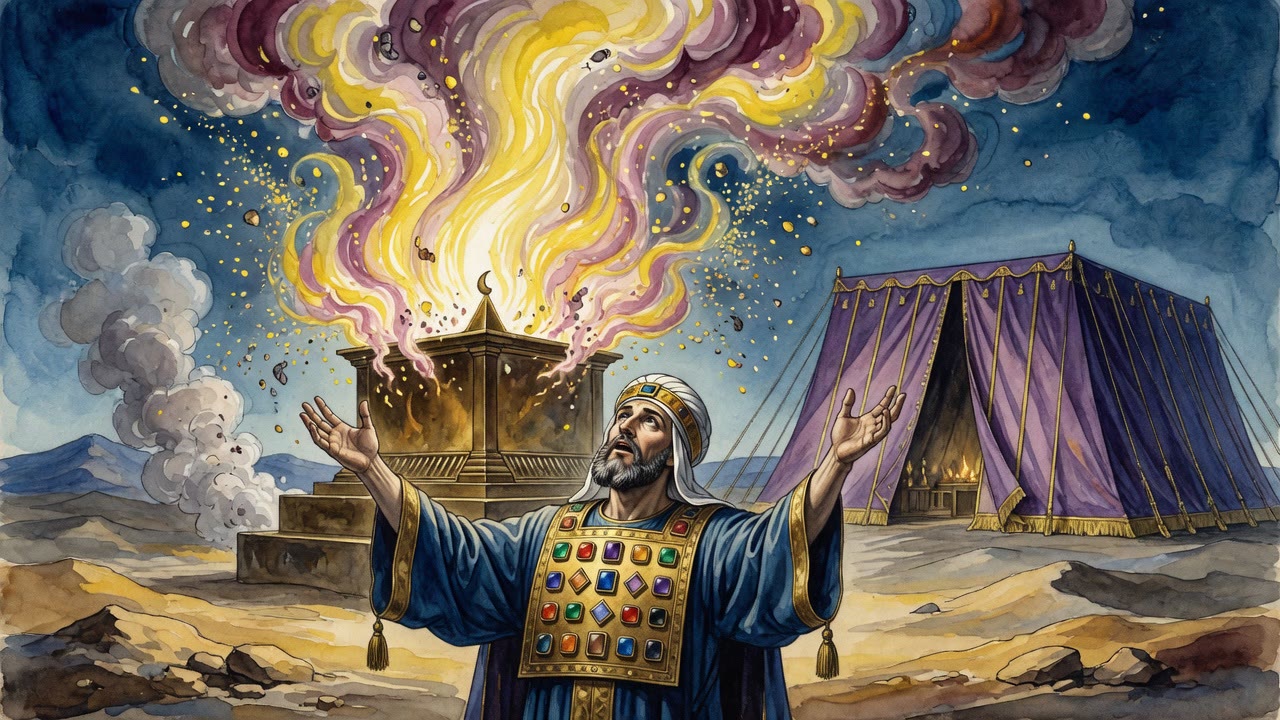
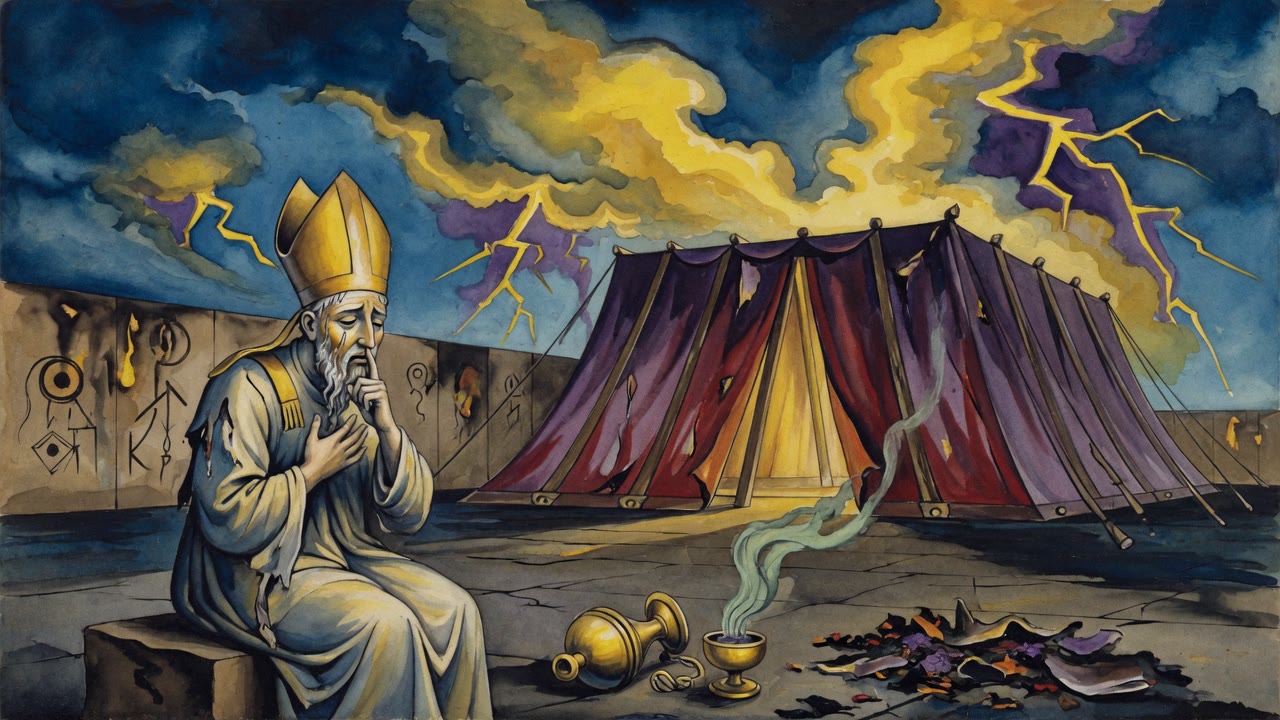
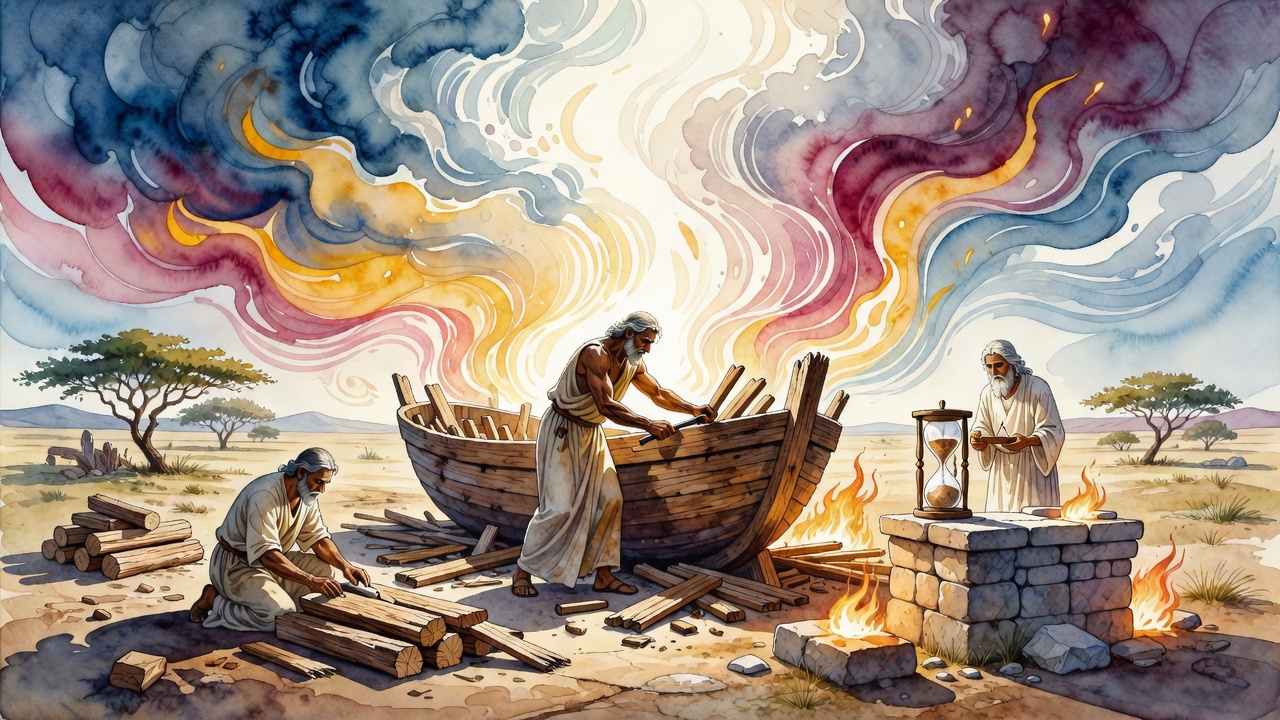
Moses held the measurements and found a flaw in them. Acacia wood for the altar, over the wood a plating of brass no thicker than a dinar, and on top of the brass a fire that was never, by day or by night, to be allowed to go out (Exodus 27:2).
He did the arithmetic any builder does. Brass conducts. Wood burns. A flame fed without rest works through that skin of metal in a season and leaves the courtyard standing over ash.
So he said it out loud. "You told me to make the altar of acacia and overlay it with brass. You also told me the fire on it burns perpetually. It will go through the plating and take the wood."
God did not argue with the arithmetic.
"Normally," God said, "that is exactly what happens."
The Household Where Fire and Water Hold Still
Then God walked him through the house.
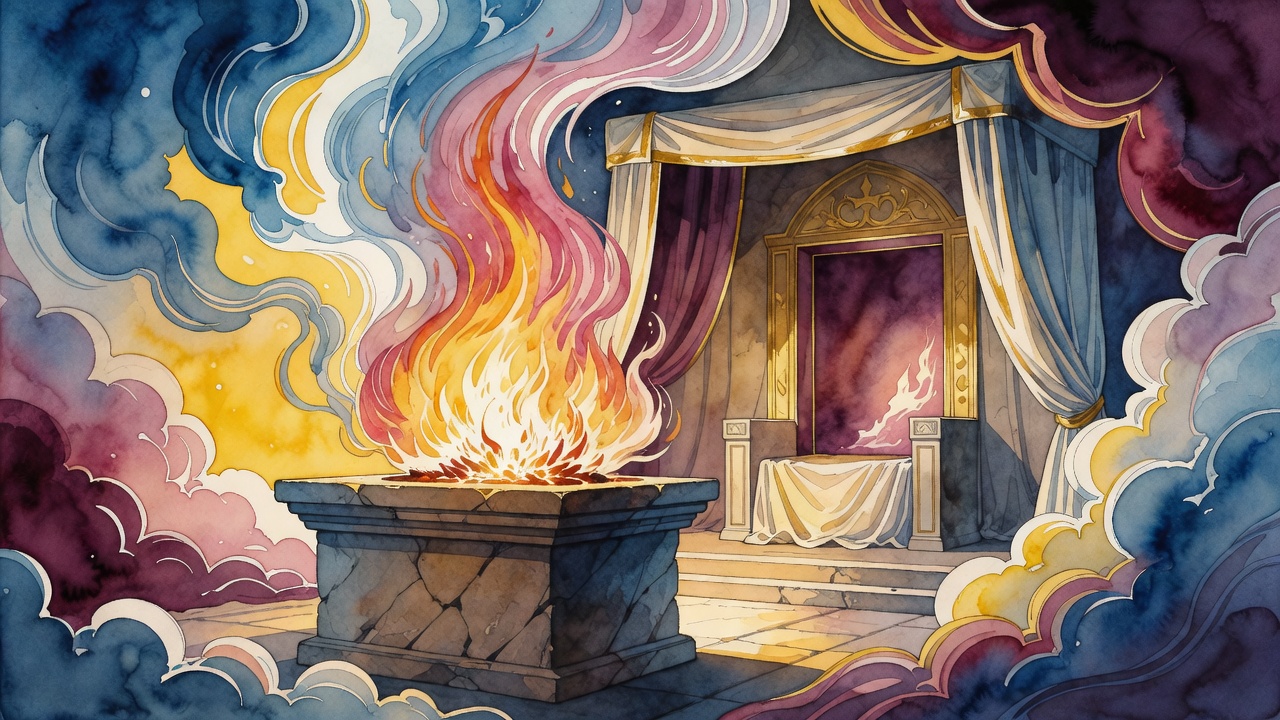
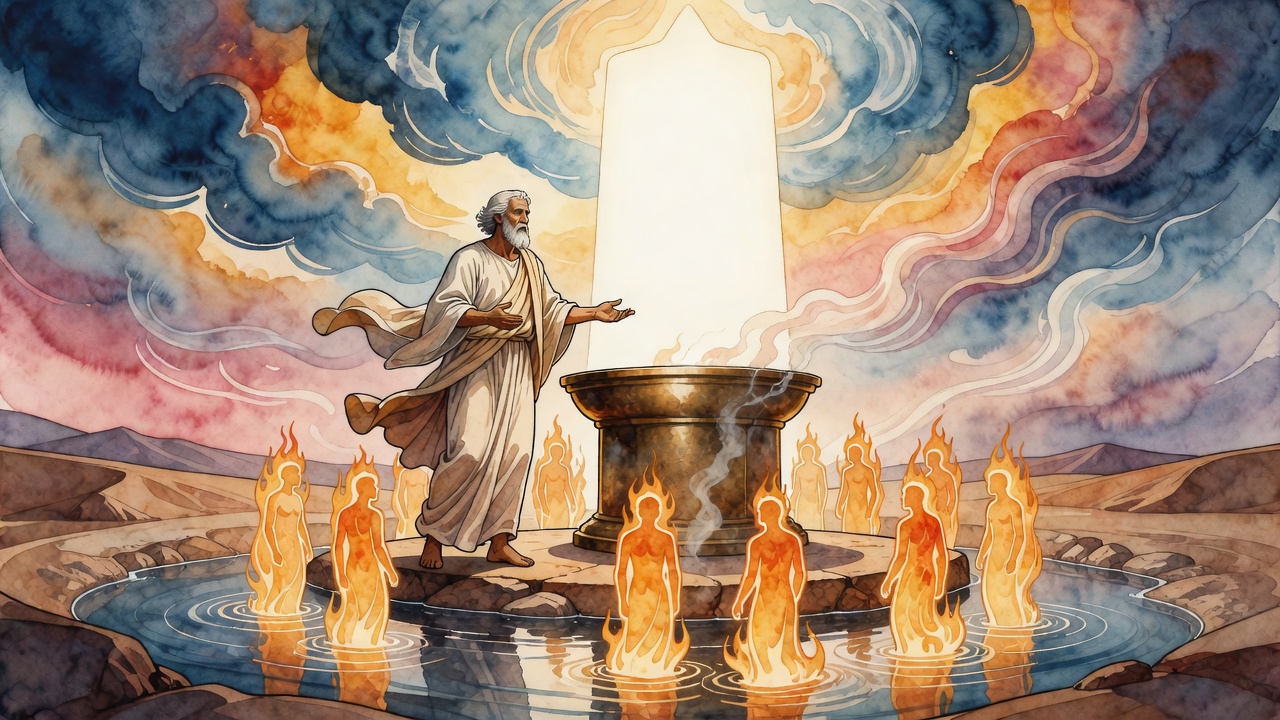
Near the Throne stand the angels of glowing fire. Above them a firmament stretches out like terrible ice, and under it the living creatures burn like coals, like torches, and the fire darts up and down between them (Ezekiel 1:22). On their heads they carry the whole weight of the waters, five hundred years of walking thick, and between the firmaments they hold up bodies of fire the same depth. Their hoofs alone measure four hundred years of road.
The water does not put the fire out. The fire does not dry the water. They have been pressed against each other that way since before there was an Israel to build anything, because He makes peace in His high places.
"I keep treasuries of snow and hail," God said, "and I lay the beams of My upper chambers in the water. And because I told you to keep one flame alive on one altar, you are frightened for the wood."
The Dead Things That Walk Out Alive
There was more.
Aaron had carried a dry stick into the Tent of the Testimony one evening. By morning it had buds on it, then blossoms, and then ripe almonds hanging off a rod that had been cut from its tree and left to die.
The cedars Hiram of Tyre floated down to Solomon came ashore as lumber and refused to stay lumber. When the ark went into the Temple, every tree in those courts took the living spirit back into itself and put out fruit that fed the young priests. Then Manasseh carried an idol through the same doors. The Shekhinah (שכינה), the Divine Presence, walked out, and the flower of Lebanon withered on its branch.
The staves of the ark kept growing for four hundred and eighty-four years, until their ends showed against the curtain.
"Dead things are brought in to Me," God said, "and they leave alive. And you are afraid for a plank."
He Had Already Walked Into the Devouring Fire
Then the argument turned on Moses himself.
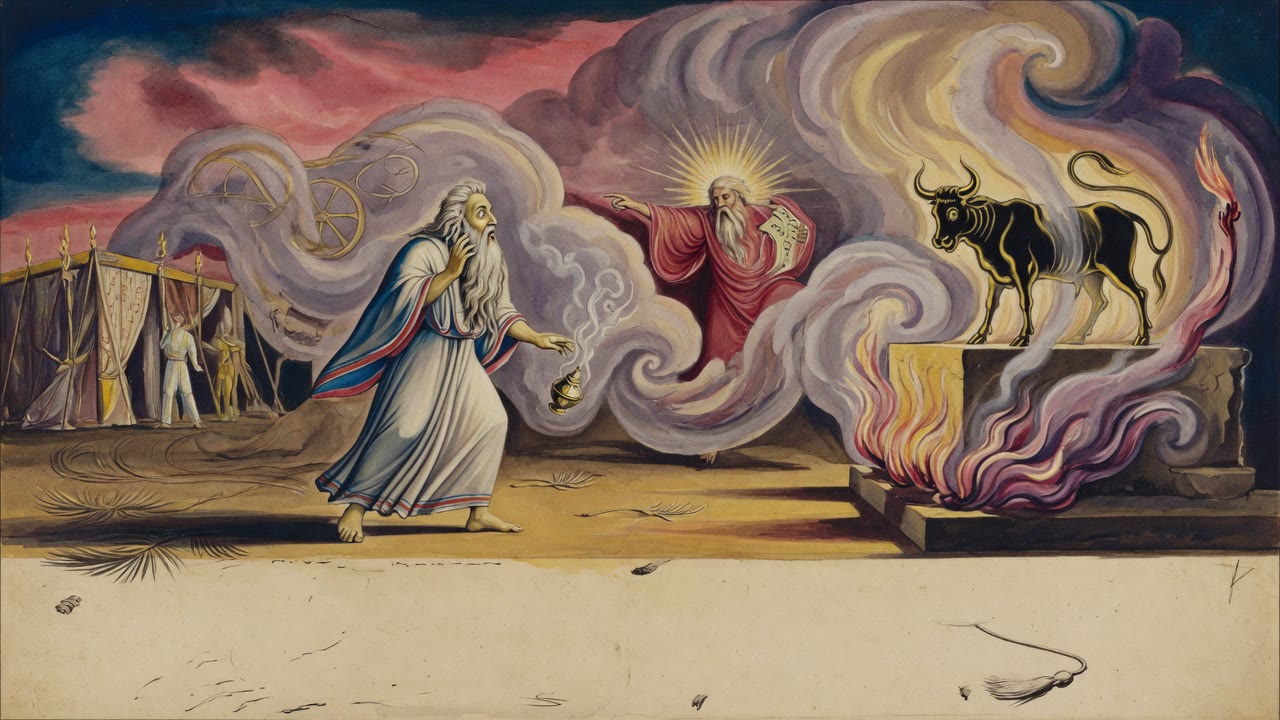
He had climbed the mountain, gone into a wall of fire, passed between the bands of angels standing inside it, and come out the far side with his beard unsinged, into the thick darkness where God was (Exodus 20:18). None of that should have been survivable. The Lord his God is a devouring fire, and a man who walks into a devouring fire walks out as smoke.
He walked out as Moses.
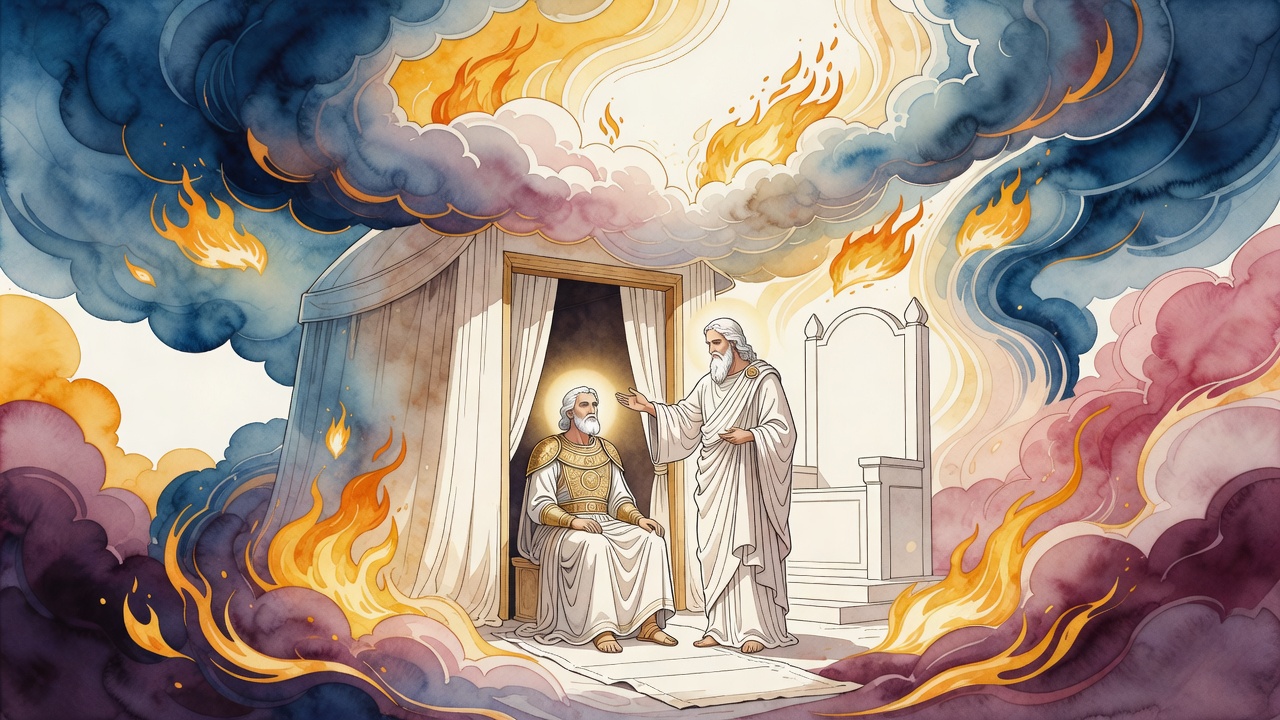
"You were not eaten because you came up for My glory," God said. "The brass will not be eaten and the wood will not burn, for the same reason."
The plating stayed a dinar thick. The fire was never once lifted off that altar, day or night, and the acacia under it held. Brass, for a people whose foreheads God had called brass.
The Thirsty Man Who Stopped at the Water
Moses had one more question, and it was not about carpentry. "If the fire takes nothing from You," he said, "and the smoke reaches nothing in You, why do You want the animals at all?"
"A strong man walks a road in the heat," God said. "He comes to a stream, kneels, cups his hands. Ten handfuls. Six. Four. He does not drink fewer than two, because that is what one thirst costs a body. Now count every sea and river and cistern that exists. All of it fills the hollow of My hand a single time."
There is no eating in that place. There is no drinking. Nothing laid on the altar was ever food (Isaiah 40:12).
"I asked for the bull and the sheep and the goat," God said, "so that there would be something for you to have done."
The Voice on the Mountaintops Calls for Creditors
"There is a man in a province," God said, "with no wife and no son, who pays out of his own purse the wages of the teachers who drill Scripture and Mishnah into other men's boys. I owe him. I will pay in a son of his own."
Then God showed him how the last accounts get settled. A bat kol (בת קול), a voice out of heaven, breaks over the tops of the mountains, "Whoever has worked together with God, let him come forward and take his wage."
And in the same breath the voice asks who ever put anything into His hand first, since whatever lies under the whole of heaven is already His (Job 41:3).
"Who sang to Me before I set a soul in him? Who circumcised a son before I gave him the son? Who tied tzitzit (ritual fringes) before I gave him the cloak, or raised a sukkah before I gave him ground to stand on? Who left the corner of a field for the poor before I gave him the field? Who brought Me a firstborn before I gave him the animal?"
The mountains hold that sound a long time. Nobody steps forward to collect. And down in the courtyard, on acacia wood that will not burn beneath brass that will not melt, the fire keeps going, because it was never eating anything at all.
← All myths