The Fire That Never Went Out and the Gold No Eye Reached
A flame from heaven lodged on Moses's altar and stayed four hundred years. In the same Tabernacle, gold was plated in one place no human eye would ever find it.
Table of Contents
 Click for full size
The Fire That Would Not Leave
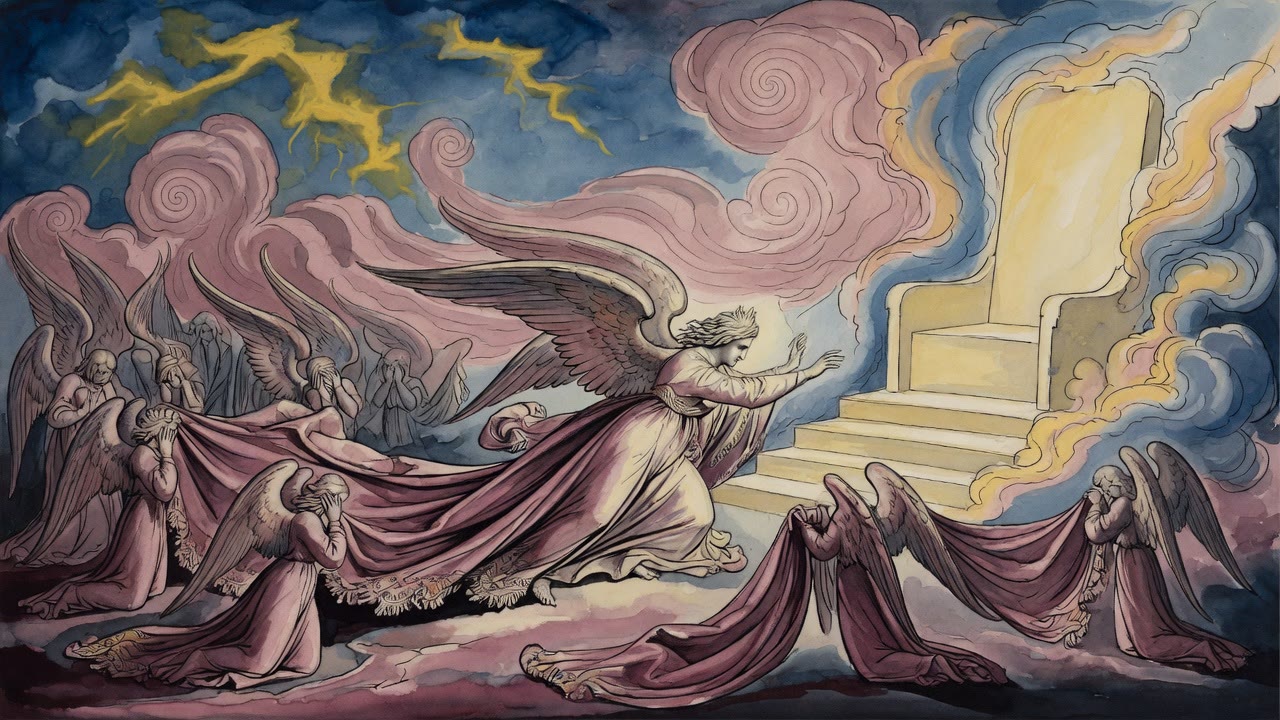
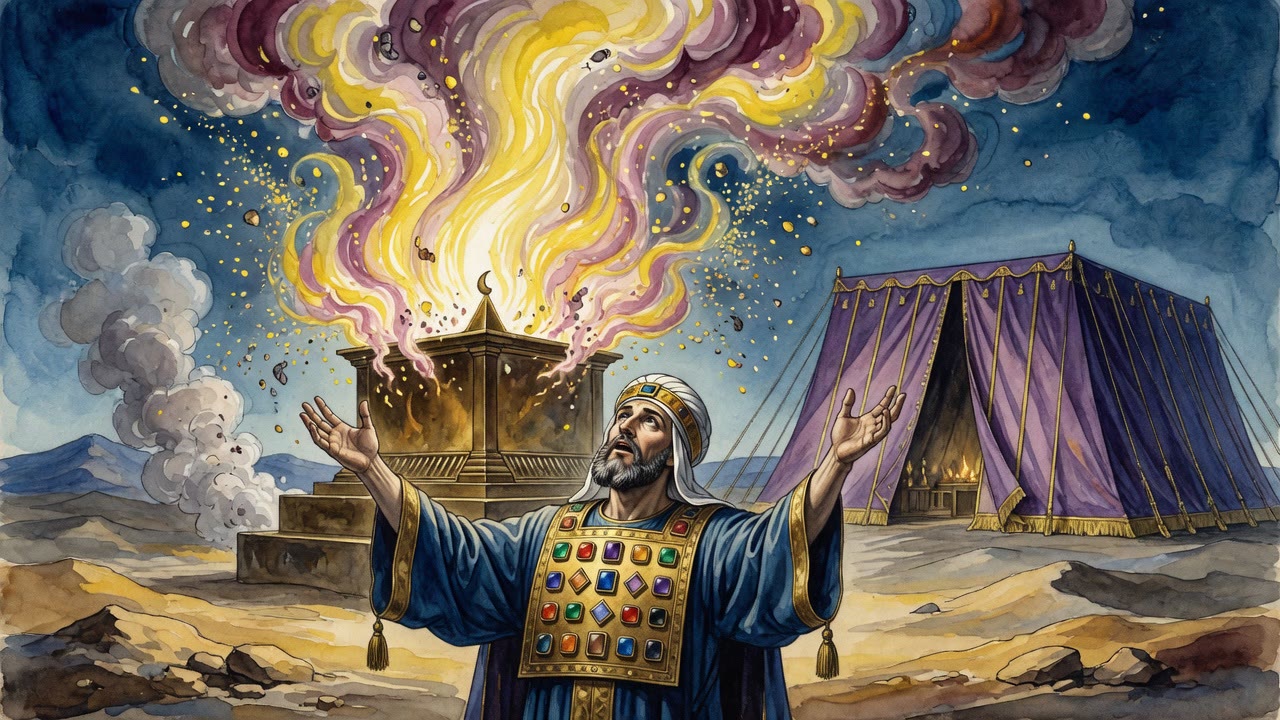
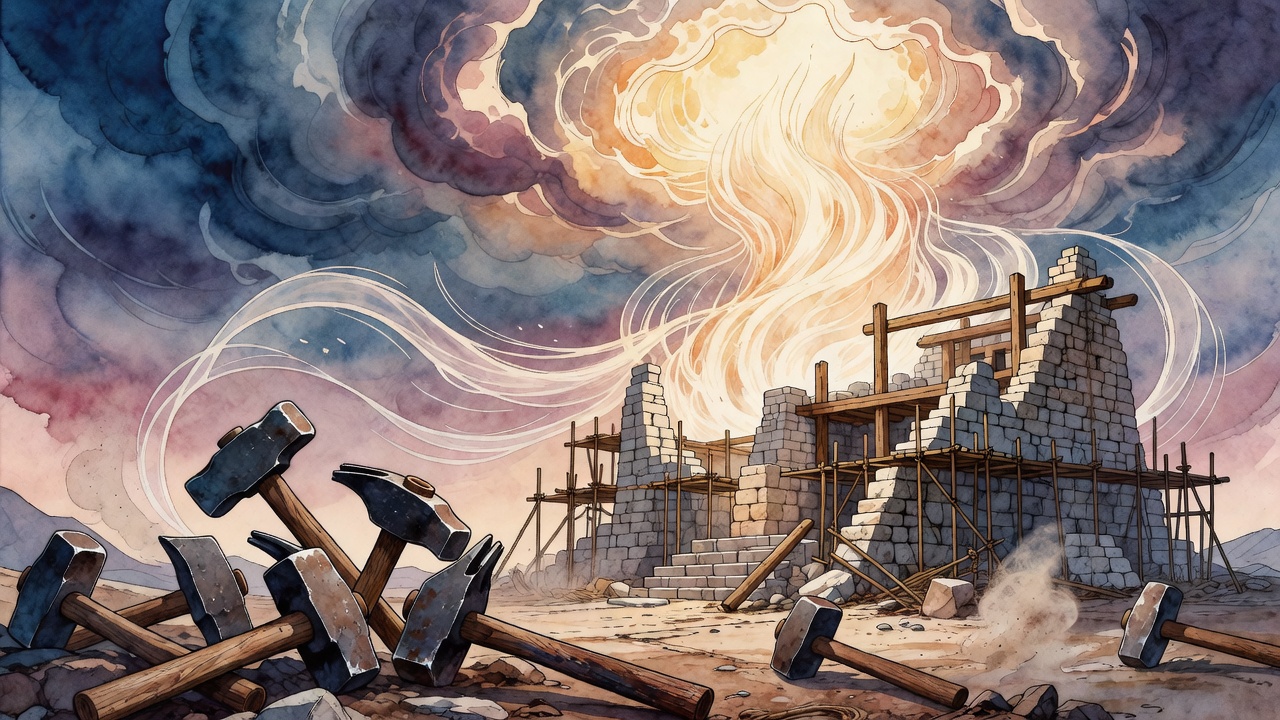
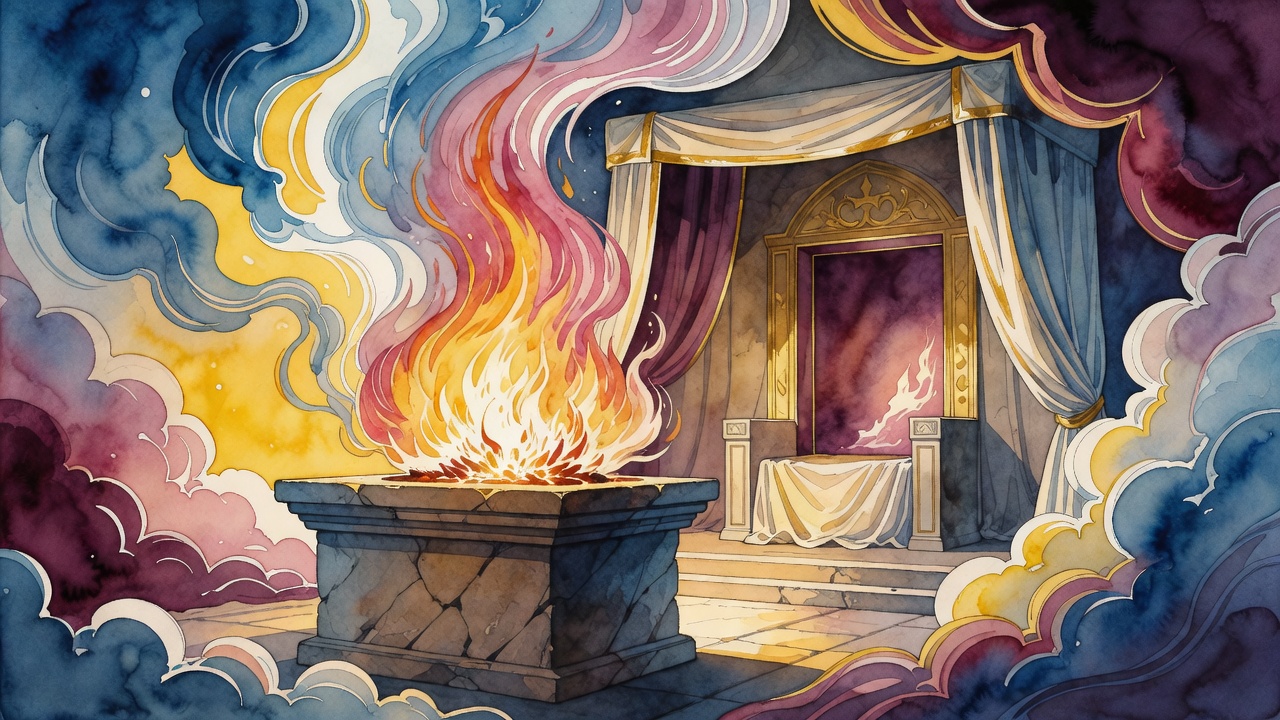
A fire fell out of the sky in Moses's day, landed on the altar, and then simply stayed. This is the stubborn claim of the midrashic tradition: the fire that came down from heaven at the dedication of the wilderness Tabernacle did not burn out. It held its place for roughly four hundred years, through the loss of the Ark to the Philistines, through the era of the judges, through Saul and the early years of David, until Solomon raised the Temple in Jerusalem and a second fire came down and relieved the first one. That second fire held its position until a wicked king named Menasheh, deep in the seventh century BCE, extinguished it.
The sages who preserved this tradition in the Yalkut Shimoni on Torah were not sentimental about it. They wanted to understand the mechanics, and they were willing to argue about it for as long as it took.
How Many Altars in a Single Word
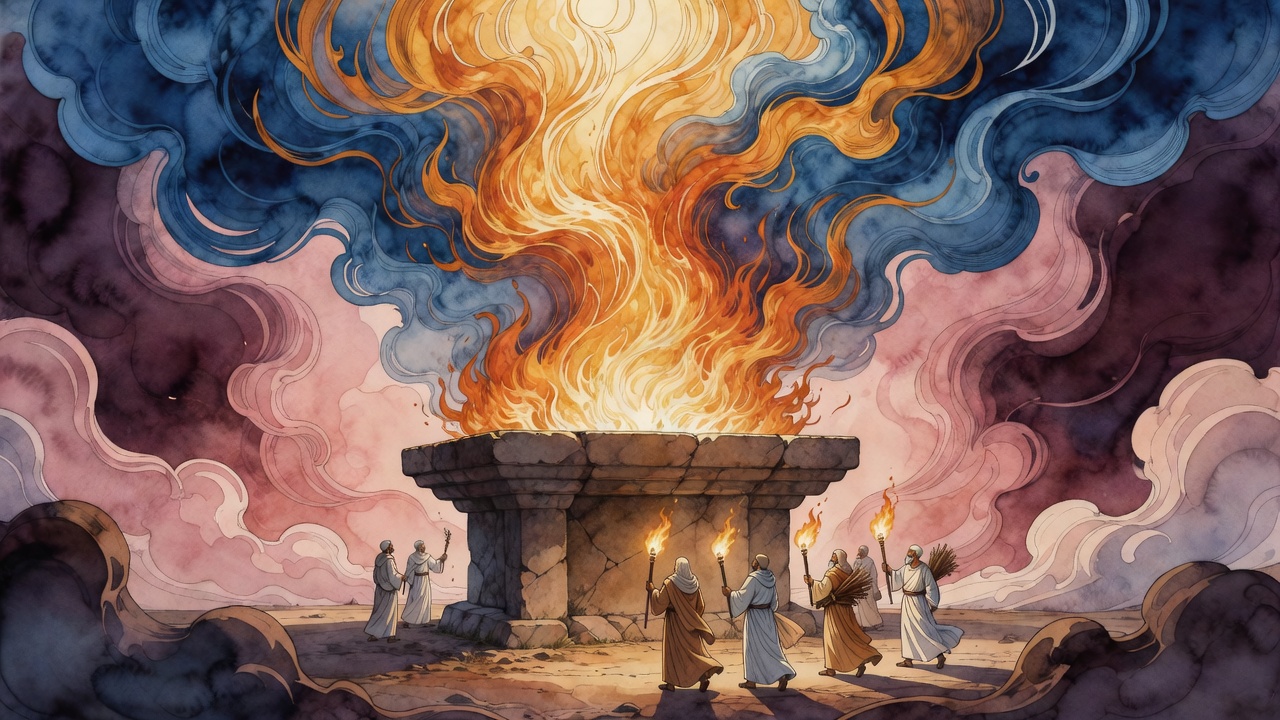
The argument began with a counting problem. When the Torah commands building an altar of stones, the word stones appears three separate times in Deuteronomy 27:5-6, and the sages refused to treat the repetition as emphasis. Three mentions means three separate altars, and three separate altars means three separate arrivals of heavenly fire.
First fire: the altar Moses built in the wilderness. Second fire: the altar Elijah built on Mount Carmel, when he challenged the prophets of Baal and the fire fell from heaven and consumed the offering and the water in the trench. Third fire: the altar Solomon built when the Temple was completed, when fire came down and the glory of God filled the house so completely that the priests could not stand up to serve.
The tradition maps the divine fire as a kind of presence that moved through Jewish history by stages, each stage inaugurated by a descent from heaven onto stone, each one lasting until the next one came to replace it or until human action extinguished it.
The Gold Where No Eye Goes
In the same Tabernacle where the fire burned, there was gold plated in a location no human being would ever see. The boards of the Tabernacle were overlaid with gold on their visible faces, on the surfaces that faced the interior where the priests worked and the cloud rested. But the tradition in the Yalkut preserves an account of a second gold application: the boards were plated also on the face that pressed against the next board, the hidden surface that faced only other wood.
Why put gold where no one looks? The answer the tradition gives is not practical. It is about the nature of the work itself. Every board in the Tabernacle had to be gold all the way through, not because a priest would ever see the hidden face, but because the Tabernacle was not being built for human inspection. The hidden gold was for the One who sees what no human eye reaches. If you skimped on the surface no one checked, you had built something that was presentable, not holy.
The Middle Bar That Ran Through Everything
The same passage in the Yalkut describes the middle bar of the Tabernacle, the horizontal pole that ran through the center of the wall boards from one end to the other, holding them plumb. The Torah says it reached from end to end, and the sages read that as a miracle. The bar was not assembled in sections. It was a single piece that somehow passed through each board without splitting it, running the full length of the Tabernacle wall inside the wood itself, through a tunnel that did not exist until the bar entered it.
The bar, the hidden gold, and the permanent fire belong to the same vision of how sacred construction works. The fire does not go out because it was placed by a hand that does not tire. The gold covers the surface no one sees because the One for whom the structure exists sees everything. The bar passes through without breaking because the boards that seem to be obstacles are in fact already shaped to receive what they cannot see coming.
← All myths