The Altar Needed Human Fire After Heaven Sent Its Own
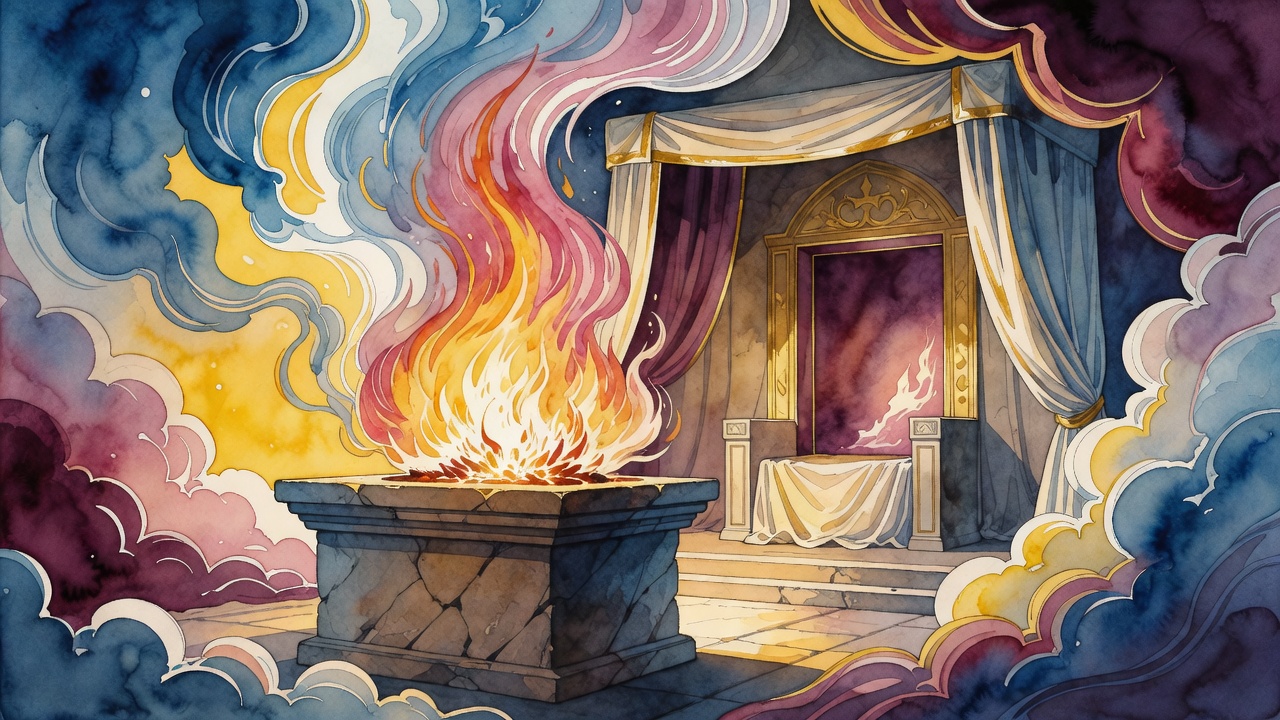
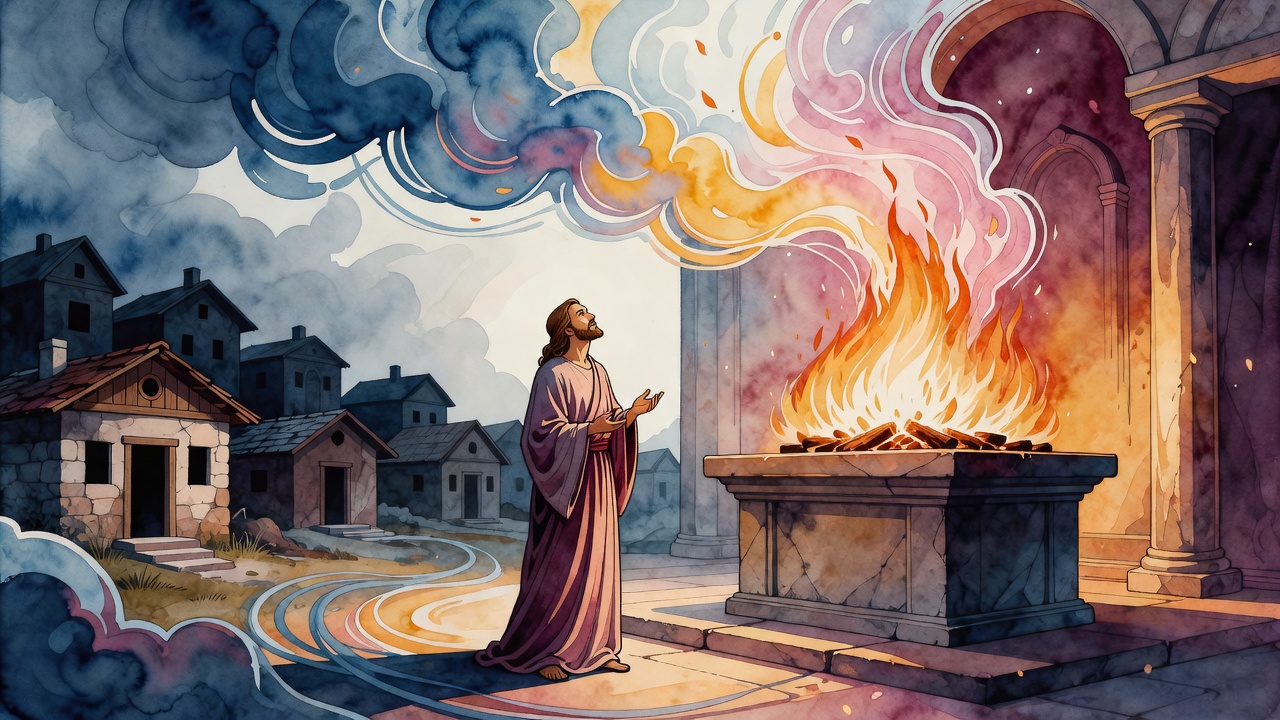
Fire descended from heaven onto the altar and stayed, yet the Torah still commanded priests to bring human fire, because the kindling itself was a commandment.
Table of Contents
Fire came down from heaven onto the altar, and it never left.
 Click for full size
The flame kindled in Moses' day clung to the bronze altar until Israel reached the permanent Temple. The flame of Solomon's day burned on until the time of the wicked king Manasseh, who drove it away. For generations the altar already had its own fire, a fire that had come from above, that had accepted the first offerings, that had become the permanent resident of the holiest place of service in Israel's camp.
And still the Torah commanded the priests to bring fire from below.
Heaven's Fire Still Needed Human Kindling
The sages paused over Leviticus 1:7: the sons of Aaron shall put fire on the altar. The question is almost too bold to ask aloud. If fire comes down from heaven and burns continuously on the altar, why does the Torah give a separate commandment to add fire from human hands? What does a mortal flame add to a divine one?
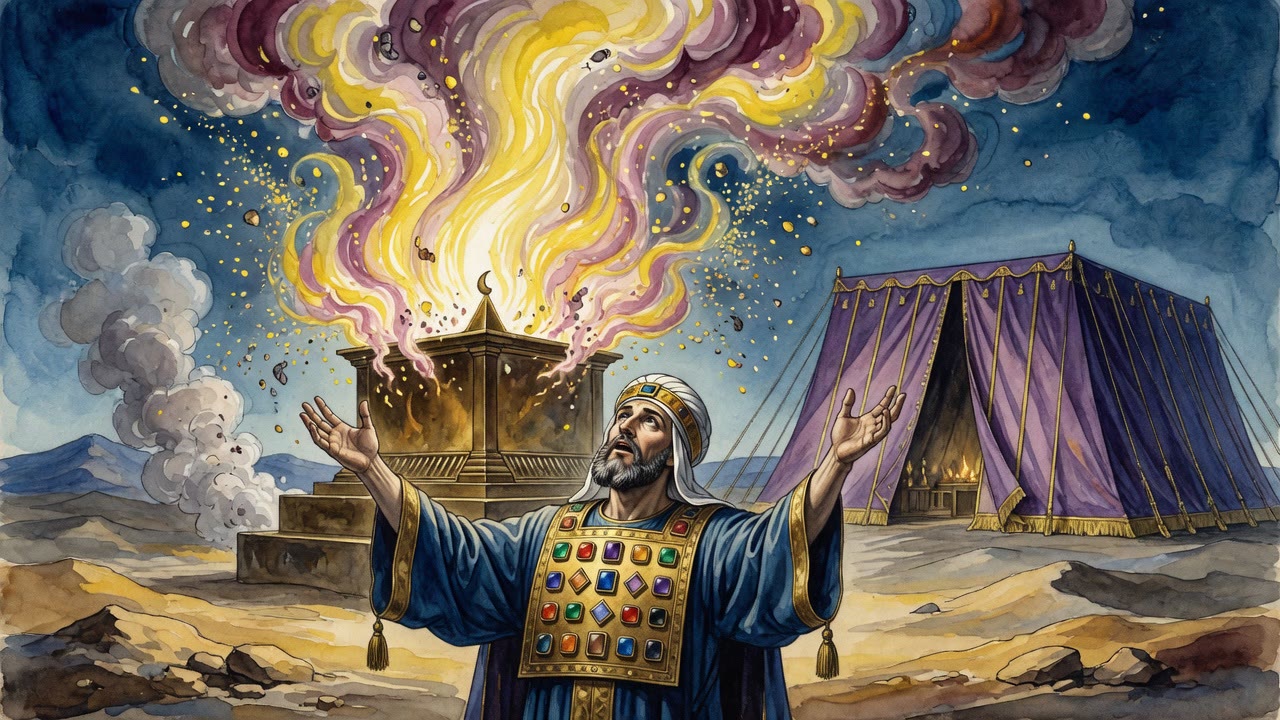
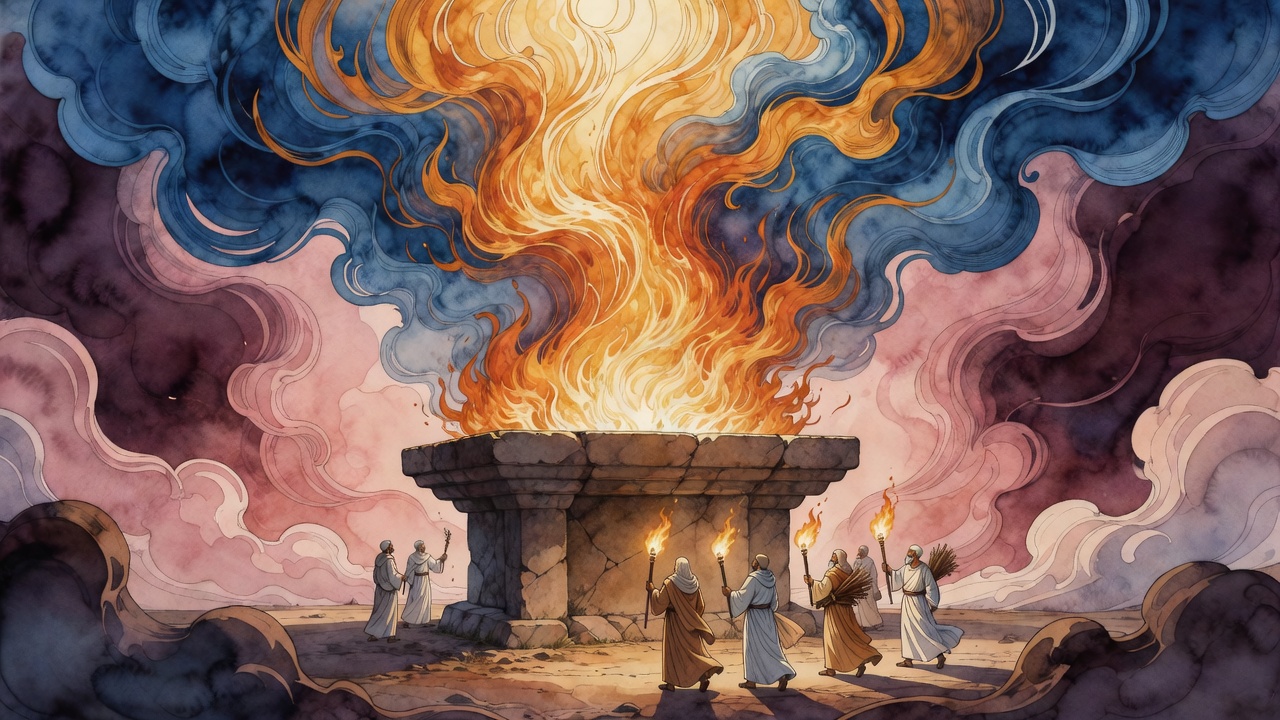
The answer cut through two easy theologies at once. Even though fire descends from heaven, it is a commandment to bring fire from below. Human effort is not made pointless by divine provision. Human kindling does not presume to replace the heavenly flame. Both are required, at the same altar, at the same moment. God's fire and human fire meet where the offering burns. Heaven does not make our effort unnecessary. It asks us to add our own kindling to its flame.
Aaron's sons grasped this correctly on the day of the Tabernacle's dedication. They understood the principle even before they overstepped by making a ruling in the presence of Moses their teacher. The understanding was real, even if the moment of overstepping revealed they had not yet learned the full weight of what they understood.
The King Who Wiped the Bowl Clean
The rabbis kept turning the same short verse about the burnt offering, and each turn found a new layer. And as in the days of old and as in former years sent them back through history. Former years reached to Abel, to a world so young that idolatry had not yet been invented, when an offering rose from clean hands toward heaven without any interference, any corruption, any second altar competing for divine attention. The burnt offering at its cleanest was Abel's offering: nothing withheld, nothing reserved, everything given.
Rabbi Avin offered a domestic image of God's pleasure. A king reclines at his feast, a dish is set before him, and he enjoys it so thoroughly that he scrapes the bowl clean, leaving nothing behind. That, said Rabbi Avin, is the meaning of the verse about fatlings: when Israel's offering is genuine, it is so welcome at the divine table that nothing is left over. The burnt offering is eaten completely. The king finishes the dish.
How Many Fires Burned on the Altar at Once
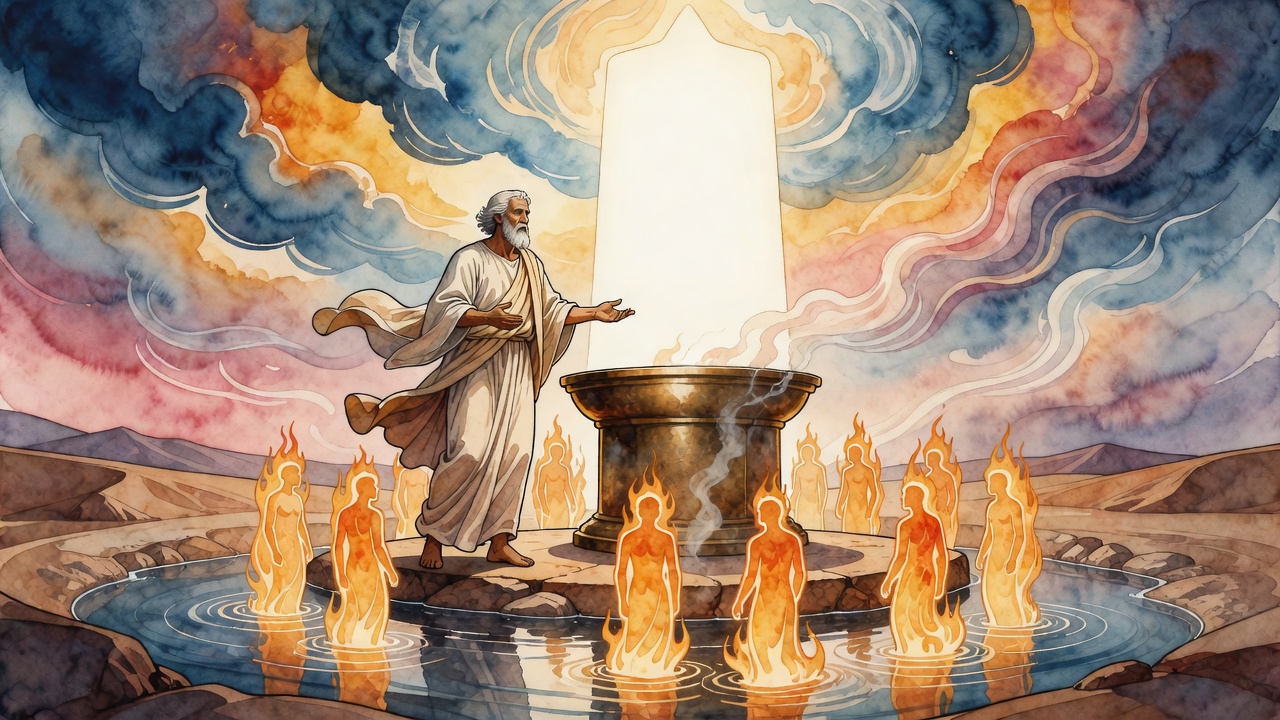
The teachers counted the fires with care and disagreed, and the disagreement itself was an act of devotion. Rabbi Yehudah said two on an ordinary day and three on the Day of Atonement. Rabbi Yose said three and four. Rabbi Meir said four and five, adding a separate fire for the limbs that the night had not finished consuming from the previous day's offerings.
However they counted, all agreed on at least two: the great arrangement where the main offerings burned, and a second fire kept continuously for the daily incense. Each additional fire the masters claimed was anchored in a word or even a single letter of the verse. A connecting and, a stray heh, each read as a sign that the Torah intended one more flame. The altar was not lit by a single burning. It was a place of multiple, simultaneous fires, each with its own purpose, each with its own wood arrangement, each necessary.
A practical question threads through the debate. What happens to limbs and fat-pieces from an evening offering when morning comes and a new day's offerings need to begin? Does the old fire serve the new? Does the arrangement need to be rebuilt? The sages resolved it with the same principle that governed everything at the altar: each obligation has its own proper time and its own proper form, and the precision of the service was itself a form of worship.
What the Altar Required from Both Heaven and Earth
The altar was neither purely divine nor purely human property. Heaven supplied the fire that never went out. Human hands supplied the arrangement of wood, the choice of animals, the garments of the service. The priest who climbed to the altar was not replacing God's fire with his own. He was adding his own kindling to a flame already burning, completing an act that required two sources because the service itself was a meeting point between two realms.
That principle extended to every detail. The fire arrangements, the whole offerings, the incense, the timing of each service. None of it could proceed without the priest. None of it would mean anything without what descended from above. The Temple was built to be both at once, because Israel's relationship with the divine could not be one-sided and still be a relationship.
← All myths