2,285 related texts · Page 1 of 48
Two words haunted ancient Israel: shedim (demons) and se'irim. The Israelites were forbidden from sacrificing to either. They sacrificed anyway. The se'irim were the hairy ones, sa...
In what lies in the other ark it is written (Exodus 20) "I am the L–rd your G–d," and of Joseph it is written (Genesis 50:19) "Am I in the place of G–d?" In what lies in this ark i...
We find ourselves pondering just that in a fascinating discussion rooted in the verse from (Song of Songs 4:16): "Awake, north wind, and come, south wind; blow upon my garden, that...
Rabbi Berekhya said: The Holy one blessed be He recorded the redemption of Israel in the Torah, as it is written: “If a stranger who is a resident among you shall prosper…” (Leviti...
“In the first month, that is, the month Nisan, in the twelfth year of King Aḥashverosh, he had cast a pur, that is, the lot, before Haman for each day and for each month, to the tw...
It’s a fascinating glimpse into ancient ritual and devotion. Today, we're diving into some of the details, specifically as recorded in Bamidbar Rabbah 13, a section of the great co...
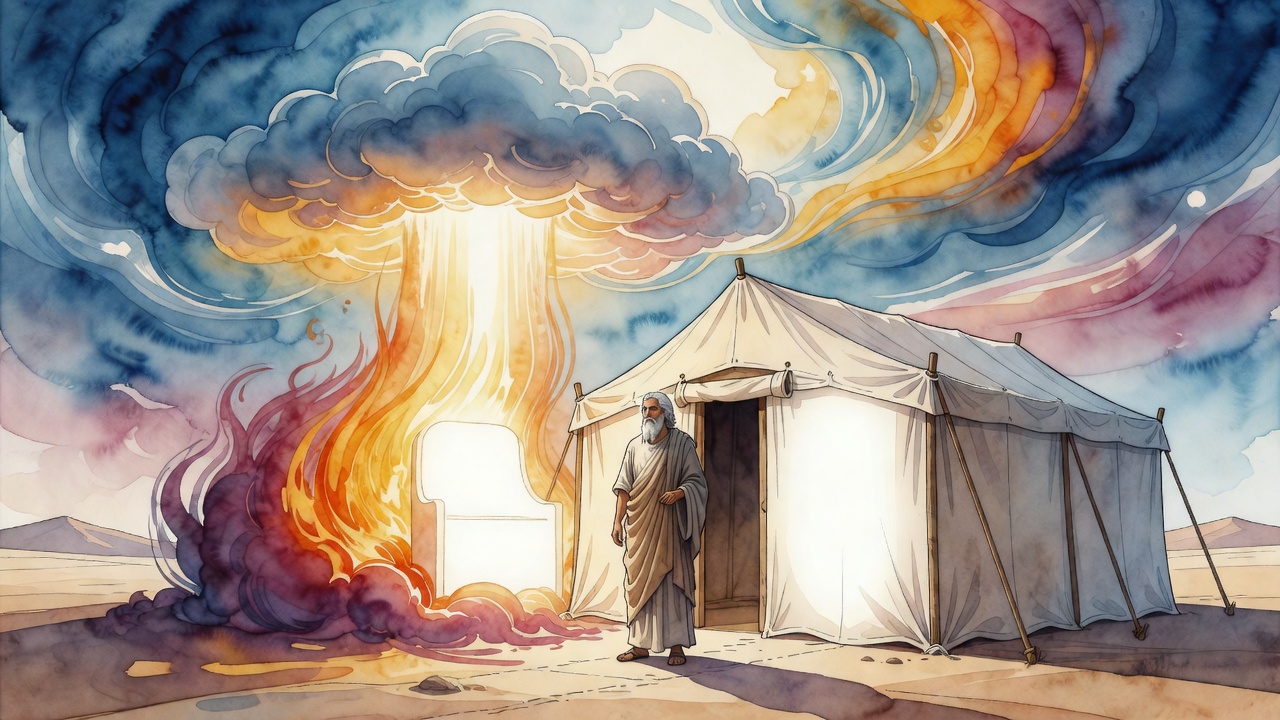
The text says: "offer them all together on the altar of burnt-offering; it is a sweet savour before the Lord." So, the whole animal, a burnt offering (olah), is going up in smoke. ...
The Mekhilta DeRabbi Yishmael raises a question about who is obligated to honor parents. The commandment says "Honor your father and your mother," but a related verse in (Leviticus...
Three figures pray and God delights in it: Moses, David, and the Messiah. This is the claim Aggadat Bereshit makes from (Proverbs 15:8) — "the prayer of the upright is His delight....
What happens when only part of the offering is present? Is it still valid? Our little puzzle comes from Sifrei Devarim, a collection of legal interpretations on the Book of Deutero...
The Sifrei Devarim, a collection of legal interpretations on the Book of Deuteronomy, dives into just that when discussing the burnt offering, the olah. We're talking about the com...
The Torah portion of Vayikra (Leviticus) dives deep into the intricate world of offerings, and Vayikra Rabbah, a collection of rabbinic interpretations of Leviticus, sheds light on...
The Small Letters and their Purposes The ALEPH in ויקרא And He called (Leviticus 1:1) is small, to teach that the Holy Blessed One is only revealed to the nations of the earth thro...
R. Yossi b. R. Yehudah says: From half the altar northwards is regarded as north, and from half the altar southwards is regarded as south. And this tells me only that the north of ...
Rabbi Yishmael taught that the word "if" in the Torah generally means something is optional — except in three specific cases where "if" actually means "when," making the instructio...
We often focus on Abraham's unwavering faith, but what about Isaac? What was going through his mind as he walked alongside his father toward that fateful mountain? The biblical tex...
Leviticus 3 describes the peace offering—the only sacrifice where the person bringing it actually got to eat part of the meat. The Targum Jonathan adds a small but theologically lo...
Sometimes, it's in those tiny details that we find the biggest insights into the heart of the matter. Take the ritual of the sota, the woman suspected of adultery, described in Num...
The core debate boils down to this: Did the descendants of Noah, meaning all humanity before the giving of the Torah at Sinai, offer only burnt offerings, or did they also offer pe...
(Ibid. 7) "You shall not take the name of the L–rd your G–d in vain": A vain oath, too, was included in (Leviticus 19:12) "You shall not swear falsely in My name," and Scripture re...
There is nothing more beloved than the Mincha prayer. The afternoon offering — the one between the morning and the evening — is the prayer that comes at the moment when the day is ...
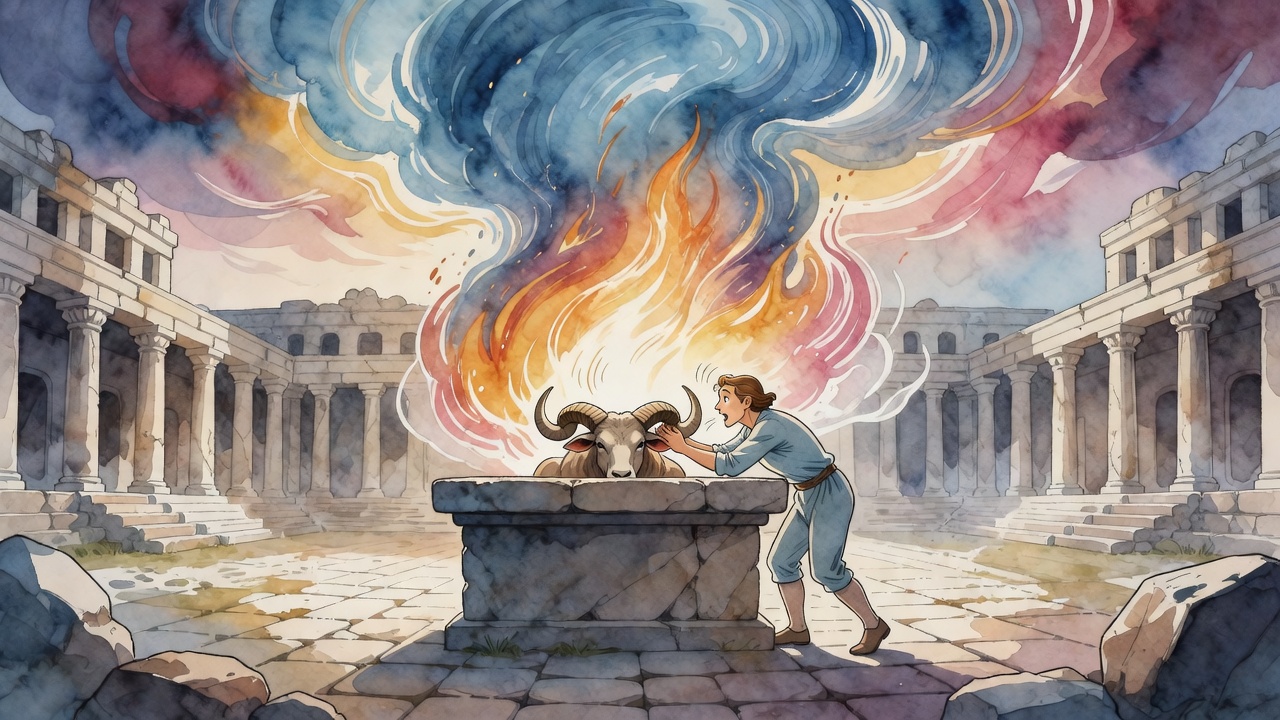
This comes to us from Ginzberg's Legends of the Jews, drawing from various Midrash (rabbinic interpretive commentary)ic sources. Remember the story? Elijah, challenging the priests...
The Tikkun (spiritual repair)ei Zohar delves into the mystical underpinnings of the Torah, revealing hidden layers of meaning within its words. In Tikkunei Zohar 125, it speaks of ...
The Torah commands regarding the Passover sacrifice that "there shall not remain the fat of My festival offering until morning." The Mekhilta takes this verse and extracts from it ...
We read about them in the Torah, these intricate ceremonies involving blood and altars. But what was the point? And how did they actually work? to a little detail from Sifrei Devar...
to a passage from Sifrei Devarim, a collection of legal interpretations related to the Book of Deuteronomy. The text poses a question about priestly gifts, specifically, whether ch...
When the entire community of Israel sinned by accident, who took responsibility? The Hebrew Bible says "the elders of the congregation" laid their hands on the bull (Leviticus 4:15...
Leviticus 7 compiles the laws of trespass offerings, thanksgiving offerings, and the priestly portions. The Targum Jonathan repeats a stunning claim from the previous chapter, fram...
It comes from Numbers, Chapter 5, verse 26. We're in the middle of the sotah ritual – that's the process involving a woman suspected of infidelity. The verse reads: "The priest sha...
Today, we're diving into a passage from Vayikra Rabbah, a collection of rabbinic interpretations of the Book of Leviticus, that explores just that. It revolves around the verse: "C...
It wasn't just about hearing the thunder and seeing the lightning. It was about a tangible, visceral connection – a bond sealed in blood. See, back then, there was no Temple, no es...
To draw peace into the world, Rabbi Nachman of Breslov taught, you must elevate God's glory to its source. And that source is fear. "To fear the glorious name" (Deuteronomy 28:58)....
There exists a soul in every generation through whom Torah insights are revealed to the world. Rabbi Nachman of Breslov describes this soul as one burdened with suffering: "Bread w...
(Exodus 22:18) "Whoever lies with a beast shall be put to death": What is the intent of this? It is written (Leviticus 20:15) "And a man who cohabits with a beast shall be put to d...
... Another reading: “Comfort, oh comfort My people” (Isaiah 40:1) Said the Holy Blessed One: Who needs to be comforted? For one whose wife died, not the husband? Thus was Zion ana...
“And did not remember His footstool [hadom raglav],” Rabbi Ḥanina bar Yitzḥak said: The Holy One blessed be He does not remember that blood [hadam] that was between the legs of the...
Rabbi Azarya began: “Do not see wine in its redness, for one who sets his eye on the cup will walk the straight path” (Proverbs 23:31). Rabbi Azarya said: “Do not see wine in its r...
Forget the sterile descriptions in history books. Let's try to feel it, to breathe it in, to almost see it shimmering before us. Ben Sira, in chapter 50 of his wisdom book, gives u...
It's a city that resonates through millennia, a place where, according to legend, the very ground remembers the most important moments in our shared past. Think about Abraham, read...
It involves a sotah (סוטה), a woman suspected of adultery. The Torah details a procedure involving a priest, a special concoction, and a whole lot of public humiliation. Now, the p...
It’s more than just a fleeting feeling. It's actually connected to something quite profound. The book of Devarim, Deuteronomy, tells us, "and you shall rejoice." But it doesn't lea...
The grain offering described in Leviticus 2 seems straightforward—flour, oil, frankincense, baked into cakes or wafers. But the Targum Jonathan adds a theological bombshell hidden ...
It wrestles with a seemingly simple question about the dedication of the altar in the Tabernacle. The text focuses on the phrase "the first, and his offering." It’s from the Book o...
It might seem like a simple opening, but Jewish tradition finds layers of meaning even in the placement of God’s name in the very first verse. Rabbi Shimon ben Yoḥai, a prominent f...
The Torah lists the patriarchs in a specific order: Abraham, Isaac, and Jacob. In (Exodus 3:6), God introduces Himself to Moses at the burning bush as "the God of your father, the ...
The Mekhilta, the tannaitic midrash on Exodus, explores a striking rhetorical pattern found throughout the Hebrew Bible: moments where a prophet says God "has spoken," and the rabb...
The Torah declares: "And if one strikes his father and his mother, he shall be put to death" (Exodus 21:15). The Mekhilta explains why this verse is necessary when the Torah alread...
"And if one strikes his father and his mother": This tells me only of (one who strikes both) his father and his mother. Whence do I derive (liability for one who strikes) his fathe...