The Temple Veil Woven on Seventy Two Strands
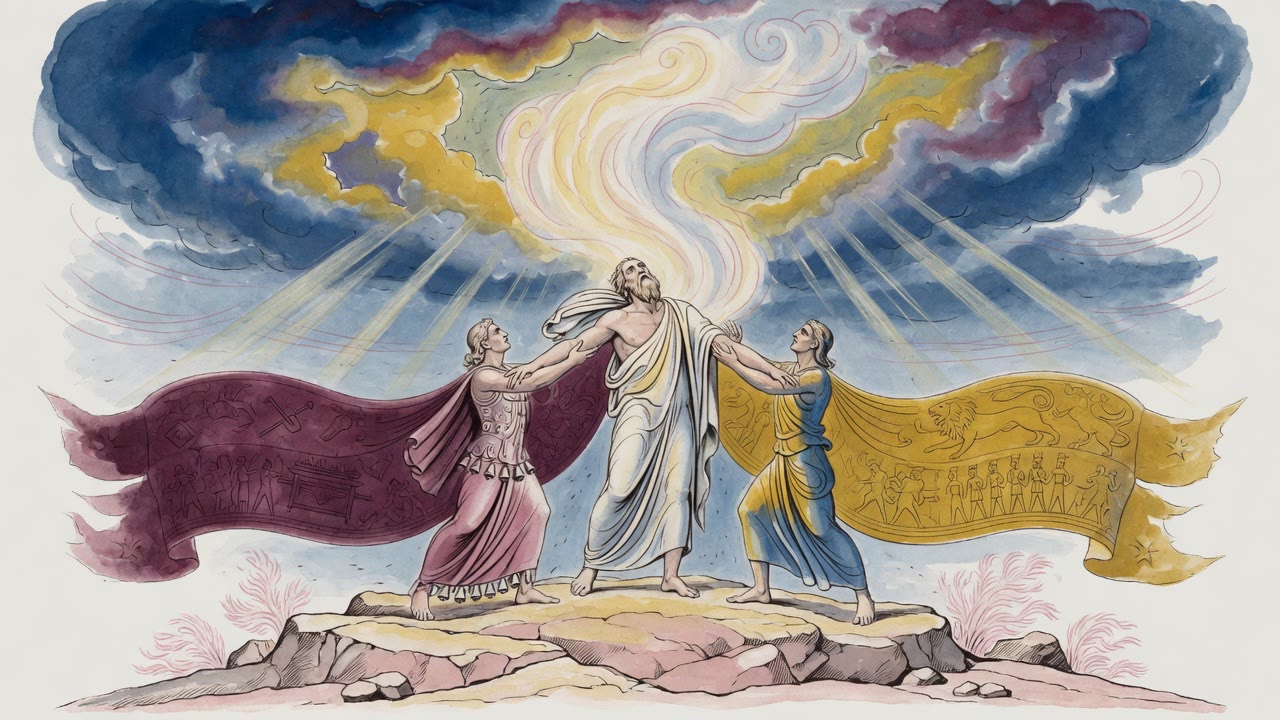
Three hundred priests carried one curtain to be washed. A handbreadth thick, woven on seventy-two strands, the parokhet guarded the holiest room.
Table of Contents
 Click for full size
The Loom That Guarded the Innermost Room
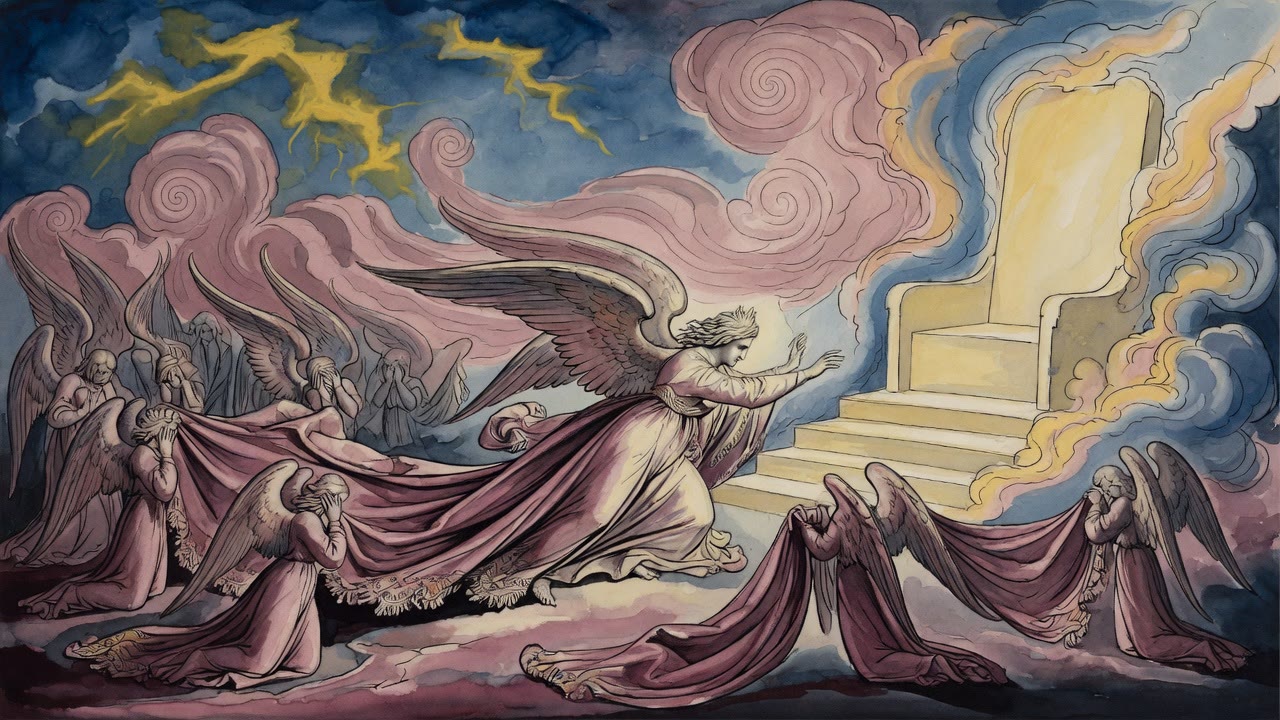
Three hundred priests once carried a single curtain down to the river to wash it, and even three hundred men strained under the weight. One curtain. That was the parokhet, the veil that hung between the Holy Place and the Holy of Holies in the Jerusalem Temple, and the people who built it could not stop measuring it, weighing it, counting its threads, as if the only way to feel the presence hidden behind the cloth was to keep documenting the cloth itself.
Yalkut Shimoni, the great thirteenth-century anthology that gathered scattered midrash into one running commentary on the Torah, preserves the obsession with a builder's precision. Open it at the verses on the Tabernacle and you do not get a sermon. You get measurements.
A Walk Through the Sanctuary Cubit by Cubit
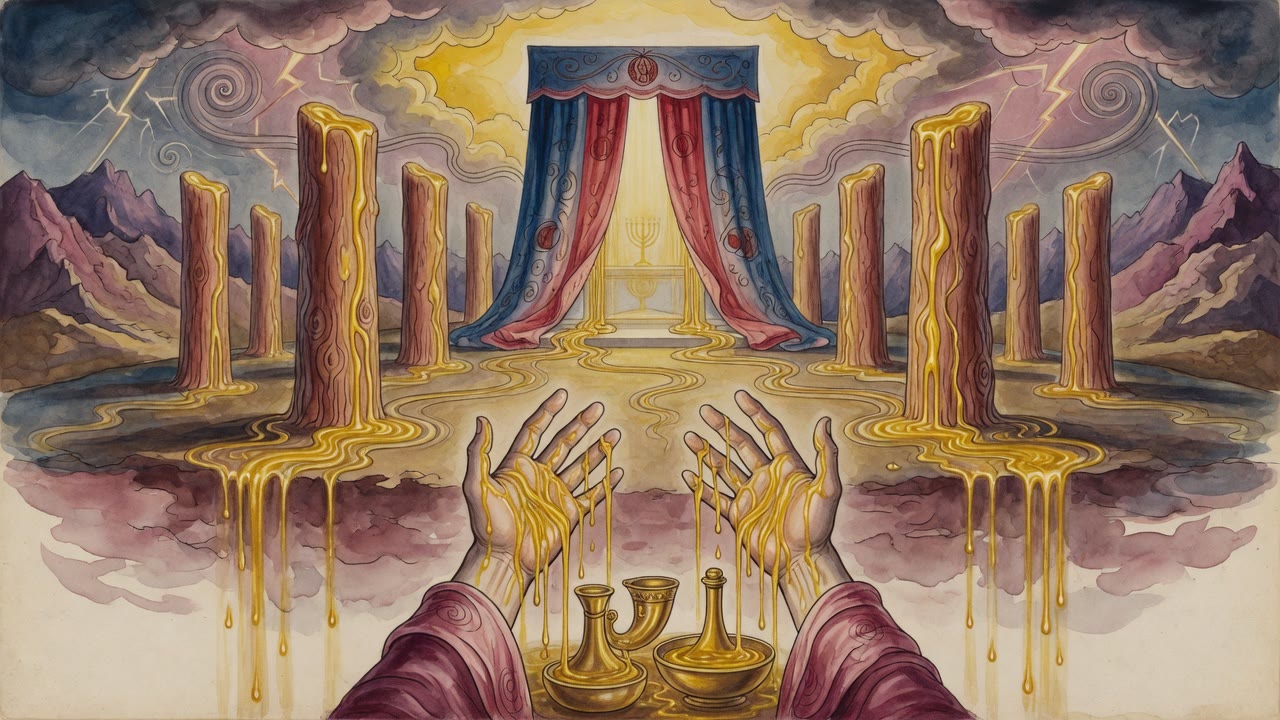
The veil came first in any account of the sanctuary's furnishings, because everything else could only be understood in relation to what it hid. Ten cubits square. Four panels. Hung lengthwise on hooks driven into the pillars with its width running vertical, not horizontal, so that it rose from floor to ceiling as one unbroken face of woven color. Behind it, in the permanent dark, sat the Ark of the Testimony. The jar of manna that never rotted. The flask of anointing oil. Aaron's staff, still budding, still carrying its almonds and blossoms centuries after any living wood would have crumbled to dust.
Into that dark room one man went, four times, on one day each year. The high priest on Yom Kippur crossed the parokhet's threshold carrying incense and blood, and the whole world's forgiveness depended on what happened in the seconds after the curtain fell behind him.
Seventy-Two Strands and Three Hundred Priests
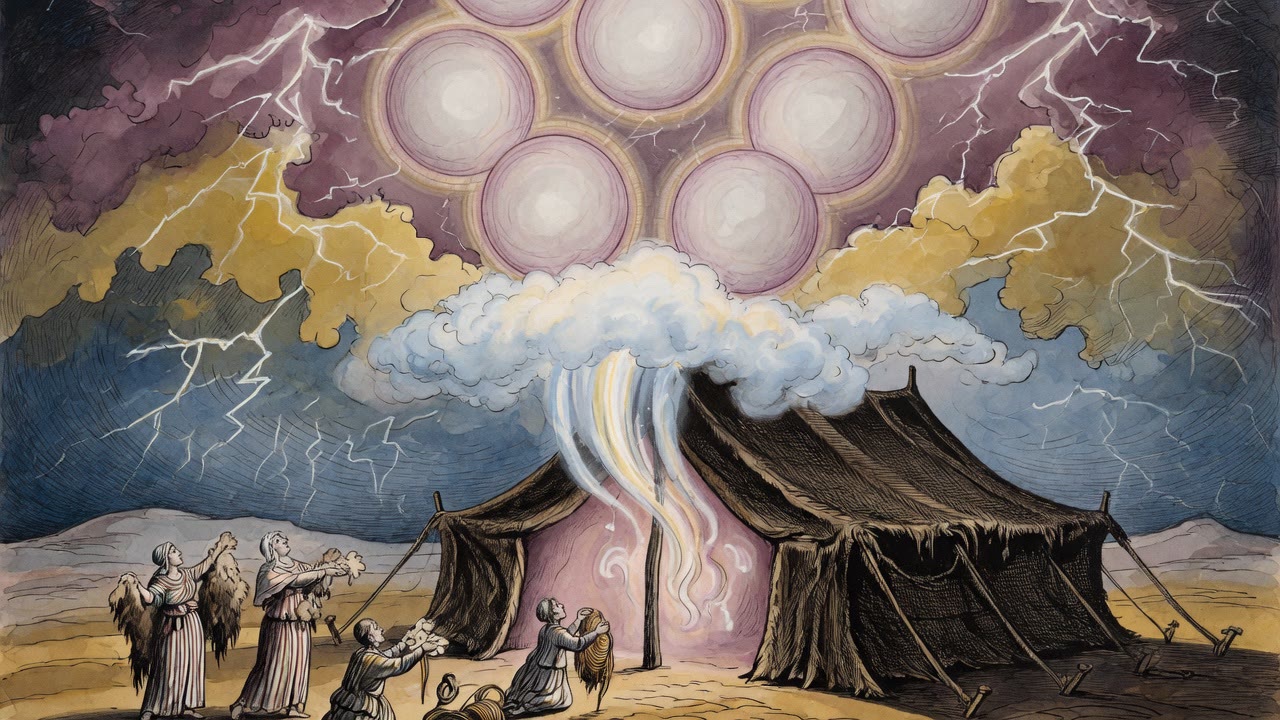
The rabbis who measured the curtain were not merely cataloguing it. They were honoring it, running their fingers along a wall of cloth that held the holy apart from the common. The parokhet was a handbreadth thick. Not thin fabric, not ceremonial silk, but a woven wall. Each of its seventy-two strands was itself made of twenty-four separate threads twisted together, which means the finest weaver in Israel was not trying to make something beautiful. He was trying to make something impenetrable.
The three hundred priests who carried it to the water for washing were not performing a ritual. They were doing the impossible physical work of keeping the barrier between the holy and the common clean enough to serve its function.
The Veil Built to Be Impossible
Yalkut Shimoni also preserves what might be the earliest recorded instance of what a later age would call hyperbole, though the rabbis themselves would have resisted that word. They understood that the Mishnah's figures for the parokhet, the thickness of a handbreadth, the weight requiring three hundred men, the seventy-two twisted strands, were not meant as engineering specifications. They were meant as praise. The veil that separated the holy from the holy of holies had to be impossible. Anything less would be insufficient for what it was guarding.
The tradition also records where the parokhet went when the Temple fell. It was among the items Titus carried to Rome in his triumph. The veil that had guarded the innermost room of the world ended up paraded through a foreign city as a trophy, which is exactly the kind of reversal the prophets had been warning about for two hundred years.
What Stood Beyond Jerusalem
Beyond the Temple and the Tabernacle, the rabbis reached back to where the Shechinah (the Divine Presence) rested before Jerusalem was built. The answer the rabbis offer is Shiloh, the sanctuary that preceded the Temple by generations, where the ark rested after the conquest of Canaan. Shiloh was the inheritance. Jerusalem was the dwelling. The two words, menuchah and nachala, both pointing to the same holy center, are not the same word, and the sages insisted the difference mattered. Shiloh was where God rested. Jerusalem was where God was meant to be.
The parokhet, the three hundred priests, the seventy-two strands: these are the details of a people who measured what they could not touch and counted what they could not fully comprehend, because measurement was the only reverence their hands knew how to make.
← All myths