God Gave Up Seven Heavens and Moved Into a Tent of Goat Hair
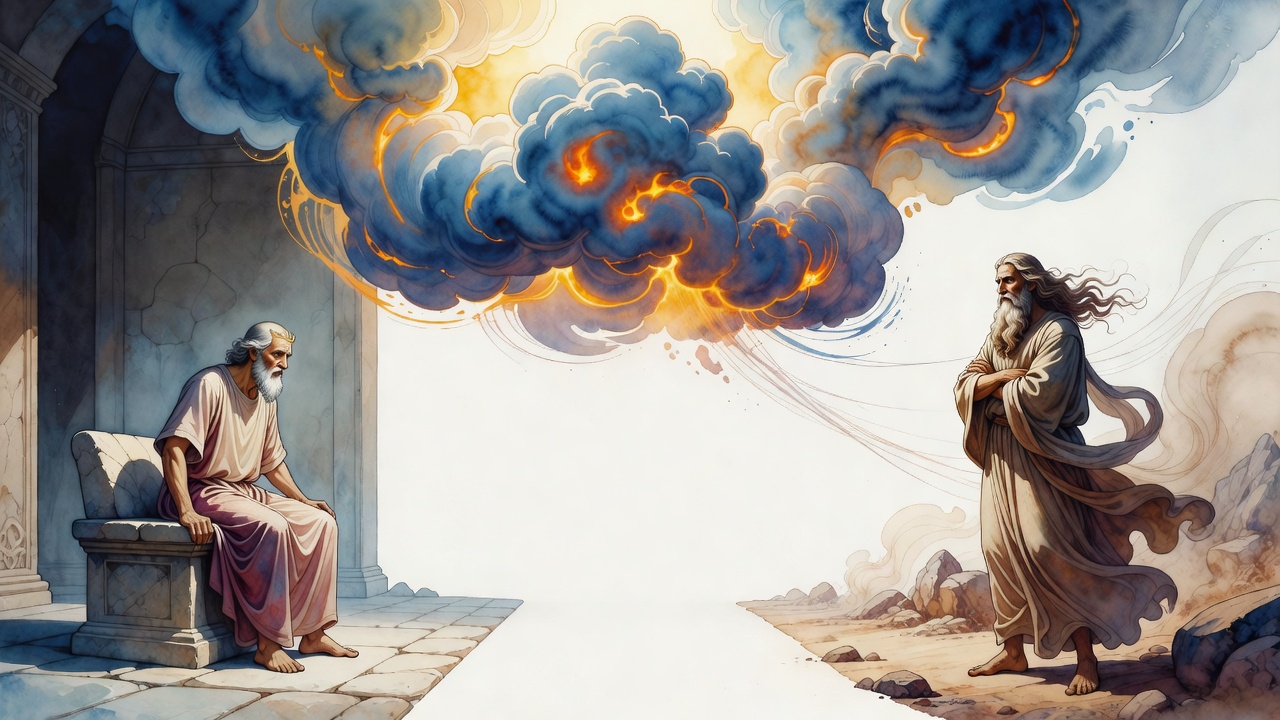
God's throne stood five hundred years above the seventh heaven. He left it all and asked freed slaves for scraps of wool so He could live among them.
Table of Contents
 Click for full size
The Distance He Gave Up
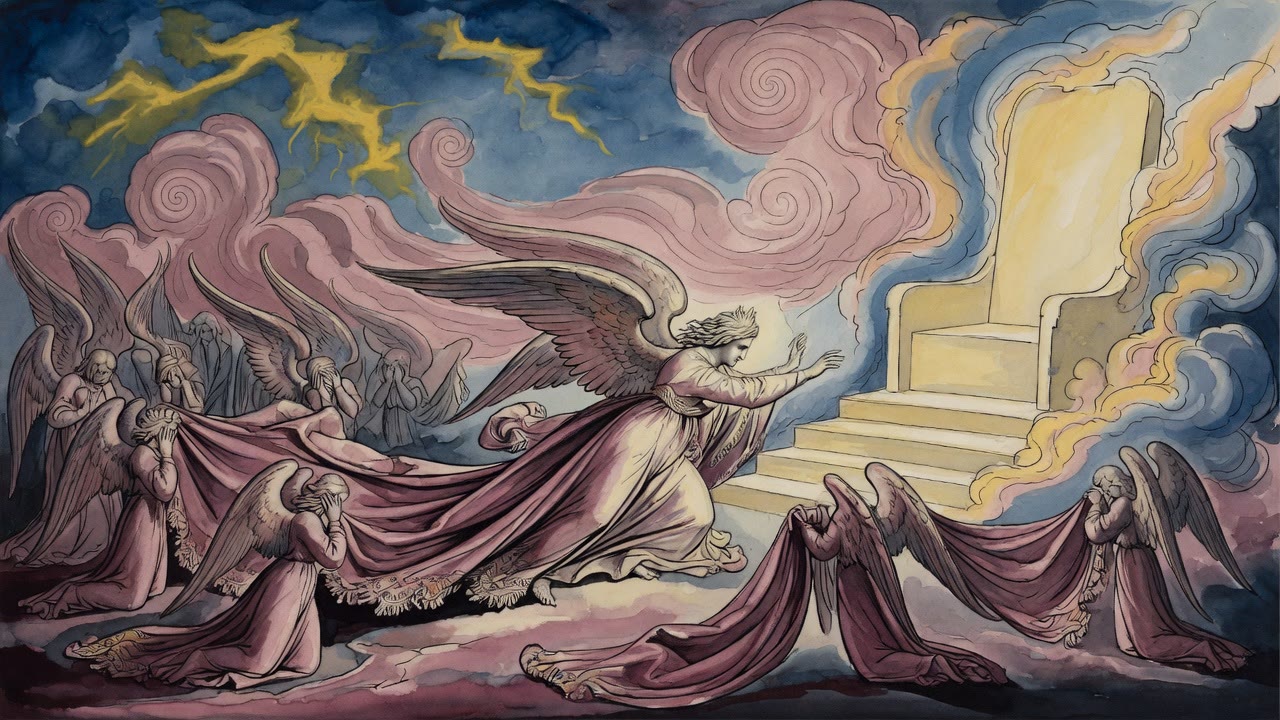
Five hundred years of travel separates the earth from the first heaven. Five hundred more from the first to the second, and the same again from each heaven to the next, all the way up through the seventh, and the Throne of Glory set higher still above the living creatures whose wings beat and whose voices thunder. That was where God lived, in a height so great that the distance between here and there took ten lifetimes simply to traverse.
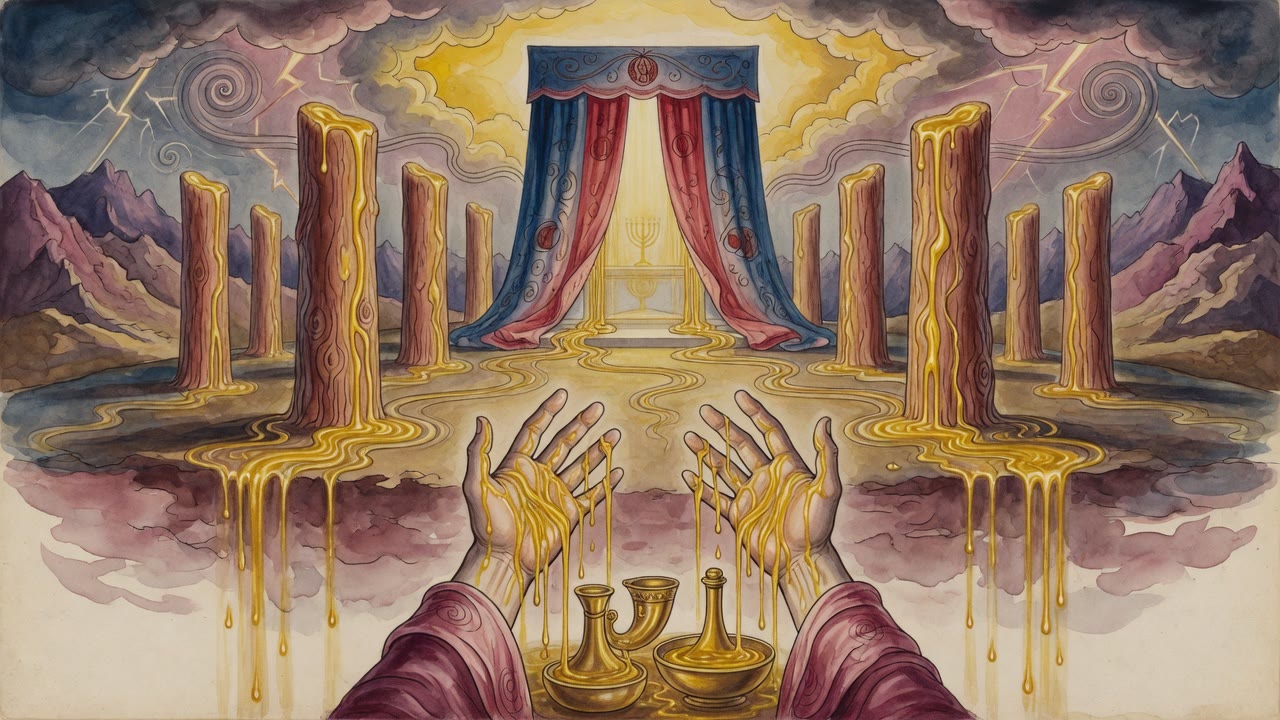
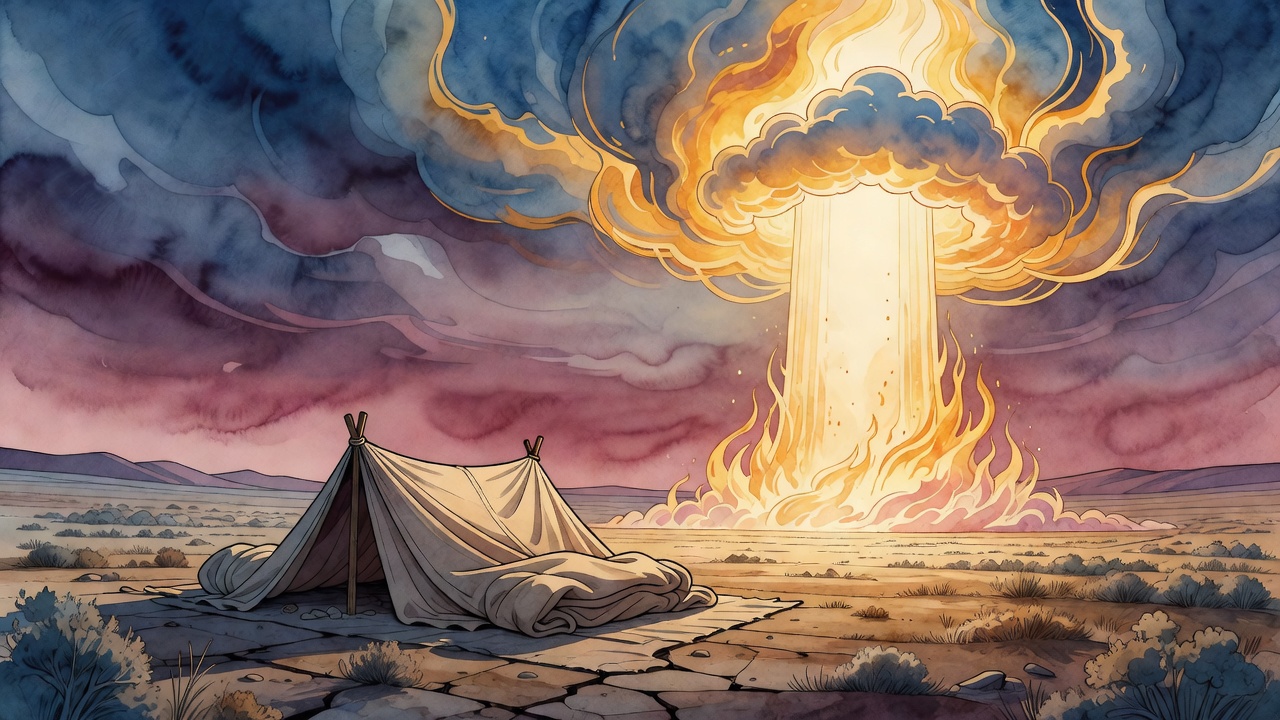
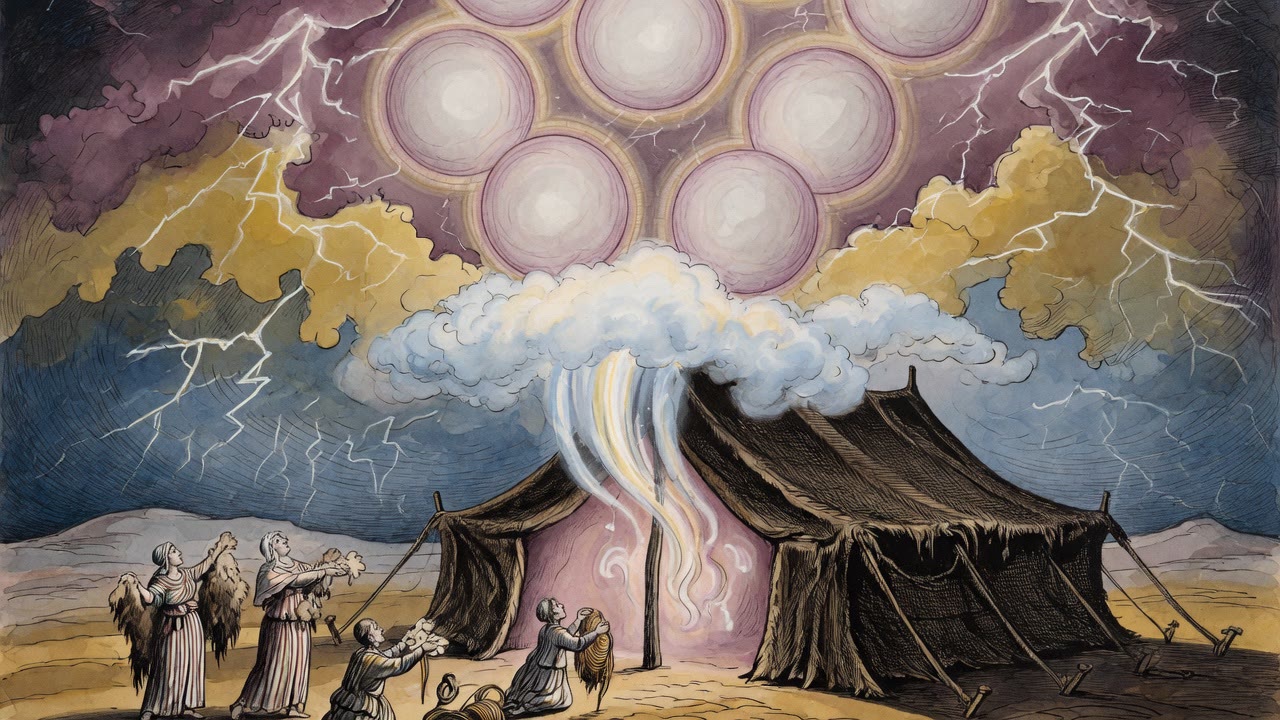
He left it. He left the whole shining architecture of it, the angelic chambers and the rivers of fire and the vaults of hail and the storerooms of wind and the creatures whose faces are four and whose bodies are like burning coals, all of it, and He asked a band of former slaves for some goat hair and some acacia wood and some gold they had walked out of Egypt carrying, so He could move into a tent they would stitch together with their own hands in a desert.
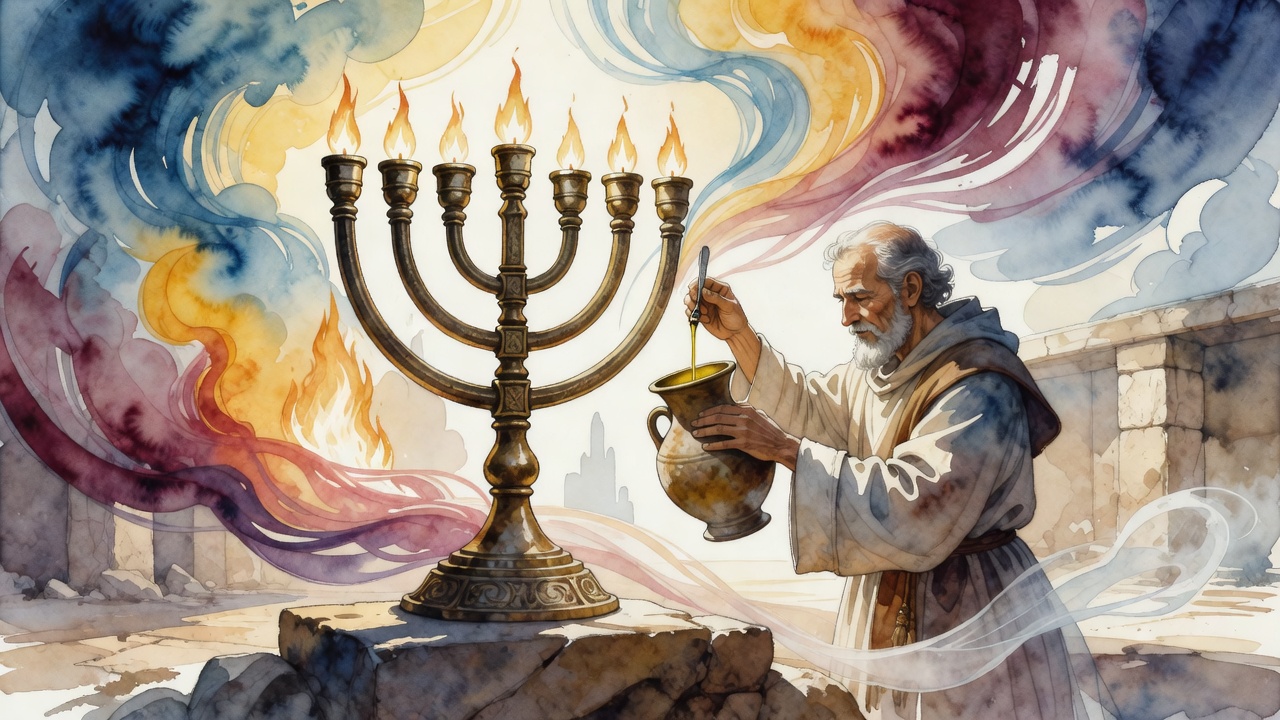
The sages of the Yalkut Shimoni, the great thirteenth-century anthology, kept returning to the strangeness of this. They could not get past it. The God who made everything desired something small enough to carry.
An Invitation Soft as the Word Speak
The request came with a particular gentleness that the rabbis noticed. When God told Moses to collect the materials for the Tabernacle, the command opened with the word dabber, speak. Not command. Not instruct. Speak. The prophet Isaiah had used the same word when he wrote of consoling a broken city: speak to the heart of Jerusalem. The sages heard the same tenderness in both. You speak to the heart. You do not issue orders to someone whose gift you are receiving.
And God already owned everything. He said this Himself, in the psalms and through the prophets: the sea belongs to Me for I made it. The heavens and the earth and everything filling them already belong to Me. Why would the maker of all things ask for a donation from people who owned nothing but what they had carried out of a slave house? Not because He needed it. Because He was lonely for them and wanted them to build Him something. The tabernacle was not tribute. It was an invitation accepted.
The Offering That Had Three Forms
The materials came in through three annual collections, the half-shekel offering that every Israelite brought, which funded the daily sacrifices and the shared maintenance of the sanctuary. Three times a year the priests would collect from the chamber of offerings, and three times a year the household of God was provisioned from the gifts of the people it housed. The giving was built into the calendar, woven into the fabric of the year so that no single season would bear all the weight of upkeep.
The sages who traced the details of this found in the triple collection a pattern of reciprocity. God gave to Israel three great things, Torah and Temple and this world. Israel gave back in three annual installments. The accounting was not one-sided. Nothing in the relationship between God and Israel was ever one-sided, though one side held the heavens and the other held goat hair.
How the Curtains and the Boards Were Joined
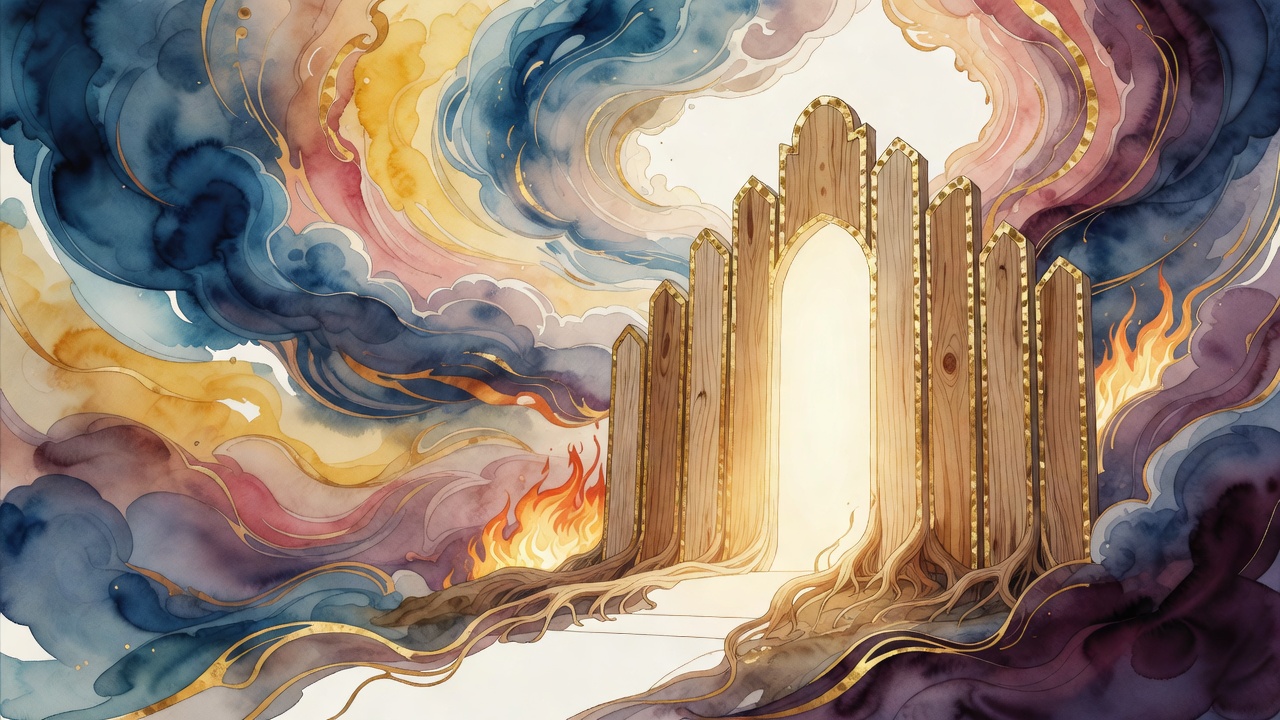
When the tent went up, every piece had its proper partner and its proper place. The curtains were joined in sets of five, and the two sets were fastened to each other with loops and clasps of gold and bronze so the whole covering hung as one. The boards stood in their silver sockets, each socket a pair, two foundations under every board, because the law required two witnesses for every matter of weight and the sanctuary reflected that principle even in its architecture.
The joining of the curtains, the clasping together of two sets that had been separate, is where the rabbis saw the image of God and Israel brought together under one roof. The loops reached toward each other from opposite sides of the tent, and when the clasps went through, the two halves became one covering over one dwelling place. The image of reunion was built into the tent's own construction, visible every time it was raised.
← All myths