6 myths
Each story names the sources it was written from.
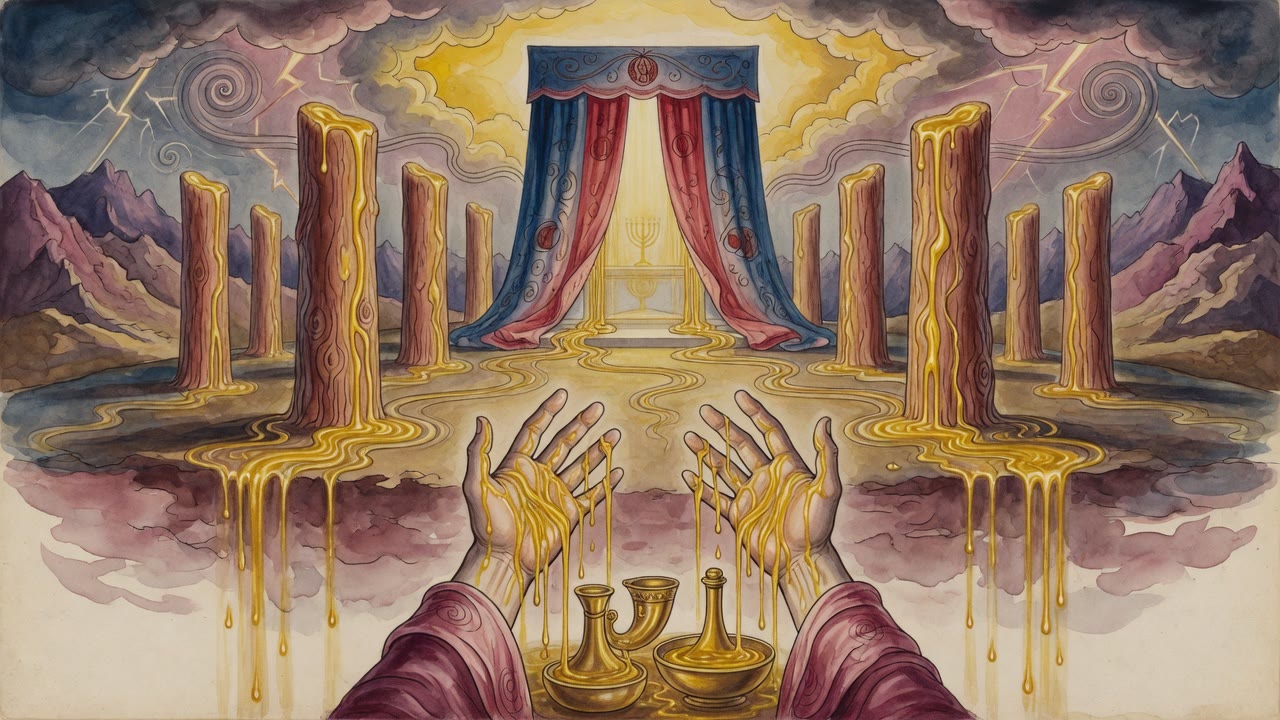
Moses made twelve logs of sacred oil in the wilderness. It anointed priests, vessels, and kings for centuries and never diminished by a drop.
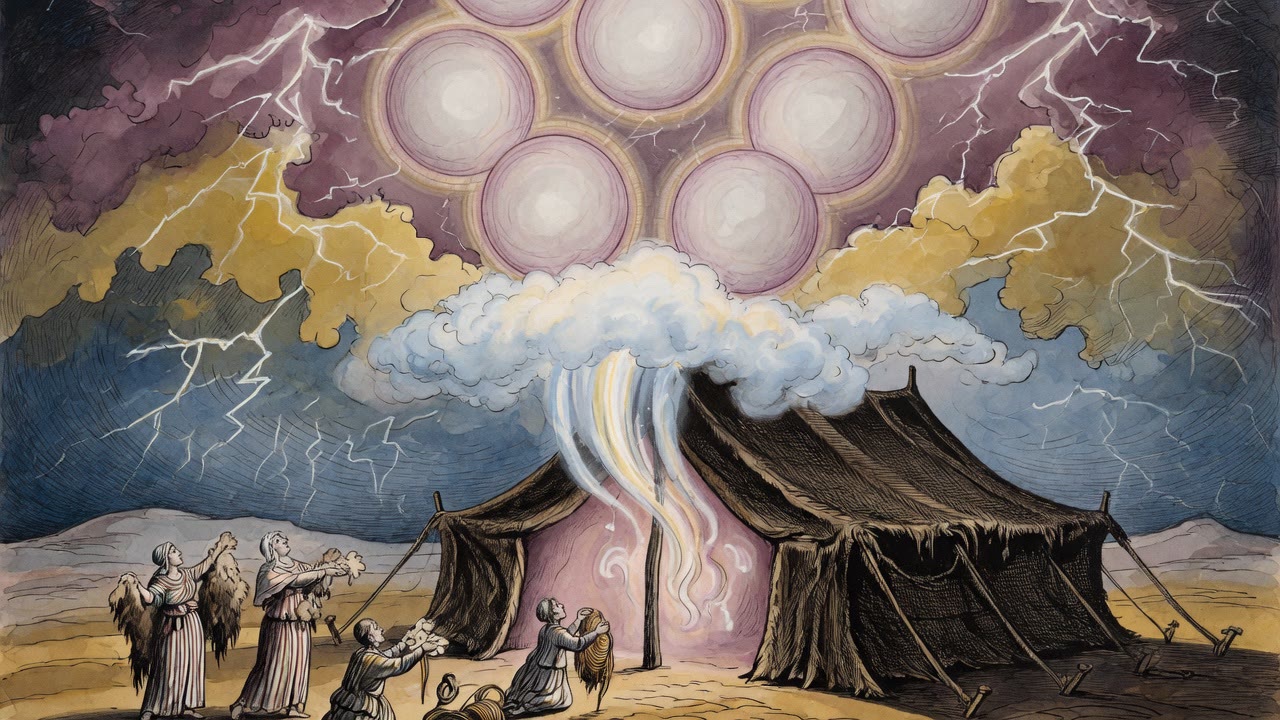
God's throne stood five hundred years above the seventh heaven. He left it all and asked freed slaves for scraps of wool so He could live among them.
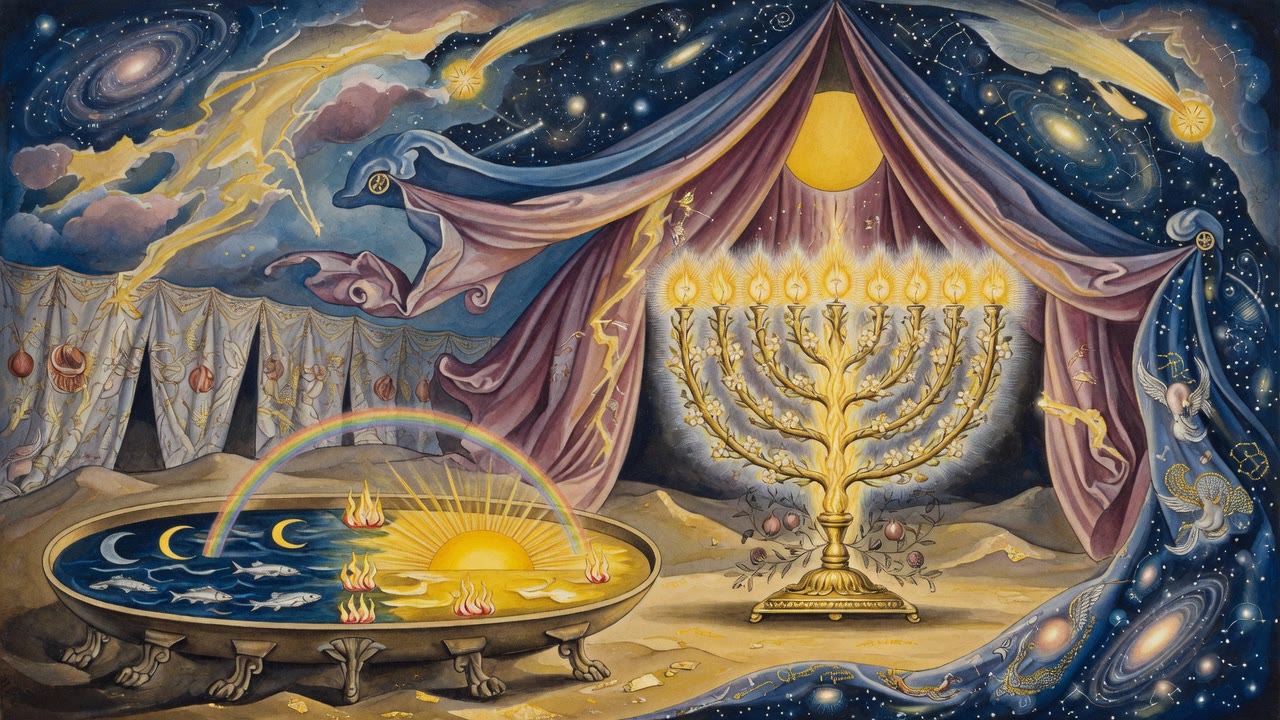
He lifted the tent flap and looked up. The curtains were not cloth. They were the sky pulled taut, the same sky stretched on the first day.
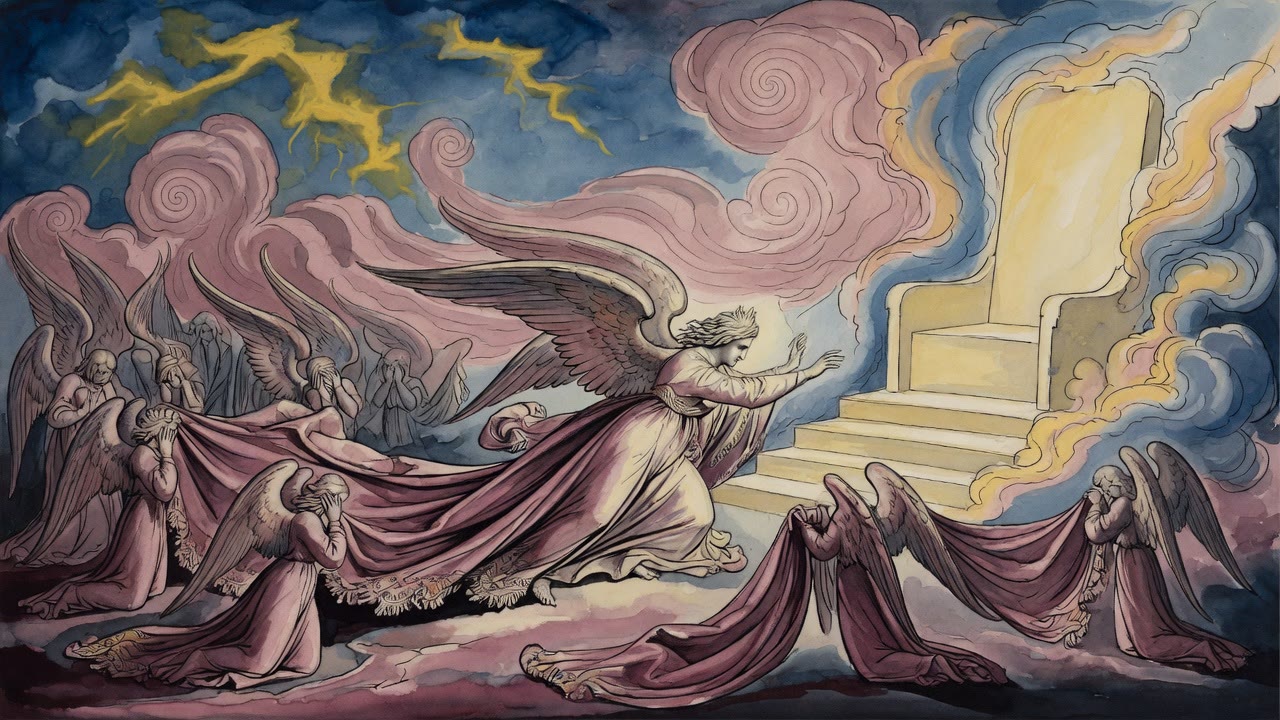
Three hundred priests carried one curtain to be washed. A handbreadth thick, woven on seventy-two strands, the parokhet guarded the holiest room.
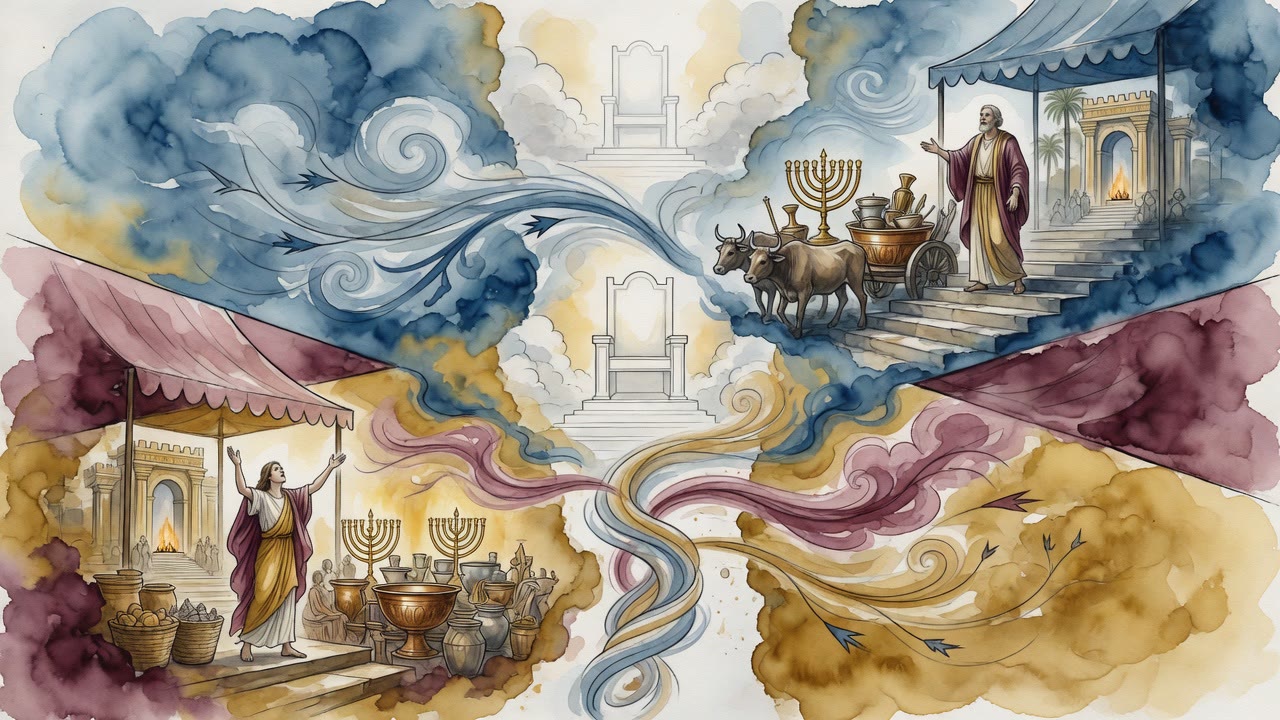
In the upper market Jeremiah says the Temple vessels go to Bavel. In the lower market Chananiah promises their return. Time must choose the true mouth.
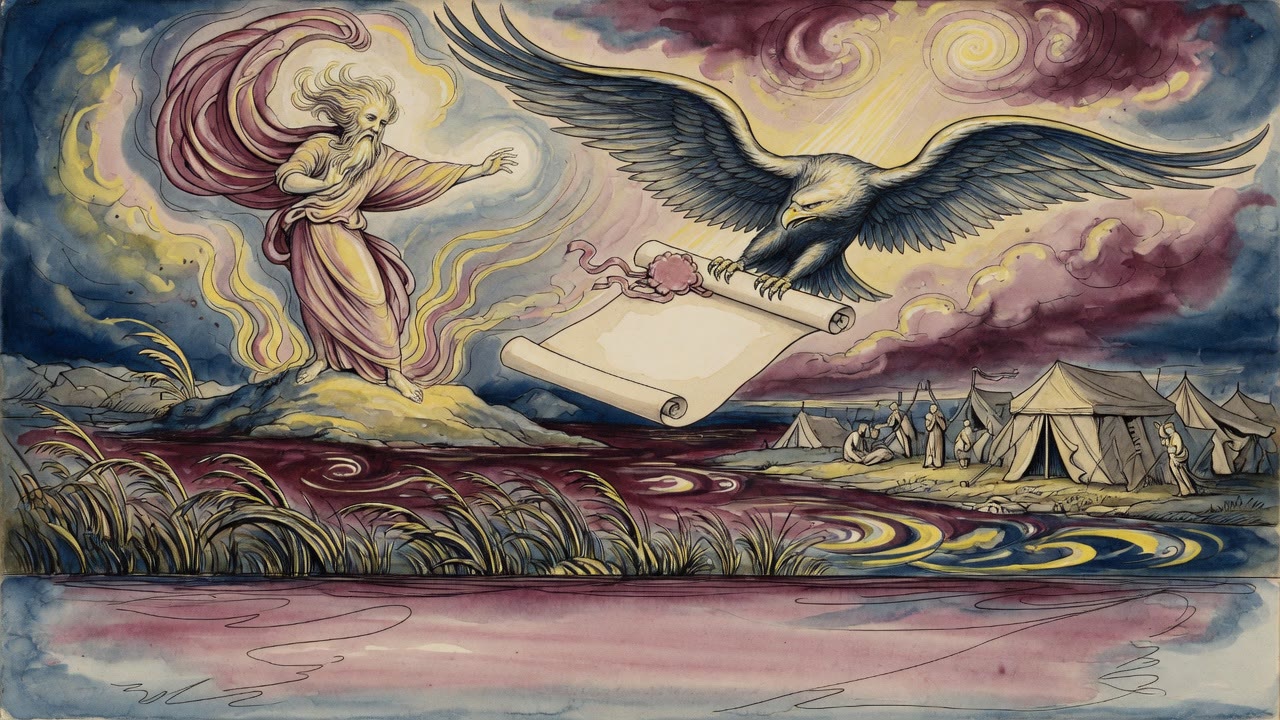
God told Baruch the city was already finished. He begged to die first, watched angels bury the vessels, then wrote to the tribes across the river.
