Rabbi Nehemiah Walked Into the Tabernacle and Saw the Whole Universe
He lifted the tent flap and looked up. The curtains were not cloth. They were the sky pulled taut, the same sky stretched on the first day.
Table of Contents
 Click for full size
He Lifted the Flap and the Sky Was Cloth
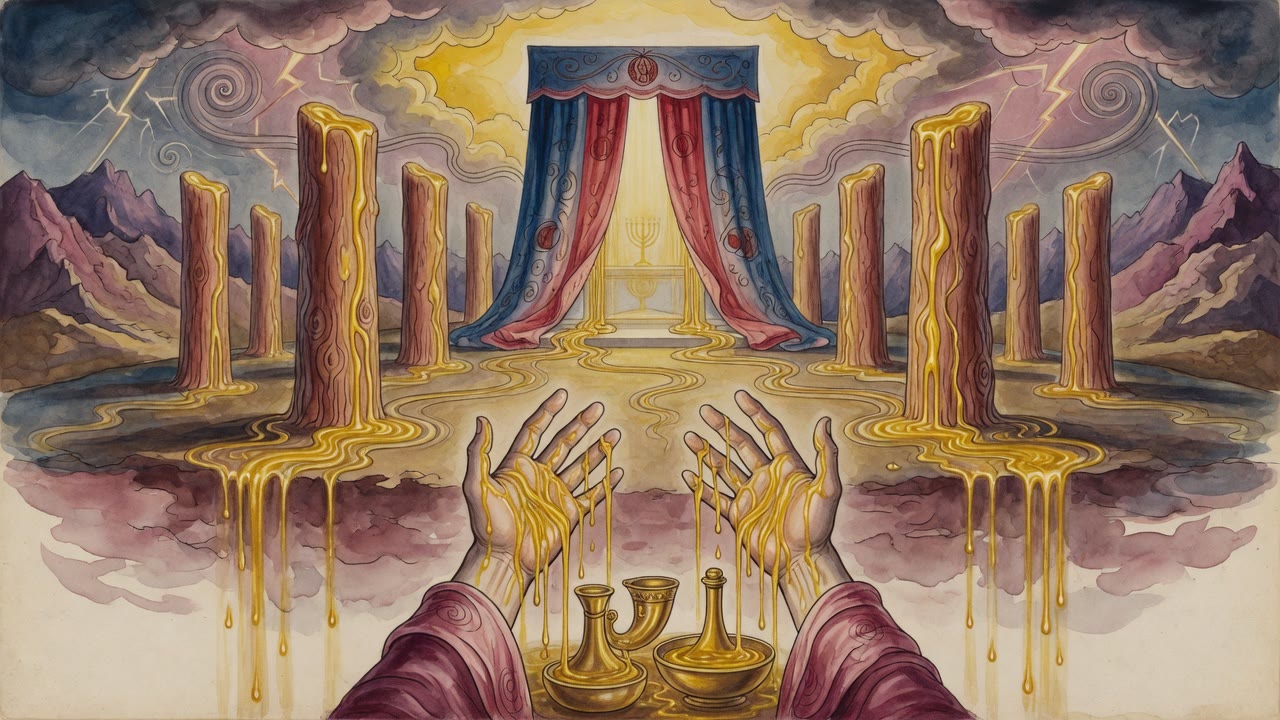
Rabbi Nehemiah lifted the tent flap and stepped inside. Other men who walked into the Tabernacle saw a portable shrine. Blue and purple curtains. A hammered gold lampstand. Incense sweet enough to follow a man out into the sand. A structure built to be taken down, carried forward, and set up again.
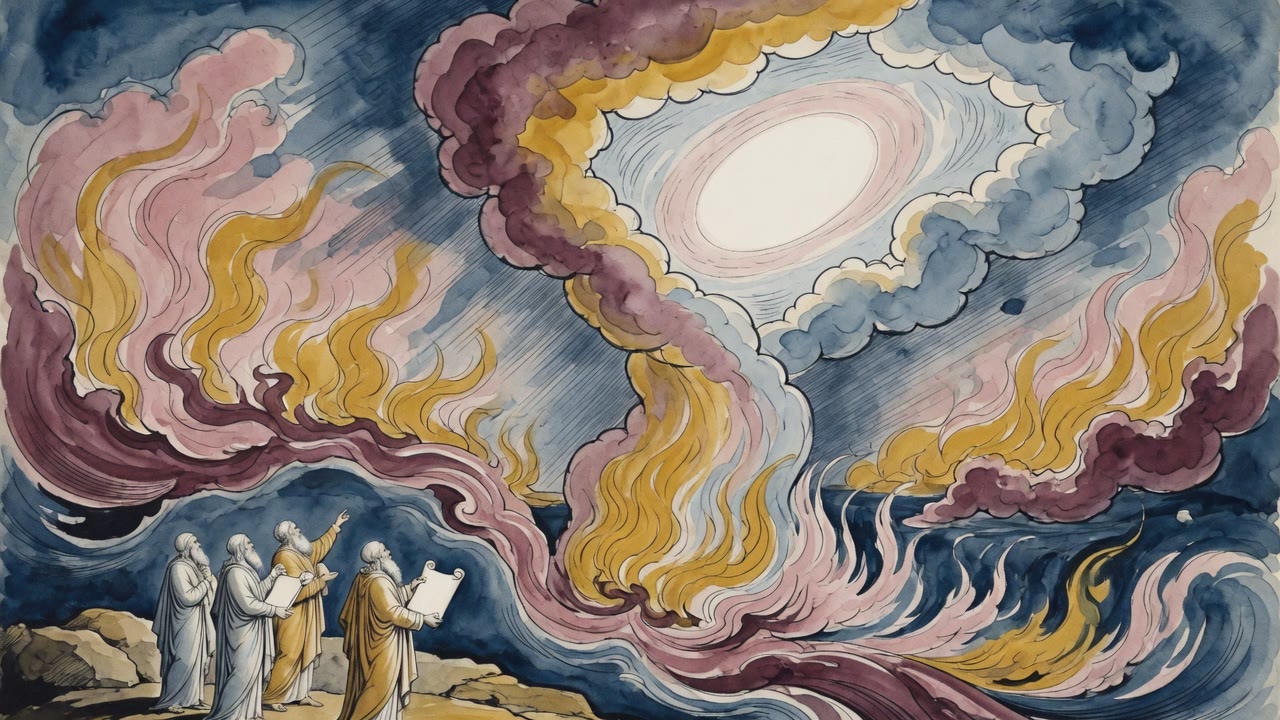
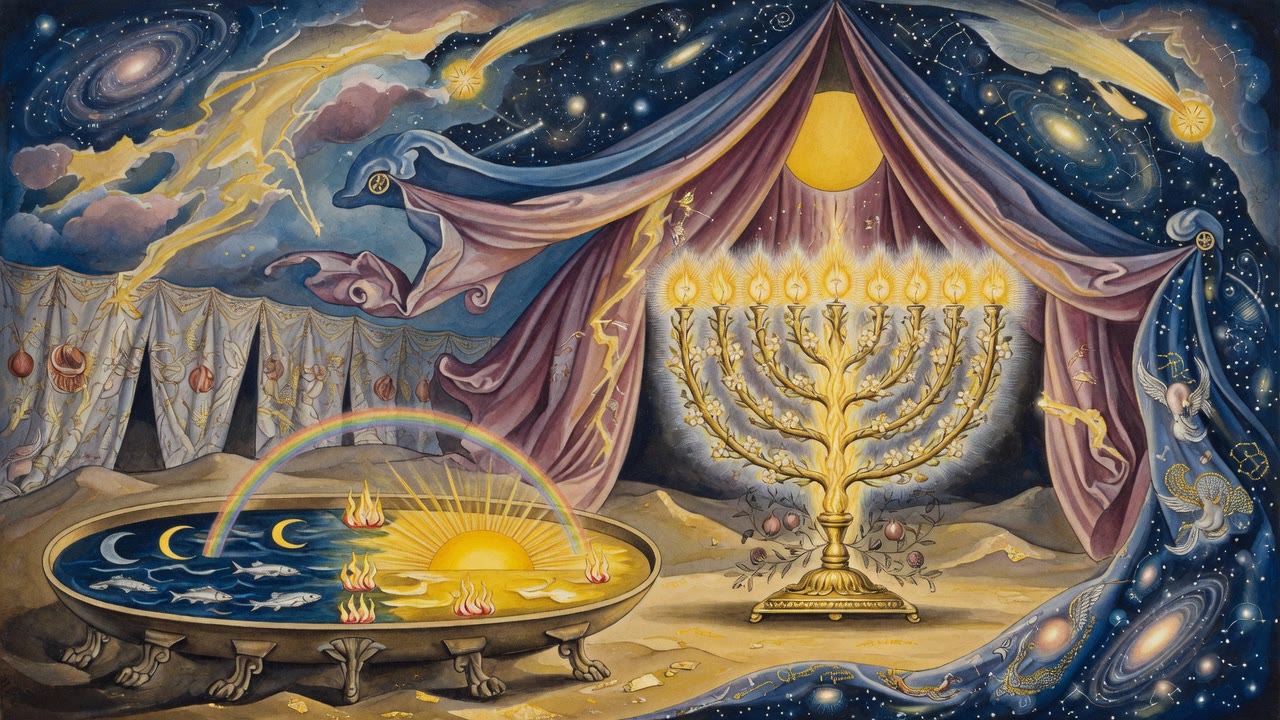
He looked up. The curtains hung from poles and covered the space the way a tent covers the people under it. He did not see cloth. He saw the heavens stretched the way Psalms said God stretched them, like a curtain (Psalms 104:2). The verb, the image, the function were the same. A curtain pulled taut across a world. Whoever wove this cloth and hung it from the poles had repeated the gesture of the first day.
He stood under it and did not move for a while. The desert was still outside. Inside, the first day had been hung on poles.
He Washed His Hands in the Divided Waters
Below the curtains stood the laver, the great bronze basin where the priests washed their hands and feet before they went any farther. Rabbi Nehemiah put his hands in.
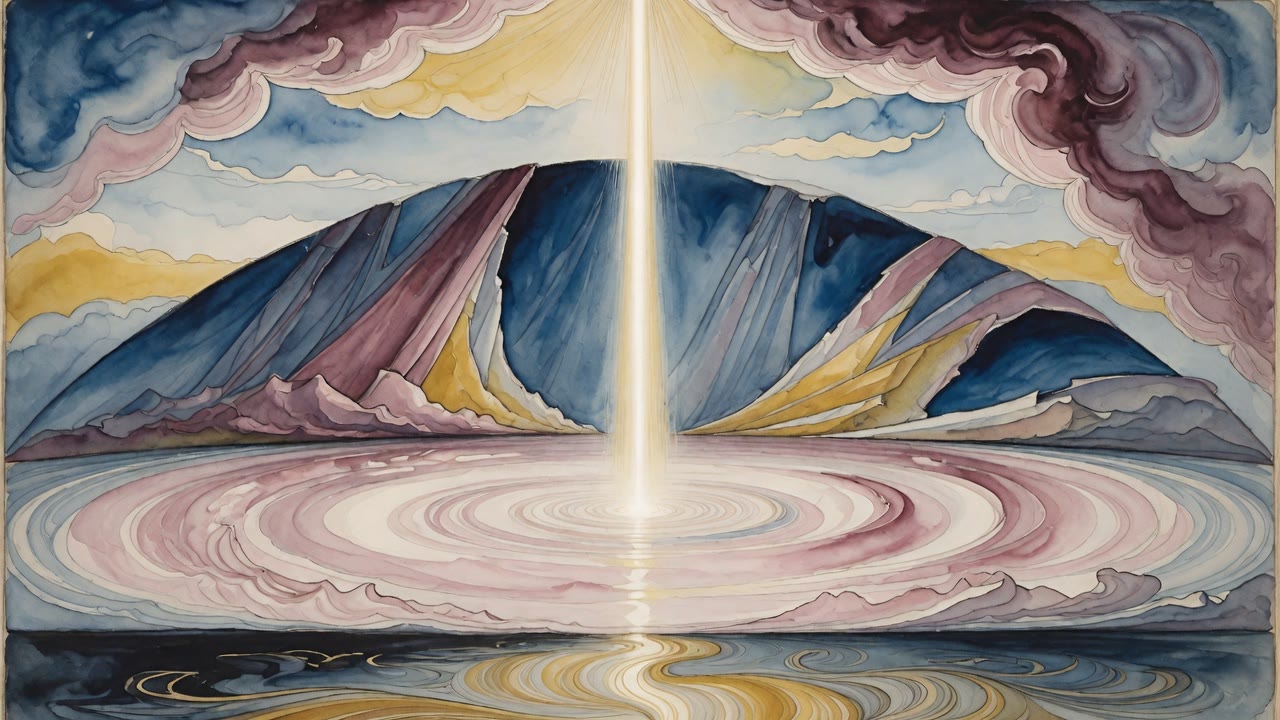
The water was cold. He saw in it the waters divided on the second day, the upper waters separated from the lower, the firmament set between them (Genesis 1:6-7). To wash here was to touch the waters of creation at the moment of their first split, to stand at the boundary between what was above and what was below.
He drew his hands out. Drops ran back into the basin. He was still in a tent in the wilderness, and he was also standing where the waters had been told to stay on their own side.
The Altar Held Every Creature That Breathes
He walked out to the altar in the court. Bulls, rams, birds, goats. Israelites brought them. The fire took them. Other men saw a place where animals died. Rabbi Nehemiah saw every living creature that breathes, gathered into one act of presentation before God. The altar was not only a place of death. It was the place where every creature's life was named as belonging to the one who had made it.
Smoke went up. The court smelled of fat and blood and heat. The third day's work, the living earth, was being walked up a ramp and given back.
Seven Flames Kept the Fourth Day Burning
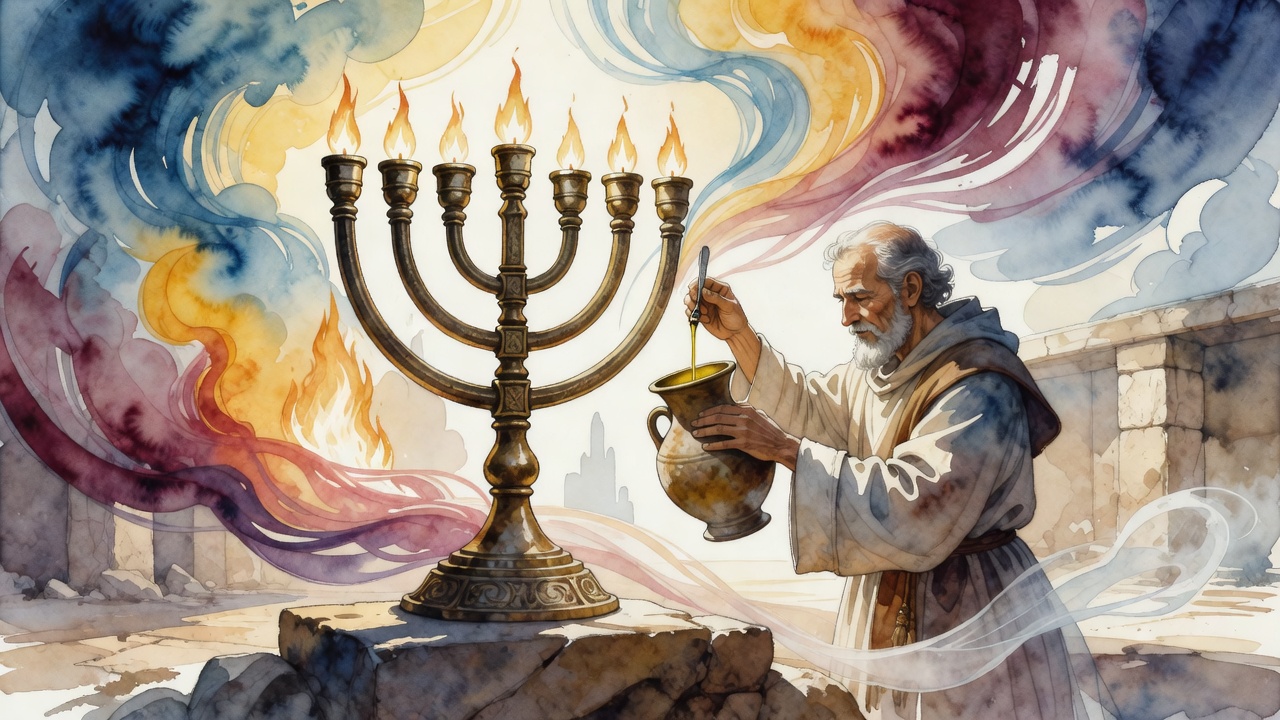
He went back inside. The menorah (the lampstand) stood in the holy space and burned without a seam, seven flames from a single hammered body of gold. Rabbi Nehemiah counted them. Sun. Moon. The five visible planets. The lights set in the firmament on the fourth day to rule the day and the night and to be for signs and for seasons (Genesis 1:14-16).
A priest trimmed the wicks at dawn. Each time he did it he was tending the lights of creation. The gold held the heat. The oil lasted from evening until morning, the same care the boards had been given, the same refusal to let the night go dark in the middle.
Beside it the altar of incense burned resins and spices in a continuous cloud that rose toward the roof. Rabbi Nehemiah breathed it. Air and wind. The breath of the world moving between earth and heaven. The fifth day's air, still traveling.
The Presence Sat Between Two Wings
He came last to the Ark. Over it, between the outstretched wings of the two golden cherubim, God's own presence rested. The same presence that had hovered over the face of the waters before anything was made (Genesis 1:2).
Rabbi Nehemiah did not go in. He stood at the edge of the holy of holies and knew what the tent had been saying since the first pole went up. God had already built a house. The universe was that house. The desert tent was Israel's way of saying we understand what You built, and we have done our best to build it again in the only materials we had. Cloth. Bronze. Gold. Acacia. A basin of water. Seven flames.
He stepped back out into the sand. The flap fell. The sky over the camp was the same sky he had just been standing under, only without poles. He washed nothing off his hands. The divided waters were still on them.
← All myths