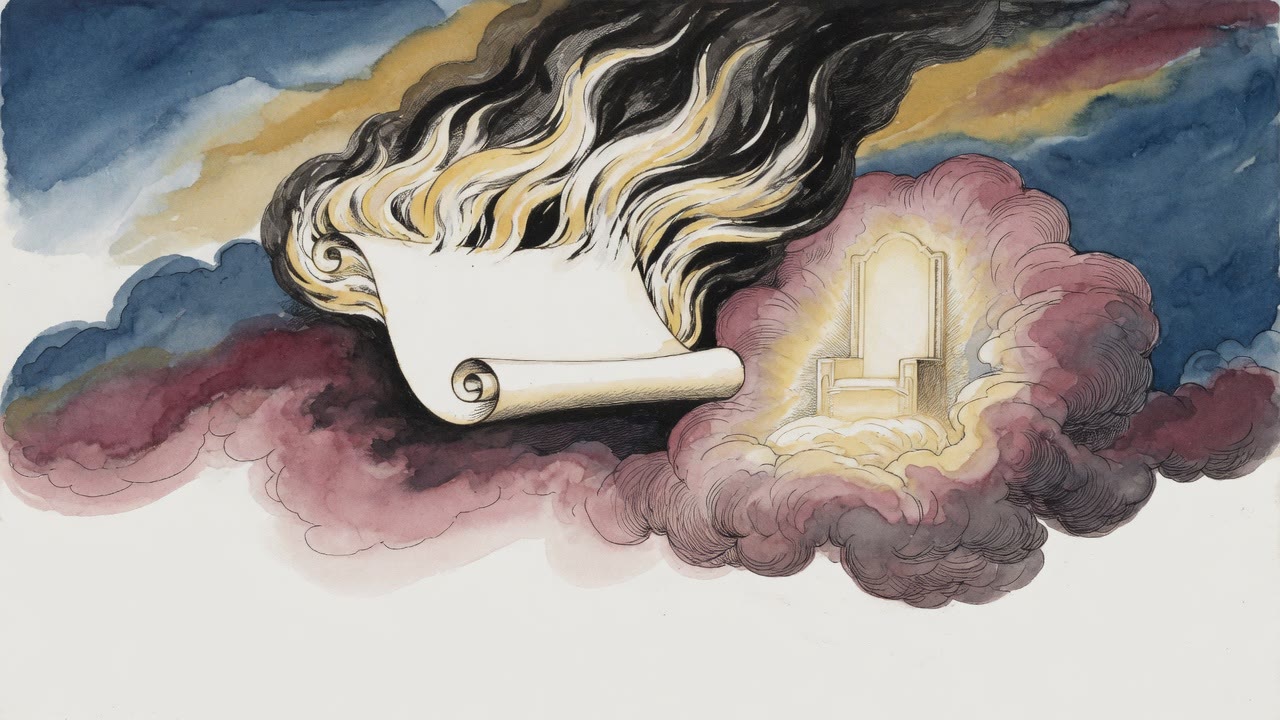
Two Sages Fought Over Where Rain Comes From and Both Were Right
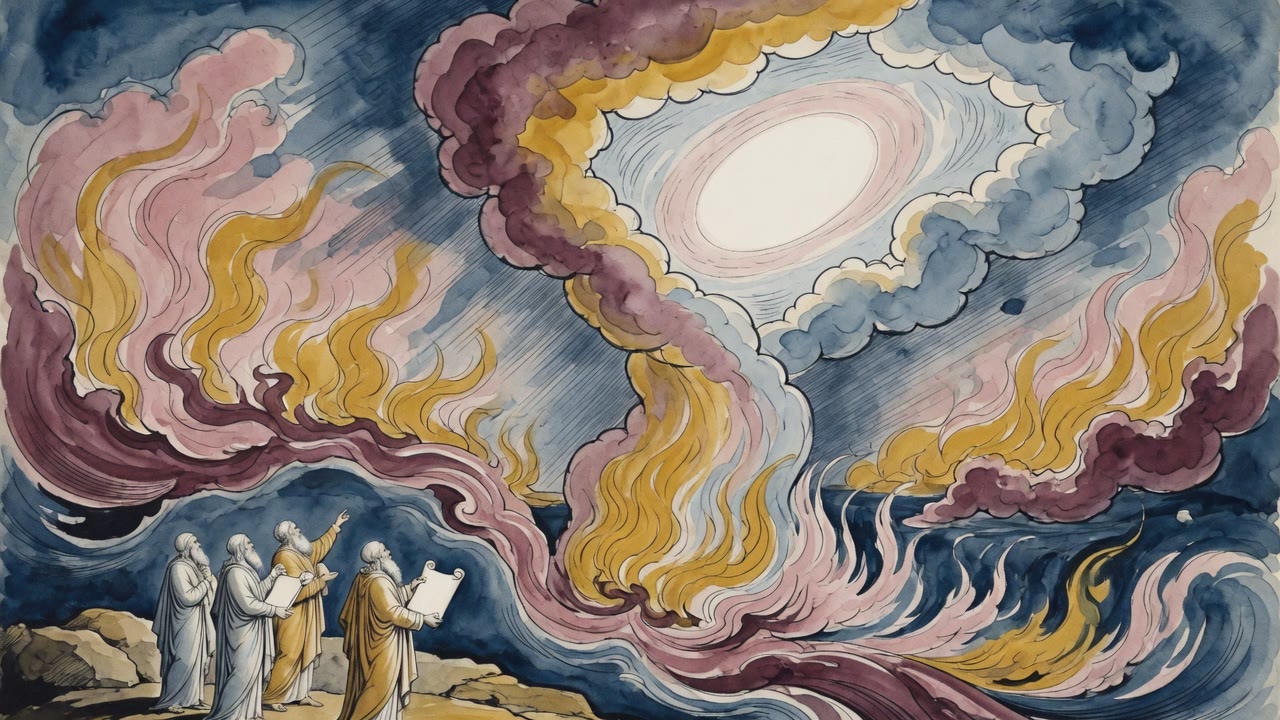
Rabbi Eliezer said rain rises from the sea. Rabbi Joshua said it drops from above the sky. Between them they made the heavens a millstone grinding the ocean.
Table of Contents
 Click for full size
A Question About Rain That Was Really About Creation
Before the rain, before the sea, before the first cloud lifted from the ground, the Yalkut Shimoni opens its account of creation with a count. In ten utterances the world was made. God spoke ten times and ten times something that had not existed answered. He could have done it in one. The sages asked why He chose ten, and their answer had nothing to do with aesthetics. A world built on ten utterances is a world that carries ten times the weight of obligation. The wicked who tear it apart answer for ten acts of destruction. The righteous who hold it together are rewarded ten times over. Creation was stretched out across ten moments so that what people do inside it would matter proportionally more.
Once the world stood, the sages turned to the question of how it maintained itself, and they chose rain as the test case. Not because rain was poetic but because rain was a genuine physical puzzle. The clouds were not big enough. Everyone could see that the clouds that gathered and dropped their rain did not contain enough water to account for the rain that fell. Something else was happening. Where did the rain actually come from?
Two Sages and Two Answers
Rabbi Eliezer said rain rises from the sea. The clouds draw the water up from the ocean, carry it inland, and release it over the fields. The proof was in the texture of rainwater. It should be salty. It comes from the sea, which is salt. But rainwater is not salty. So how does the sea's water lose its salt on the way up?
"The clouds filter it," Rabbi Eliezer said. The water passes through the cloud and leaves its salt behind and arrives at the ground clean and sweet. The cloud was a sieve between the sea and the earth, and the proof of the filtering was the salt left in the cloud itself, which was why clouds sometimes appeared dark or heavy or strange at the edges, because they were carrying what the rain had left behind.
Rabbi Joshua disagreed. The rain does not rise from the sea. It falls from the upper waters, the body of water above the firmament that had been separated from the lower waters on the second day of creation. Those upper waters had been sitting on the other side of the sky since the beginning, and when the time came for rain, they came down through the firmament the way water comes through a cloth stretched over a bowl, filtered and sweetened by the passage.
The Sky as Millstone
A third sage, whose name the tradition did not always attach to his teaching, offered the synthesis that the Yalkut Shimoni preserved alongside the dispute. The Hebrew word for heaven, shamayim, was itself a compound: esh, fire, and mayim, water. The sky was not one thing but two, fire and water mixed and held in tension, and what the fire did to the water was what a millstone does to grain. It ground the sea, drew it up, broke it into mist, and the mist rose and became cloud and the cloud fell as rain over the fields.
The sky was a machine for transforming salt water into fresh. The ocean was the input, the firmament was the grinding stone, the clouds were the flour, and the rain was the bread. The whole weather system of the world was a mill running continuously since the second day of creation, and the word shamayim had been carrying the description of the machine inside it all along.
The Five Names of the Cloud
The sages went further into the vocabulary and found five names for the cloud in the Hebrew Bible, each one naming a different phase or function. There was the cloud that gathered, the cloud that poured, the cloud that held back, the cloud that released in drops, and the cloud that floated. Five stages, five names, a complete taxonomy of the machine's parts laid out in the language itself without anyone having organized it that way on purpose. The Torah was describing the weather system the way an engineer describes a factory, part by part, without ever calling it a factory.
← All myths