The Heavens Were Liquid Until a Word Fell In and Made Them Firm
On the second day of creation the sky trembled like fresh milk in a bowl, waiting. One divine word dropped in and the whole expanse seized and stood.
Table of Contents
 Click for full size
A Kitchen Image for the Second Day
On the first day the heavens existed but they were not finished. They spread across the top of the world as water spreads across a flat surface, thin and trembling, a body without edges, shivering at the slightest motion. The Yalkut Shimoni, the great thirteenth-century anthology that gathered centuries of rabbinic teaching into one running commentary on the Torah, preserves the image that Rav, the third-century Babylonian master, used to describe this moment: pour milk into a bowl and watch what it does before the rennet touches it. It quivers. It cannot hold a shape. It will not stand. It is a liquid waiting to become something else.
That was the sky on the first day. Wet, unsettled, trembling. A dome not yet done.
The Word That Dropped In
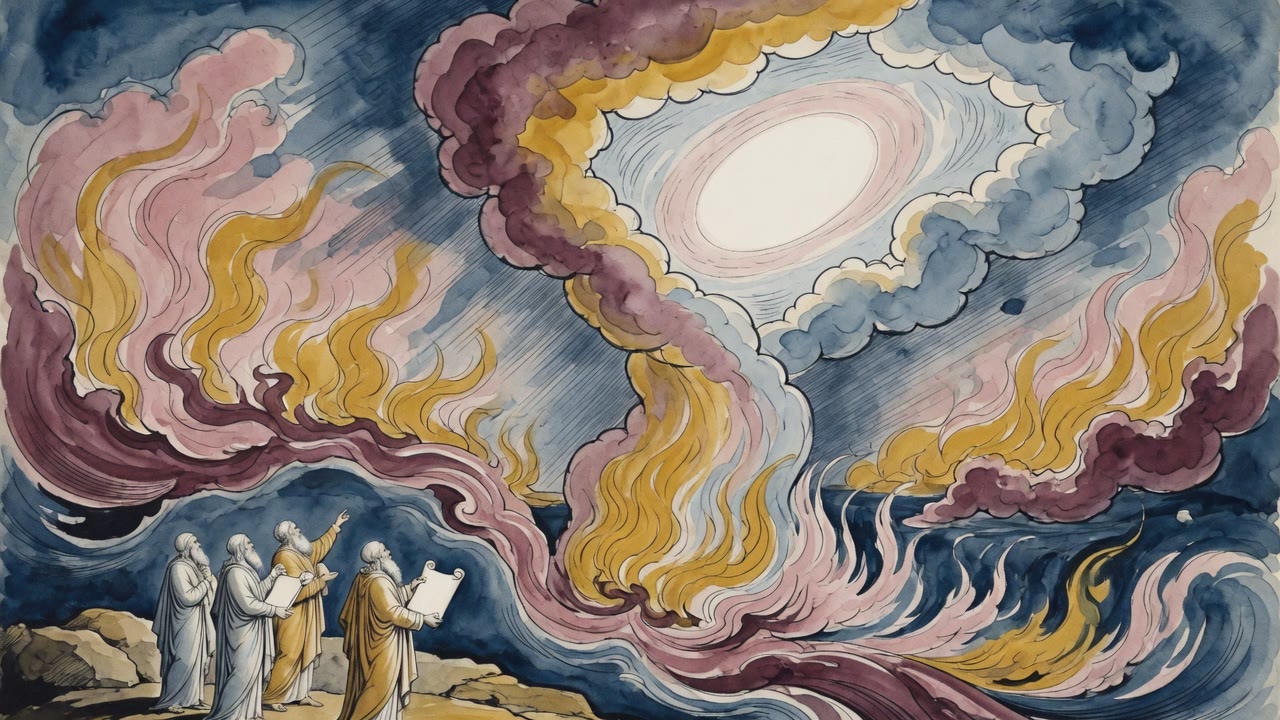
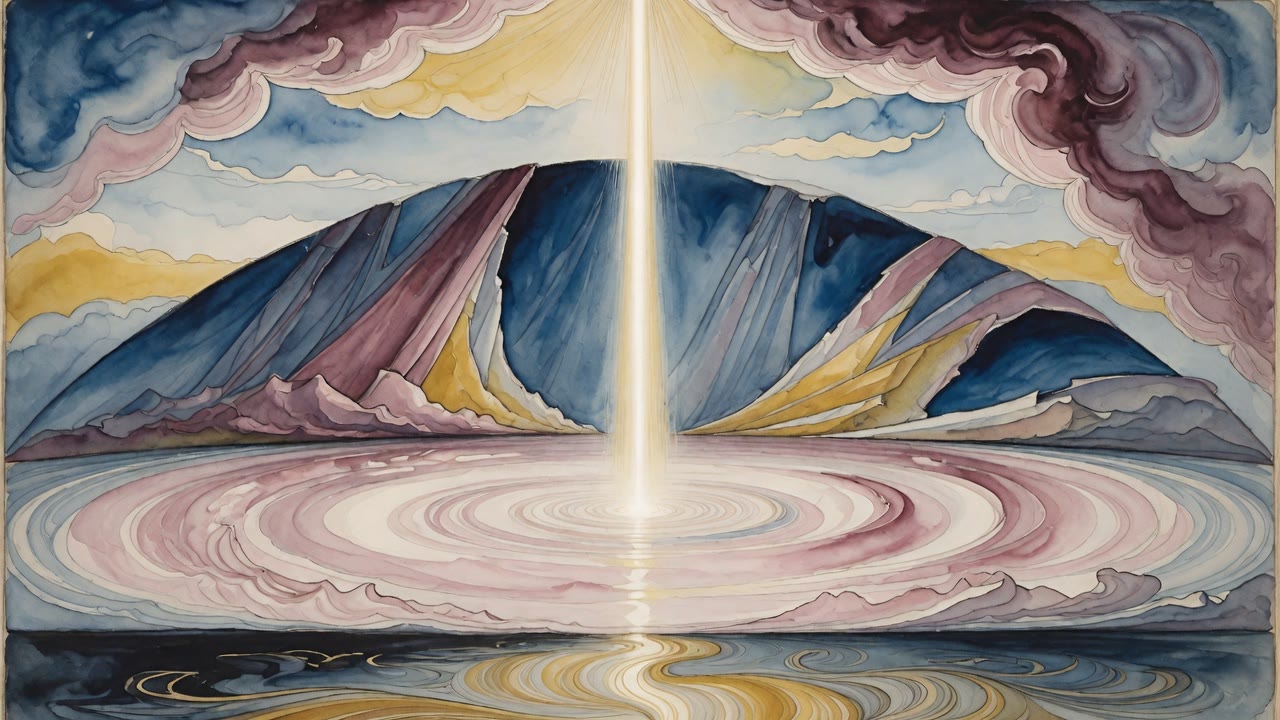
On the second day, the word came. God said, let there be a firmament, and the Hebrew word for firmament, rakia, carries the idea of something beaten flat and stretched taut, like metal hammered thin into a sheet. The sky that had been trembling liquid seized. The trembling stopped. The same transformation that happens in a bowl of milk when the rennet falls, the whole surface going still and solid in the same instant, happened across the width of the entire sky. It set.
The verse from Job said what everyone who watched it would have felt: the pillars of heaven quake. The sky shook the way milk shudders at the moment it begins to curdle, right at the boundary between liquid and solid, before it has decided which one it will be. Then it decided, and it stood, and it has been standing ever since.
Two Waters and What Holds Them Apart
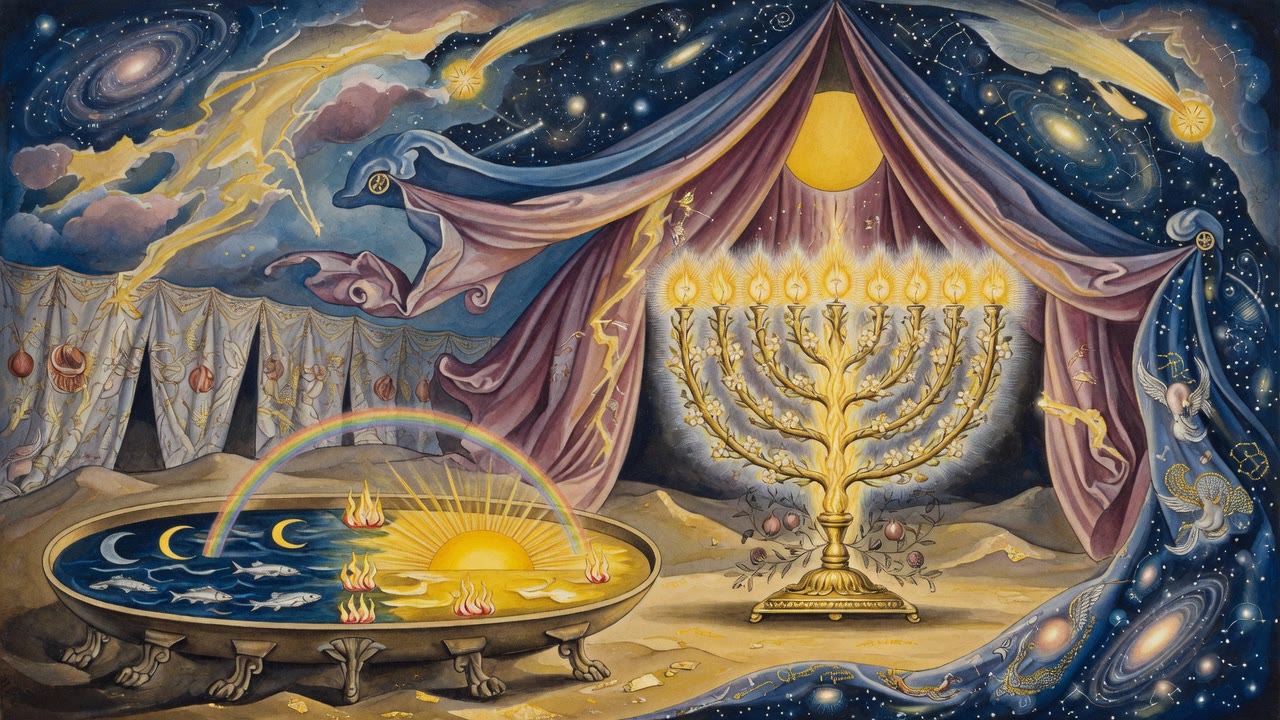
The curdling of the sky solved one problem and created another. Once the firmament stood firm between the waters above and the waters below, there were two bodies of water separated by a solid expanse with no visible means of support. The waters below stayed where they were, held in their basins by the land that would be separated from them on the third day. But the waters above, the ones that now sat on the other side of the solid sky, had no basin under them, no land, nothing to rest against.
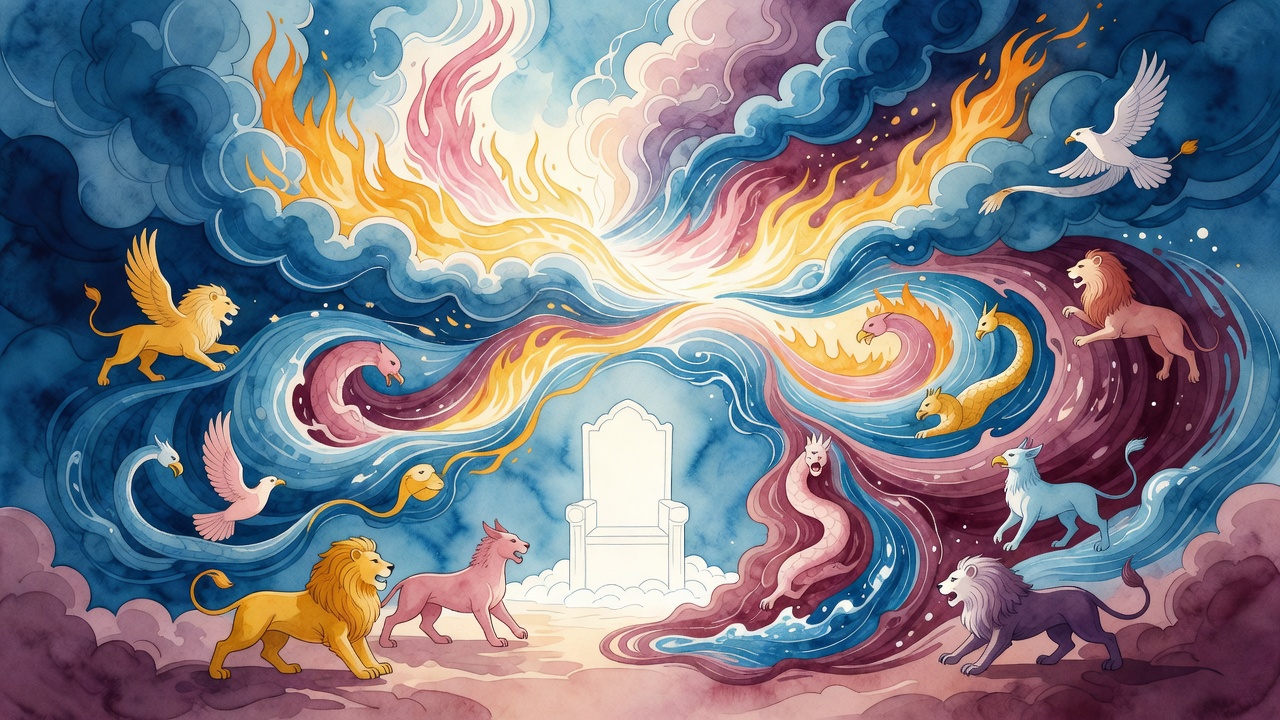
The rabbis asked what held them there, and their answer was exact: the divine word itself. The same word that had solidified the sky continued to act as the support for the upper waters. Not the sky, which was below the upper waters, but the word that made the sky was the ongoing foundation for everything above it. The upper waters sat on nothing physical. They sat on speech.
This was the tradition the Yalkut Shimoni carried from older sources, the idea that the act of creation did not end when God stopped speaking on the sixth day but continued in the ongoing pressure of the divine utterance holding the upper waters aloft against the pull of everything below.
The World Built on Ten Sayings
The sages counted the times God spoke in the creation narrative and arrived at ten. Ten utterances, ten distinct moments when a word opened and reality answered. God could have done it in one, they insisted. He could have said everything in a single breath and the world would have stood complete. He chose to stretch it to ten on purpose.
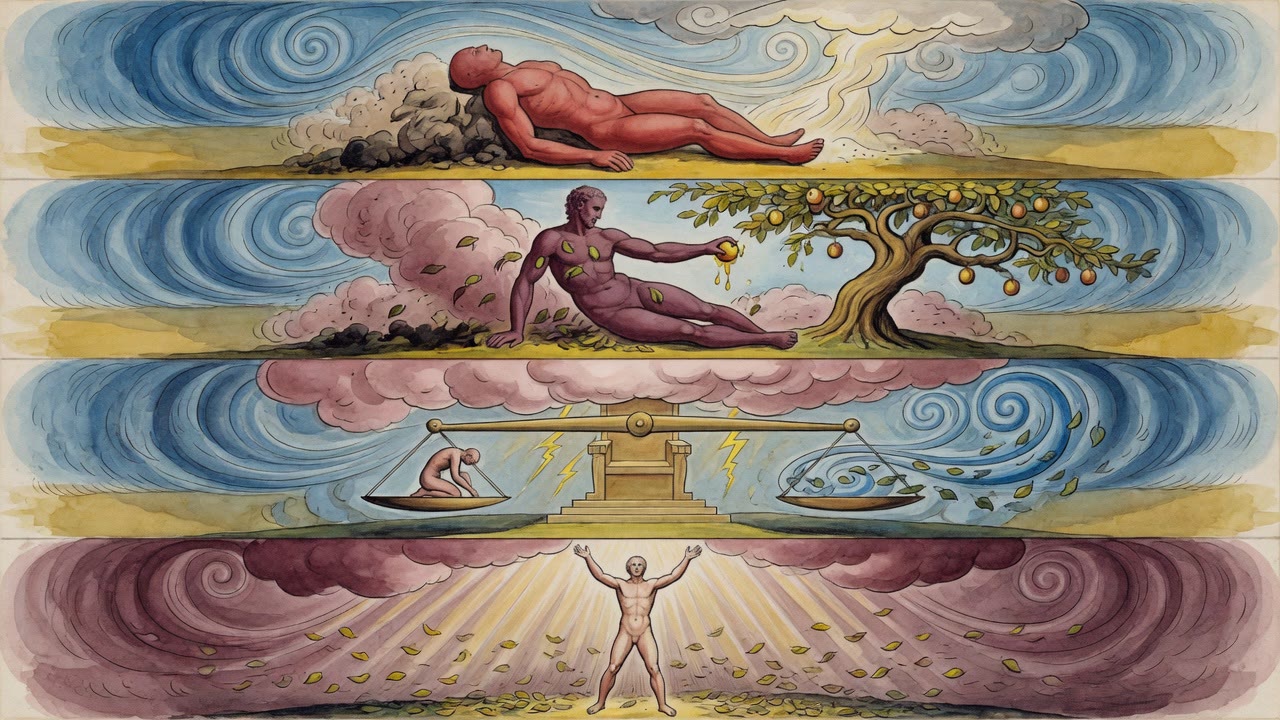
The reason was moral. A world built on ten utterances has ten times the weight of a world built on one. The wicked who undo such a world, who unravel creation thread by thread, who take apart what ten divine speeches assembled, they will answer not for one act but for ten. And the righteous who hold the ten-saying world together, who live in it with the respect it deserves, they will be rewarded not once but ten times over. Creation stretched out over ten moments so that the account of what humans do in it would be proportionately full.
← All myths