Parshat Korach5 min read

Korah Drew Hearts With Words Against Moses

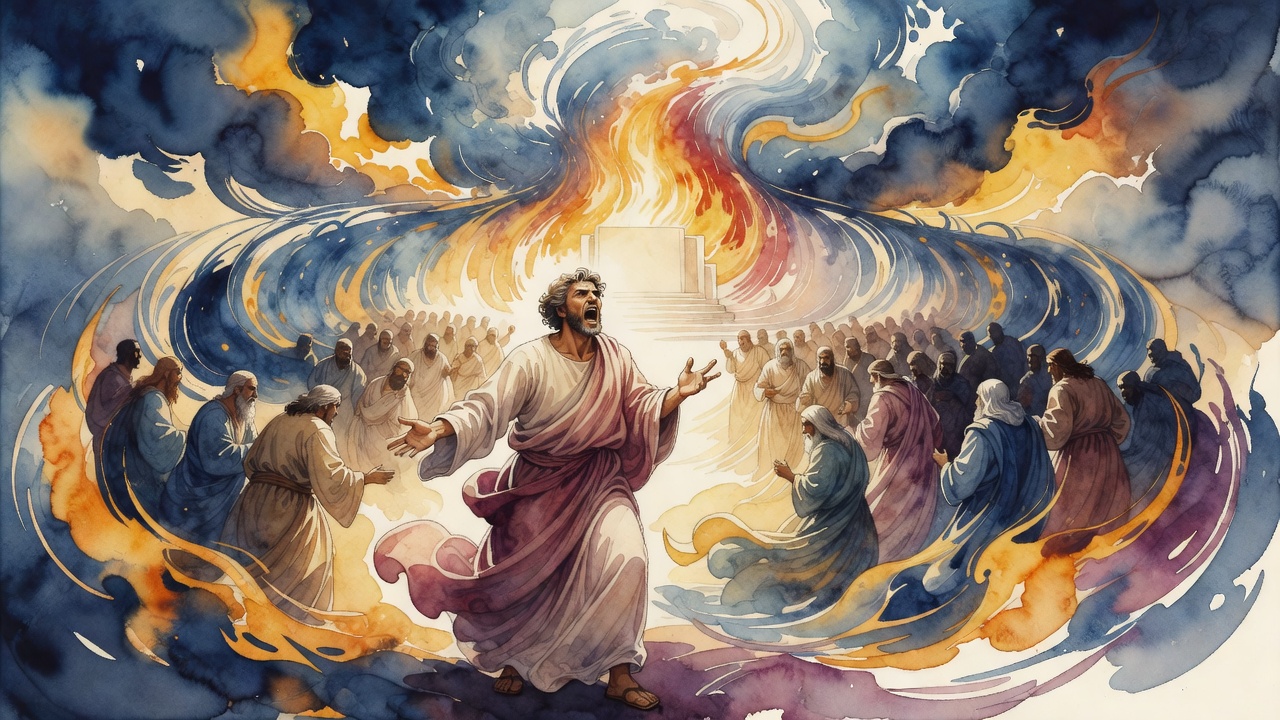
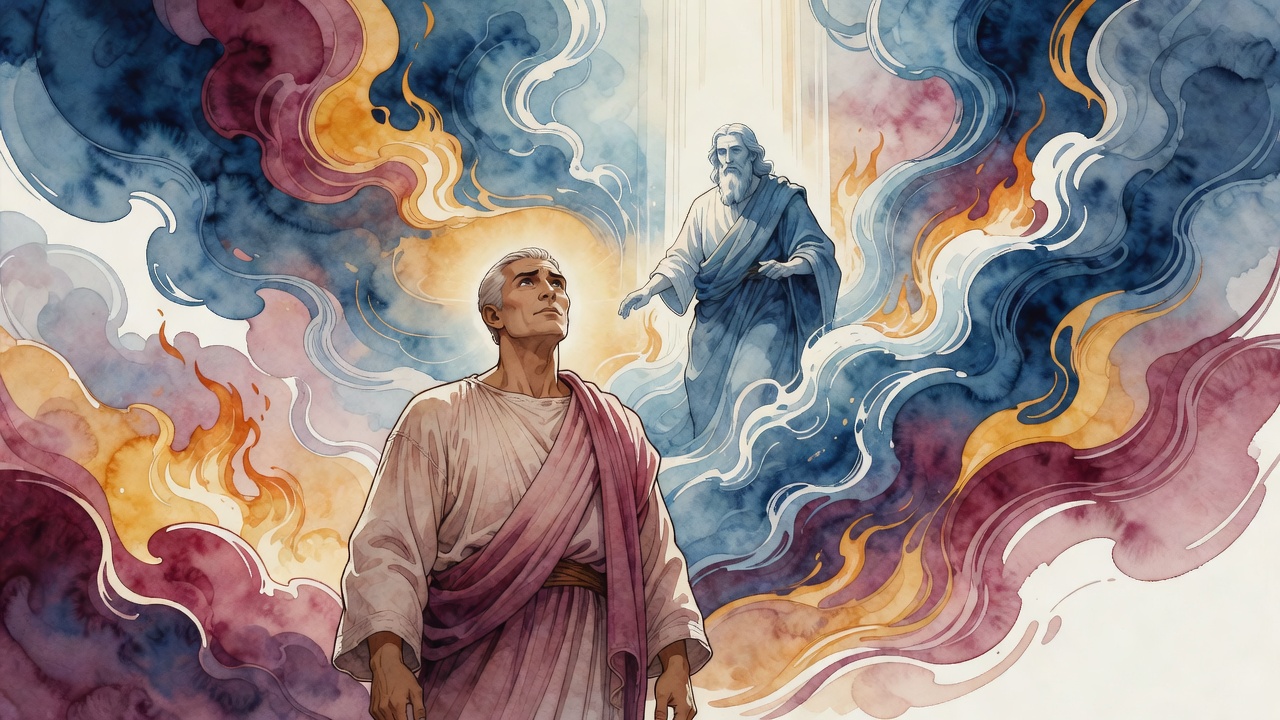
Korah takes no sword. He takes leaders with persuasion, counting Amram's sons against Uzziel's, until the earth raises bars like a castle.

Curated by Arthur · Told by Maggid ·
Table of Contents
  1. A Brother More Formidable Than a City
  2. What "Took" Means
  3. Princes Who Also Waited Their Moment
  4. The Argument That Could Not Climb
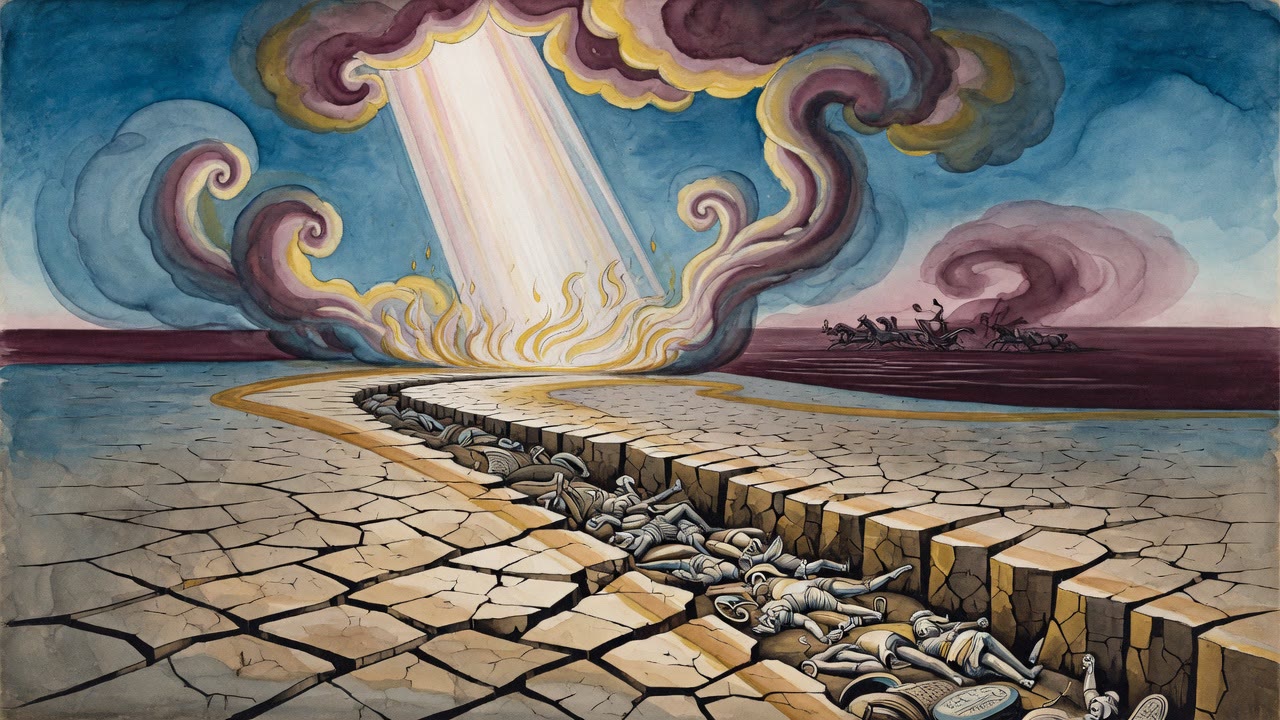
  5. Bars of Earth
Korah Drew Hearts With Words Against Moses Click for full size

A Brother More Formidable Than a City

"Now Korah betook himself" (Numbers 16:1). The line looks quiet until Proverbs answers it: a brother offended is more formidable than a fortified city, and contentions are like a castle bar (Proverbs 18:19).

Korah is that brother. He sides against Moses and against the Omnipresent, and the earth will answer by raising its bars against him like a castle. Rebellion is not a mood. It is a city gate swinging shut from below.

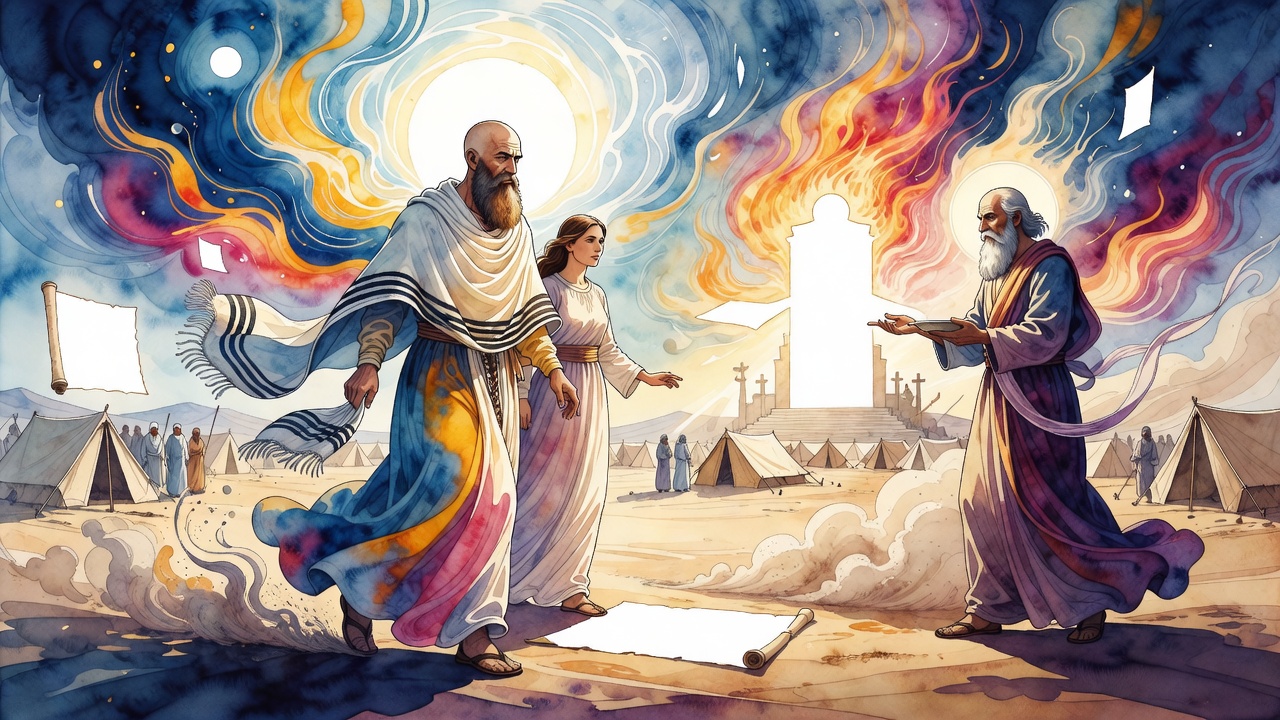
He does not begin with spears. He begins with a grievance that can be counted on four fingers. Kohath had four sons: Amram, Izhar, Hebron, Uzziel (Exodus 6:18). Amram's line took the high priesthood through Aaron and the leadership through Moses. Izhar's son Korah expected the next rung. Instead Elizaphan ben Uzziel, son of the youngest brother, was made prince over the Kohathite clan (Numbers 3:30).

Korah did the arithmetic out loud. "Should the youngest of father's brothers become superior to me?" The math of birth order became a theology of invalidation. He declared everything Moses had done empty, so that his own missing title could feel like justice.

Family fights dig deeper than foreign wars. Korah shares blood with Moses and Aaron through Kohath. That shared blood is the fuel. A stranger's challenge can be dismissed. A cousin's arithmetic about birth order spreads through the tents like oil on dry cloth.

What "Took" Means

"Now Korah took." Took is not only a hand on property. Took is attracting with persuasive words. He drew leaders of Israel and the sanhedraot after him the way a magnet draws iron filings into a new shape.

Scripture uses "take" for Moses and Aaron selecting men, for Aaron and his sons being set apart, for words carried into repentance, even for a woman taken into Pharaoh's house. Korah's taking belongs to that family of verbs. He took hearts. He took the rooms where judgment sat. He made dissent sound like repair.

Men who would not have followed a drawn blade followed a careful sentence. "You have gone too far." "Why do you raise yourselves?" The phrases traveled faster than any messenger with a sword.

Glory he already possessed began to sink the moment he spent it on proving Moses false. Offense, in the midrash's ear, means rebellion. The castle bar was already swinging before the ground opened.

Princes Who Also Waited Their Moment

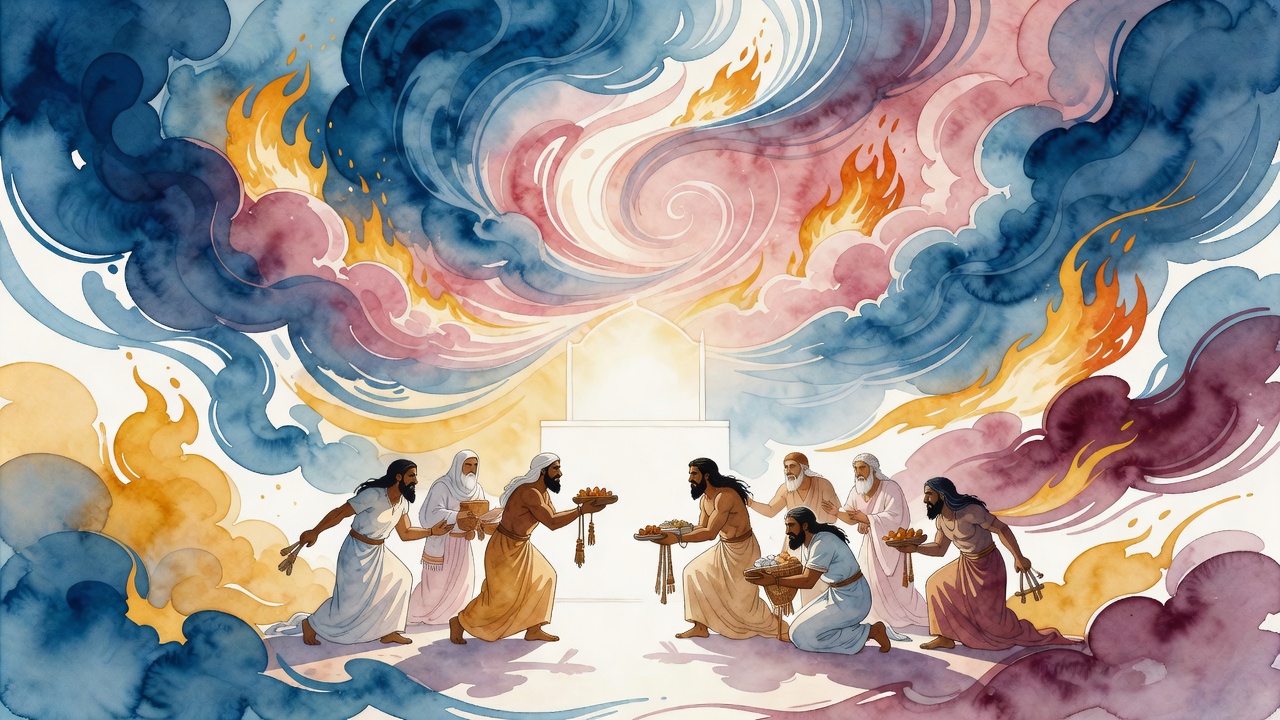
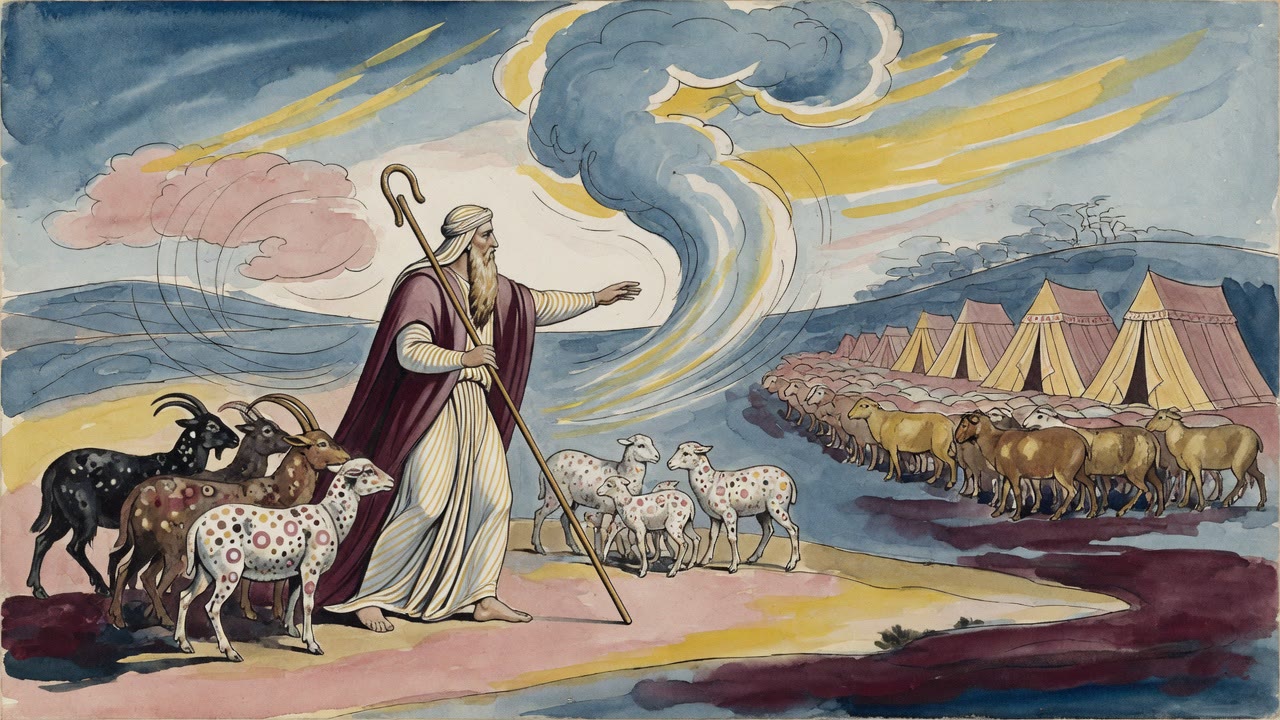
Another set of leaders once misread Moses and nearly missed the Tabernacle. When Moses said, "Take from among you an offering" (Exodus 35:5), the princes held back. They muttered that Moses had not known enough to tell them the work was starting. The common people brought freewill gifts morning after morning until the supplies were more than enough (Exodus 36:3-7).

God said, in effect, that the princes were not required. Two mornings of ordinary Israel filled the work. Moses blessed the makers: may the Divine Presence dwell in the work of your hands. The chiefs who had waited found themselves late to a building that no longer needed their delay as strategy.

Korah's circle is the darker twin of that hesitation. The princes of Exodus delayed out of pride and still found a path back into offering. Korah delays nothing. He advances with words until the only opening left is the mouth of the earth.

The Argument That Could Not Climb

His case had a clean surface. Firstborn of a second son should outrank the child of a fourth. The camp ran on order. Why should Kohath's internal ladder break for Moses' appointments?

The surface hid the real climb he wanted: not fairness inside a clan, but the right to cancel the whole structure Moses had built. Once the grievance is allowed to judge the giver of Torah, no standard is safe. Aaron's oil, the censers, the tents of meeting, all become props in a family lawsuit.

Moses falls on his face. The next day, pans of fire will decide what arithmetic cannot. Korah's two hundred fifty men of renown will learn that incense is not a petition when the petition is to unmake the priesthood.

Bars of Earth

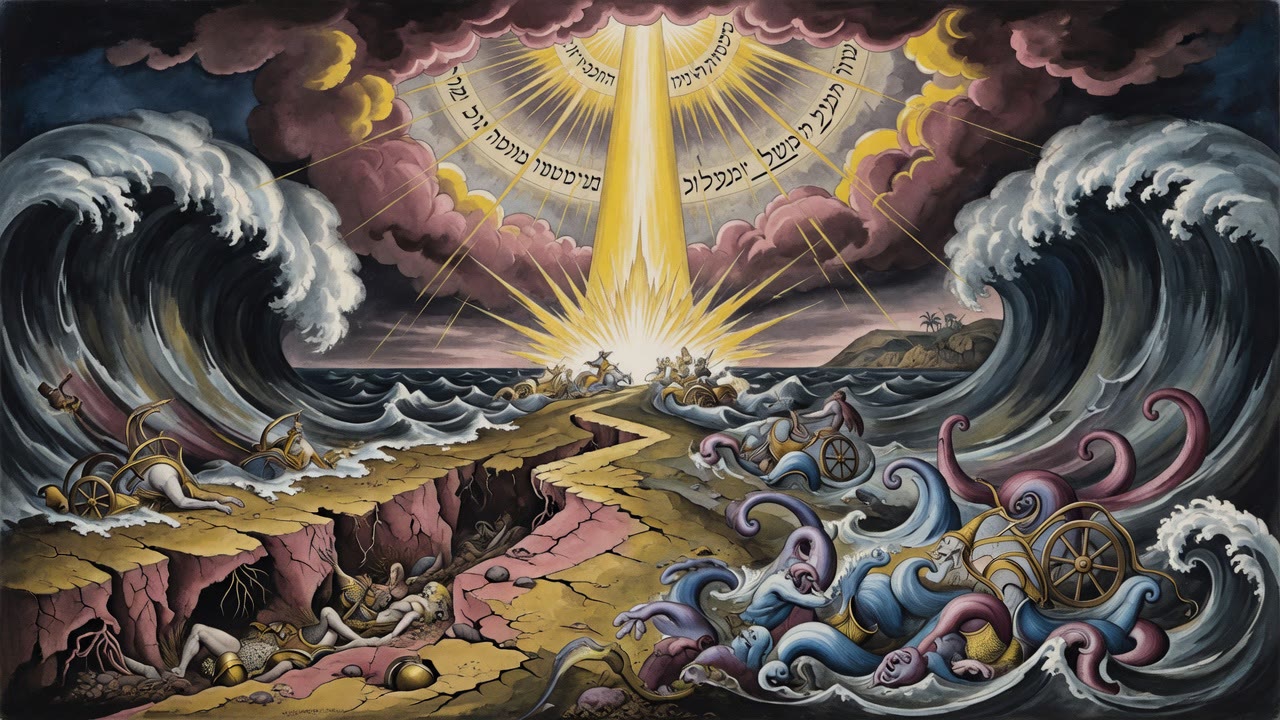
When the ground opens, Proverbs' castle bar becomes literal. Contentions that felt like debate become architecture underfoot. The brother more formidable than a city is swallowed by a city of dust.

He took hearts with speech. The earth takes him without a speech. Leaders who followed the smooth verbs go down with the man who minted them. What remains above is the hard lesson the princes of the Tabernacle learned more gently: God's work does not wait on the pride of the titled, and titles seized by argument can open a door no human can close.

Smoke still rises from pans that were never accepted. Somewhere under the new-smooth dirt, a grievance about Uzziel's son keeps the shape of a mouth that would not stop counting.


← All myths
From the tradition

Sources

2 sources

The texts behind this telling. Some cards carry a translation of the source; others are our own retelling of it, and each card says which. Every card links out to the original.

Midrash Tanchuma, Korach 1Midrash Tanchuma

Retold in our words. Read the original at the link below.Townsend 1989 translation of Midrash Tanhuma, S. Buber Recension · CC-BY

(Numb. 16:1:) “Now Korah betook himself.” This text is related (to Prov. 18:19), “A brother offended (rt. psh') is more formidable than a fortified city; [such] contentions are like a castle bar.” The brother offended is Korah, in that he sided against Moses. So he rebelled and sank from whatever glory that he possessed. Now offended (rt: psh') can only imply rebellion, since it is stated (in II Kings 3:7), “The king of Moab has rebelled (psh') against me.” It also says (in II (Kings 8:2)2), “then did Libnah rebel (rt. psh').” (Prov. 18:19:) “[Such] contentions are like a castle bar.” [The earth raised its bars against him like a castle.] (Prov. 18:19:) “Like a castle bar.” [These words also refer to Korah,] who sided against Moses and against the Omnipresent. (Numb. 16:1:) “[Now Korah …] took.” “Took” can only be a word for "attracting with persuasive words," in that he attracted all the leaders of Israel and the sanhedraot [to follow] after him. Concerning Moses it is written (in Numb. 1:17), “So Moses and Aaron took these men.” And similarly it is written (in Numb. 8:2), “Take Aaron and his sons with him.” And so does it say (in Hos. 14:3), “Take words with you and repent….” And so does it [also] say (in (Genesis 12:1)5), “and the woman was taken to the house of Pharaoh.” Ergo (in Numb. 16:1) “Now Korah […] took,” in that he drew (i.e., took) their hearts with persuasive words. (Numb. 16:1:) “Now Korah […] betook himself.” Because of what did he dissent? Because of Elizaphan, the son of his father's brother, who had been appointed prince (nasi) over his clan. So it says (in Numb. 3:30), “And the prince of the ancestral house for the Kohathite clan was Elizaphan ben Uzziel.” Korah said, “Father had four brothers.” It is so stated (according to Exod. 6:18), “And the sons of Kohath were Amram, Izhar, Hebron, and Uzziel.” “As for Amram, the first-born; his son Aaron and his sons attained the high priesthood, and his brother Moses [attained] the kingship. So who deserves to get second [place]? Should it not be the second [son]? Now I am Izhar's son. I deserved to be prince of my clan, but he has appointed the son of Uzziel. Should the youngest of father's brothers become superior to me? See, I am dissenting and declaring everything invalid, whatever he had done.” Therefore, there was dissent.

Full source
Midrash Tanchuma, Nasso 27Midrash Tanchuma

Retold in our words. Read the original at the link below.Townsend 1989 translation of Midrash Tanhuma, S. Buber Recension · CC-BY

(Numb. 7:2:) “Now the princes of Israel drew near (to make an offering).” You find that when Moses proclaimed and said (in Exod. 35:5), “Take from among you an offering [for the Lord],” what did the princes do? They said, “Moses did not know [enough] to tell us that the Tabernacle was being made.” What did they do? They did not give a freewill offering. They said, “These people are making the Tabernacle, and now he is telling us to give a freewill offering?” The Holy One, blessed be He, said, “By your lives, you should know that I do not need you (princes).” What is written there (in Exod. 36:3)? “And they (i.e., the Children of Israel) still brought freewill offerings unto him in the morning, in the morning.” R. Johanan said, “For two mornings they brought all the supplies (mela'khah) for the Tabernacle, and they were more than enough, as stated (in Exod. 36:7), ‘For they had sufficient supplies (mela'khah), more than enough for all the work (mela'khah) to make it.’” And it is written (in Exod. 39:43), “When Moses saw all the work (mela'khah) […]; then Moses blessed them.” And with what blessing did he bless them? He said to them, “May the Divine Presence dwell in the work of your hands.” In this world Moses has blessed them; but in the world to come, the Holy One, blessed be He, will bless them, as stated (in Ps. 128:5–6), “The Lord will bless you from Zion; may you see the prosperity of Jerusalem…!”

Full source