Korah Saw Samuel in His Bloodline and Missed His Sons' Repentance
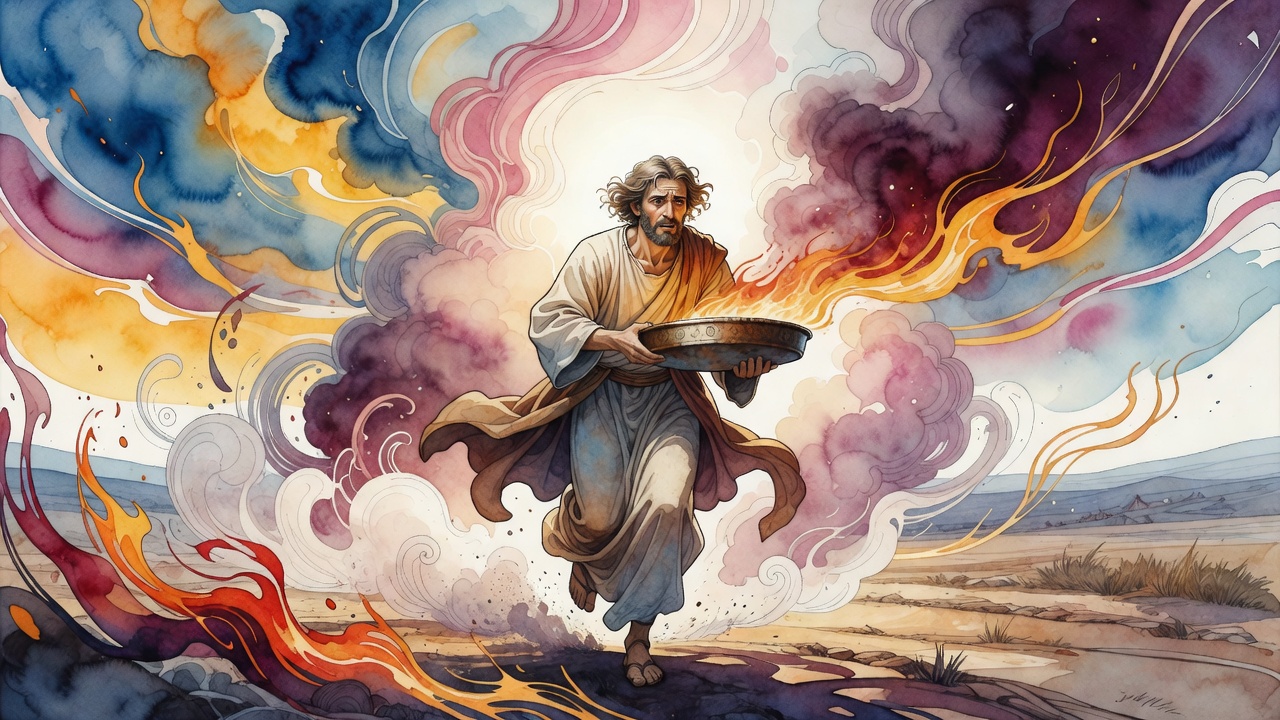
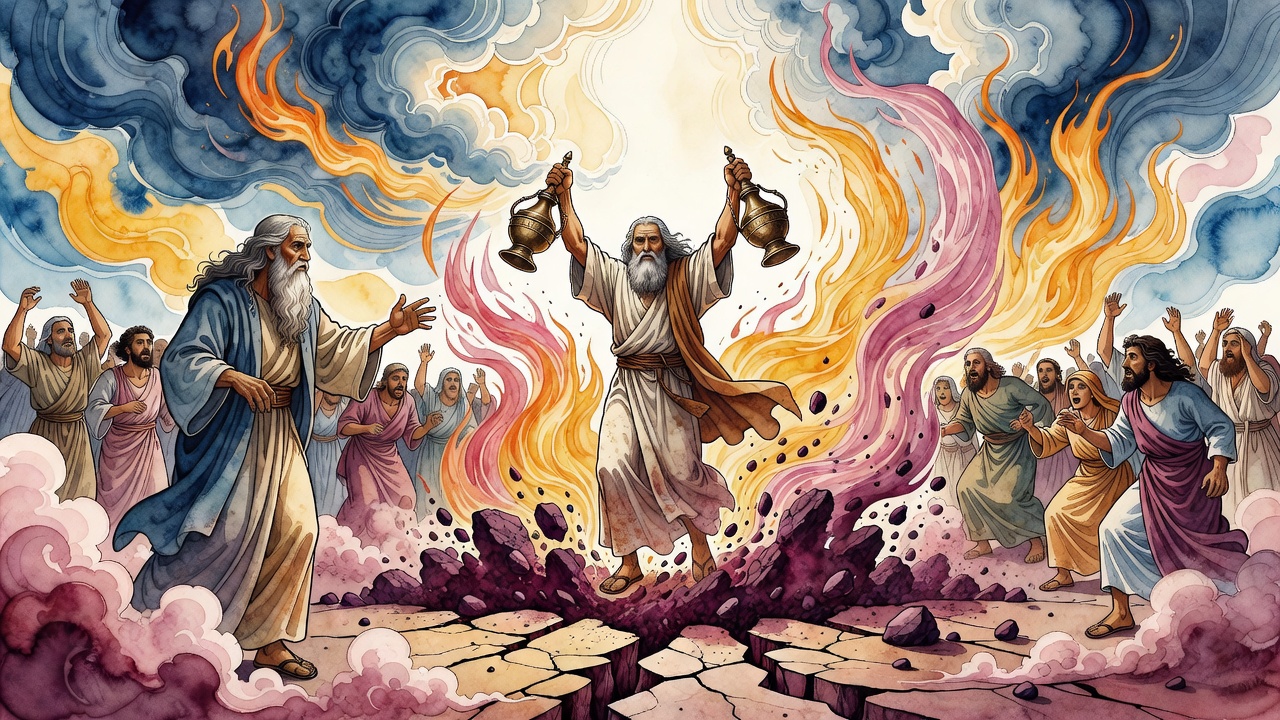
Two hundred fifty men came forward with censers. Moses reminded them that Nadab and Abihu had died holding pans like those. Korah put fire in his pan anyway.
Table of Contents
 Click for full size
Enough, Sons of Levi
Moses faced the company at the entrance of the Tent and said what a leader says when flattery has already failed. Enough, sons of Levi. The warning was clean. They were no fools. They heard that the fire-pans would be "the censers of these who sinned at the cost of their lives." Still they stepped forward, two hundred fifty strong, reaching for a priesthood Heaven had not assigned, their bowls ready, their pride louder than the desert wind.
Korah stood at their head, shrewd in the things of this world, sharp-eyed in property and status, a man who could count a flock and a grievance with equal skill. Why does a clever man walk into a plain folly? His eye deceived him with a vision of the future that looked like a guarantee written in his own bloodline.
The Chain He Thought He Owned
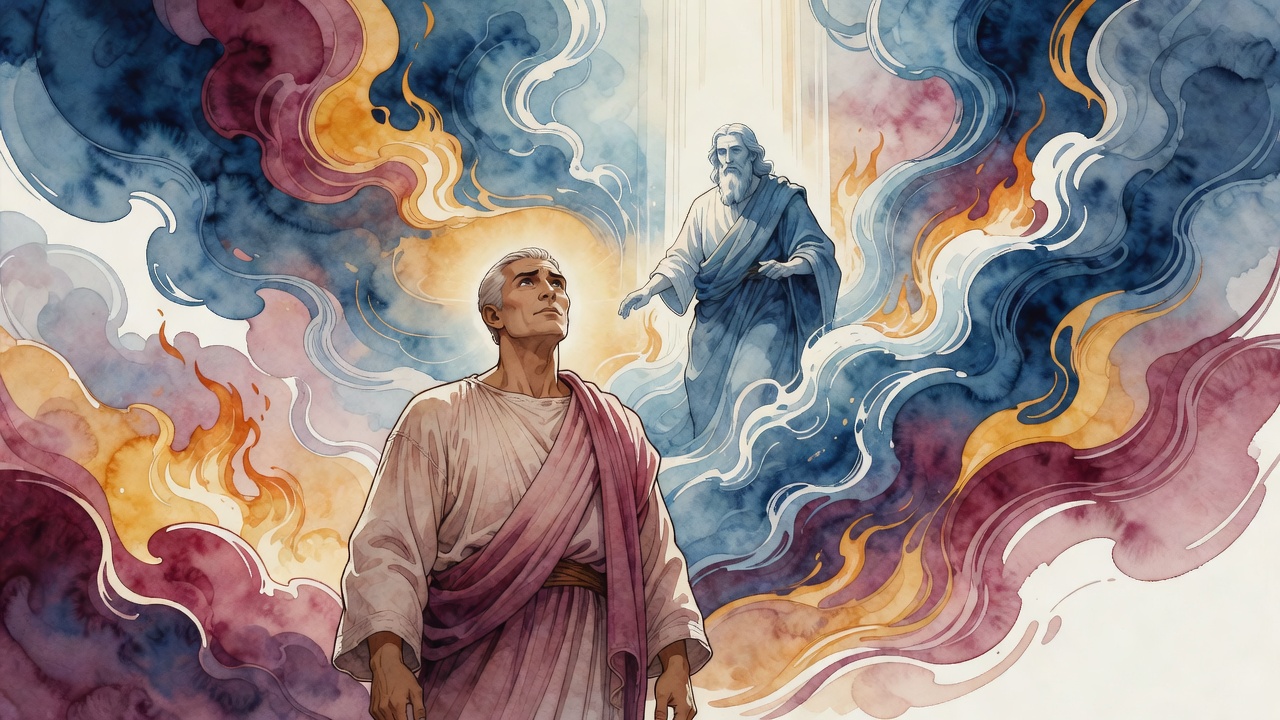
Gazing down the years, Korah beheld a great chain rising from his own loins. He saw Samuel, weighed in the balance against Moses and Aaron together. He saw twenty-four watches of singers and seers, every one prophesying by the Holy Spirit. He saw Heman, the king's seer, and the horn of his house lifted by the words of God until the court itself seemed to lean toward his descendants.
Can such greatness spring from me, he reasoned, and yet I myself be lost? The vision felt like armor. Glory in the bloodline looked like a shield over the rebel. If the end is holy, the middle must be safe. So he challenged the statute and gathered men around incense and grievance, sure that history had already voted for his house.
The Gate He Did Not See
He saw the glory and not the gate it would pass through. His sons would rise only because they would turn back in repentance and step away from his rebellion before the ground opened. The greatness would come not from Korah but from the teshuvah of his children. The half-seen future made him bold. The unseen repentance made the future possible without him, a door he mistook for a throne.
Trusting a ledger with missing pages, he put fire in the pan. Moses had already said: only the man whom the LORD chooses is the holy one. Korah heard that as a contest he could win by numbers and pedigree. Heaven meant it as a closed case that no genealogy could reopen by force.
The Warning Inside the Incense
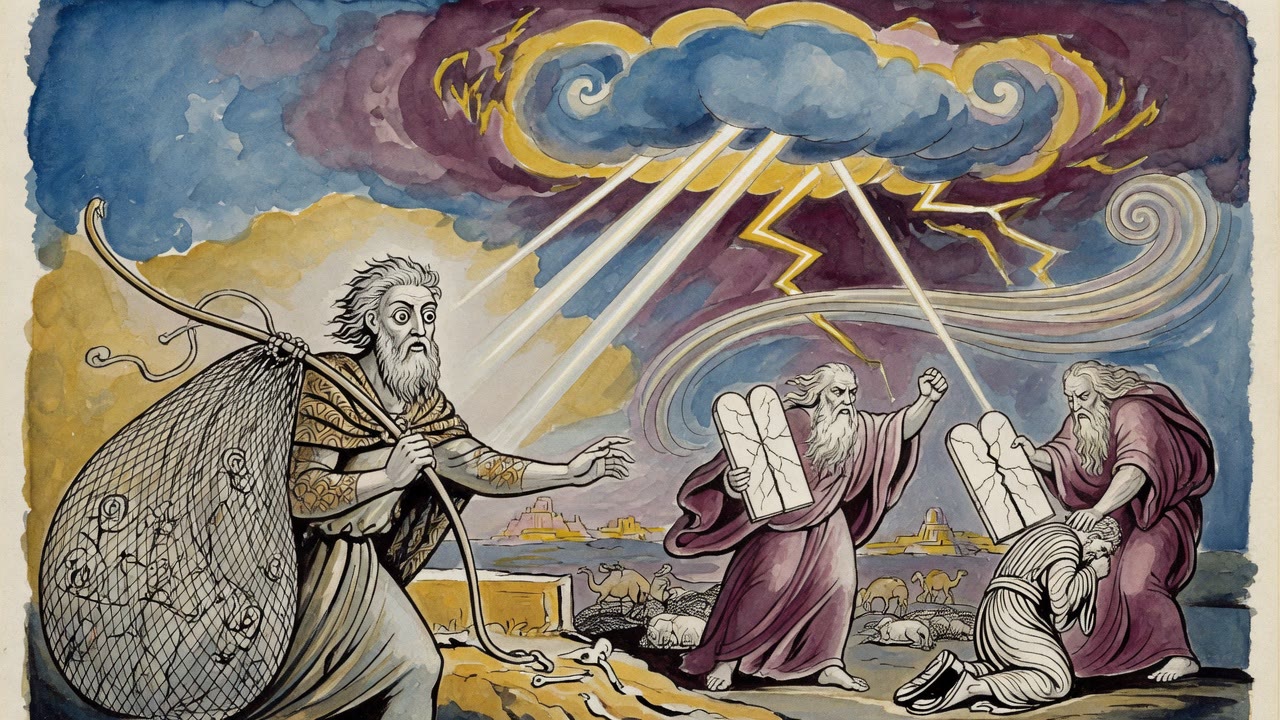
Moses framed the test without cruelty and without flattery. Among star-worshippers there are errors without number, customs without number, priests without number, crowded into one house. Israel has one God, one Torah, one law, one altar, one high priest. You two hundred fifty want the dearest service. Very well. Take censers. Know that Nadab and Abihu died by that very nearness, and their father still carries the ash.
Do not bring guilt upon your own souls, Moses pleaded. They took the danger on purpose. Scripture does not call them accidental sinners. It calls their pans the tools of men who sinned at the cost of their lives. The smoke that rose from those bowls was not confusion. It was a chosen risk dressed as zeal for equality.
Earth Opens, Sons Step Back
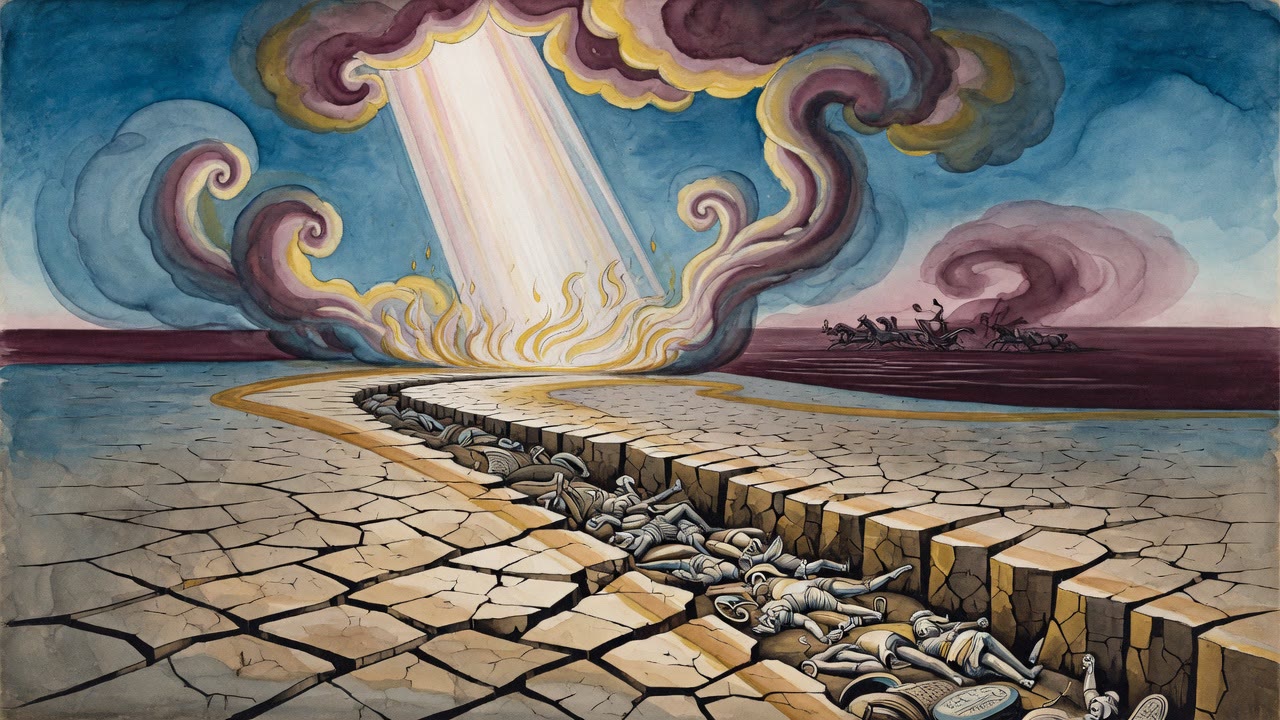
When the ground split and the fire went out, Korah's calculation burned with him. The descendants he had counted as proof of his safety would stand only because some of his house refused his last step. The midrash leaves that irony sharp: a man can see prophets in his line and still miss the repentance that keeps the line alive. Vision without teshuvah is only a flattering dream.
Ambition reads the future as inheritance. Heaven writes the future as choice. Korah chose the pan and the crowd. His sons, in the telling that saves them, chose the step away from the edge. Samuel's name would rise from the second choice, not the first. The watches would sing because someone turned back, not because someone grabbed.
In the hours before the test, Korah moved among the two hundred fifty like a man counting allies rather than souls. He pointed to burdens, to status, to the claim that the whole congregation was holy. He did not point to the ash of Nadab and Abihu. He did not rehearse Moses' warning that only one would walk out alive. Numbers felt like destiny when they stood in a circle with pans in their hands.
The midrash keeps the scene close to the body on purpose. Names move. Choices cost. Heaven writes while people still think they have more time to finish what fear postponed.
After the earth closed, the camp stood in a silence thicker than smoke. People who had almost joined the two hundred fifty looked at their own hands as if fire pans might still appear there. Moses' warning no longer sounded like rhetoric. It sounded like a map of the last hour, drawn too late for those who had trusted a pedigree more than a command.
Korah's name would cling to rebellion the way ash clings to cloth. His sons' names, in the songs that survive, cling to return. The midrash wants both memories held: the shrewd man who misread glory, and the children who stepped back before the ground finished its sentence.
← All myths