Korah Lifted Censers and Chose His Own Fire
Moses pleaded like a brother. Take heed, he said. Do not stake your souls on a contest you cannot win. They would not hear him.
Table of Contents
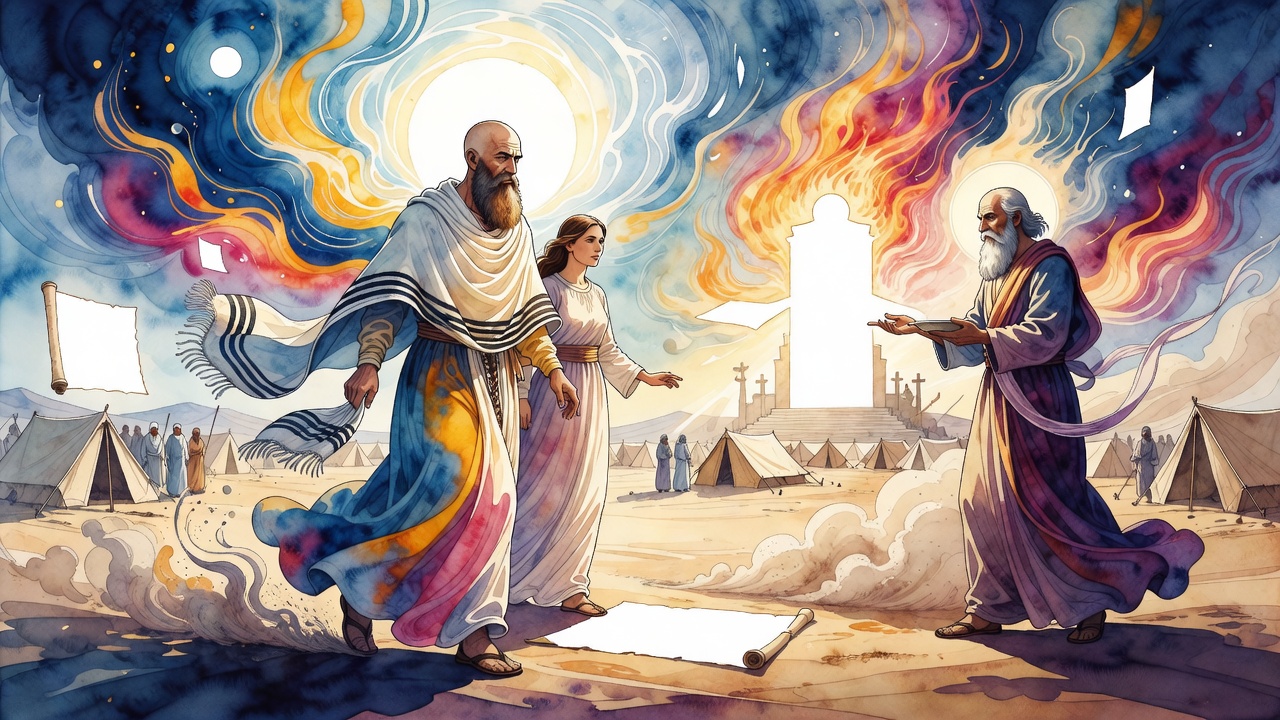
Moses did not raise his voice first. He looked at the pans in their hands and told Korah the rule of the test while there was still time to set them down.
 Click for full size
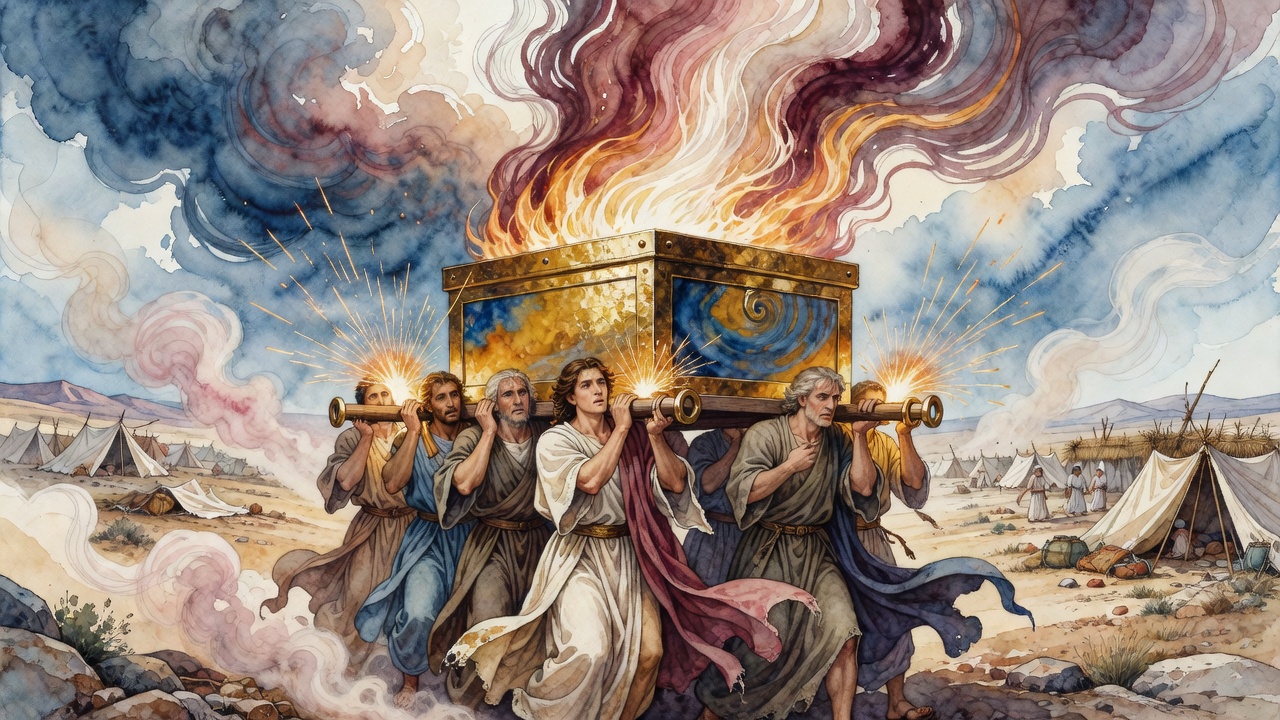
Bring your firepans, he said, and let the Holy One Himself decide. The man whom God chooses is the holy one, and that man alone will walk away from the fire. The rest will die.
Only One Walks Away
He pleaded as a man pleads for the lives of brothers. Take heed. Do not bring this evil down upon your own heads. Do not stake your souls on a contest you cannot win. The choosing is not yours to force. Only the one whom God helps will be saved, and not one of you will be saved beside him.
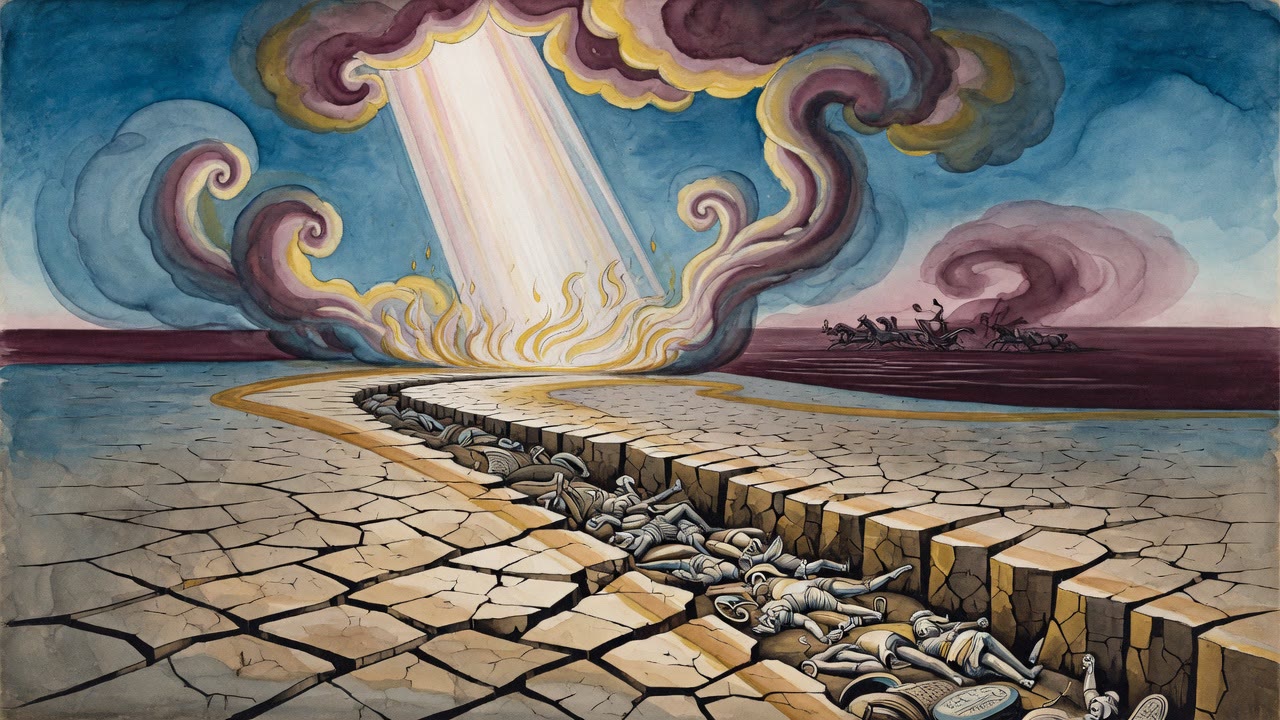
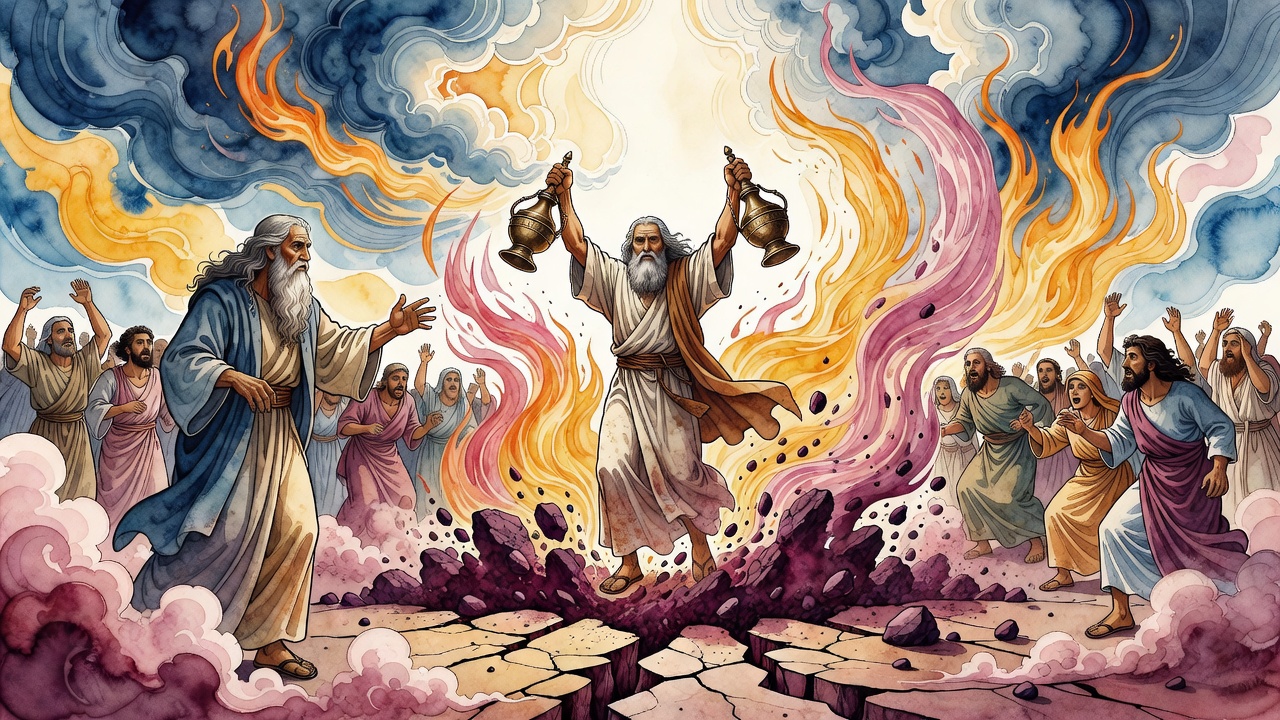
They would not believe his words. Korah and his company had risen against the priesthood with the confidence of men who think holiness is a vote. They lifted their censers. The fire that should have shown favor consumed them instead. The firepans of these sinners against their own lives. They sinned against their very selves. The warning had been mercy. Their refusal made it judgment.
The Ground and the Fire
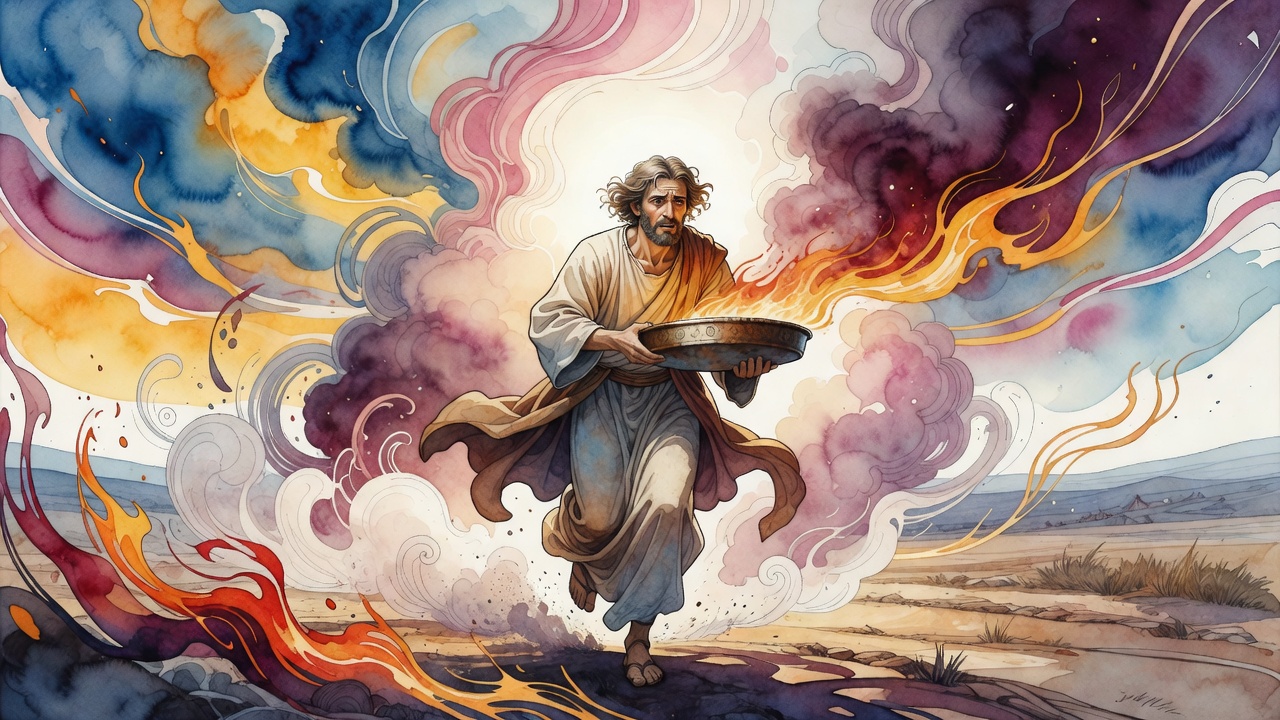
The ground opened for some. Fire finished others. Then plague moved through the camp like a second argument. Aaron ran with incense, ketoret (קטרת), and stood between the living and the dead until the Angel of Death was held back. The people watched a priest do in a lane of corpses what Korah claimed any man could do with enough votes.
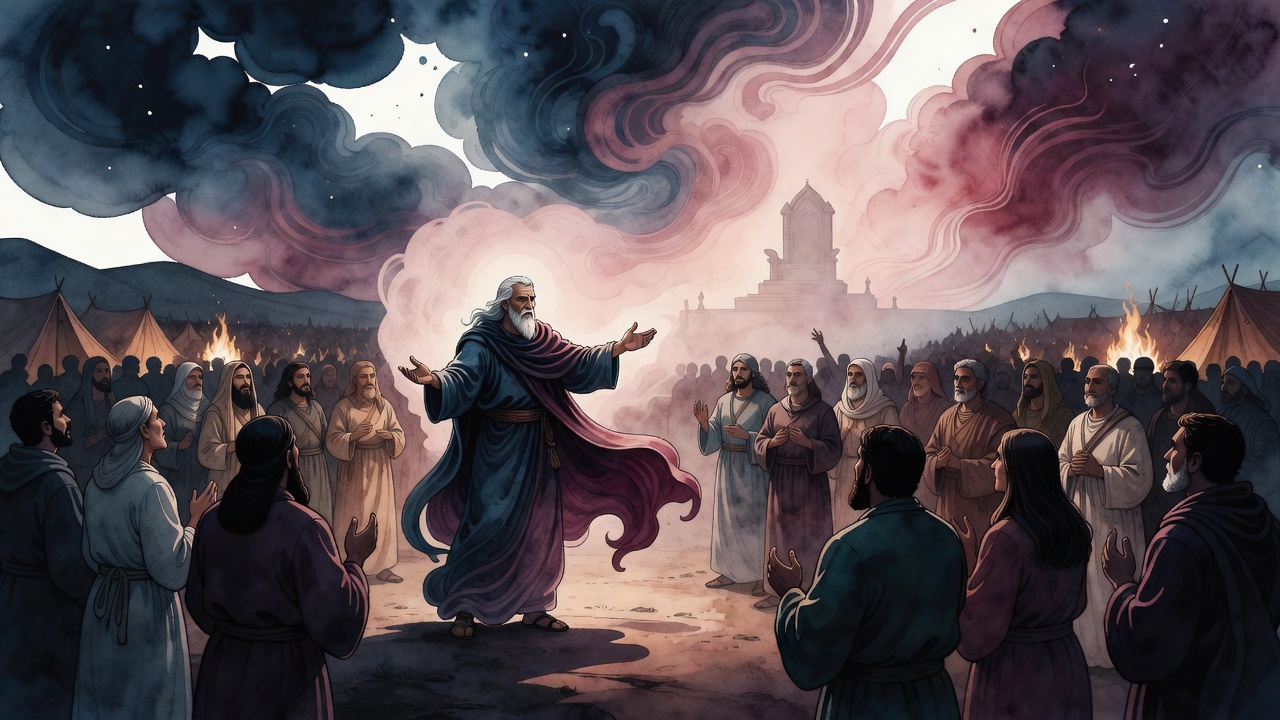
When the blows paused, Israel lifted a cry that was not prophecy but panic. "Behold, we perish, we are lost." To them every fresh death seemed the final stone of a wall closing over the whole nation.
The Cry That Stacked Three Graves
In that single cry the camp stacked every wound it still had open. "We perish" remembered the golden calf and the plague that followed it. "We are lost" remembered Korah and the earth that covered the assembly. "All of us are lost" counted the newest dead of the pestilence.
Three catastrophes pressed upon them at once until terror persuaded them that no one would be left standing. Their lament was the despair of a people who, having buried so many, could no longer believe they themselves would be spared. Moses walked among them with a brother still alive and a nation that panicked at every new grave.
Aaron in the Lane of the Dead
Aaron's run was the answer Korah had refused. He did not lift a pan to seize a rank. He lifted incense to stop a killing. He stood in a corridor of bodies and held the Angel until the count of the dead stopped rising. The priesthood held, not because no one had questioned it, but because the fire had already voted and a living priest had already spent himself in the gap.
Korah chose his own fire. Aaron used fire to stop a plague. Both fires were real. Only one kind left a people still alive to bury anyone.
The Bier on the Mountain
Time moved. On another mountain Moses and Eleazar descended alone. Israel pressed them. Where is Aaron? He has already died, Moses answered. The people would not believe it. This, they protested, was the very man who once stood between the living and the dead and held back the Angel of Death. Could that same Angel now have prevailed over Aaron himself? It seemed impossible.
So the Holy One showed them Aaron's bier, and there he lay like any man stretched upon a bed. Only then did they believe. All the congregation saw that Aaron had expired. They saw, and they feared. For the moment Aaron died, the clouds of glory that sheltered Israel withdrew. Those clouds had accompanied them by Aaron's merit. With his expiring, the protection lifted, and the people trembled.
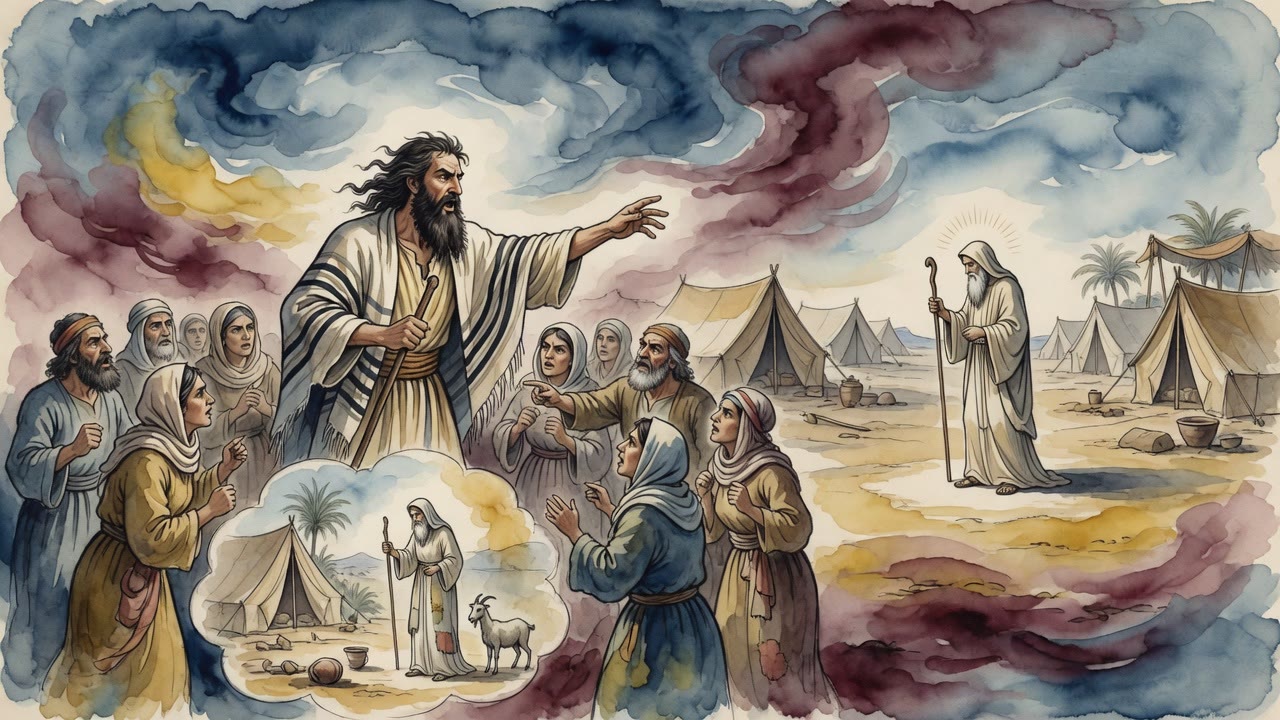
The man who ran between death and life could not outrun his own end. The camp learned that even the greatest intercessor is still a body that can be laid out for viewing. Children asked why the sky looked thinner. Elders answered with Aaron's name and could not finish the sentence. Someone still muttered that Korah had spoken for equality. Someone else pointed to the ground that had opened and asked whether equality tasted like that.
Moses walked among them with a brother missing and a nation that still panicked at every new grave. The surviving pans became a sign. The cry we perish became a memory of how close the whole camp came to believing it was finished. The bier on the mountain became the proof. Korah chose his own fire. Aaron used fire to keep them alive, and even he had to be believed dead before the clouds would leave.
← All myths