5 min read

Kehatites Who Carried the Ark That Burned

When Israel broke camp, sparks leapt from the Ark's staves. The sons of Kehat had to carry the fire that could also cut their own numbers down.

Curated by Arthur · Told by Maggid ·
Table of Contents
  1. Sparks That Chose Their Target
  2. The Double Bind at the Staves
  3. Stride and Shame at the Altar
  4. Names Written Before the Cloud Moved
  5. What the Bearers Knew

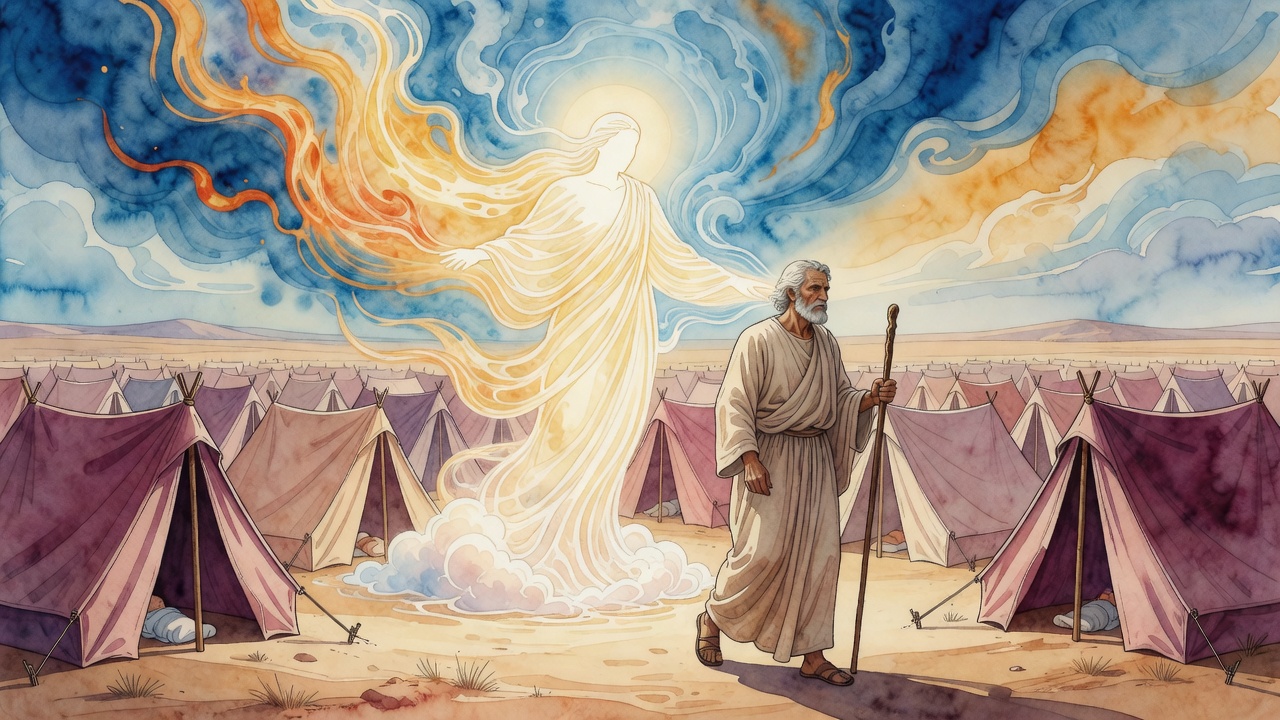
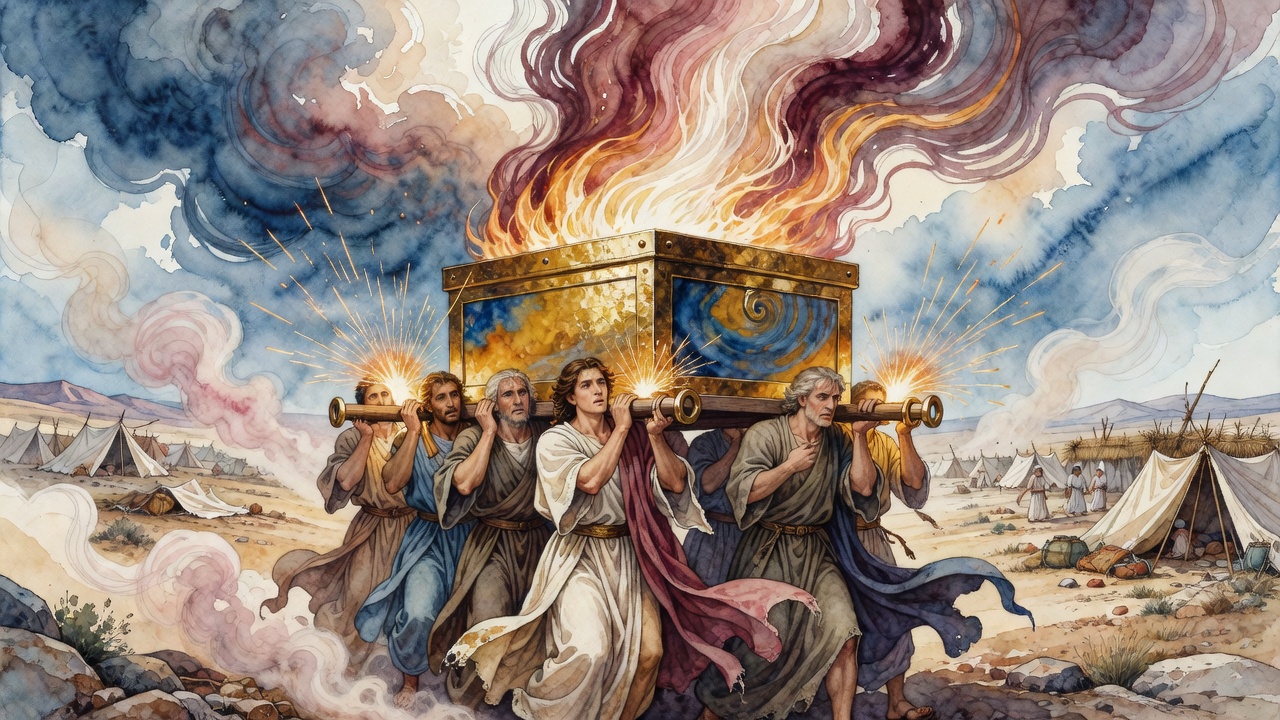
Elizaphan set his palms on the staves and felt heat climb the wood before the camp had even finished folding its tents. Ahead of him the cloud lifted. Behind him the Merarites laughed as they hoisted beams that never burned. Between their jokes and the open desert, the Ark waited like a coal that would not cool.
Kehatites Who Carried the Ark That Burned Click for full size

Sparks That Chose Their Target

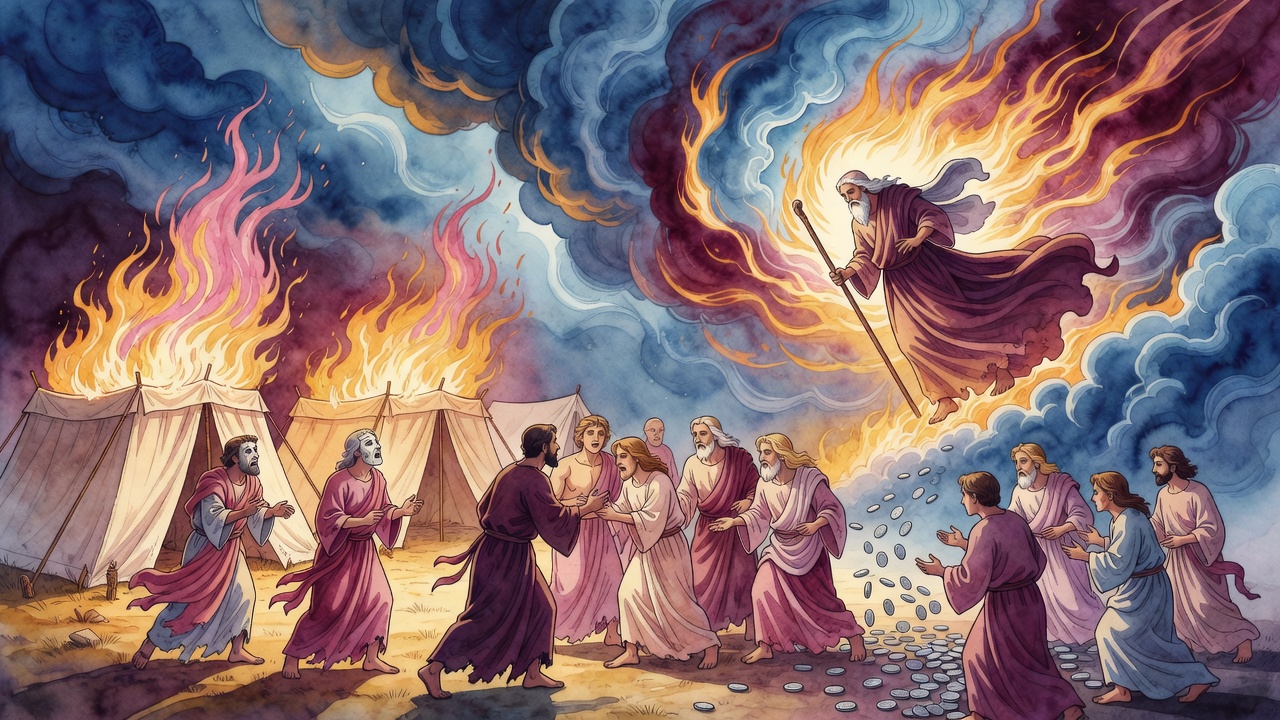
When Israel traveled, fire left the staves in thin white lines. The same sparks that tore through enemy ranks also clipped the men who carried the holy chest. Gershon carried curtains. Merari carried boards. Kehat carried the presence that could kill them.

At the first count from one month old, the sons of Kehat outnumbered both other Levite houses. By the count from thirty years old, one hundred seventeen were gone. Not all to age. Not all to war. The Ark itself thinned them.

Moses heard the numbers and said nothing at first. He had watched a man reach for the table instead of the staves, then another, then three more, as if furniture could save a life. The Holy One grew angry at the dodge. Carry it and burn. Refuse it and burn another way. That was the trap.

Do not cut off the tribe of the Kehatite families from among the Levites, the Torah said. The verse was not soft comfort. It was a warning that a whole house could vanish inside its own honor.

The Double Bind at the Staves

"How am I killing the sons of Kehat?" God said, as if the question itself were part of the command. If they bore the Ark, their count fell. If they did not, wrath rose. Between those two deaths lay a third possibility no one had tried: order.

God told Moses and Aaron to assign each man his service and his burden by name. No more free scramble. No more trading the Ark for the candelabrum at the last second. A Kehatite would know, before dawn, whether his hands would touch the staves or the table or the altars of gold.

Some later voices said the danger was not fear but hunger for glory. Everyone wanted the reward that clung to the Ark, so they shoved and argued, and the fire punished the levity. Fear and zeal can look different until the same spark finds both. Aaron's list ended both stories at once. A name on a line is not glory. It is a fence.

Stride and Shame at the Altar

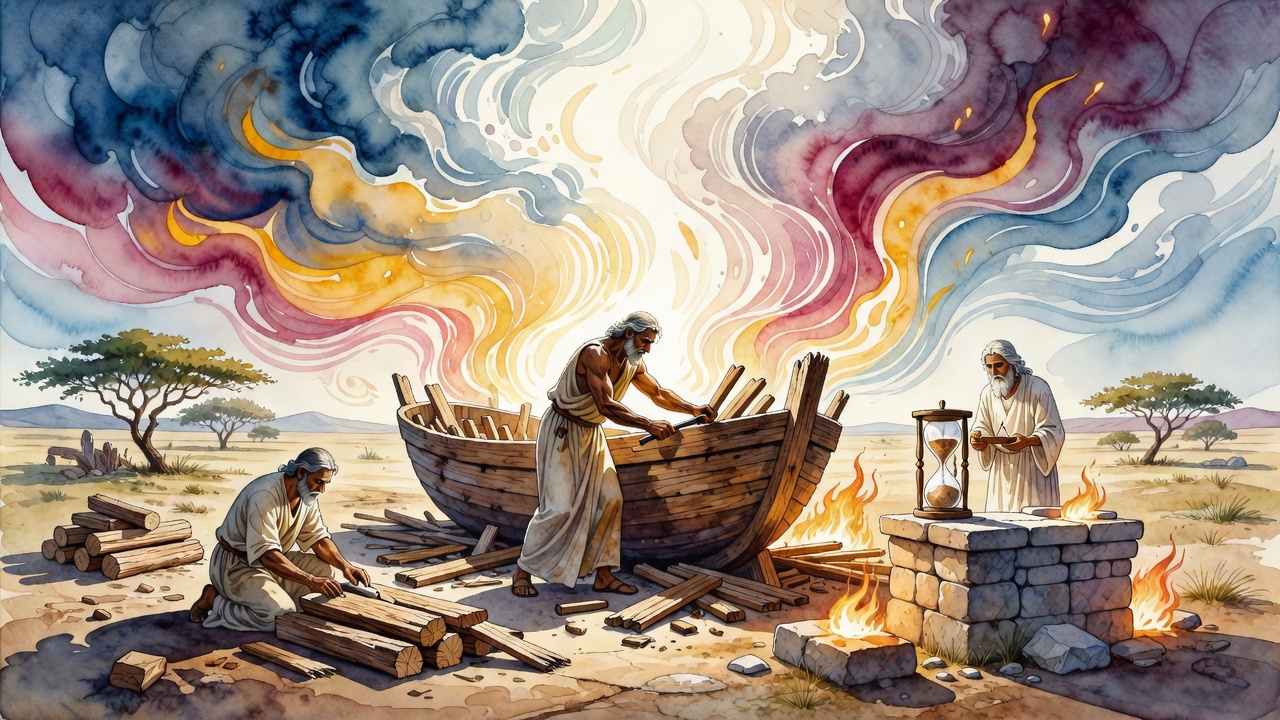
The same care ruled the altar stones. A priest might walk freely through the sanctuary and even the holy of holies, but on the altar he could not take broad strides. Nakedness of the body was only the outer picture. Boldness of gait was the real exposure.

If stones, which feel no insult and know no fear, still demand a careful step, how much more a friend made in the image of the One who spoke the world into being? The law about the altar and the midrash about the Ark share one nerve: the holy is not safe because it is good. It is dangerous because it is near.

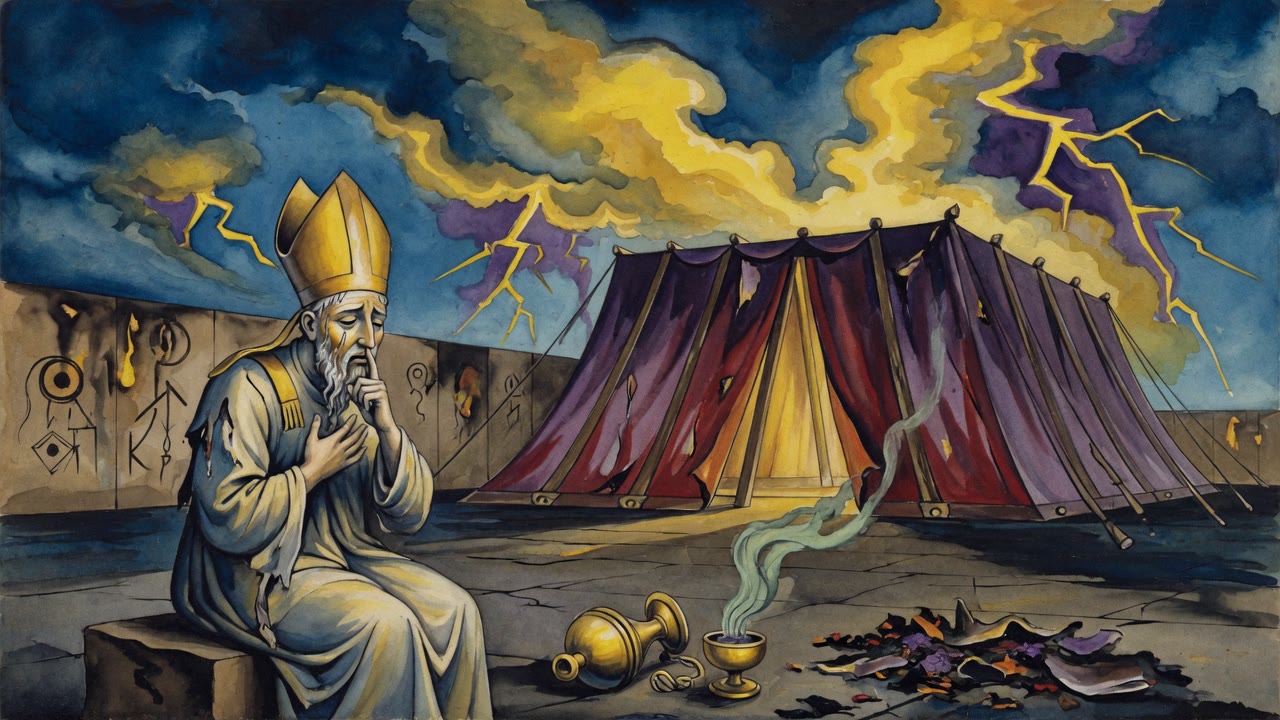
Aaron's sons had already learned that in fire of their own. The Kehatites learned it mile by mile across the wilderness, palms blistered by wood that should have been cool. Broad strides and loose hands both open a body to shame.

Names Written Before the Cloud Moved

On the morning of the next march, Aaron walked the line with a list. He did not shout. He set a hand on a shoulder and spoke a name and a task. One man to the staves. One to the table. One to the menorah, wrapped and ready. The scramble ended. The heat did not.

Elizaphan took his place. The staves bit his palms. Sparks still left for the road ahead, where nations would learn what devouring fire means. But the fire no longer hunted the confusion of men who did not know their burden.

The Levites had no land. They waited on tithes and on God's eye, the kindness that keeps a landless house alive. Deliverance from death, the psalm said. For Kehat that death had a wooden face and gold rings and a weight that chose who would walk home.

What the Bearers Knew

By evening the camp stopped. Curtains rose. Beams locked. The Ark settled under its covers, still warm. Elizaphan washed his hands in a basin that steamed from the day's work and watched younger cousins who had not yet turned thirty. Their time would come.

They would learn that service is not a contest and not a flight. It is a name spoken over a body that must stand still under heat. The Gershonites would sleep without counting their missing. The Merarites would stack wood and dream of nothing. The sons of Kehat would dream of sparks that chose, for one more day, to burn the road instead of the hands.

In the dark the staves still glowed a little, as if memory of the march had stuck to the grain. No one touched them until morning. When the cloud rose again, the list would already be known, and the fire would have fewer excuses.


← All myths
From the tradition

Sources

2 sources

The texts behind this telling. Some cards carry a translation of the source; others are our own retelling of it, and each card says which. Every card links out to the original.

Bamidbar Rabbah 5:1Bamidbar Rabbah

Retold in our words. Read the original at the link below.The Sefaria Midrash Rabbah, 2022 · CC-BY

That feeling isn't new. In fact, the ancient Israelites grappled with it too, as we learn from Bamidbar Rabbah, a collection of rabbinic teachings on the Book of Numbers.

Our story centers on the Kehatites, a family within the tribe of Levi. Now, the Levites held a special role – they were responsible for the Tabernacle, the portable sanctuary that housed the Ark of the Covenant. But within the Levites, the Kehatites had the most special (and dangerous) job: carrying the Ark itself, along with the table, the candelabrum, the altars, and the sacred vessels.

Here’s the rub. (Numbers 4:18) gives us the verse, “Do not cut off the tribe of the Kehatite families from among the Levites.” It sounds simple enough, a divine plea for preservation. But why this plea? What was putting the Kehatites at risk?

As (Psalm 33:18-19) says, "Behold, the eye of the Lord is on those who fear Him, on those who await His kindness, to deliver them from death, and to sustain them in famine.” The text connects this verse to the Levites, suggesting they particularly relied on God’s kindness, having no land of their own. They depended on tithes – a portion of the harvest given to them. They needed the Land of Israel to be fruitful so they could survive.

But Rabbi Elazar ben Pedat offers a startling interpretation. He asks, what "death" were they being delivered from? After all, everyone dies eventually. He answers, it was death by the Ark itself!

3), where Moses assures the Israelites that God is a "devouring fire" going before them.

Powerful. But there was a terrifying side effect. These divine sparks sometimes grazed the Ark bearers – the Kehatites! – causing their numbers to dwindle.

Now, let’s look at the numbers. The text contrasts the Kehatites with the Gershonites and Merarites, two other Levite families with different responsibilities. The Gershonites carried the woven materials, while the Merarites bore the beams, pillars, and bases. When the Gershonites and Merarites were counted, their numbers from thirty years old were about a third or half of their numbers from one month old. But the Kehatites? They started with the highest number but ended with less than a third. As the text points out, they were missing one hundred and seventeen people!

Why the discrepancy? Because, as Rabbi Elazar ben Pedat explains, they were literally being burned by the Ark they were carrying!

Everyone’s scrambling to carry the Tabernacle’s components. But the Ark? It’s like a hot potato! People were literally fleeing from it! One person might grab the table, another the candelabra, anything to avoid the deadly Ark. But treating the Ark with contempt brought its own problems. The Holy One, Baruch Hu (blessed be He), would become angry, and even more of them would perish.

A classic double bind. Carry the Ark, and risk being incinerated. Avoid the Ark, and face divine wrath.

God recognized this impossible situation. "How am I killing the sons of Kehat?" He asks. "If they bear it, they decrease in number, if they do not bear it, there is anger directed at them."

So, what was the solution? God tells Moses and Aaron to assign each Kehatite a specific task and burden. As (Numbers 4:19) says, "Assign them, each man to his service and to his burden..". This prevented them from switching duties and potentially getting too close to the Ark without proper preparation or instruction.

However, Rabbi Shmuel bar Nahman offers a slightly different take. He suggests the Kehatites weren't shirking their duty. They weren't abandoning the Ark for safer tasks. On the contrary, they were too eager to carry the Ark! Because they knew the reward for carrying the Ark was so great, everyone wanted the job! This led to squabbling and contention, which, in turn, angered God and put them at risk.

In this version, the problem wasn't fear, but excessive zeal. By assigning specific roles, Moses and Aaron restored order and prevented the Kehatites from acting "with levity."

The text emphasizes that Aaron and his sons had to personally assign each man his duty. This wasn't a bureaucratic process; it was a sacred act of ensuring everyone knew their place and their purpose.

What does this all mean for us today? Perhaps it's a reminder that even the most sacred duties can become dangerous if approached with the wrong attitude. Whether it's fear or excessive ambition, we need to find a balance. And sometimes, we need a little divine intervention – or at least some wise leadership – to help us navigate those tricky situations where we feel caught between a rock and a hard place.

Full source
Mekhilta Tractate Bachodesh 11:20Mekhilta DeRabbi Yishmael

Retold in our words. Read the original at the link below.Mechilta, translated by Rabbi Shraga Silverstein · CC-BY

"Do that your nakedness not be revealed upon it": Upon it (the altar) you may not take broad strides, but you may in the sanctuary and in the holy of holies. For it would follow (otherwise), viz. If on the altar, the less formidable, it is forbidden to take broad strides, how much more so in the sanctuary and the Temple, the more formidable! It is, therefore, written "So that your nakedness not be revealed upon it." Upon it (the altar) you may not take broad strides, but you may in the sanctuary and the holy of holies. Now does this not follow a fortiori, viz. If of stones, which have no consciousness of evil or of fear, the Holy One Blessed be He said: Do not deport yourself upon them boldly, then your friend, created in the image of Him who spoke and brought the world into being, how much more so should you not deport yourselves boldly with him!

Full source