5 min read

Fire Killed Aaron's Sons and Levites Replaced the Firstborn

The census came up short. Israel counted 22,273 firstborn sons and only 22,000 Levites, so 273 fathers paid five shekels each and watched the silver go.

Curated by Arthur · Told by Maggid ·
Table of Contents
  1. Ash Where Two Priests Had Stood
  2. Levites Counted Against Firstborn
  3. Wagons, Oxen, and a Closed Door
  4. Voice Between the Wings

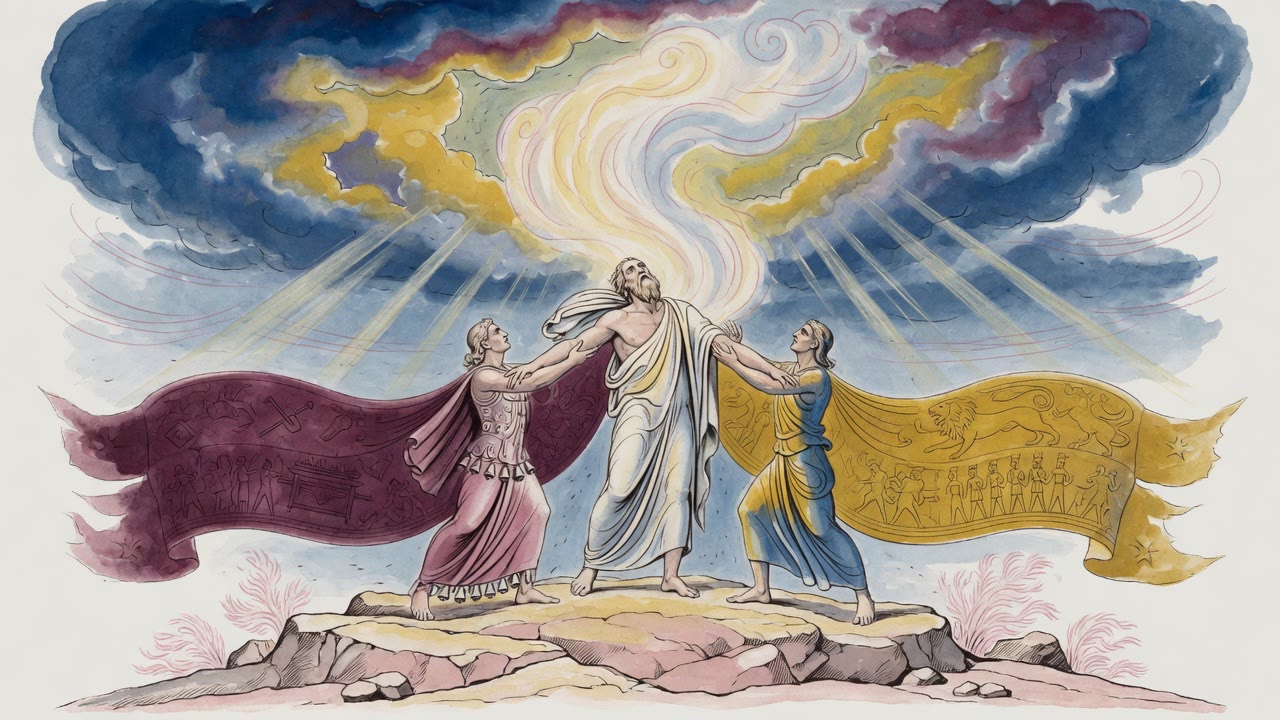
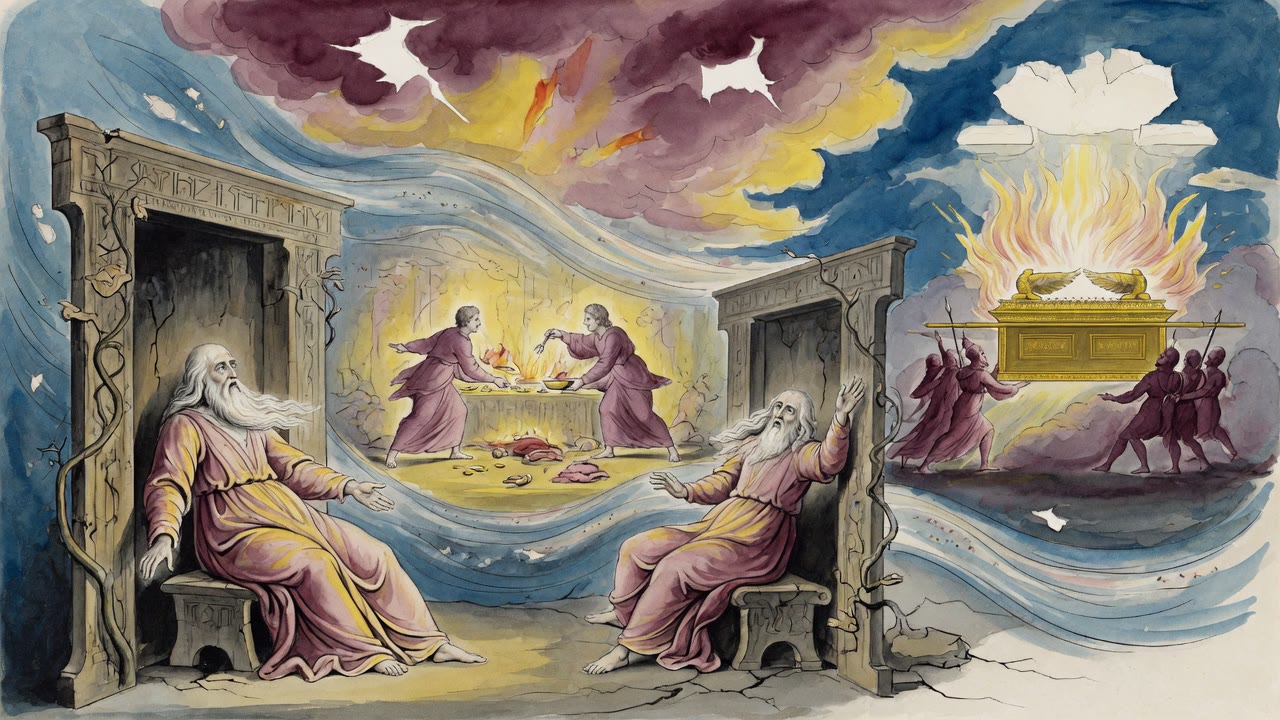
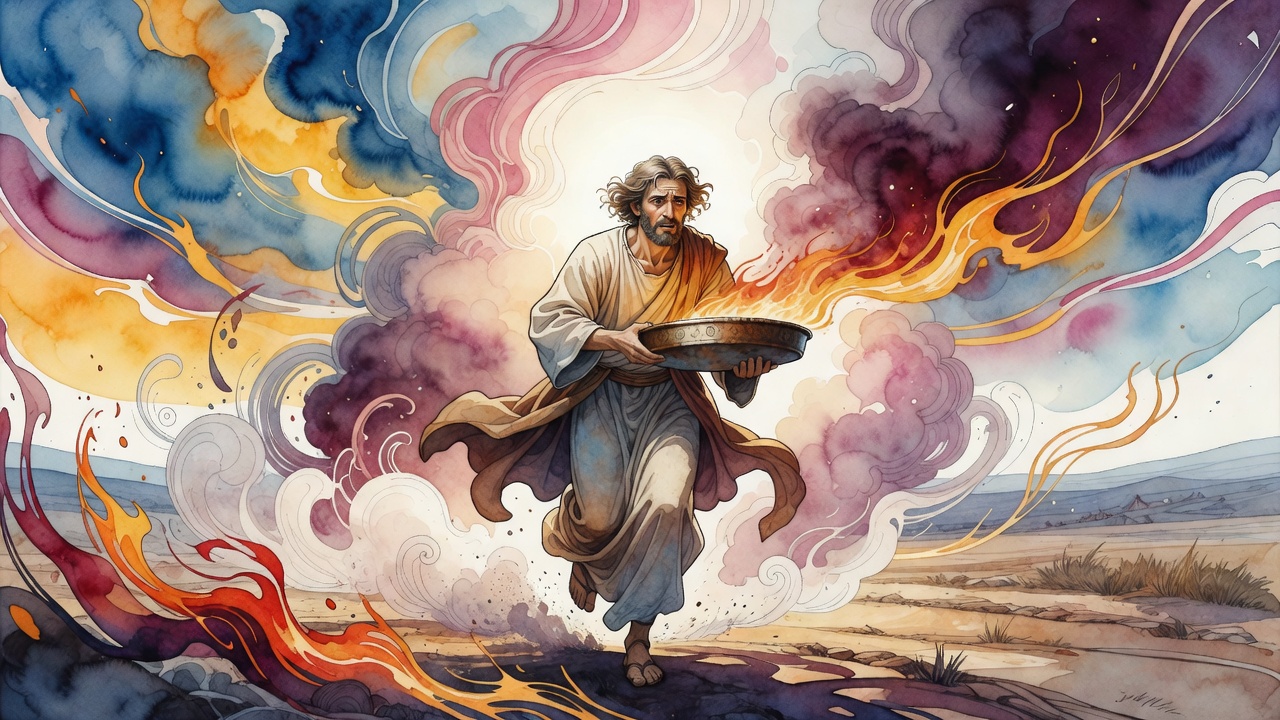
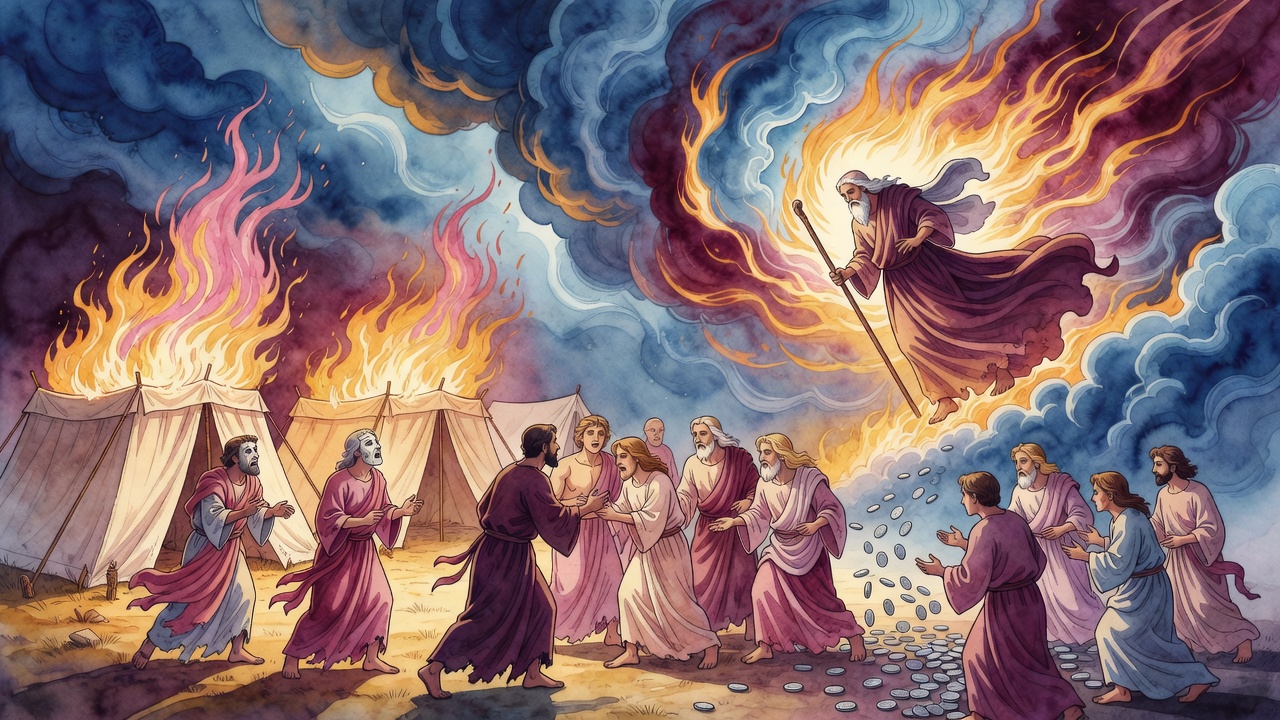
The strange fire did not come from a foreign altar in some distant court. It came from the tents of Nadab and Abihu themselves. Flame took the sons of Aaron while the smell of unauthorized coal still clung to the fabric of their own homes. They left no children. The priesthood lurched around the hole they made.
Fire Killed Aaron's Sons and Levites Replaced the Firstborn Click for full size

Moses still had a Tabernacle to finish and a nation of firstborn claims to settle.

Ash Where Two Priests Had Stood

The Targum names the source of the fire with a domestic cruelty. Not abstract "alien fire" floating in midair. Fire from their own tents, carried into the holy work as if household coals were holy coals. When the blaze finished, Aaron's older line was ash and silence. Eleazar and Ithamar would have to bear weight their brothers had dropped.

Grief sat in the priestly compound like heat that would not leave the stones. Aaron's hands still knew the motions of service, but his mouth stayed bound by the law of the moment. The camp still needed someone to guard the Ark, the table, the lampstand, the altars. Holiness did not pause for mourning. Cousins swept ash and did not speak the dead men's names louder than a whisper.

Levites Counted Against Firstborn

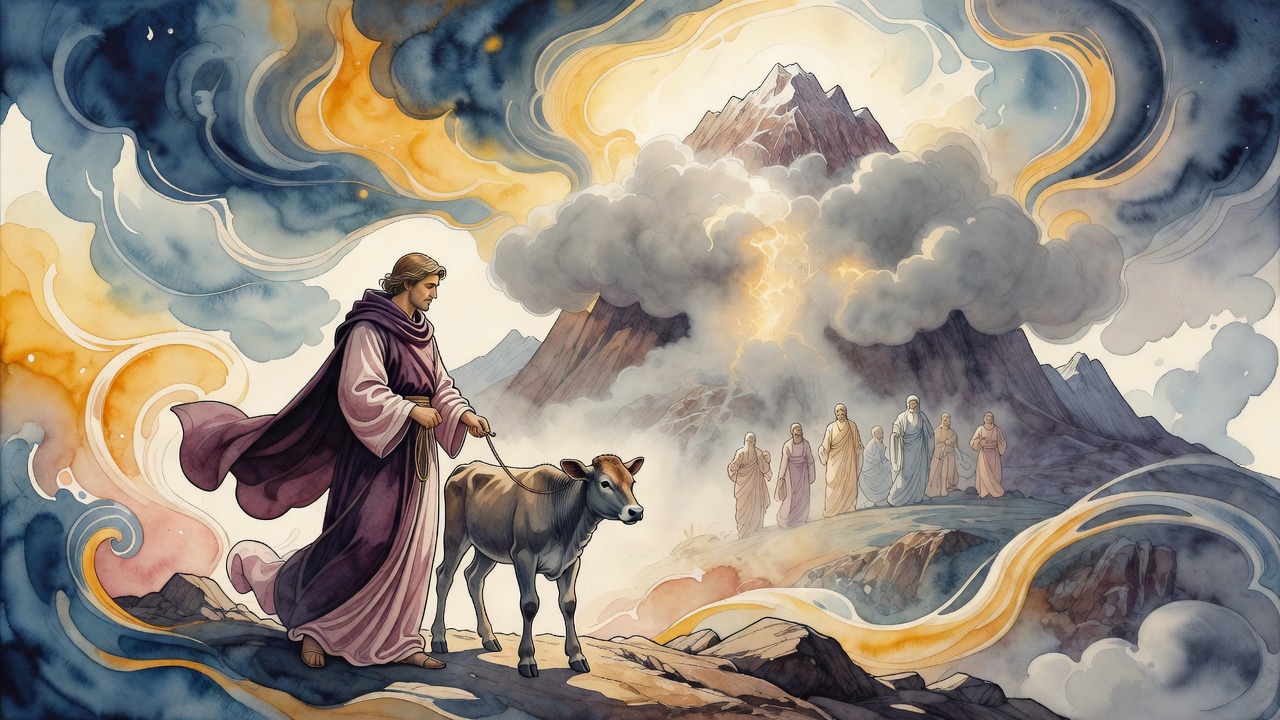
God took the Levites in place of every firstborn in Israel. The swap was not a soft metaphor. It was a census with teeth. Levite clans were set to be divided into twenty-four parties, the seed of the later courses that would serve when a House of stone finally rose in Jerusalem.

Kohath's family drew the cargo that could kill: Ark, table, lamp, altars. Over them stood Eleazar son of Aaron, called Amarkol in the Targum, superintendent who inquired by the Urim and Thummim. Oracles and logistics sat in one pair of hands. A wrong lift of the poles was not a paperwork error. It was a death sentence waiting for a slipped shoulder.

When the numbers closed, Israel held 22,273 firstborn sons and only 22,000 Levites. Two hundred seventy-three firstborn had no Levite mirror. Five shekels each. One thousand three hundred sixty-five shekels of silver moved into Aaron's house "according to the mouth of the Word of the Lord," the Targum's careful phrasing for speech that never pretends a man stares at bare divinity.

Fathers of those 273 counted coins with jaws set. A firstborn title that once meant altar rights now meant a payment and a reassignment. The boy's life stayed. His old claim did not. Mothers watched silver leave the house and felt the weight of a birthright convert into metal.

Wagons, Oxen, and a Closed Door

On the first of Nisan Moses finished erecting the Tabernacle. Curtains hung true. Boards locked. Twelve princes rolled up with six covered wagons and twelve oxen. Moses hesitated to take the gift until God ordered the distribution. Gershon received two wagons and four oxen. Merari took four and eight. Kohath received nothing. Their load had to ride on human bone and muscle, not on cart wood.

Nachshon of Judah brought the first of the twelve days of offerings. Silver bowls, basins, gold pans, animals in measured stacks moved toward the altar until the dedication smelled of fat and metal. Day after day another prince stepped forward with the same weights and the same blood. The camp watched wealth become smoke.

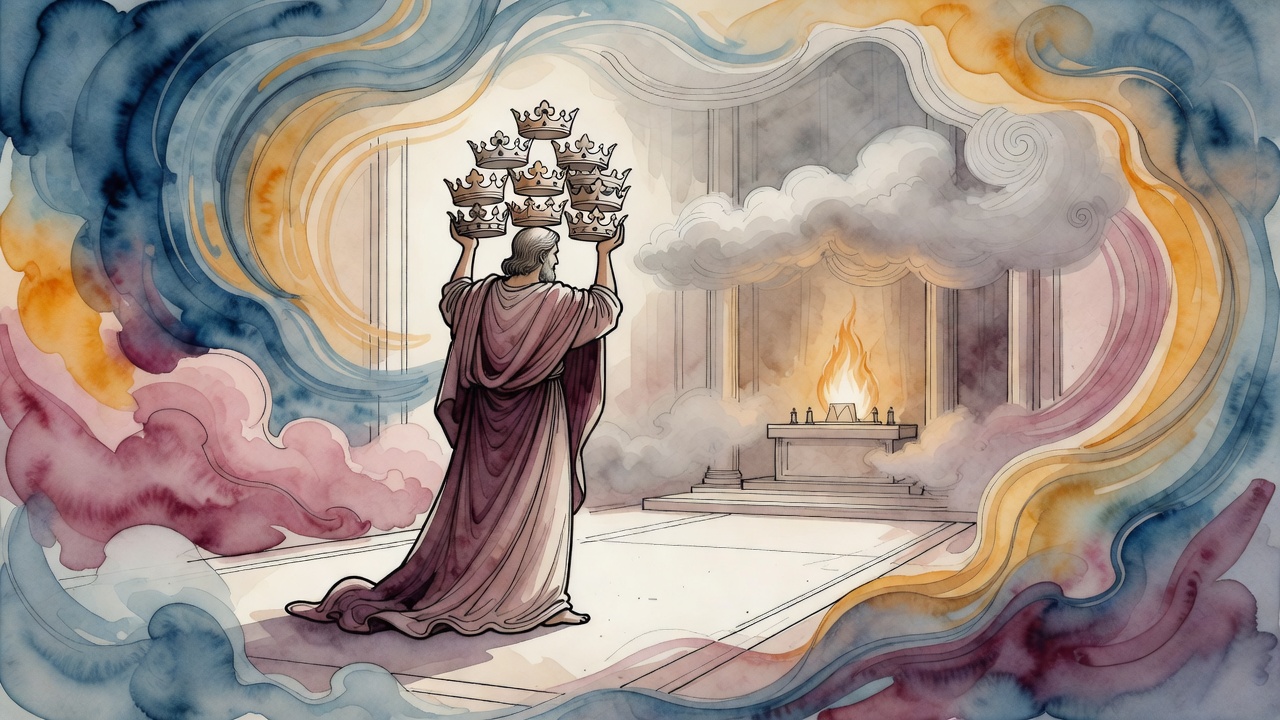
Then the Cloud of Glory came down. The Shechinah (שכינה), the indwelling Presence, filled the Tent so completely that even Moses could not enter. The builder stood outside the house he had raised. Day-cloud and night-fire would lead the journeys, but the first gift of the finished work was a door Moses himself could not pass.

Voice Between the Wings

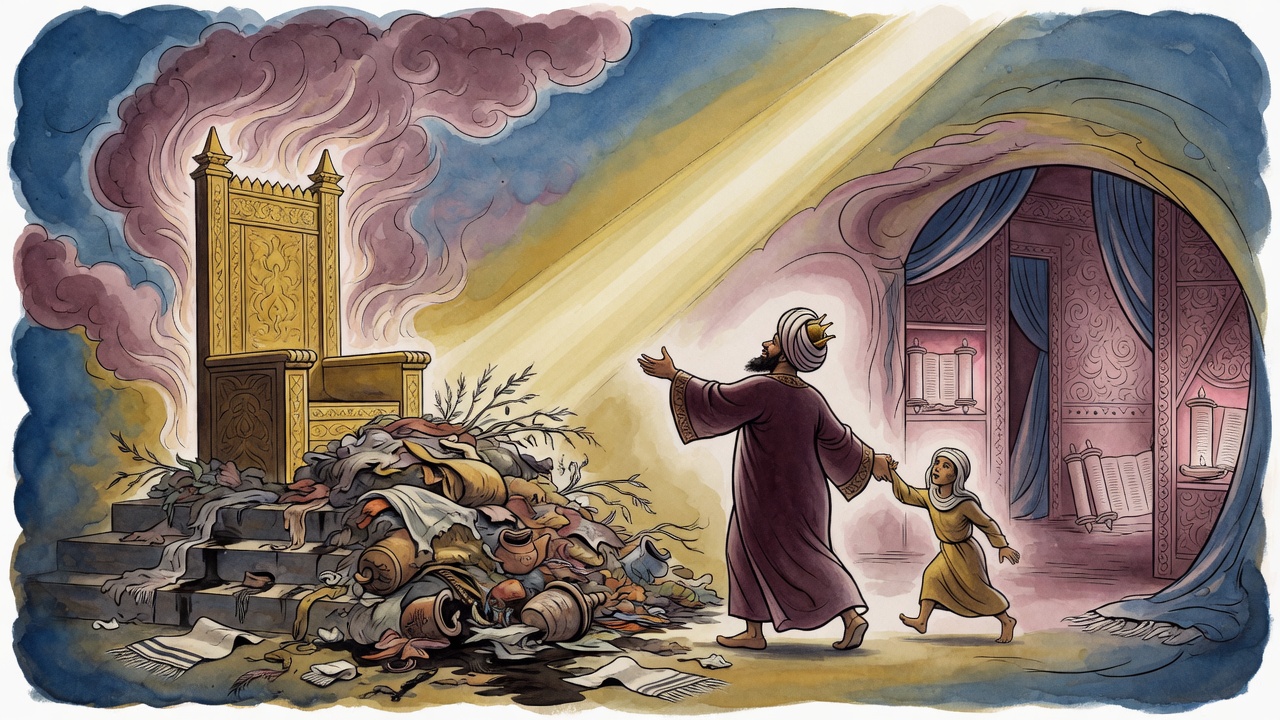
When he was finally called in, the voice that met him did not rise from inside the Ark like a man speaking from a box. It descended from the heaven of heavens upon the cover between the cherubim. Spirit-speech came down the height of the world to a handspan of gold.

Behind him lay ash of two nephews who had forced fire, silver of two hundred seventy-three firstborn bought out of a sacred claim, and oxen assigned by clan. Ahead of him lay a Presence that could fill a room past the tolerance of the greatest prophet. The Tabernacle was open for Israel's service and closed, for a moment, even to Moses.

That is how the wilderness cult began in their eyes: not with a gentle ribbon across a gate, but with domestic fire, paid redemption, and a Cloud that taught the builder the limits of his own key. The men who hauled Kohath's poles felt that lesson in their shoulders every time the camp moved.


← All myths
From the tradition

Sources

3 sources

The texts behind this telling. Some cards carry a translation of the source; others are our own retelling of it, and each card says which. Every card links out to the original.

Targum Jonathan on Exodus 40Targum Jonathan

Retold in our words. Read the original at the link below.The Targum of Jonathan ben Uzziel, trans. J. W. Etheridge, London, 1862 · Public Domain

The final chapter of Exodus (Exodus 40:1-38) is, in the Hebrew Bible, the moment God's Presence fills the completed Tabernacle. The Targum Jonathan turns this moment into a prophetic map that stretches from the patriarchs to the end of days.

Every object Moses placed in the Tabernacle receives a symbolic explanation found nowhere in the Hebrew text. The table was set on the north side "because from thence are given riches; for from thence distil the drops of the latter rain upon the herbs, for the food of the inhabiters of the world." The candelabrum went on the south side "because there are the paths of the sun and of the moon, and the pathways of the luminaries; and thence are the treasures of wisdom which resemble the light." Its seven lamps correspond to "the seven stars which resemble the just, who shine unto eternity in their righteousness."

The incense altar represents "the wise who are diligent in the law" whose study has "a perfume fragrant as the sweet incense." The veil represents the righteous "who cover with their righteousness the people of the house of Israel." The burnt offering altar represents the generous who "spread the table before their doors and feed the poor." The laver holds water "for the sins of such as convert by repentance, and pour off their perversity like water."

The courtyard stands for "the merit of the fathers of the world, which encompasses the people of the house of Israel round about." The gate-hanging represents "the merit of the mothers of the world, which spreads at the gate of Gehinnom (the place of spiritual purification after death), that none may enter there of the souls of the children of the people of Israel." The matriarchs literally guard the entrance to hell.

The anointing oil is consecrated "on account of the crown of the kingdom of the house of Judah, and of the King Messiah, who is to redeem Israel at the end of the days." The altar consecration points to Elijah, "the great Priest who is to be sent at the end of the captivity." The laver is anointed on account of "Messiah son of Ephraim, who shall spring from him, by whose hand the house of Israel is to vanquish Gog and his confederates at the end of the days."

Then the Cloud of Glory descended, and the Shekinah (the Divine Presence) filled the Tabernacle so completely that even Moses could not enter. The pillar of cloud by day and fire by night guided Israel through every journey. The Targum's Exodus ends where it began: with God physically present among His people, a light visible to every eye in the camp.

Full source
Targum Jonathan on Numbers 3Targum Jonathan

Retold in our words. Read the original at the link below.The Targum of Jonathan ben Uzziel, trans. J. W. Etheridge, London, 1862 · Public Domain

In the standard Hebrew text, God takes the Levites instead of Israel's firstborn sons. The Targum Jonathan adds details that transform this administrative swap into a high-stakes theological drama involving death by fire, twenty-four priestly divisions, and a mysterious figure called the Amarkol.

Nadab and Abihu, the sons of Aaron, died "by the flaming fire at the time of their offering the strange fire from their own tents." The Targum specifies the fire came from their personal tents, not some other source, implying they used unauthorized domestic fire rather than sacred fire from the altar. They left no children. Their deaths created a vacuum that shaped the entire priestly succession.

The Targum introduces a detail found nowhere in the Hebrew Bible: the Levites were to be "divided into twenty and four parties." This is the origin of the twenty-four priestly courses that would later serve in the Temple in Jerusalem, projected backward into the wilderness period.

Among the Levite clans, Kohath's family guarded the most dangerous objects: the Ark, the table, the candelabrum, and the altars. Overseeing them all was Eleazar son of Aaron, whom the Targum calls the "Amarkol", a title meaning superintendent or chief administrator, who "inquireth by Uraya and Thumaya," the Urim and Thummim. This gives Eleazar an oracular role absent from the biblical text.

When the census came in, Israel had 22,273 firstborn but only 22,000 Levites. The 273 surplus firstborn had to be redeemed with silver: five shekels each, totaling 1,365 shekels paid to Aaron and his sons. The redemption was carried out "according to the mouth of the Word of the Lord," the Targum's signature phrase for divine communication, never a direct encounter with God, always mediated through the Memra, the divine Word.

Full source
Targum Jonathan on Numbers 7Targum Jonathan

Retold in our words. Read the original at the link below.The Targum of Jonathan ben Uzziel, trans. J. W. Etheridge, London, 1862 · Public Domain

Numbers 7 is the longest chapter in the Torah, listing identical offerings from twelve tribal princes across twelve days. It is famously repetitive. The Targum Jonathan rescues it by revealing what each detail supposedly symbolized.

The dedication began on the first of Nisan, when Moses finished erecting the Tabernacle. The twelve princes brought six covered wagons and twelve oxen. Moses initially refused to accept them, but God told him to distribute them to the Levites. Gershon received two wagons and four oxen. Merari received four wagons and eight oxen. Kohath received nothing, because their sacred cargo had to be carried on human shoulders.

Nachshon son of Amminadab, prince of Judah, brought his offering first. But the Targum's real treasure comes in the summary at the end. Each silver bowl weighed 130 shekels, "answering to the years of Jochebed when she bore Moses." Each vase weighed 70 shekels, "answering to the seventy elders of the great Sanhedrin (the supreme rabbinic court)." The twelve golden pans corresponded to the twelve signs of the zodiac. Each pan weighed ten shekels, "answering to the Ten Words" (the Ten Commandments). The total gold of 120 shekels matched "the years lived by Moses the prophet."

The twelve rams meant "the twelve princes of Ishmael would perish." The twelve lambs meant "the twelve princes of Persia would perish." The sixty rams of the peace offerings corresponded to "the sixty years which Isaac had lived when he begat Jacob." The sixty goats matched "the sixty letters in the benediction of the priests."

The chapter ends with Moses entering the Tabernacle and hearing "the voice of the Spirit who spoke with him descending from the heaven of heavens upon the Mercy Seat between the two Cherubim." The voice came not from the Ark but from above it, descending through the cosmos to reach the space between the golden wings.

Full source