Aaron Took the Fire-Pan After His Sons Died by Fire
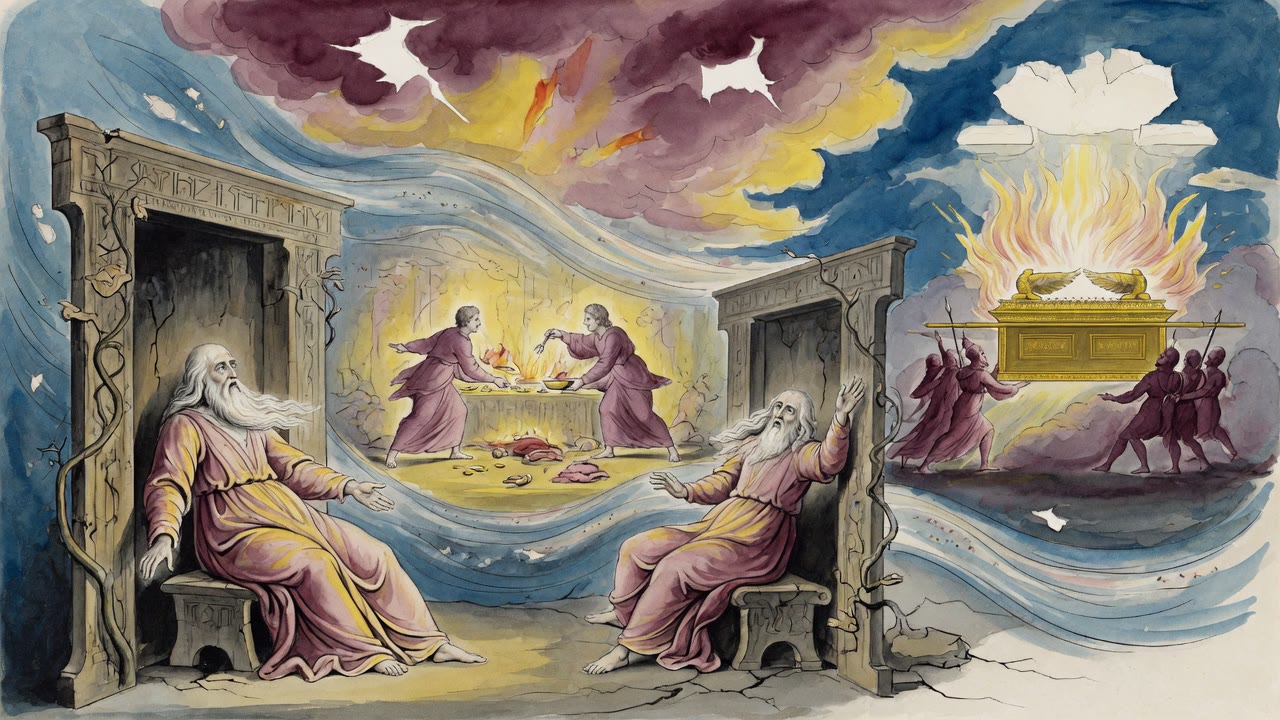
Men were falling in the tents when Moses put the fire-pan in Aaron's hands. Aaron's sons had died by fire. He ran toward the plague anyway.
Table of Contents
 Click for full size
Wrath in the Camp
The plague moved through the tents like a low wind that knew names. Men fell where they stood. Women pulled children back from doorways that no longer felt safe. Moses heard the count of the dying climb while the argument with Korah's company still smoked in the air.
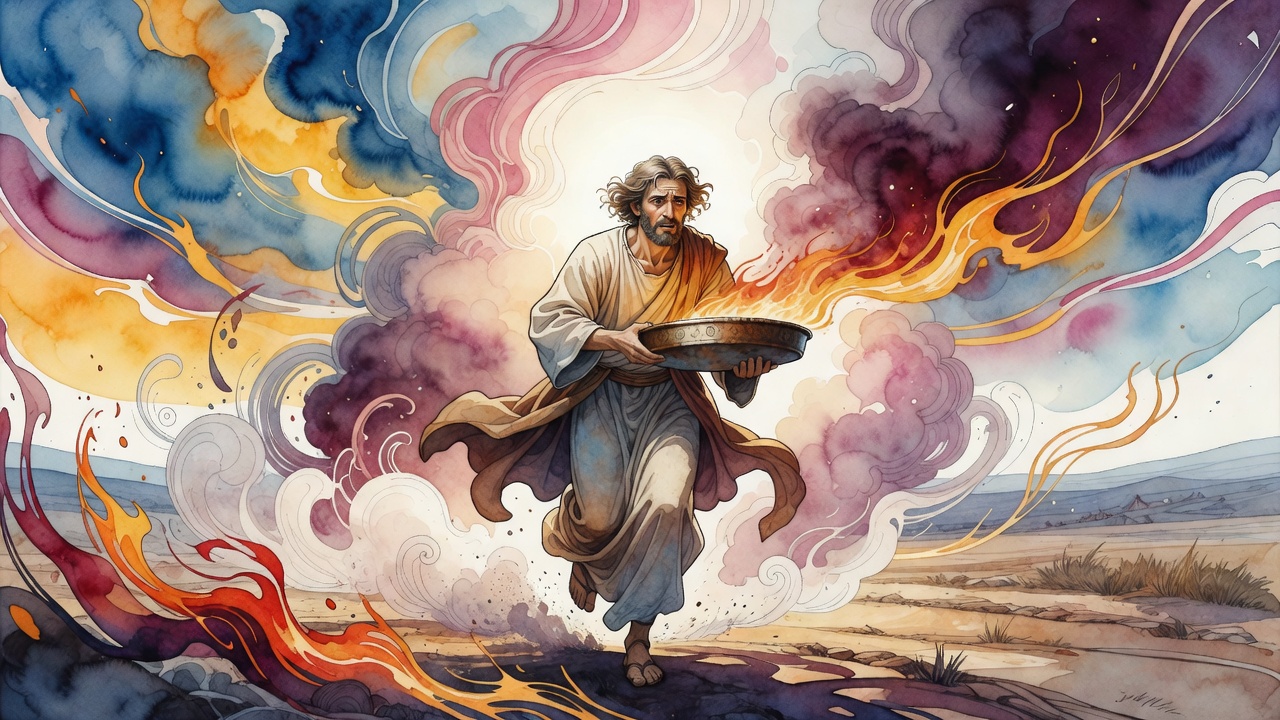
He turned to Aaron and shouted for the tool that had already killed two sons. Take the fire-pan. Put fire upon it. Carry incense into the people. Atone before the stroke reaches the next row of tents.
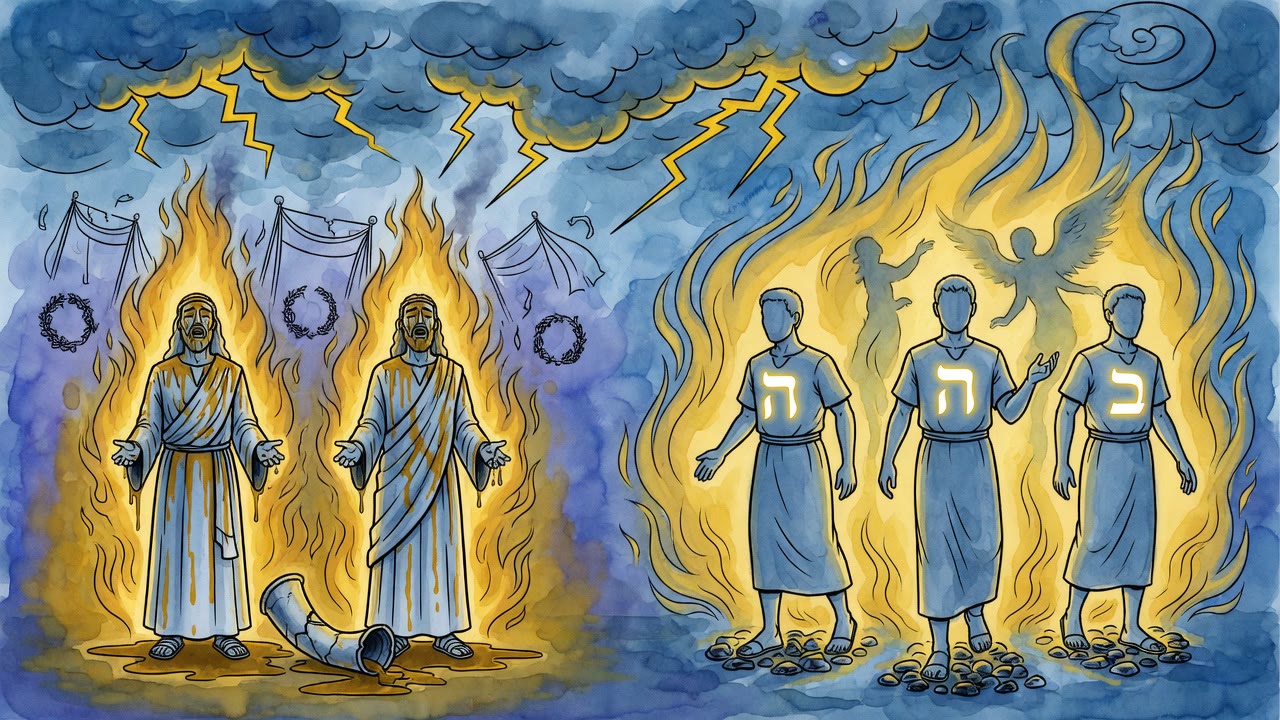
Aaron's hands knew that pan. His memory knew the other fire. Nadab and Abihu had brought near what was not commanded, and fire went out from before the LORD and consumed them. Anointing oil had been on their heads. Holy oil had not saved them.
Would You Send Me Out to Die the Same Death
Aaron trembled.
"My master Moses, do you want to kill me? My sons brought strange fire and were consumed. You say take the pan. They carried common fire in and burned. I would carry holy fire out. Would I not burn too?"
The question was not cowardice alone. It was a father measuring the same element twice. Moses did not soften the order.
"Hurry," he said, "for as you speak they are dying. Run to the people and atone for them."
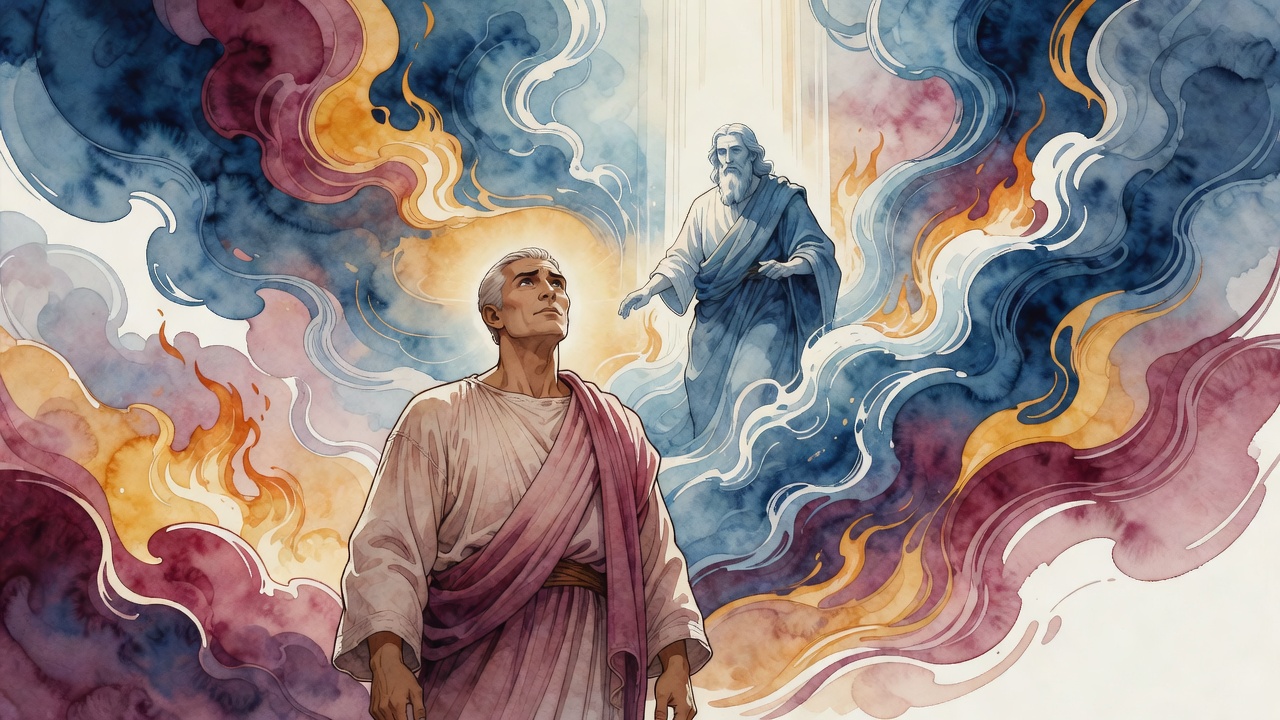
Every second of debate was another body on the ground. Something turned in Aaron's chest. If I die for Israel, am I not worthy? He took the pan. He put fire on it. He ran toward the plague instead of away from it, a high priest racing death with the same element that had taken his children.
The camp saw him come, gold and smoke and a face still raw with old grief. The living made a path without knowing if he would reach the line in time.
Death Held at the Line
Where Aaron stood between the dead and the living, the stroke stopped.
He planted his feet in dirt that still held warmth from people who had been standing a moment before. Smoke rose from the pan. The plague came up to that smoke and did not cross. On one side, bodies. On the other, breath. Aaron held the line with trembling legs and a steady pan.
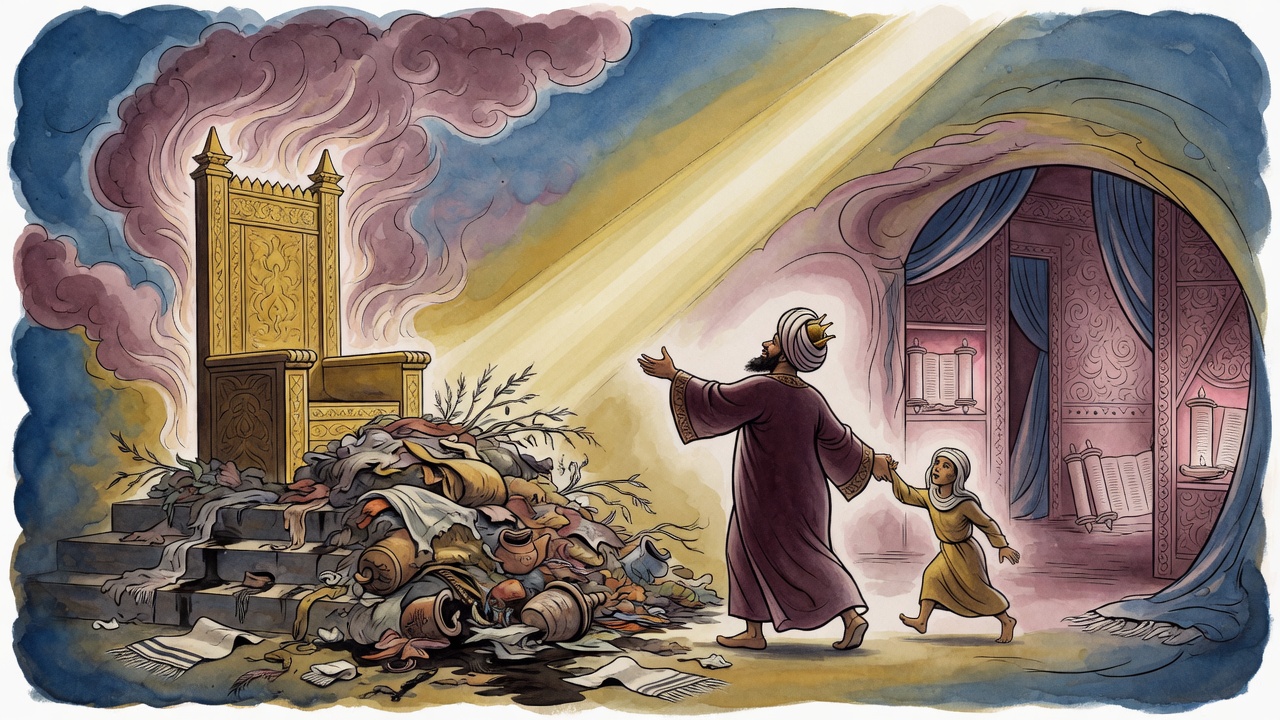
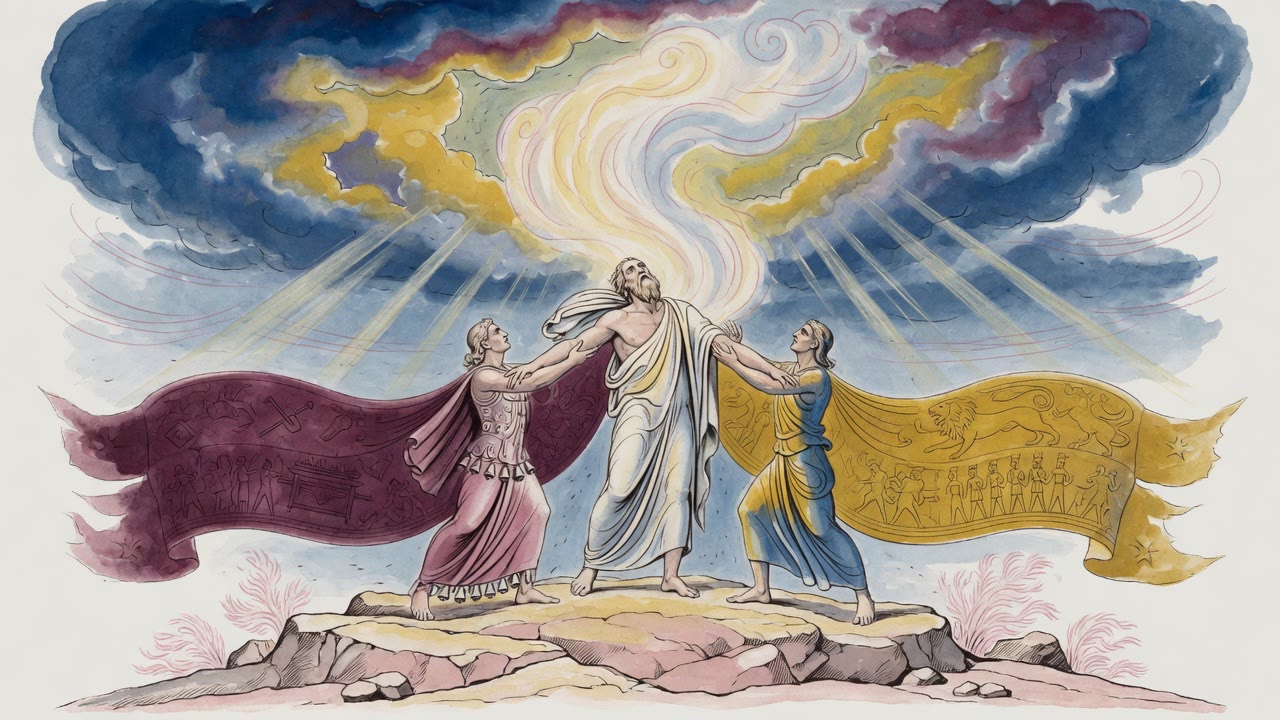
Later, when Scripture says "Take Aaron and his sons," Heaven is not only assigning robes. The Holy One whispers to Moses: I owe Aaron a taking. Magnify him by taking. Remember the day he ran into wrath with a pan of fire and held back death for My children. Honor is not only a title. It is memory of a sprint under smoke.
Fools carry away shame. The wise inherit glory. Aaron's glory that day was not a crown polished in a quiet court. It was a sprint into contagion. The plague knew the boundary of atonement when a man who had reason to fear fire chose fire for others rather than for his own advancement.
Two Hundred Fifty Censers
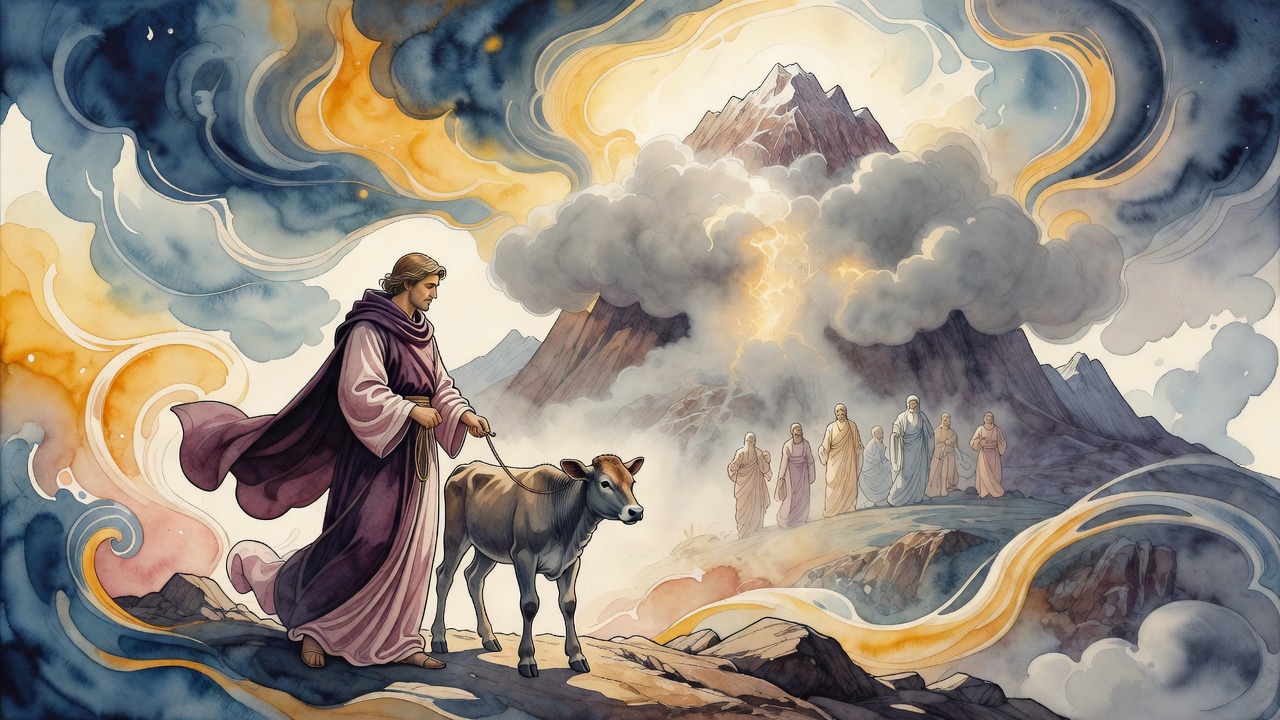
Earlier, when Korah's two hundred fifty men reached for the priesthood, Moses had framed the same tool as a warning.
"Among the nations there are priests without number crowding one house of many gods. Israel has one God, one Torah, one altar, one high priest. You want the dearest service? Know that within the incense a deadly poison can hide. By that offering Nadab and Abihu were consumed, and their father still walks with that ash in his memory."
He pleaded with them. "I am telling you, do not bring guilt upon your own souls. Two hundred fifty will carry the pans. Only the one the LORD chooses will walk out alive. All the rest of you will perish."
They took the censers anyway. Fire answered them as it had answered the sons of Aaron, the same flame for rebels who grasped and for priests who drew near wrongly. The pan does not flatter ambition, and it does not forget the last hands that misused it.
Oil, Name, and the Pan That Saves
A good name later carried Hananiah, Mishael, and Azariah through a furnace in a foreign court. The sacred oil had not carried Aaron's sons through the sanctuary flame. That knowledge sat in Aaron's bones while he ran. Oil on the head is not the same as a name that heaven will keep.
So three fires stand in one line. The anointed sons die despite oil. The three in the furnace live by a good name. Aaron, oil on his head and grief in his bones, runs with a pan into a plague and lives because he carries atonement for others, not ambition for himself. Motive is what heaven reads. Metal is only metal until then.
The pan does not care who holds it. Heaven cares why. The same vessel can mark a rebel's death, a son's error, or a father's courage. Aaron's taking is the honor paid for the hour he chose Israel's life over his own fear of fire. When later generations lift incense, they lift that choice with it, whether they know the story of the run or only the smoke of the service.
← All myths