The Furnace Spared Names That Anointing Oil Could Not
Nadab and Abihu turned down every match. No woman in Israel was good enough for the sons of the high priest, they said, and those women grew old unmarried.
Table of Contents
 Click for full size
Oil on the Brow, Fire in the Sanctuary
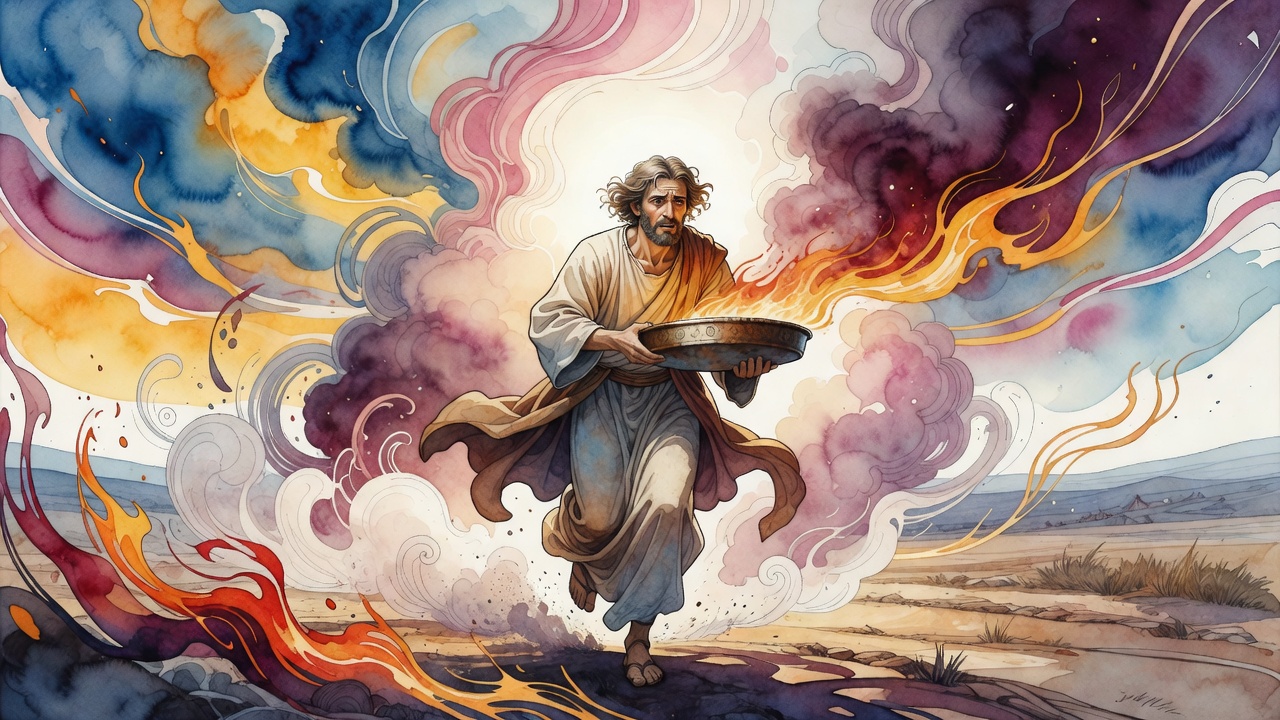
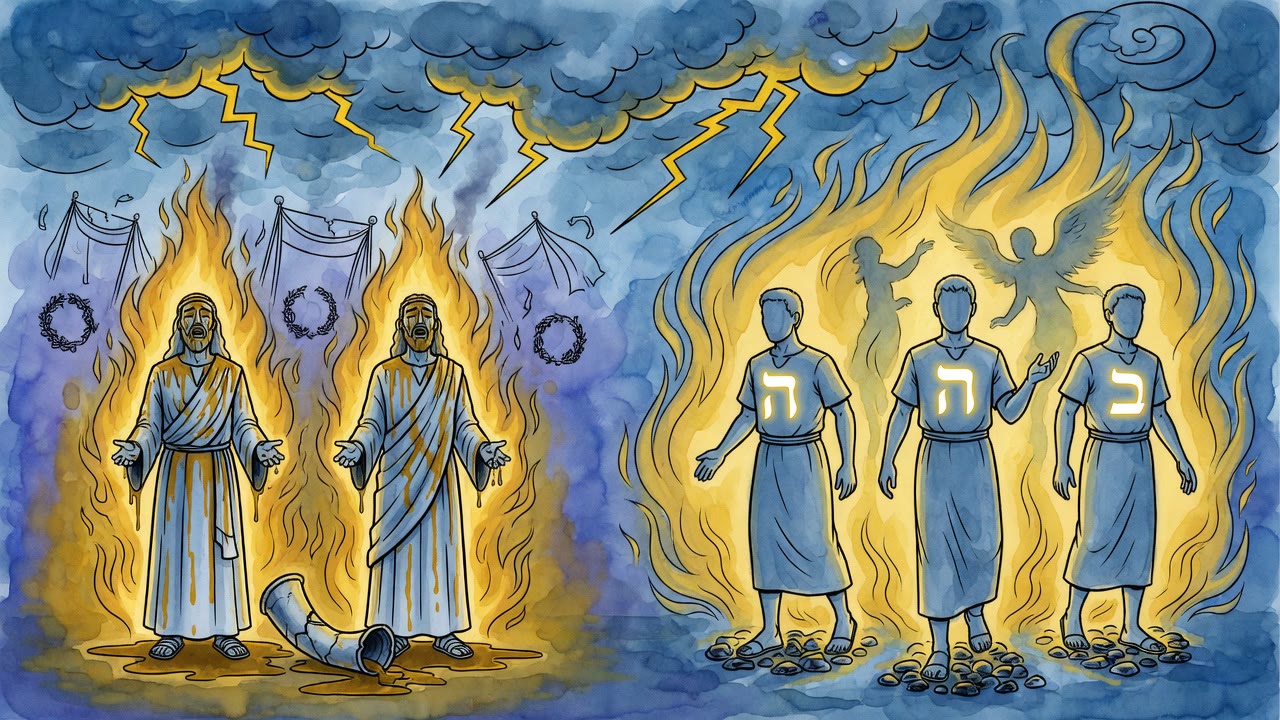
Nadab and Abihu entered the sanctuary with anointing oil still marking them as buds of the high priesthood. The camp outside still tasted the joy of dedication. They brought near an offering. Fire went out from before the LORD and consumed them. They had drawn close and were burned. Holy oil had been poured. Holy oil did not preserve them. The midrash will not let the oil become an excuse or a shield after the fact.
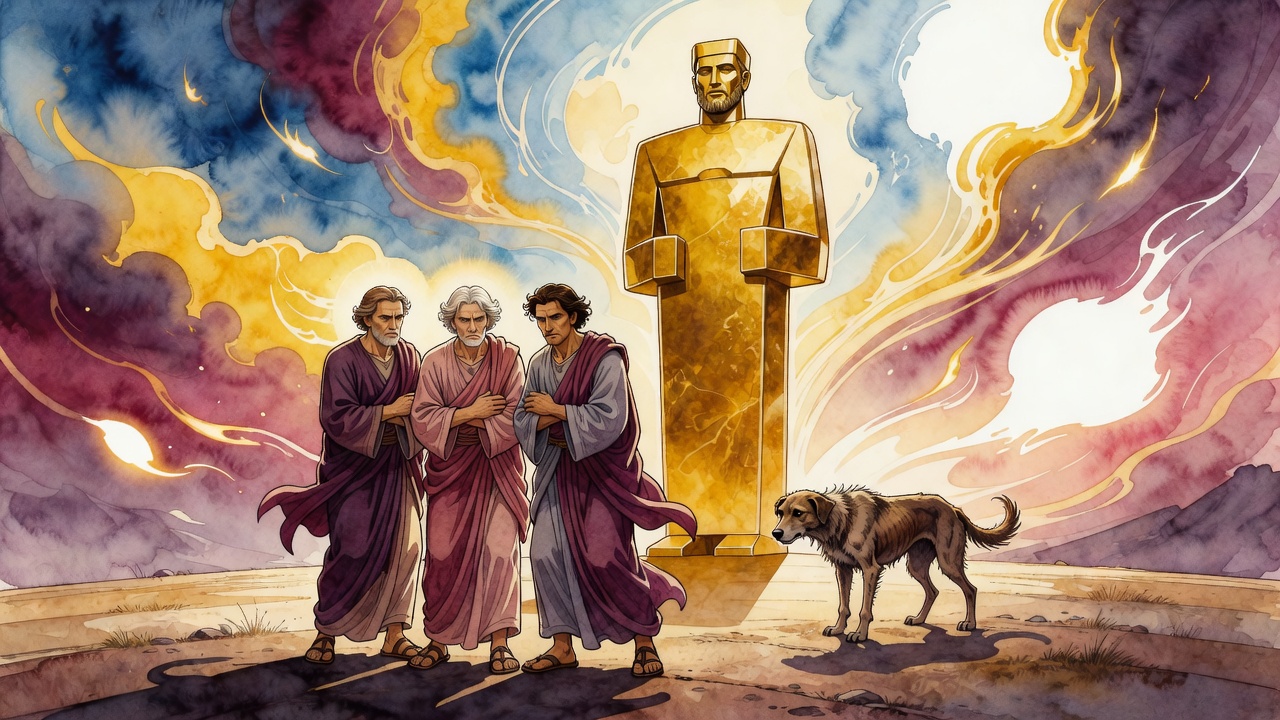
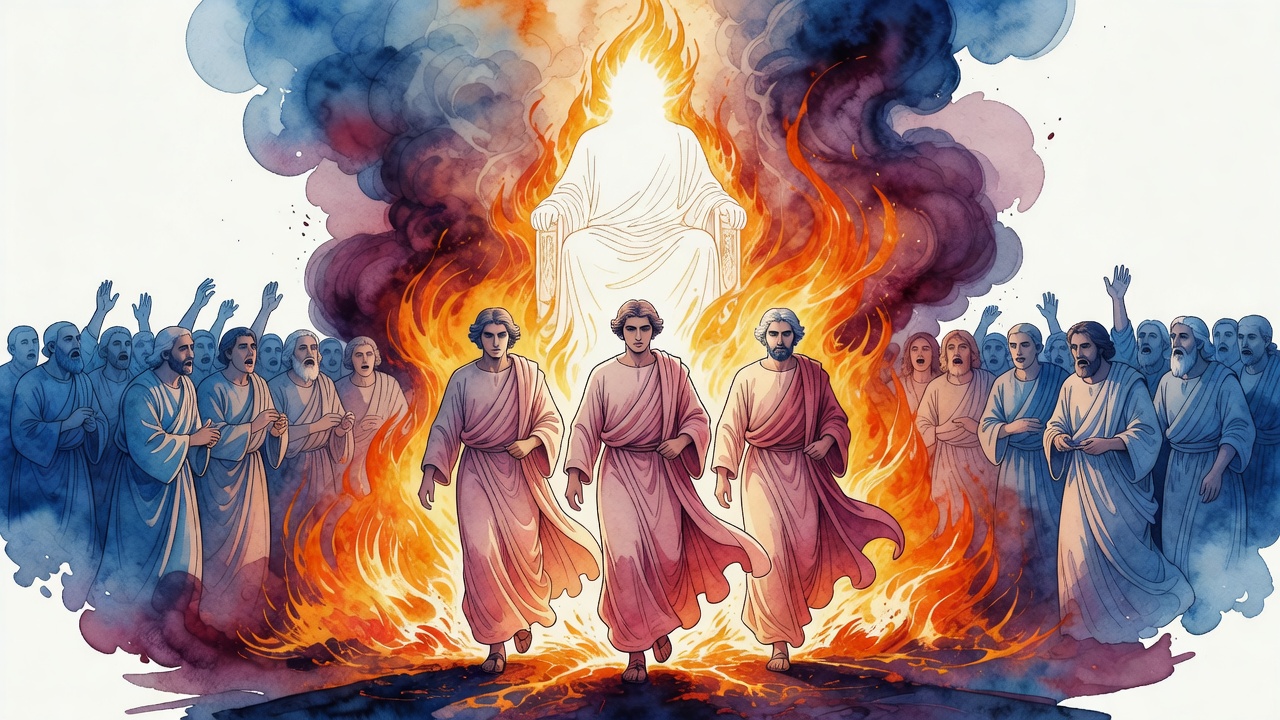
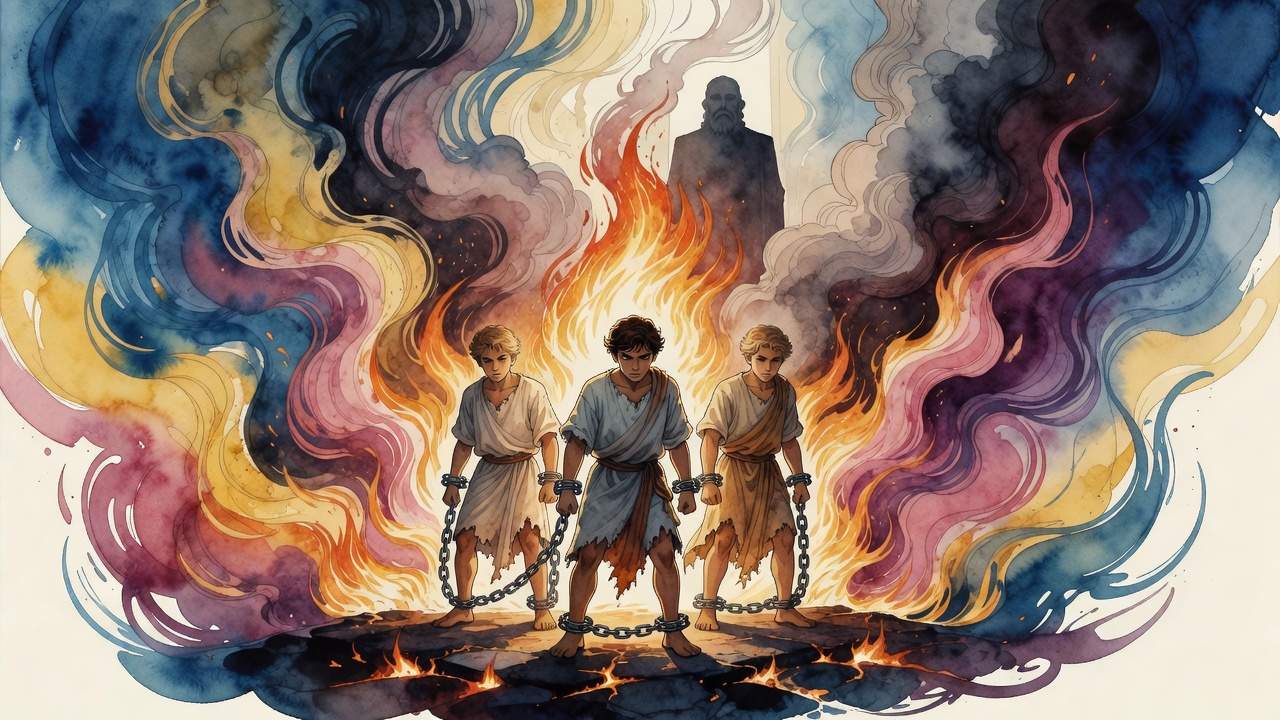
Outside, in another age and empire, three young men without that oil were seized for a furnace. Hananiah, Mishael, and Azariah carried no sacred cruse, only their names and their refusal to bow before an image that demanded a knee. Flames meant to destroy them did not touch them. They walked out alive. Solomon's line stands between the two scenes: a good name is better than good oil, and fire is the honest accountant of both.
The Weddings That Never Sang
Rabbi Aha pressed a harder charge against Aaron's sons. They never gave themselves to the commandment of being fruitful and multiplying. Listen to the pride in their mouths as the midrash reconstructs it. We are the buds of the high priesthood, the blossoms of the holiest office in Israel. Shall we take wives who are not worthy of us? Every possible match looked too small for their reflected glory.
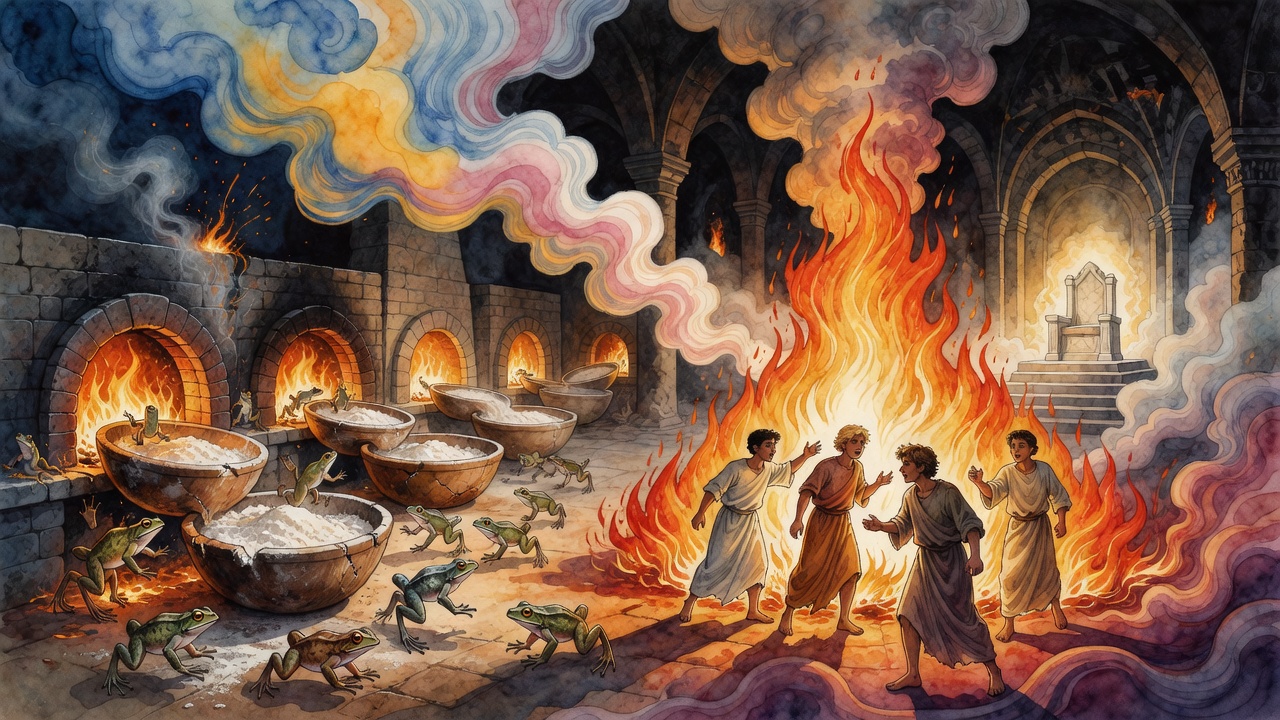
So they waited. So they refused. Daughters of Israel grew older unwed while the young men weighed every match against their own rank. Fire devoured their young men, the verse says, and the midrash hears the next breath: because their maidens had no nuptial song. The fire that should have warmed a home turned and took them at the altar. Measure for measure is not always a sword. Sometimes it is a missing song that becomes a consuming flame.
Same Flame, Two Offerings
Kohelet's riddle hangs over the ash: as with the good, so with the sinner. Korah's company rose against Aaron, grasping at a priesthood not theirs, and a fire went out from the LORD and devoured them. Nadab and Abihu entered to draw near, and a fire went out from before the LORD and consumed them as well. The same flame for rebels and for priests who erred in nearness. Solomon's lament finds its picture in two burnings that look alike from a distance and are not alike in motive.
Aaron sat in grief and asked what sin clung to his sons. The Holy One told Moses to comfort him. After the death of the two sons of Aaron, Speak to Aaron your brother. Speaking, here, is consolation, as the prophet is told to speak to the heart of Jerusalem. The same word that names the loss carries the comfort, and Moses must deliver both without collapsing either into silence or into cheap explanation.
Name Against Oil
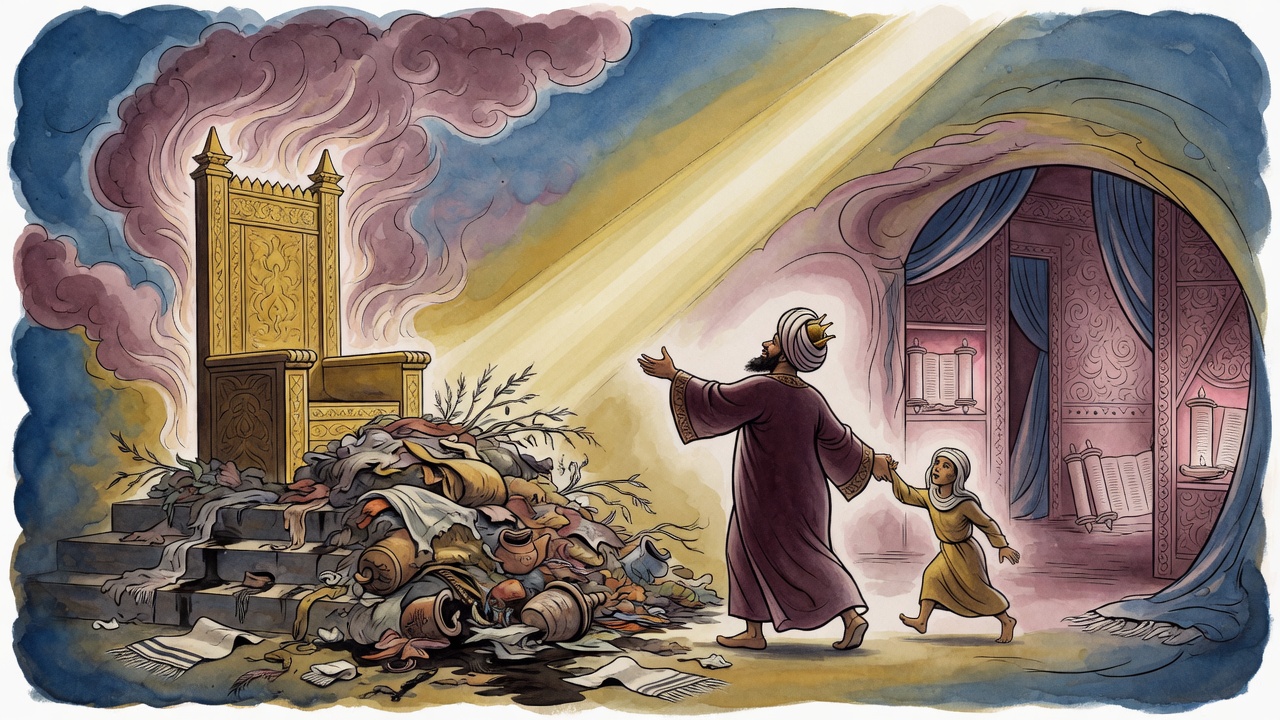
The three in the furnace did not outrank the sons of Aaron in pedigree. They outlasted them in the midrash's scale because a lived name of faithfulness held where ritual oil failed. Oil is a gift of office. A name is a life under pressure, spoken by neighbors and by Heaven when the kiln is lit. Fire tests both and is not impressed by vestments alone.
This is not a sneer at anointing. It is a warning to those who trust the cruse more than the conduct. The sanctuary can burn the anointed. The furnace can spare the named. The difference is not temperature. It is whether the life inside the fire has already chosen whom it will serve when the crowd is watching and when it is not.
What the Living Do With Ash
Aaron must keep serving after the ash is gathered. Israel must keep marrying after pride has been answered. Later generations must keep a good name when empire lights the kiln and demands a bow. The midrash refuses a single moral. It offers a cluster: do not refuse the household; do not grasp a priesthood not given; do not trust oil without the name that walks through fire.
Measure for measure still stands. The young men who would not kindle lamps of a home met a holier flame. The young men who would not bow to an idol met flames that would not kindle against them. Between those two fires the living learn what to pour on a brow and what to build in a life before any fire is asked to decide.
The midrash keeps the scene close to the body on purpose. Names move. Choices cost. Heaven writes while people still think they have more time to finish what fear postponed.
In Babylon the kiln was politics made visible. In the wilderness the sanctuary fire was holiness made visible. The midrash sets them side by side so no one can hide behind office or exile as if context alone saves. Context is the stage. Choice is the actor. Oil marks a calling. A name marks a life that has already answered when the crowd shouted a different script.
← All myths