Aaron Offered a Calf to Close the Golden Wound
The Holy One would not let him bring a bull. A calf had broken the priesthood in his hands. A calf would have to set it firm again.
Table of Contents
 Click for full size
Not a Bull, a Calf
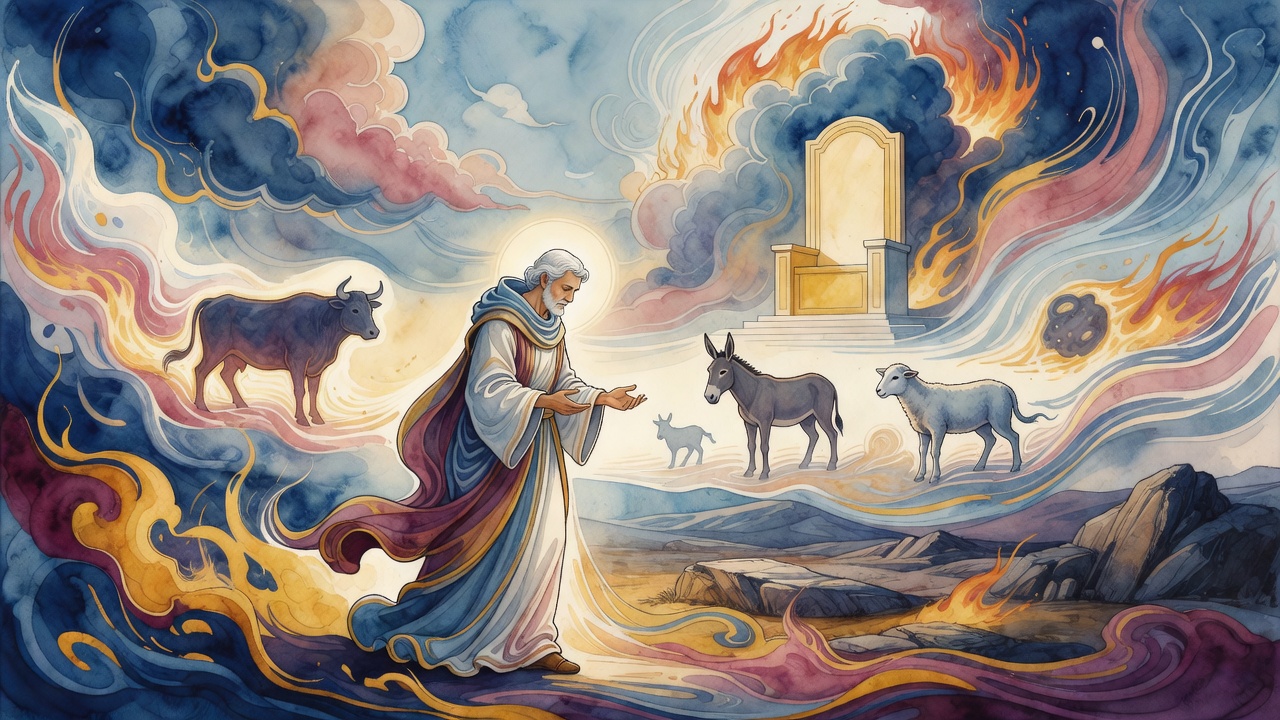
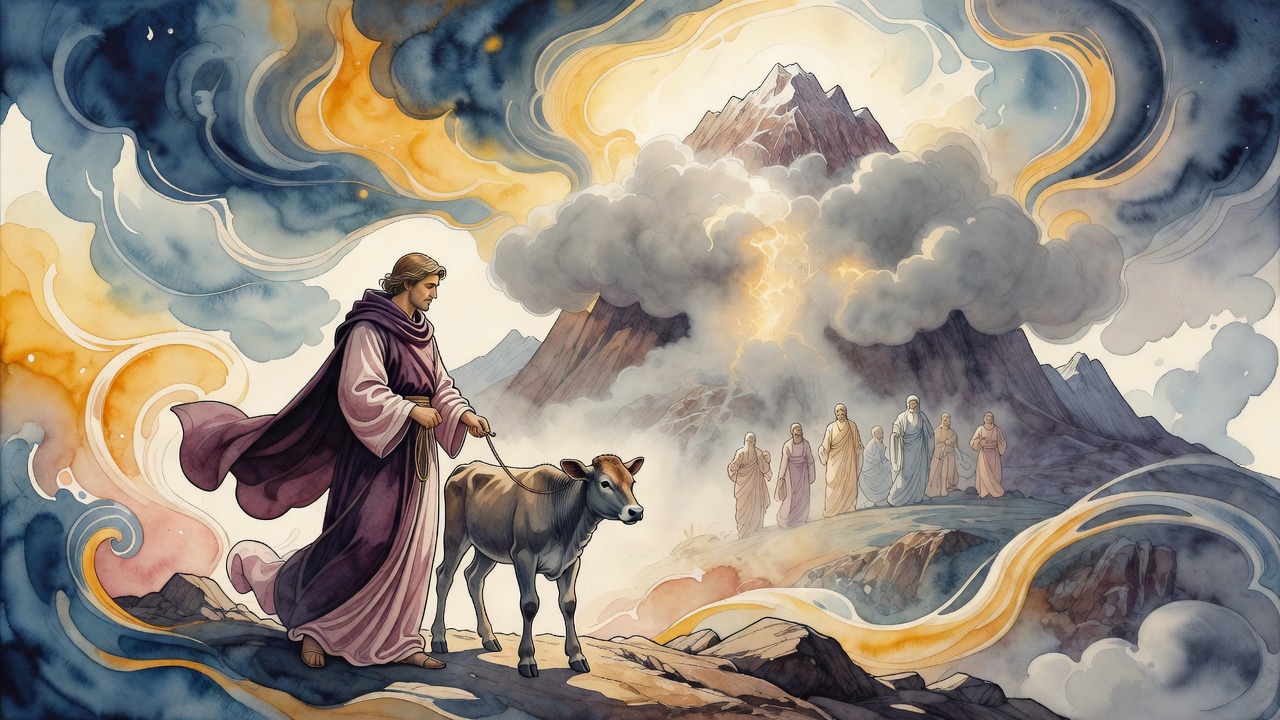
Aaron stood at the altar with a calf, not a bull. The day of the priesthood's beginning had arrived, and the Holy One had said, "Take for yourself a calf." Aaron's hands knew the weight of that word before the knife did. At the foot of the mountain it had been a calf of gold that shook the priesthood loose in his grip. Now, by a calf, that same priesthood would be set firm again. The thing that broke him would be the thing that mended him.
Israel was commanded to bring a calf as well, a male goat for a sin offering and a calf, so the people would never whisper that the guilt of the golden one still clung to them. "Let them see, with their own eyes, that they have been forgiven," said the Holy One. In this world I grant atonement through offerings. In the world to come I will wipe iniquities clean with no offering at all, as Isaiah heard: "I, even I, am He who blots out your transgressions for My own sake" (Isaiah 43:25). The altar smoked. Past shame and future mercy stood in the same animal.
Four Sons Under One Decree
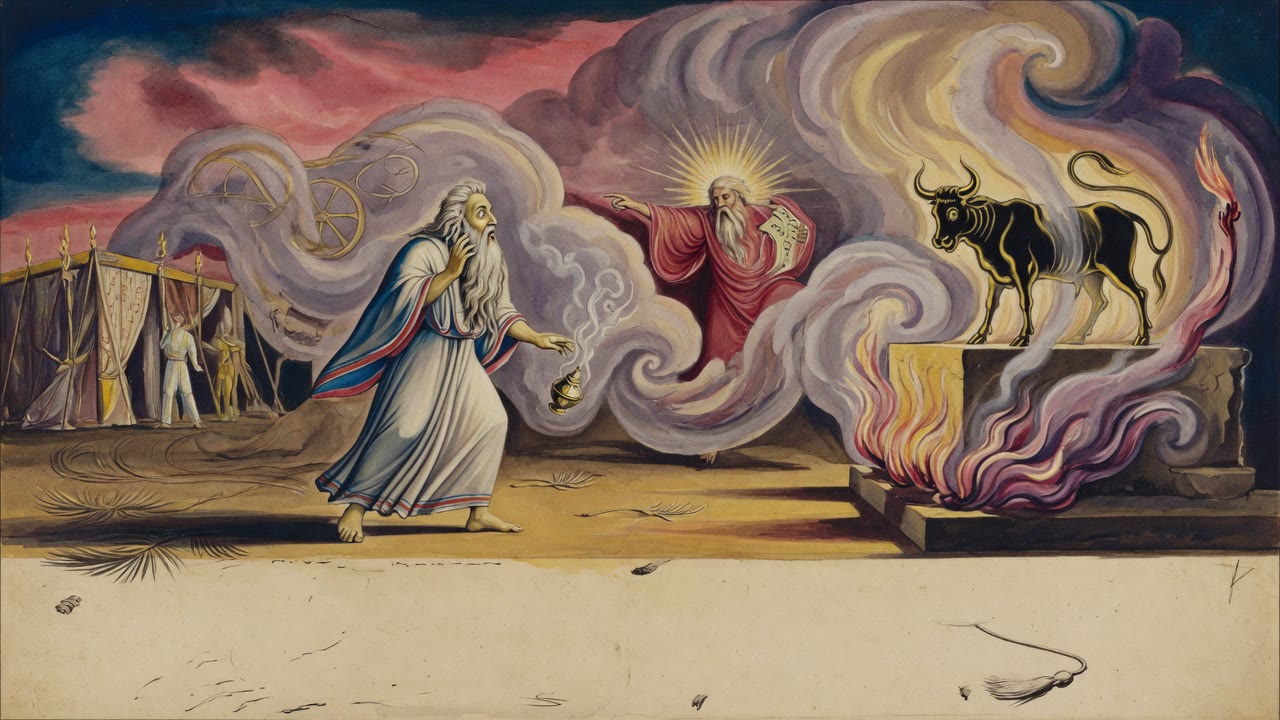
Aaron had four sons. On a bitter accounting all four stood liable to death. At the calf it is written, "And the LORD was very angry with Aaron, to destroy him" (Deuteronomy 9:20), and to destroy means a house wiped out, root and branch. By that decree Nadab and Abihu, Eleazar and Ithamar, were sentenced together. The mountain's anger did not stop at the gold. It ran through the priest's bloodline.
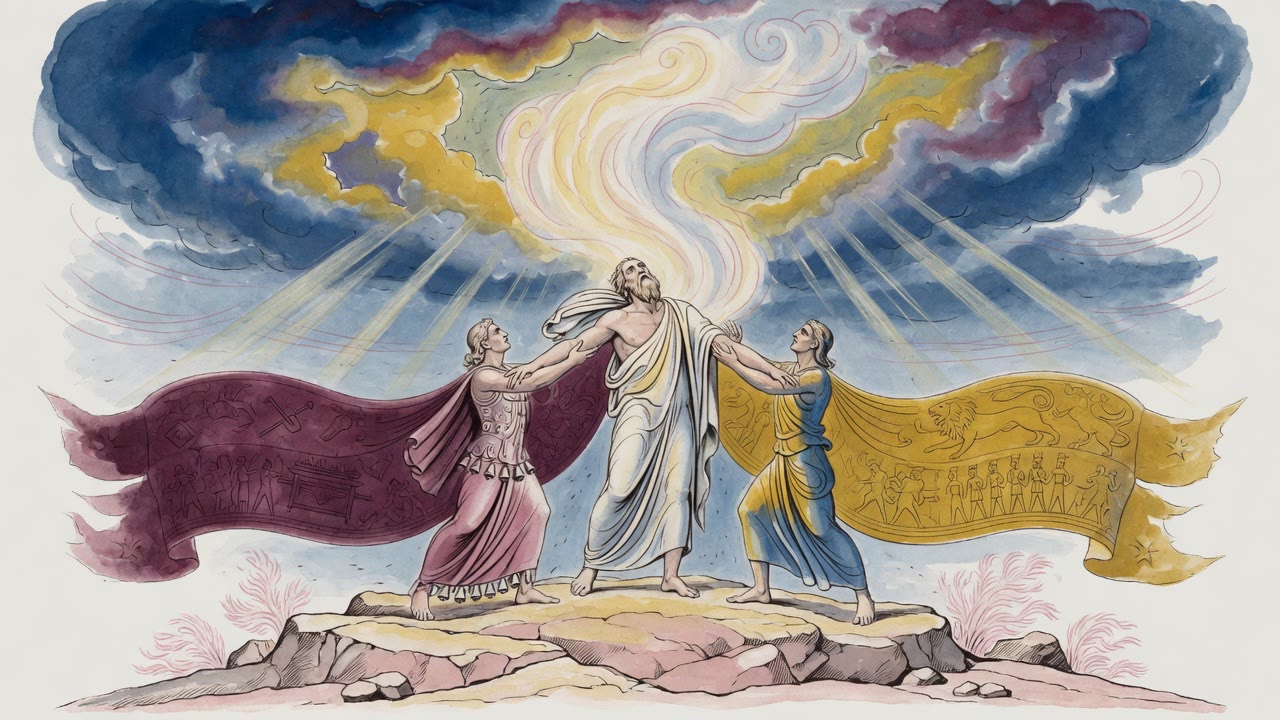
Moses stood and poured out prayer for his brother no less than for the people. He had already broken tablets and climbed again. Now he stood between a whole house and erasure. The measure of that prayer was half. Half the house was spared and half was taken. Nadab and Abihu fell. Eleazar and Ithamar lived to serve. Moses could not buy back every name. He bought two.
After the Death, the Holy Day
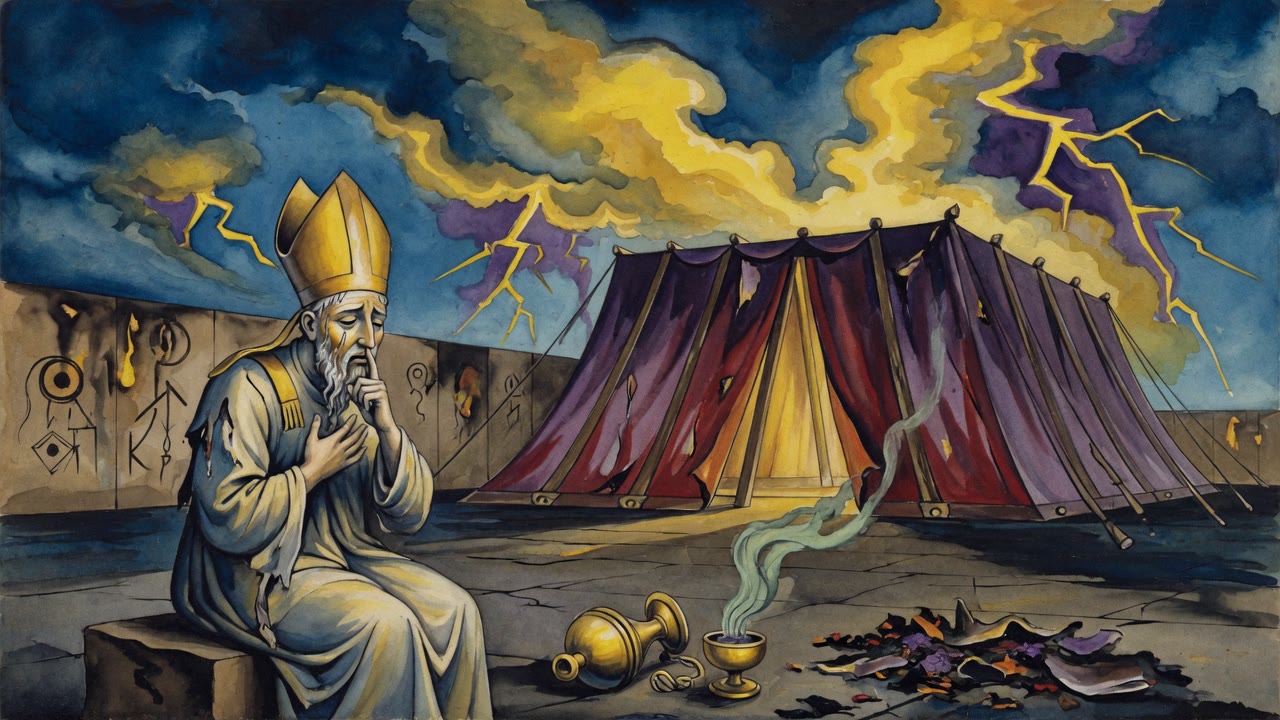
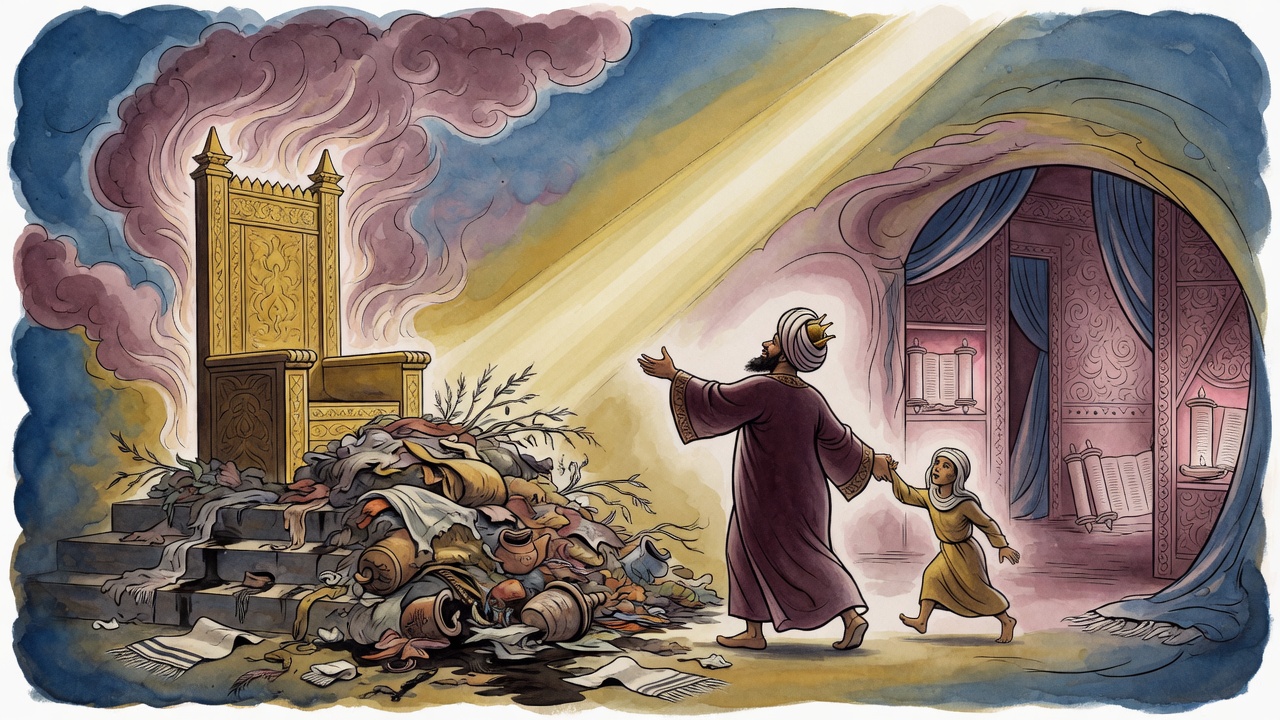
A later holy day opened with grief before it opened with ritual. "After the death of Aaron's two sons." Rabbi Berekhyah opened the verse with Proverbs: "Also to punish the righteous is not good." Even though I punished Aaron and took his two sons, says God, this taking was "not good." Loss is never called good, not even when it falls by Heaven's own decree.
The verse continues, "to smite the noble ones for uprightness." The two sons were nedivim (נדיבים), noble ones, princes of the priest's house. The blow fell measured and just, even where it remained bitter. God named the taking just. God also refused to call it good. Aaron had to walk between those two sentences. Israel learned to fast with the memory of empty places in the priest's family standing at the door of the service.
The Knife and the Empty Places
On the altar the calf burned for the man who had once shaped gold into a calf. Outside the camp, later, two sons lay dead, and two sons remained to wear the garments. The mountain's anger had demanded a whole line. Moses' prayer cut the demand in half. The day of atonement would forever open with that death so Israel would not forget that even a just blow can be named "not good" by the mouth of God Himself.
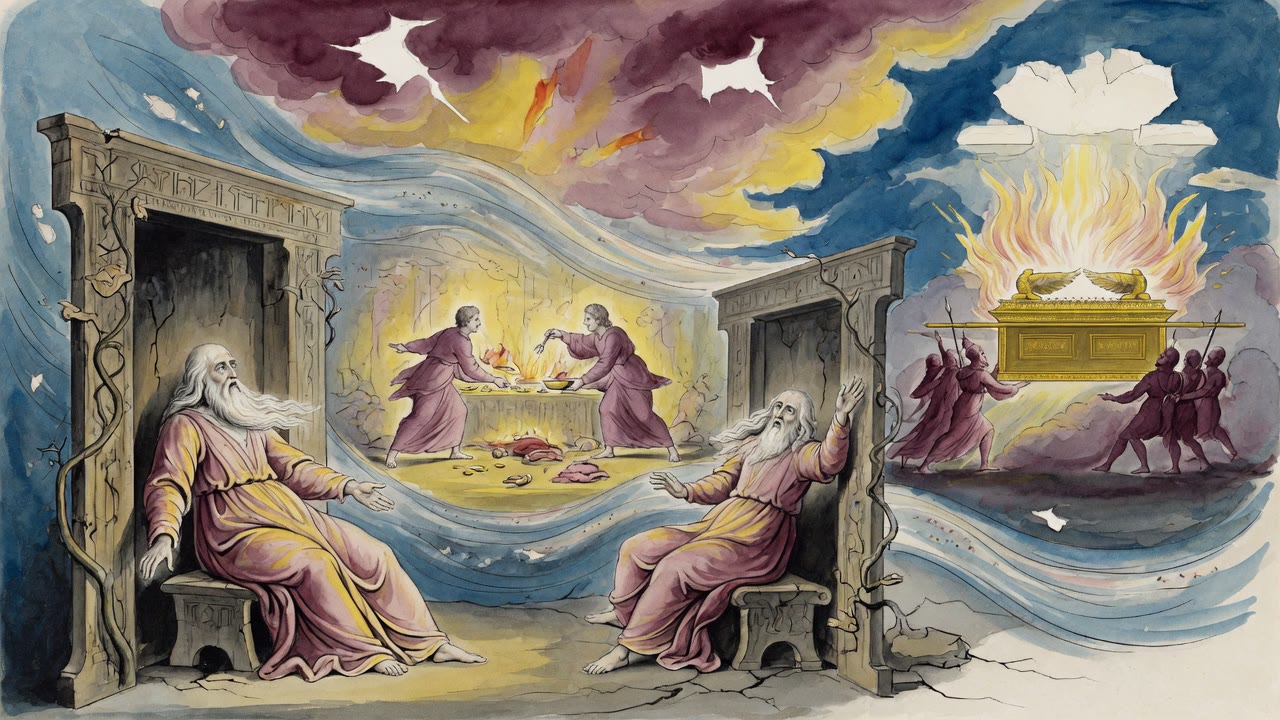
Aaron raised the knife over a calf and the past stood at the edge of the fire. The people watched their own calf go up and understood they were not still standing under the first one's guilt alone. Forgiveness had a body. It smelled of smoke. It did not erase the empty places in the priest's house. Nadab and Abihu had brought strange fire on another hour of that same long day. The calf of inauguration answered a stranger fire still, the one cast at the mountain's foot.
What Remained Standing
Eleazar and Ithamar stepped into service because a brother's prayer had bought them room. Nadab and Abihu did not. Every Yom Kippur would open with that death, so the camp would remember how the wound closed.
Aaron washed. He lifted the knife. He offered the calf, and the fire took it. Two sons stood at his side. Two did not. Heaven called the taking just. Heaven also refused to call it good. Between those two sentences the high priest learned to walk. The golden wound closed enough for the priesthood to begin. It did not close enough to forget. The gold at the mountain's foot did not get the last word, and it did not get to pretend it had cost nothing.
← All myths