Parshat Shemini5 min read

Aaron Carried Ten Crowns Into His Darkest Morning

Aaron entered the Mishkan's first public morning with ten crowns on the day, while seven hidden days of mourning closed around his house.

Curated by Arthur · Told by Maggid ·
Table of Contents
  1. The Week Counted Like Mourning
  2. Moses Dressed His Brother for a Door
  3. Ten Crowns Settled on One Dawn
  4. Fire Chose the Altar First
  5. The Ark Remembered the Warning

Aaron spent seven days at the entrance of the Tent like a mourner with no grave.
His sons were alive. Their hands still moved. Their voices still answered. Moses dressed them, instructed them, stood before the altar in their place, and the days of consecration passed one by one under the wilderness sun. The camp saw training. Heaven counted something darker.

The Week Counted Like Mourning

Before the Flood, God had kept seven days of mourning for a world about to drown. Now Aaron and his sons were shut into seven days of retirement before the first great service of the Mishkan (משכן), the Tabernacle. The old grief of creation pressed itself into a new sanctuary.

Aaron did not know the shape of it. That is what makes the week so hard to look at. A father can prepare a son for service. He can correct the fold of a garment, watch a hand learn its motion, hear a footstep settle into priestly rhythm. He cannot prepare for fire to choose the same room as joy.

Moses Dressed His Brother for a Door

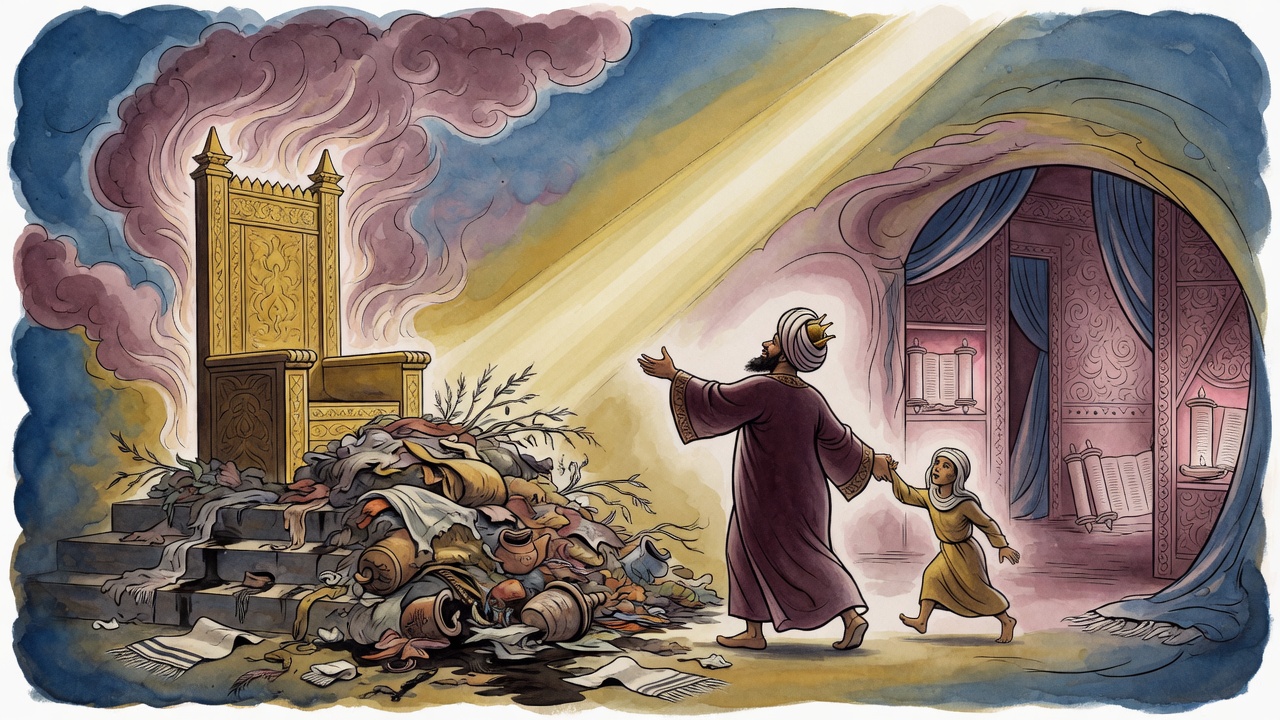
During those seven days, Moses stood where Aaron would soon stand. He robed his brother, arranged the service, and carried the altar work until the eighth day arrived. The priesthood was crossing a threshold. What had belonged to firstborns would now settle on the sons of Aaron, the kohanim, with oil, garments, blood, and command.

The door of the Tent became the narrow place between old order and new. Israel waited outside it. Aaron waited inside it. Every day said almost. Every night said not yet. The altar was ready for a fire that had not come down, and the people were ready for a Presence that had promised to dwell among them.

Ten Crowns Settled on One Dawn

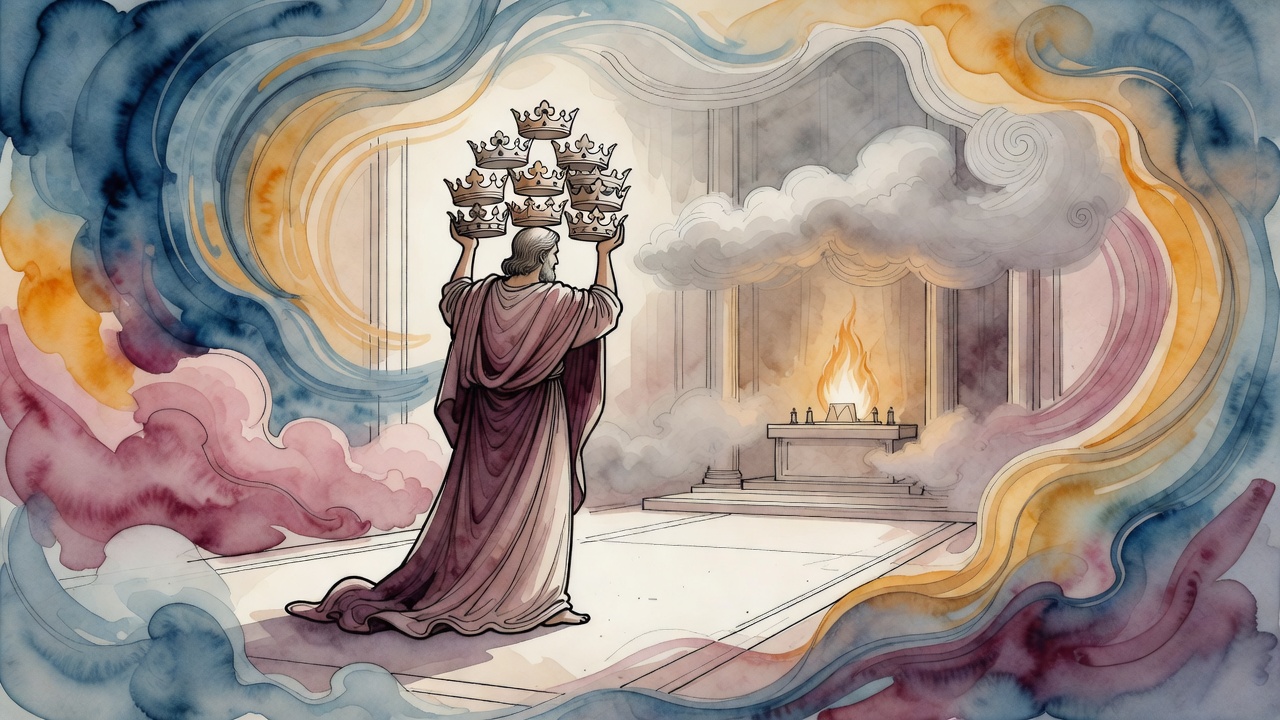
The first of Nisan arrived carrying more beginnings than one morning should be able to bear. It was the first day of the week and the first day of the first month. It was first for the tribal princes and their offerings. First for priestly service. First for the daily and communal offerings. First for the eating of consecrated food. First for the forbidding of scattered altars, because one dwelling now gathered Israel's worship into itself.

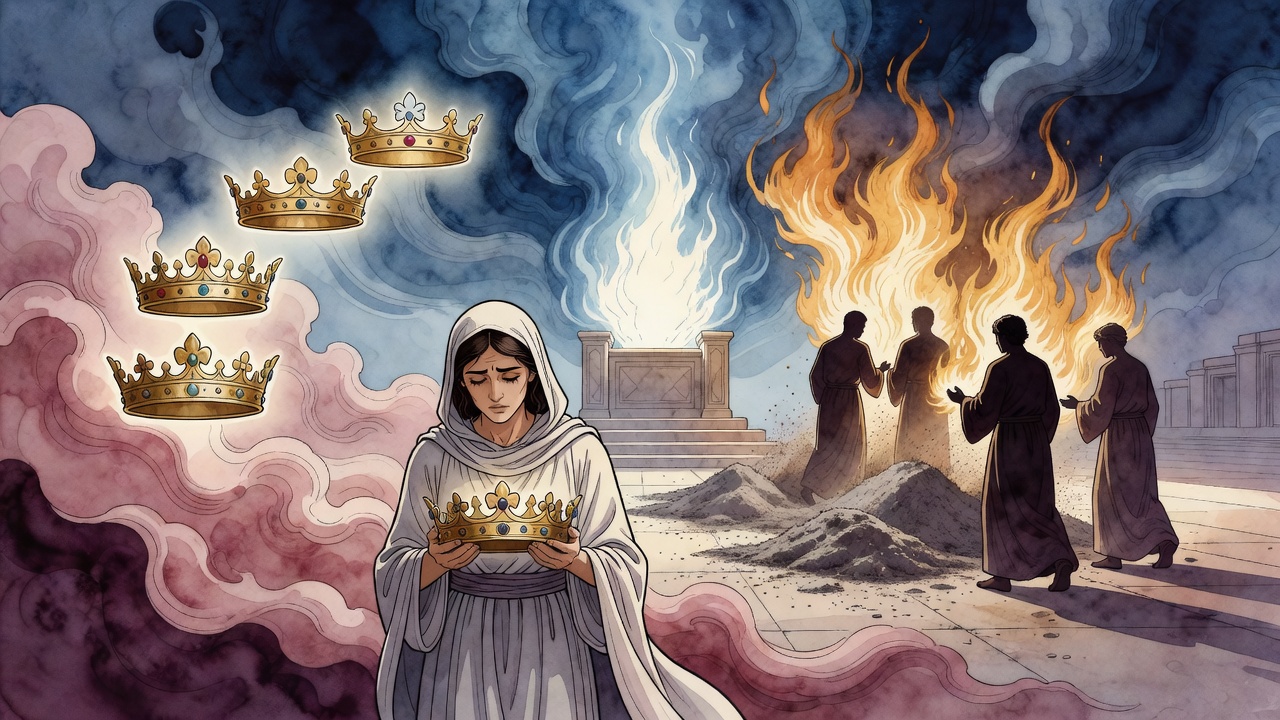
It was first for the heavenly fire. First for the Shekhinah resting among Israel. First for Aaron lifting priestly blessing over the people. Ten crowns on a single dawn, each one bright enough to make the desert hold its breath.

Aaron walked into that morning crowned by the day itself. His sons walked with him.

Fire Chose the Altar First

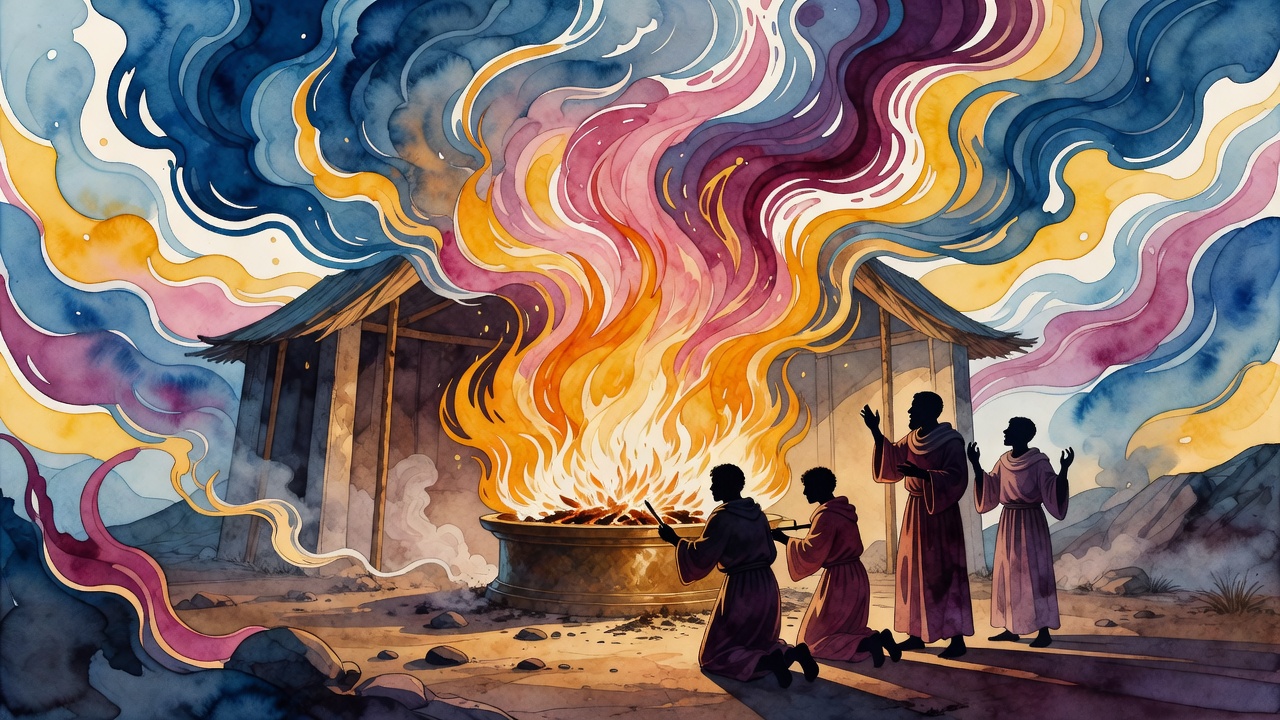
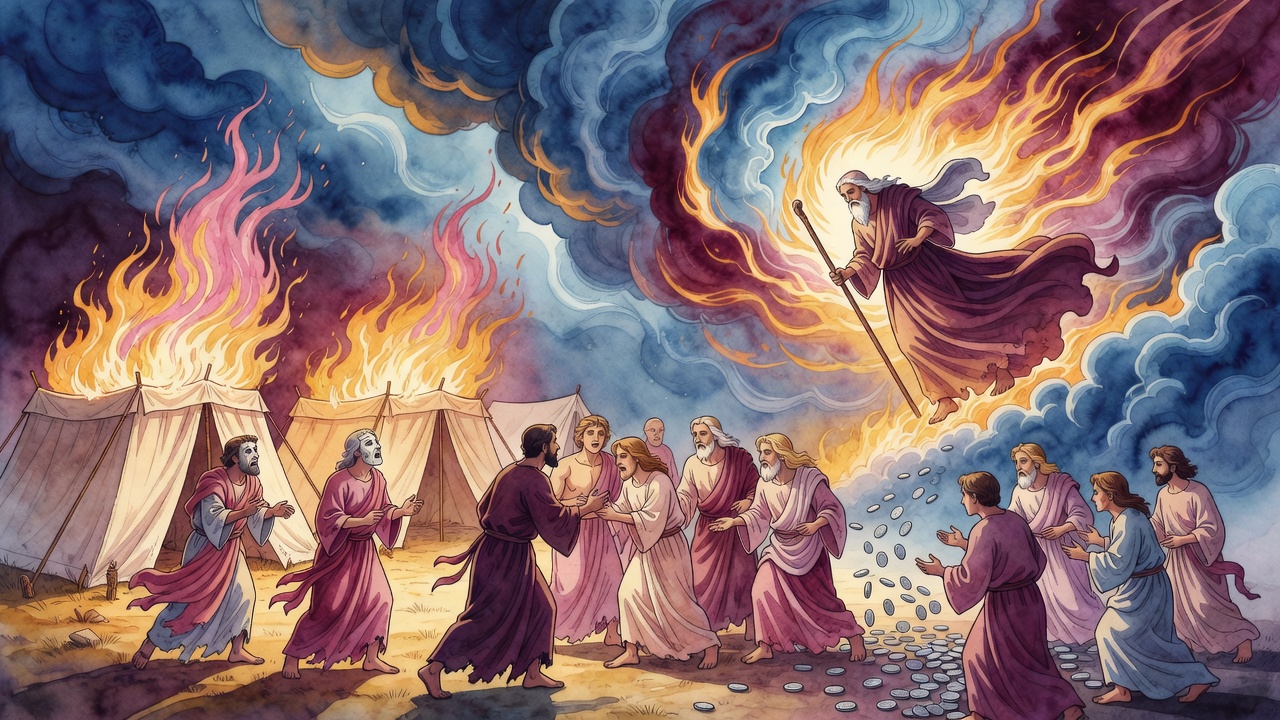
The fire came from before God and touched the altar. The service had been accepted. The camp had built a dwelling, and heaven answered with flame. For one instant everything worked. The garments, the oil, the blood, the offerings, the waiting, the seven days at the door, the first day of Nisan, the crown of priesthood on Aaron's head. All of it met the fire.

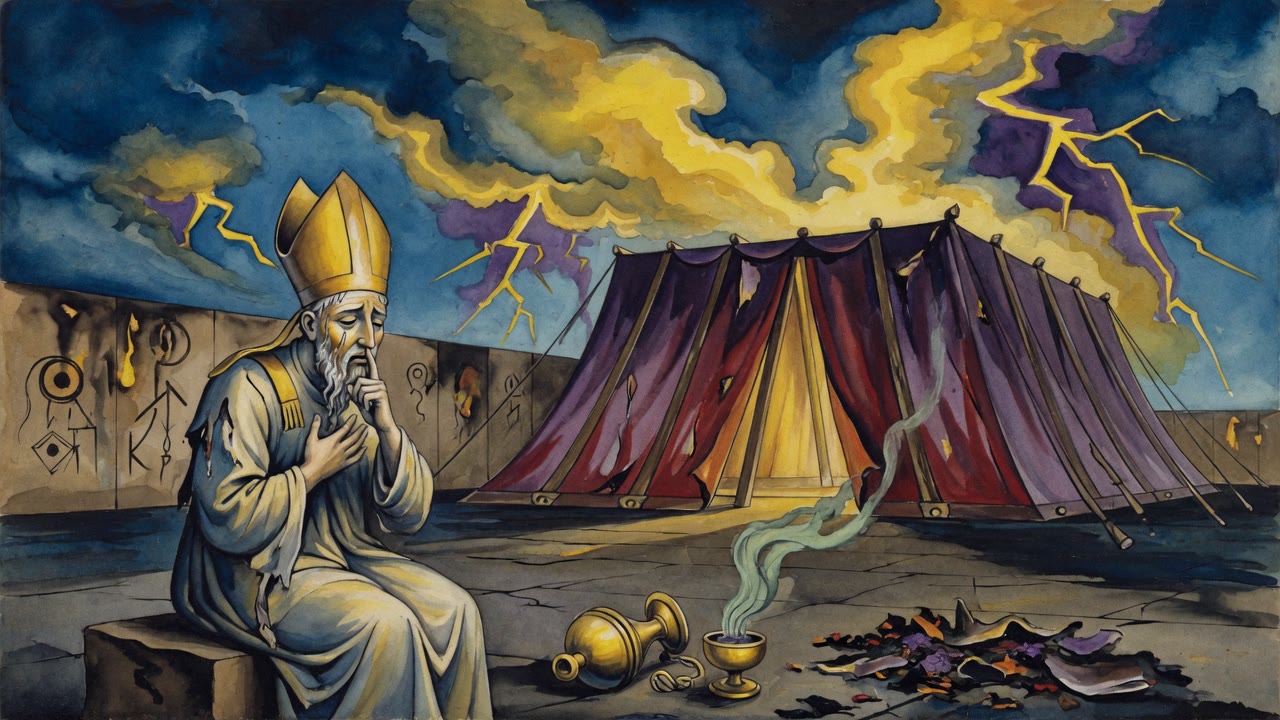
Then the same day opened its other hand. Nadab and Abihu entered where they had not been sent. Fire came out from before God again, and this time it did not crown the altar. It consumed them.

The day of dedication became the day Aaron's house split. The same morning that gave Israel priesthood took two priests away. Ten crowns still shone on the first of Nisan, but now their gold reflected smoke.

The Ark Remembered the Warning

Later, another family would tremble near another holy danger. The sons of Kehat were told to bear the Ark, and fear rose in them. They cried out that they would die as Aaron's sons had died. The Ark was not a box to be handled with careless hands. The holy could kill when approached with levity.

God gave Moses and Aaron a remedy for them. Cover the holy. Order the carrying. Do not cut off the families of Kehat. The warning passed through Aaron because Aaron's house had already paid for entering without command. No one near the Ark could pretend not to know.

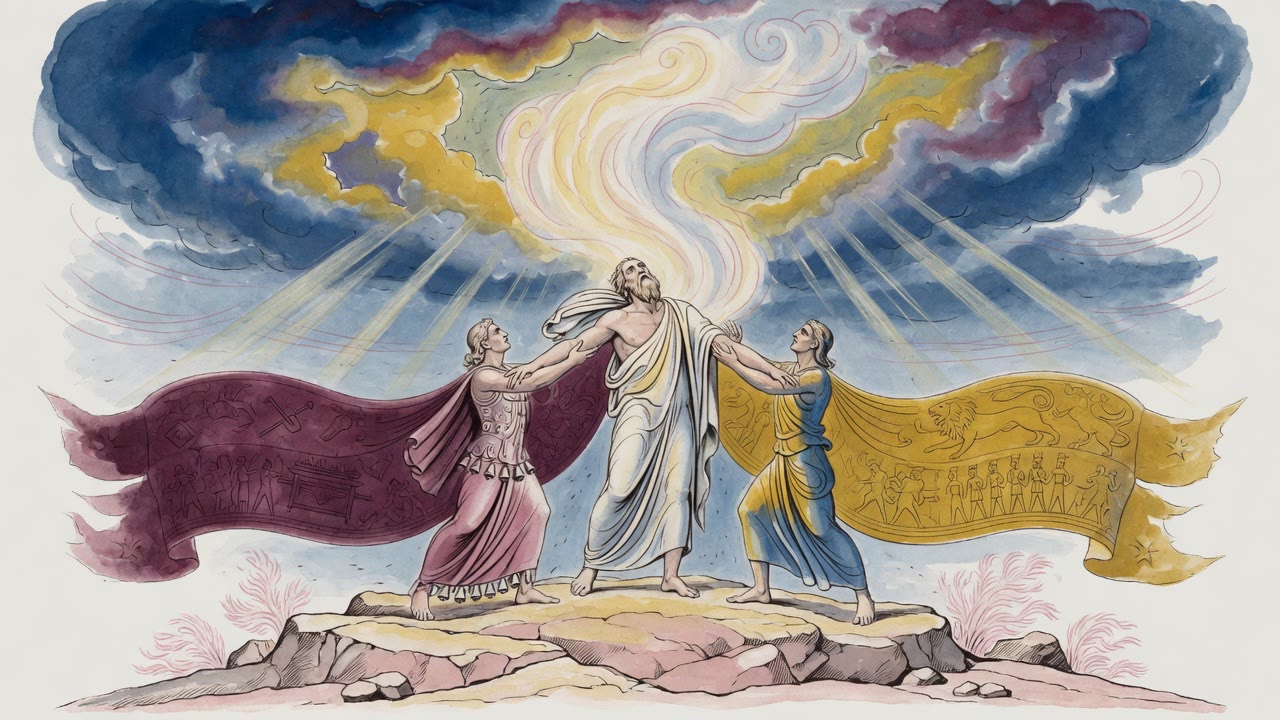
Aaron's first morning never became simple. It remained a day with crowns and ashes together, blessing raised over Israel while a father stood inside the cost of the blessing.


← All myths
From the tradition

Sources

3 sources

The texts this telling draws on, in full. Open a card to read inline, or expand it for a wider, quieter read.

Legends of the Jews 3:69Legends of the Jews

Take the story of Aaron and his sons, for example.

Before they could even begin their sacred service, they had to retreat for seven days. A week of… what exactly? Preparation, yes. But so much more. According to Legends of the Jews, these weren't just any ordinary days. These seven days mirrored the seven days of mourning God Himself observed before unleashing the Flood. for a second. The weight of the world, the sorrow for what was to come. That somber feeling clung to Aaron and his sons. It was a foreshadowing, a cosmic premonition of the tragedy that awaited them: the death of Nadab and Abihu. A loss that would strike on the very day of their joyous dedication.

It makes you wonder, doesn't it? How often are we walking into joy with a shadow lurking just around the corner?

Speaking of momentous days, let's Now, Nisan is the first month of the Jewish calendar, a time of new beginnings, of spring. But this particular first day? The Sages call it "a day that was distinguished by ten crowns." Ten! What made it so special?

Well, for starters, it was the day the princes of the tribes began bringing their offerings. A beautiful display of unity and devotion. But it was so much more than that. It was the first day the Shekinah (the divine presence) came to dwell among Israel. Imagine the feeling, the tangible sense of God being right there with them.

And that's not all. It was the first day that sacrifice was forbidden anywhere except the designated place. A shift in how they connected with the divine. It was the first time the priests bestowed their blessings upon Israel, a moment of profound connection and grace. Think of the weight of that first blessing, echoing through generations.

It marked the start of regular sacrificial service, the first time the priests partook of specific portions of the offerings, and the first time heavenly fire graced the altar. A sign, a symbol of divine acceptance. And to top it all off? It was a Sunday, the first day of the week, the first day of the first month. A convergence of beginnings.

So, a day of ten crowns. A day of divine presence, of new rules, of blessings, of fire. A day etched in history. It makes you think about the power of beginnings, doesn't it? The potential held within a single day, the ripple effect that can stretch across eternity. Are we even aware of the crowns that might be bestowed on our days? And what will we do with them?

Full source
Sifra, Mekhilta deMiluim II 1Sifra, Mekhilta deMiluim

1) (Vayikra 9:1) ("And it was on the eighth day that Moses called to Aaron and to his sons and to the elders of Israel"): This is one of the verses that needs expounding: It is written here: "And it was on the eighth day," and elsewhere (Shemoth 19:16): "and it was on the third day." We do not know whether (this refers to) the third day of the month (Sivan) or the third day of the number (of days of separation, viz. Shemoth 19:15). Its being written (Shemoth 19:11): "… for on the third day the L–rd will go down before the eyes of all the people on Mount Sinai" and then "And it was on the third day, when it was morning etc." tells us that it is the third day of the number, and not of the month, that is being referred to. Here, too, it is written: And it was on the eighth day," and we do not know whether it is the eighth day of the number (of days of miluim [i.e., the first of Nissan]) or the eighth day of the month (of Nissan). Its being written (Vayikra 8:33): "For seven days shall He invest your hands" tells us that it is the eighth day of the number and not the eighth day of the month. That day (the first of Nissan) took ten crowns: It was first for creation of the universe; first for the (sacrificial service of the) nesi'im (the chiefs of the tribes); first for the (sacrificial service of the) Cohanim, (that service having previously been performed by the first-born, and, on the seven days of miluim, by Moses); first for the (sacrificial) service (of the daily offerings [temidim] and all of the communal offerings); first for the descent of fire (upon the altar from Heaven); first for the eating of consecrated foods; first for the prohibition of bamoth (temporary altars); first for roshei chodoshim (the beginnings of months); first for the reposing of the shechinah in Israel; first for the (priestly) blessing of Israel.

Full source
Bamidbar Rabbah 5:4Bamidbar Rabbah

Bamidbar Rabbah turns to Why Aaron Was Warned About the Kehatites and the Ark.

Our story begins in Bamidbar Rabbah, specifically section 5, which explores the passage about the Kehatites and their crucial role in carrying the Ark of the Covenant. The verse in question, (Numbers 4:17), reads "The Lord spoke to Moses and Aaron," followed by the warning "Do not cut off…" (lo takritu)

Rabbi Levi raises a fascinating question: why is Aaron even mentioned here? The warning seems directed at the Kehatites. Rabbi Levi suggests that God is subtly reminding the Kehatites to be mindful of their conduct when near the Ark. "Focus your attention," He seems to say, "and don't act with levity." Why? Because the consequences can be devastating, as demonstrated by the fate of Aaron's own sons. As we read in (Leviticus 10:2), Aaron's sons entered without permission, and "fire emerged from before the Lord, and consumed them." A harsh lesson,.

In another interpretation offered by our Rabbis, the Kehatites were already terrified. Tasked with bearing the Ark, they cried out to Moses, fearing they would meet the same end as Aaron's sons. In response, the Holy One, blessed be He, reassured Moses. Just as Moses had instituted a remedy for Aaron before entering the Holy of Holies – as described in (Leviticus 16:3), "With this Aaron shall come into the Holy of Holies" – so too should he institute a remedy for the Kehatite families to prevent their demise. Hence the verse: "Do not cut off… But do this for them, [and they will live, and will not die]" (Numbers 4:19).

It seems a little strange, doesn’t it? This idea of a "remedy" against divine punishment. Is that even possible? The text anticipates this question. Do not wonder, it says, that the Holy One, blessed be He, instituted a remedy for them so they would not die, as even for the wicked, we find that He instituted a remedy so they would not die.

The passage then pivots to a discussion of karet (spiritual excision) and the concept of atonement through flogging. When God detailed the thirty-six instances of karet in the Torah, Moses questioned whether those who sinned would truly be eliminated. God's response, according to this Midrash (rabbinic interpretive commentary), was that forty lashes could satisfy the obligation of karet. This is echoed in Makkot 23a, where Rabbi Ḥananya ben Gamliel states that those liable to karet are exempt from it if they are flogged, citing (Deuteronomy 25:3), "And your brother shall be debased before your eyes," implying that the flogging restores the person to brotherhood.

But why forty lashes? The text provides a fascinating symbolic explanation: the Torah was given in forty days, and the human form is completed in forty days (based on Yevamot 69b). The sinner violated the Torah, causing death to themselves, so forty lashes serve as a symbolic reckoning.

Drawing a parallel to Adam, the first man, who sinned and incurred death, the text notes that Adam was, in a sense, "stricken with forty blows." The world was cursed with forty curses – ten for Adam, ten for Eve, ten for the serpent, and ten for the earth. While Adam was told he would die on the day he ate from the Tree of Knowledge (Genesis 2:17), he lived for 930 years. He didn't complete God's day, which (Psalms 90:4) tells us is "like yesterday gone by" – a thousand years. Thus, even for the "wicked," there is a delay, a chance for repentance.

So, if even the wicked are afforded a remedy, how much more so are the righteous? This brings us back to the initial message: "Do not cut off…" It's a message of hope, of redemption, and of the enduring possibility of life, even in the face of transgression. It reminds us that even when burdened with immense responsibility, there is always a path toward atonement and renewal.

Full source