Why Kislev Waited and Nisan Got the Tabernacle's First Day
The Tabernacle was finished on the 25th of Kislev and sat folded for months. God held the dedication for Nisan, Isaac's month, to repay an ancient debt.
Table of Contents
 Click for full size
The Work Was Finished
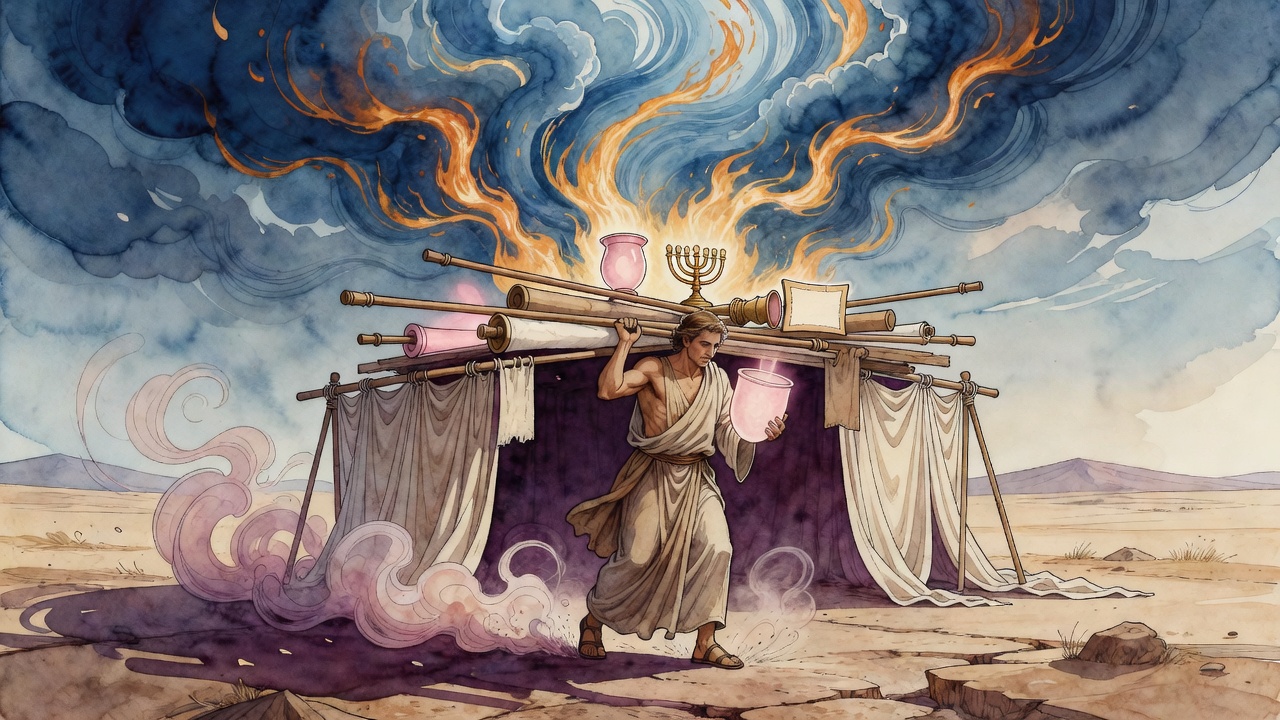
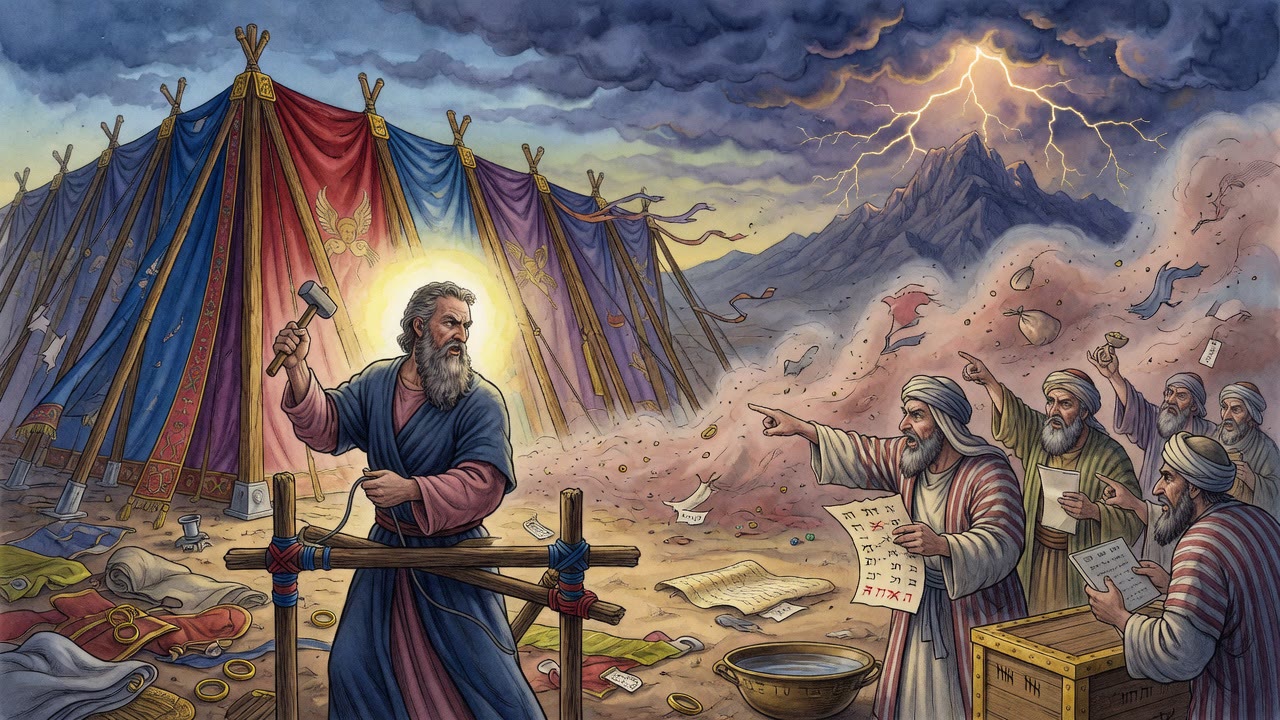
The boards are fitted. The curtains are hung. The holy vessels are waiting, each one constructed exactly as God specified, the menorah (the lampstand) from a single piece of beaten gold, the ark with its carrying poles already inserted. The craftsmen have done what they were asked to do. Bezalel and the workers of Israel have built the thing. The Tabernacle is complete on the twenty-fifth of Kislev.
Then Moses receives the instruction not to raise it. Wait for Nisan. The sanctuary that is ready now will stand in its crates for months. The month that completed the work will receive no ceremony. The dedication goes to a different month for reasons that the builders are not initially given.
The Whisper in the Camp
People talk. They always talk when something expected does not happen, and a finished sanctuary that is not being raised is exactly the kind of stall that produces speculation. Moses absorbs the suspicion while holding a timetable he had not chosen. Maybe something is wrong with the construction. Maybe the craftsmen made an error somewhere, something invisible to the eye but visible to God, something that prevents the Shekhinah (God's indwelling presence) from descending into this particular structure.
The tradition holds Moses in this discomfort without resolving it immediately. A finished sacred object becomes a test precisely when it sits unused. Faith in what God has commanded requires trusting not only the instructions but the timing, and the timing here is a kind of deprivation: the month that earned the completion receives nothing, and must watch a later month receive what it built.
What Kislev Was Owed
Yalkut Shimoni, the thirteenth-century anthology preserving older midrashic material, holds Rabbi Chanina's explanation. The twenty-fifth of Kislev will not be left without a dedication forever. What is taken from it now will be returned later. Centuries pass. The Hasmoneans recapture Jerusalem and purify the Temple that Antiochus defiled, and they rededicate it. The rededication falls on the twenty-fifth of Kislev.
Hanukkah is the repayment. The month that built the Tabernacle and was passed over for its dedication waited for Nisan, but Nisan's priority created a debt in the divine calendar. That debt was paid in the Hasmonean period when the purification of the Temple aligned, by no accident the tradition would accept, with exactly the date that had been set aside and then postponed.
Why Nisan Received the Honor
The dedication went to Nisan because Nisan belonged to Isaac. The pivot turns on something no one watching the wilderness camp could have seen. Isaac was born in Nisan. The Binding of Isaac happened in Nisan. The covenant that made Abraham's line the bearer of God's promise was sealed in that month. When God chose which month would inaugurate the Tabernacle, the choice was not arbitrary. It was the payment of a debt to the month in which the covenant family's founding promise was tested and confirmed.
The Tabernacle was the portable version of everything the Akeidah pointed toward: the place where human beings and divine presence could meet across the gap that sin opened in Eden, the structure whose service would hold the covenant in physical form through every exile and every restoration. If the Tabernacle belonged to any month, it belonged to the month when the man who was supposed to be the covenant's first sacrifice walked up a mountain with his father and came back down alive.
Three Dedications, One Calendar
The tradition read three moments as a single pattern: the completion of the Tabernacle in Kislev, the dedication of the Tabernacle in Nisan, and the rededication of the Temple by the Maccabees in Kislev again. Each moment answers one of the others. Kislev completes and waits. Nisan receives and inaugurates. Kislev is repaid. The calendar is not a neutral measure of time. It is a record of promises made and eventually kept, of months that suffered the passing over and months that received the honor, and of a God who remembered the twenty-fifth and found the right moment to restore what Kislev was owed.
← All myths