5 min read

When the Israelites Turned Aaron's Children Against Him

Aaron spent his life in service. Then Israel found the one wound that could reach him - a question about who had fathered his grandchildren.

Curated by Arthur · Told by Maggid ·
Table of Contents
  1. The Man Who Carried the Blessing
  2. The Question About Phinehas
  3. Words That Cannot Be Taken Back
  4. How God Answered
  5. The Arrangement of the Holy Objects

The Man Who Carried the Blessing

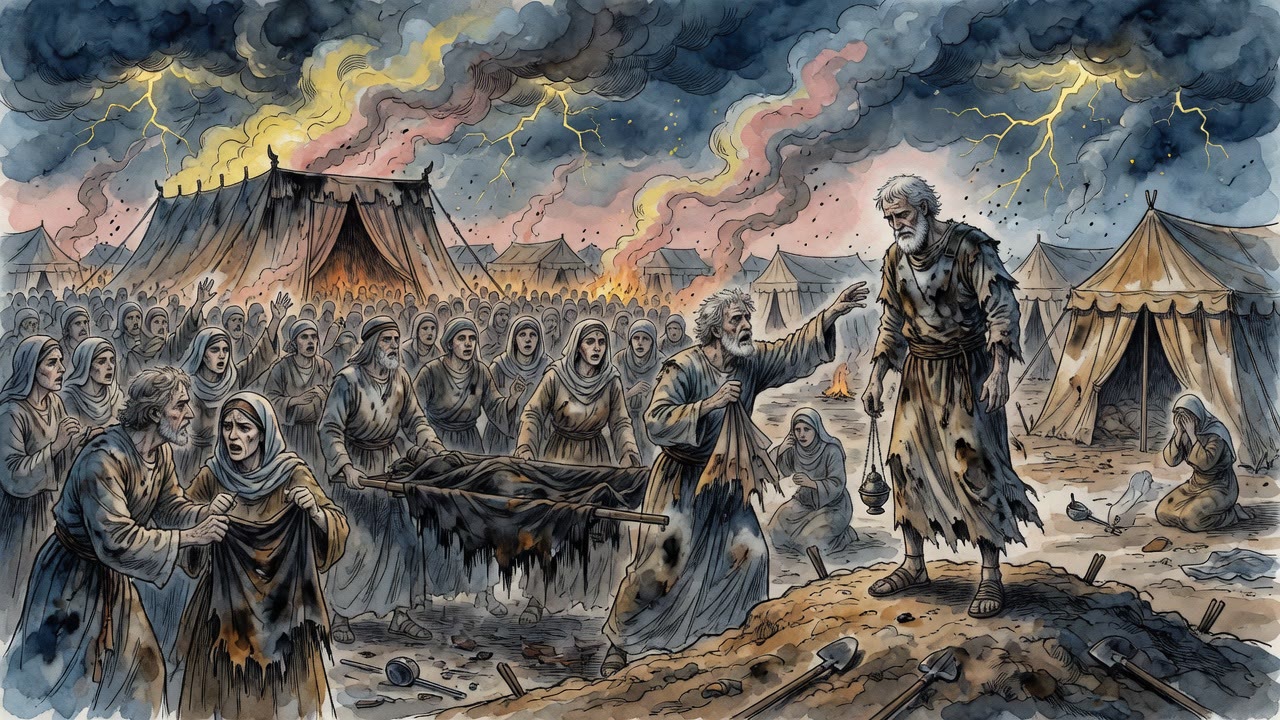
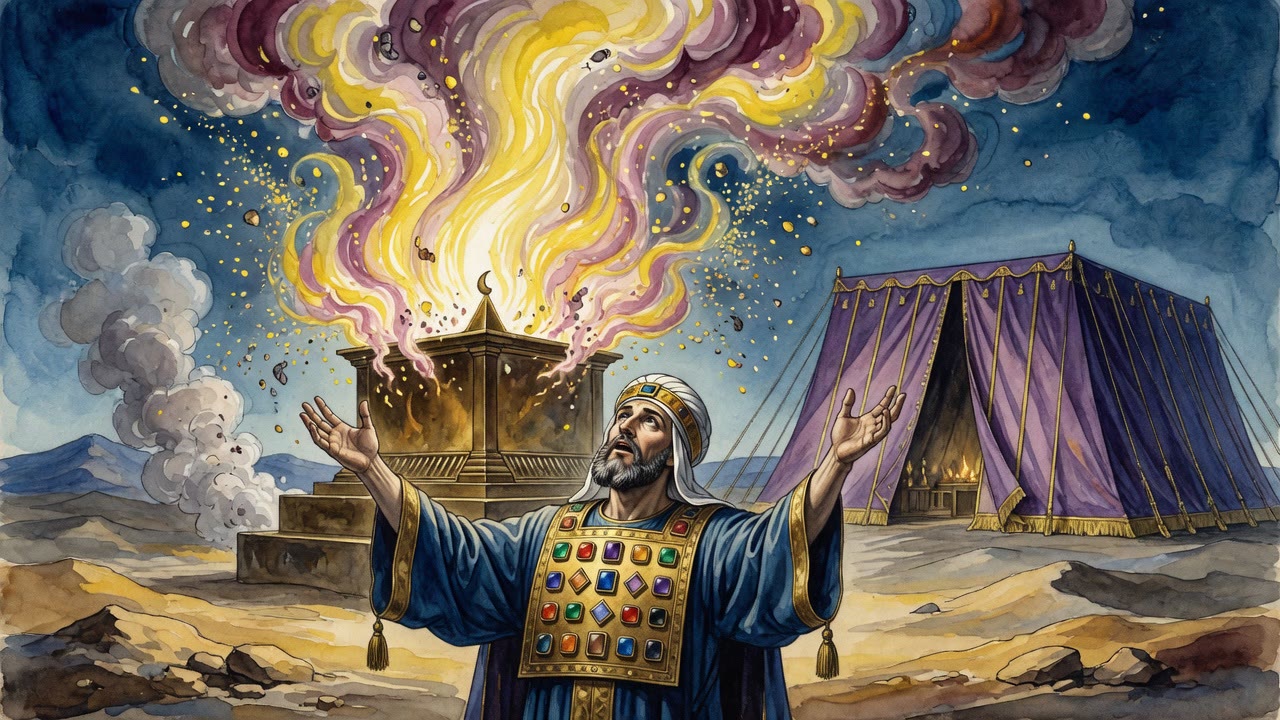
Aaron had given his whole life to the work. He carried the Ark. He covered the holy vessels at each camp. He lifted his hands over all of Israel in the priestly blessing and let God's words pour through him like water finding its channel. He had stood between the living and the dead during the plague and held the incense burning until the dying stopped. He had watched two of his sons consumed by fire on the day of consecration and had not spoken a word of protest. He had gone where Moses directed him and done what God had commanded and asked for very little in return.

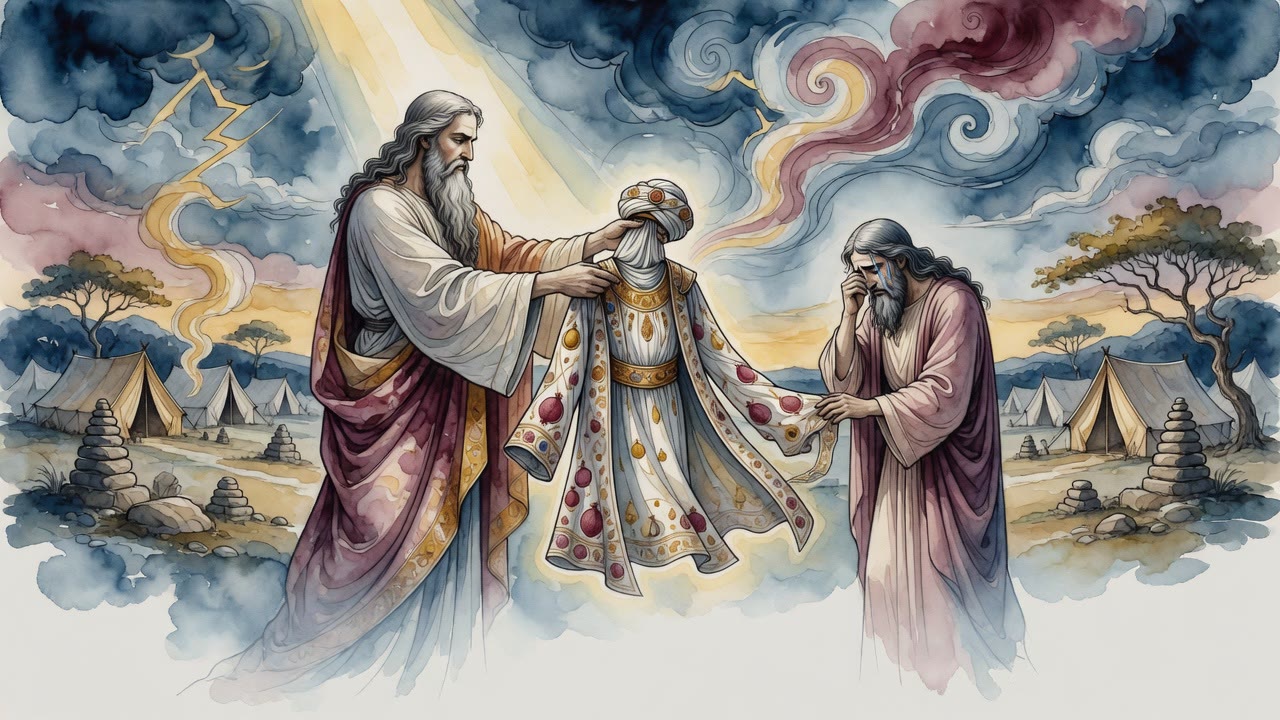
Then Israel attacked him with words, finding the one wound that could reach him, not a sword, not a stone, but a question about his children.

The Question About Phinehas

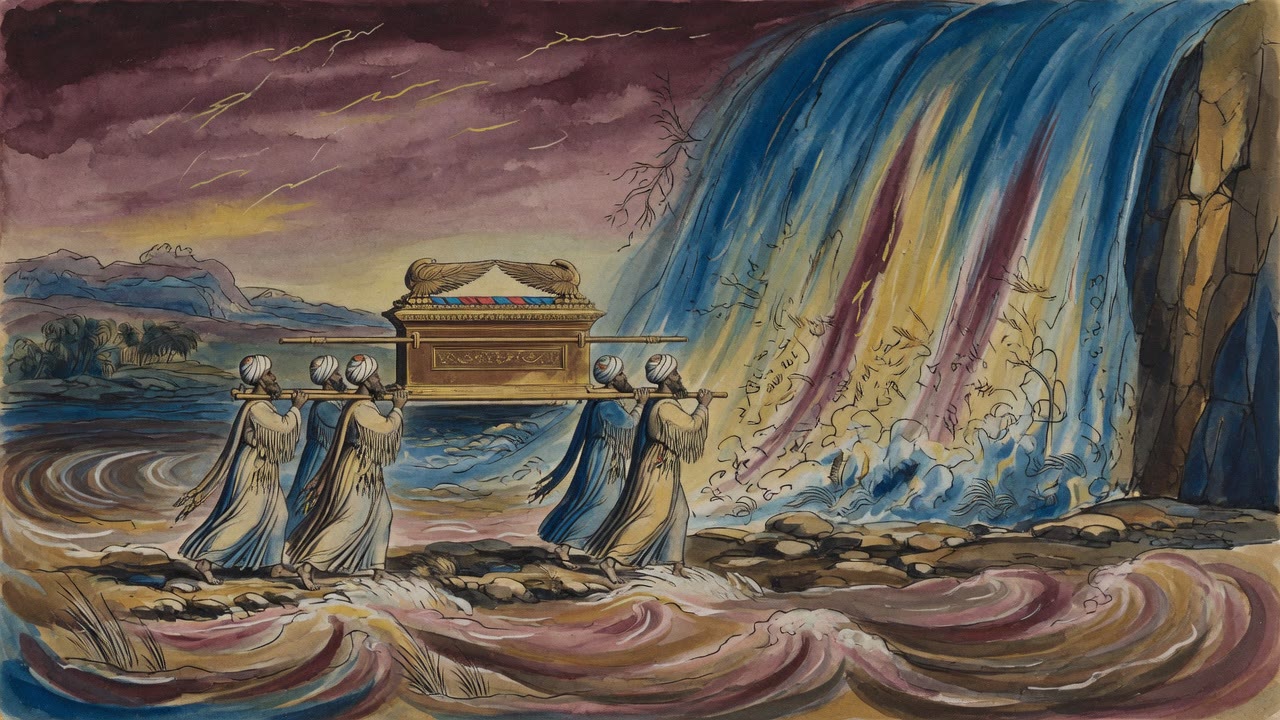
The attack began in the organizational context of the Tabernacle. Bamidbar Rabbah records the dispute that arose when Aaron assigned the tribes their roles in carrying the holy objects during the wilderness marches. There was a precise choreography: the Ark first, then the table, then the candelabrum, then the golden altar, then the altar of burnt offering. Each object moved in a sequence that mirrored the order of its installation. The Levites had their assignments and Aaron had given them, and someone in Israel did not like the way the assignments had been made.

The complaint was targeted. It went for the thing that would hurt most. Phinehas, Aaron's grandson, whose mother was the daughter of Putiel, was the object of the attack. Who was Putiel? Some said he was descended from Jethro the Midianite, Moses' father-in-law, a man who had fattened calves for idol worship before finding his way to the God of Israel. Others read the name differently, pointing toward Joseph. But the accusation that found its way to Aaron was the uglier one: that the priest who had just inherited a sacred lineage had idolatrous blood running in his veins through his grandson's mother's family.

Words That Cannot Be Taken Back

Vayikra Rabbah, the midrash on Leviticus, arrives through the verse about verbal wrongdoing: the prohibition against wronging one another. The rabbis reading that verse were not thinking about property disputes. They were thinking about words. Specifically, they were thinking about the act of throwing a person's ancestry at them in the middle of their sacred work, to take the one thing they cannot change and make it into an accusation.

The principle the midrash extracts from the incident is precise: verbal abuse cuts differently than physical harm. The welts close. The bruises fade. Words about lineage, words about where a person came from and what blood they carry, do not fade in the same way. They attach to a person's sense of who they are in the world and stay there. Aaron had carried the blessing of the whole people on his shoulders for years, and a few sentences about his grandson's mother's father had the power to reach him where nothing else had.

How God Answered

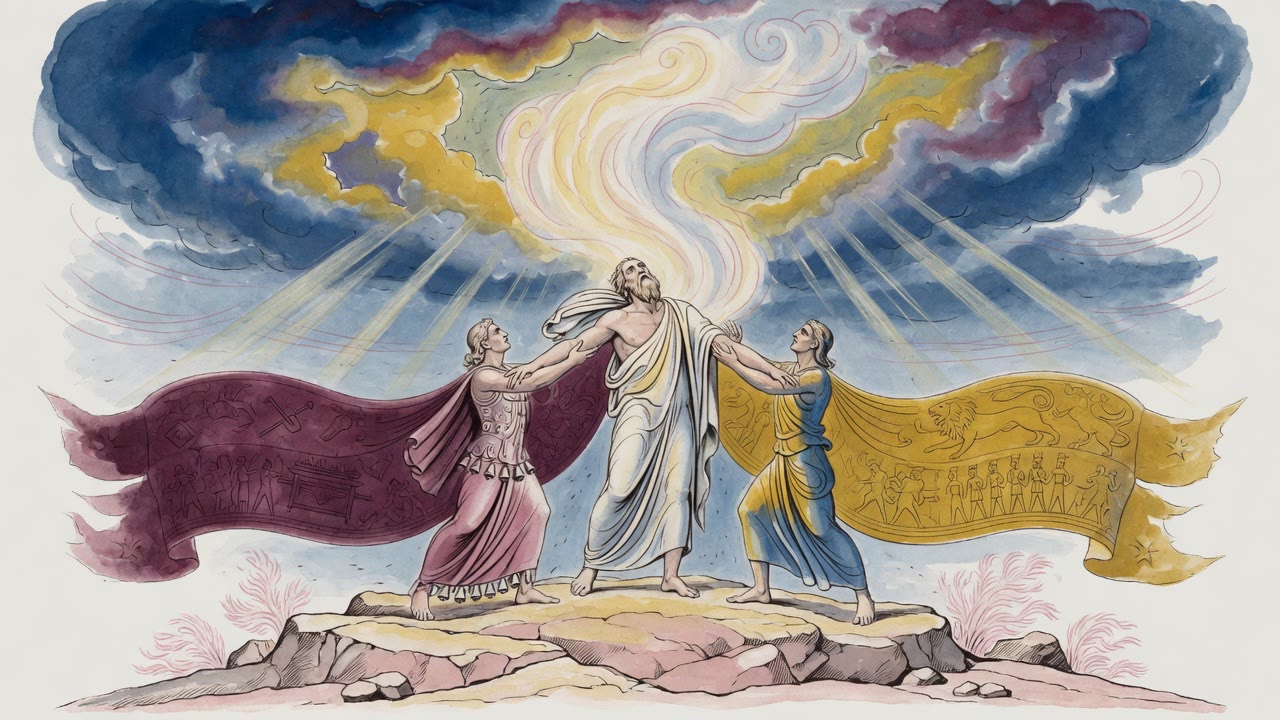
The divine response to the attack on Aaron came in the form of a sustained argument about Phinehas himself. The text turns to Phinehas's actions, to the moment when he took decisive action against the Israelite man who had brought a Midianite woman into the camp in public defiance of everything happening around him. Phinehas had acted when others had not. He had stopped a plague with a single act of zeal that the tradition read as the quality of a high priest, not a man compromised by foreign blood.

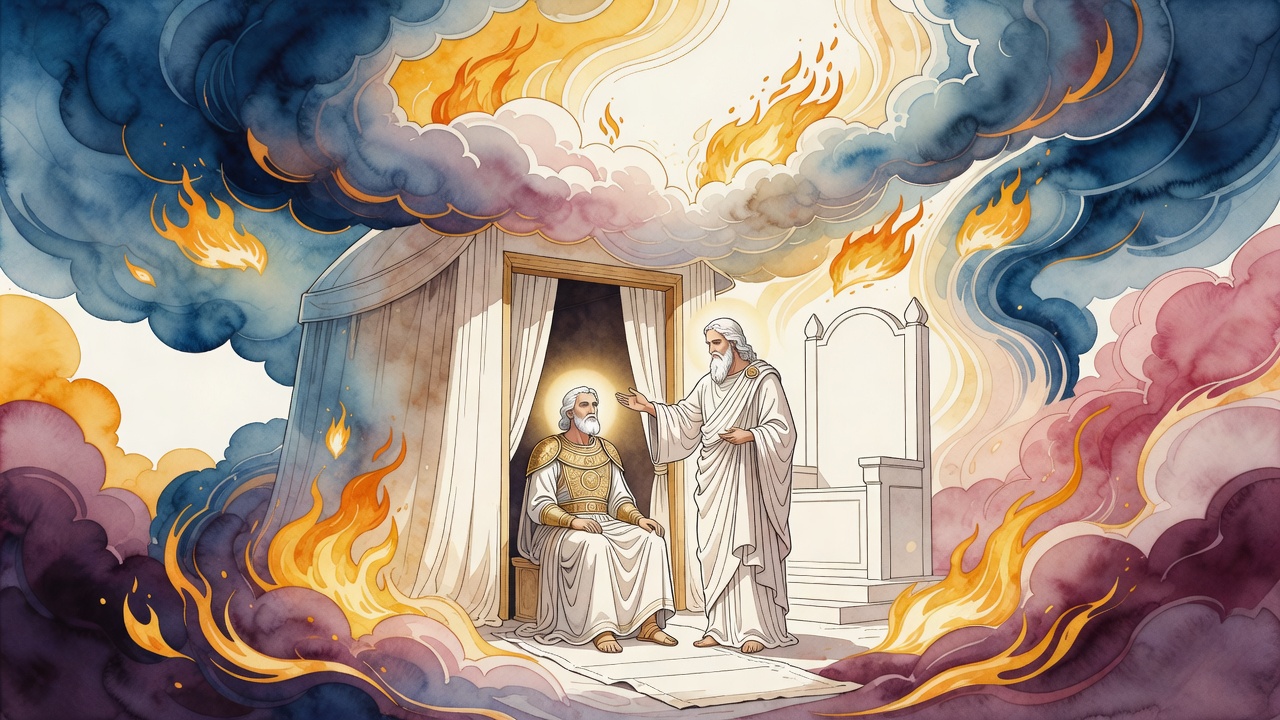
God made the argument explicit. The priestly covenant was given to Phinehas precisely because he had acted, not because of who his mother's father was, but because of what he himself had done in the moment that required it. Lineage matters. It also has limits. The attack on Aaron had assumed that questionable ancestry on the mother's side would poison the grandson's standing permanently. The answer was that what a man does in his own generation is the measure of his standing, and what Phinehas had done was enough to secure the covenant for his line for all time.

The Arrangement of the Holy Objects

The original dispute about the order in which the Tabernacle's objects were carried during the wilderness marches gets its answer from Bamidbar Rabbah as well. The sequence, the rabbis explain, was not arbitrary. The dismantling of the Tabernacle at each departure mirrored its original construction. The Ark that went first in the procession was the Ark that had gone first in the sanctification of the space. The order of movement preserved the order of holiness. Aaron had assigned the roles correctly. The attack had come from people who wanted something to attack, and they had reached past the assignment to the man who gave it.


← All myths

From the tradition

Sources

3 sources

The texts this telling draws on, in full. Open a card to read inline, or expand it for a wider, quieter read.

Bamidbar Rabbah 4:18Bamidbar Rabbah

It wasn't just a matter of tossing everything into a wagon. There was a precise order, a sacred choreography, and it all begs the question: Why this order?

Bamidbar Rabbah, specifically Bamidbar Rabbah 4, explores this very question. It asks, "What did the Omnipresent see to command them so, the Ark first, then the table, after it the candelabrum, after it the golden altar, and after it the altar of the burnt offering?"

It's a fascinating puzzle, isn't it? Why this particular sequence when dismantling and transporting the holiest objects?

The Rabbis offer a beautiful explanation: "Their dismantling at the time of the journeys was like their establishment at the time of encampment." The act of taking down the Tabernacle mirrored the act of setting it up. It was as if they were re-enacting the creation of the sacred space each time they moved.

The text then walks us through the verses in Exodus (40:21-29) describing the initial erection of the Tabernacle. "He brought the Ark… then, he placed the table… then, he placed the candelabrum… then, he placed the golden altar… and then, the altar of the burnt offering." This is the order of creation, the order of establishing God's presence in their midst.

And just so, when dismantling, they followed the same order, ensuring that even in transit, the sanctity and the divine order were preserved. The Ark first, then the table, then the candelabrum, the golden altar, and finally, the altar of the burnt offering.

This wasn't just about efficiency; it was about maintaining a connection to the divine, about carrying that sacred order with them wherever they went.

(Numbers 4:15) reinforces the gravity of this task, emphasizing the role of Aaron and his sons. "Aaron and his sons shall conclude to cover the sacred, and all the sacred vessels, when the camp travels." It was their responsibility to prepare these holy objects for transport. Then, and only then, could the sons of Kehat carry them. And there's a stark warning: "They shall not touch the sacred and die." This emphasizes the profound respect and reverence demanded when dealing with the vessels of the Mishkan.

The text clarifies: "Aaron and his sons shall conclude to cover the sacred – this is the Ark; and all the sacred vessels – these are the table, candelabrum, and the two altars and all their utensils." The covering and preparation were paramount.

"When the camp travels – they would do so only at the time of the journeys." Meaning, this wasn't a casual affair. This meticulous process was reserved solely for the times of designated travel, a evidence of its importance.

So, what does this all mean for us? It suggests that even in periods of transition, in times of dismantling and moving forward, there's a profound opportunity to maintain order, to remember the sacred foundations upon which we build our lives. Just as the Israelites carried the essence of the Tabernacle with them, we too can carry the essence of our values, our beliefs, and our connections to the divine, no matter where our journey takes us. It's a beautiful reminder that even in the midst of change, we can find continuity and meaning.

Full source
Bamidbar Rabbah 11:4Bamidbar Rabbah

This section of Bamidbar Rabbah, a classical midrashic (rabbinic interpretive commentary) text, explores the nuances of this ancient blessing, revealing layers of meaning and practice. It all starts with the simple phrase, "Speak to Aaron…" The text highlights that because this entire section focuses on Aaron, the High Priest, the divine speech includes Aaron and his sons. The principle, as the verse states, is that when the action involves the priests, the Divine Speech is directed towards them. When it concerns the Israelites, the speech is for them.

"So you shall bless," God instructs. But how exactly are they to bless? Rabbi Yehuda raises a crucial question: How do we know the specific order and manner in which the priests should bless the people? The answer, according to him, lies in the very verse itself: “So you shall bless the children of Israel.”

It doesn't stop there. The discussion moves to the language of the blessing. Must it be in the sacred tongue, Lashon HaKodesh (Hebrew)? The text explores this, referencing another verse: “These shall stand to bless the people” (Deuteronomy 27:12). Just as that blessing is in Hebrew, so too must the Priestly Blessing be. Rabbi Yehuda offers further support: the word "so" (ko) indicates that the blessing is only valid in the original language.

The text then asks, must the blessing be recited while standing? Again, (Deuteronomy 27:12) comes into play: “These shall stand to bless the people.” Rabbi Natan offers an alternative proof, linking blessing to service: “To serve Him and to bless in His name” (Deuteronomy 10:8). Service, as stated in (Deuteronomy 18:5), requires standing; therefore, so does blessing.

And what about the lifting of hands? Is that essential? The verse tells us, "Aaron lifted his hands to the people and blessed them" (Leviticus 9:22). Rabbi Yonatan raises a counterpoint: if we follow this logic strictly, wouldn't the blessing also require a New Moon, a communal offering, and a High Priest, as was the case when Aaron blessed the people? The text then clarifies through another verse: “For the Lord ]your God[ has chosen him…him and his sons” (Deuteronomy 18:5). It's the sons of Aaron, the priests, who are instructed to lift their hands.

Perhaps one of the most fascinating points is the use of the Ineffable Name, the unspeakable Name of God. Should the priests bless with this Name, or with a substitute appellation? The text quotes (Numbers 6:27): “They shall place My name upon the children of Israel, and I will bless them.” This seems to indicate the use of the Ineffable Name. However, the text then introduces a crucial distinction: in the Temple in Jerusalem, the Ineffable Name was used. But outside the Temple, in the "outlying areas," an appellation was used instead. Rabbi Yoshiya makes this point explicitly.

The discussion expands to include proselytes, women, and freed slaves. Are they included in this blessing? The text uses the phrase "Say to them" to argue that the blessing extends to all. It emphasizes that the blessing should be given "face-to-face," with intention and directness.

The text even touches upon the role of the synagogue attendant, who prompts the priests to recite the blessing. Rabbi Yehoshua ben Levi goes so far as to say that a priest who refuses to participate in the blessing violates three positive commandments! He also states that a priest who doesn't move his feet towards the ark for the blessing of retzeh (acceptance/favor) in the Amidah prayer forfeits his right to do so in the future, drawing a parallel to Aaron’s descent after performing the sin offering (Leviticus 9:22).

The text continues, delving into the specifics of the blessing, from washing hands before lifting them (Psalm 134:2) to the prayers recited before and after the blessing. Rav Hisda outlines specific protocols: priests cannot bend their fingers until turning away, the attendant must wait for the congregation’s "amen" before calling for the blessing, and so on.

The midrash also explores what the congregation recites during specific prayers like the additional prayer on Shabbat (the Sabbath) and during fast day afternoon services, quoting verses from Psalms and Jeremiah to illustrate appropriate responses.

Finally, the text concludes with a powerful message: God instructs the priests to bless with heartfelt intention, not as a mere obligation. That’s why the word "say" (amor) is written with an extra letter (a vav), implying a deeper commitment and sincerity.

So, what does all this mean for us today? It reminds us that blessings are not just empty words. They are powerful expressions of intention, connection, and divine presence. The Priestly Blessing, with its intricate details and profound meaning, offers a glimpse into the heart of Jewish tradition, inviting us to consider the weight and wonder of every word we utter. Next time you hear or offer a blessing, remember the layers of meaning, the history, and the intention behind it. Let it be more than just words; let it be a true expression of your heart.

Full source
Vayikra Rabbah 33:4Vayikra Rabbah

Our tradition certainly thinks so. There’s a powerful message tucked away in Vayikra Rabbah, specifically in section 33, about the weight of our words and the damage they can inflict. It all begins with the seemingly simple phrase, "You shall not wrong one another" (Leviticus 25:14).

How does the Midrash (rabbinic interpretive commentary), that ancient form of Jewish biblical interpretation, understand this verse? Etz Yosef, a commentary on the Midrash, explains that it refers to avoiding verbal abuse and insults. It's about the power of our tongues, for good or ill.

The Midrash then takes us to a fascinating, and frankly, a bit scandalous story from the Book of Numbers (2:34). The Israelites are encamped, organized by their banners, but there’s a problem. Aaron, the High Priest, is facing a barrage of criticism.

Rabbi Yehoshua bar Neḥemya, Rabbi Levi bar Ḥayata, and Rabbi Abba, citing Rabbi Ḥiyya bar Abba, paint a vivid picture: As Aaron attempts to establish the lineage of the tribes, he’s met with scorn. The people challenge him, questioning his own family's pedigree: "You are establishing our lineage? Before you come to establish our lineage, go and establish the lineage of your sons! Elazar your son, to whom is he married? Is it not to the daughter of Putiel?"

Ouch.

What's the big deal about Putiel? Well, the Midrash (specifically Shemot Rabba 7:5) suggests that Putiel is another name for Jethro, Moses' father-in-law, who was, at one time, an idolater. So, the Israelites are essentially implying that Aaron’s grandson-in-law has tainted lineage. Can you imagine the sting of those words?

The text points to (Exodus 6:25): "Elazar, son of Aaron, took from the daughters of Putiel." It's a factual statement, but in the context of their accusations, it becomes a weapon.

But here's where the story takes a turn. According to the Midrash, God sees this verbal assault on Aaron and steps in to defend his honor. God Himself establishes Aaron’s lineage, emphasizing the purity and zealotry of his grandson, Pinḥas. (Numbers 25:11) states: "Pinḥas son of Elazar son of Aaron the priest."

The Midrash interprets this as "priest son of a priest, zealot son of a zealot, one who turned back wrath son of one who turned back wrath." A powerful lineage indeed! This is because Pinḥas acted decisively to stop immorality and idolatry, thereby "turning back God's wrath" (Numbers 25:11-13). In doing so, he earned God's favor and a "covenant of eternal priesthood."

The Midrash emphasizes that God prioritized Aaron's honor over Moses' in this instance. We see this reflected in (Numbers 3:1): "These are the descendants of Aaron and Moses." Notice the order? It's not Moses and Aaron, but Aaron and Moses.

Why this reversal? The Midrash suggests it's because of the verbal abuse Aaron endured. He was publicly shamed, and God responded by elevating his status.

So, what's the takeaway?

This story reminds us that words have power. They can build up or tear down, heal or wound. The Israelites' harsh words against Aaron, questioning his family’s integrity, were deeply hurtful. And God, in His infinite wisdom, recognized the injustice and intervened.

Moses then cautions Israel: "If you sell a sale item..." (Leviticus 25:14) This seemingly disconnected verse serves as a warning. Just as you wouldn't cheat someone in a business transaction, you shouldn't cheat them with your words. The Talmud (Bava Metzia 58b) actually derives from this verse the prohibition against ona'at devarim, verbal oppression.

The story of Aaron and the Israelites is a potent reminder to choose our words carefully. They have the power to diminish, but also to elevate. Let's strive to use them to build each other up, just as God built up Aaron in the face of adversity. What kind of legacy are we building with our words?

Full source