Aaron Sealed Manna in Clay Before the Testimony
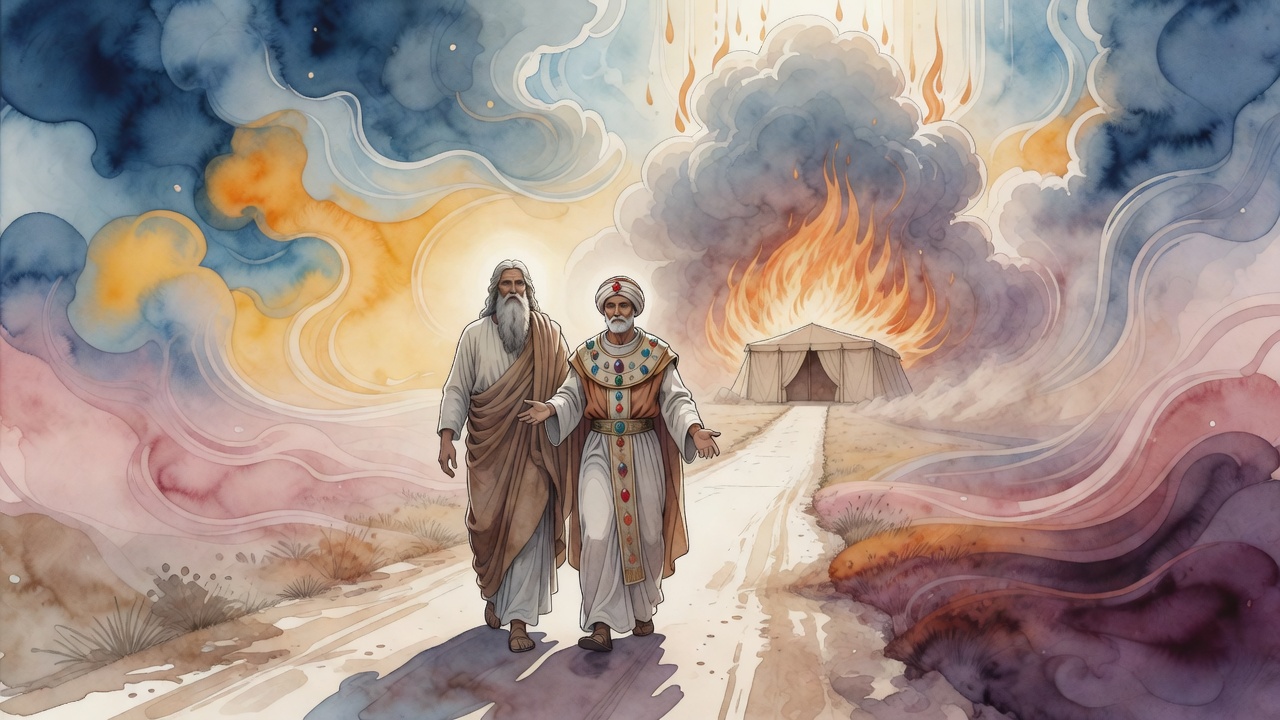
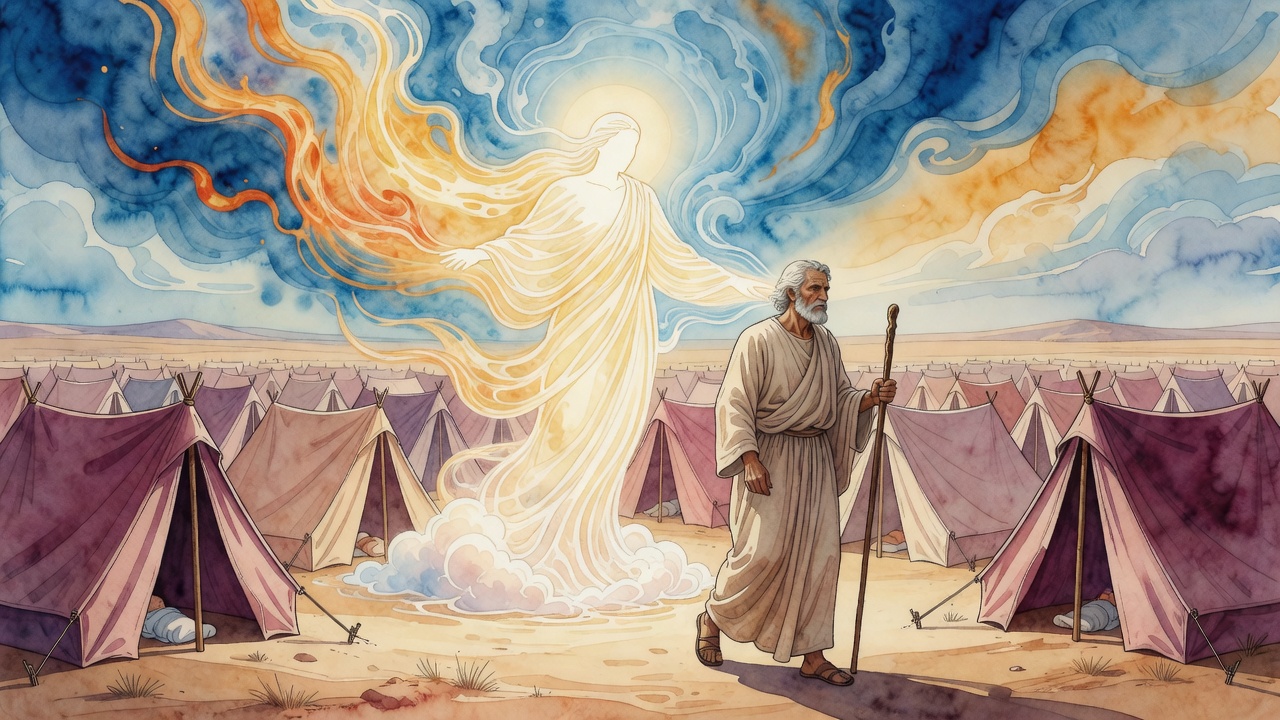
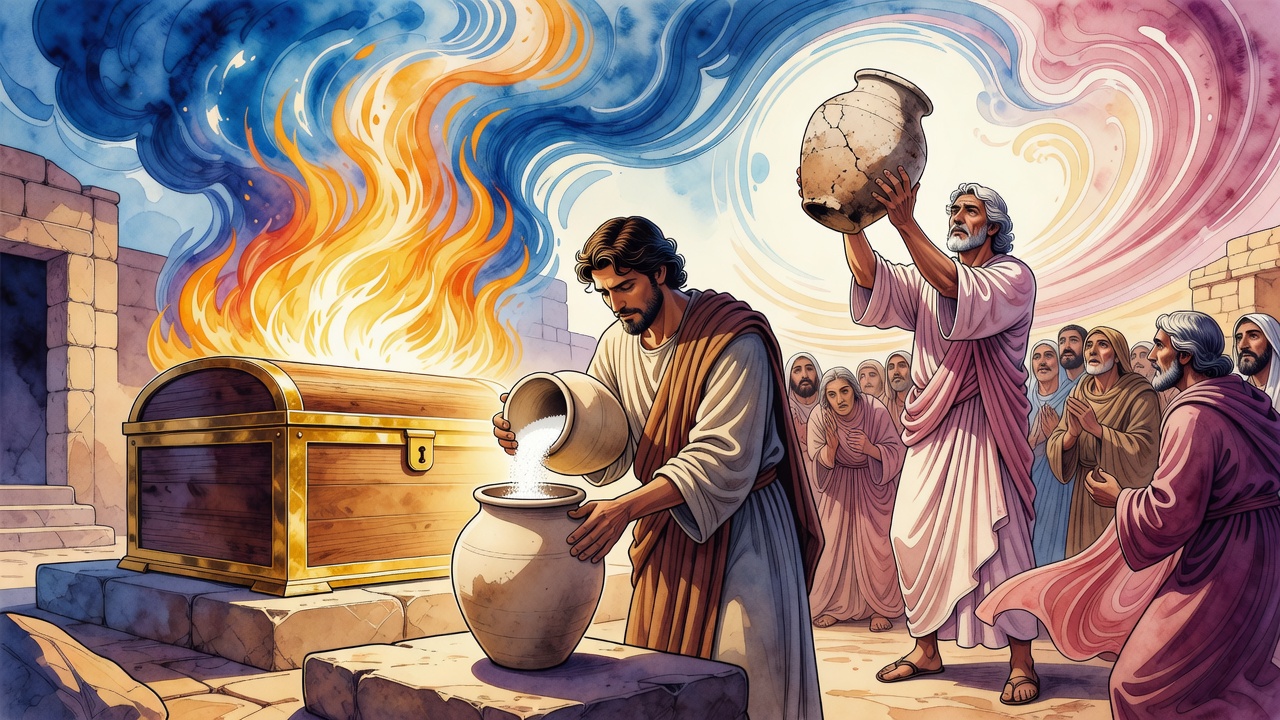
Aaron fills a plain clay jar with an omer of manna and sets it by the ark. Centuries later Jeremiah lifts the same jar to feed a doubting people.
Table of Contents
 Click for full size
An Omer for Eyes Still Unborn
Moses heard the command and passed it on without decoration. Keep an omer of the manna, a measured portion, so that later generations may see the bread their fathers ate in the wilderness (Exodus 16:32). Not gold for display. Not a legend told at night. A real portion, sealed, waiting for eyes that had never watched white flakes settle on morning sand.
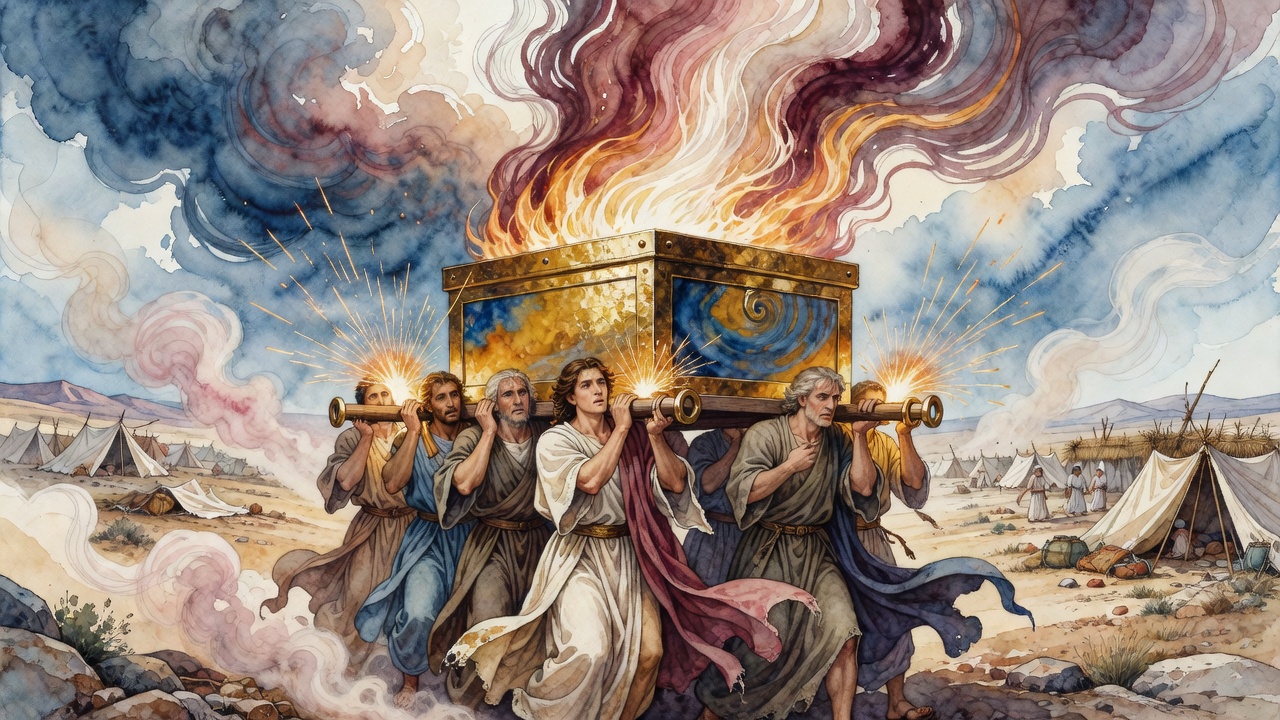
When was the jar set down? A reader might guess the fortieth year, a parting gift as Moses prepared to die. The verse that places the jar "before the Testimony" will not allow that delay. The Testimony is the ark that holds the tablets, and the ark rose only when the Tabernacle stood, in the second year after Egypt. So Aaron did not wait for nostalgia. As soon as there was a holy place to set a witness, he set it. Early. Beside the law itself. Bread next to the words that ordered the people's days. The future would need proof that Heaven once fed a free people from the sky. Aaron made sure the proof would not depend on memory alone.
He measured the omer with hands that still remembered slavery and still trusted the next dawn. That double knowledge went into the clay with the manna.
Why Clay and Not Gold
What kind of jar? Gold, silver, copper, iron, lead? The unusual word for the vessel pushed the sages past every metal until they landed on the humblest answer: plain fired clay. The treasure of heaven stored in a pot of earth. No glamour for the relic. No temptation to worship the container instead of the Provider. The vessel matches the lesson. What feeds you can sit in something any potter can make.
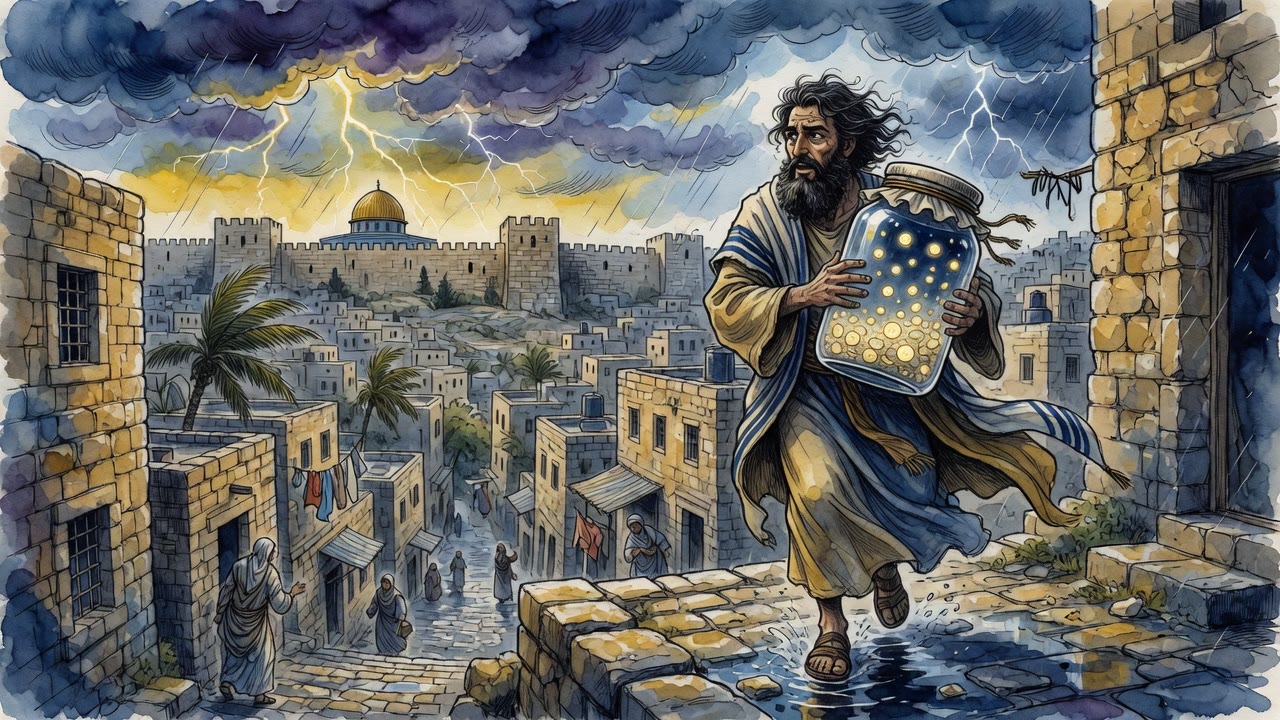
Why keep it at all? One voice says it was a witness for the ancestors who lived that hunger. Another says it was for the distant future. A third opens a scene centuries later. The prophet Jeremiah urged Israel to give themselves to Torah, and they answered with the oldest worry in a working body: if we sit and study, who will feed us? Jeremiah brought out the ancient jar and held it where light could find it. Look at what sustained your ancestors when they devoted themselves to the word, he said. The same One who fed them will feed you. Clay in a prophet's hands did more work than a sermon about trust. The manna was still a fact, not only a story.
The people who asked about bread were not fools. Hunger is a real argument. Jeremiah answered with a real object older than their fear.
Bread After the Leader Fell
Scripture says Israel ate the manna forty years, yet the bread did not simply stop the day Moses died on the seventh of Adar. Rabbi Joshua counts the rest of that month and the days of Nisan until the people crossed into the land and tasted its grain. As Joshua records, the manna ceased the day they ate the produce of the land (Joshua 5:12). Rabbi Eleazar of Modiin adjusts the arithmetic for a leap year, adding a second Adar, and arrives at the same Nisan morning. Others stretch the gift through conquest and the dividing of the inheritance, fourteen years after Moses was gone, fifty-four years in all from the first morning it fell.
However the days are tallied, the point holds. The gift did not vanish when the great leader fell. Heaven kept feeding Israel until the land itself was ready to do so. The jar in the sanctuary stood for that same stubborn care: provision that outlasts any single human hand. Moses could die. The omer stayed. The people still woke to bread until their own fields answered. Grief and grace shared a calendar, and grace ran longer.
A nation that buries its teacher still has to eat. The manna did not make them pretend the teacher had not died. It simply refused to abandon them in the same week.
Three Hidden Flasks
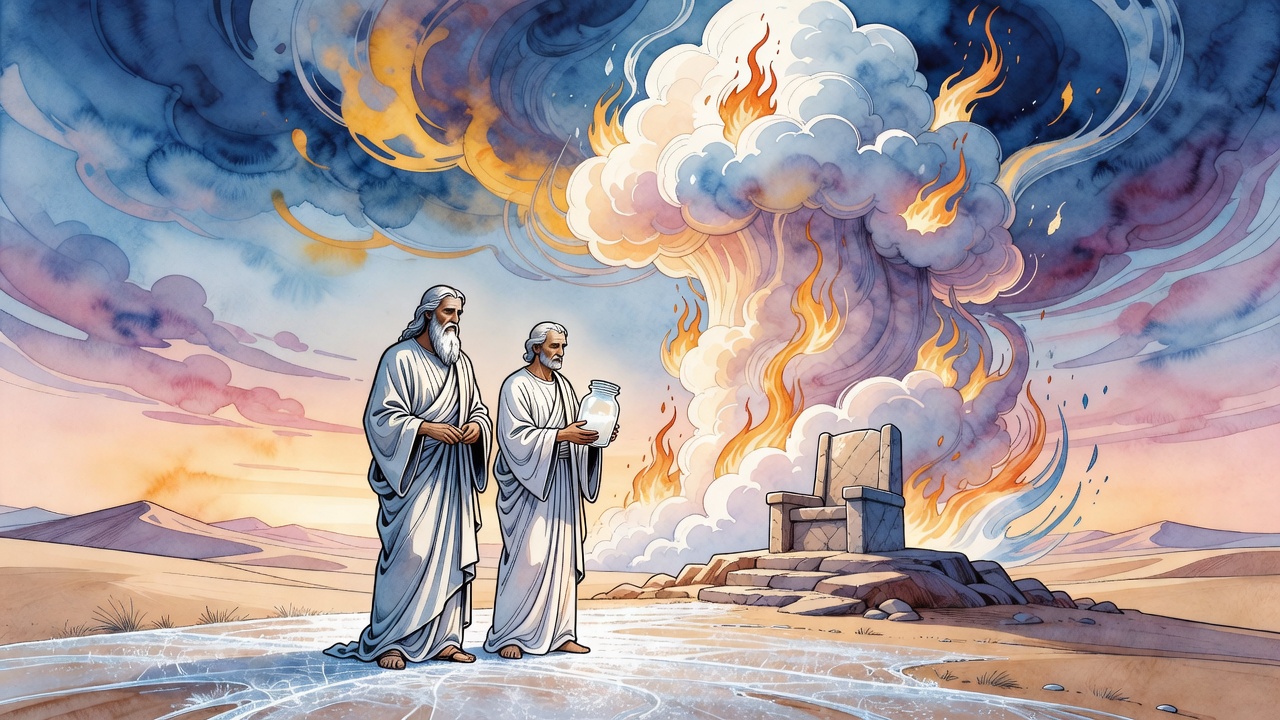
The tradition closes the manna jar among three sealed treasures Elijah will one day reveal: the flask of manna, the flask of water, and the flask of anointing oil. Each is a promise waiting in humble material that the One who provided before will provide again. Not a museum of miracles. A set of sealed proofs for a people that keeps forgetting how it survived. When the jar is finally shown again, it will not be for curiosity. It will be for a generation that needs to see that wilderness bread was never only a rumor.
Aaron's hands, clay, and an omer measured for mouths still unborn. That is the whole scene. No metal shine. No public parade. Only a pot set before the Testimony so that when hunger and doubt rise together, someone can lift the lid of history and say: your fathers ate this, and they lived. The wilderness ends. The jar does not apologize for still existing. It waits in earthenware, patient as a law that knows the next famine of trust is always coming.
← All myths