Moses Put Aaron in the Center of the Path
Every morning Moses took the middle of the path to the Tent. One day he stepped to the right and set Aaron where the camp would have to look.
Table of Contents
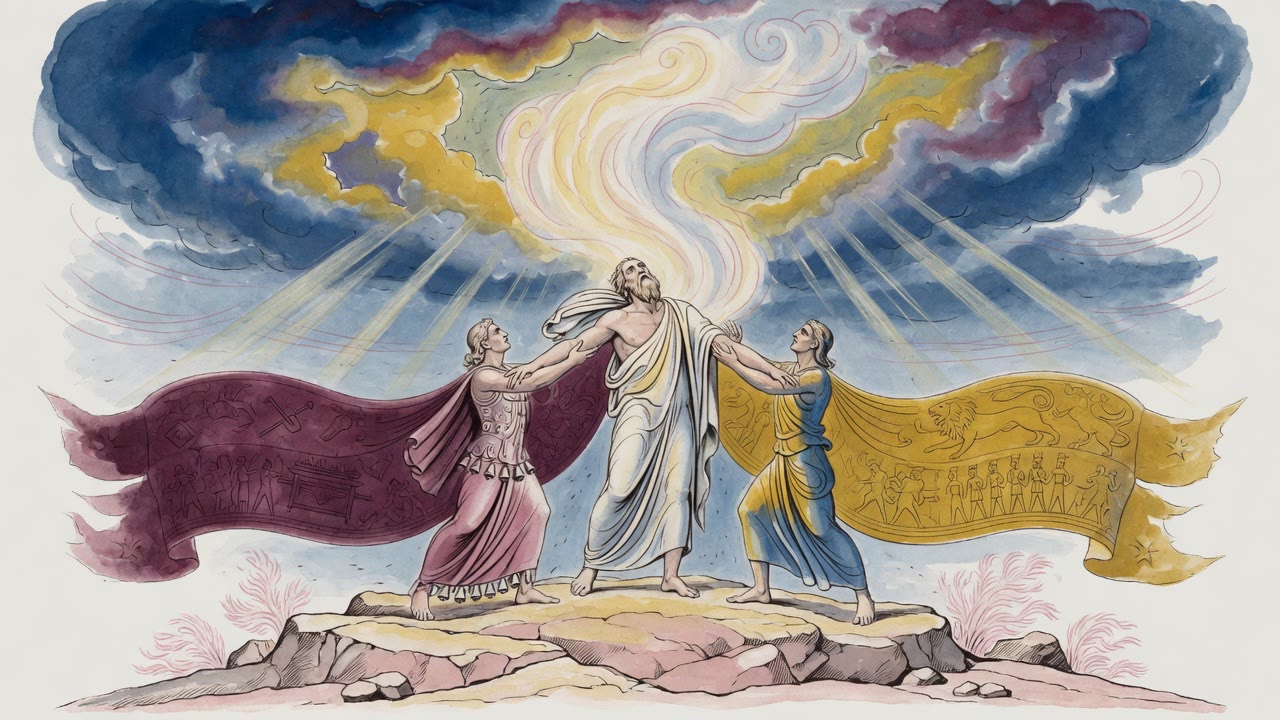
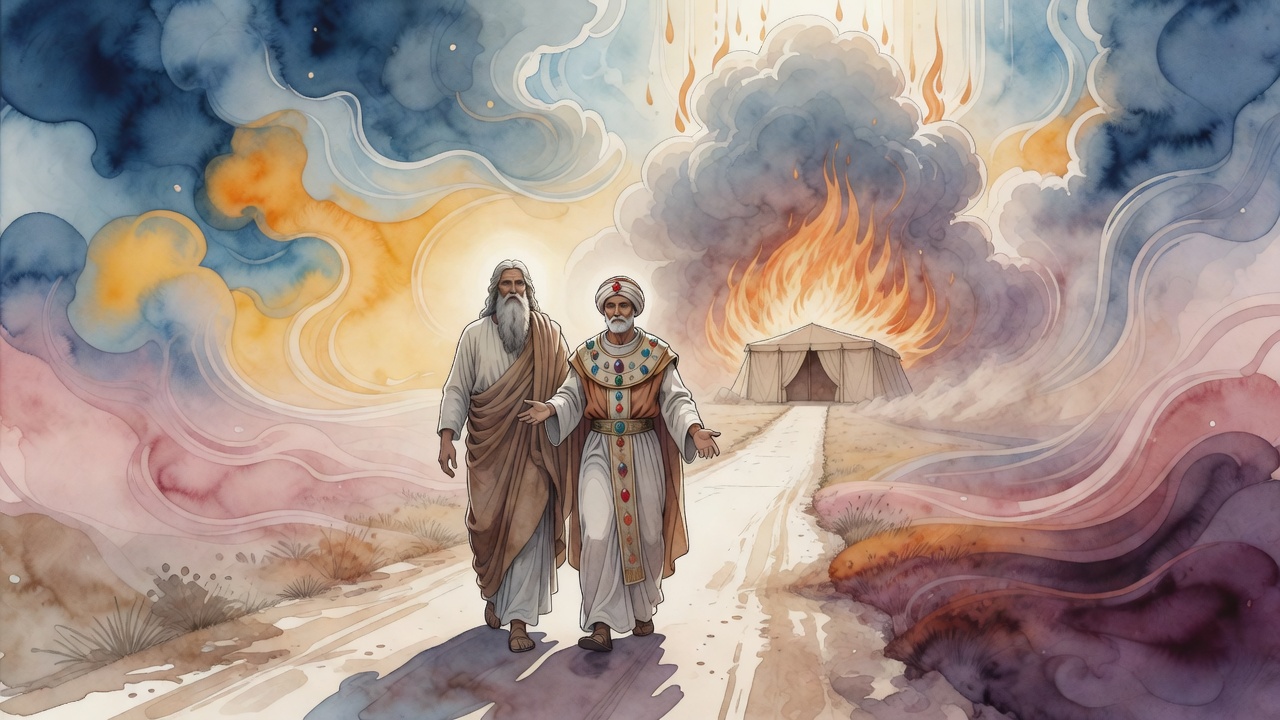
Moses put his foot in the middle of the path before the camp had finished its bread. Aaron took the right without being told. Eleazar took the left. The dust already knew the width of that three-man line.
 Click for full size
Elders filled the flanks. The people poured behind. Inside the Tent the seating copied the walk: Aaron nearest Moses's right hand, Eleazar at the left, princes arranged in front. Hands knew the wood. Feet knew the groove.
The Line They Knew by Foot
Children learned the walk before they learned the words of the offerings. Moses in the middle meant the law still stood among them. Aaron at the right meant the priesthood still answered to the brother who spoke with God face to face. Eleazar at the left meant the next generation already held a place. When the procession reached the Tent, no one scrambled for seats.
Moses felt the weight of that habit in his heels. If he died still locked in the center, the people might treat Aaron as a shadow of a greater man rather than the High Priest heaven had chosen. Fire had already taken sons. The camp could shine and still tear itself if rank stayed only in Moses's private loyalty.
He did not announce a plan. He walked.
Rivers Cut the Square
The camp around that path was no loose scatter of skins. It was a square twelve thousand cubits on each side, with four thousand cubits at the heart held for sanctuary, priests, and Levites. Moses, Aaron, and Aaron's sons kept the east, nearest the entrance. Kohath, Gershon, and Merari took south, west, and north. The tribes stood in threes under banners, each block four thousand cubits wide.
Livestock stayed outside. The Anan HaKavod (ענן הכבוד), the Cloud of Glory, sealed people from herds. Rivers ran around the whole enclosure and between the tribal sections. On Shabbat, board bridges spanned the water so no one needed a ride. Purple light from the Cloud fell into the rivers until the water shone like sun and stars, and the nations who watched from the ridges feared Israel and praised God for what they saw.
In that ordered glory, the center of the path still belonged to Moses. He passed the purple water with Aaron at his right and felt, for the first time, that the picture was lying.
Moses Gave Away the Middle
One morning his next step missed the worn stripe. The dust in the middle waited for a heel that did not come. Aaron's sandal landed there instead, and the whole line behind them stumbled in the eyes before the feet caught up.
Moses took the right flank, the place that had been Aaron's. Eleazar stayed at Aaron's left. Elders and princes filled the sides. The people still followed, but their eyes snagged on the empty space that was no longer empty in the old way.
Aaron did not argue. He moved into the center as if the path had been waiting for him. His shoulders took the view of every face behind them. Moses matched his stride at the right, no staff raised, no speech explaining the change. Dust rose the same. The Cloud did not darken. The rivers kept their purple sheen. Only the human line had been rewritten in full view of the camp.
The Seats Followed
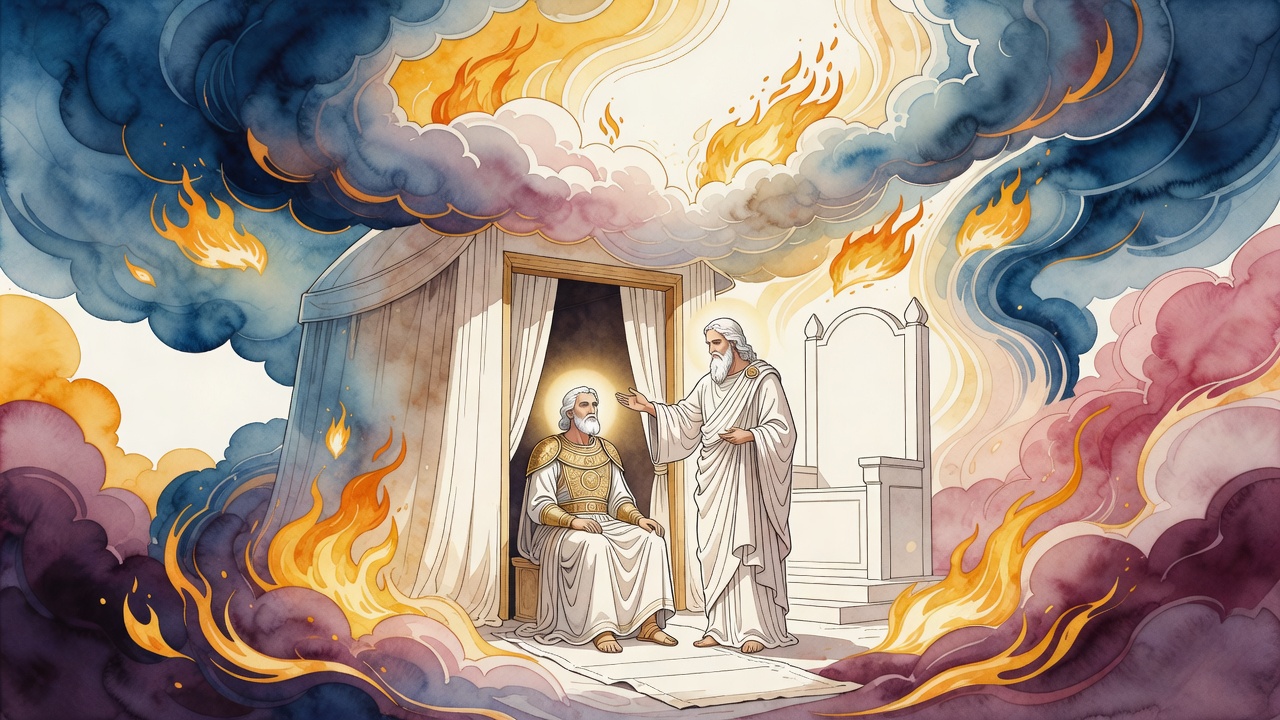
Inside the Mishkan (משכן), the Tabernacle, the seating followed the new walk. Aaron sat where the center of authority now rested. Moses took the seat that said he had yielded. Eleazar held the left. The princes arranged themselves in front and said nothing, because silence was the only language that fit a shift this clean.
No trumpet announced a promotion. No verse was read aloud on the bridge. The people who had watched purple water and feared nations now watched two brothers trade places. Moses still spoke with God. Aaron still wore the garments of the altar. But the middle of the road, the place every child watched first, now carried the High Priest.
Moses wanted that picture sealed before any quarrel could pretend it had misheard. By walking right of Aaron, he made loyalty public. He put his body where the camp could not call the ranking a rumor.
He Did Not Take the Center Back
When the day ended, Moses did not reclaim the middle for a private walk home. The new line held. Aaron walked center under the same Cloud that divided herds from households. Rivers still cut the tribes into islands joined by boards. Nations on the ridges still saw radiance in the water. Inside the camp, the radiance had a human shape: a High Priest in the path's heart, a prophet who chose the right hand, a son who kept the left.
Moses returned to his tent with dust on sandals that had refused the center. The staff rested. The Cloud did not comment. The bridges waited for Shabbat traffic. Somewhere past the purple rivers, the order of heaven had been copied onto a stretch of desert dirt, and Moses had signed it with his feet.
← All myths