74 myths · Page 1 of 3
Each story names the sources it was written from.
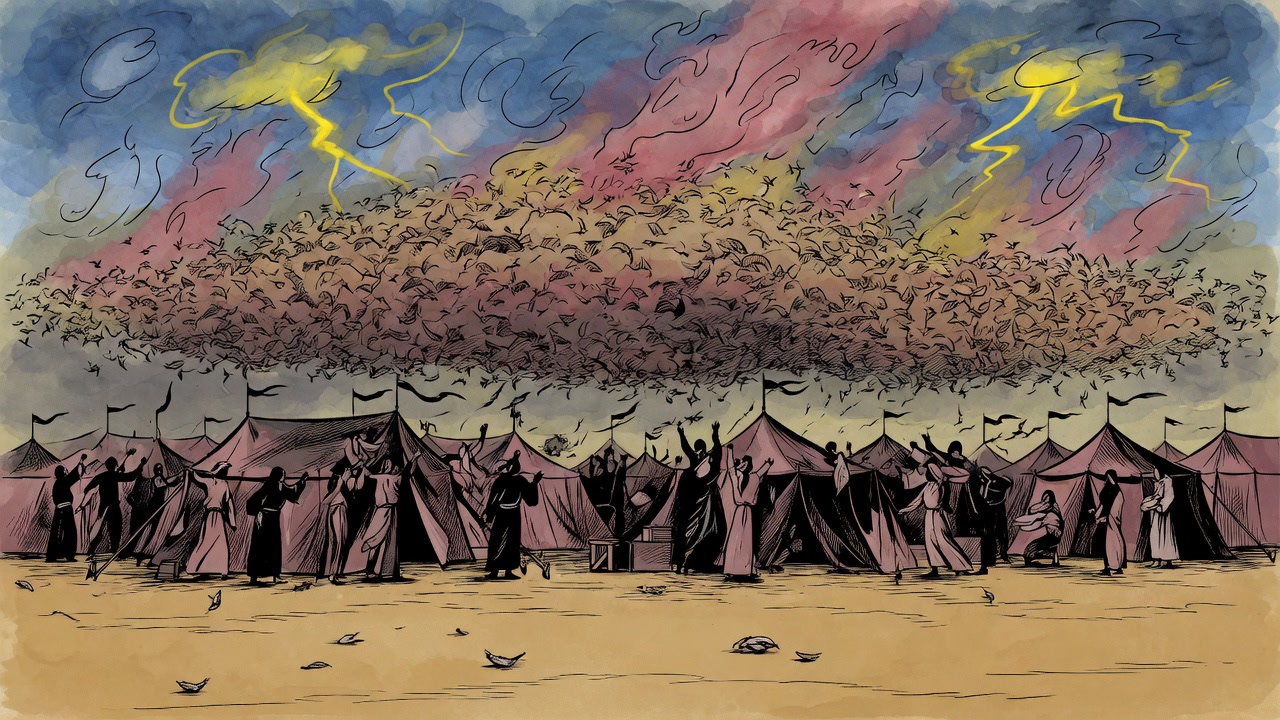
The camp was not starving. Manna still covered the ground. They wanted meat anyway, and the birds came in so low a tired man could grab them.
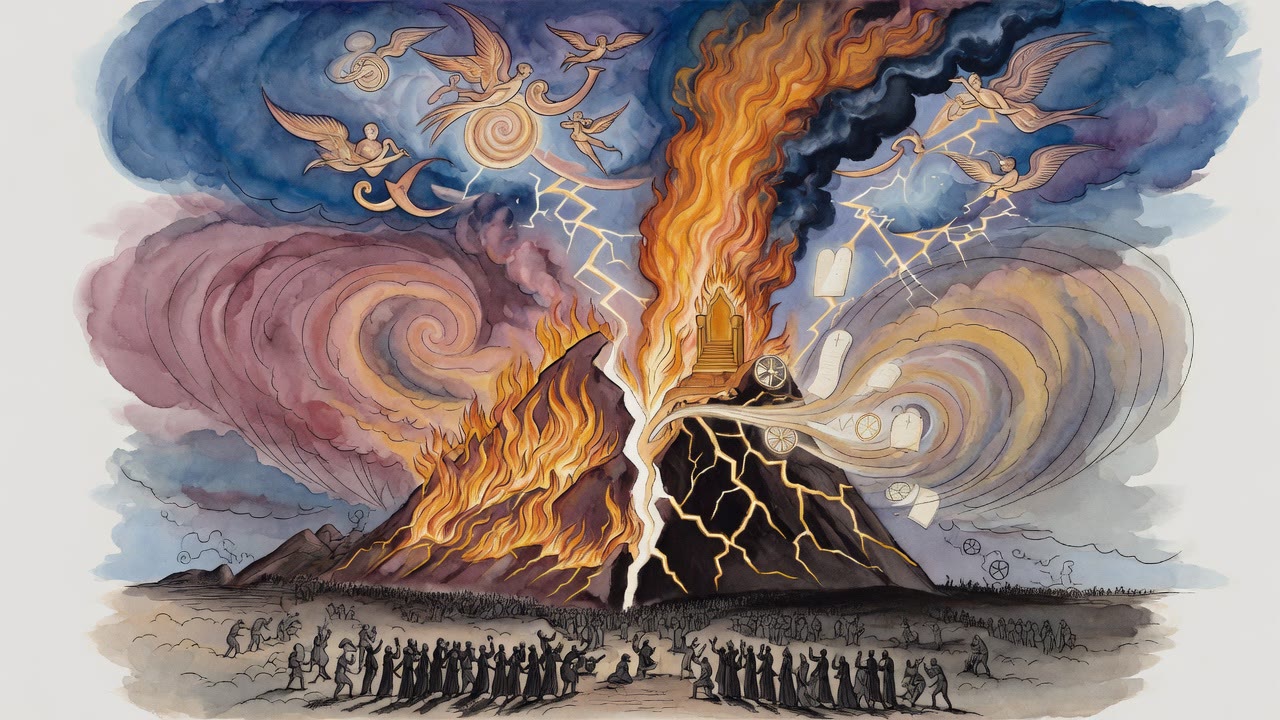
The first word emptied them. Angels pushed the bodies twelve mil back to the mountain. Dew had to fall before they could hear the second.
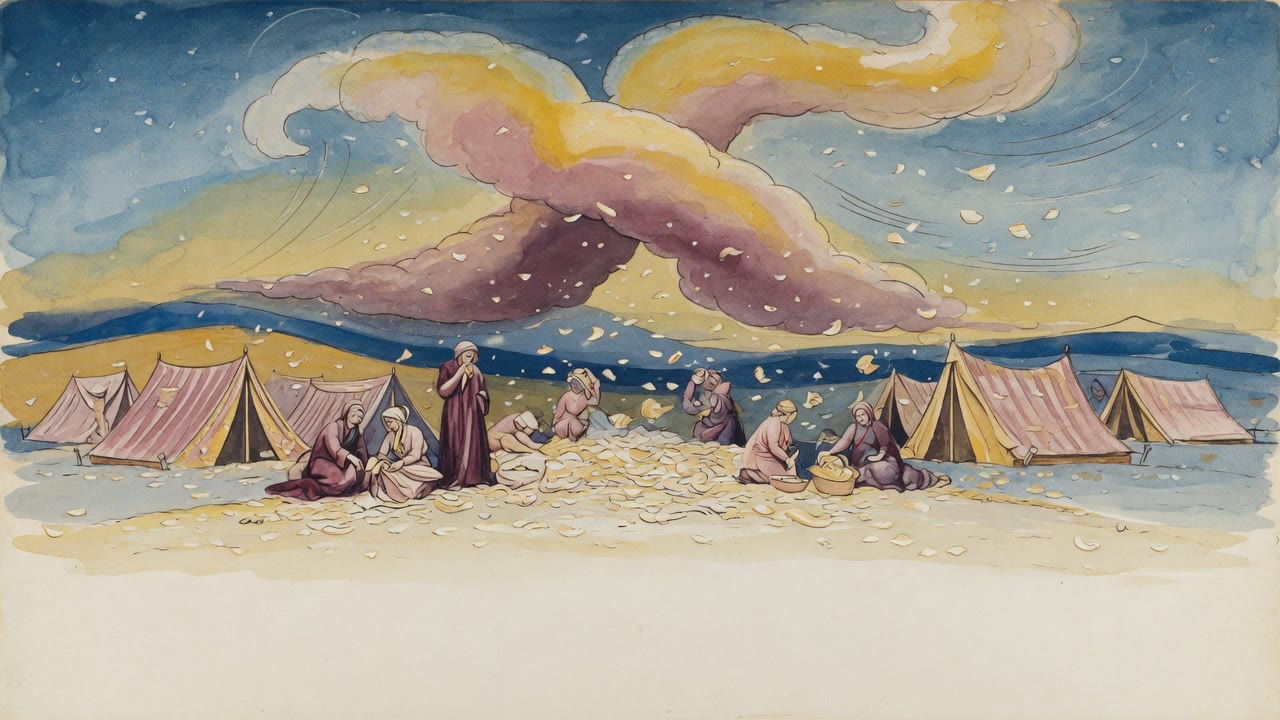
In the desert, manna appeared at every door each morning except Shabbat. The taste changed with each bite to match what you desired, unless you were wicked.
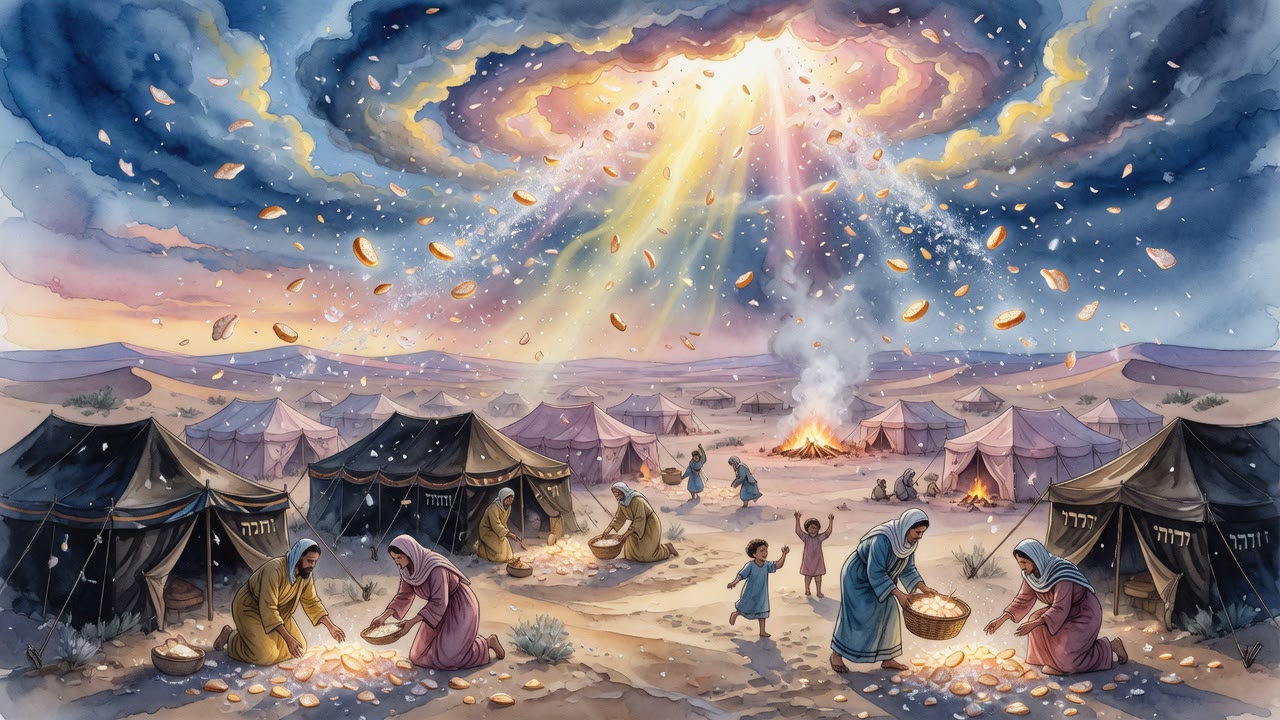
Moses said leave none until morning. One household hid a jar anyway. Dawn found worms first, then rot, which is the wrong order for ordinary bread.
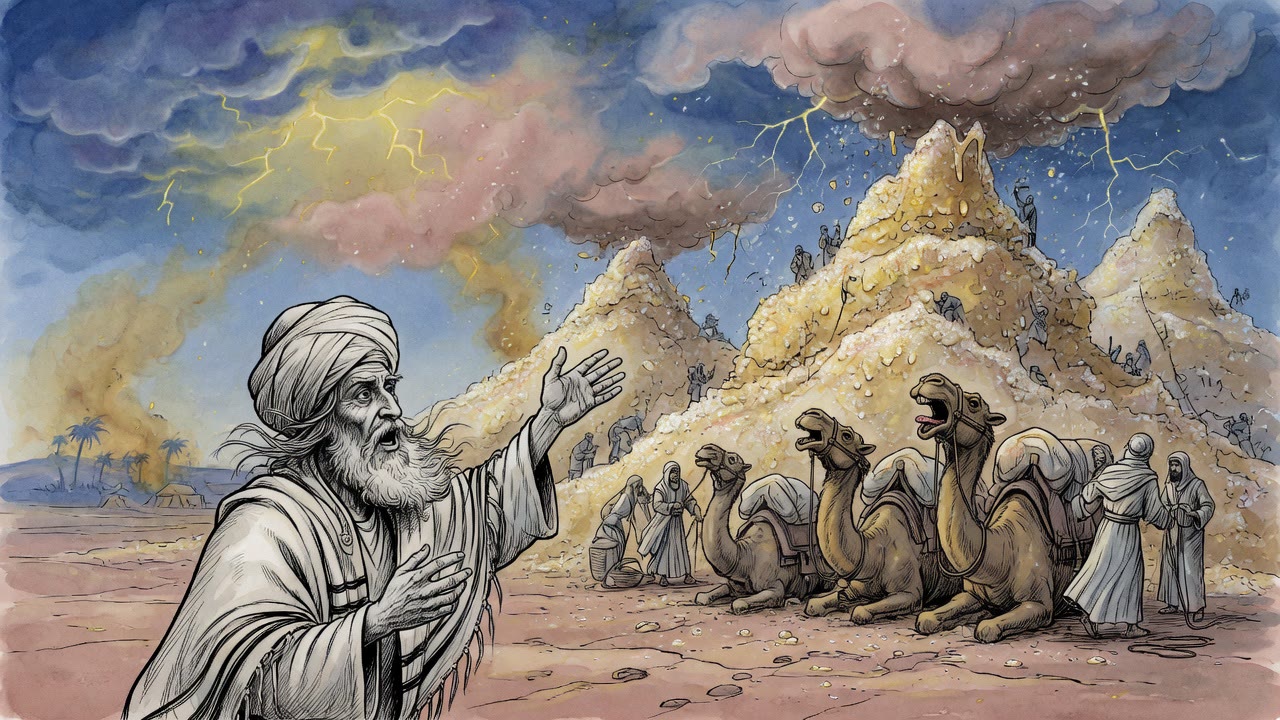
Tarfon groaned loud enough for the row to hear. Elazar of Modiim did not smile. He asked which of God's two measures was larger. Then he counted doors.
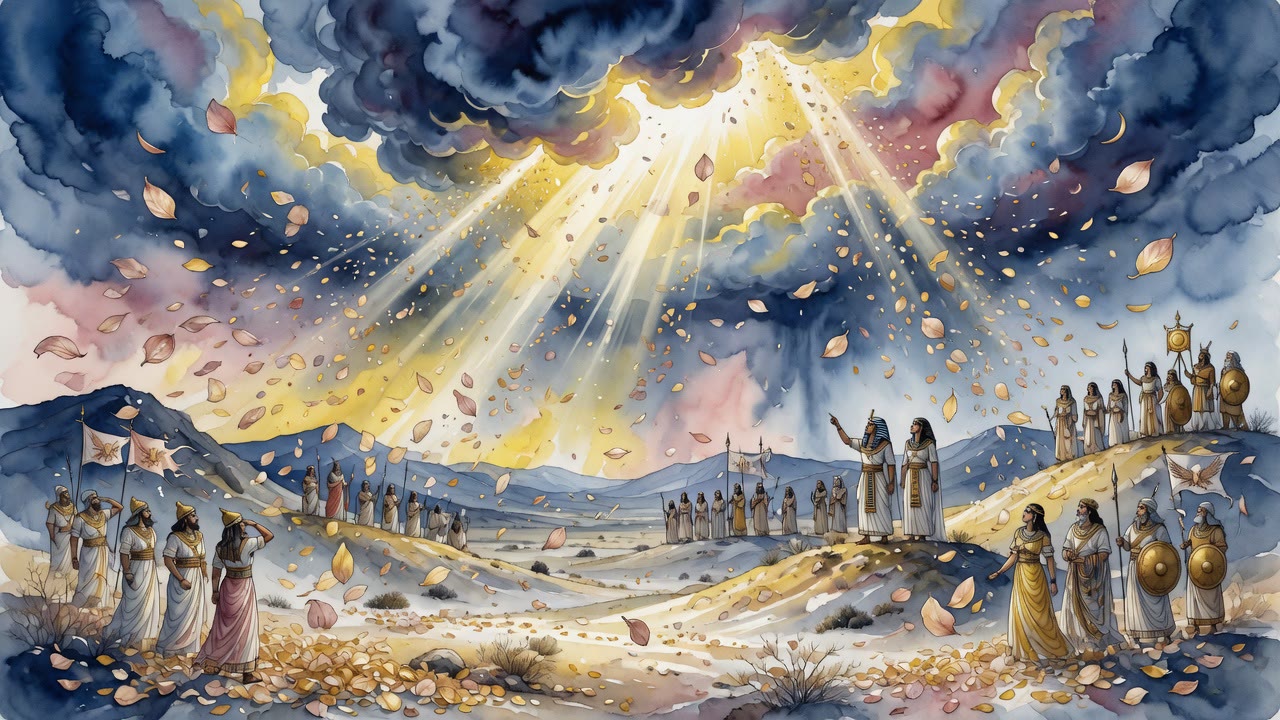
Scouts on the ridges waited for the camp to starve. Dawn lifted the dew, and they counted baskets no desert nation had come to see.
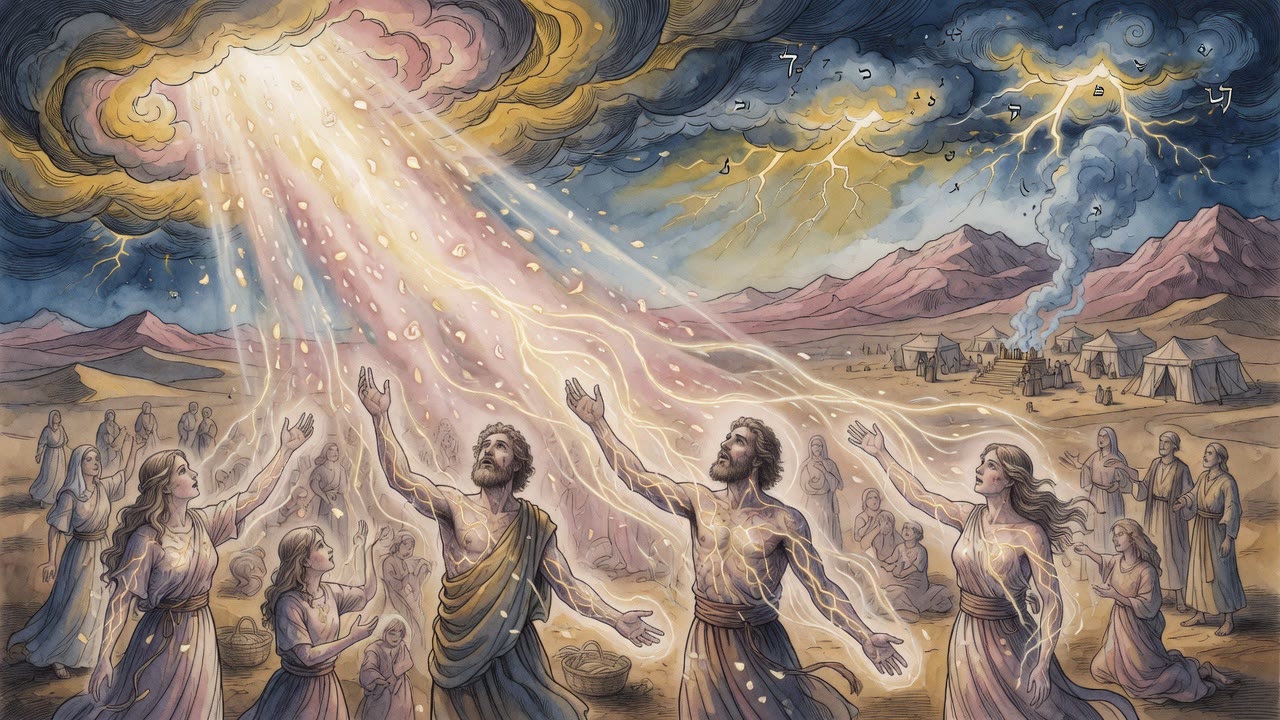
Bread fell from heaven and Israel gorged like horses, but the manna left nothing behind. It vanished into their limbs and became them.
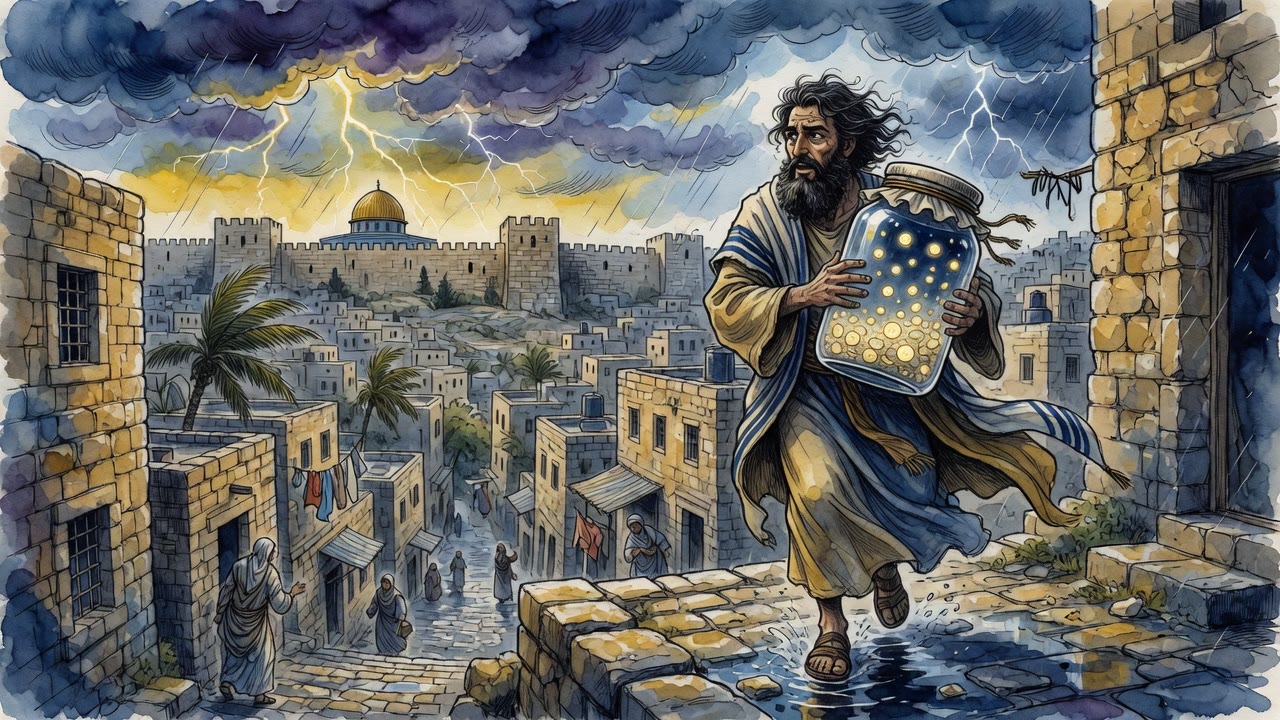
The crowd told Jeremiah they had fields to plow and hungry children, so Torah would have to wait. He came back holding a jar of old manna.
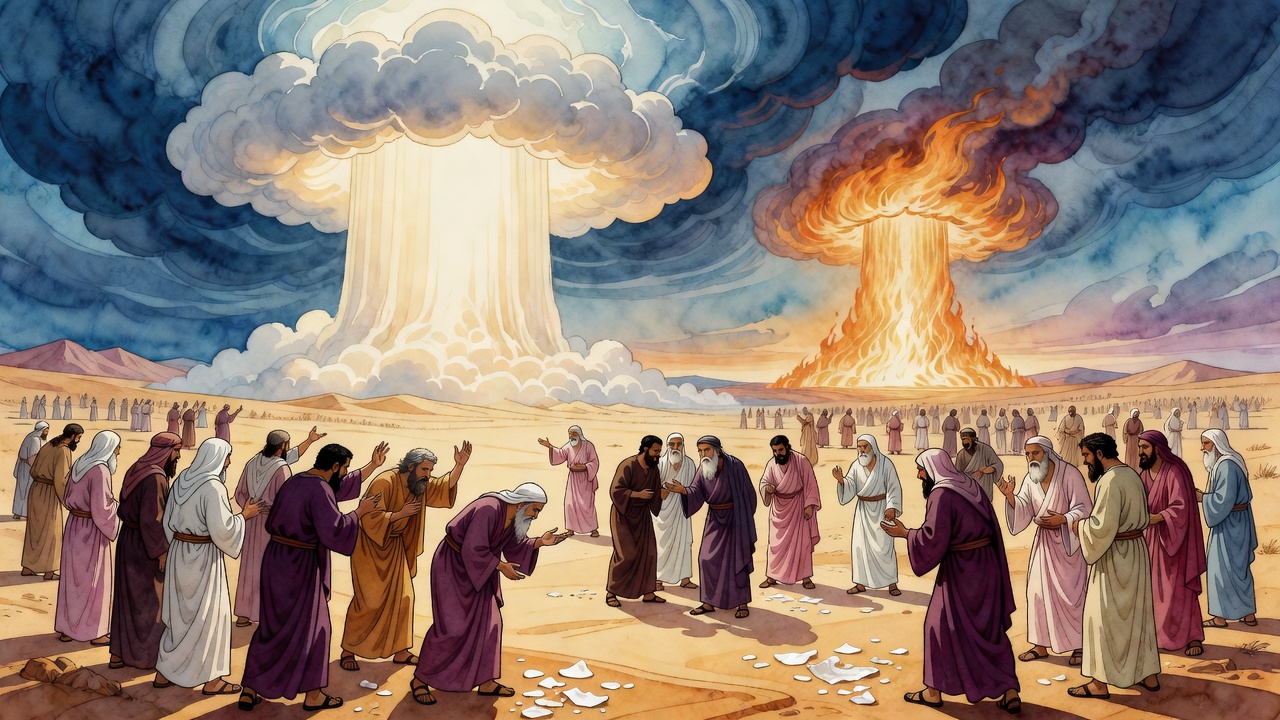
The bread came down with the dew in the exact right amount and rotted if anyone hoarded it. It bought them free mornings for forty years.
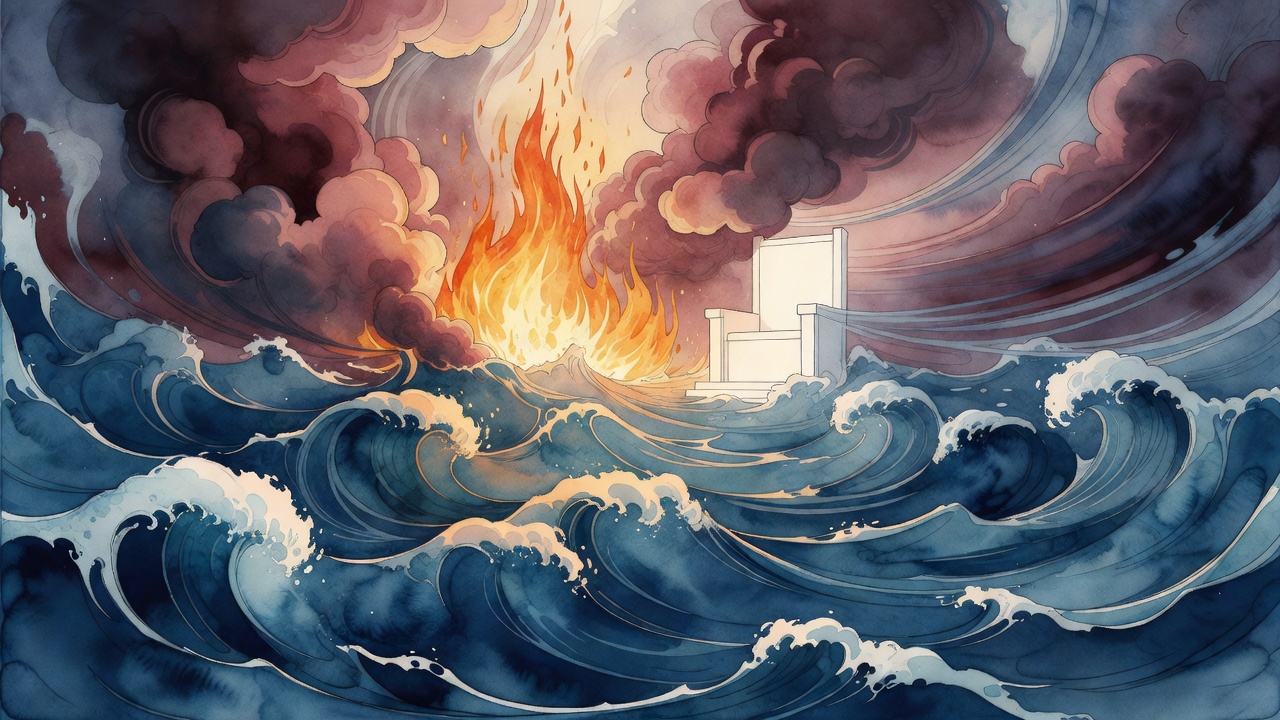
Rabbi Yochanan read one word in Exodus and found a secret deal: the sea was told to split for Israel before the world was three days old.
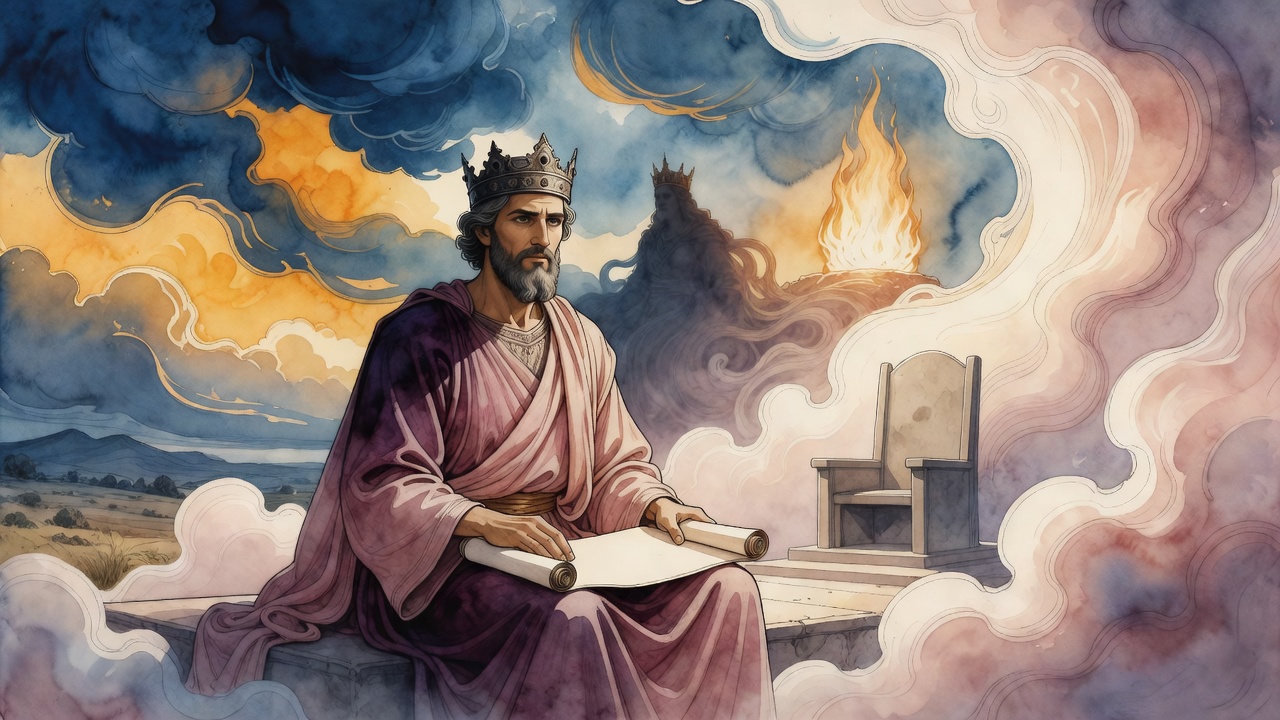
At twenty-seven they put a crown on him he had not asked for. He kept Shabbat in that court for forty years, and he would not take the queen.
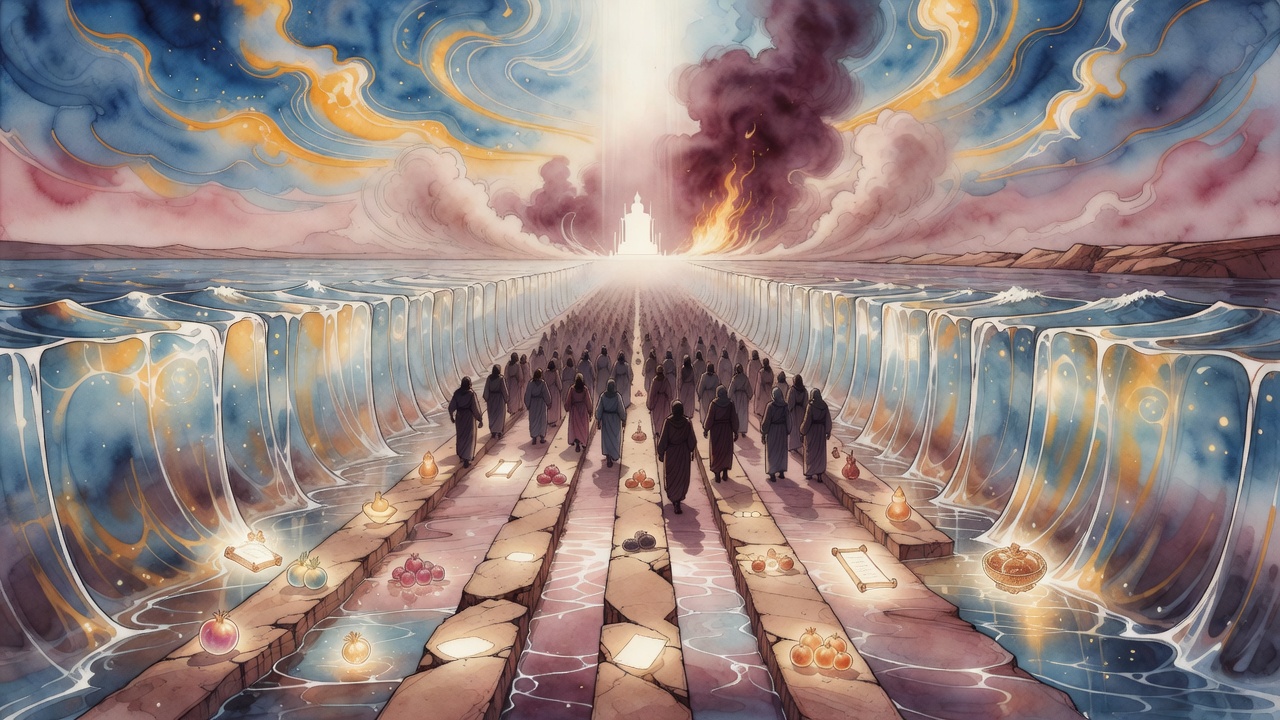
Two tribes were already in the waves. God turned on Moses, who was still praying, and told him to lift the rod over the water.
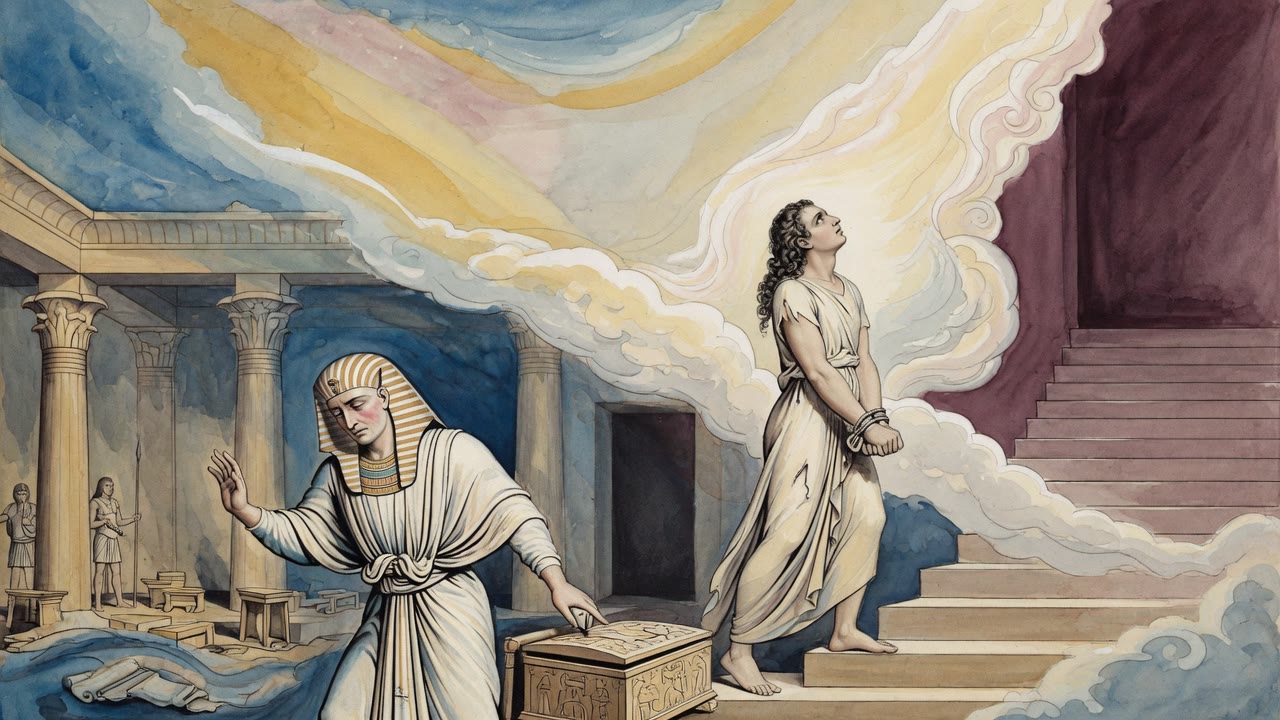
Three days after the sea split, Israel met water it could not drink and learned that confession can sweeten a bitter world.
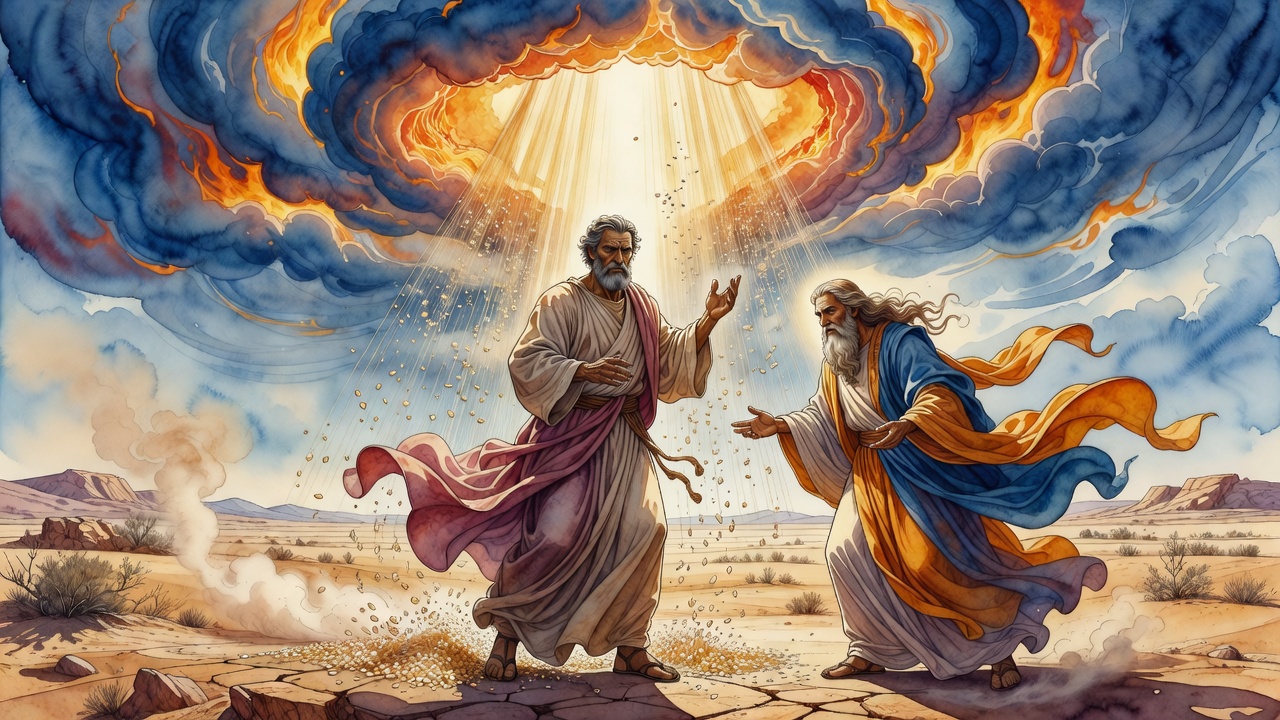
Moses called him the apple of Israel's eye and offered him a share in the land. Jethro tied his bags for Midian while manna still stuck to his sleeves.
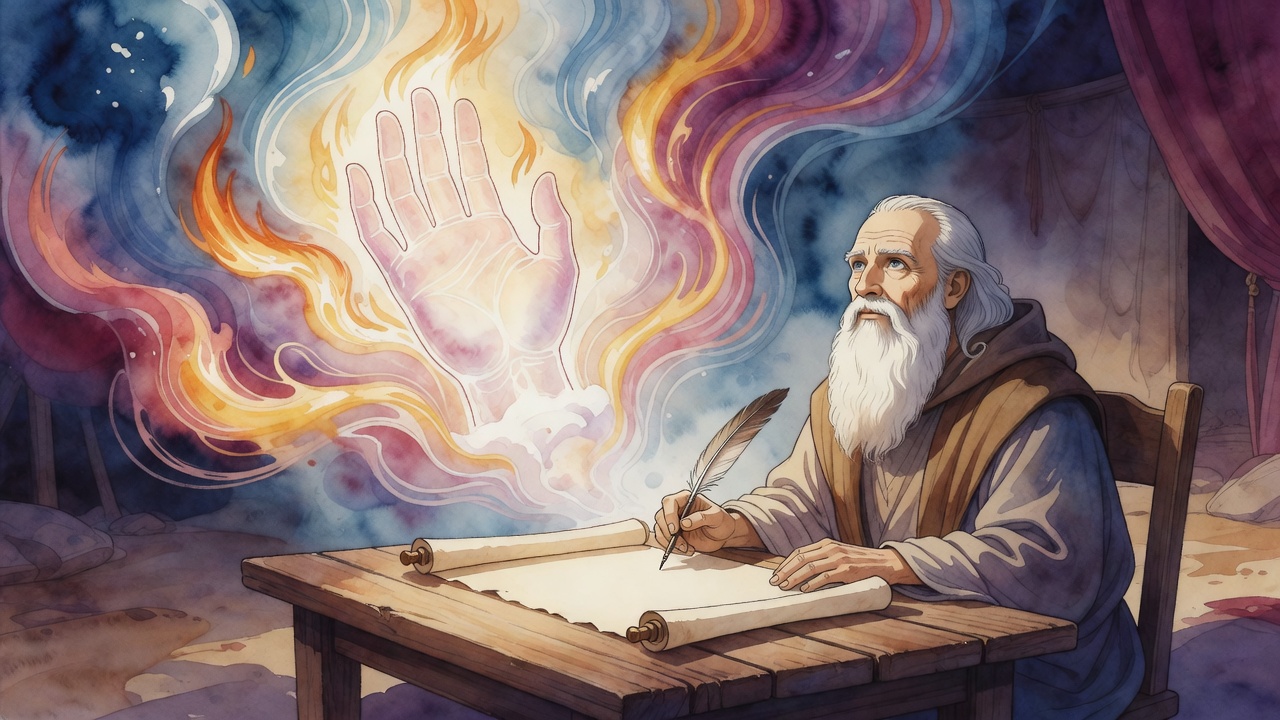
The camp woke to frost on the ground that was bread. Nobody sang over it. God had opened His palm before they asked.
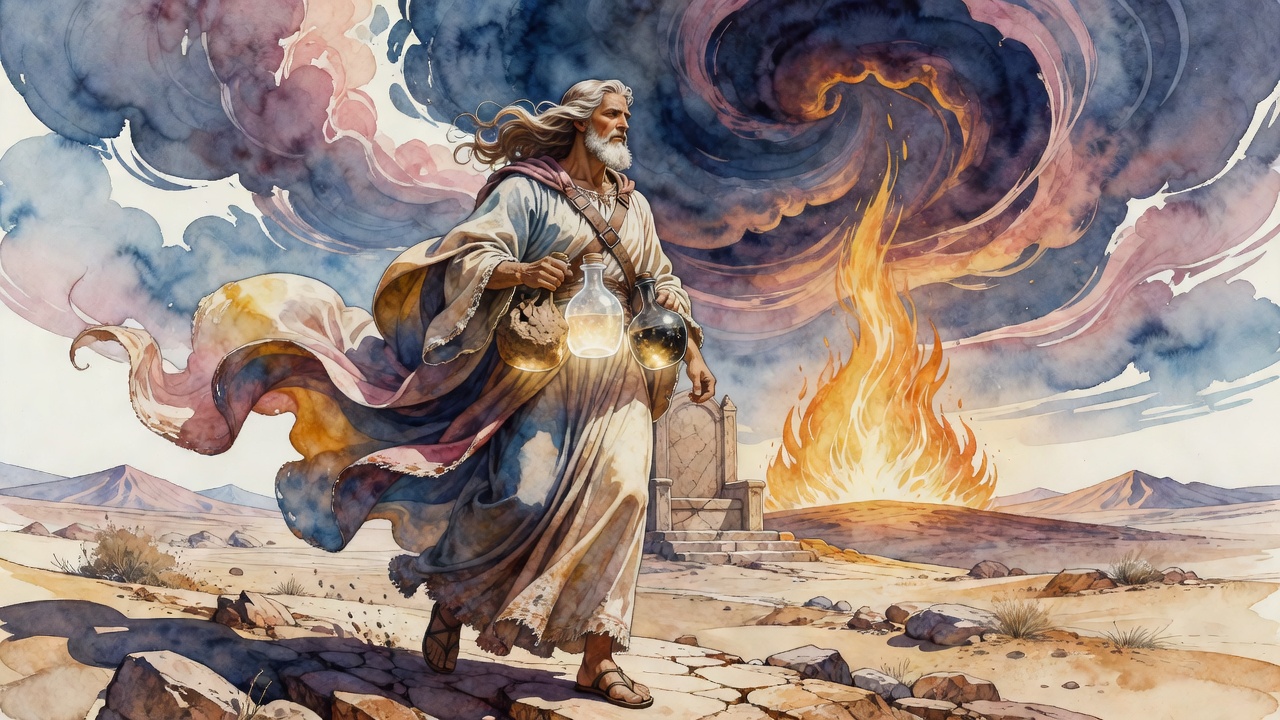
Two of them named what they wanted and had it before morning. The third asked for a beautiful wife, and Elijah made him walk three nights for her.
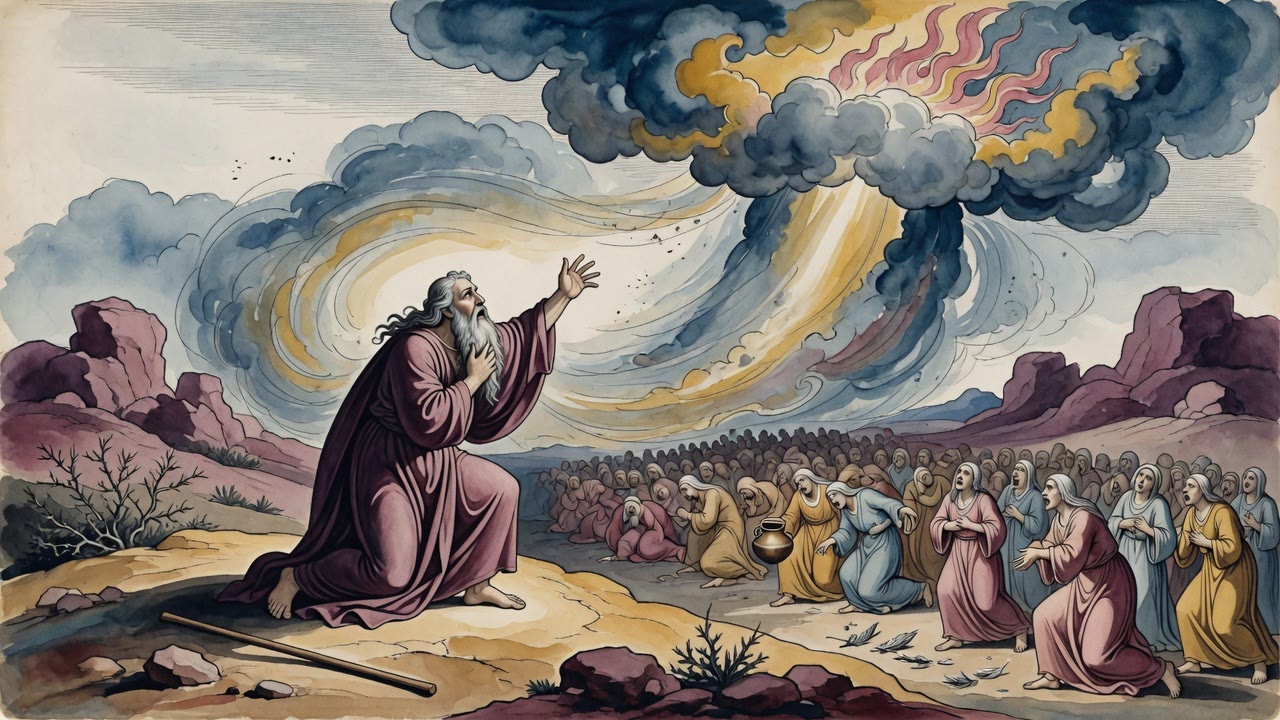
When Israel wept for meat in the wilderness, Moses did not pray for quail. He asked God to end his life. Sifrei Devarim examined the prayer word by word.
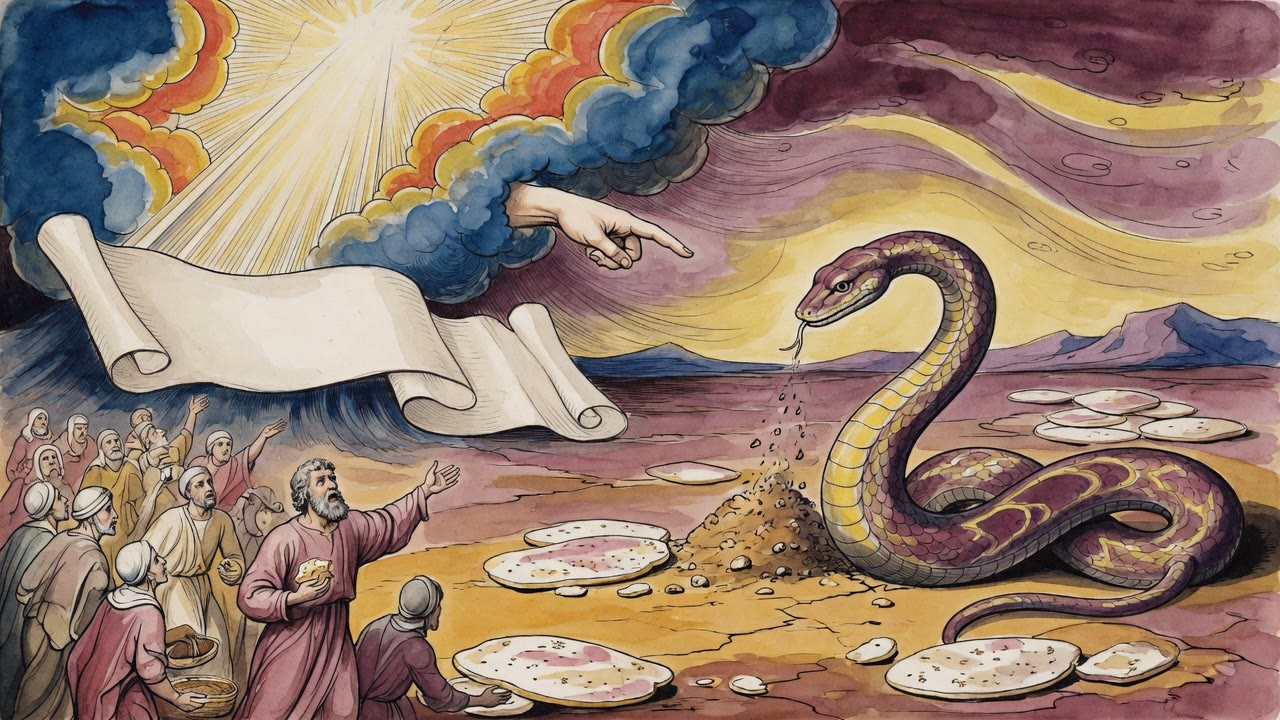
Israel called the manna disgusting after forty years. A heavenly voice answered by pointing to the serpent, who eats dust without complaint.
The first day of the week had the second. The third had the fourth. The fifth had the eve. The seventh counted them off and found itself standing alone.
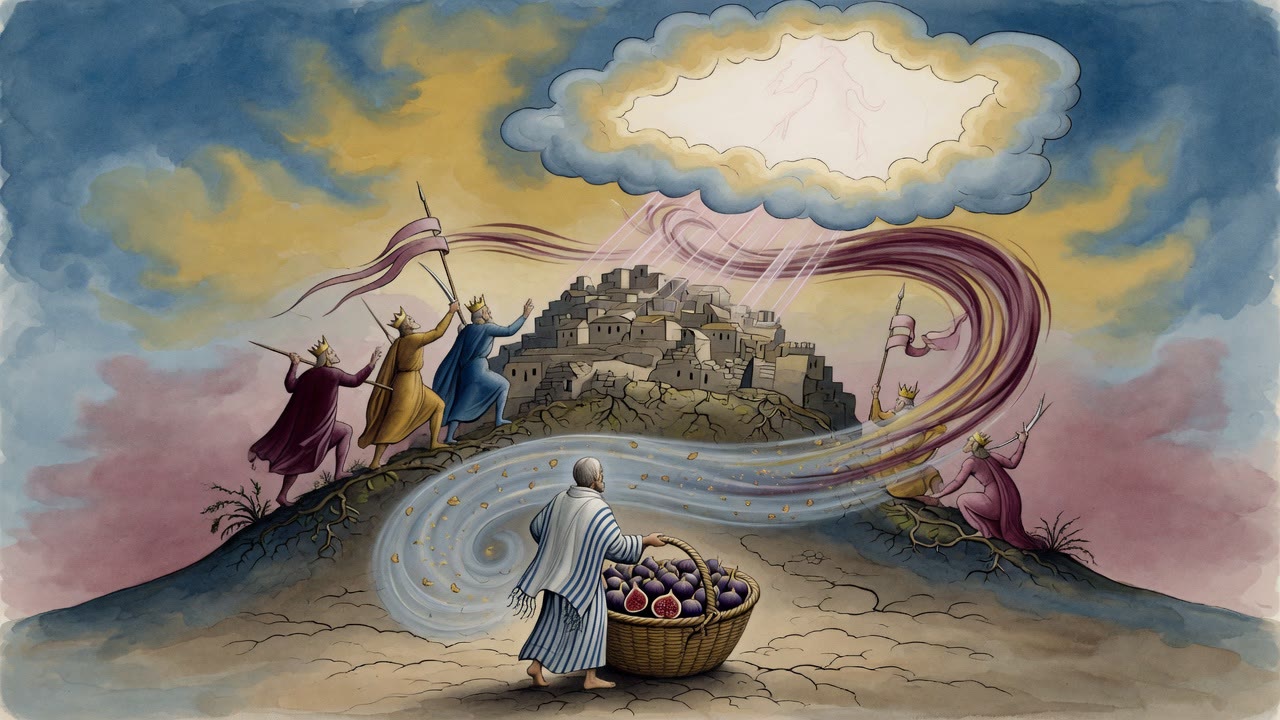
They wept until heaven sent meat, and it came down in layers. The laziest man in the camp gathered ten kor of it. Nobody finished the first mouthful.
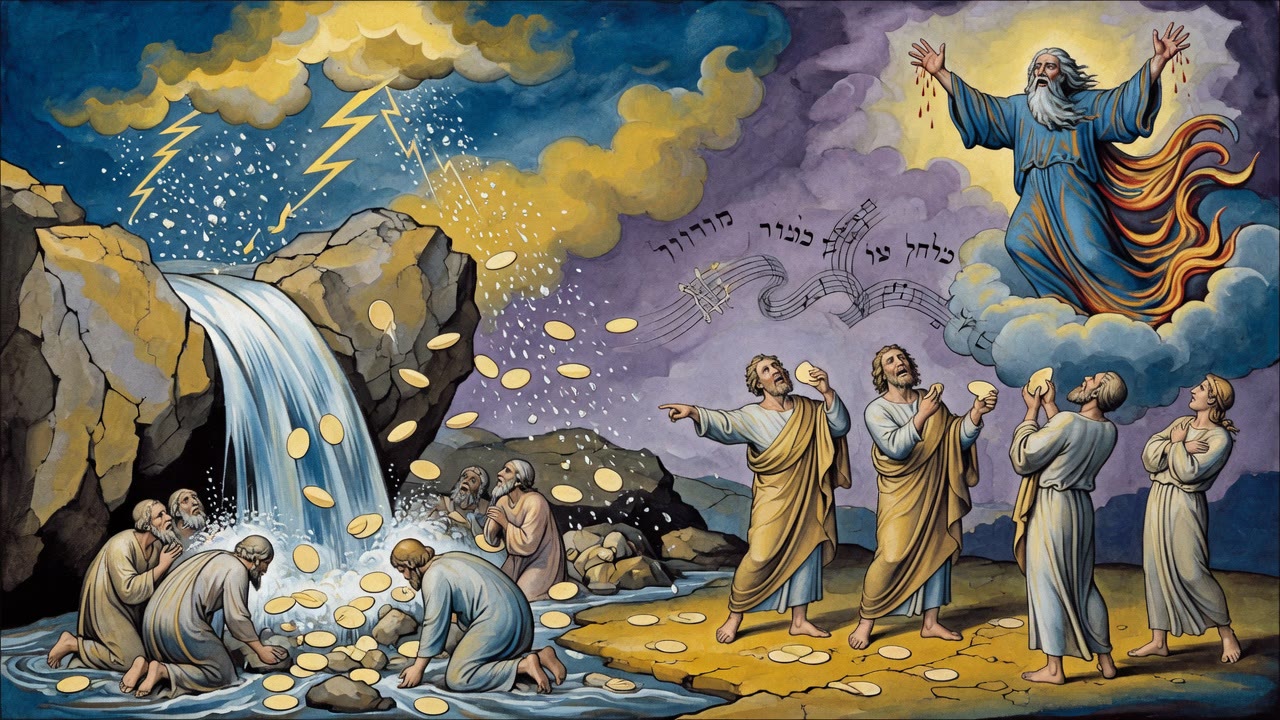
Israel drinks from a gushing rock and eats bread from heaven, then mocks the miracle before learning what a new song costs.
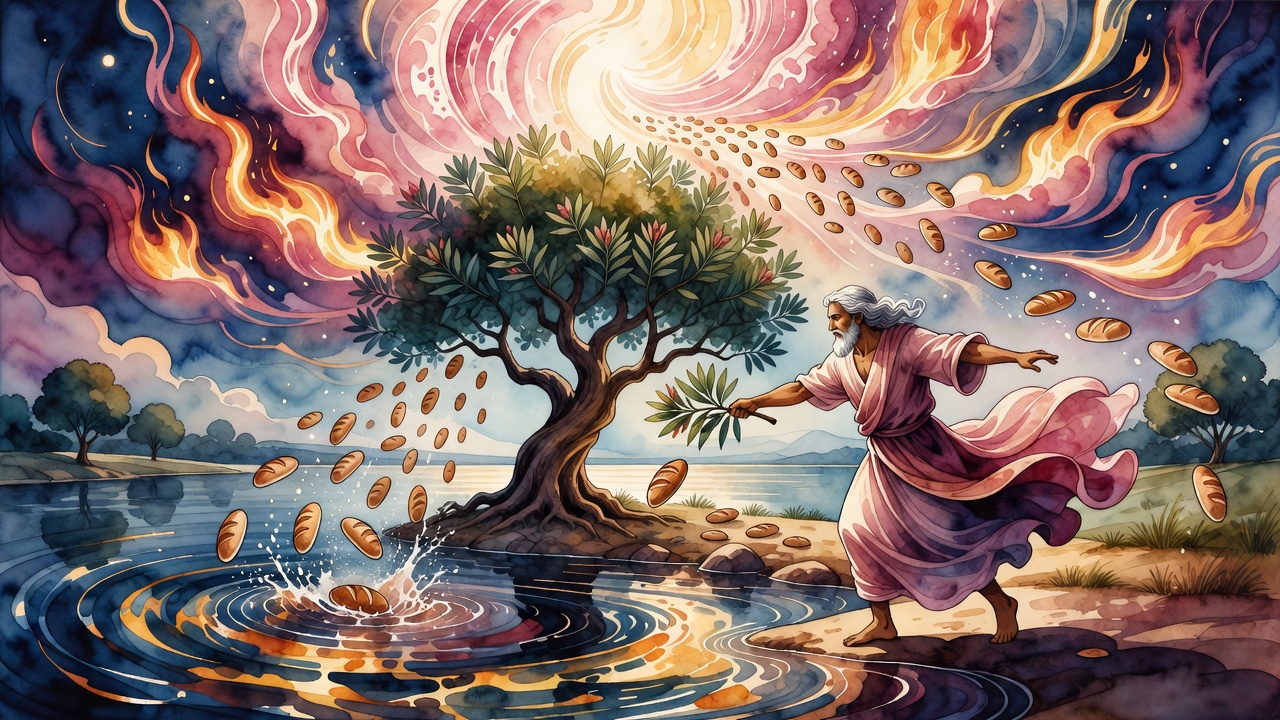
Moses writes God's Name on poisonous oleander and throws it into bitter water. Weeks later, heaven drops bread stored there since the first week of creation.
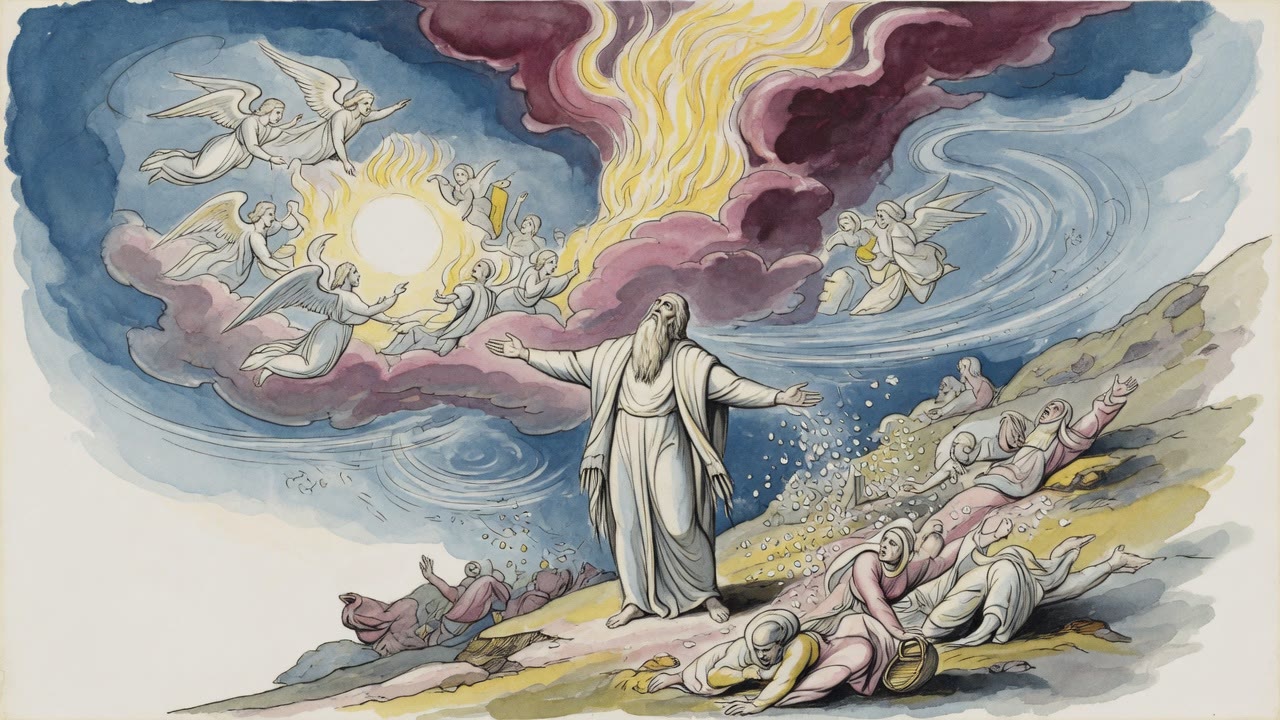
The tablets were still warm in his hands when he saw the calf. He broke them. Below the mountain, Israel was already dancing.
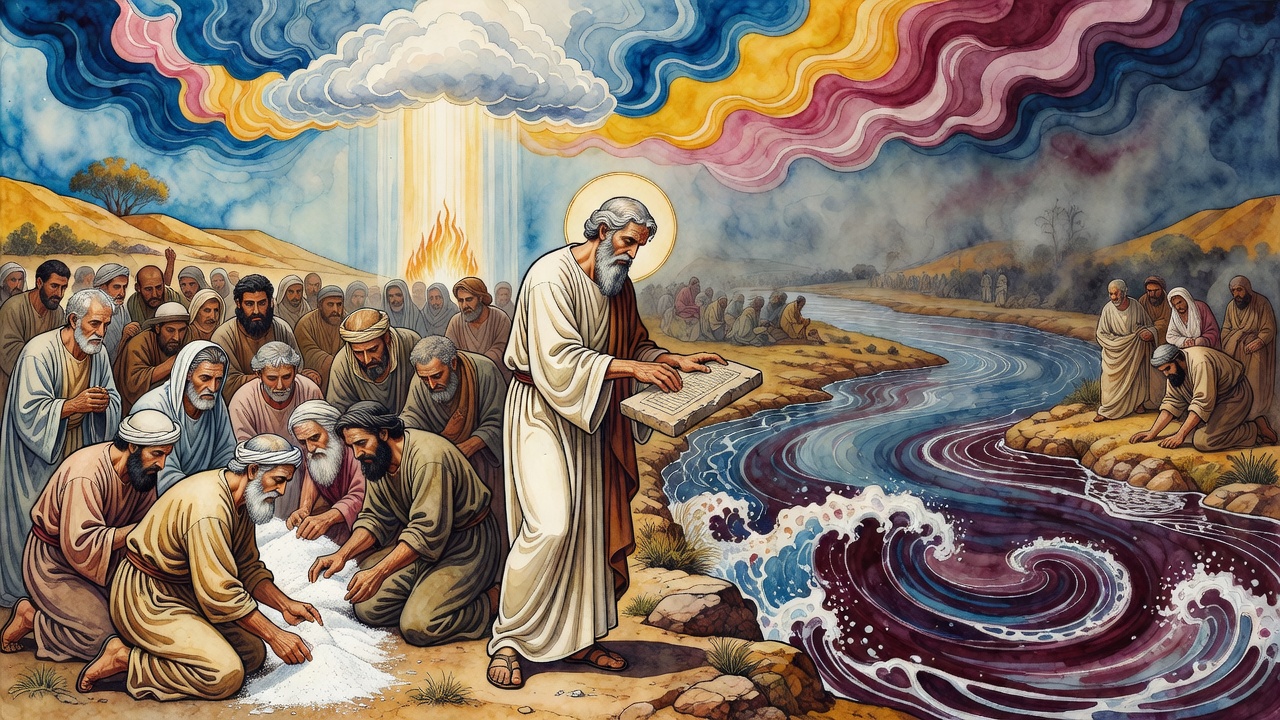
A man was caught gathering wood on the Sabbath. They held him in custody because Moses, who had received the law at Sinai, did not know the ruling.
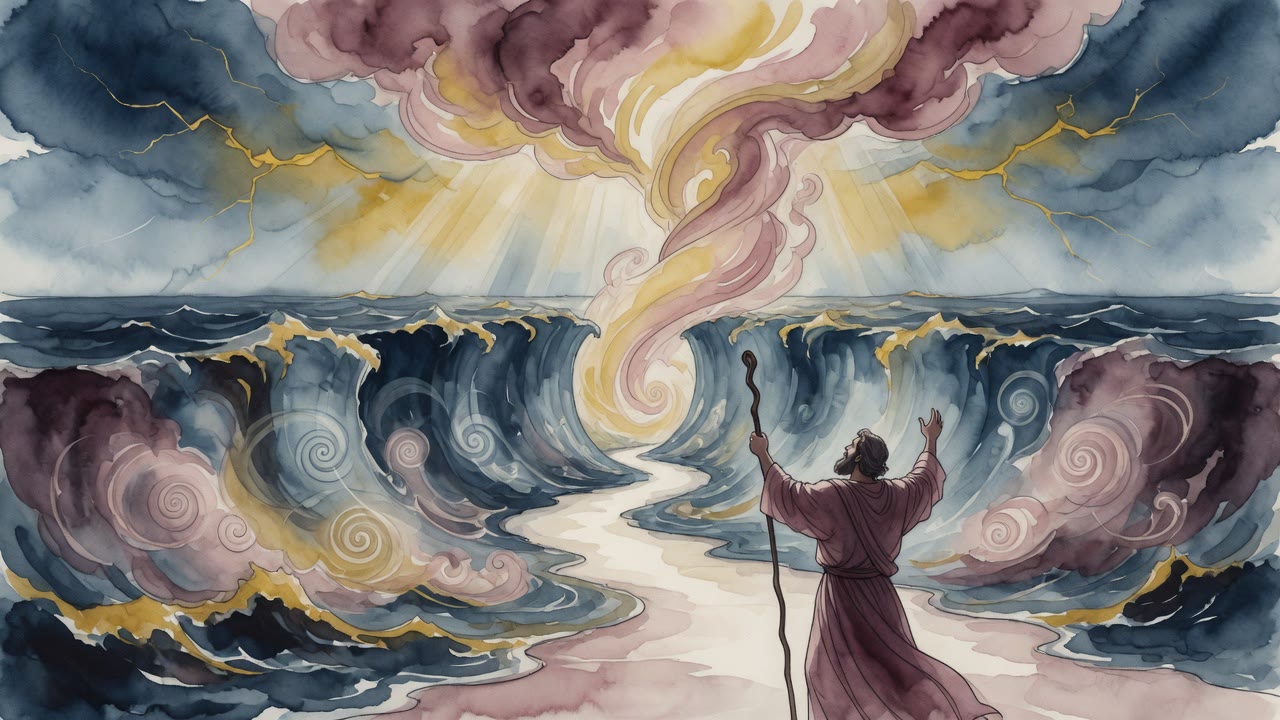
Before Moses lifts his staff at the sea, the sea already knows. God built a condition into creation the day the waters were gathered, and this is the day.
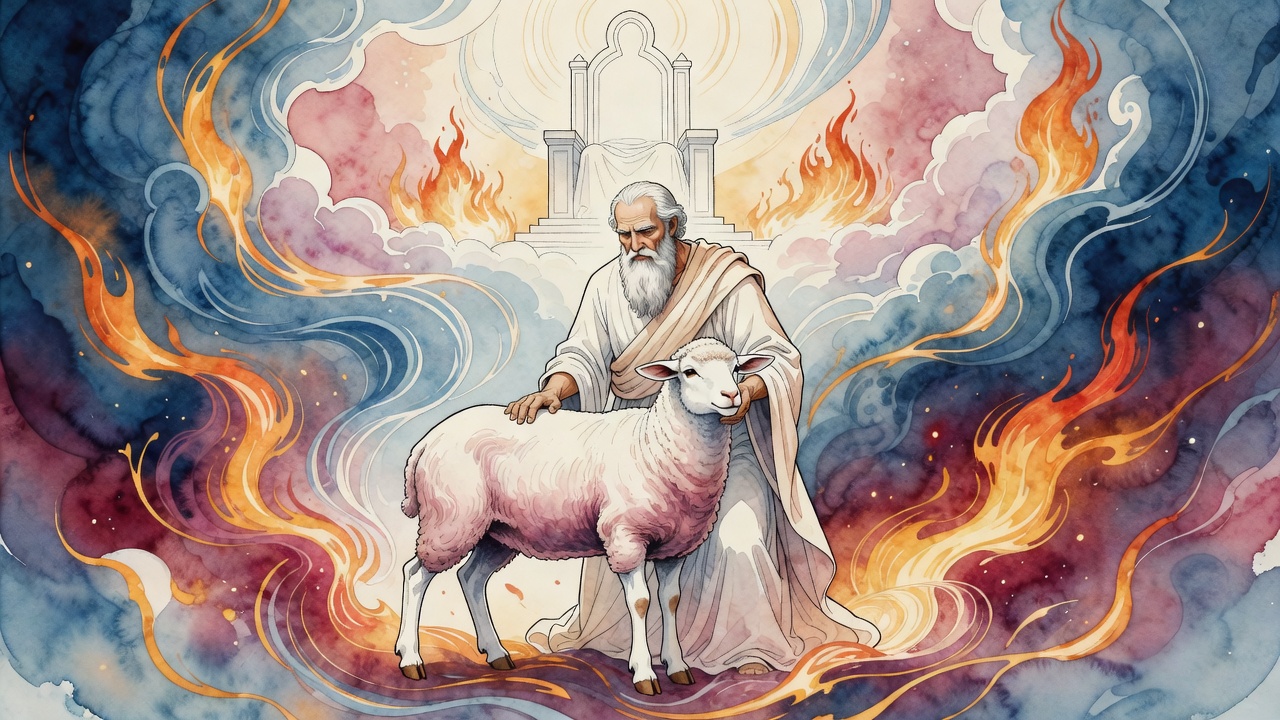
The sentence against the first man was handed down on a Friday. It was not carried out until Saturday night, and he spent the day in between shining.
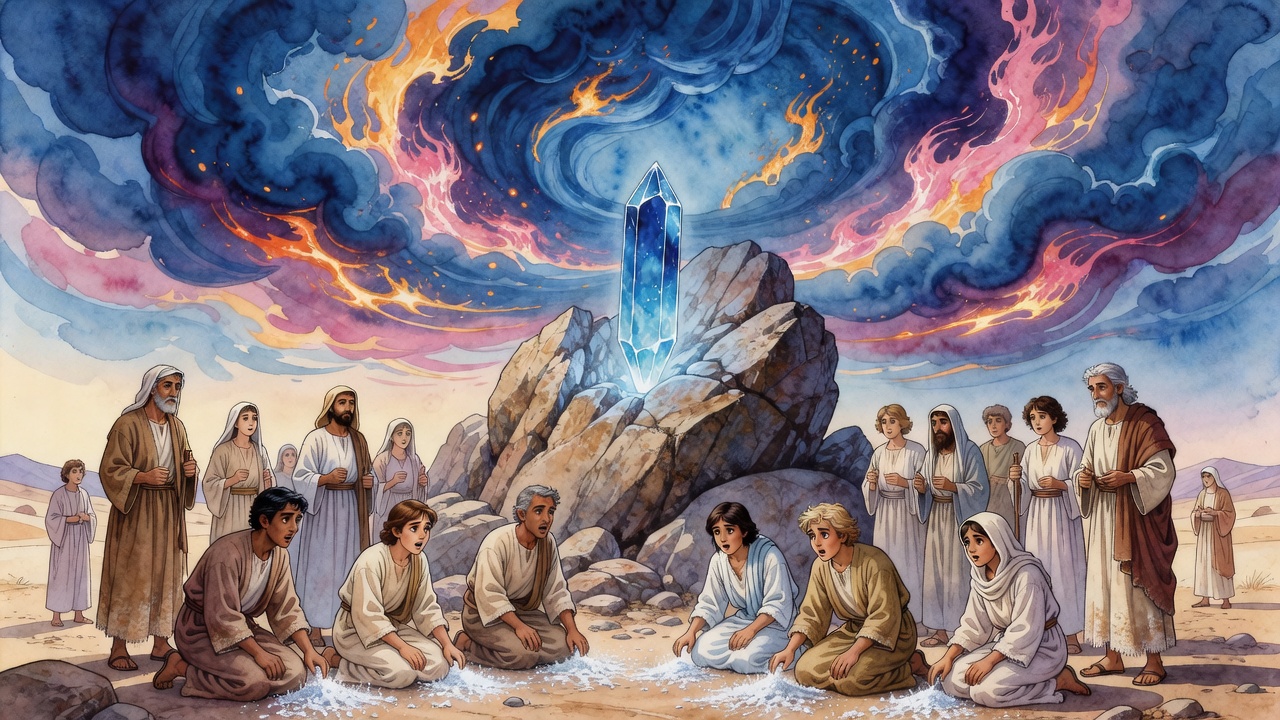
The desert was white before anyone had a name for the stuff on it. A man turned to his neighbor. Man hu, he said. The question became breakfast.
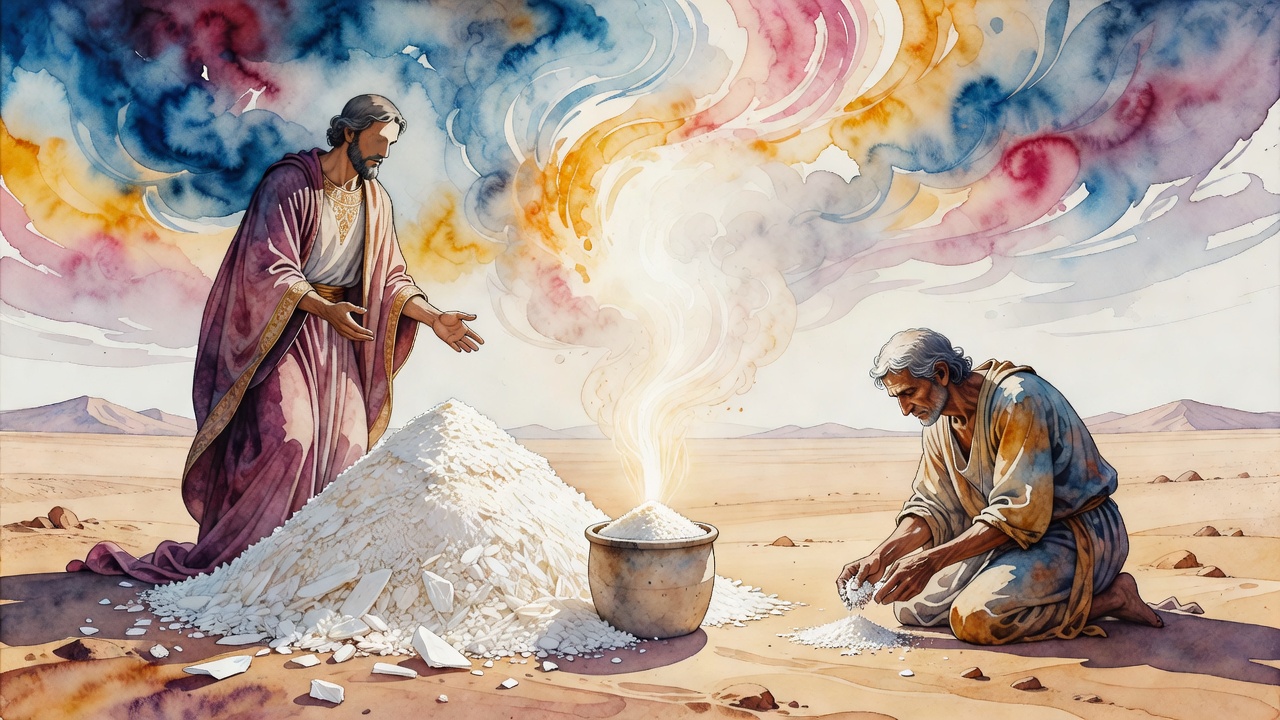
Nachshon sent his whole household out to gather. A poor man went out alone. When they measured, both jars stopped at the same line.
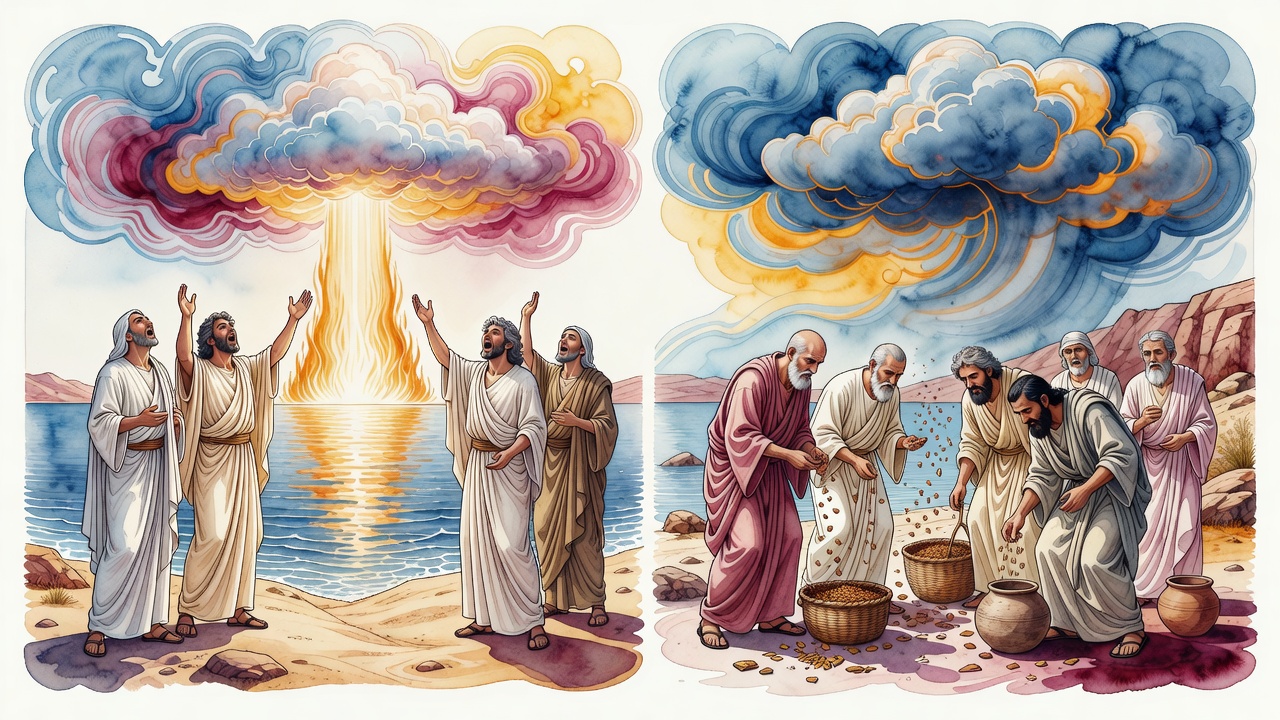
The song rose before they had bread or a plan. Six weeks later some of them walked out at dawn with empty vessels.
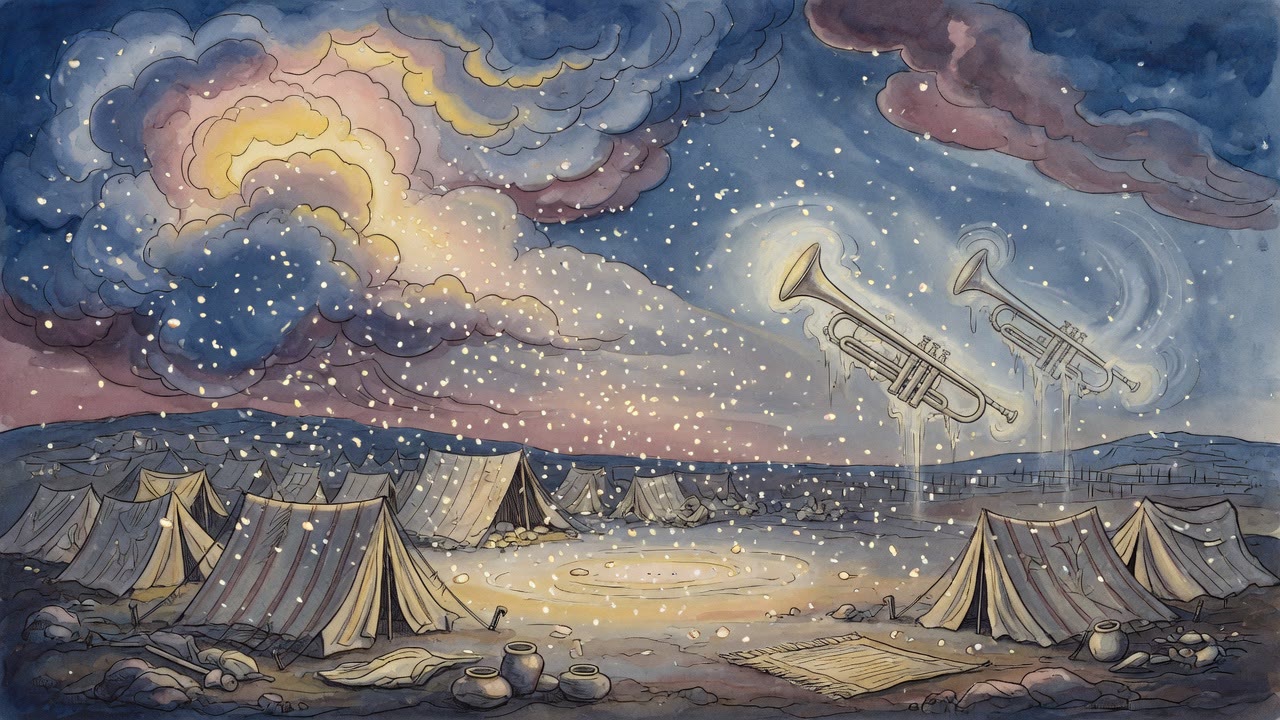
When Moses died, heaven's bread fed Israel thirty-nine more days. His silver trumpets disappeared before Joshua could touch them.
