Quail Flew Low as Judgment Filled the Camp
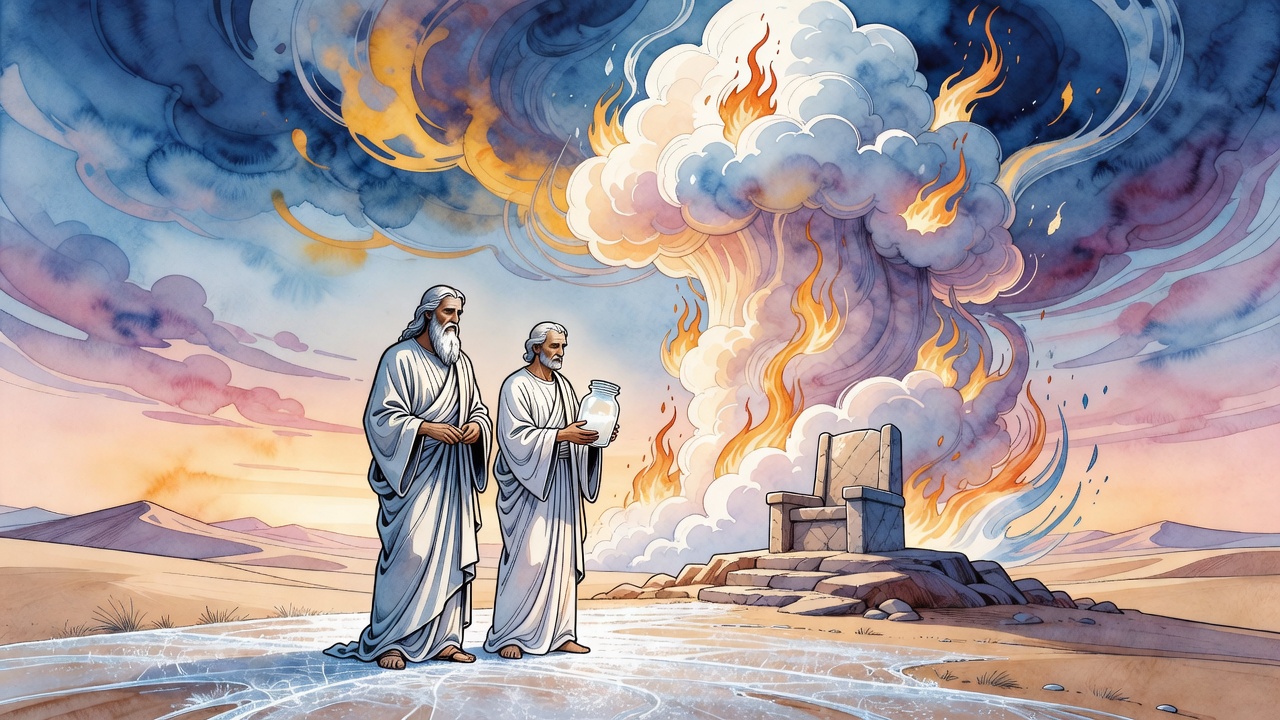
The camp was not starving. Manna still covered the ground. They wanted meat anyway, and the birds came in so low a tired man could grab them.
Table of Contents
The birds came in at the height of a man's chest. Not high. Not clean. Down where tired hands already were.
 Click for full size
Israel still had manna on the ground in the morning. They were not starving. They wanted the taste of Egypt anyway: fish, cucumbers, melons, leeks, onions, garlic. Craving had gotten louder than hunger.
The Wind Drove Them off the Sea
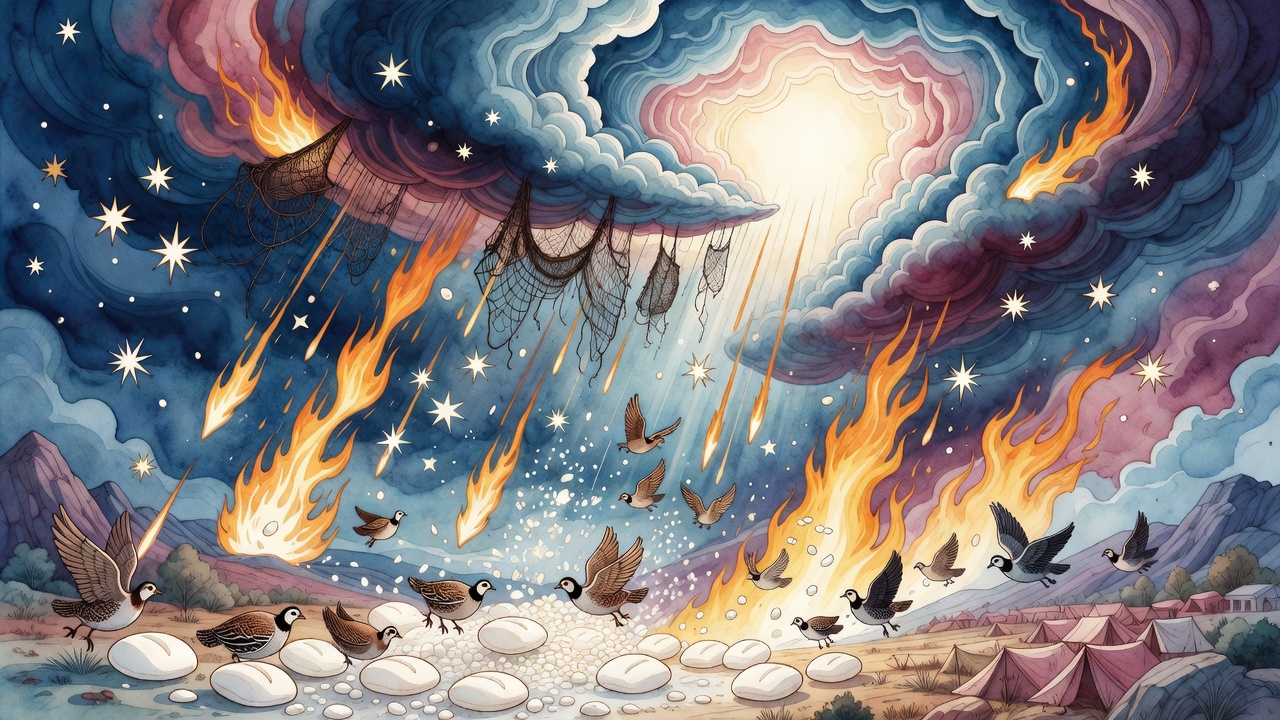
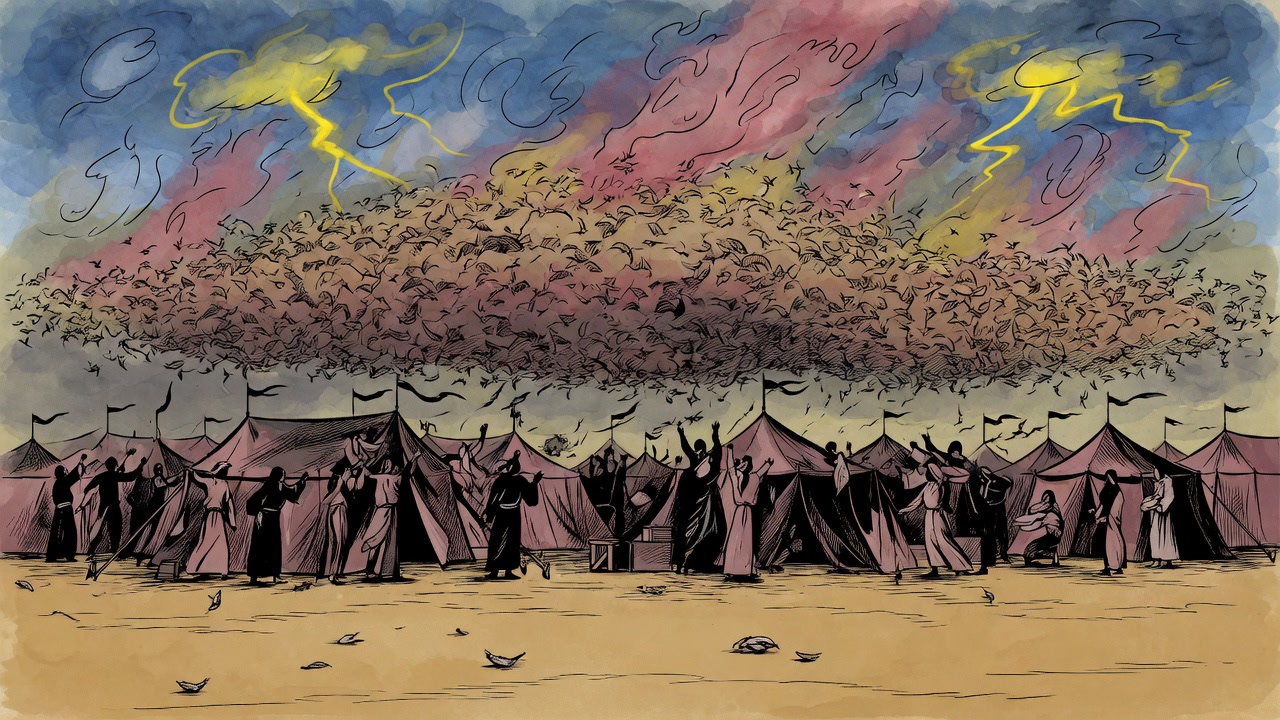
A wind went out from God and drove quail up from the sea. A wild flock should have climbed and scattered. These did not climb. They flew about two cubits above the ground, near a person's chest.
A walker did not have to chase them. He reached out. He grabbed. The people had asked badly, with memory twisted toward Egypt and appetite turned against bread already given. The birds were still held low. The same hand that sent the wind set the height.
The Ground Went Level under the Gift
The quail did not tumble into ravines. They did not scatter across jagged stone. They settled around the camp, on the face of the ground, where families could reach them.
Sinai had rock, slope, thorn, and hard distance enough to turn a gift into work. The ground went level instead. People stepped out of tents into wings and dust. Baskets filled. The smallest gatherer took a staggering pile. Desire had asked for meat, and meat answered from every side of the camp.
They gathered all that day and all that night and the next day. The least among them took ten homers. They spread the birds around the camp to dry. No one slept. Hands kept moving. The gift was so large it became labor, and the labor became a way not to stop wanting.
They Slaughtered What They Had Asked For
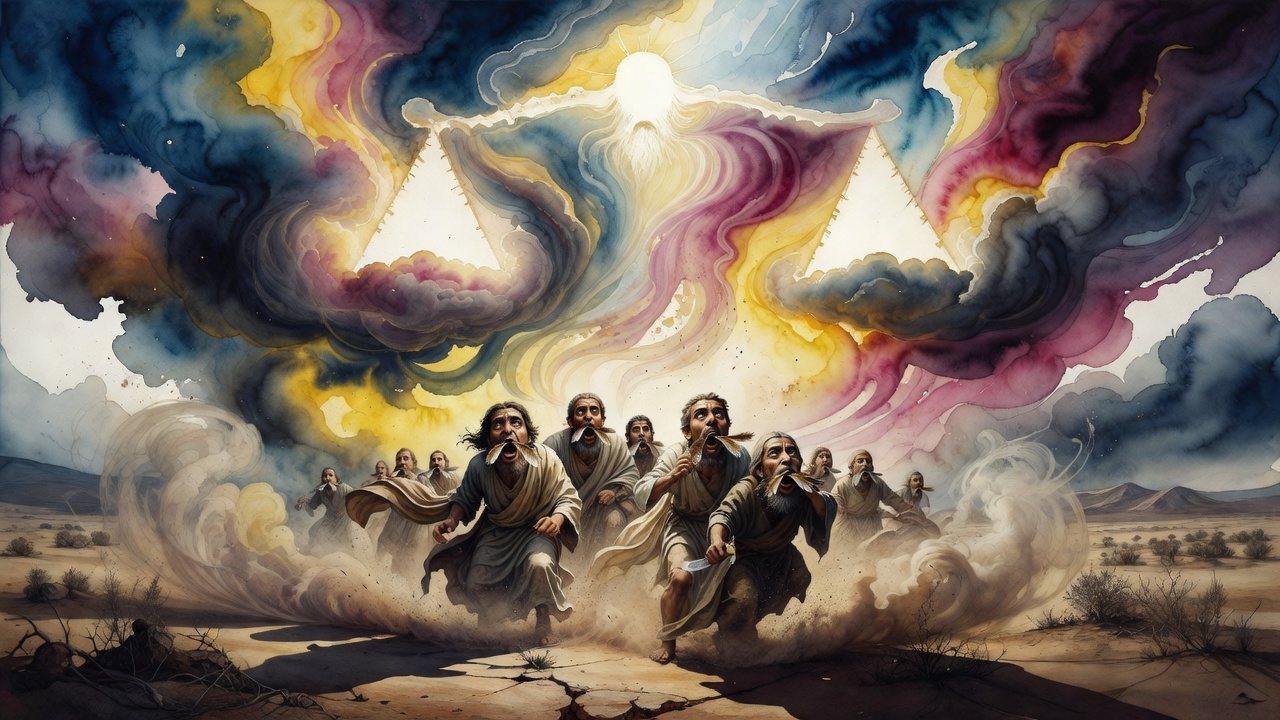
They spread the birds in the open. The demand became work with blood in it. Hands that had been lifted in complaint now cut throats and pulled feathers. God did not give them a dream of meat. He gave them meat as meat is. Alive. Then killed. Then eaten.
Some took what came and stopped. They ate in quiet and let the camp remain a camp. Others piled bird on bird, as if the flock would vanish if they blinked. The gift sat heavy in those hands before it ever entered a mouth.
Moses heard the shouting change. Complaint had become calculation. Knives flashed. Feathers stuck to wrists. The air that had carried the wind now carried the smell of slaughter.
The Flesh Was Still between Their Teeth
The plague struck before the bite had finished becoming a meal. A man lifted meat. He closed his jaw. He tasted the thing he had demanded. Death entered the camp before the swallow could turn craving into fullness.
The judgment did not fall with one flat weight. The less corrupt craving emptied a body fast, a violent sickness that ended soon. The worse craving stretched the agony toward thirty days. For them the meat lingered as trouble, not food. The flesh stayed between their teeth while the camp learned what it had asked for.
Birds still covered the ground. Proof lay in piles. Proof did not heal a craving that had made itself king.
The Graves Kept the Name
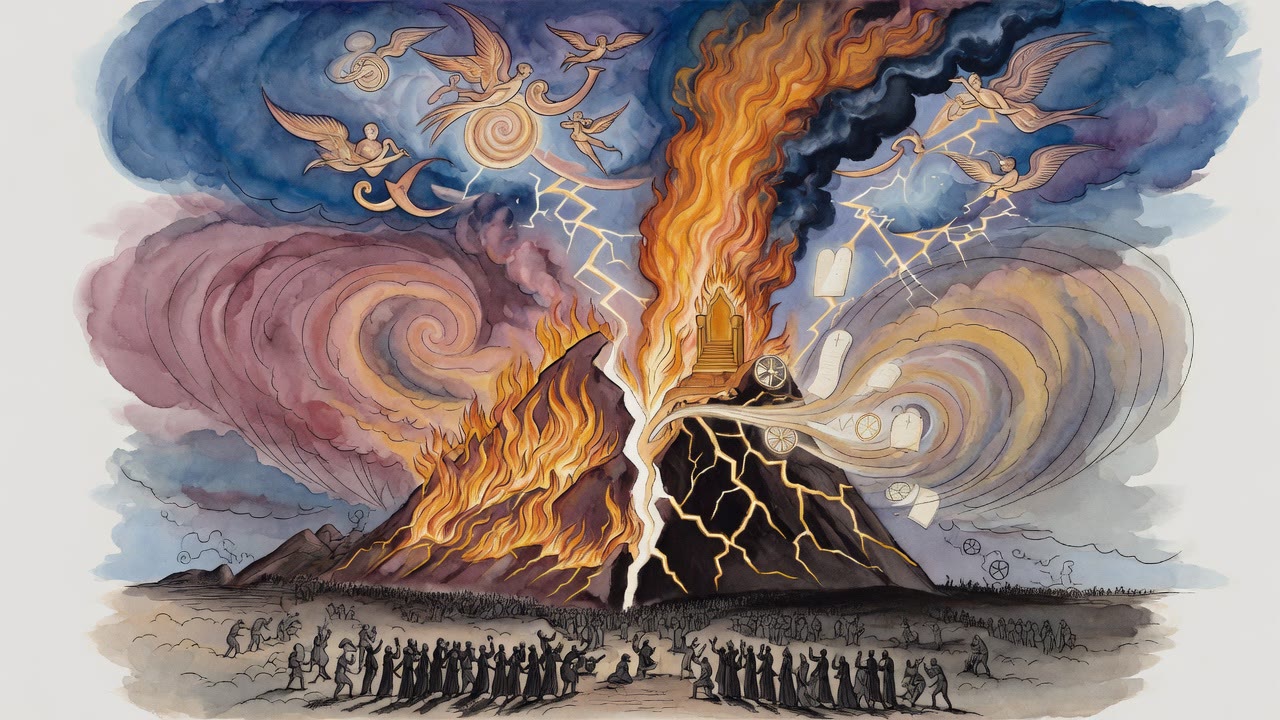
After the shouting came burial. They dug. They carried bodies. The place received a name harsh enough to remember them: Kivroth Hataavah (קברות התאווה), Graves of Craving. Not graves of hunger. Not graves of famine. Craving.
Tents came down. Families lifted poles. The cloud would not let them freeze forever beside the dead. The name stayed behind in the wilderness, a stone marking the place where meat became a mouthful of death, and the camp walked on with that taste still in the mouth of the living.
← All myths