The Bronze Serpent Moses Raised on a Pole in the Wilderness
Fiery serpents tore through the camp, so Moses raised a bronze serpent on a pole and told the bitten to lift their eyes and live.
Table of Contents
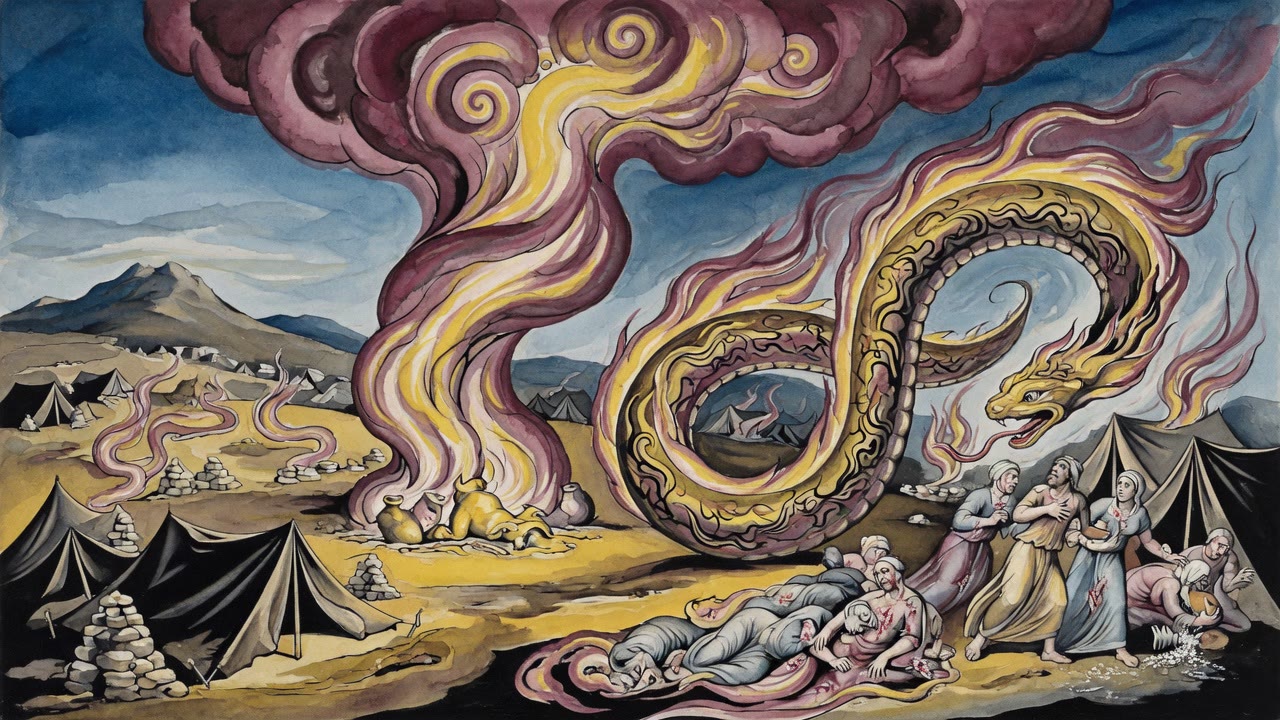
The first scream came from the edge of the camp, near the goat pens, and then there were too many to count. A woman stumbled out from between the tents holding her wrist against her chest as if she could press the heat back into the bone. Her skin had gone the color of a banked fire. Around her ankles the sand moved. It moved the way water moves, in ropes and coils, and where it touched bare feet the feet buckled.
 Click for full size
They had been walking for days, skirting the long way around a border that had been shut in their faces, and the walking had soured them. The bread of heaven that fell each dawn, the pale flakes they had once gathered with cupped hands, had become a thing they spat the name of. There is nothing here, they had said, no bread, no water, and this wretched food turns our stomachs. Their mouths had been full of contempt. Now their mouths were full of dust as they fell.
The Serpents Came Up Out of the Sand
The creatures were not like the snakes the herdsmen knew. These burned. A man would feel the strike, a quick double sting at the calf, and then the fire would start traveling, up the leg, into the gut, until it reached the place behind the eyes and he could no longer stand. The bite did not only break skin. It went down into whatever a person is underneath the skin, and it burned there too. By midday the camp had become a field of the dying, and the living stepped over them and did not know where to put their feet.
Moses stood at the center of it. The same people who an hour before had cursed him came crawling now, dragging swollen limbs across the ground, and they laid their faces in the sand before him. We have sinned, they said, the words coming out cracked. We spoke against the Lord and against you. Beg Him to take the serpents away from us. Their tongues, the very tongues that had turned a gift into garbage, could barely shape the confession.
Moses Prayed and Heard a Strange Answer
So Moses prayed. He prayed for the people who had wanted him dead that morning, lifting his voice over the hiss and the weeping, and he waited for the simple mercy any man would ask for: that the snakes be gathered up and carried off, that the sand go still again.
The answer that came was not that. He was told to make a serpent. To take the very shape that was killing them, fashion it, fix it to the top of a pole, and raise it high where the whole camp could see. And whoever was bitten would look at it and live. Make the wound into a thing to be stared at. Hang the terror up in the air over the tents.
He Hammered the Snake from Bronze
No one had told him what to make it from. The instruction named no metal. Moses could have shaped the thing from clay or carved it from wood. He chose bronze, and the choice was his own, because in the old tongue the word for serpent, nachash, rang against the word for the burnished metal, nechoshet, the two sounds leaning into each other like an echo answering a cry. He wanted the ear to catch it. He wanted a man looking up to feel the pull of memory.
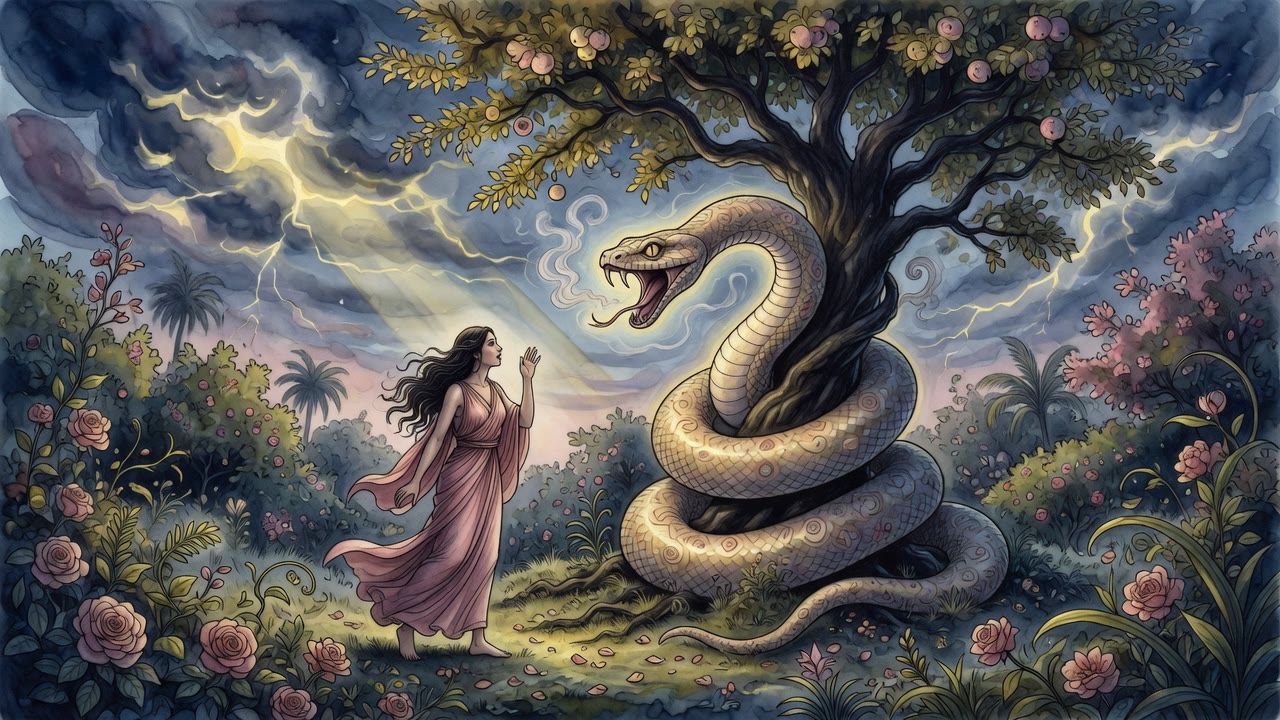
For there had been a serpent before this one, in a garden at the beginning, a creature that opened its mouth and bent a desire and brought ruin into the world through speech. That was the first wound, and it had been a wound made of words. And here were these people, bitten by burning things shaped like that first speaking creature, struck down because their own words had turned bread into bile. Moses hammered the bronze until it shone, and the form he raised on the pole was not a charm. It was a mirror.
They Lifted Their Eyes and Were Healed
The pole went up at the center of the camp, and the bronze caught the sun and threw it down on the dying. A bitten man, fire climbing his leg, would tilt his face toward it. He would see the shape of the thing that had felled him gleaming above, and he would remember the garden serpent and the ruin of words, and a tremble would go through him. In that tremble he would turn. He would lift his heart past the metal, past the pole, up to Heaven, and surrender there.
And in that exact moment the fire would go out of him. The swelling would ease. He would breathe.
It was never the bronze. A lump of beaten metal heals no one, and a serpent does not kill and then turn around and give life. The healing came in the lifting of the face, the choosing to look up, the directing of the heart away from complaint and toward the One who had fed them all along. The eyes that had looked at the manna and called it wretched were made to look upward instead. Whoever could still raise his head off the sand and aim it at the sky did not waste away. The pole stood over the camp like a question every bitten man had to answer with his own neck, and those who answered it lived.
← All myths