Moses Learned Mercy in Midian's Wilderness
A sacred staff, seven years in a pit, and forty years with sheep turned Moses from fugitive prince into the shepherd who could face the bush.
Table of Contents
The staff was waiting in a garden before the bush ever burned.
 Click for full size
Moses had run from Egypt with blood behind him and no throne left under his feet. In Midian, among the daughters of Jethro, he found a house that did not yet know whether he was a guest, a danger, or the redeemer hidden in plain sight.
The Rod Took Root
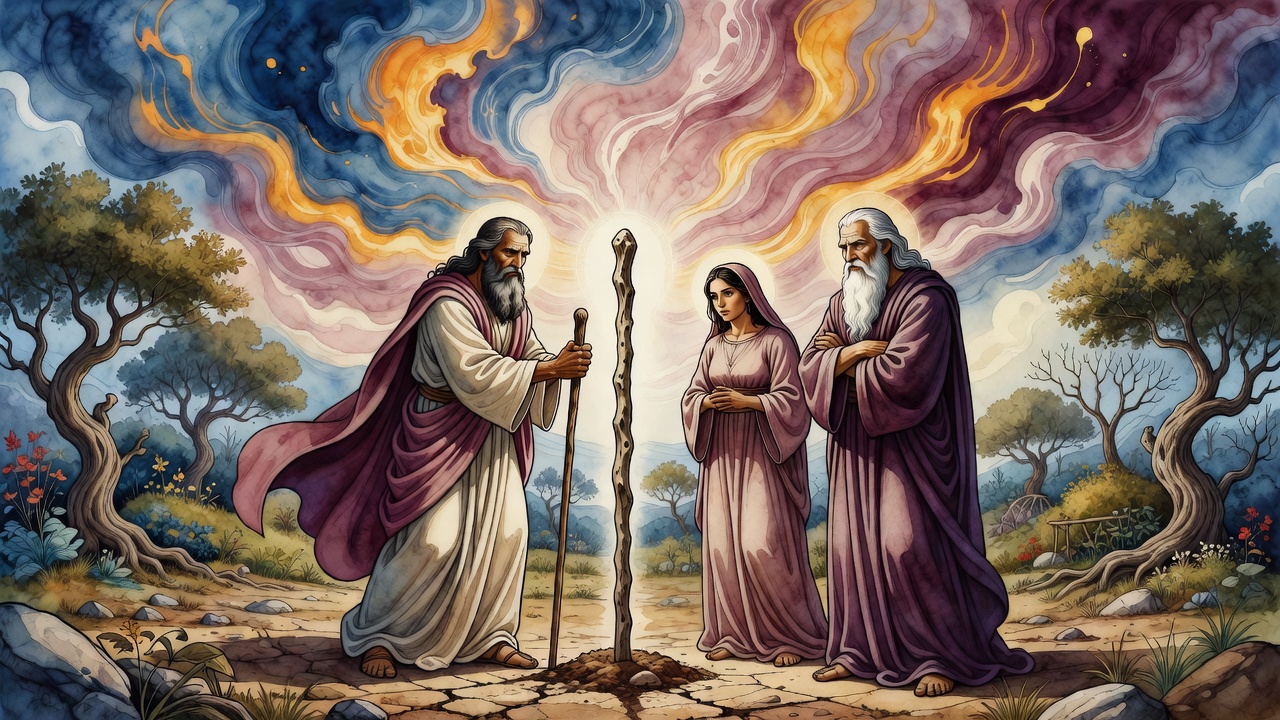
One of the daughters was Zipporah. She told him the rule of her father's house. In the garden stood a tree, or what looked like a tree, and every man who wanted one of Jethro's daughters had to touch it. The men who reached for it were devoured.
Moses asked where such a thing had come from.
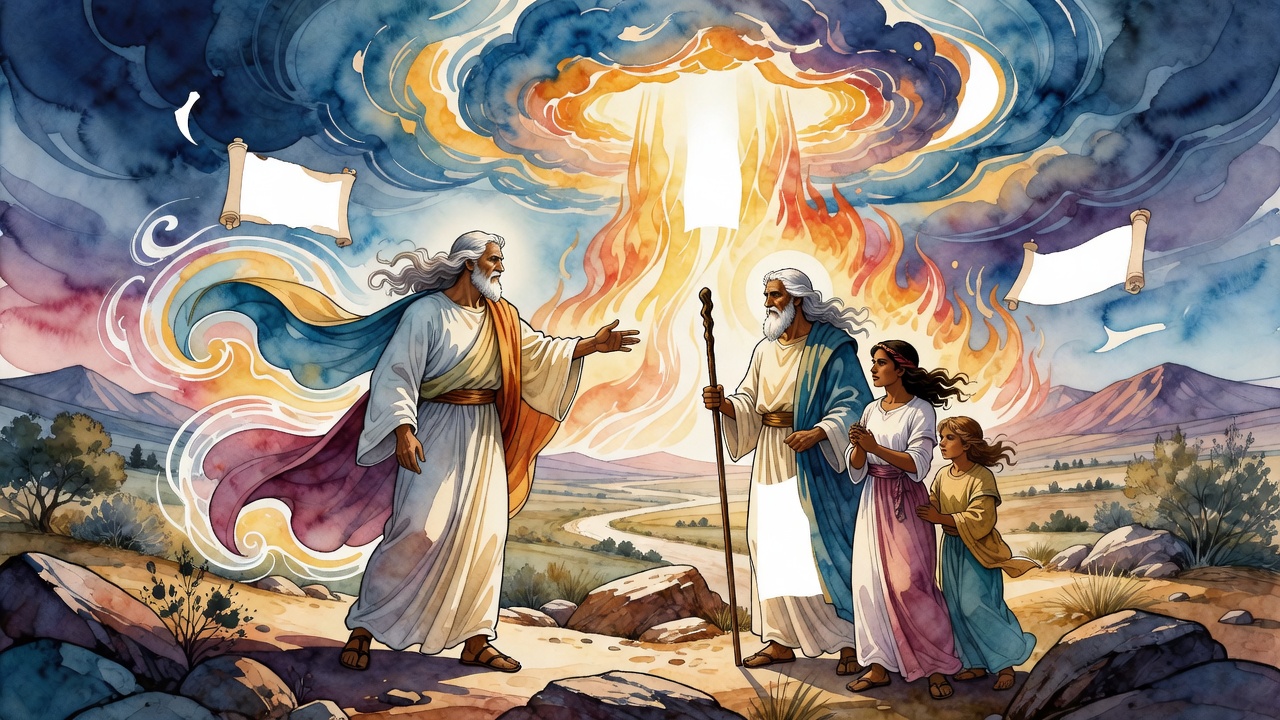
It was no tree. It was the rod created in the twilight before the first Sabbath, passed from Adam through the holy line until it reached Joseph in Egypt. After Joseph's death it came into Pharaoh's palace, and Jethro, once close enough to royal secrets to see it, carried it away. The Ineffable Name was engraved on it, along with signs of the plagues that would one day break Egypt open. When Jethro planted it in his garden, it rooted and blossomed.
Moses walked into the garden, read the letters, stretched out his hand, and drew the rod free.
Zipporah Kept the Fugitive Alive
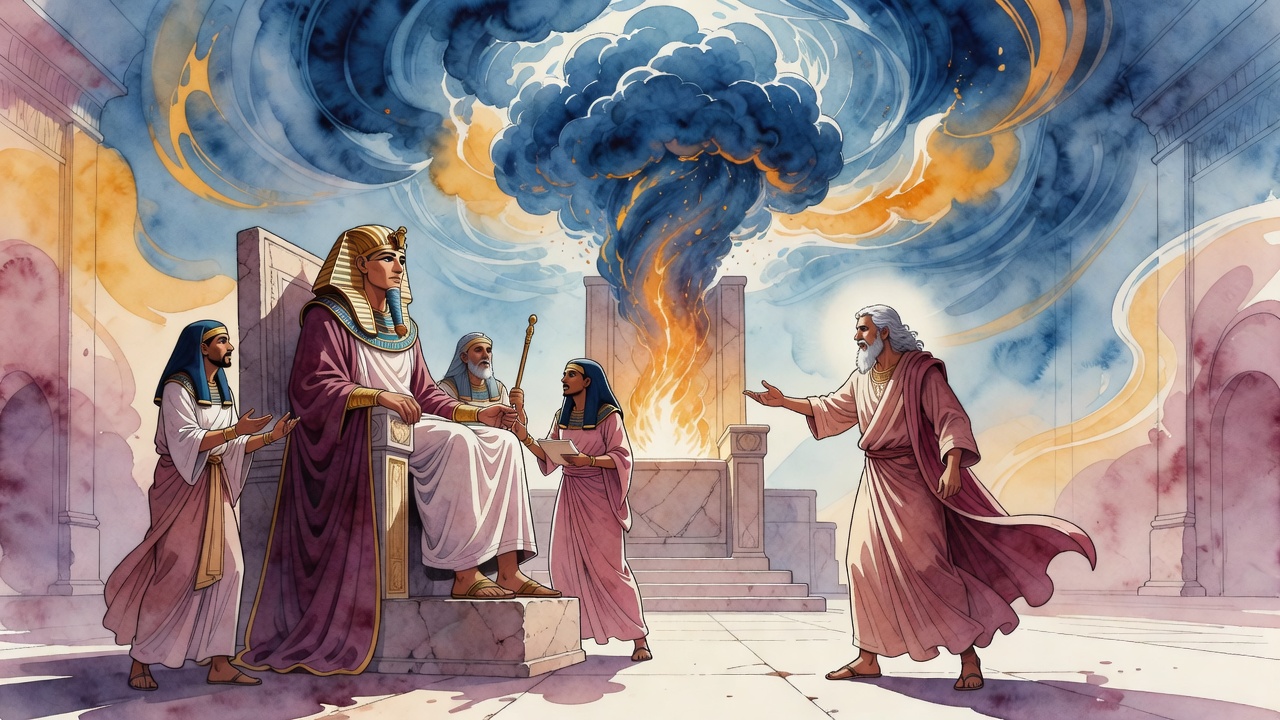
Jethro understood too quickly. A stranger who could pull that rod from the earth was not merely strong. He was dangerous to Egypt, dangerous to every arrangement that had kept the world as it was. Fear moved faster than welcome. Jethro seized Moses and threw him into a pit.
Zipporah did not let the pit become a grave.
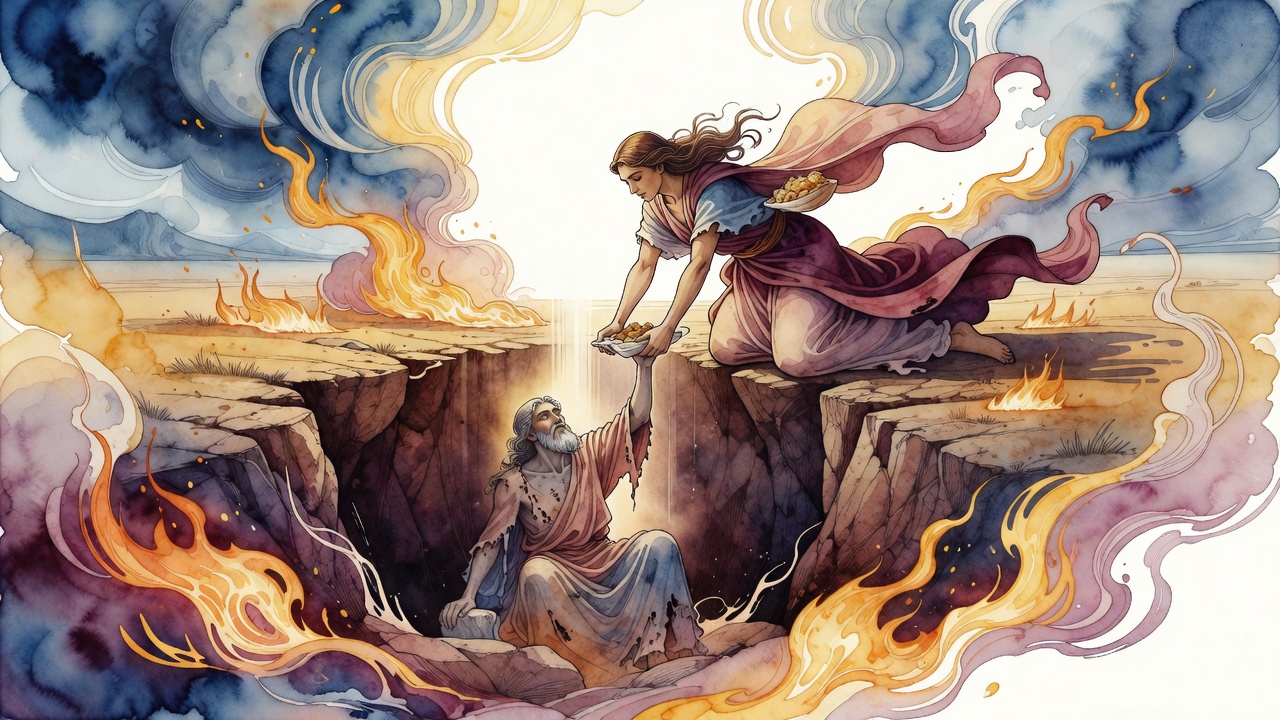
For seven years she kept him alive with food and water, hiding mercy inside the daily running of the household. Her sisters tended the flocks. She stayed near the house. Under her father's roof, under his authority, she made a narrow channel through which life could pass down into darkness.
After seven years, Jethro called into the pit. Moses answered. The man who should have been bones still had a voice. Jethro drew him out, kissed him, blessed the God who kills and revives, and gave him Zipporah.
The Oath Made Him a Shepherd
Marriage did not send Moses back to the road. Jethro made him swear that he would not do what Jacob had done in Laban's house, taking wives and children away without the father's consent. Moses swore, and the oath fastened him to Midian.
So the fugitive prince became a shepherd.
For forty years he kept Jethro's flock. Wild beasts did not consume them. The flock multiplied. Moses chose open meadows so the sheep would not graze on another man's field. He learned that care was not only tenderness. Care was boundary, attention, restraint, and the refusal to let one's own hunger trespass on another person's ground.
Mercy Was Tested in Small Bodies
He did not drive the flock as one mass. The lambs went first to the tender grass. The older sheep followed to the herbs fit for them. The strong ones came last to the harder grass the others could not eat. Moses watched mouths, legs, age, weakness, appetite. A flock was not a crowd to him. It was many needs moving under one name.
Then one kid ran away.
Moses followed until he found it at the watercourses, thirsty and exhausted. He did not strike it for leaving. He did not drag it by the neck. "Poor little one," he said, "all that running was thirst." Then he lifted it onto his shoulders and carried it back.
God saw the fugitive carrying a kid through the wilderness and chose the shepherd for a harder flock. A man who could bend down for one thirsty animal could stand before a nation that would hunger, panic, complain, and still need to be carried.
Forty Days Without Pasture
Once Moses drove the sheep behind the wilderness for forty days and forty nights. They found no pasture. They tasted nothing. Still, not one was lost.
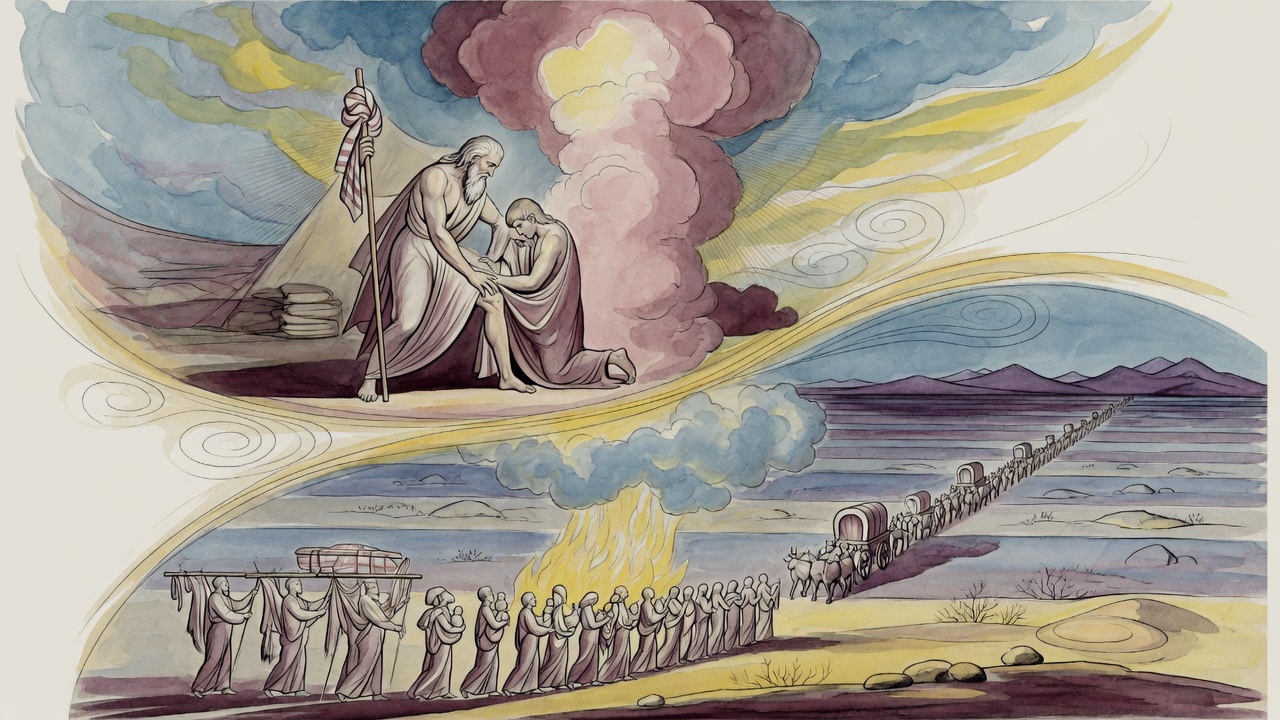
The empty stretch was already speaking in signs. Forty hungry days pointed toward forty years in which Israel would live in the wilderness without eating from sown earth. The shepherd who counted Jethro's sheep would one day count tribes, camps, graves, complaints, miracles, and mornings of bread from heaven. The same sand that trained him would hold a generation, and it would hold him too.
He kept walking until the flock reached Horeb.
The Flame Trained His Heart
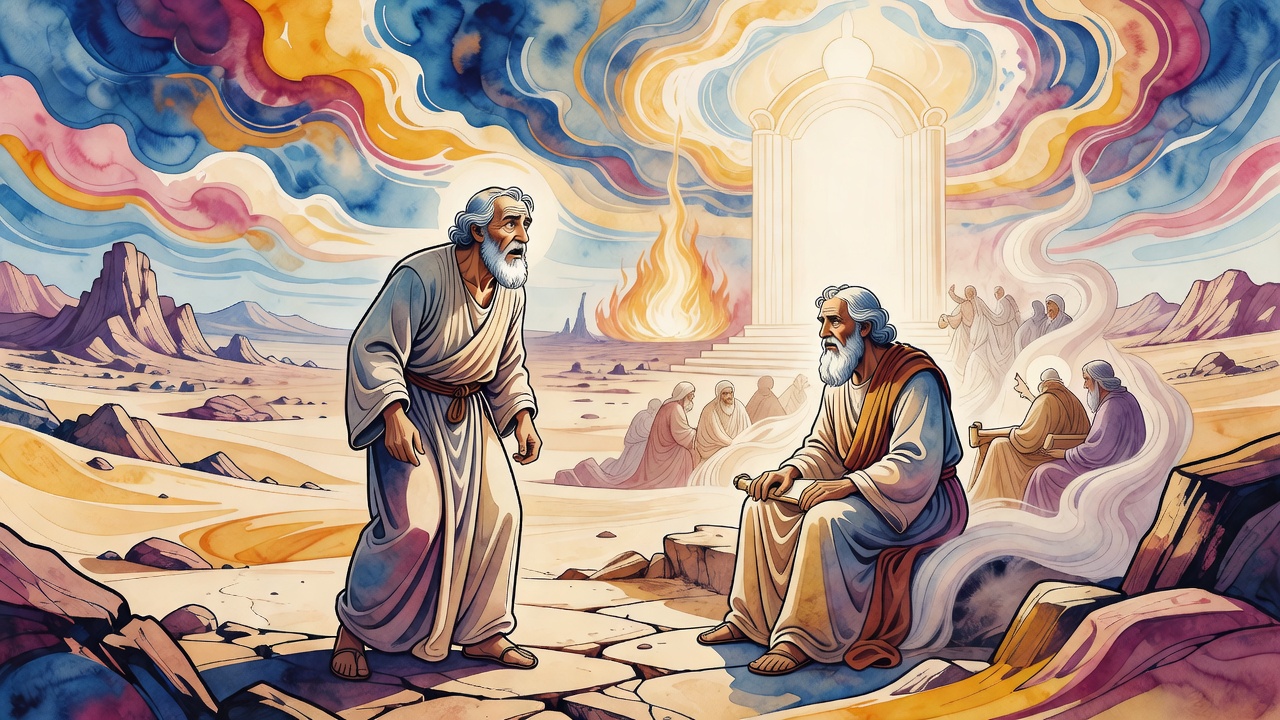
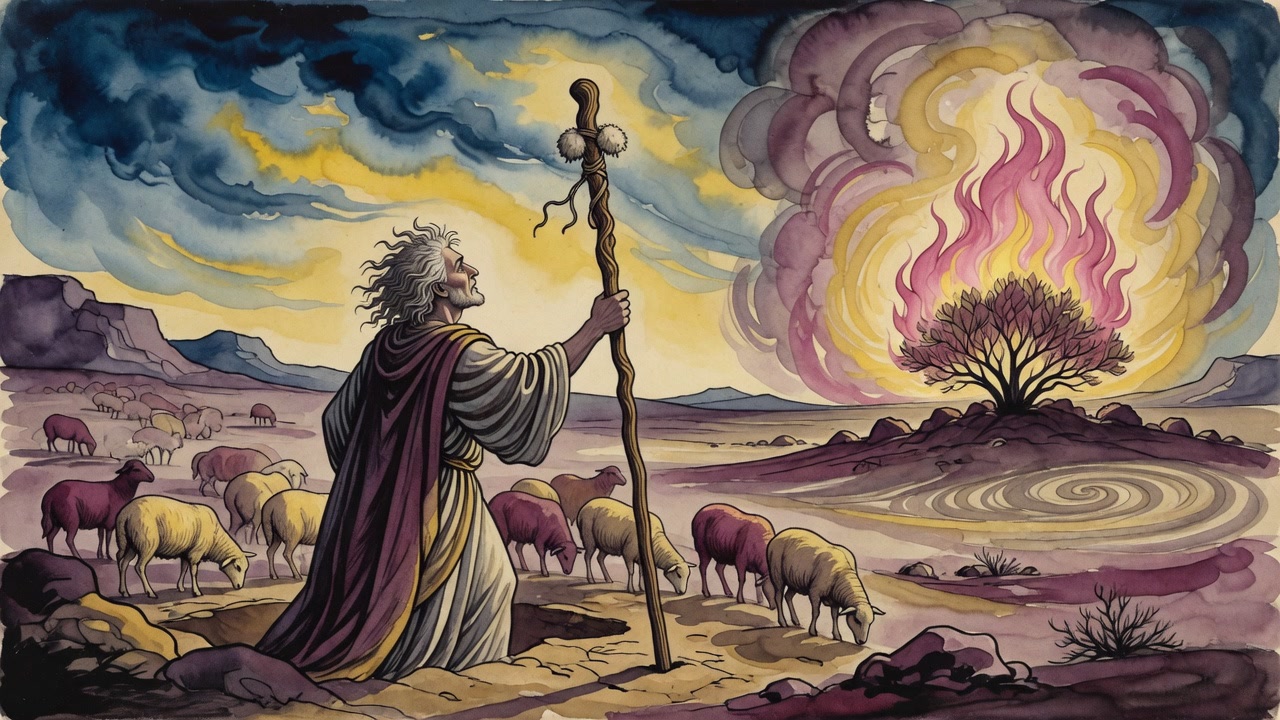
At the mountain, a bush burned and was not consumed. The flame came first as training. One day Moses would stand at Sinai before fires and torches, before a whole people shaking under the voice of God. His heart had to learn fire before it could lead others through fire.
He had entered Midian as a man who knew palaces, violence, flight, and fear. The wilderness gave him slower knowledge. A staff in the hand. A wife who had kept him alive. An oath that held him in place. Sheep that needed different grasses. A thirsty kid against his shoulder. Forty days without pasture.
Then the bush called him by name, and the shepherd turned aside.
← All myths