Zipporah Moved in the Dark While Moses Could Not
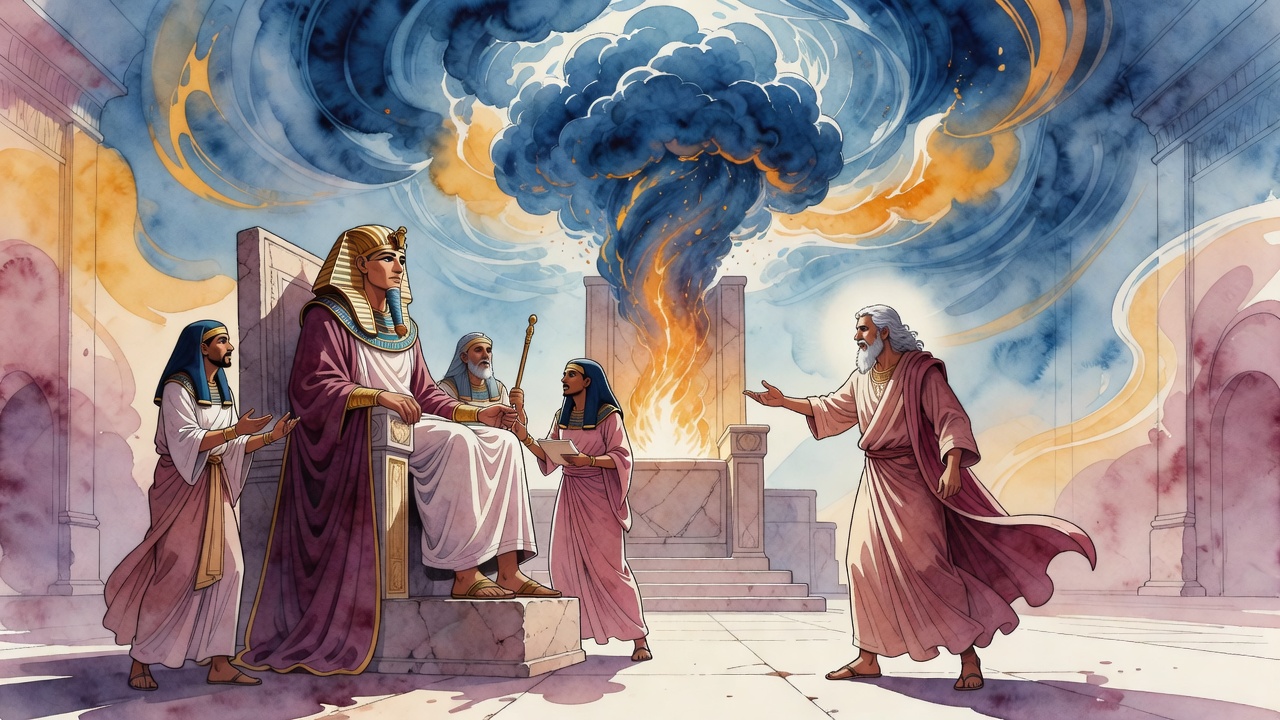
At a night lodging on the road to Egypt, God came for Moses. Zipporah grabbed a flint knife and did what needed doing before anyone else understood the danger.
Table of Contents
 Click for full size
The Attack at the Night Lodging
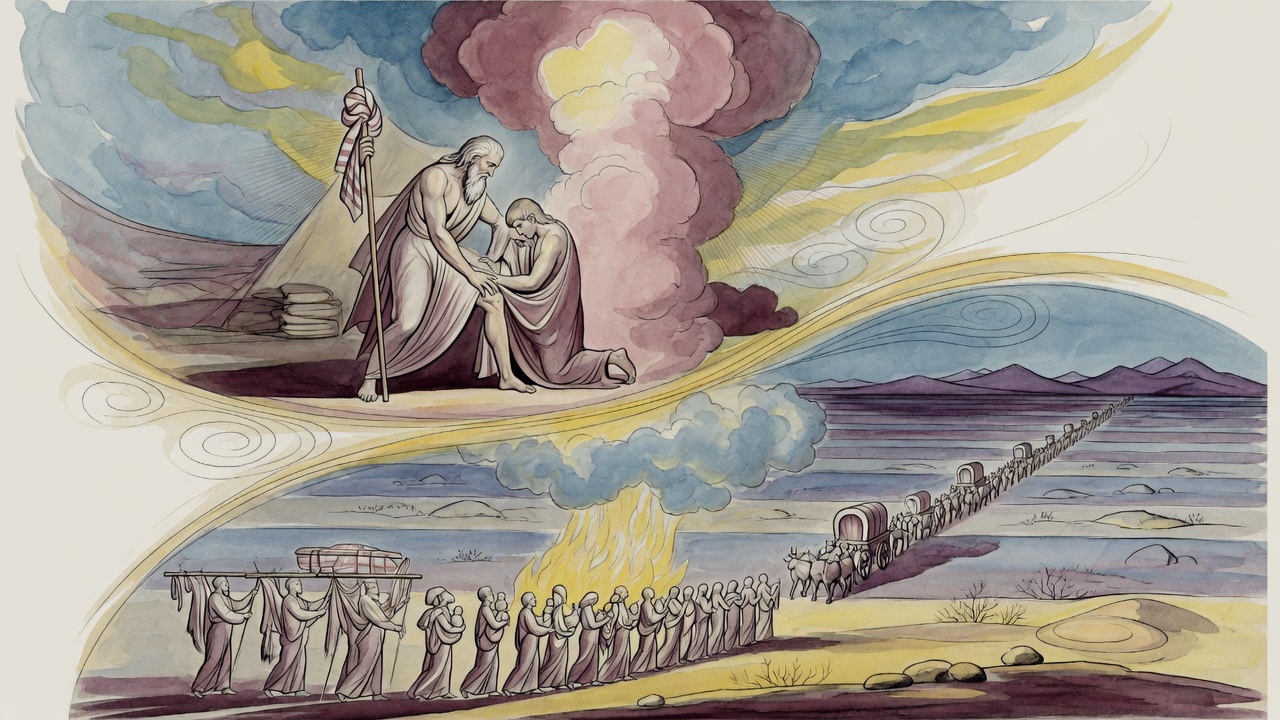
Moses was three days out from the burning bush, his staff in hand, his brother waiting for him in Egypt, the whole weight of liberation resting on a man who had argued against his own appointment until God's patience ran dry. He had his wife Zipporah beside him, their son Gershom at her hip, the road to Egypt stretching ahead in the dark. Then something came for him.
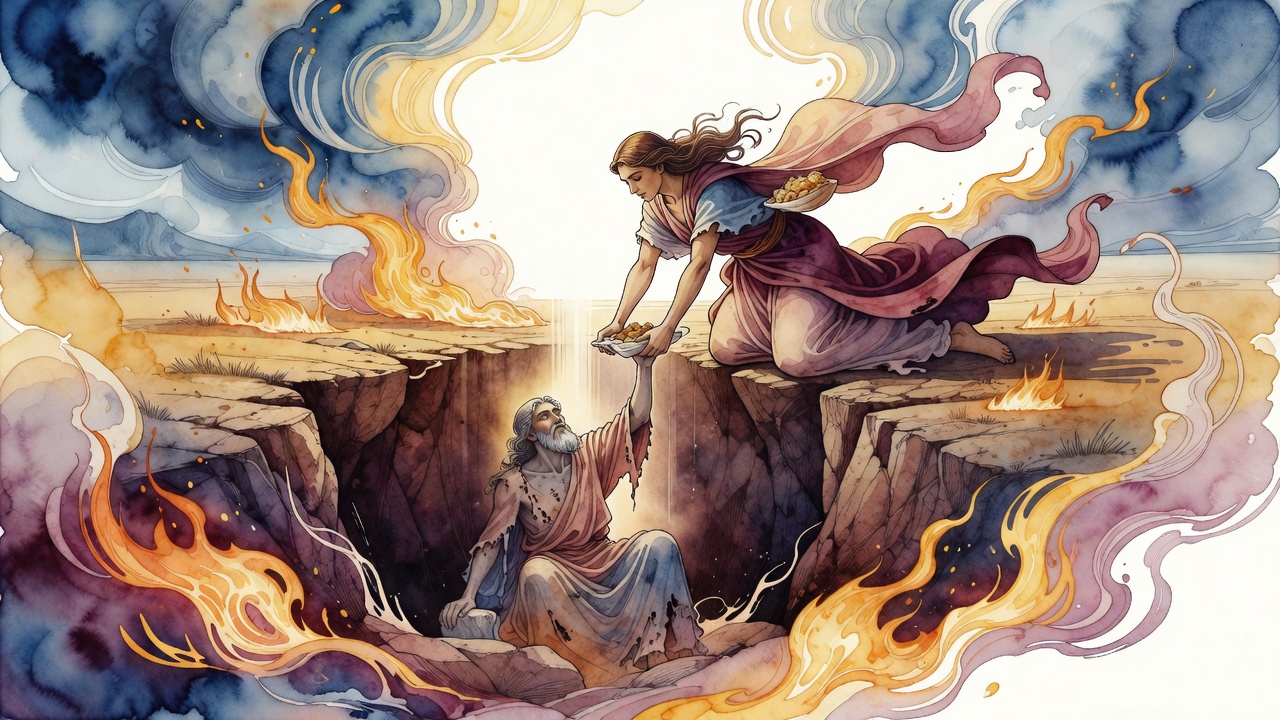
Three verses in Exodus describe what happened next, and they offer almost nothing. God met Moses at the night lodging and sought to kill him. The aggadic tradition, drawing on a cluster of midrashic accounts, provides what the Torah withholds. The attack took the form of a serpent. It began to swallow Moses from his feet upward, and then stopped, and then swallowed him from his head downward, and stopped again. The creature could not complete what it had started, and the reason was the foreskin of Gershom, the son Moses had not yet circumcised.
Zipporah Saw the Threat Before Moses Did
Zipporah understood what was happening before Moses could. The tradition is careful about this. It was not Moses who diagnosed the crisis, not the prophet who had just spoken face to face with God from the burning bush, not the man who had been handed the instrument of every plague Egypt would suffer. It was his wife. She read the serpent's behavior, the start and stop of its consuming, and she knew what it was waiting for.
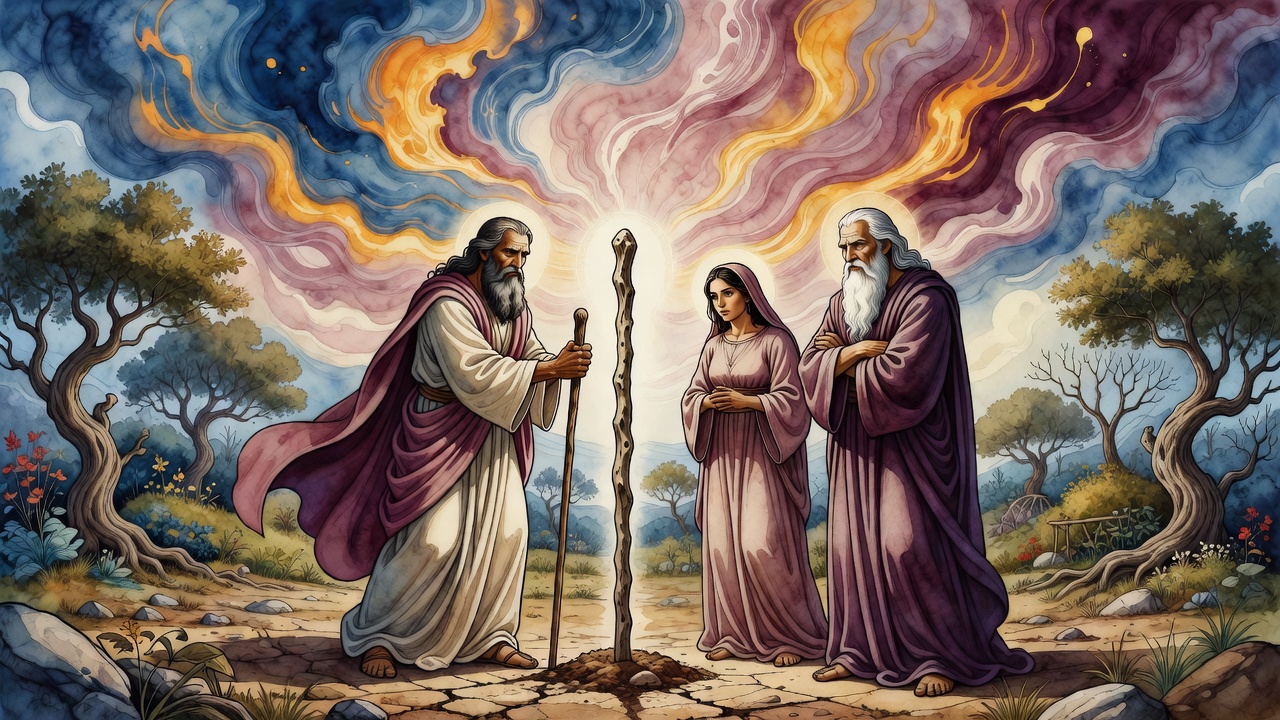
She took a flint knife. She circumcised the boy herself. She touched the foreskin to Moses and said: you are a bridegroom of blood to me. And God let Moses go.
The tradition that records this scene also asks why Moses had delayed the circumcision in the first place. The answer given is that Moses had been absorbed in the immediate demands of departure. Some versions of the account say he was attending to the logistics of the inn itself, making arrangements for the journey, when the serpent came. He had allowed a small thing to slip, a procedural neglect rather than a rejection, but the covenant with Abraham did not distinguish between deliberate and careless.
A Portrait That Predates the Desert
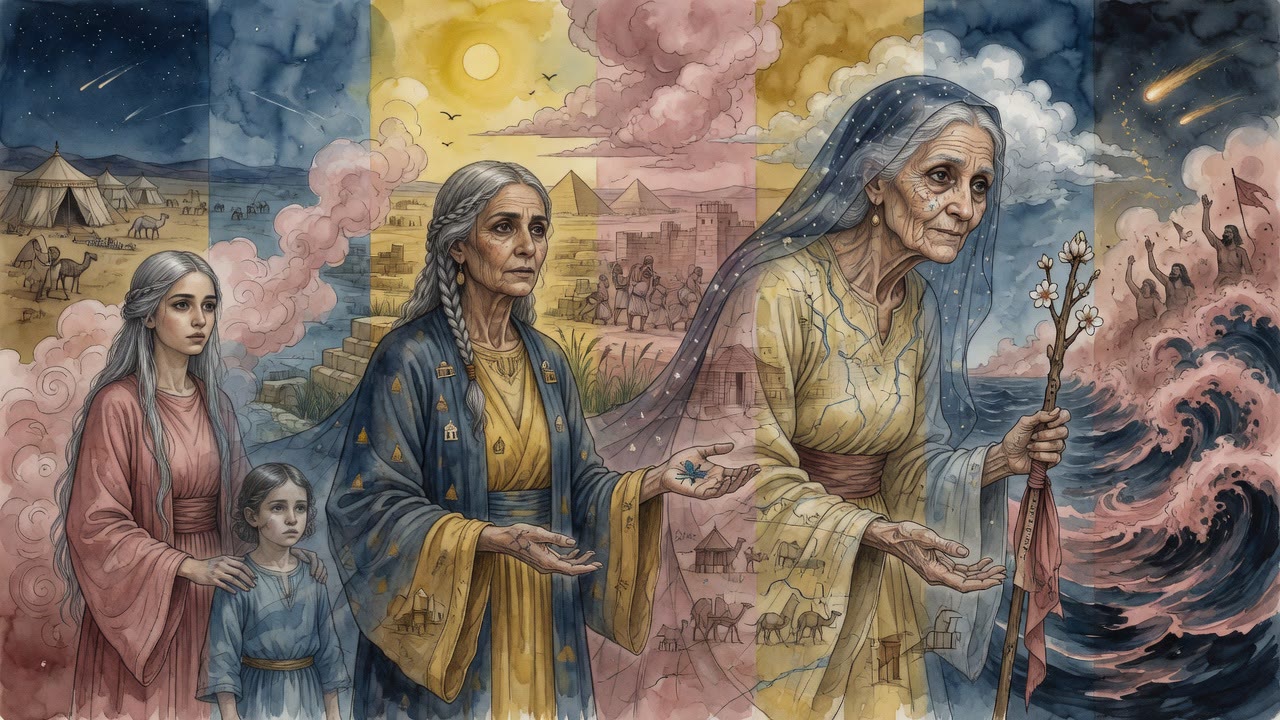
The tradition's portrait of Zipporah does not begin at the night lodging. It begins earlier, in Midian, at the well where she first encountered Moses. Her father Jethro had kept her and her sisters from the shepherds who harassed them at the water, but it was Zipporah who managed the household with a precision the text suggests was hers by nature. When Moses came to their tent, it was Zipporah who spoke for her sisters. When Jethro proposed the marriage, the tradition suggests it was Zipporah who shaped the terms, who saw in this strange Egyptian refugee something the other shepherds could not see.
The tradition about her name in one reading means bird, specifically a bird associated with speed and clarity of vision. At the night lodging she acted with exactly that speed. She did not deliberate. She did not wait to see whether the serpent might release Moses on its own. She picked up the flint knife and moved.
What the Foreskin Touched
The Talmudic and midrashic accounts that preserved the scene were troubled by it. Some rabbis identified the angel who came as Uriel. Others identified it as a different messenger sent specifically because of the circumcision delay. Some read the phrase that Zipporah touched with the foreskin as meaning she touched Moses with it; others read it as meaning she touched the angel, the agent of attack, and that the contact broke the assault's legal basis.
The phrase she spoke, bridegroom of blood, appears to have been a formula, a declaration that now bound Moses through Gershom's circumcision blood into the covenant from which his own birth circumcision had always made him a member. She was performing a rite that completed a covenant connection that should already have been in place. She was fixing something Moses had left undone.
This is the detail the tradition finds most significant: the man chosen to lead the redemption of Israel could not, in that moment, save himself. His wife could. And she did.
← All myths