Jethro Was the Only Counselor Who Told Pharaoh the Truth
Three men were asked how to deal with the Hebrews. One gave the murderous answer, one shrugged, and one argued and left Egypt that day with a stolen staff.
Table of Contents
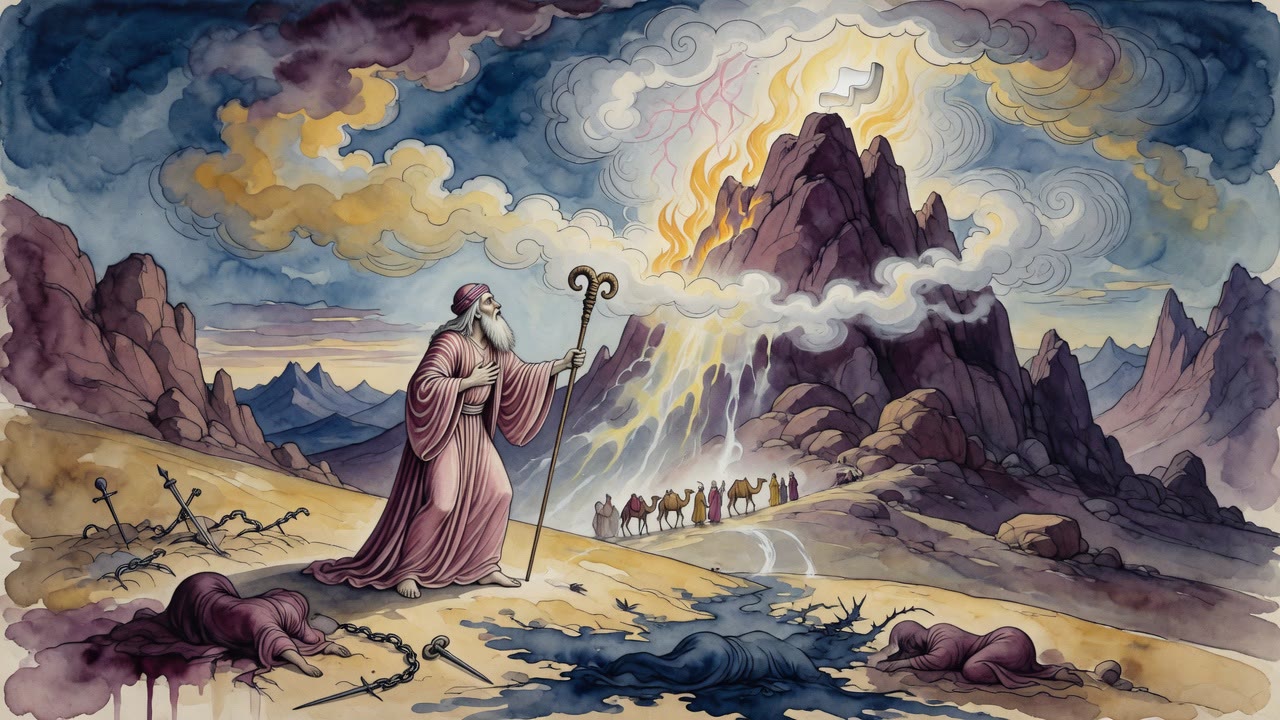
 Click for full size
Three Men in a Room With a Question
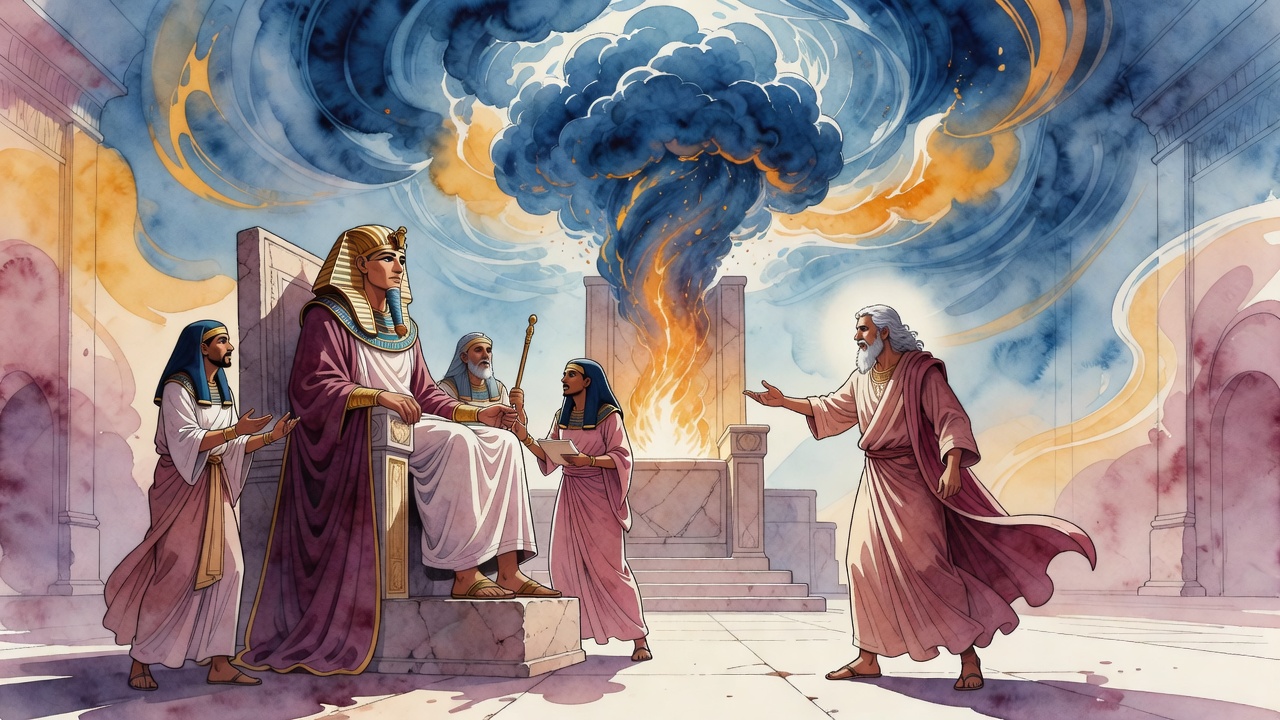
The question Pharaoh put to his three counselors was practical and it was not rhetorical. The Israelites were multiplying. If a war came, they would side with the enemy and walk out of Egypt. What should be done about it.
Reuel the Midianite answered first, and he answered with a list. Long live the king, he said, but do not put out your hand against them. When Abraham came down to Egypt and a Pharaoh took his wife, plagues went through that Pharaoh's house until she was given back. When Abimelech took her, every womb in his household closed, and the animals too, until Isaac prayed for them. When Isaac was kept from his wife, the springs of Gerar dried up and the trees stopped bearing and the milk stopped in the women and the cows. And it was your own father who put Joseph over every prince in Egypt, because Joseph's wisdom kept this country alive through seven years of famine. Let them stay, Reuel said. If you will not let them stay, send them to Canaan.
Pharaoh's anger came up so fast that Reuel left the kingdom that day. He went east to Midian, and on his way out he took Jacob's staff with him.
Then the king turned to Job of Uz and asked him the same thing. Job did not argue and did not agree. "Is not everyone in your country already in your hand?" he said. "Do whatever is good in your eyes." Nine words, and he was finished.
Balaam of Petor had been working the problem properly. Fire will not do it, he said, because their God brought Abraham out of the furnace of the Chaldeans. The sword will not do it, because Isaac was already tried by the knife and a ram was put in his place. Water has never been tested on them. Throw the newborn boys in the river.
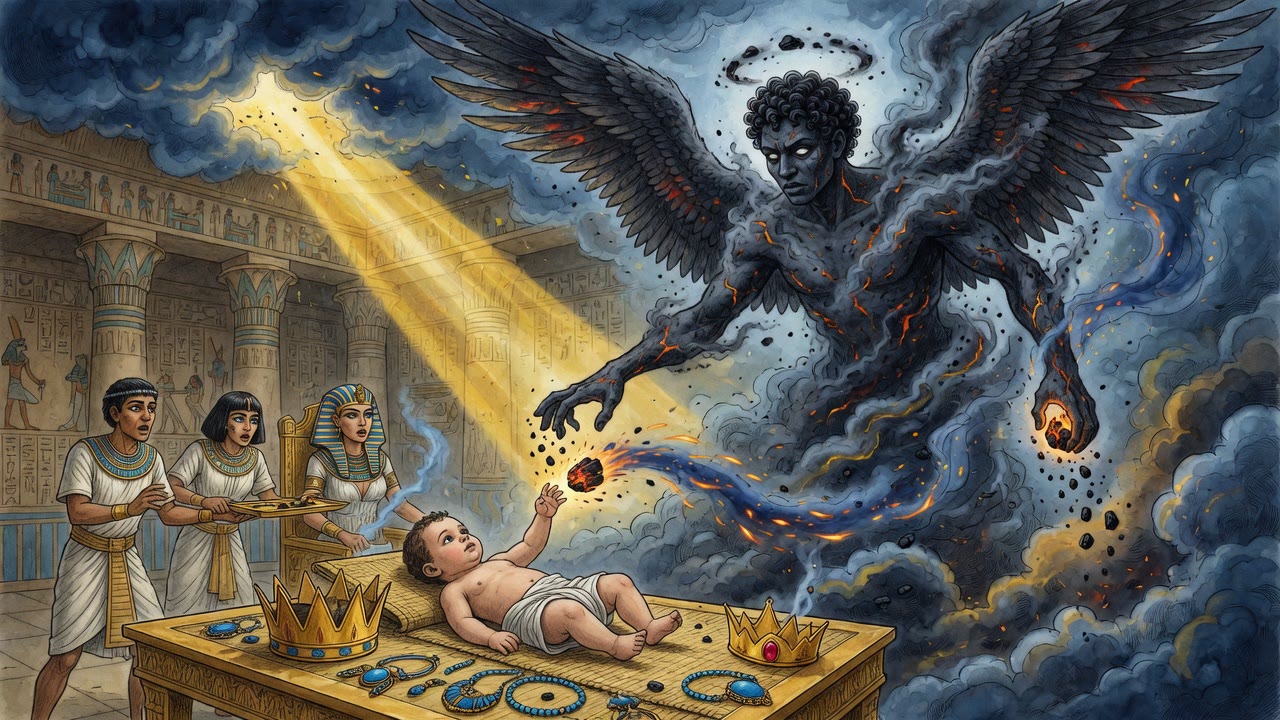
The decree went out across Egypt. Among the boys carried down to the water was one whose mother put him in a basket instead, and a daughter of Pharaoh pulled him back out of the same river.
The Priest Nobody in Midian Would Serve
In Midian, Reuel took the name Jethro and served the idols of the town for years, and the longer he served them the emptier the work felt. One day he stood in front of his townsmen and told them he had grown too old for the office and they should choose someone else. He handed over every implement of the worship and told them to give it all to whoever they picked.
They understood exactly what he meant by it. They put him under a ban. Nobody in Midian was permitted to do the man a service, not the smallest one. No shepherd would take his flocks out.
So the work fell to his seven daughters. They learned to reach the watering troughs before the other shepherds arrived, which worked until the shepherds started arriving early on purpose. Then the girls would draw the water and the men would drive them back and water their own animals out of the troughs the girls had filled.
The Day They Threw the Daughters in the Water
On the day it went furthest, the shepherds took the drawn water first, then went for the girls themselves, and then threw them into the water to drown them.
A man who had just arrived at that well pulled all seven of them out. He drove the shepherds off, and then he watered Jethro's flock, and then he watered the flocks of the men who had just tried to kill Jethro's daughters. He drew one bucket. The water came up so fast it served every herd at the well, and it kept coming until he walked away from the stone.
The daughters thanked him. He would not take it. "Thank the Egyptian I killed," he said. "If it were not for him I would not be standing here."
Seven Years in a Pit
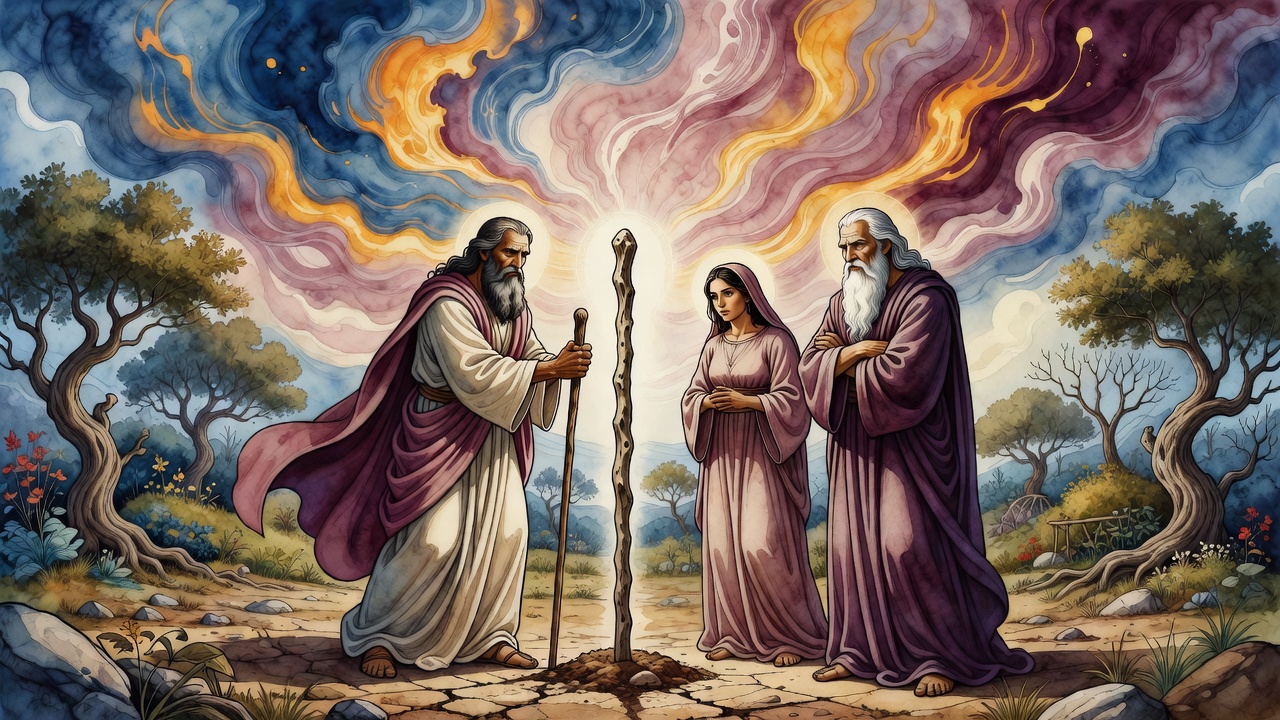
One of the seven had a warning for him before he ever reached the house. Her father kept a tree in his garden, Zipporah said, and he tested every man who wanted to marry a daughter of his against it. The suitor had to pull it out of the ground. Everyone who touched it was devoured.
It was not a tree. It was the sapphire rod made at twilight on the first Sabbath eve and given to Adam, handed down through Enoch and Noah and Shem and Abraham and Isaac to Jacob, carried by Jacob into Egypt, given to Joseph, looted out of Joseph's house after he died, and kept in Pharaoh's palace, where a certain sacred scribe of the king's had once had the run of the place. The Ineffable Name was cut into it, and under the Name, the ten plagues. Jethro had stuck it in his garden soil one afternoon and it had put out blossoms and refused to come up again.
Moses went out into the garden and pulled it out of the ground and carried it back to the house.
Jethro looked at the rod in the man's hand and understood who was standing in his kitchen. Every wise man in Egypt had said a prophet would come who would destroy the country. He seized Moses and threw him into a pit in the ground and left him there to die.
Zipporah went to her father the next morning with a household proposal. He had no wife and seven daughters. Let the other six take the sheep out, she said, and let me keep the house. Her father thought that was sensible. For seven years she carried food down into the pit.
At the end of the seventh year she mentioned to him, as if remembering it, that he had once thrown a man into that pit for fetching his rod, and that it had been a serious thing to do. Open it, she said. If he is dead, get the body out before the smell reaches the house. If he is alive after seven years, you will know what kind of man you buried.
Jethro went out and opened the pit and called down into it. "Moses! Moses!"
"Here I am."
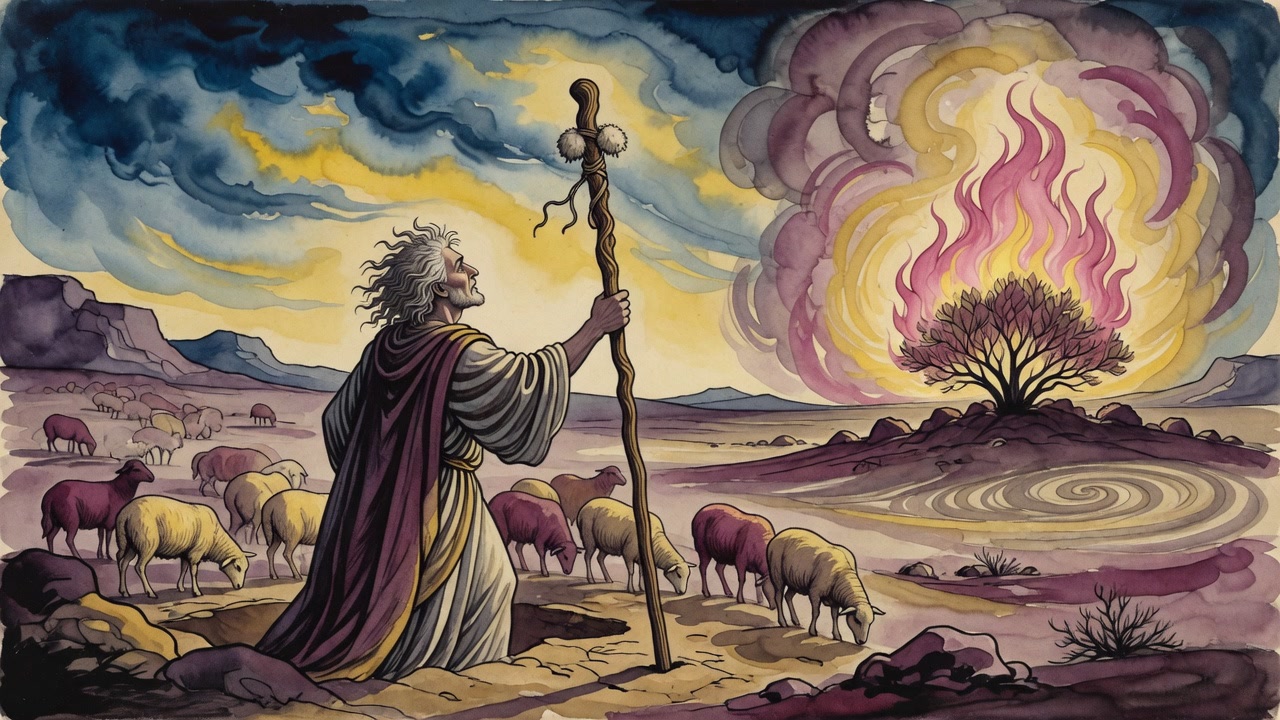
He pulled him up and kissed him and blessed the God who had guarded him for seven years underground, and he gave him Zipporah, and made him swear not to leave Midian without permission, the way Jacob had left Laban. Then he made him a shepherd. Moses took the young animals out first for the soft grass and the older ones next and the strong ones last for the hard grass nobody else could chew. When a kid bolted and he ran it down and found it drinking at a stream, he said, "I did not know you were thirsty," and carried it home on his shoulder.
The Advice He Gave the Second Time
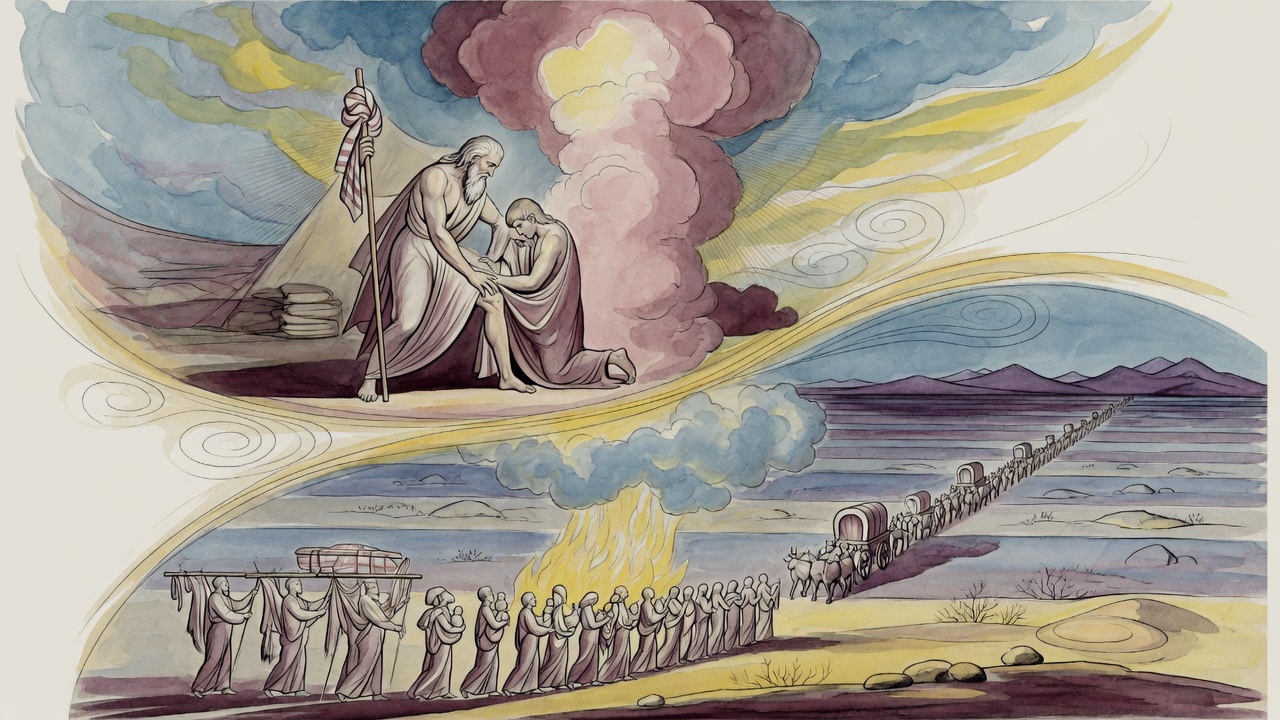
Forty years later Jethro walked into a camp at the foot of a mountain, bringing Zipporah and her two sons back to their father, and sat down to watch his son-in-law work.
What he watched was one man judging a nation from morning until night with a line of people in front of him that never got shorter. He said what he had said in Egypt, to a harder audience and with better results. "The thing you are doing is not good. You will wear yourself out, and this people with you." Put judges over thousands, over hundreds, over fifties, over tens. Let the small cases die close to the ground. Keep only what nobody else can decide.
The three men in Pharaoh's room were each paid what they were owed. Balaam, who gave the counsel, died by the sword. Job, who said do as you like, spent his life answering for those nine words. Jethro walked out, and his descendants sat in the Chamber of Hewn Stone, judging Israel.
← All myths