Jethro Warned Moses That Judging Every Case Alone Would Wear Him Out
Jethro had already paid for leaving his own gods before he arrived in the wilderness, and what he saw when he watched Moses judge all day frightened him.
Table of Contents
 Click for full size
The Priest Who Had Already Paid
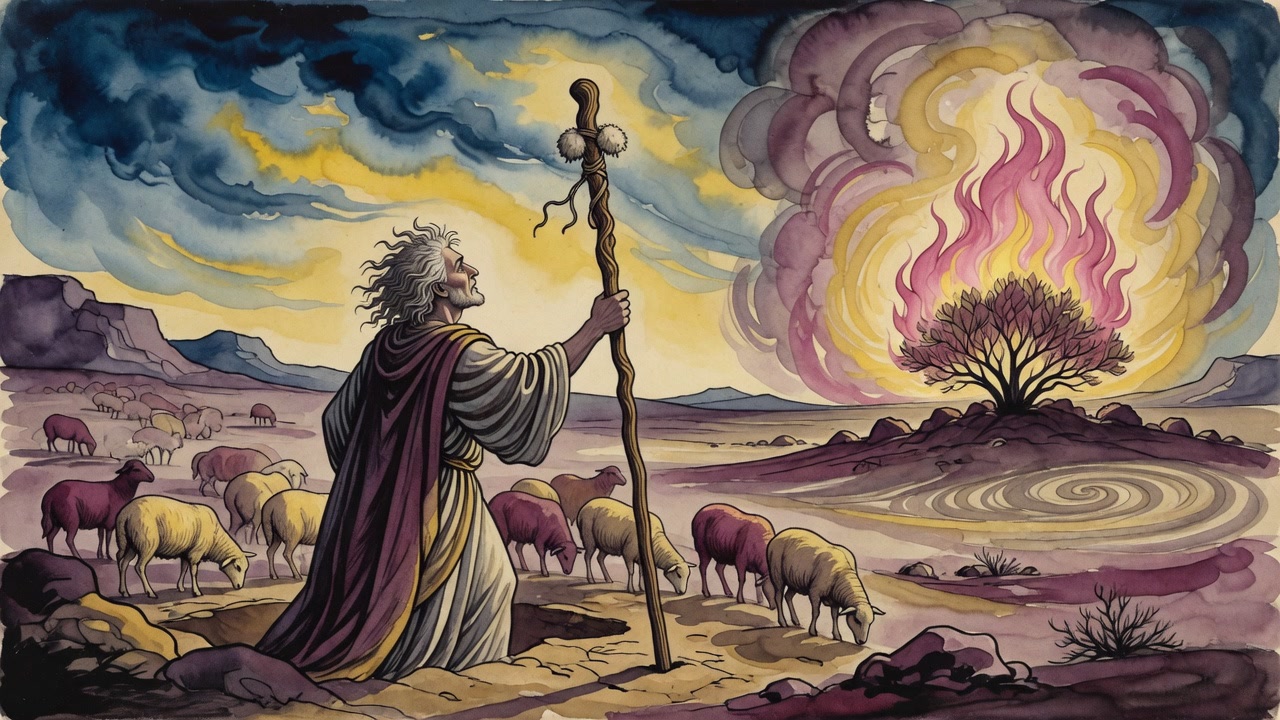
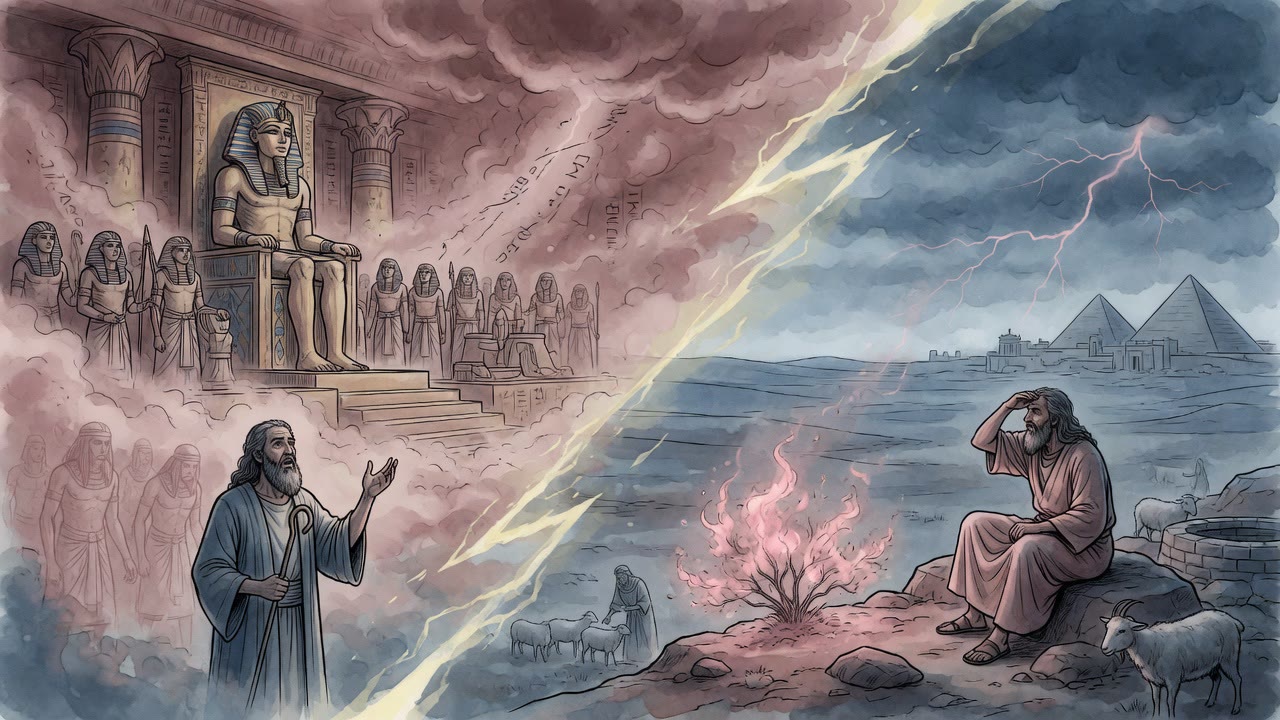
When Jethro arrived at the Israelite camp in the wilderness, he was not simply a curious father-in-law coming to see how his son-in-law was doing. He was a man who had already left something. The aggadic tradition records that the shepherds of Midian drove his daughters away from the well as punishment: Jethro had rejected the idols of Midian, and the communal response was to exclude his family from the shared water. The insult was not random. It was social enforcement, the community telling a priest who had broken with his cultic status that isolation was the price of dissent.
Moses arrived at that well as a fugitive from Egypt and drove the shepherds off. He did not know yet who Jethro was or what Jethro had given up. He acted because someone was being mistreated at a water source, and that was enough. Jethro fed him bread and gave him a daughter, and Moses stayed for forty years, learning the geography of the Sinai peninsula and the patience of a man who had already chosen isolation over comfortable falsehood.
The Man Who Heard and Came
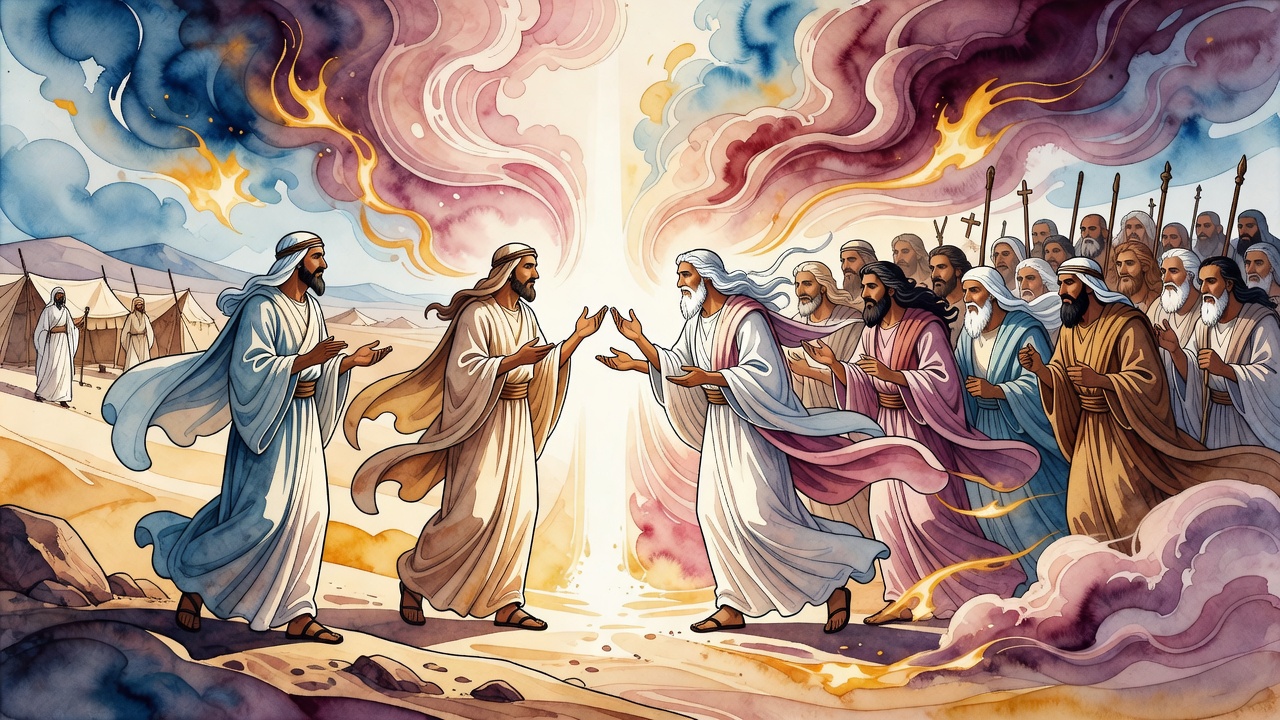
The tradition pays careful attention to what Jethro heard. The Book of Exodus says that Jethro heard all that God had done for Moses and for Israel, how God had brought Israel out of Egypt. The rabbis asked why Jethro, of all the people in the surrounding nations, heard this and came, when everyone who witnessed Egypt's collapse stayed where they were. The answer they gave reached back to his earlier choice. A man who had already walked away from comfortable religious authority when he concluded it was false had a different relationship to news of a God who acted in history. He recognized the kind of event it was because he had been waiting for one.
The tradition sometimes calls Jethro the prototypical convert, the one who came to Israel not under pressure but by intellectual and moral conviction, having examined the available options and chosen the one that corresponded to reality as he understood it.
What He Saw That Morning
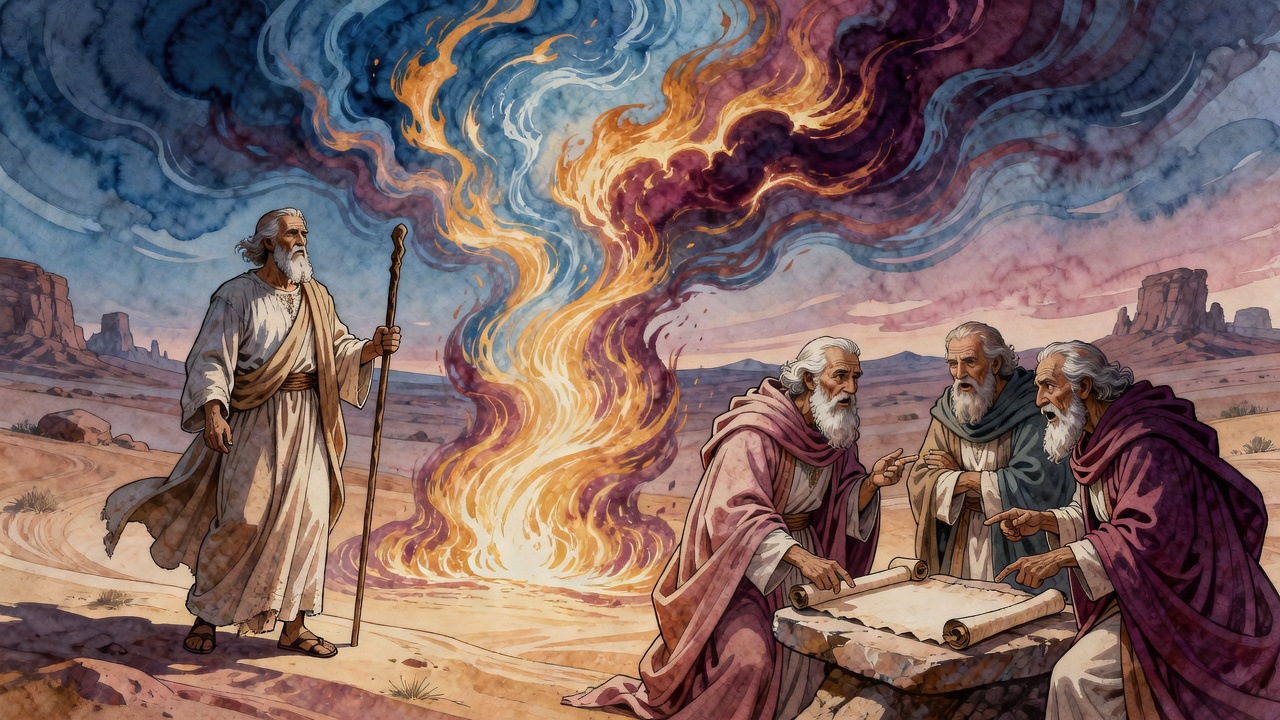
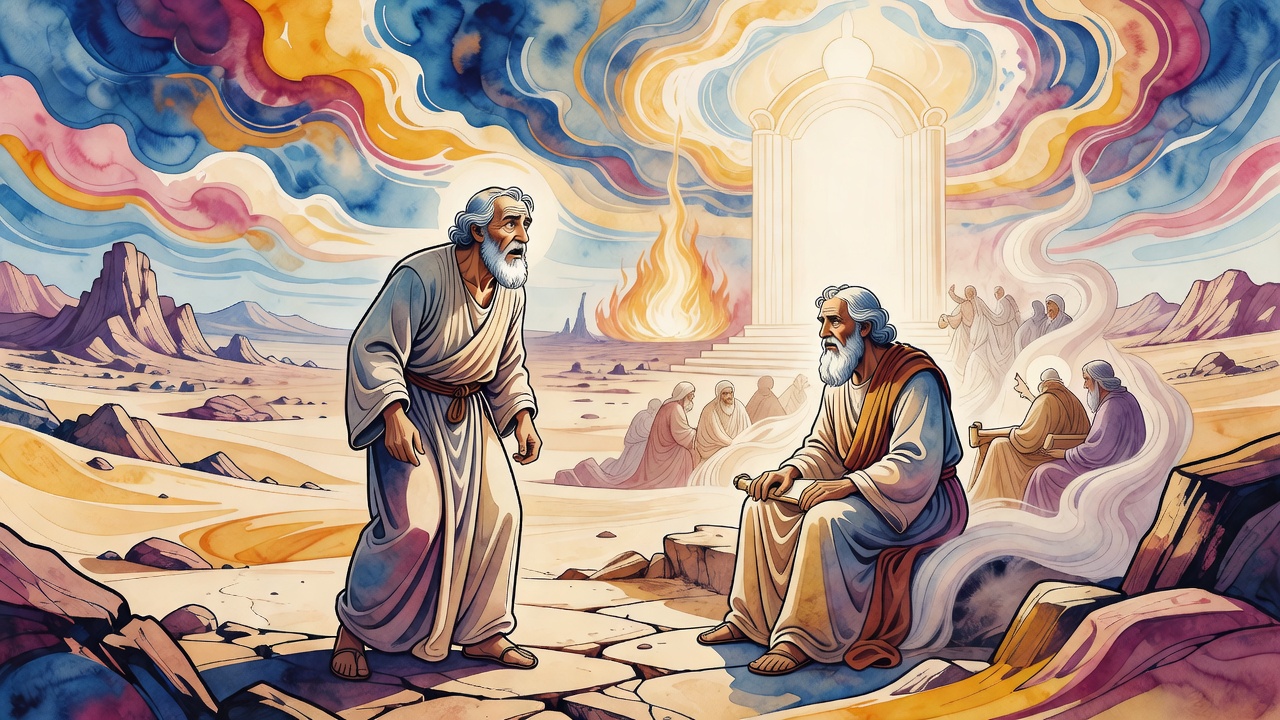
When Jethro arrived and had eaten bread with Moses and the elders, he sat down the next day and watched Moses work. From morning until evening, Moses heard cases. Every dispute in the camp, every quarrel between neighbors, every question of law, every accusation: it all came to Moses. The people stood waiting from dawn to dusk. Moses did not stop. He could not stop. He was the only person whose authority was accepted, the only one whose word settled the matter and let the parties go home.
Jethro watched this for a day and at the end of it told Moses directly: what you are doing is not good. You will surely wear yourself out, and the people with you, because the thing is too heavy for you. You cannot do it alone.
The word Jethro used for wearing out is the same word used for withering. Moses was going to wither doing this. The people were going to wait forever. Neither outcome served the covenant.
The Table of Tens
Jethro's solution was structural. Appoint capable men, God-fearing, reliable, hating dishonest gain. Set them over thousands, hundreds, fifties, and tens. Let them handle the ordinary cases. Bring only the hard ones to Moses. The people would get faster justice. Moses would have the capacity left to do what only he could do: bring the matters to God, teach the statutes, and walk in the way that the nation needed to watch.
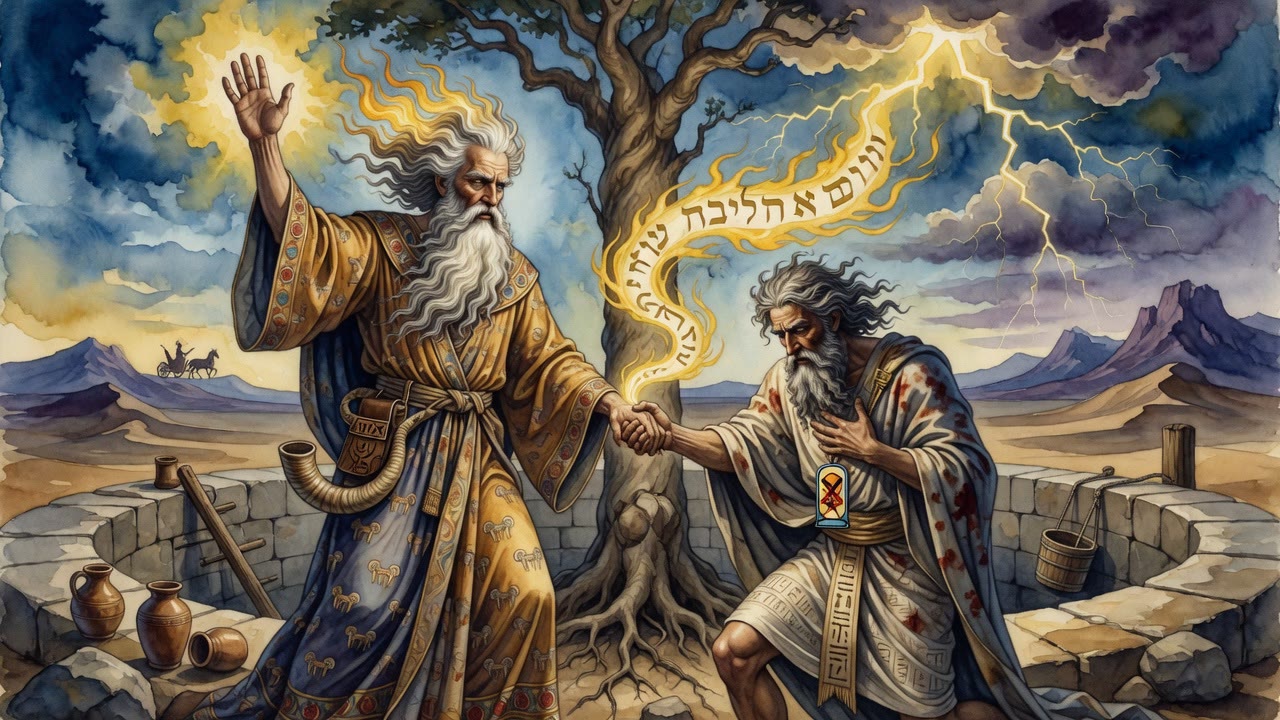
Moses listened. This is the part the tradition found remarkable: the greatest prophet in Israel's history, the man who spoke with God's face to face, took the advice of his father-in-law without arguing. The Mekhilta notes this as a virtue, the willingness to hear wisdom from outside the camp, from a man who had begun as a pagan priest and had arrived at the wilderness by a road that most of Israel would not have recognized as a qualifying credential.
← All myths