60 myths · Page 1 of 2
Each story names the sources it was written from.
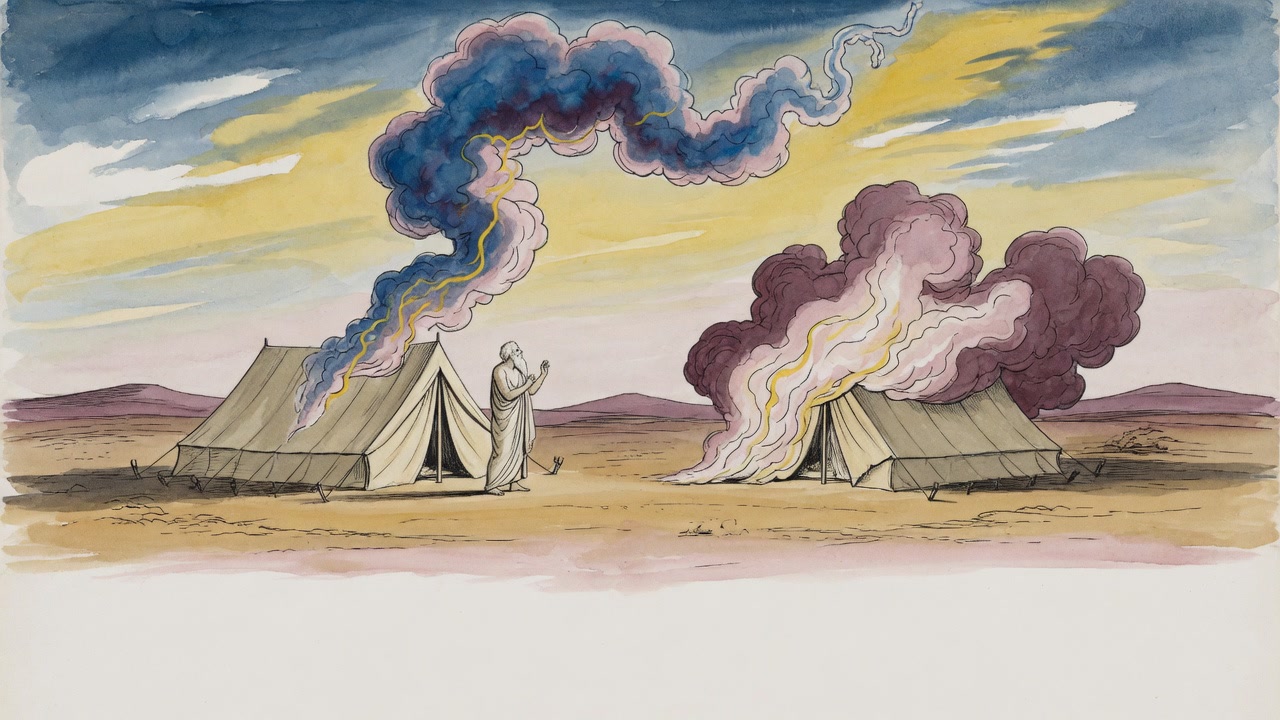
For forty years the cloud stood over Moses. On his last morning it left his tent and hung over Joshua's while Moses was still alive.
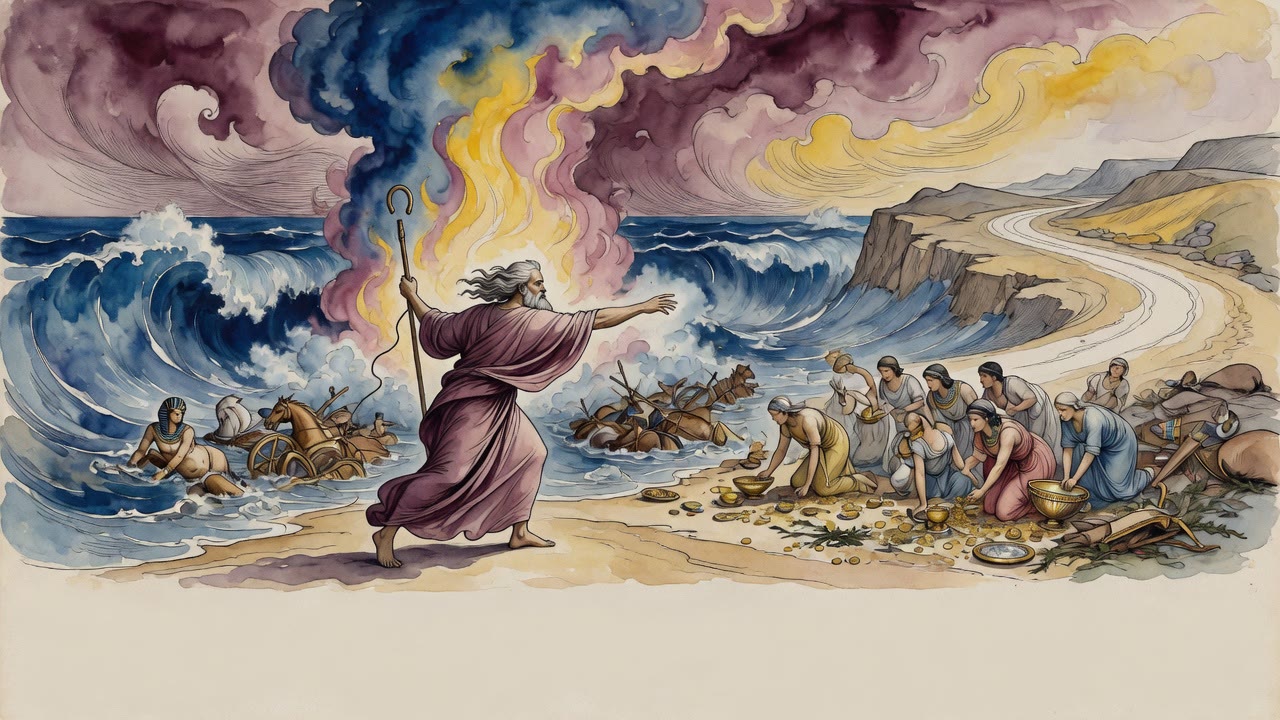
The drowned officers still wore Pharaoh's gold. Israel waded into the surf for it. Moses told them to form up and march. Nobody moved.
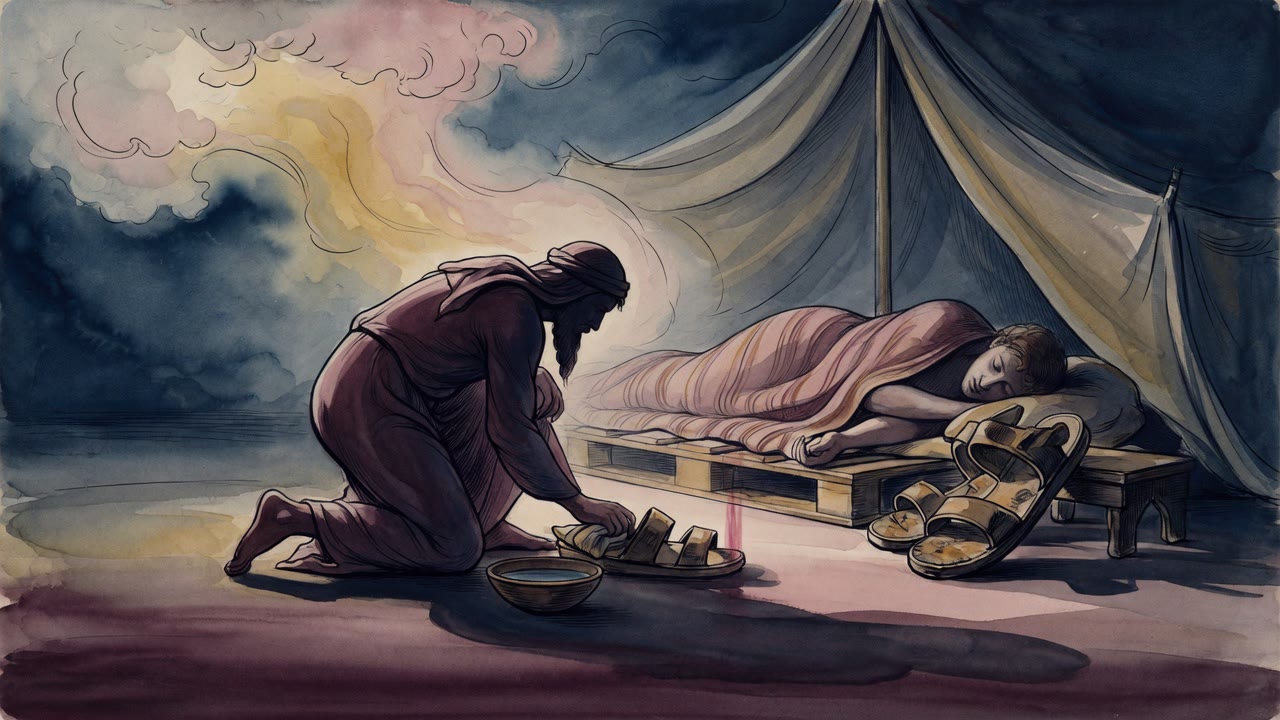
Joshua woke to a folded shirt by the pillow. The shoes sat clean beside the bed. He never saw who had knelt there in the dark.
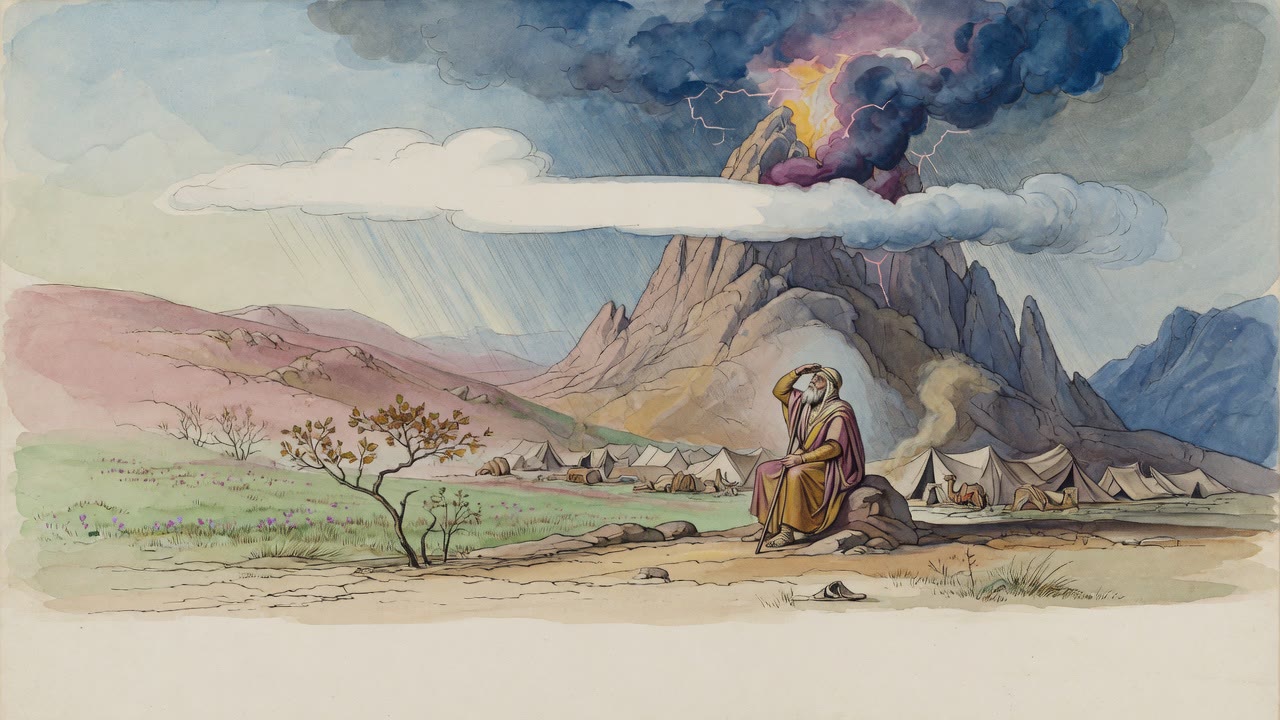
Moses vanished into the clouds of Sinai for the better part of a year. When he finally came back down, his father-in-law was still there waiting.
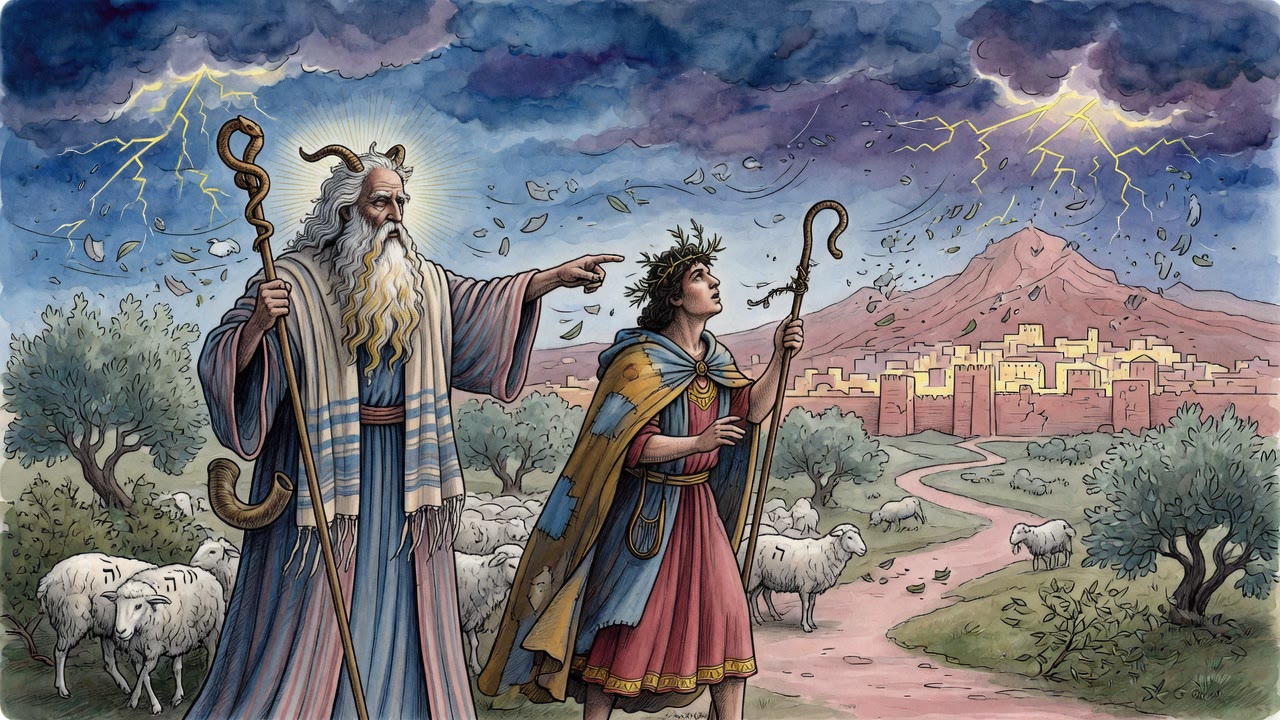
At the burning bush Moses was warned off two crowns that would never be his. The priesthood belonged to Aaron. The throne belonged to a boy not yet born.
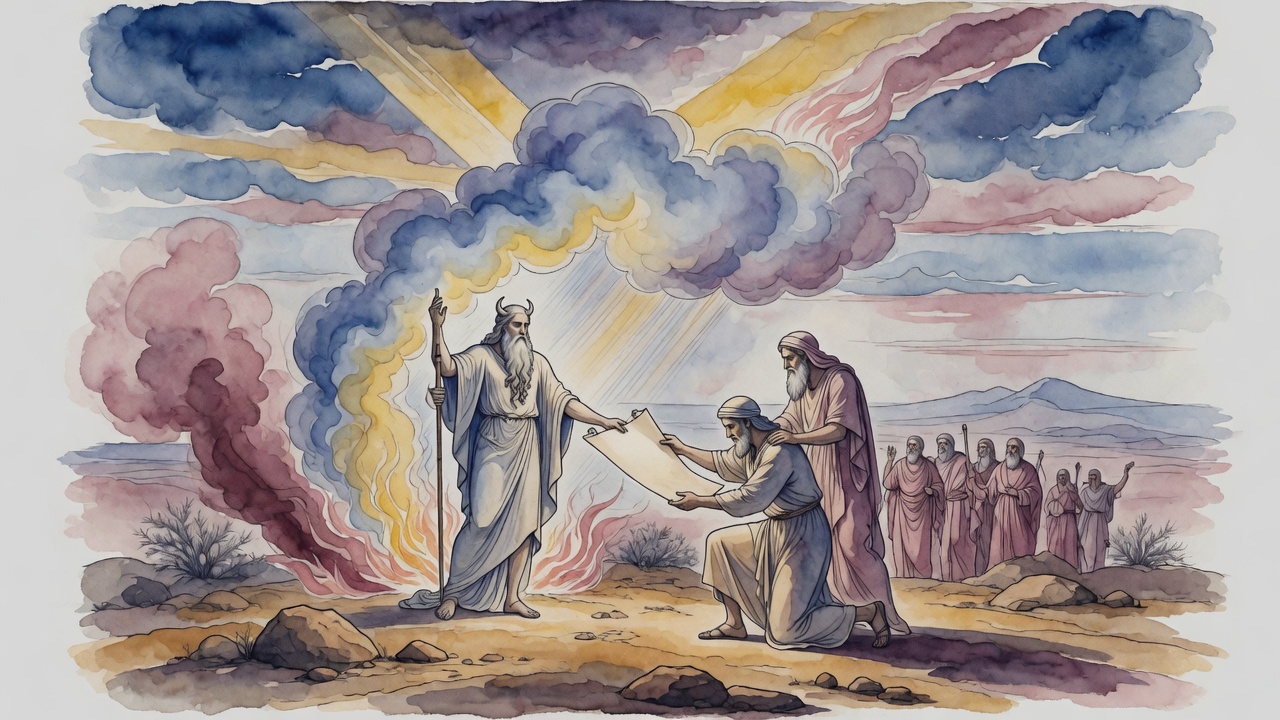
Moses wanted one of his sons to inherit the burden of leadership. God chose Joshua instead, then made Moses strengthen him in public.
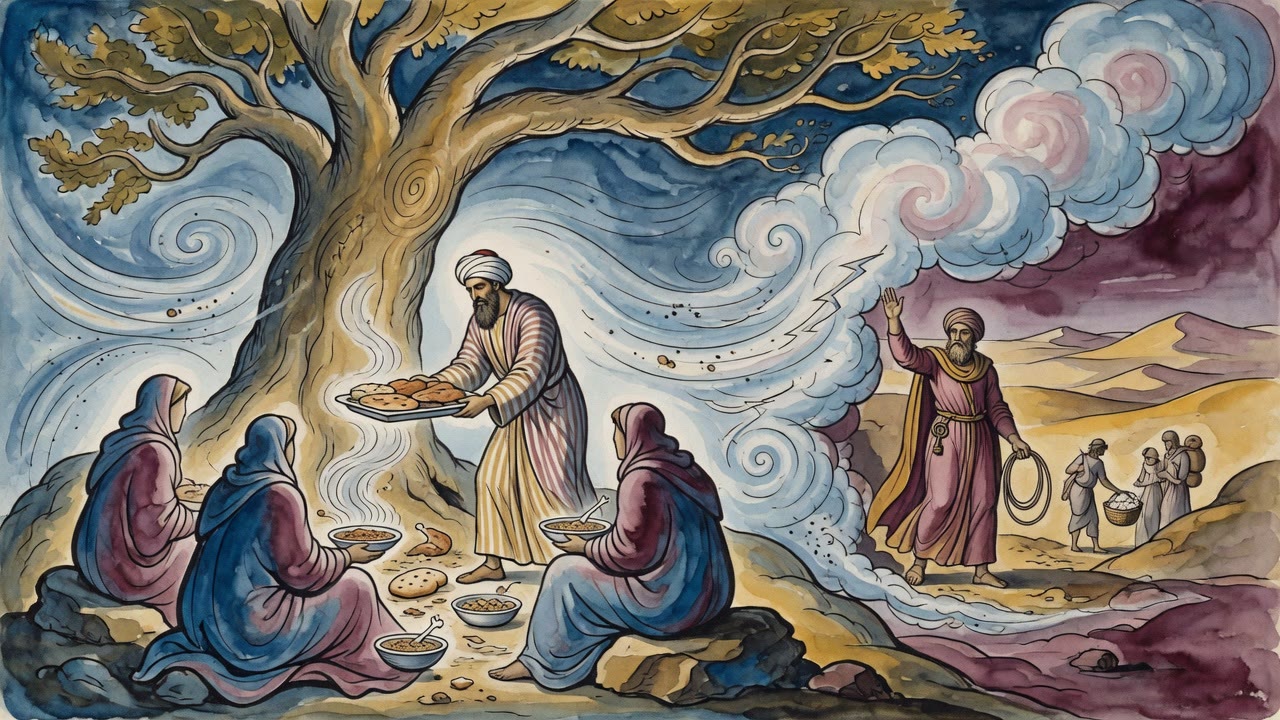
If he left the tent early, they said he had trouble at home. If he came late, they said he was plotting with his wife.
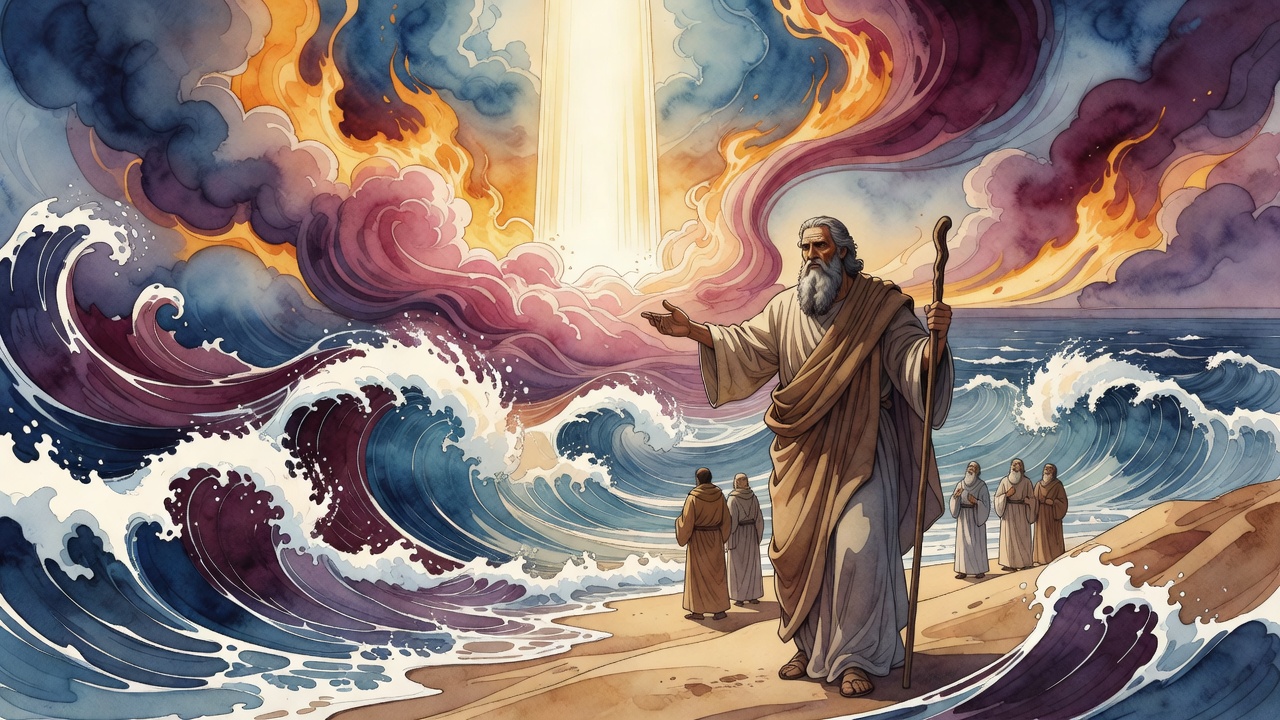
The water said it was three days older than Moses. He did not argue. He walked back to God with a complaint from the sea.
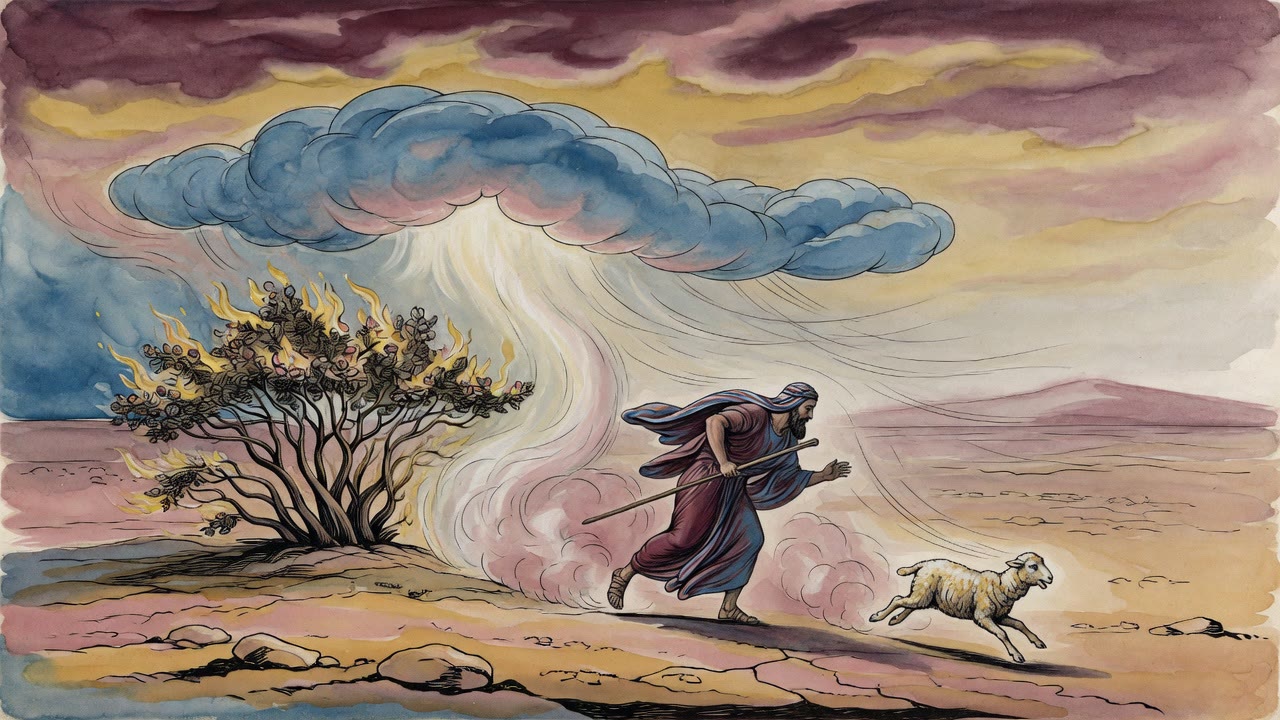
Before the burning bush, before the plagues, God watched Moses chase one exhausted lamb across the desert to find out what kind of man he was.
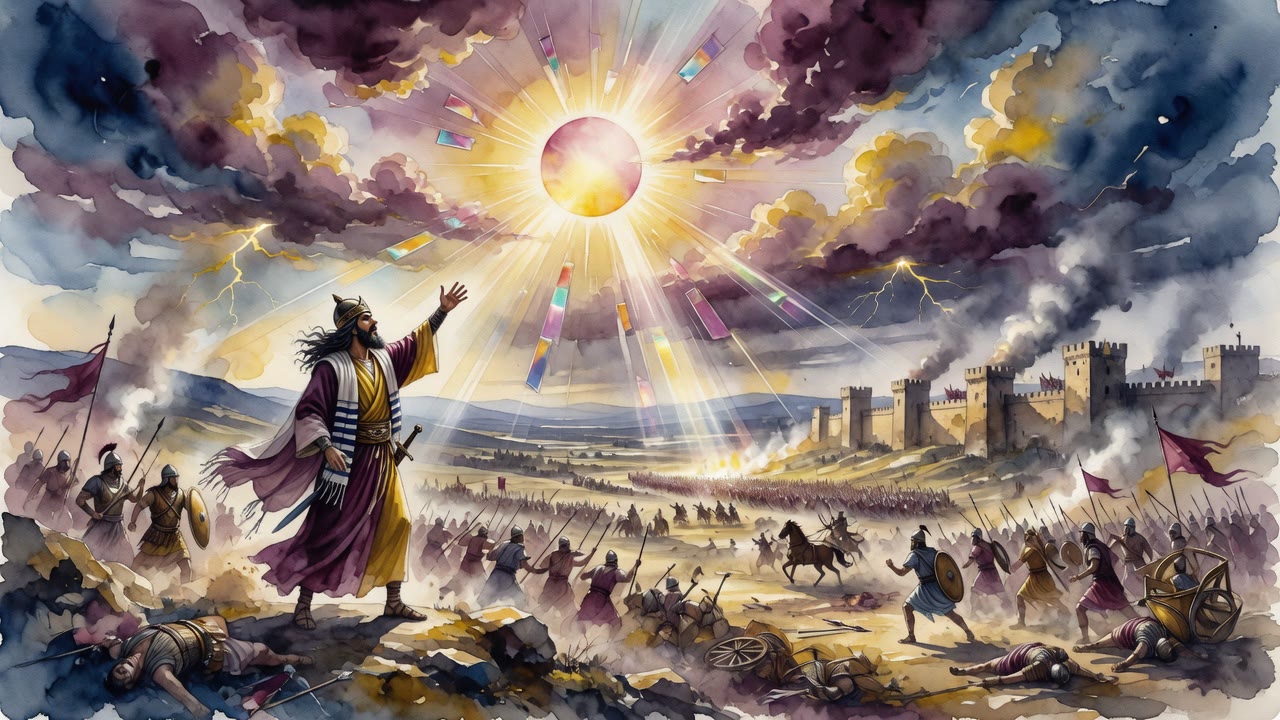
Moses called him an equal and sent him downhill. Later two men said Moses would die in the desert. Joshua wanted them locked away.
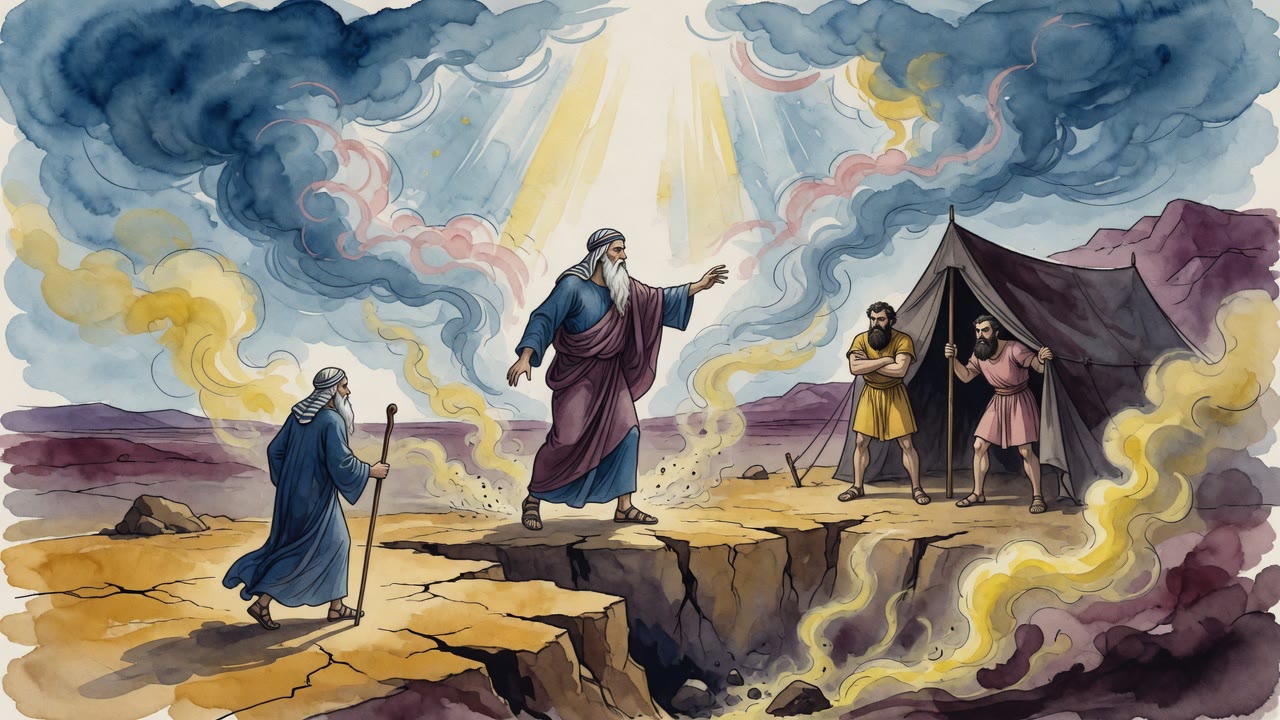
The tent flap did not move. Moses waited outside, then told the crowd to step back from the ground that was about to open.
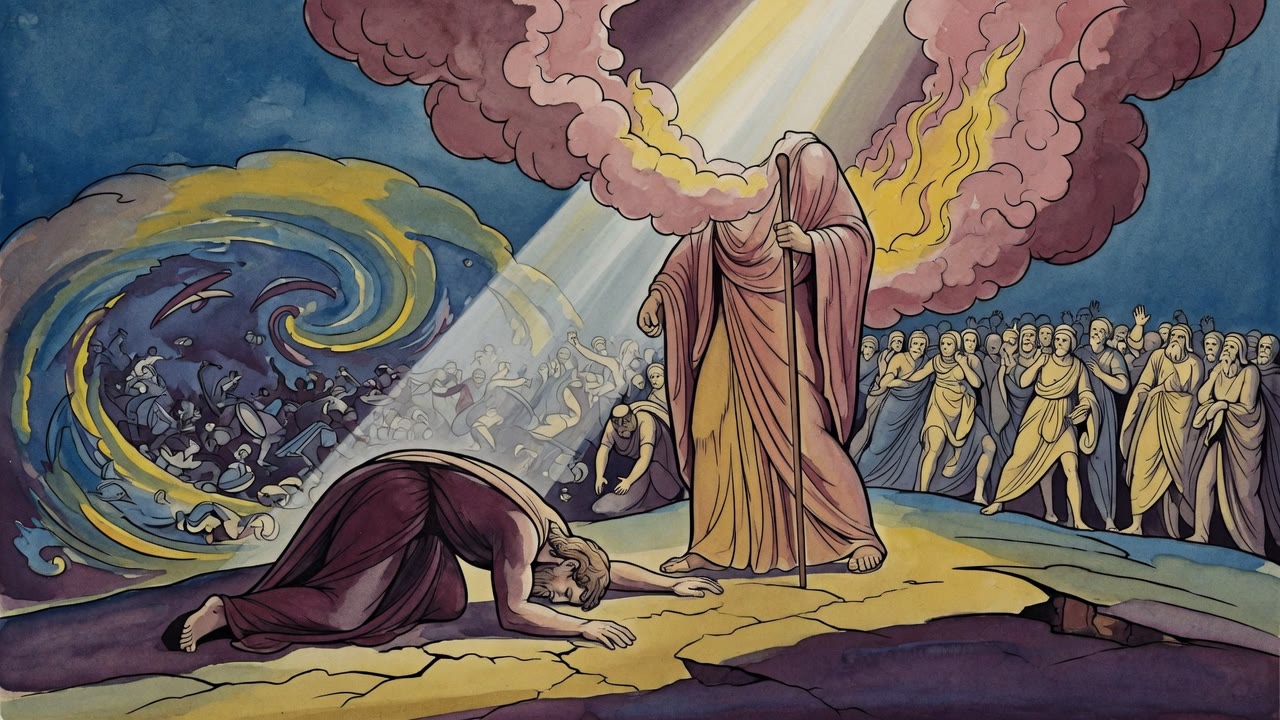
Moses tried to comfort him with wet eyes. Joshua asked who would pray when the Amorites smelled that the defender was gone.
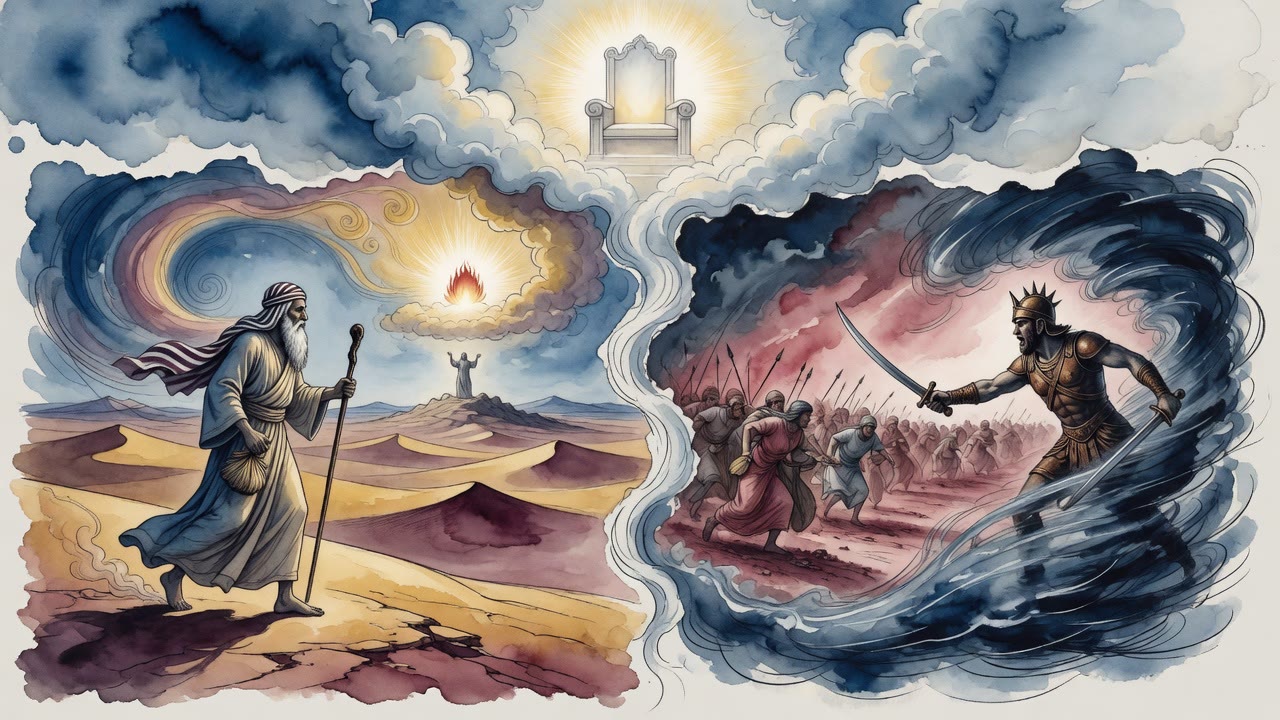
Three men advised Pharaoh about the Hebrews. One was thrown out for defending them, one said nothing useful, and one of them thought of the river.
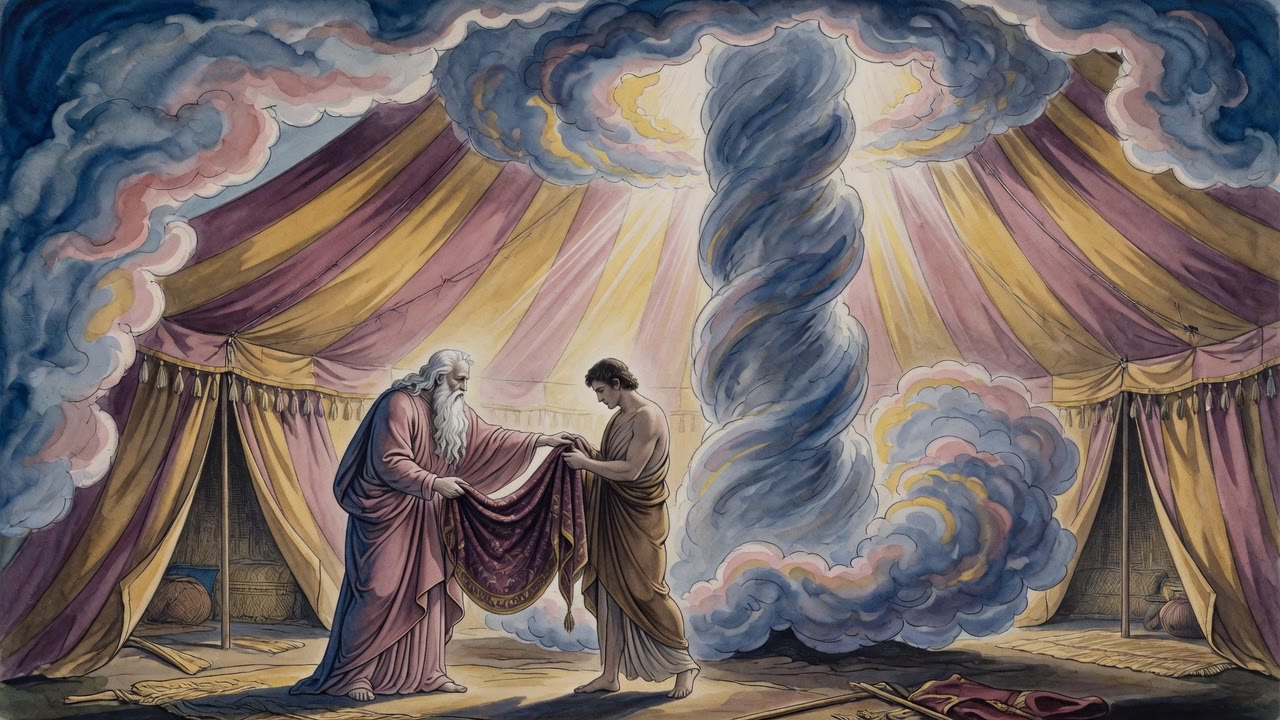
The cloud stopped at the tent door and would not come in. Moses said to Joshua the same words God had just spoken, then left him holding them.
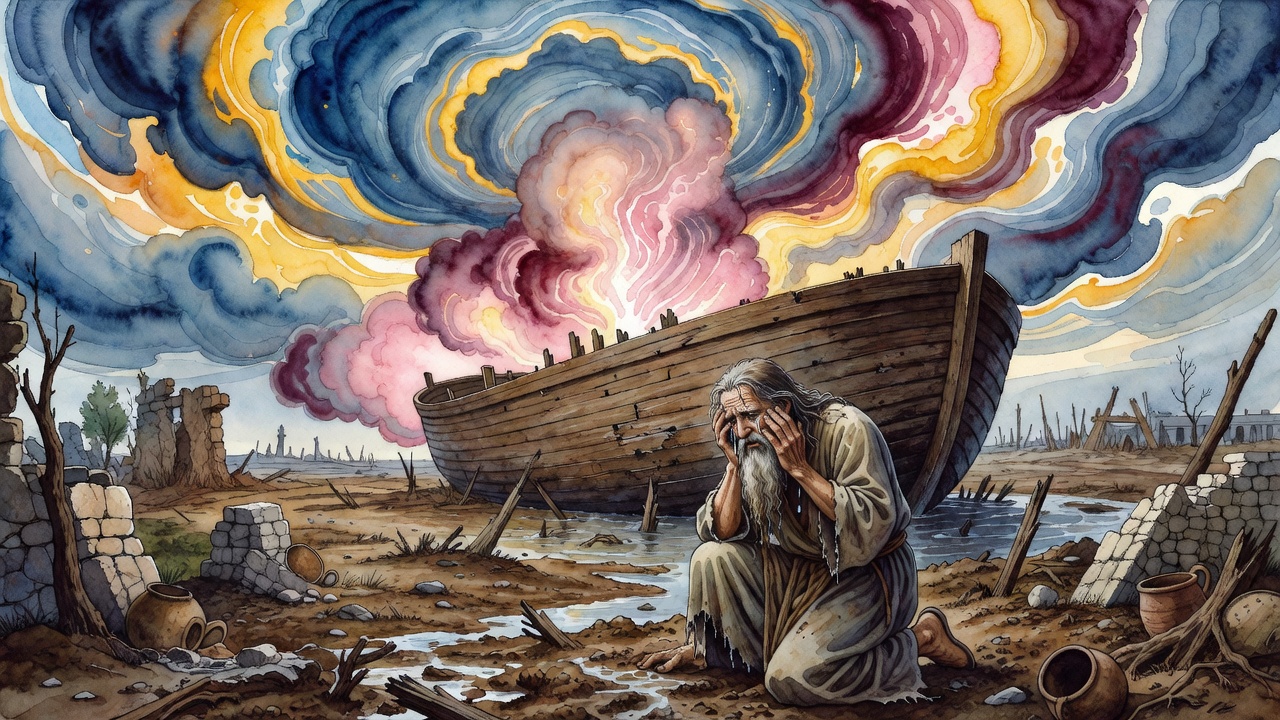
Noah built the ark, survived the flood, and wept at the ruins. Then God rebuked him for never praying for anyone outside the ark before it was too late.
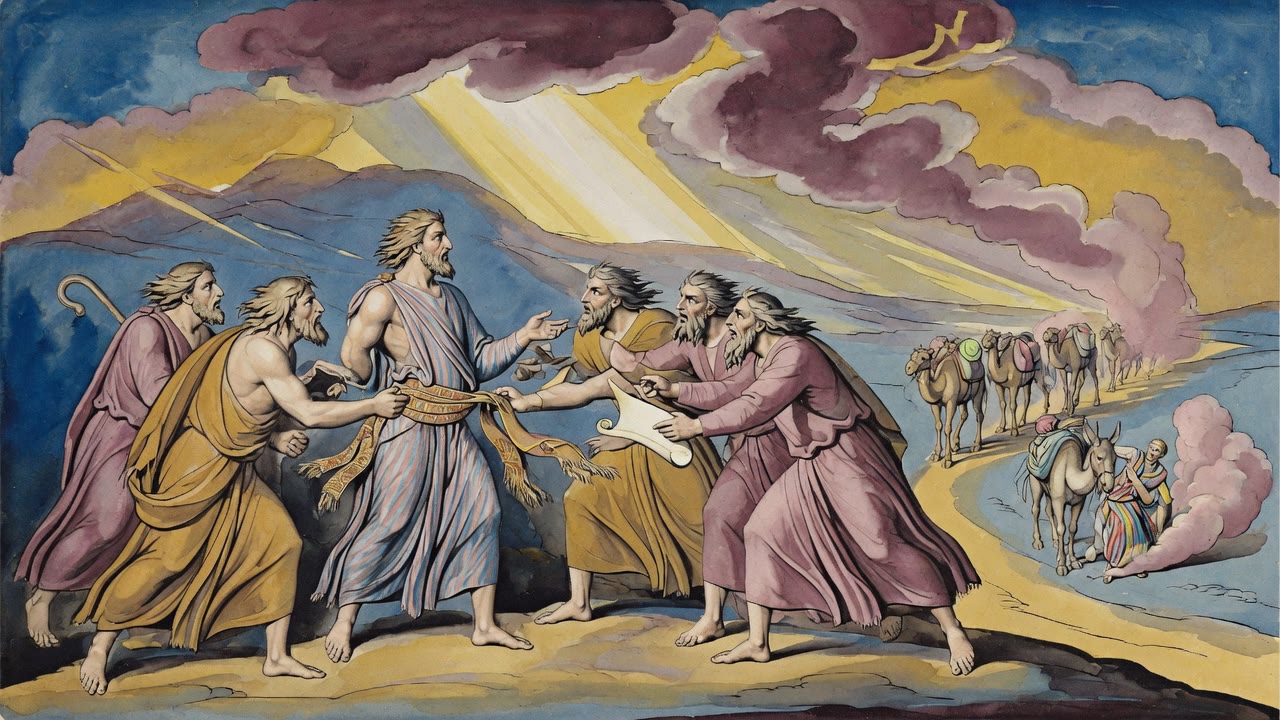
His brothers took the crown off him and put him out of the family. A Canaanite king threw him a feast, and the king's daughter kept his cup full.
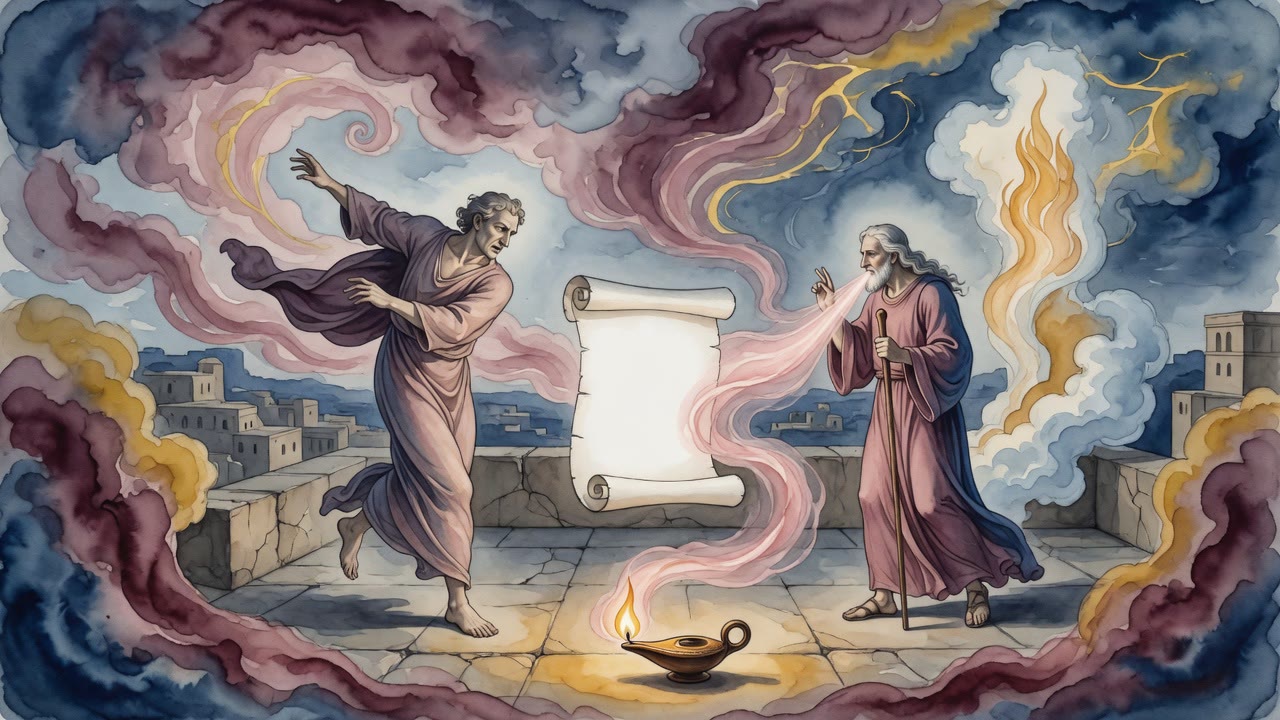
Gershom and Eliezer were grown. Their father asked who would lead Israel. God named the man who had spread the carpets at dawn.
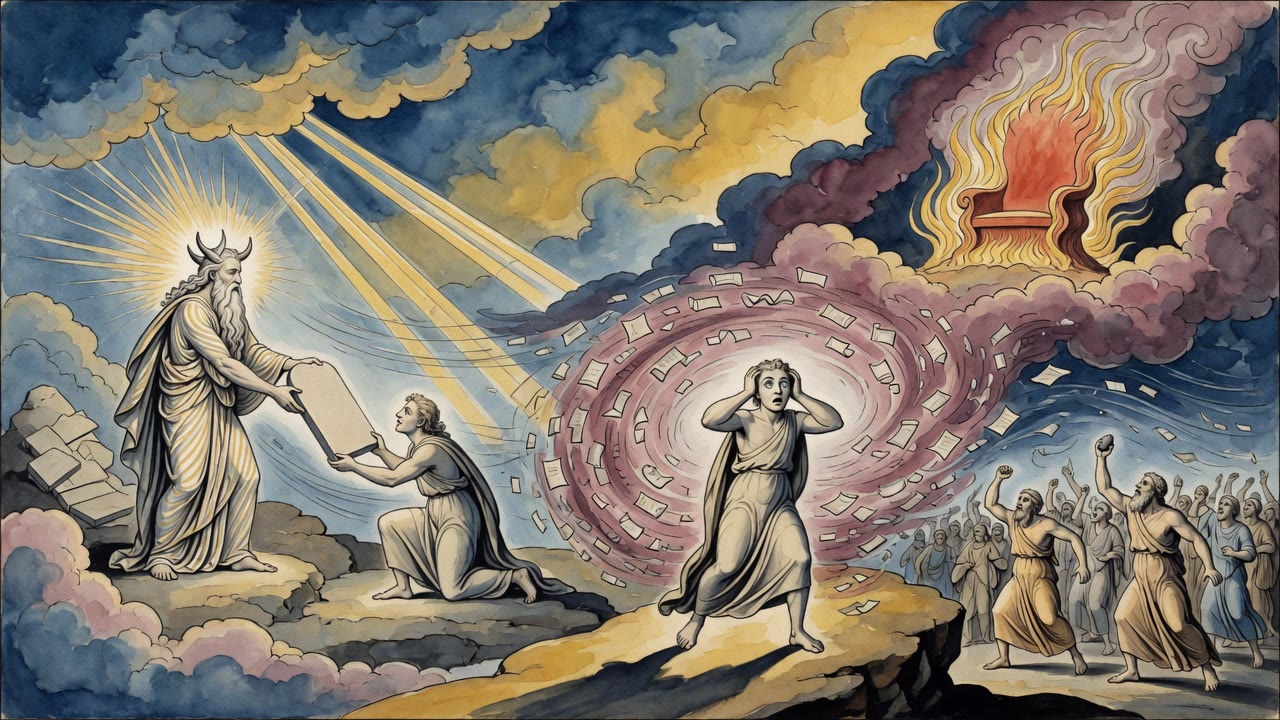
Moses named Joshua his successor. Joshua declared he had no questions. Within moments he had forgotten hundreds of laws and nearly been killed for it.
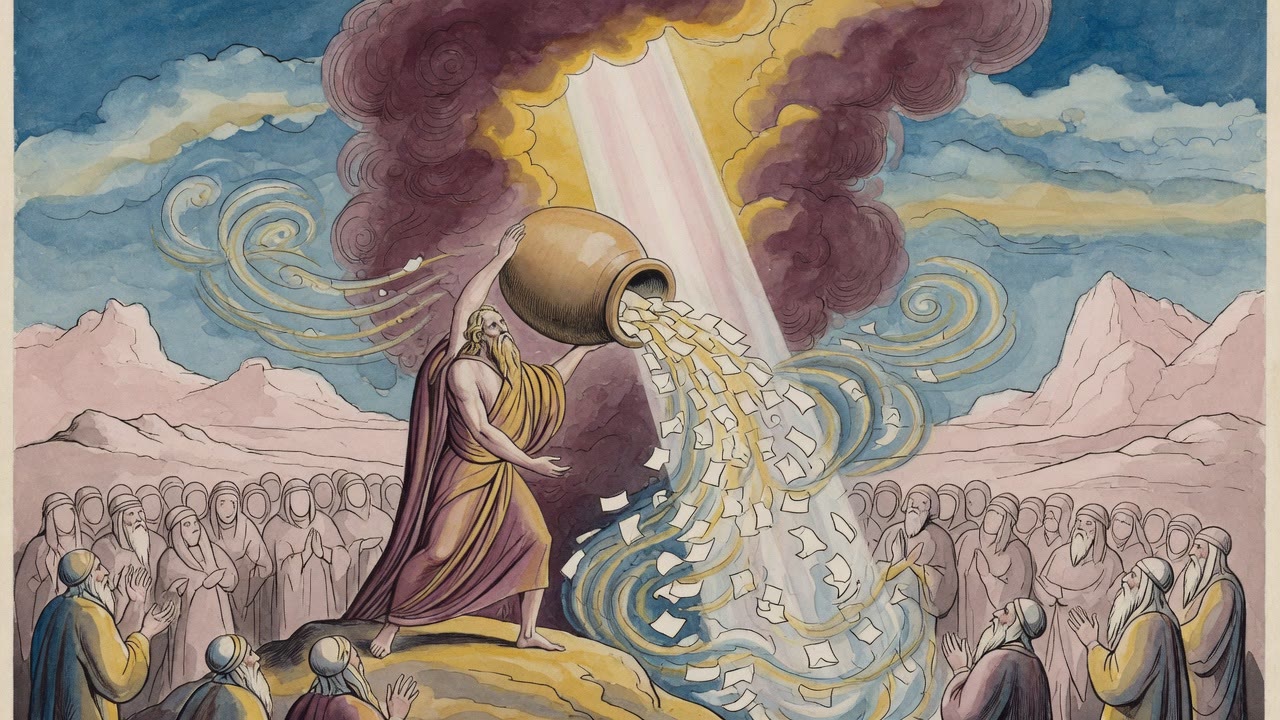
Moses had seventy-two worthy candidates and only seventy spots. He designed a lottery that left no human hand to resent and no accusation to sustain.
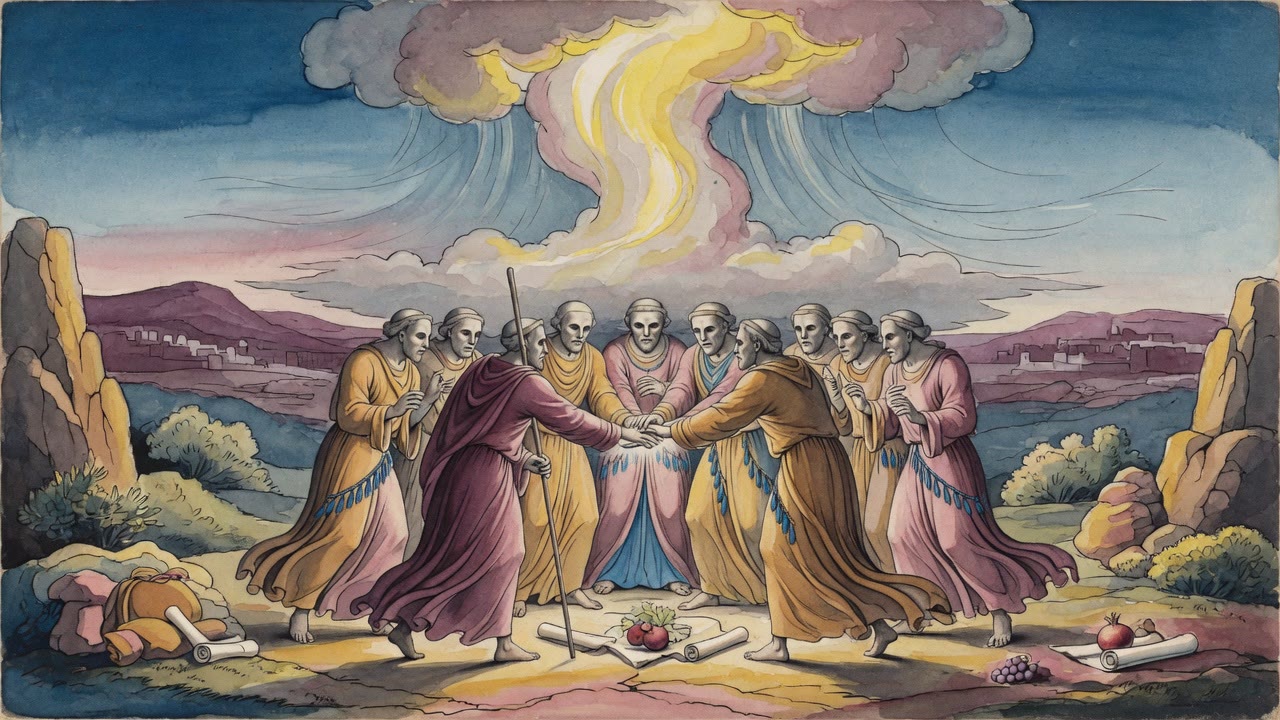
God approved every name Moses wrote. Two men came back under a grape cluster hung from a pole. Ten mouths had already called the land a grave.
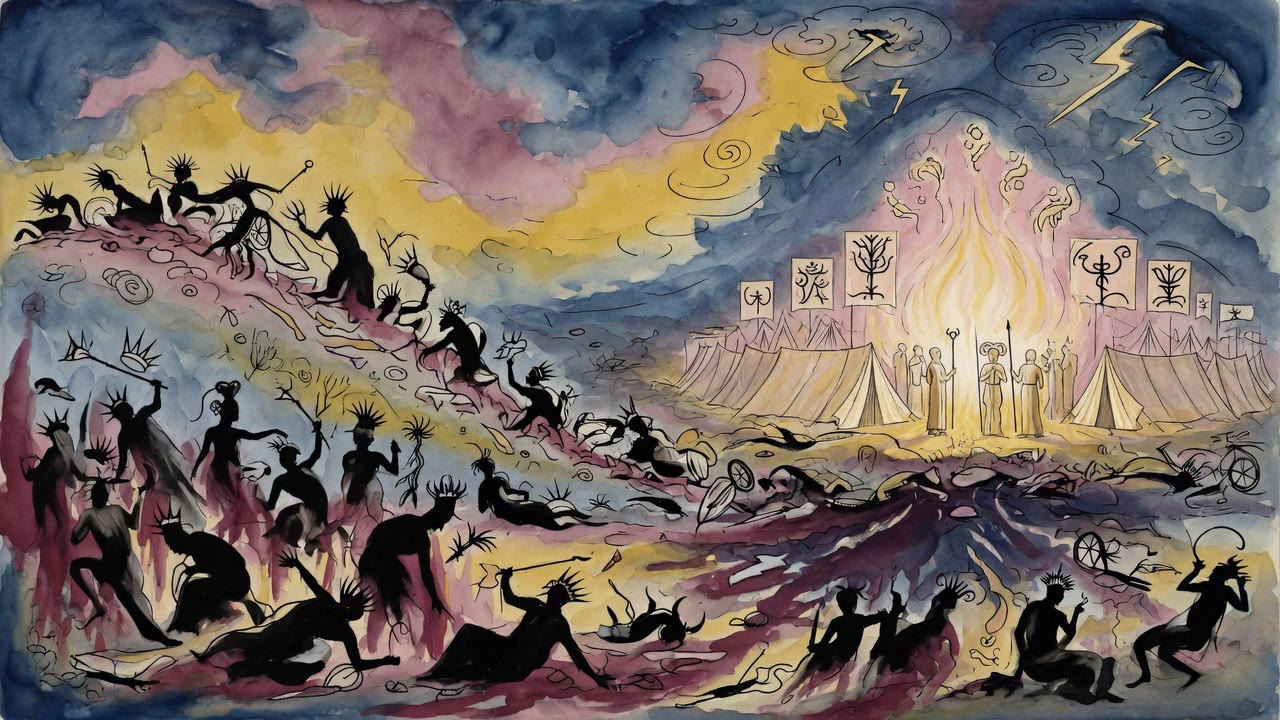
The letter named forty-five kings and thirty days. Joshua read it on the eve of the feast. He put it away until the last offering was done.
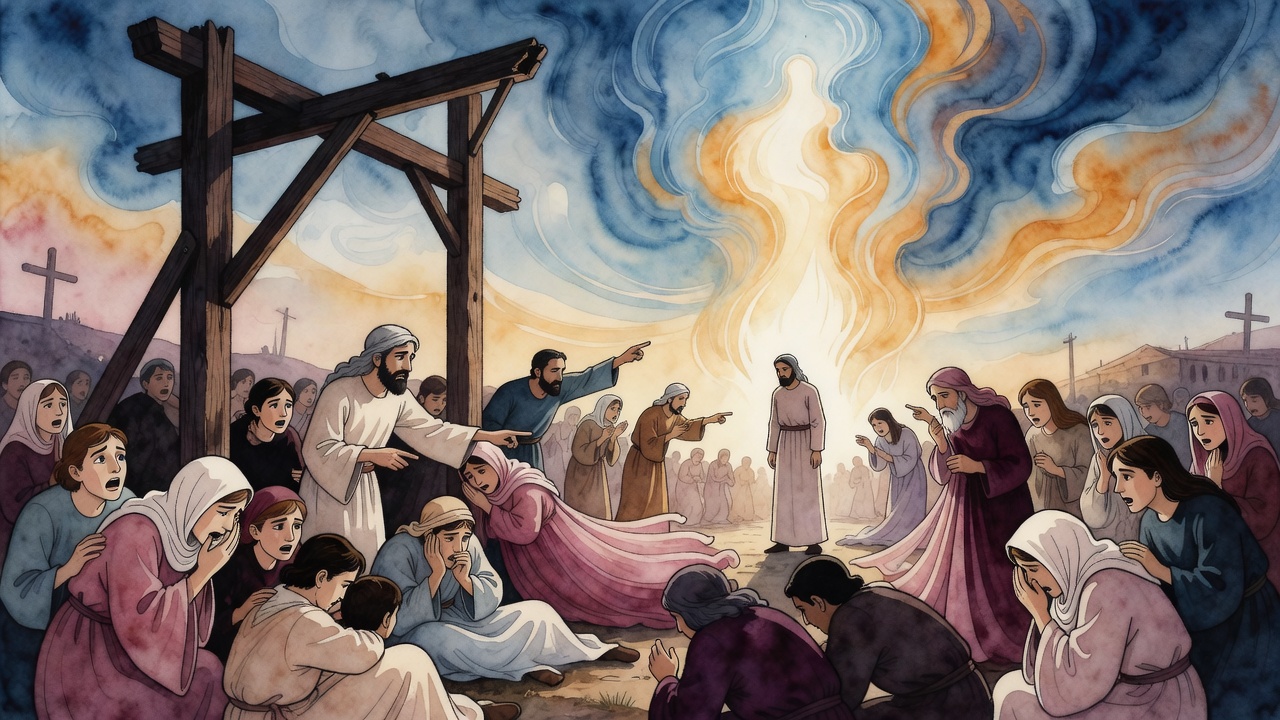
The night the Jewish people were supposed to celebrate liberation, they wept instead. And they blamed Mordecai for everything that was coming.
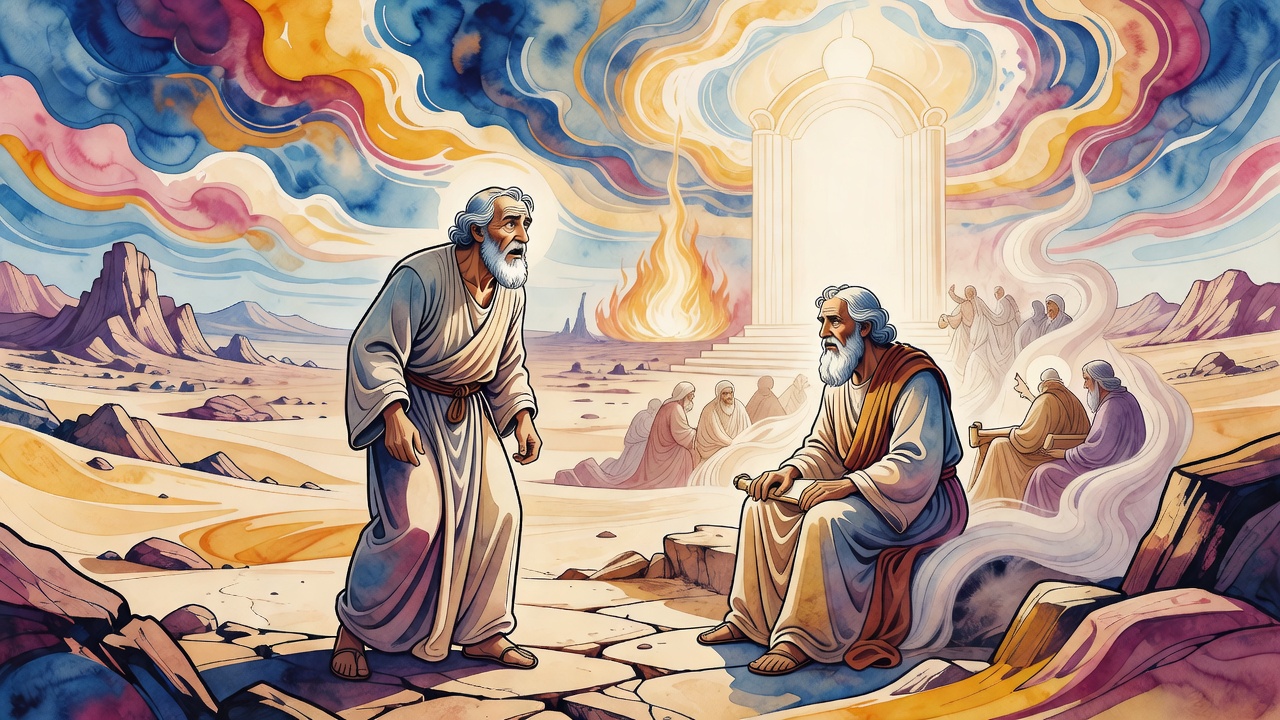
Jethro had already paid for leaving his own gods before he arrived in the wilderness, and what he saw when he watched Moses judge all day frightened him.
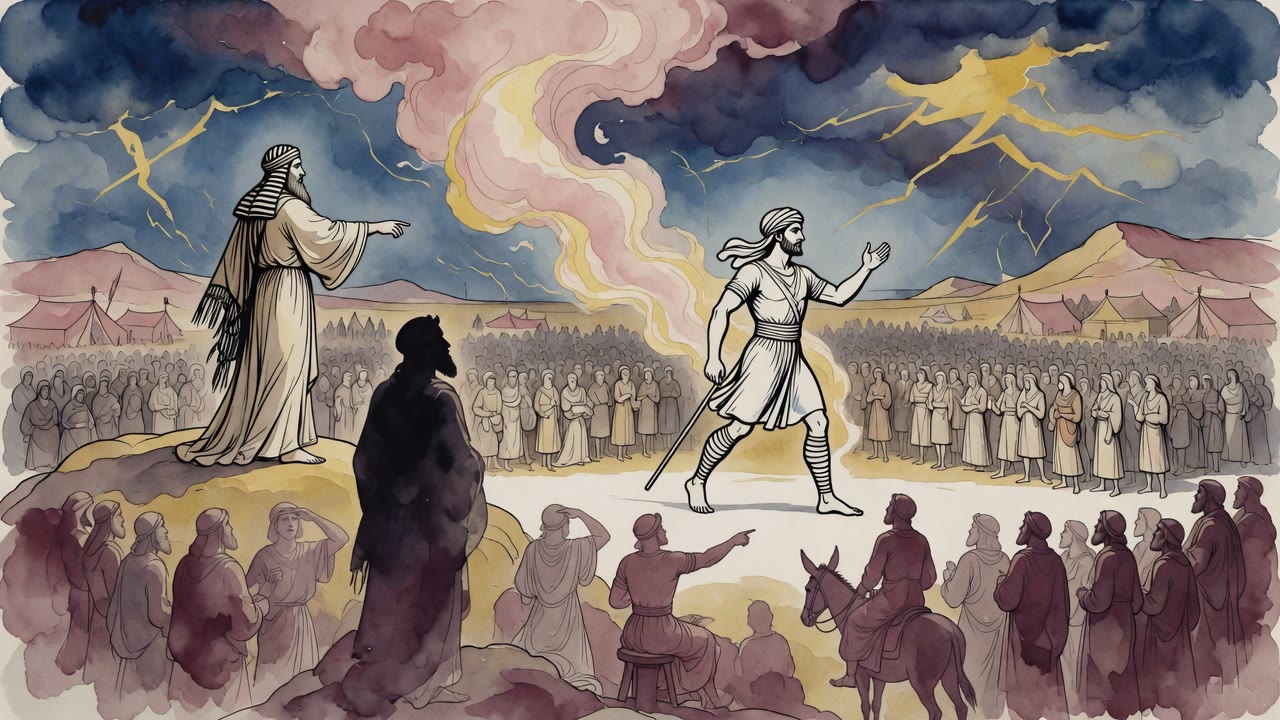
Moses lifted Joshua and set him between his knees so Israel would hear him teach. At the tent door he made the younger man walk out first.
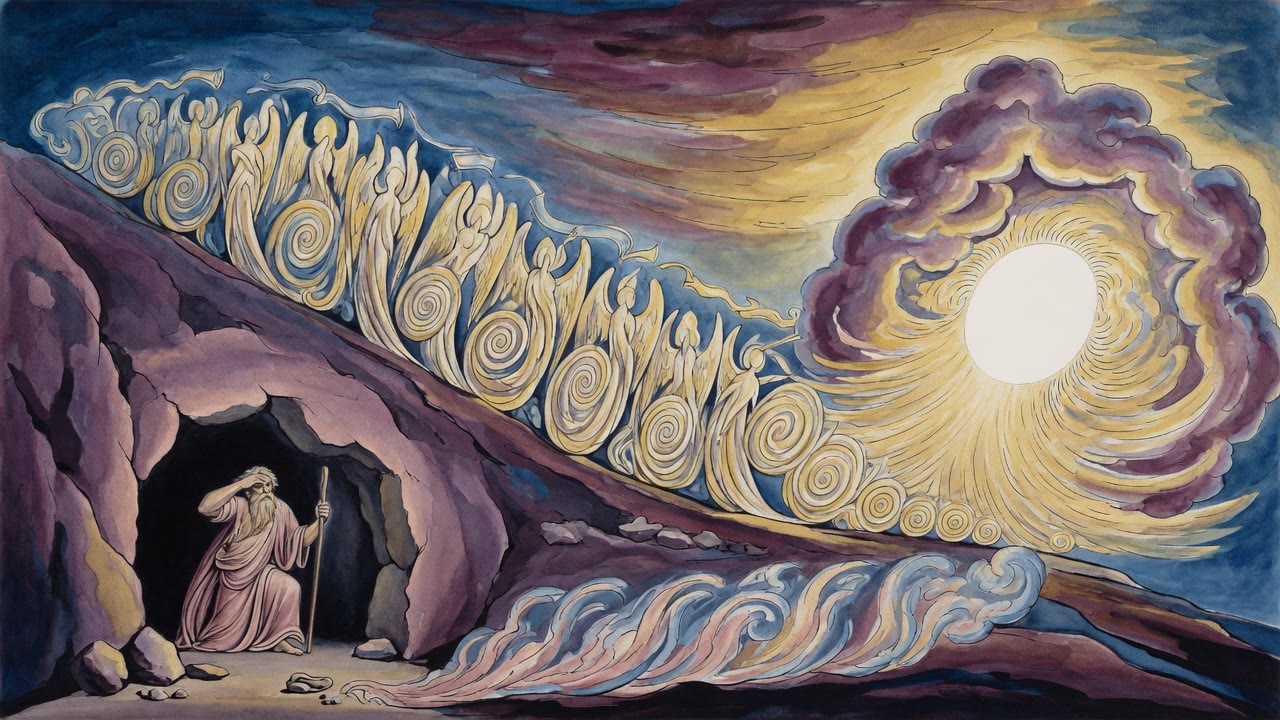
God told Moses to give some of his glory to Joshua, not all. The rabbis built the entire theology of succession from that one missing word.
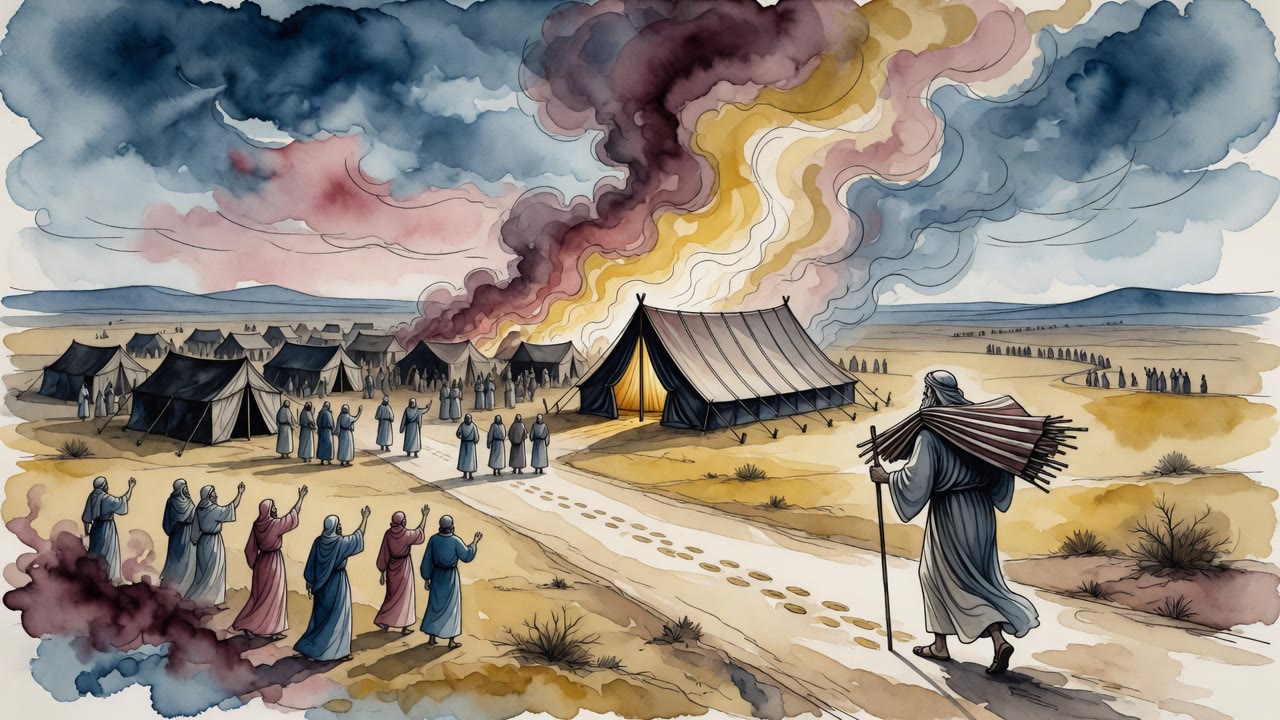
Moses prays 515 times at the Jordan's edge, draws a circle in the dust, and prays until heaven trembles. God finally says: enough, do not continue.
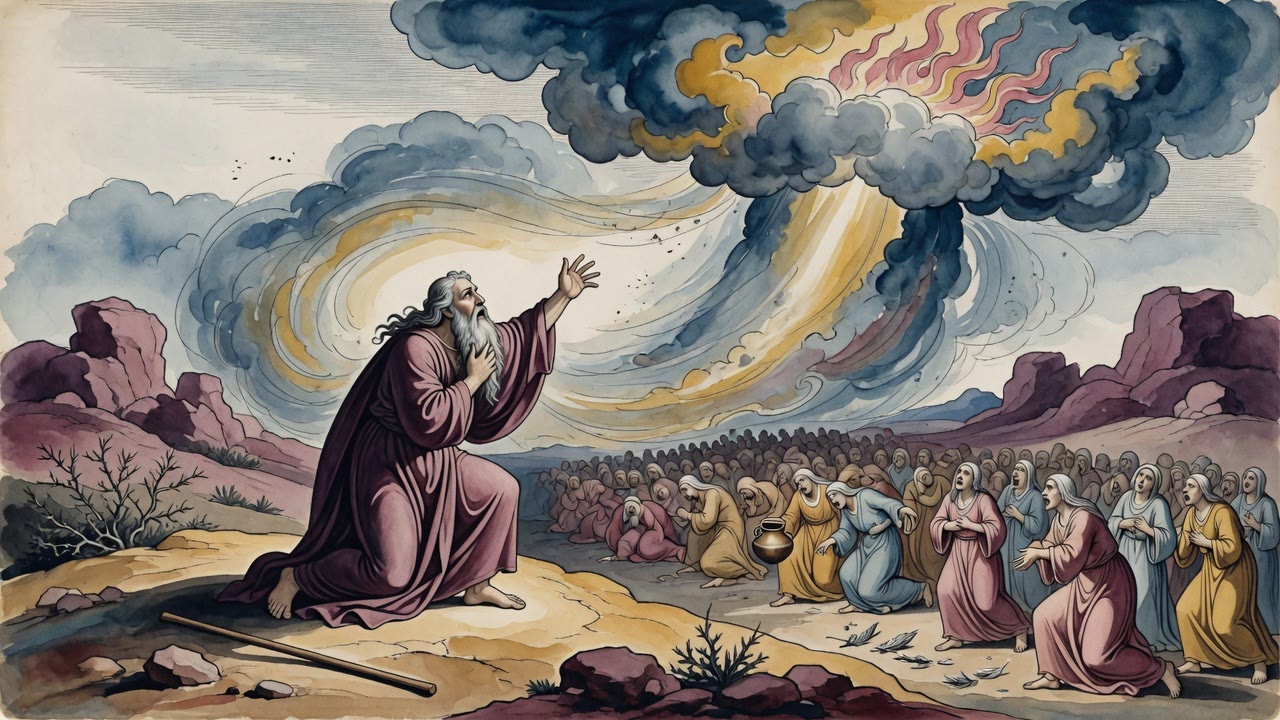
When Israel wept for meat in the wilderness, Moses did not pray for quail. He asked God to end his life. Sifrei Devarim examined the prayer word by word.
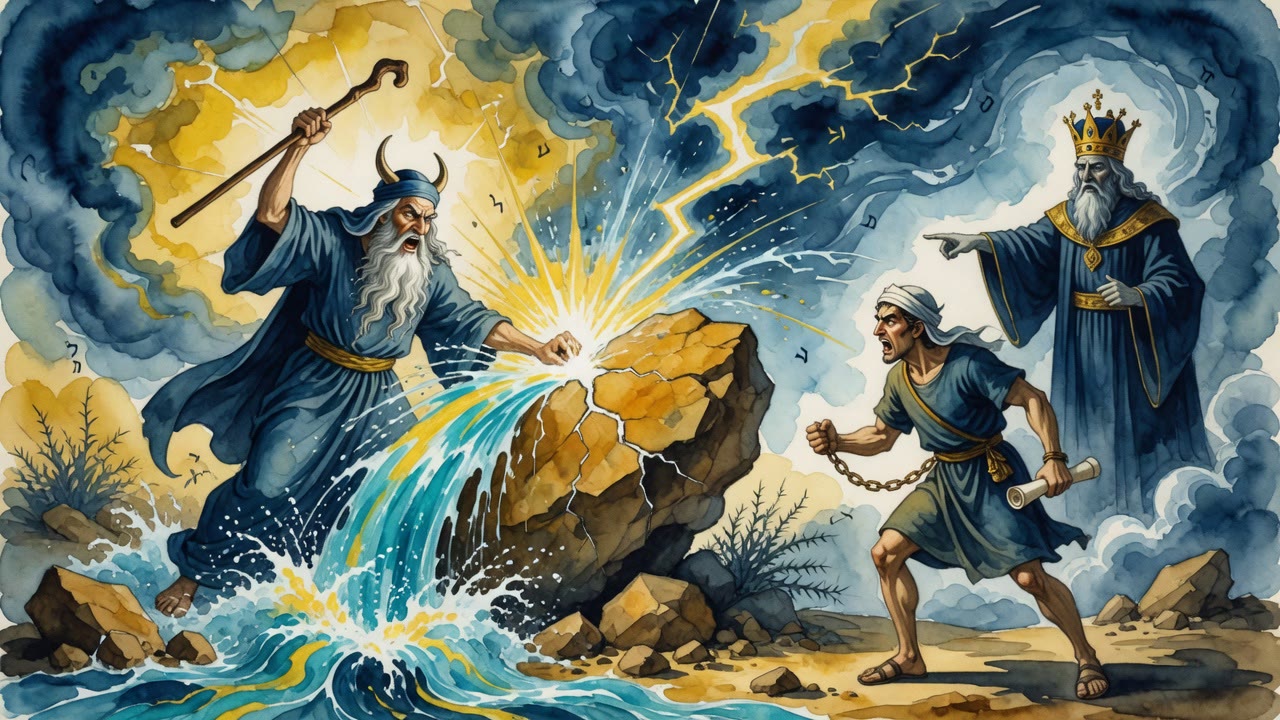
God told him to speak to the stone. The staff came down twice anyway. Water ran over his feet while the camp still watched his face.
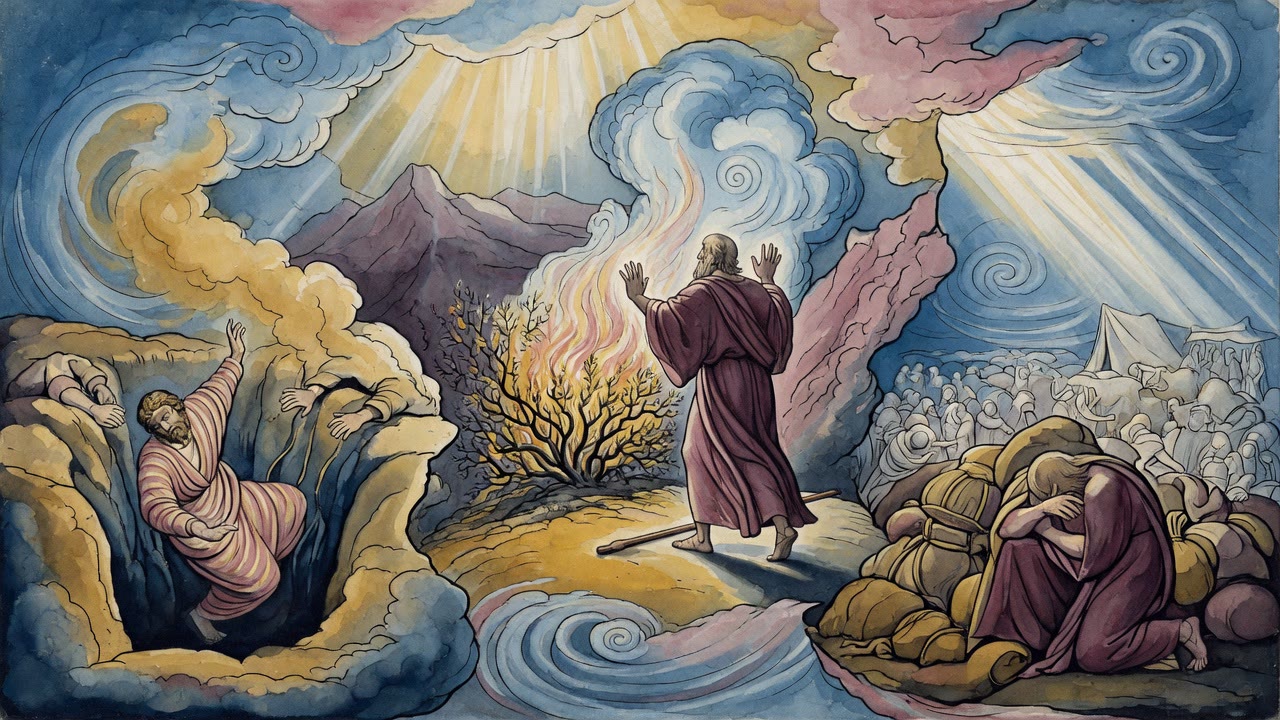
Ten men came back from the land certain it would kill them. When Joshua stood up to answer them, they shouted that a childless man had nothing to lose.
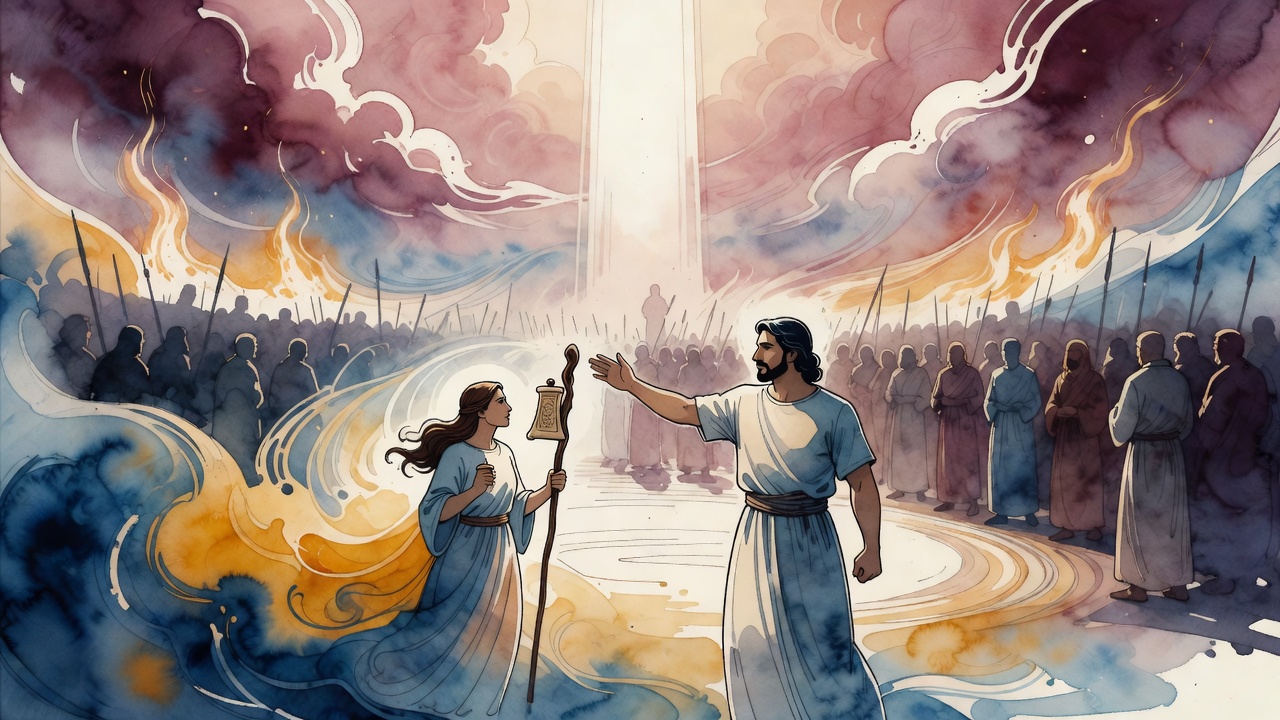
His roar carried four hundred parsangs. Hushim son of Dan heard it in Canaan and jumped. Egypt came close to turning over that afternoon.
