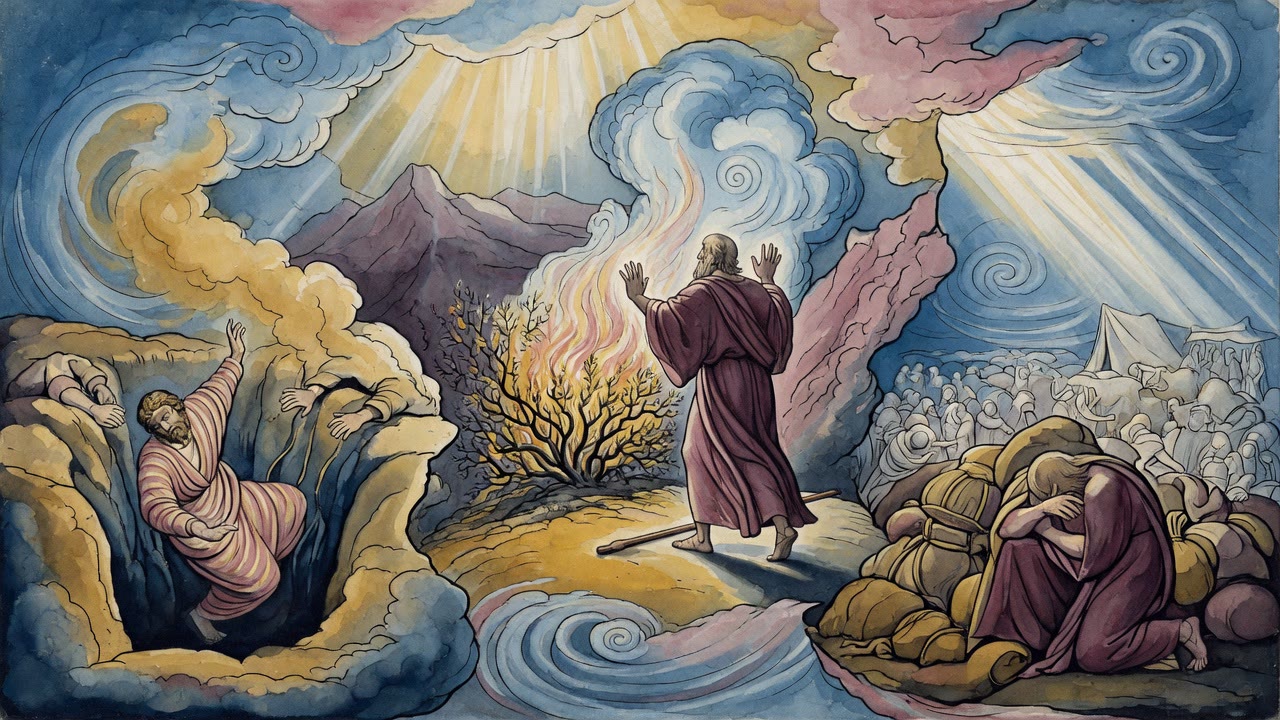
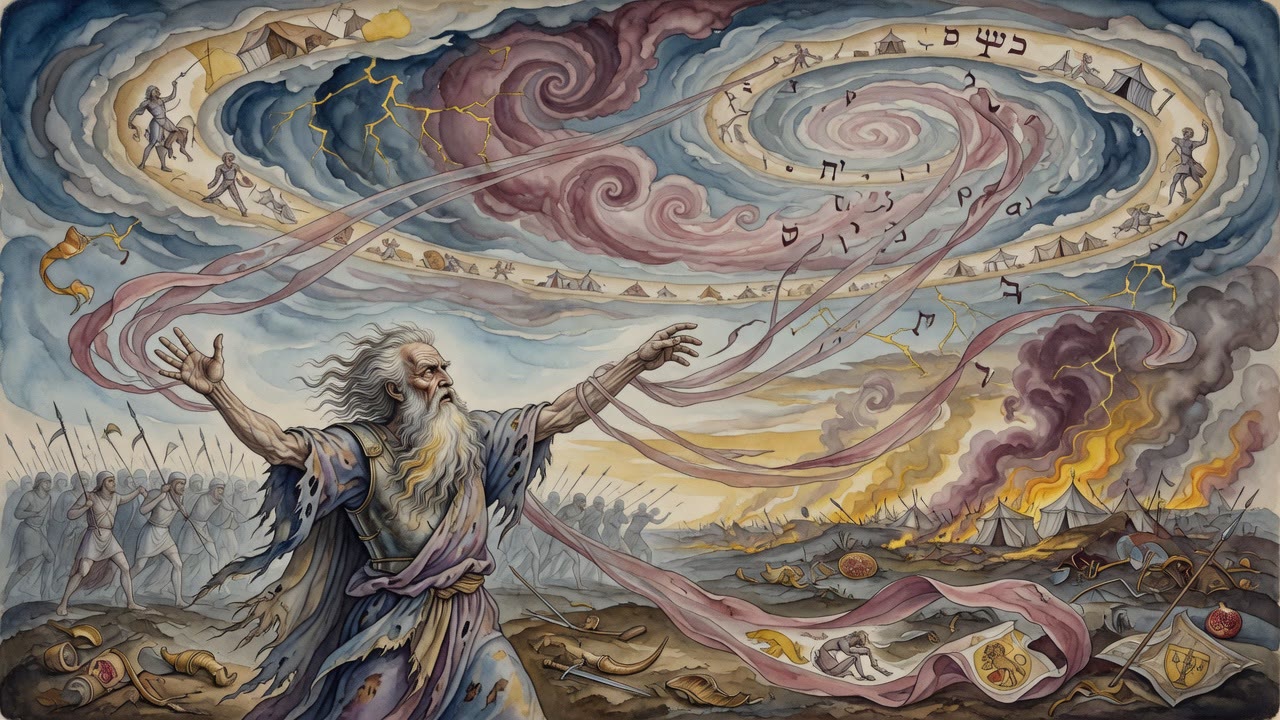
Moses Seated Joshua on the Golden Throne Against His Will
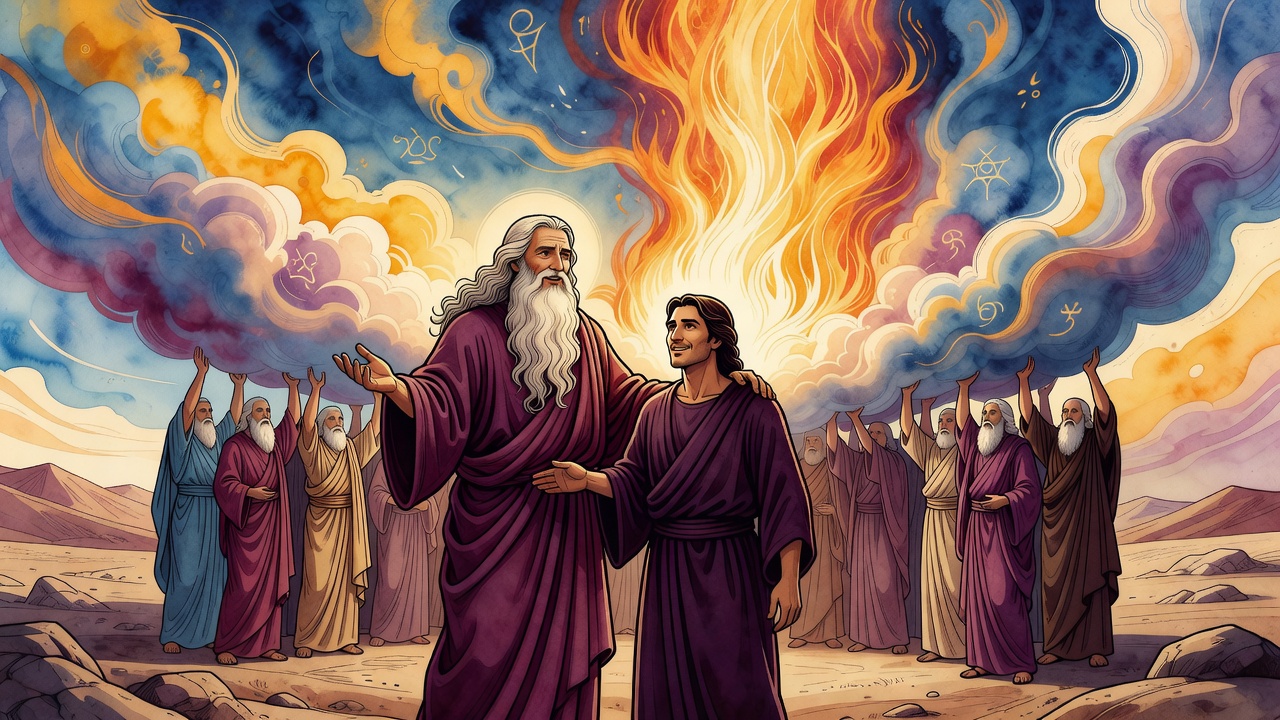
Moses lifted Joshua and set him between his knees so Israel would hear him teach. At the tent door he made the younger man walk out first.
Table of Contents
They told Moses the camp was waiting. Joshua stood inside the tent in the garments of the office, dressed and ready, and he did not want to go first.
 Click for full size
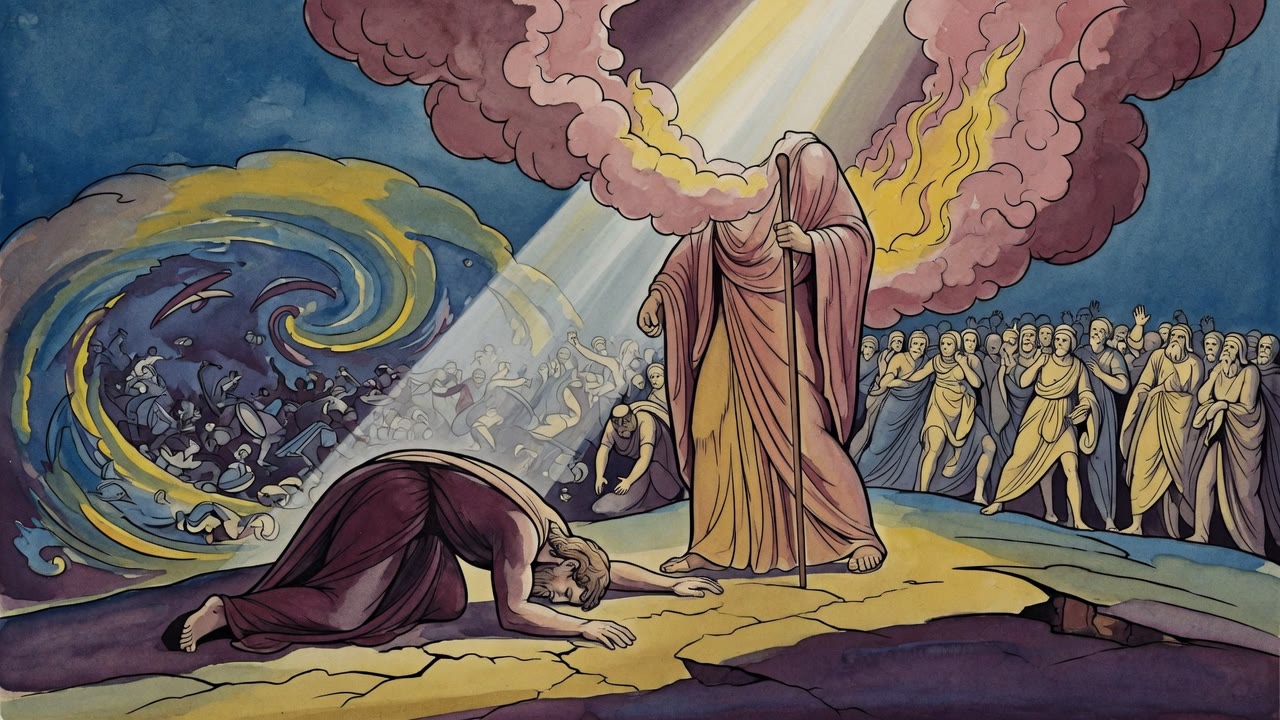
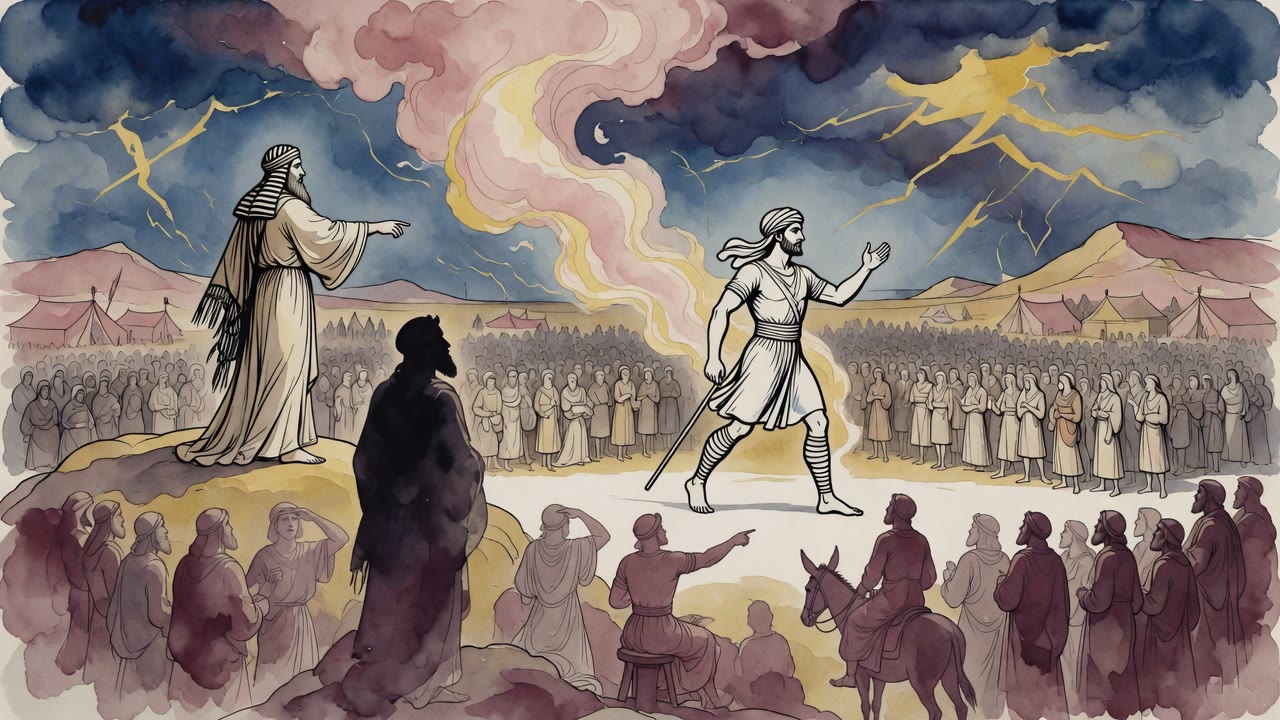
Moses laid his hand on him anyway and walked him toward the flap. When they stepped out, Moses put the younger man ahead of him, against Joshua's wish, and the whole of Israel saw the order of the door.
They trembled. They rose. They made room.
Take Him for Yourself
It had not begun at the door. God had said, "Take Joshua the son of Nun for yourself." Take him. A friend is not handed over like a staff. A friend is acquired with difficulty: you learn Scripture with him, you learn Mishnah with him, you eat with him, you drink with him, you tell him what you do not tell the camp.
Joshua had already been that friend. He had served Moses from his youth. He had stood at the tent when others were absent. When ten spies came back with a report that made Israel weep through the night, Joshua was one of two who stood against the current and said the land was worth taking. The taking God now commanded was of that man, not of a convenient deputy.
Moses had asked for a successor worth following. What he received was an order to seize a companion he already had, and to make the camp see it before he died.
Joshua Taught While Moses Still Lived
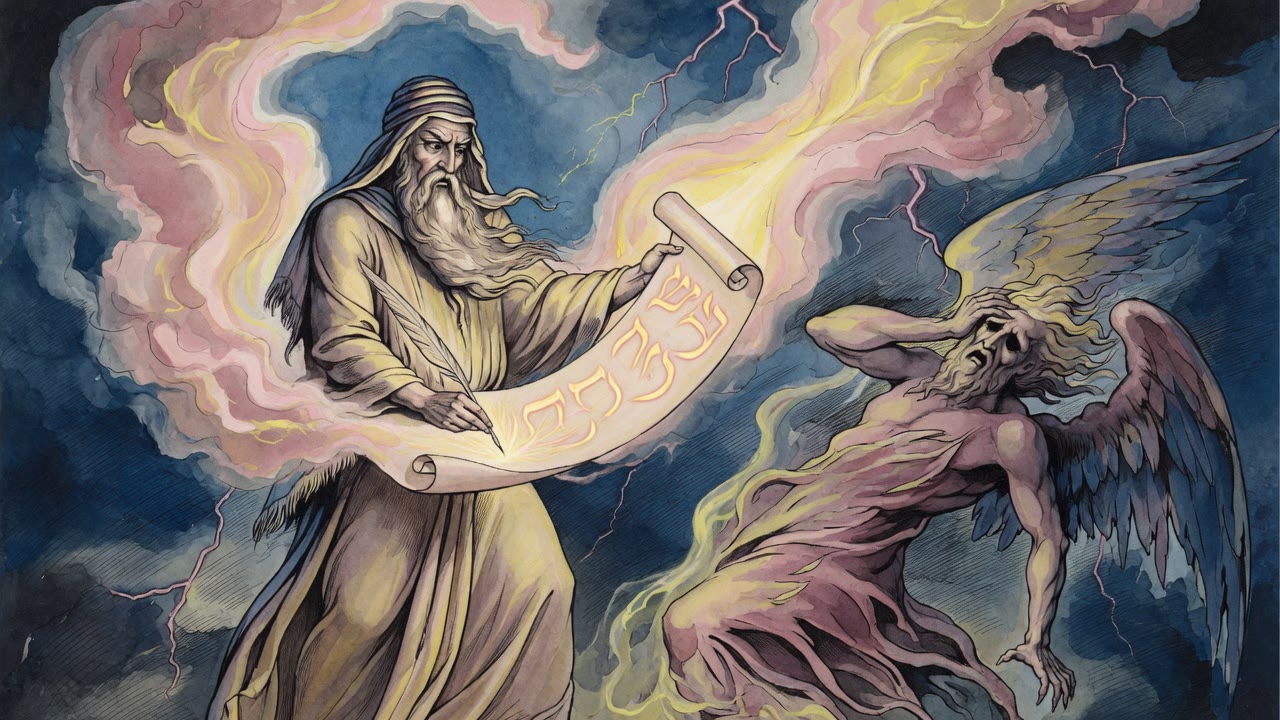
The Holy Spirit answered Moses with a practical fear. Set up an interpreter for Joshua. Have him ask, expound, and teach rulings in your lifetime, so Israel cannot say later, "In the life of your teacher you did not speak, and now you speak?"
Moses lifted Joshua off the ground and set him between his knees. Moses and Israel raised their heads to hear a voice that was not Moses's. The younger man taught while the older man was still in the room. That was the point. Authority that begins only at a grave is easy to refuse. Authority that has already been heard under the teacher's eyes is harder to call a sudden grab.
Joshua spoke. The camp listened because Moses had arranged the listening. Blessed is the Lord, they would say, who gave Torah to Israel by the hand of Moses our teacher. The hand was still on Joshua when the new voice started.
The Tent Door
When Joshua was completely dressed, the report came: all Israel awaited them. Moses laid his hand on Joshua to lead him out. He insisted on giving him precedence as they stepped forth. Joshua did not want it. Moses wanted the camp to see it more than he wanted Joshua to be comfortable inside it.
A man who has spoken with God face to face stepping aside at a tent flap is a kind of last lesson. The successor goes through first. The people watch the older back make room. If leadership is only a speech about courage, the door does not matter. If leadership is a body in front of other bodies, the door is the whole appointment.
Israel saw Joshua precede Moses and shook. They had crossed a sea with the older man. They had heard Torah with him. Now the one who went out first was the one who shone, as they would later say, like the moon beside the sun. The light was real. It was also received.
The Golden Throne
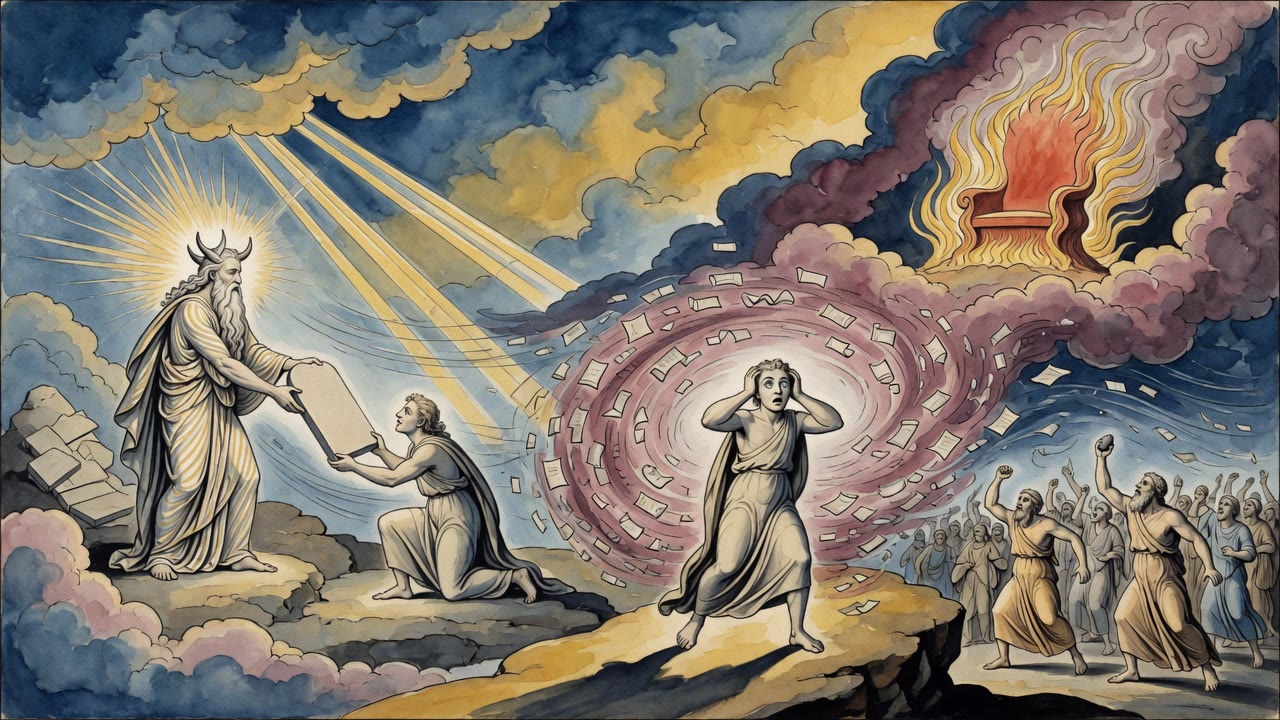
They made a path to the place of the great, where the golden throne stood. Moses seated Joshua on it against his will. All Israel burst into tears. Joshua said, amid tears, "Why all this greatness and honor to me?"
He asked it while sitting where he had not asked to sit. Moses did not take the question back. The honor was the work. The work had already started between Moses's knees, in a voice the camp had been forced to hear while the teacher could still correct it.
Joshua would go out before them because Moses had already put him out before them, through a flap, onto a throne, into a teaching hour that belonged to both of them. The weeping was honest. A generation was being asked to follow a man who had not wanted the first step, and who asked, in public, why the chair was his.
Moses did not answer with a theory of command. He had already answered with his hand on Joshua's back, and with the older body taking the second place at the door.
← All myths