Joshua Stopped the Sun Because Moses Taught Him How
When Joshua commanded the sun to stand still, the rabbis said every power he had came from Moses. The moon was still the moon. Its light was borrowed.
Table of Contents
 Click for full size
Sun, Stand Still
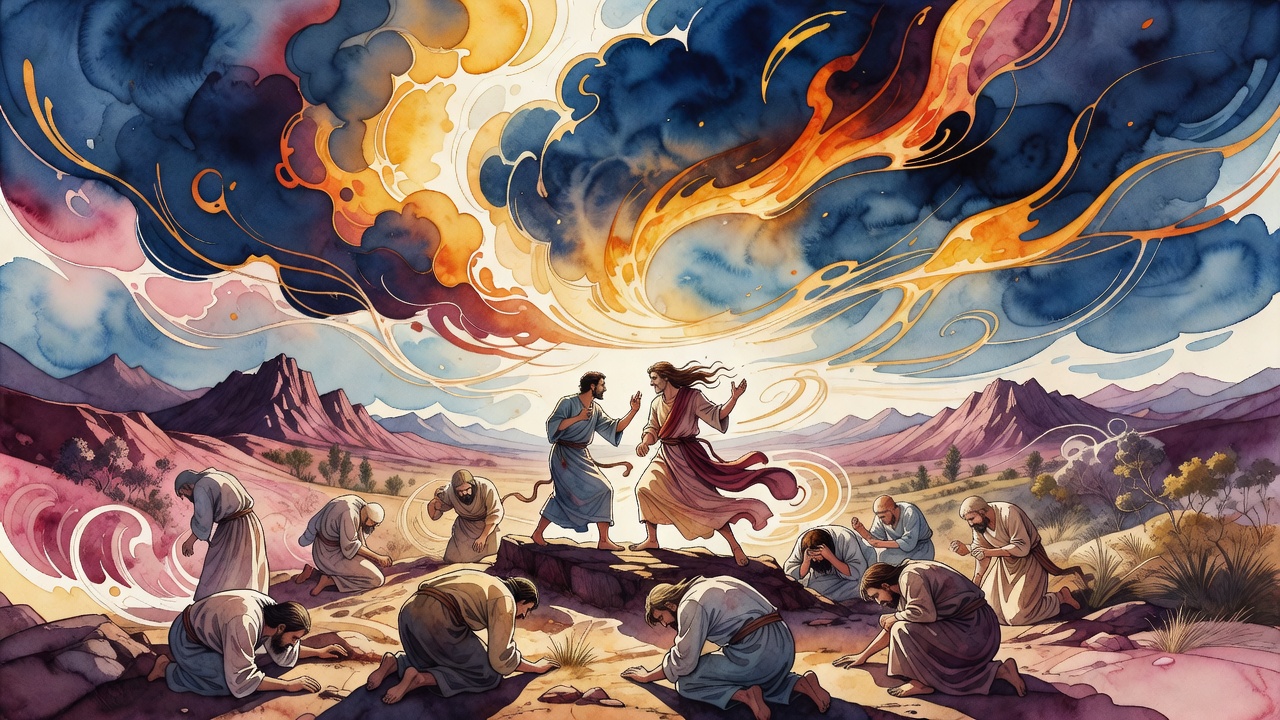
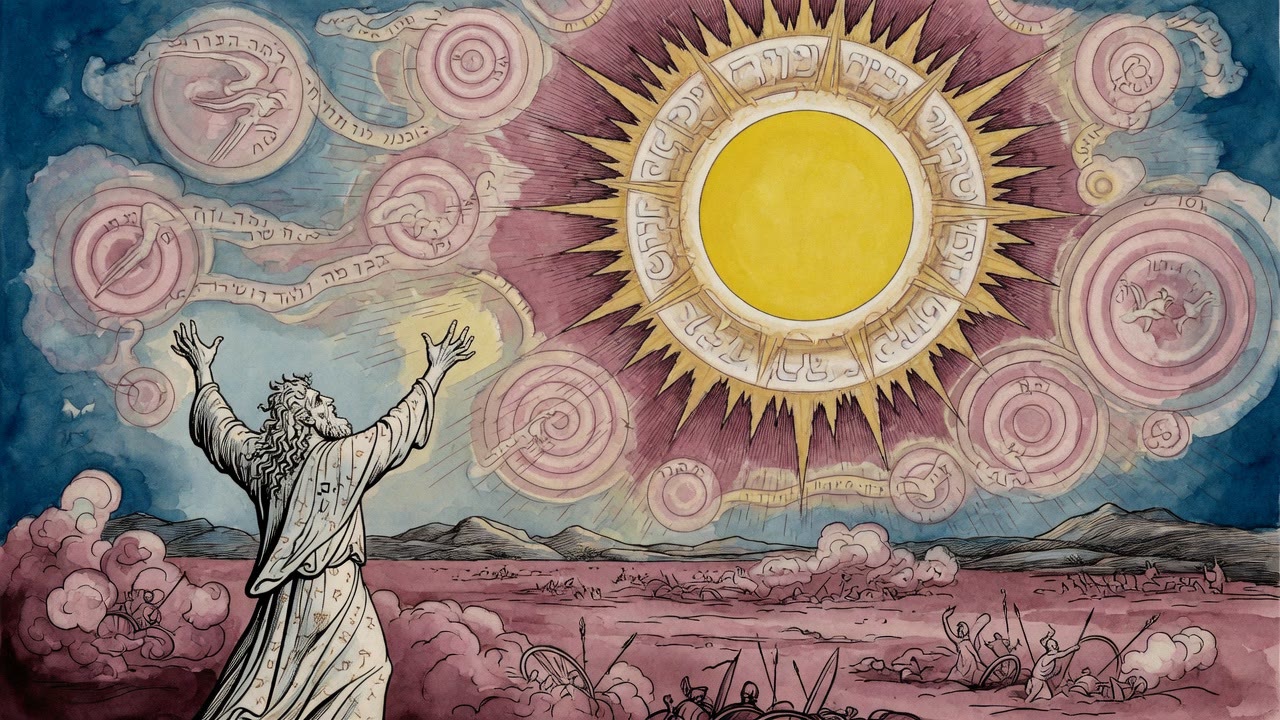
Joshua was in the middle of a battle and needed more daylight. He said: sun, stand still at Gibeon. Moon, in the Valley of Aijalon. The sun stopped in the middle of the sky and did not set for roughly a full day while Israel finished its fight against the five Amorite kings.
Nobody in the ancient world seems to have doubted that this happened. What the rabbis debated was what kind of man could give that order and be obeyed. The answer they gave was not, primarily, flattering to Joshua in isolation.
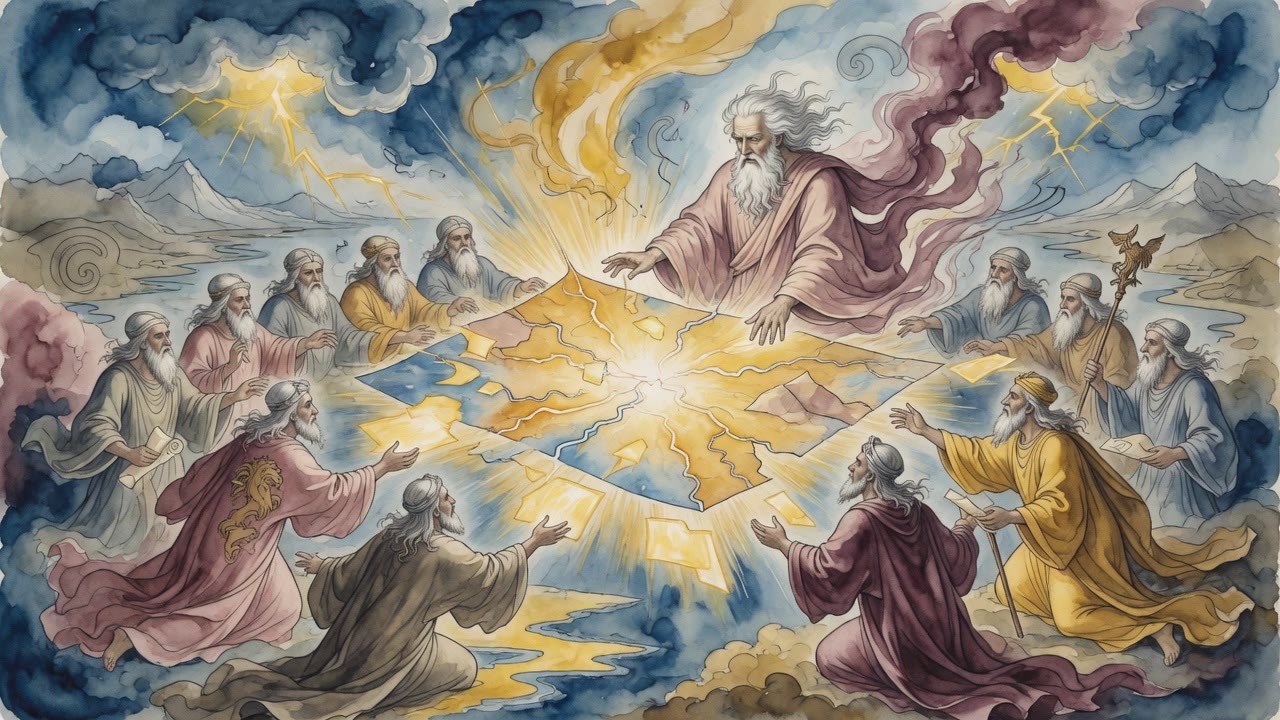
Moses was like the sun. Joshua was like the moon. The moon is not dim - it lights the night well enough to travel by, well enough to see faces - but its light is not its own. It reflects what the sun gives it. Joshua's power to command creation came entirely from what Moses had transmitted to him when Moses laid his hands on Joshua before the entire assembly of Israel and said: I am conferring a portion of my honor upon him.
What Forty Days on the Mountain Did
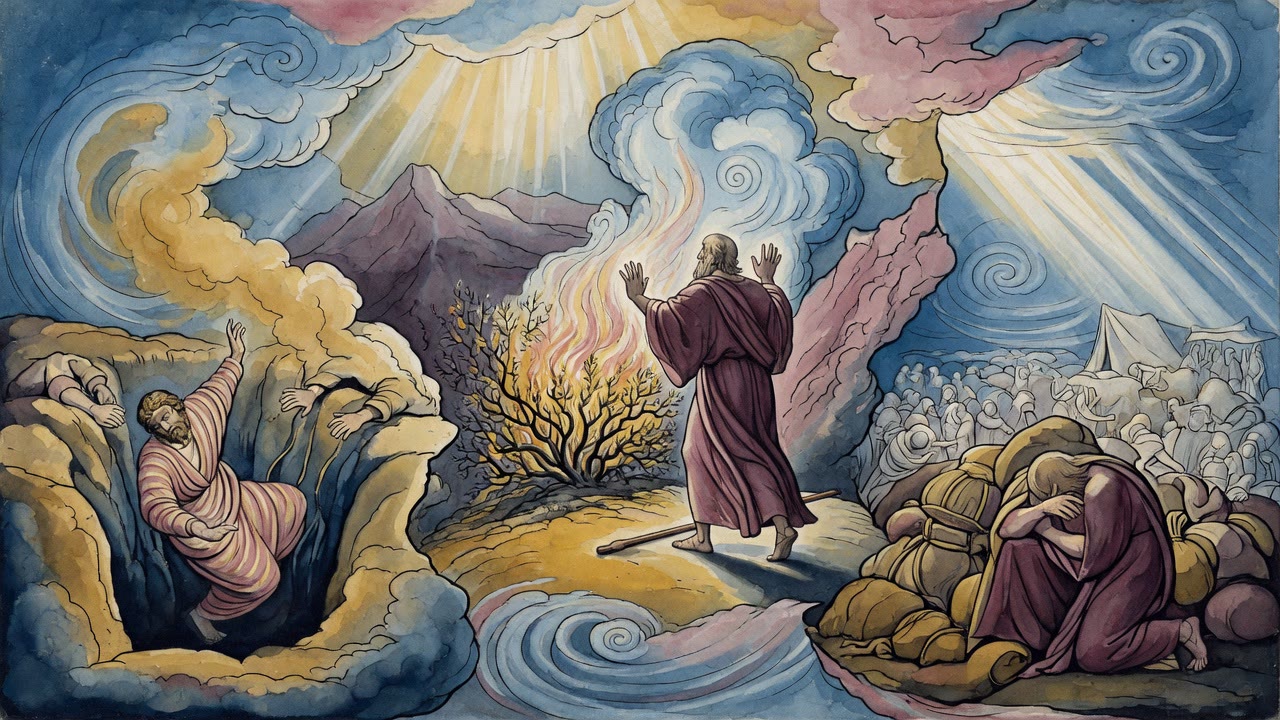
When Moses went up to receive the Torah at Sinai, Joshua waited on the mountainside. Not at the base, where the people were. On the mountain, below the summit, for forty days and forty nights, keeping watch. He heard nothing. He had no food, no water, no instruction about what was happening above him. He waited.
When Moses came down carrying the broken tablets, Joshua was still there. He heard the noise from the camp below and said to Moses: there is the sound of war. Moses, who already knew, answered: that is not the sound of victory and not the sound of defeat. That is the sound of something else entirely. He had learned, in forty days on a mountain with nothing but God's silence, to distinguish between the different acoustics of human failure.
This is what Moses transmitted to Joshua along with the portion of his honor: the capacity to hear the difference between sounds that look the same from a distance. Forty days of waiting had trained something into Moses that he could hand on, though not teach directly. Joshua had spent his life near Moses, absorbing the quality of attention that proximity to that kind of man makes possible.
The Name That Was a Prophecy
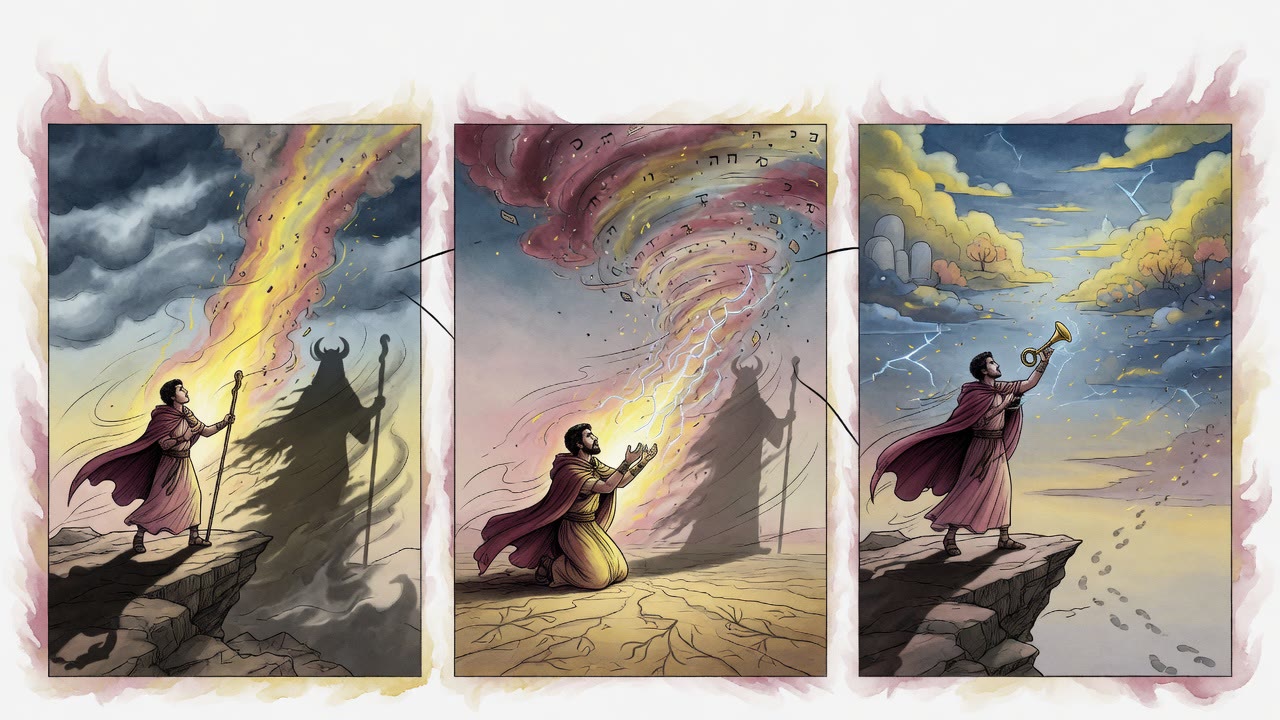
Ginzberg's Legends of the Jews, drawing on the same midrashic traditions that produced the Joshua material in Legends, records that Joshua's name contained its own prediction. Moses changed his name from Hoshea to Yehoshua before sending him with the other spies into Canaan - a prayer embedded in a name, a plea that God would protect him from the false report the other spies would bring back. The name worked. Of twelve spies sent into the land, ten brought a report that paralyzed Israel for forty years. Two held their ground: Caleb, who spoke what he felt in his heart, and Joshua, whose name had been changed before he went.
The ten whose names were given in the Torah were named, the rabbis said, in accordance with their wicked actions. Their names became records of their failure. Joshua's name became a record of what prayer can do when it is placed inside language and sent ahead of a man into danger.
The Sun That Had Already Been Stopped
Before the battle at Gibeon, Moses had also stopped the sun. At the battle of the Arnon, fighting against Sihon, Moses commanded the sun to hold still while Israel fought. Joshua was not present for every miracle Moses performed - he was still a subordinate, still a student - but the tradition understood that watching Moses do what Moses did was itself a form of instruction. When Joshua told the sun to stop over Gibeon, he was not discovering a power. He was exercising something that had been demonstrated for him, extended into him by the laying on of hands, trained into him by forty days on a mountain and decades in Moses's shadow.
← All myths