Simon Shadowed Tryphon Until Snow Closed the Road to Jerusalem
Jonathan was still alive in Tryphon's camp when the price arrived. Simon paid anyway. Snow, not swords, shut the last road to Jerusalem.
Table of Contents
 Click for full size
Tryphon Came to Destroy
Tryphon did not hide the plan. He was going to invade Judea and wreck it. He already held Jonathan Maccabee in ward, a living brother used as a key. A hostage only works if the other side still thinks a door might open. Tryphon's door was already shut.
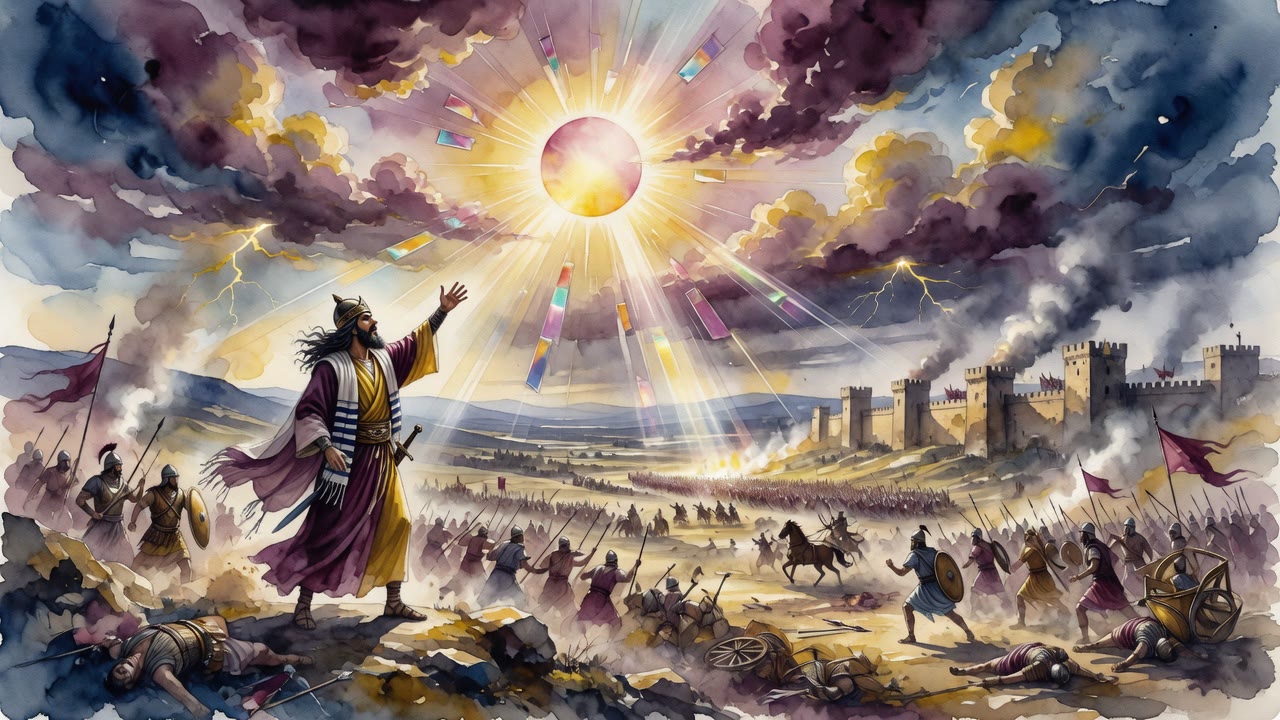
He came down from Ptolemais with a great force and turned toward Adora, feeling for a seam. Simon did not wait behind a wall. He marched against Tryphon in every place Tryphon went. Ridge for ridge. Camp for camp. Villages on the hills watched a Jewish commander who treated presence itself as a weapon.
Jonathan was still breathing in that column. Simon knew the breath might not last the month.
Wherever He Turned
Tryphon rode toward the Jordan. Simon was already there. Tryphon circled toward Adida, a fortified rise over against the plain. Simon pitched his tents at Adida and faced him. No single battle. No speech from a wall. Two armies grinding through the same country, one hunting a weak point, the other refusing to offer one.
The men in the tower in Jerusalem sent word. Come by the wilderness. Bring food. Hurry. Tryphon readied his horsemen to move that night.
Cold camps. Bad water. Officers guessing in the dark. Simon held the line together while his brother's life sat in another man's tent.
The Price at Adida
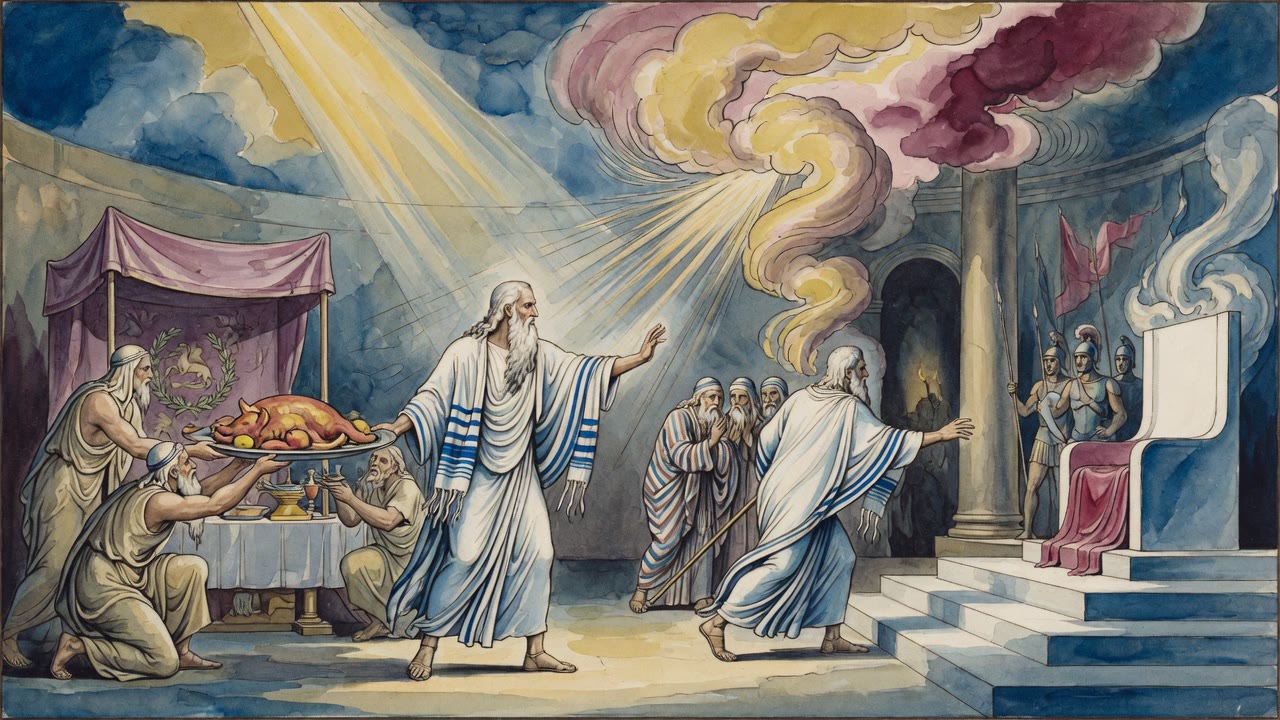
Messengers came with a voice that sounded almost polite. Jonathan is alive. He owes money to the king's treasury from the business put in his hands. Send a hundred talents of silver and two of Jonathan's sons as further surety, and the brother will be returned.
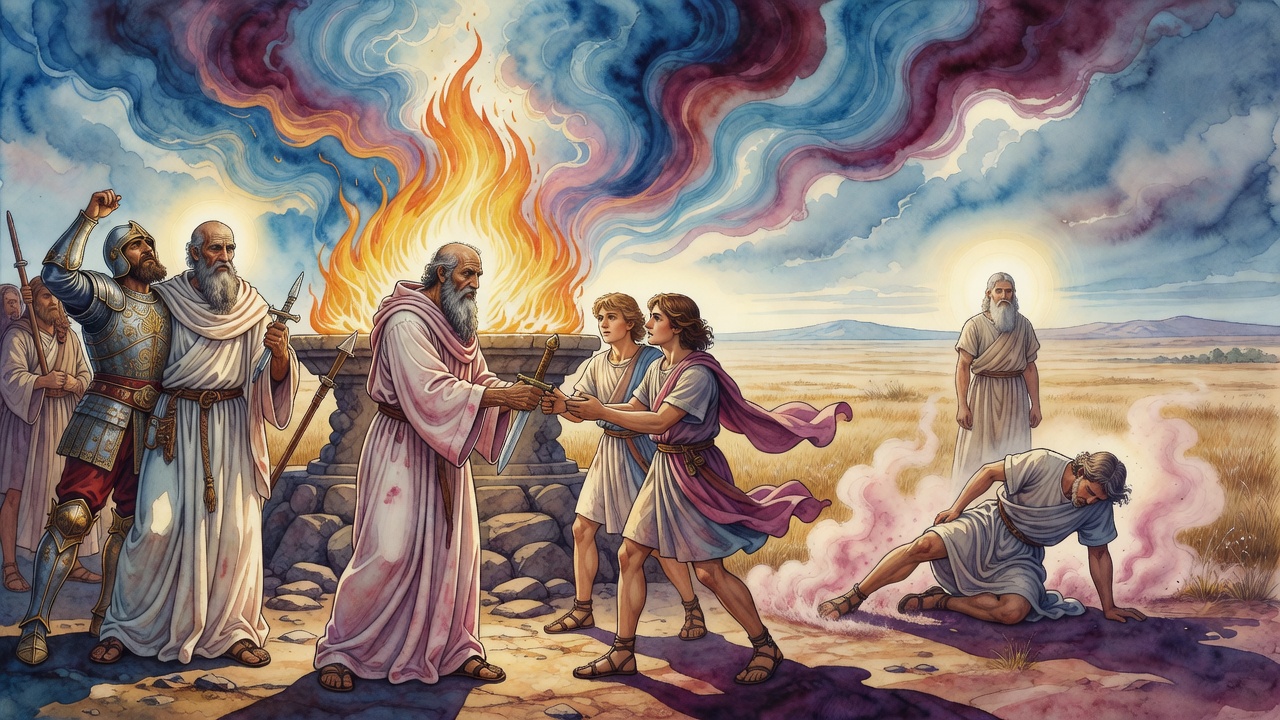
Simon knew the lie. He also knew the people. If he refused and Jonathan died, they would say he had been too hard. If he paid and Jonathan died, they would say he had been a fool. He sent the silver. He sent the two boys. He made the gift to a man who meant to kill his brother either way.
"Open the bags," he told the officers. "Send the sons. Do not wait for me to like it."
Tryphon took the money and the boys. He did not send Jonathan back.
Snow on the Road
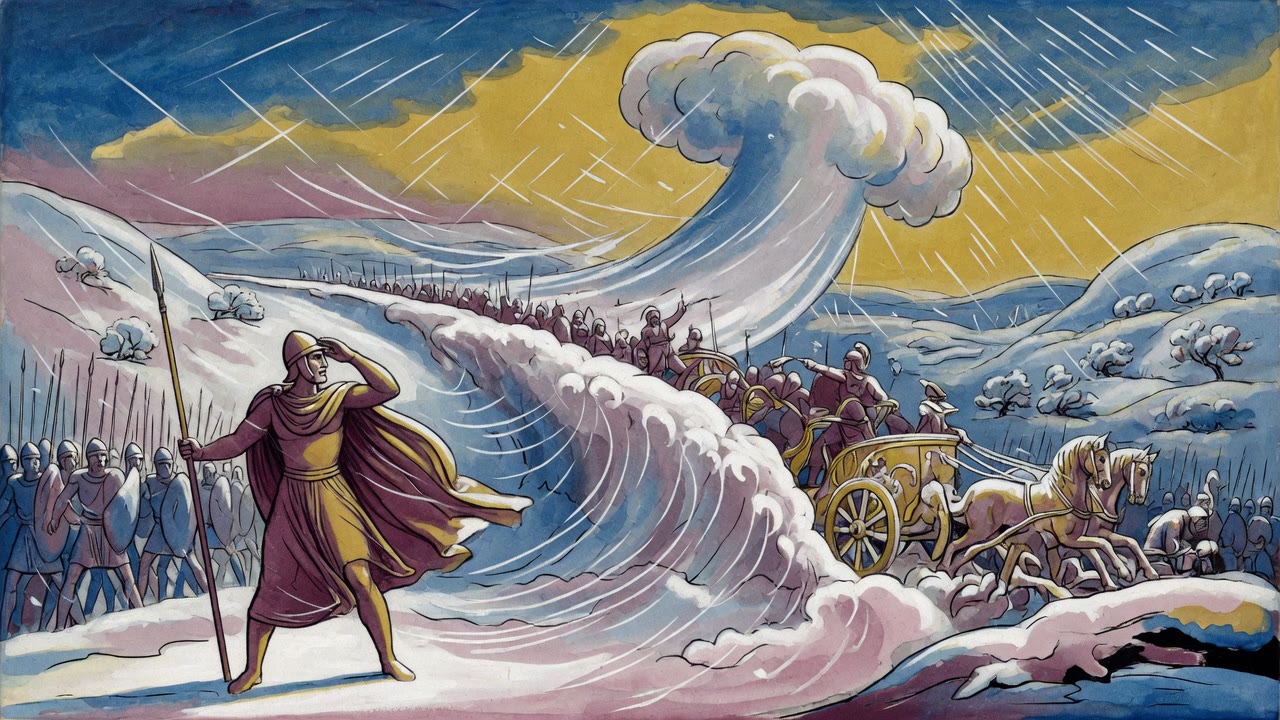
Before the killing, Tryphon made one more try at the interior. He turned the column toward Jerusalem. The road was open. Simon's force stood opposite him, but a night ride of horsemen can slip a seam if the weather holds.
The snow came down heavy. A very great snow, the kind that fills a pass and makes horses refuse. Tryphon's night ride did not happen. The army that had been threading ridges stood still. Simon had no command over winter. He only found himself on the right side of the one thing Tryphon could not bribe or outmarch.
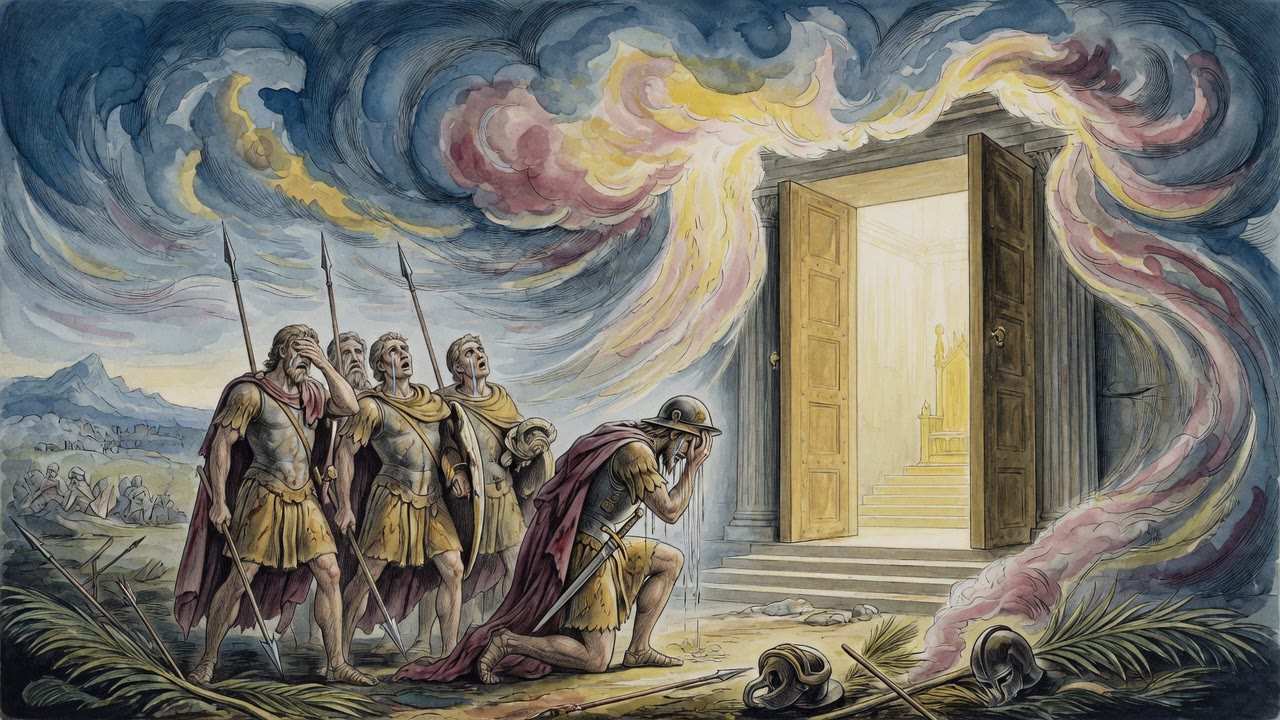
Tryphon withdrew into Gilead. There he had Jonathan killed. Simon received the body and buried him at Modin, in the family tomb where Mattathias already lay. Jerusalem was not taken. Snow had saved the city that swords had not yet been asked to save.
First Across the Brook
Years later the water was the problem. John, Simon's son, rose in the morning and went down into the plain with his men. A mighty host of foot and horse waited on the other side. A brook ran between them, wide enough that the people stopped at the bank and would not go over.
John looked at their faces. He did not give a speech about courage. He stepped into the water himself. Cold up the shin, then the knee. The men watched him reach the far stones. Then they crossed after him.
He divided them on the other bank, horsemen in the midst of the foot, because the enemy horse were many. Snow had once closed a road and kept a capital. Water had asked a Maccabee to go first, and a son had answered the way his father had answered Tryphon: by being there, in front, before anyone else agreed to move.
The body in Modin did not get up. The road to Jerusalem stayed Jewish that winter because weather had a will, and because one family kept standing in the gap the weather opened.
← All myths