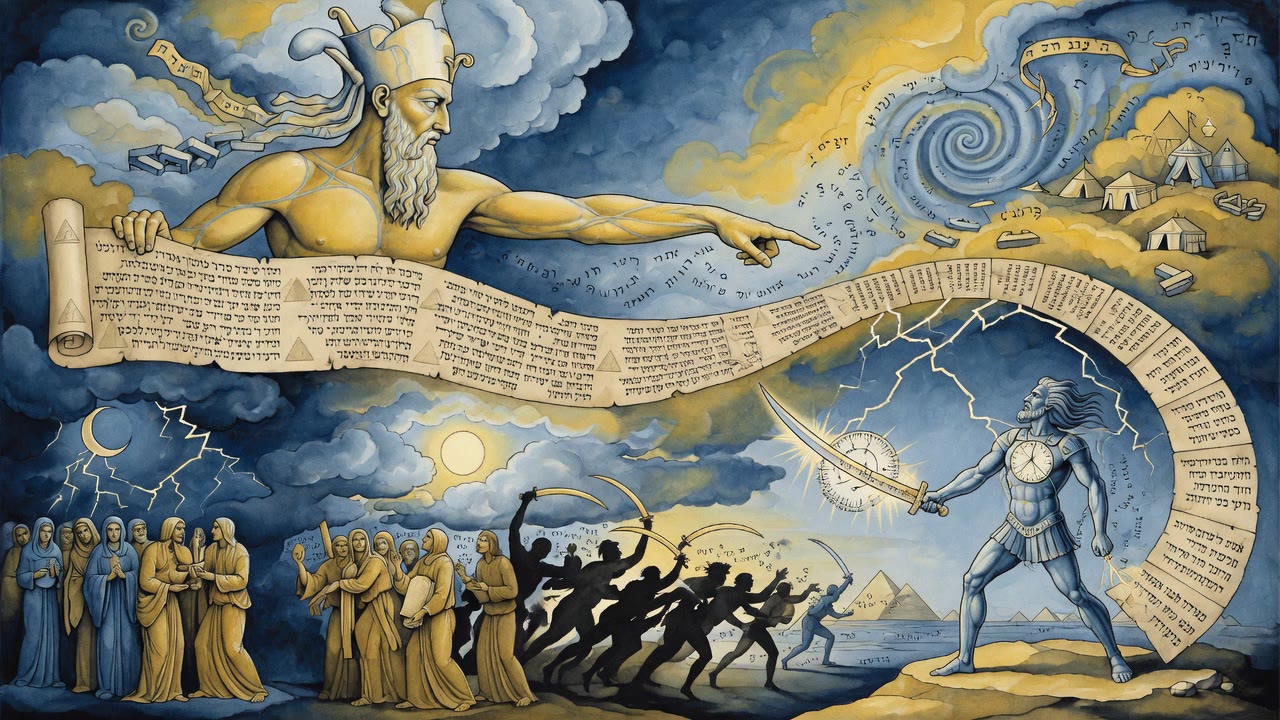
Joshua Fought Amalek, Then Tried to Imprison Two Prophets
Moses called him an equal and sent him downhill. Later two men said Moses would die in the desert. Joshua wanted them locked away.
 Click for full size
Leave the Cloud
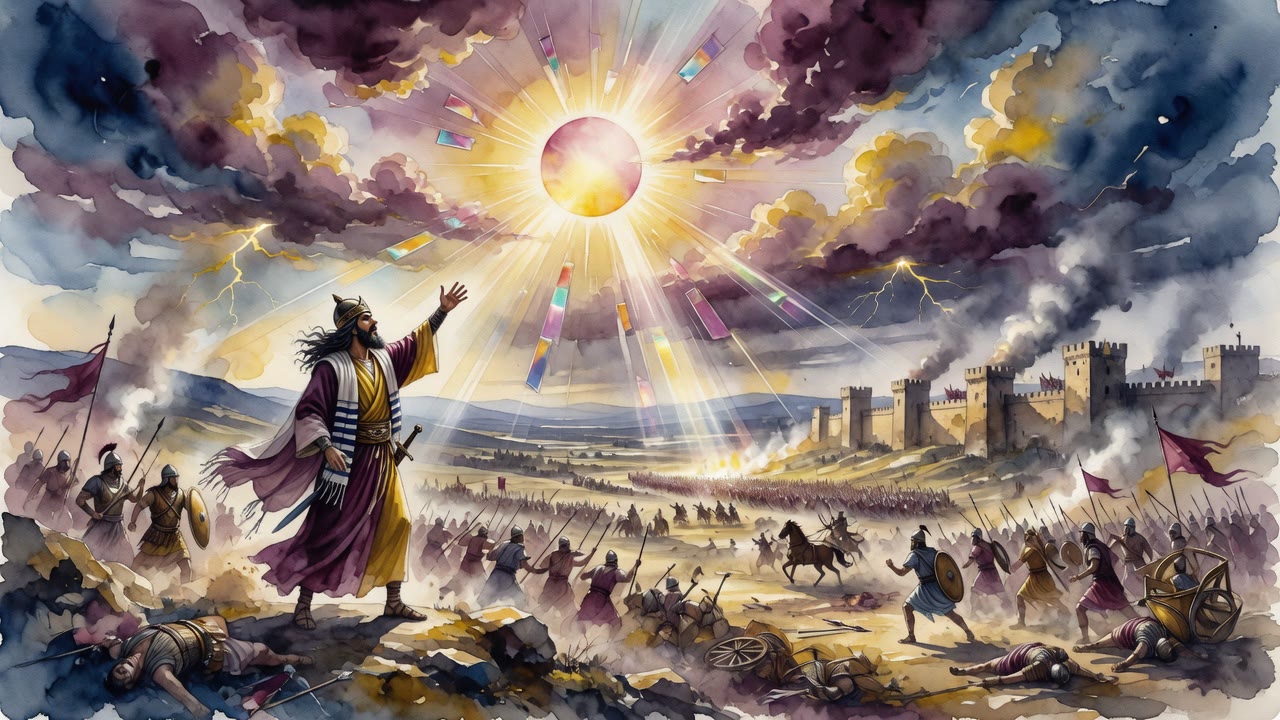
Moses did not say "Go fight." He said, "Choose us out men, and go out, fight with Amalek" (Exodus 17:9).
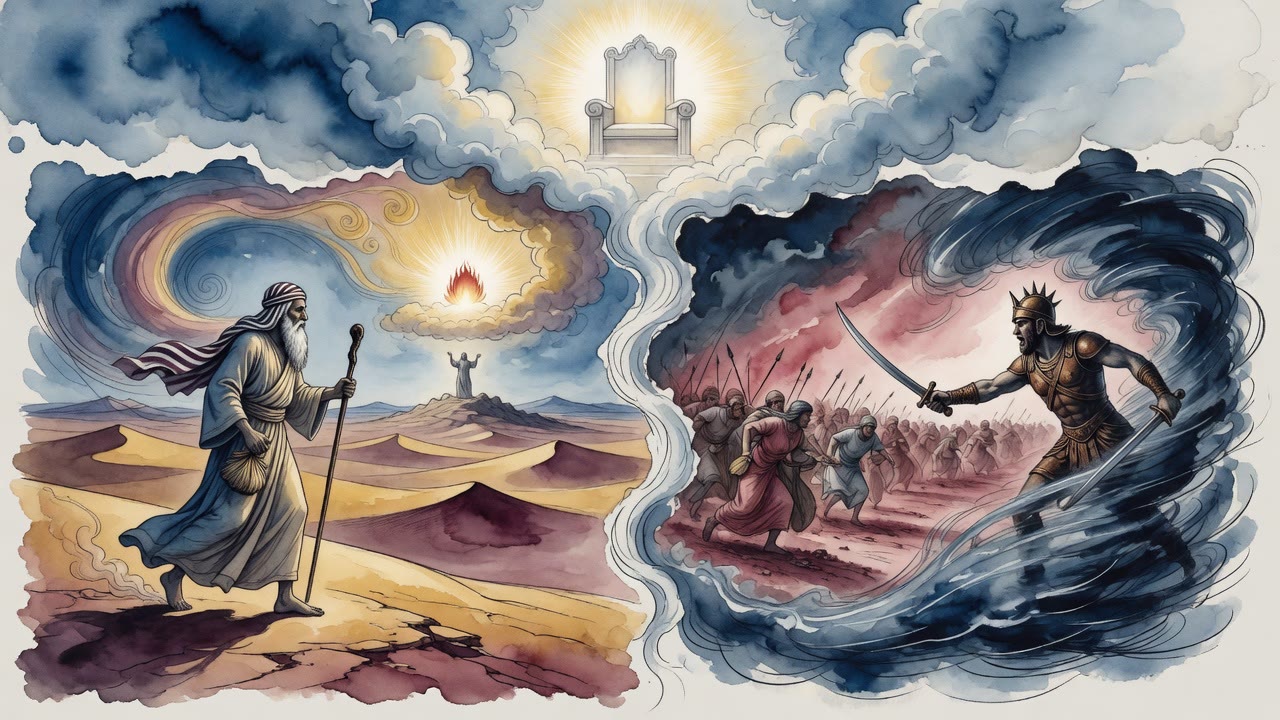
That us put the student beside the teacher. Joshua heard it. He also heard the rest of the charge, the part that did not sound like honor. Leave the cloud. The pillar that had covered the camp would not follow him into the valley. If he ever hoped to set a crown on his head, he had to walk out from under it.
He did not want to. Amalek had already cut down the stragglers at the rear, the tired, the ones the desert had half-claimed (Deuteronomy 25:18). Joshua stood a moment longer in the shade of the cloud, where no arrow reached. Then he chose the men who feared sin, and went down toward Rephidim.
Arms Over the Valley
On the hill, Aaron and Hur found a stone for Moses to sit on. Moses raised his arms. In the valley the line held. When the arms dropped, Amalek came on. Joshua felt the push in his shoulders before he understood it. The men around him slipped. He drove them forward again. So Aaron and Hur stood on either side of Moses and held the arms up until the sun went down (Exodus 17:11-13).
Joshua's sword did the work he could see. Moses's arms did the work he could not. He came back having won, and the win had two names on it. The fear had gone somewhere. It had gone into the downhill walk, and it had not left him.
Imprison Them
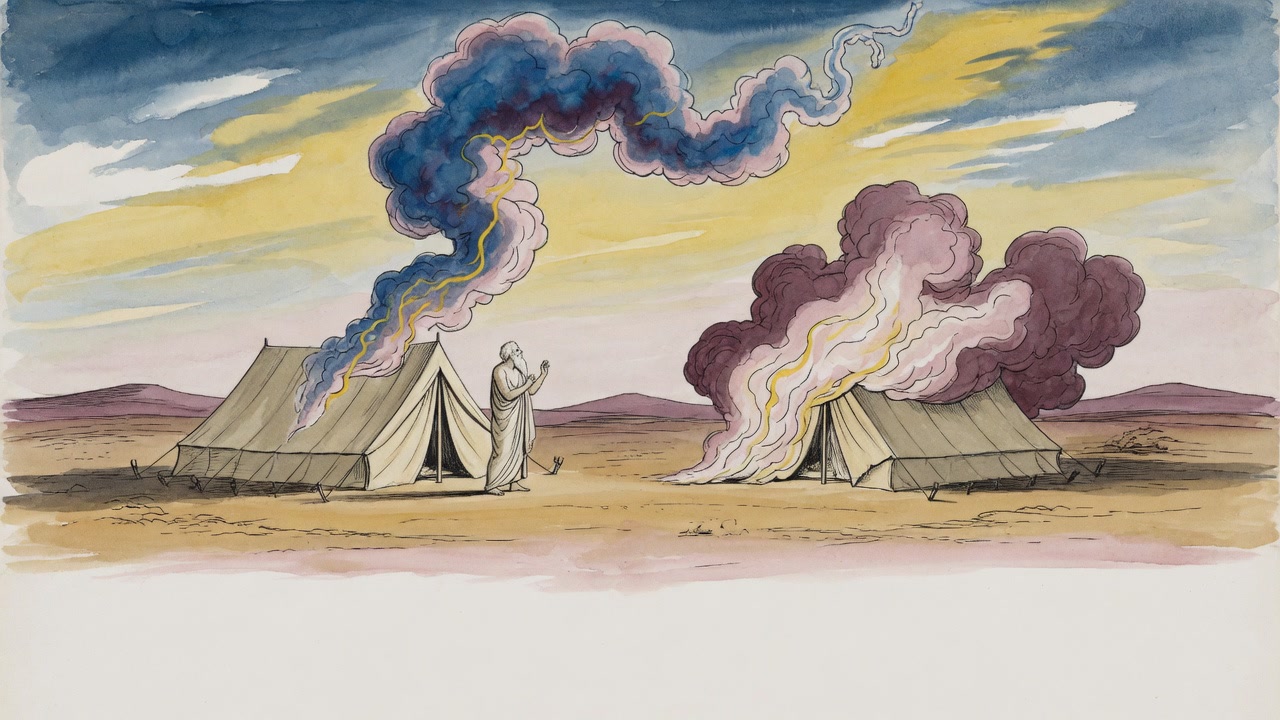
Months later a noise ran through the tents. Eldad and Medad were prophesying in the camp, not at the appointed place outside it. Gershon, Moses's son, ran to his father with the news. Joshua was standing there when the words arrived. Moses would die in the desert. Joshua would stand in his place.
He heard his own name in the prophecy and his mouth went dry. The crown Moses had named as the price of leaving the cloud was being announced in the open, by two men who had not been asked.
"My lord Moses," Joshua said, "imprison them."
He did not call them liars. He wanted the true thing shut in. Two mouths had just named a world in which Moses was gone and the leader's place sat empty for Joshua, and some part of him could not hold it. The same man who had feared leaving the cloud now feared stepping into the space the cloud would leave.
Moses looked at him. "Are you jealous for my sake?" (Numbers 11:29). He was not angry. He was naming the flinch. "Would that all the Lord's people were prophets." He wanted more voices, not fewer. He did not begrudge Joshua the future. He wished him honored as he had been, and all Israel honored like him. Joshua stood and listened. The two men kept speaking. Nobody locked them away.
The Stone for Judah Went Dark
Years on, after the Jordan, Israel broke against Ai and men died. Joshua fell on his face and asked why (Joshua 7:6). Get up, came the answer. There is sin in the camp. Hidden spoil from Jericho. Find the man.
God would not name him. God was no tale-bearer. A guilty mouth had to be found by human work.
Joshua called the high priest out of the assembly. Eleven stones in the breastplate still gleamed. The stone for Judah had gone dim. The lot ran from tribe to clan to house, and it stopped on Achan.
Achan would not bow to it. "Among all living men, you and Phinehas are the most pious," he said. "If lots were cast on you two, one of you would come up guilty. Moses has been dead scarcely a month, and you have already forgotten. A man's guilt is proved by two witnesses."
Joshua held the line. The process was not on trial. The stone had gone dark. The lot had fallen. Achan was the name.
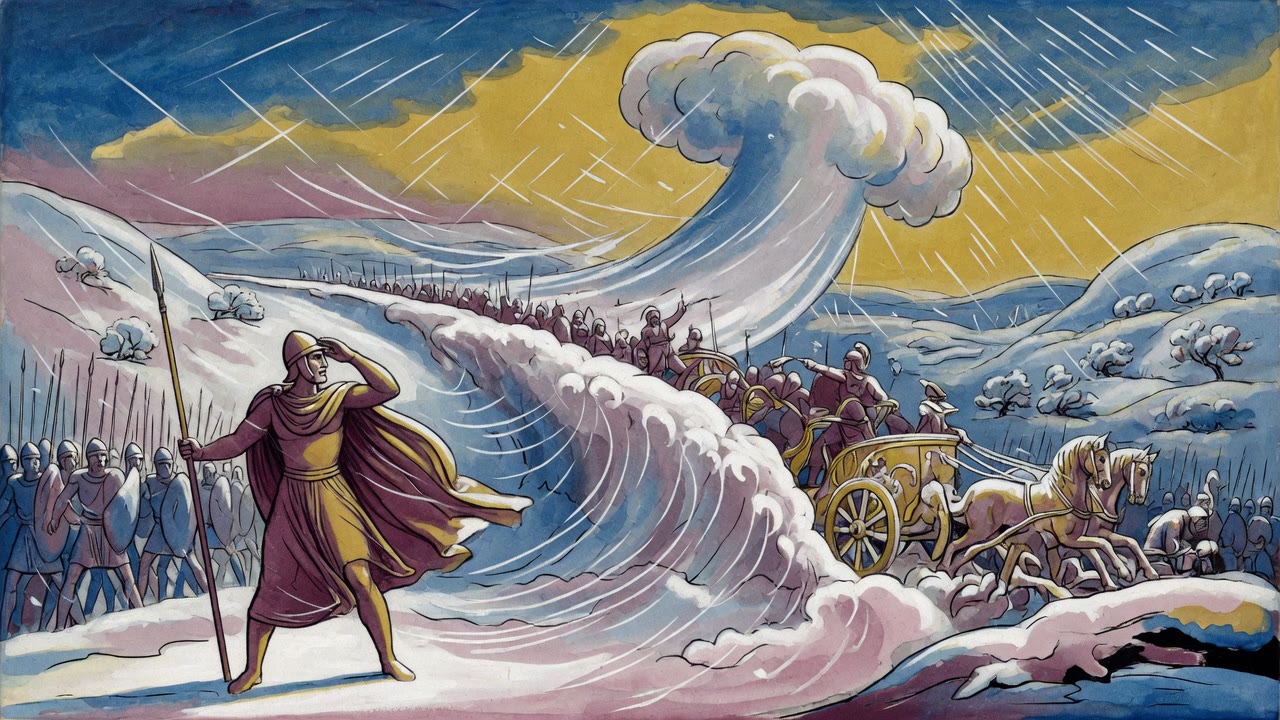
The man who had been afraid to leave the cloud, who had tried to jail a prophecy about his own life, who had to hunt a sinner without a finger pointed from heaven, that man later stood in the Jordan while the water stood up in a heap (Joshua 3:17). The shaking had somewhere to go. It went into the work.
← All myths