Judah Maccabee Fought Four Generals With a Dead Man's Sword
Judah Maccabee defeated four Seleucid generals in sequence, each time outnumbered. After the first battle he took Apollonius's sword and never put it down.
Table of Contents
 Click for full size
The First General and the Sword
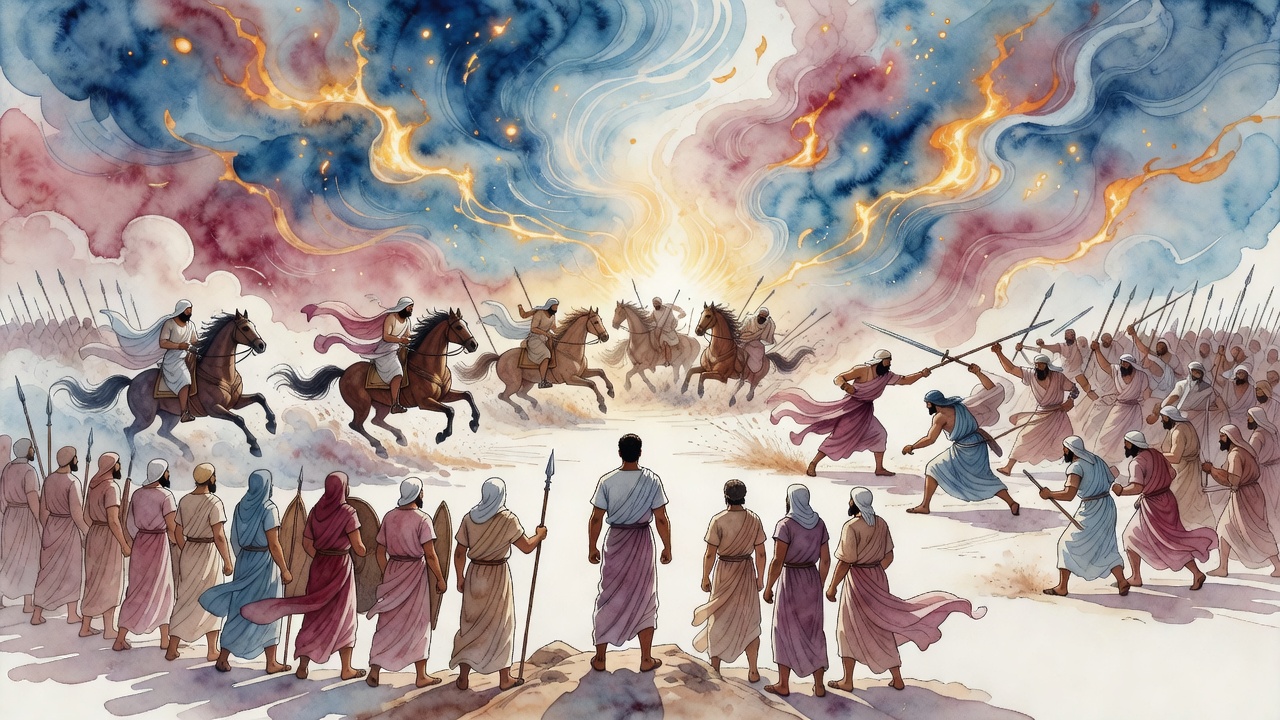
Apollonius came with a large and strong multitude of Macedonian warriors. He assembled his forces with the confidence of a man who understood the arithmetic: a professional army against a band of farmers and priests with slings and farm tools, in the mountains of Judea. The arithmetic was wrong.
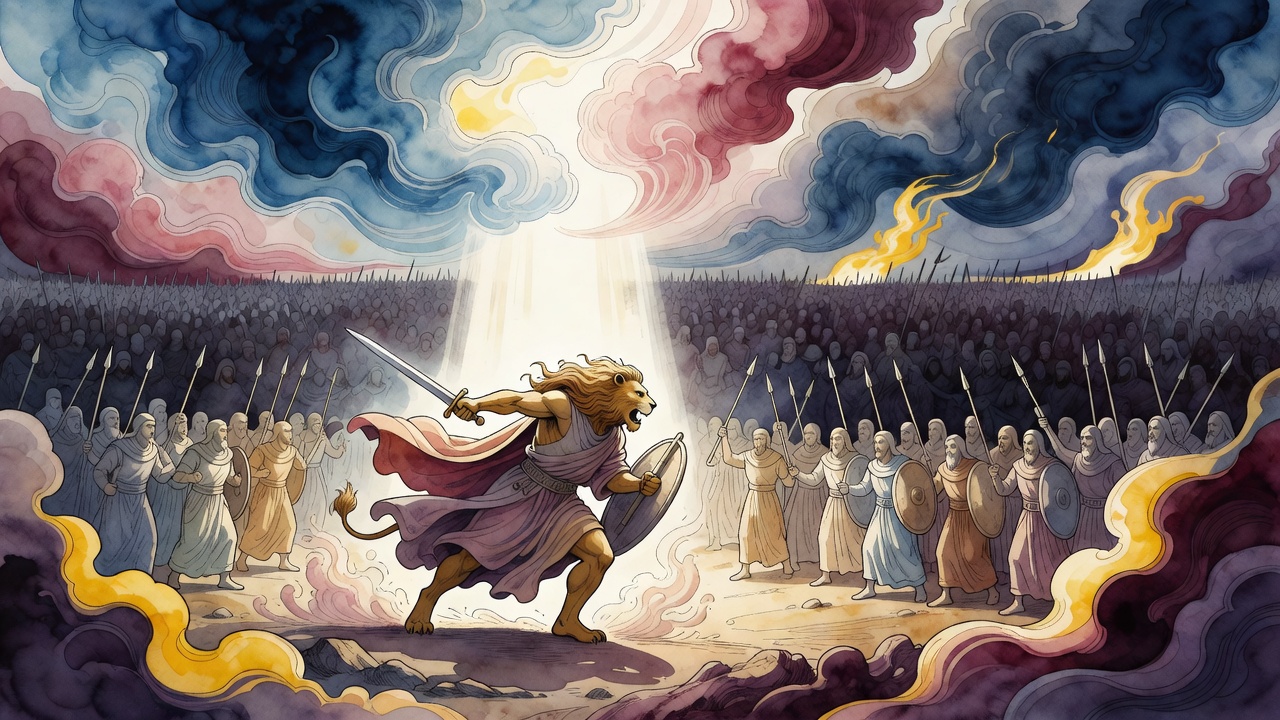
Judah went out to meet Apollonius and cut through the Greek formation directly toward the commander. He reached Apollonius and struck him down. The Macedonians fled. The pursuit was total. Then Judah bent down and picked up Apollonius's sword.
He kept it. He fought with that sword for the rest of the war, and every man in the Maccabean force knew whose sword it had been. The weapon of the first general who came against them was now in the hand of their own commander, and it did not stay at home.
Seron and the Mountain Pass
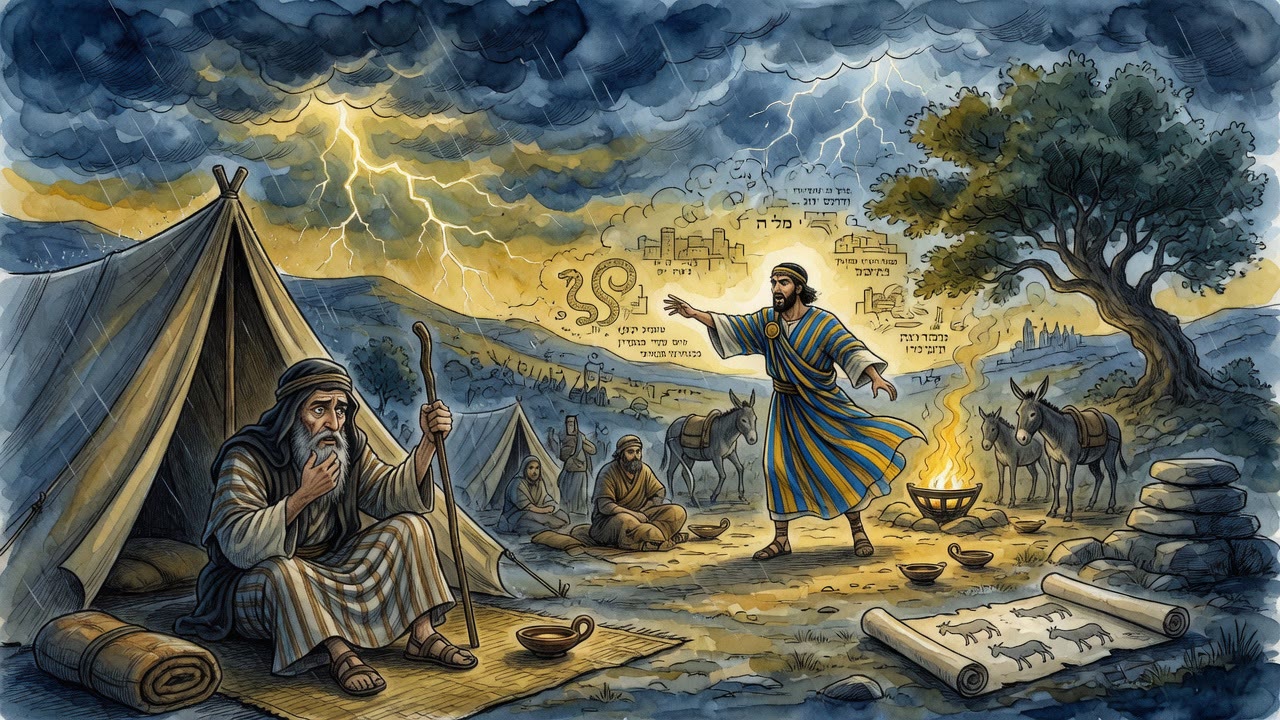
Seron, commander of the Syrian forces, had heard about Apollonius. He decided to make his name by finishing what Apollonius had started. He assembled a large army and marched toward Judea. Judah's men looked at the Syrian columns coming through the pass at Beth-horon and said to their leader: how are we to fight these numbers? We are few, we are hungry, we have not eaten today.
Judah told them: a multitude can be shut up in the hands of a few. Heaven does not save by many or by few. We fight in our lives and in our laws. God himself will shatter them before our faces. Do not be afraid.
The Maccabees descended on the Syrians in the pass at Beth-horon. Eight hundred of Seron's men were killed. Seron fled with the rest, back down the mountain.
Nicanor, Gorgias, and the Empty Camp
Ptolemy, son of Dorymenes, sent Nicanor and Gorgias next. Gorgias understood night operations and flanking tactics. He took five thousand infantry and a thousand cavalry and went around the mountain at night to strike the Maccabean camp from the rear. Judah had moved. By the time Gorgias arrived at the empty camp, Judah's force had already attacked Nicanor's main body in the valley below, routed it, and scattered it across the plain as far as Gazara. Gorgias came down from the mountain to find his colleague's army already destroyed.
He fled back to Philistia with what he had brought.
What the Victories Were For
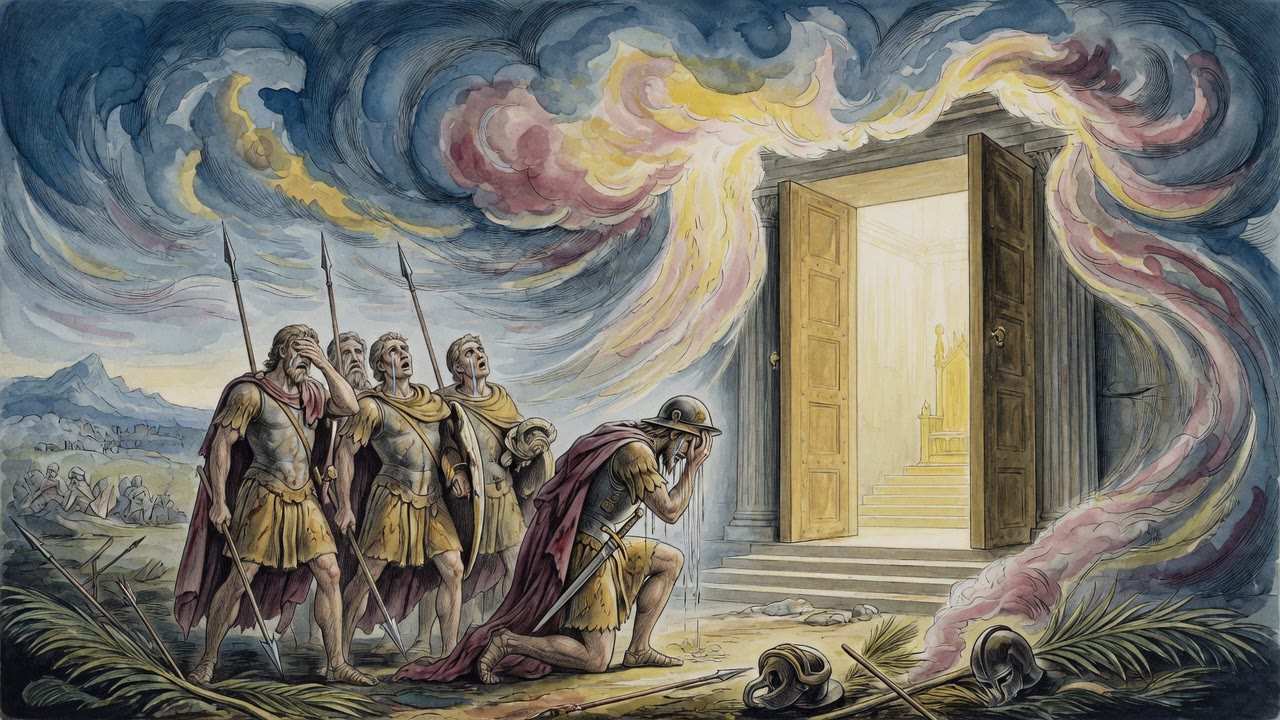
Judah gathered the plunder and brought it back to Mizpeh, and the ancient account records that they prayed and sang and gave thanks, and the prayer was the same before every battle: it is better for us to die in battle than to look on the miseries of our people and the profanation of the holy place.
Four generals defeated. The Temple not yet taken back. The war not yet over. But the Maccabean force had beaten four different armies in four separate engagements, each time smaller in number, each time on ground they knew better than their opponents. Judah still carried Apollonius's sword. He had not yet found a reason to put it down.
What They Prayed Before Each Battle
The prayers before the engagements with Seron and with Nicanor and Gorgias follow the same structure as the prayer before Apollonius: an acknowledgment that the numbers are against them, a statement about what they are fighting for, and a request that God fight with them. The Maccabean force did not pray for miraculous intervention, exactly. They prayed for the ordinary outcome of courage meeting faith: that the will to fight for the right thing, combined with the willingness to accept death if that was the result, would be enough. What the victories proved, in the tradition's reading, was not that God made exceptions to the rules of warfare for the Maccabees but that the rules of warfare, correctly understood, always favored the side whose cause was just and whose fighters were willing to die for it rather than fight for personal advantage. The four generals died for Antiochus's convenience. Judah's men were willing to die for the Temple. That was the difference, and it showed up in the outcomes.
← All myths