Eleazar Died Under the Elephant He Thought Was Royal
The tallest elephant on the field wore royal armor. Eleazar cut his way under it to kill the king. The king was somewhere else.
Table of Contents
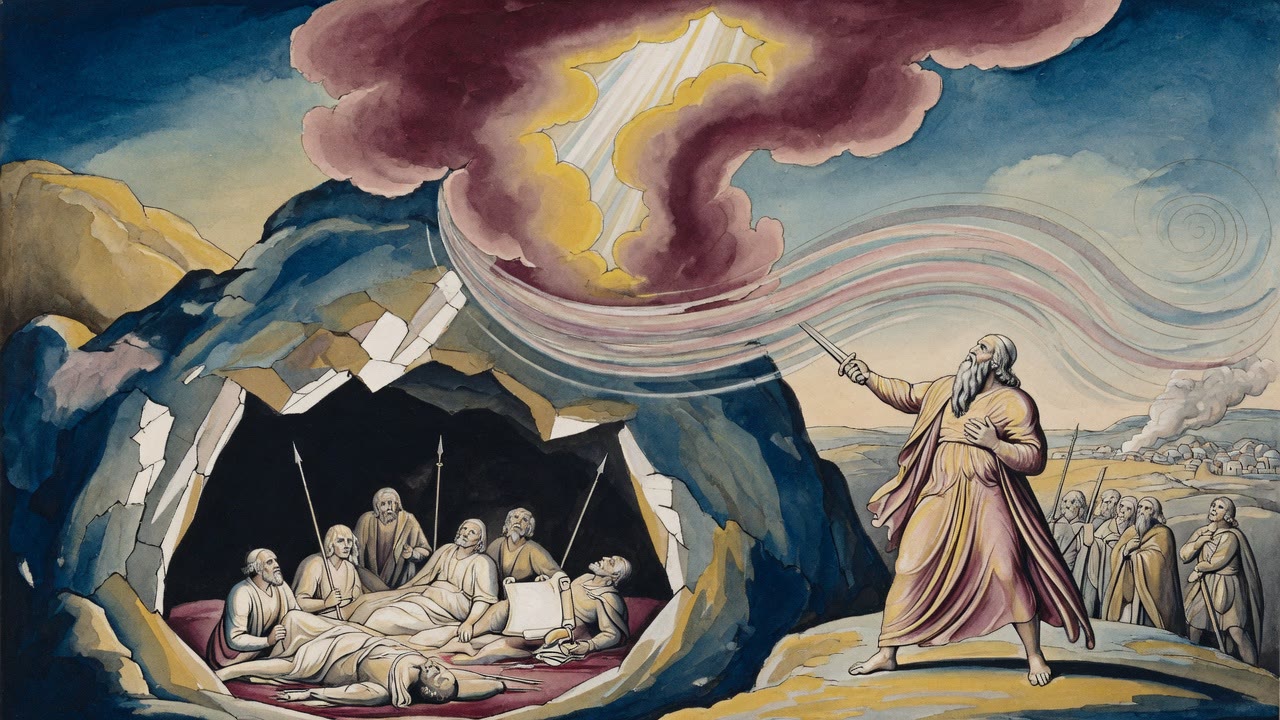
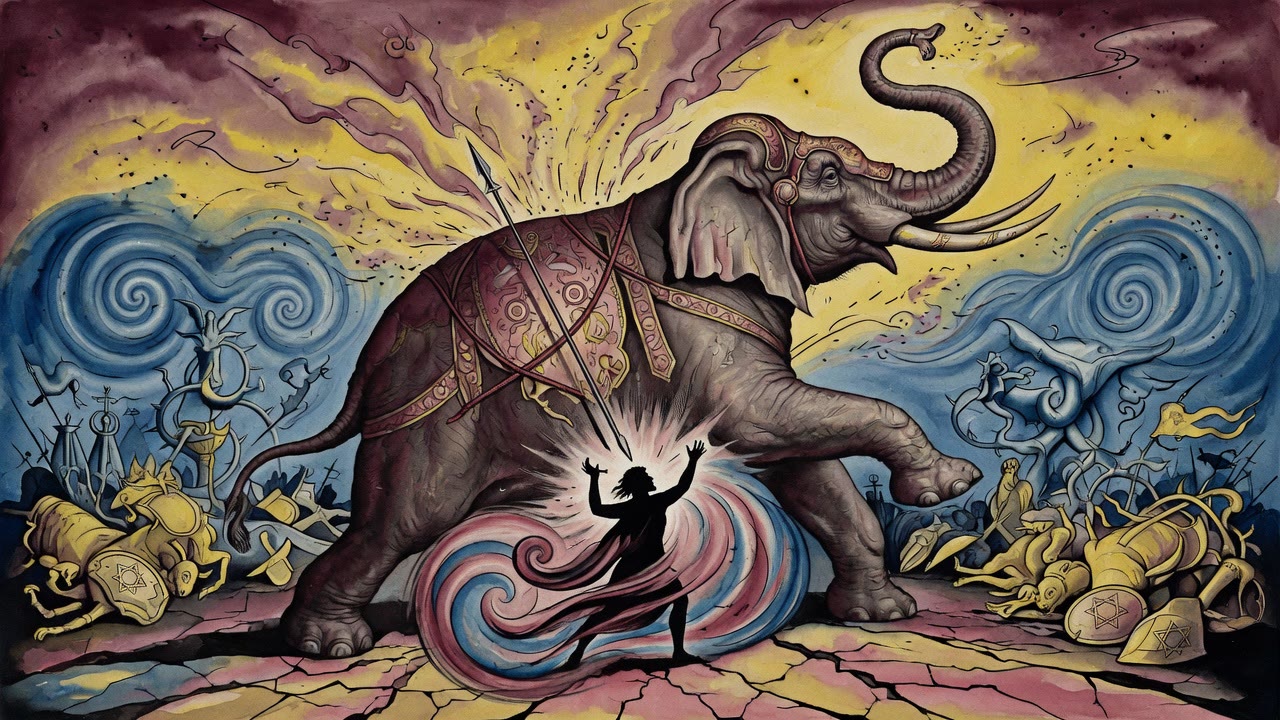
The tallest elephant on the field took a step, and the ground shook under men who had never seen an animal wear a tower. Eleazar Avaran fixed on that one beast. Royal armor. Height. A howdah that looked like a throne. He thought the king was up there.
 Click for full size
Elephants Came Like Moving Towers
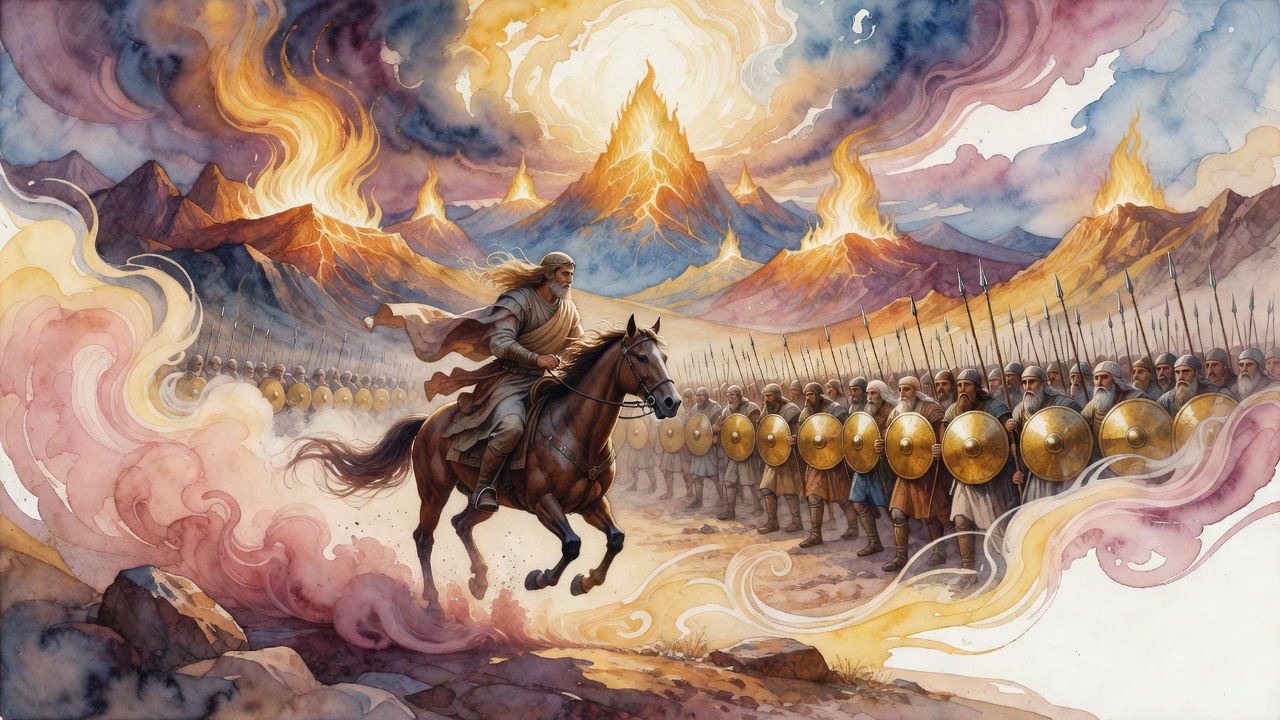
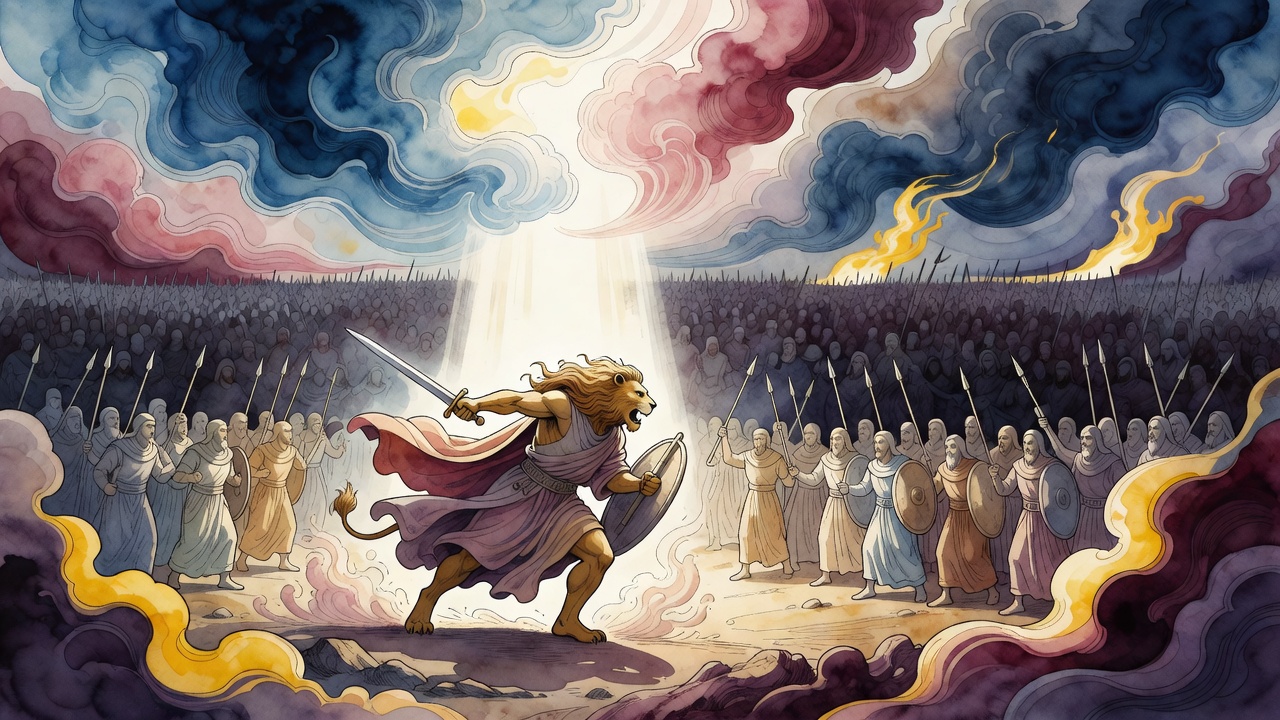
The Seleucid line came on under Antiochus V Eupator with elephants divided among the phalanxes. For every animal, a thousand men in chain mail and bronze helmets, and five hundred of the best horsemen. The beasts had been strengthened for battle. Each step said the empire had brought the weight of the world.
Judas Maccabeus met them anyway. Six hundred of the king's soldiers fell in the first clash. Smoke, brass, the scream of horses. Eleazar was one of Judah's brothers, and in that noise his eye caught the animal larger than the rest.
At Bethther the same picture held in a later Hebrew telling. Lysias, Eupator's cousin, arrived with eighty thousand horsemen and eighty war elephants. They dug a ditch around the city and brought rams. The defenders on the wall were few. The elephants were an argument in meat and iron.
He Cut a Path to the Tallest Beast
Eleazar made the sum in a heartbeat. That animal carries the king. If the king dies, the army has no reason to hold the field. If the army breaks, Judah lives. The arithmetic was simple. The walking was not.
He cut his way through the fighters around the elephant. Mail, spears, the smell of the beast. No one near him was in position to pull him out after the kill. He knew that before he went in. He went in anyway.
He did not call for a line to follow. He wanted the belly, not a speech.
He Thrust Upward Into the Belly
He went beneath it. The elephant's bulk closed out the sky. He thrust upward into the animal's belly and slew it from below. The beast shuddered. Its knees went. The tower on its back tilted.
The elephant died, and when it fell, it fell on Eleazar. The weight he had opened came down on the man who had opened it. He died under the thing he had killed.
There was no time to look up and count the riders. There was only the dark of the belly, the thrust, and then the ground.
The King Was Not On It
Eupator was somewhere else on the field. The howdah had been royal. The king had not been in it. The Seleucid army did not break. The calculation that had looked so clear from a distance was wrong in the one fact that would have made the death a victory.
Eleazar had not misjudged what he was willing to pay. He had misjudged the rider. War does not give a man a second look at a tower of hide. He saw the tallest animal, the royal trappings, and he spent himself on a mistake that still killed a war elephant.
The line of mailed men closed around the fallen beast. Judah's fighters did not pour through a gap the death had made, because the gap was only one animal wide, and the king was still breathing.
They Kept His Name Without a Triumph
They did not tidy the story later. They did not move the king onto that elephant to make the math come out. They kept the error. They kept the courage. They called the act Eleazar's memorial forever, not his triumph, not his victory. A memorial is what a camp keeps for a man who did something that will not be forgotten inside a battle he could not decide.
His brothers lived to fight the next hour. The unnamed soldiers who died in the same dust did not get a line. Eleazar got a name because he went under an elephant thinking it carried the king, knowing it might fall on him, and was right about everything except the most important fact.
The beast lay on him. The royal armor on its hide still shone. The king rode elsewhere. Judah's war went on without the man who had tried to end it in one thrust.
← All myths