Why God Called Noah a Foolish Shepherd in Jewish Legend
Noah built the ark, survived the flood, and wept at the ruins. Then God rebuked him for never praying for anyone outside the ark before it was too late.
Table of Contents
 Click for full size
He Would Not Come Out Without an Oath
The water was down and the door could have been opened, but Noah stayed inside. "As I entered the ark at the bidding of God," he said, "so I will leave it only at His bidding."
The bidding came, and he still would not go. A year of rain had taught him what the sky was capable of, and he had sons who would have sons, so he could see the arithmetic running forward into a second flood. He made a condition. He would not put a foot on the ground until God swore that the world would never again be destroyed by water. God swore it, and only then did Noah open the door.
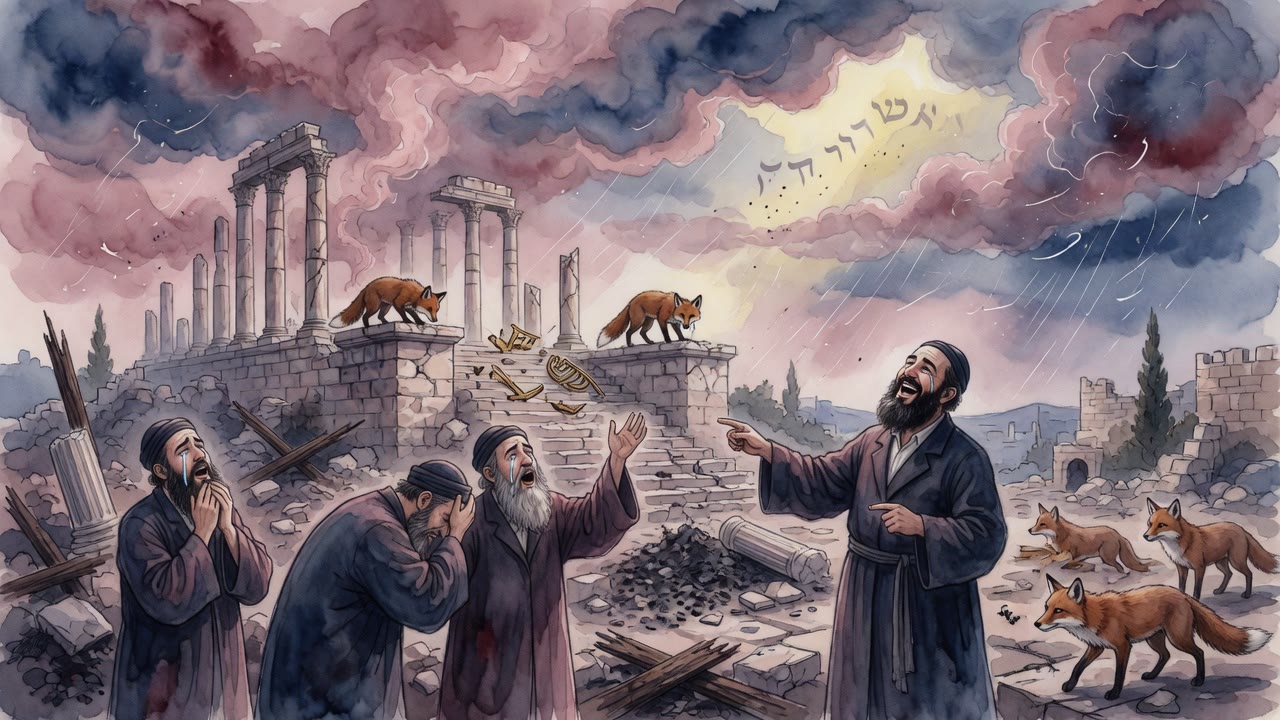
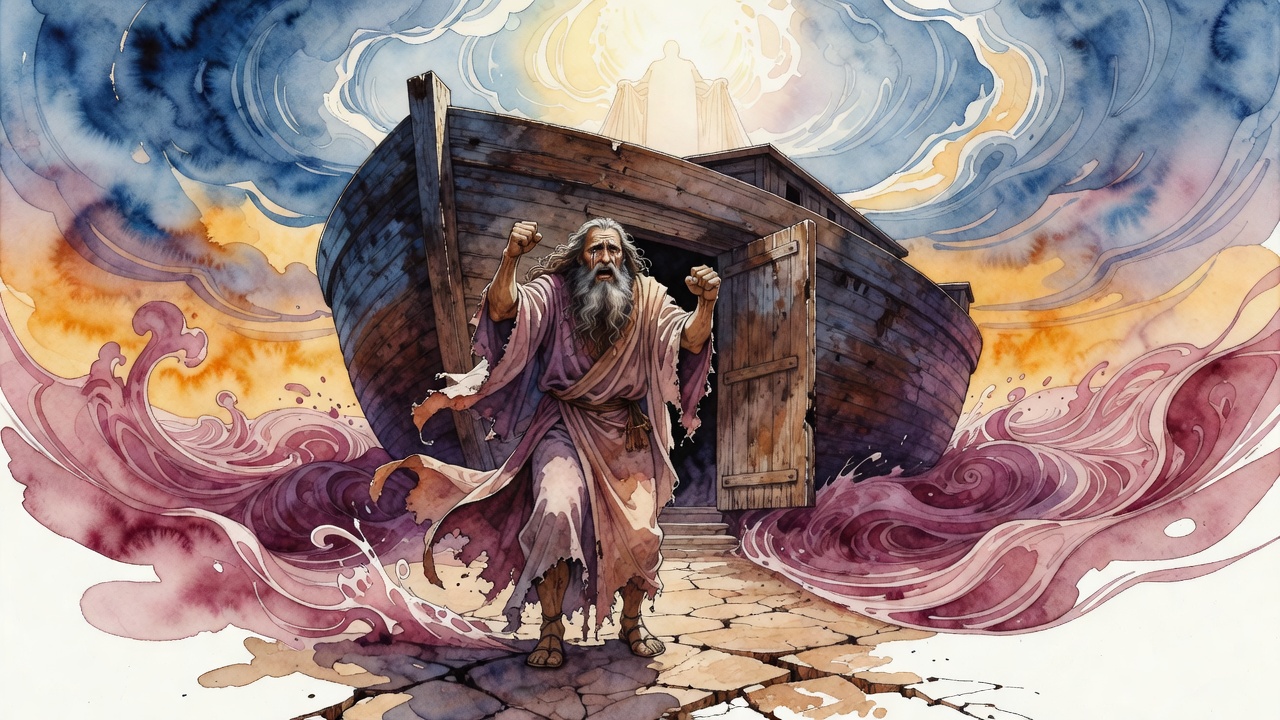
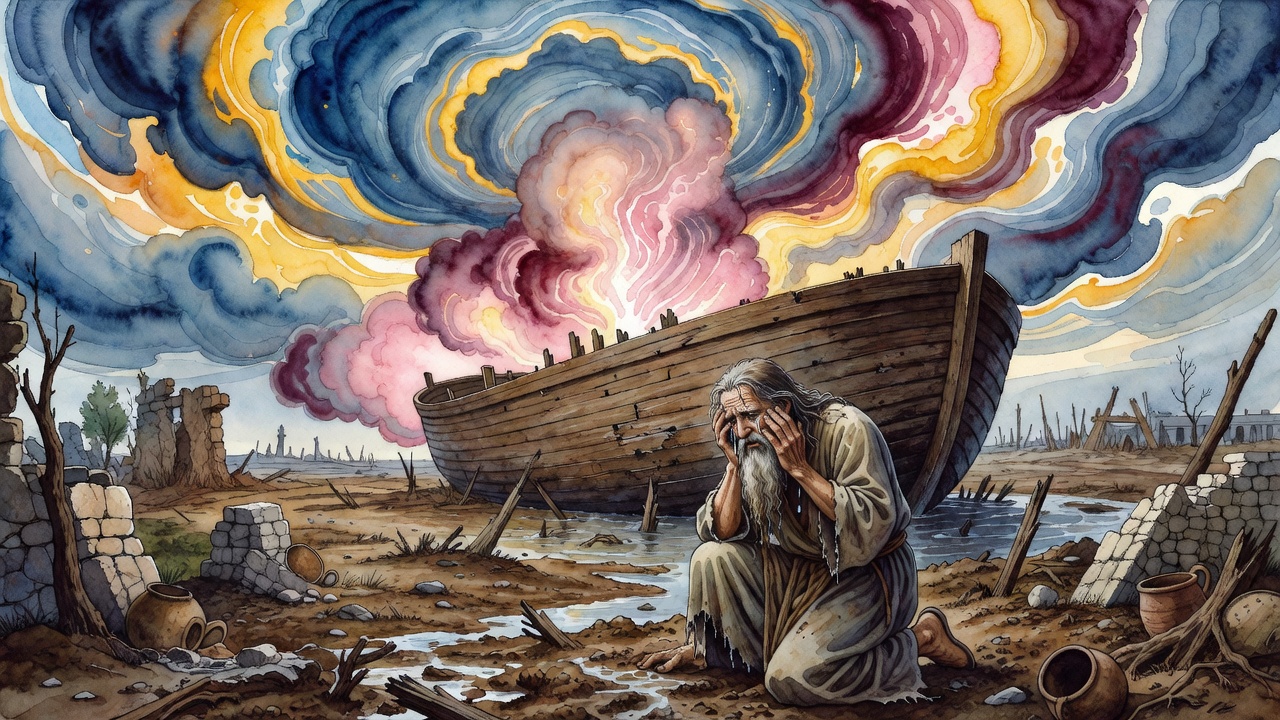
Nothing outside had a name on it. No fields, no roads, no herds, no smoke from anybody's fire, and mud over everything, holding whatever the water had left in it. Noah stood in that and wept until he could speak, and what he finally said was an accusation. "O Lord of the world! Thou art called the Merciful, and Thou shouldst have had mercy upon Thy creatures."
Foolish Shepherd
The answer came back and it started with the timing. "Now thou speakest to Me. Thou didst not so when I addressed kind words to thee." Then his own commission was read out to him word for word, the part about a righteous man, perfect in his generation, and a flood coming to destroy all flesh, and an ark to be made of gopher wood.
Every sentence of it had been a door left open. He had been told the whole schedule in advance, and told why he in particular was being told, so that he would stand up and argue for the earth. He heard that he would be rescued and stopped listening there. Then he went out and cut wood.
"Thou didst but build an ark for thyself, in which thou wast saved. Now that the earth is wasted, thou openest thy mouth to supplicate and pray."
God called him a foolish shepherd. A shepherd who sees the danger coming does not put up a shelter with room for himself and call the work finished, but Noah had known what was coming for as long as anyone could have known it and had not said one word on behalf of a single person outside his own house. The prayer he was making now was correct in every syllable. It was also a year late, and the people it was for were under the mud he was standing in.
The Lion He Forgot to Feed
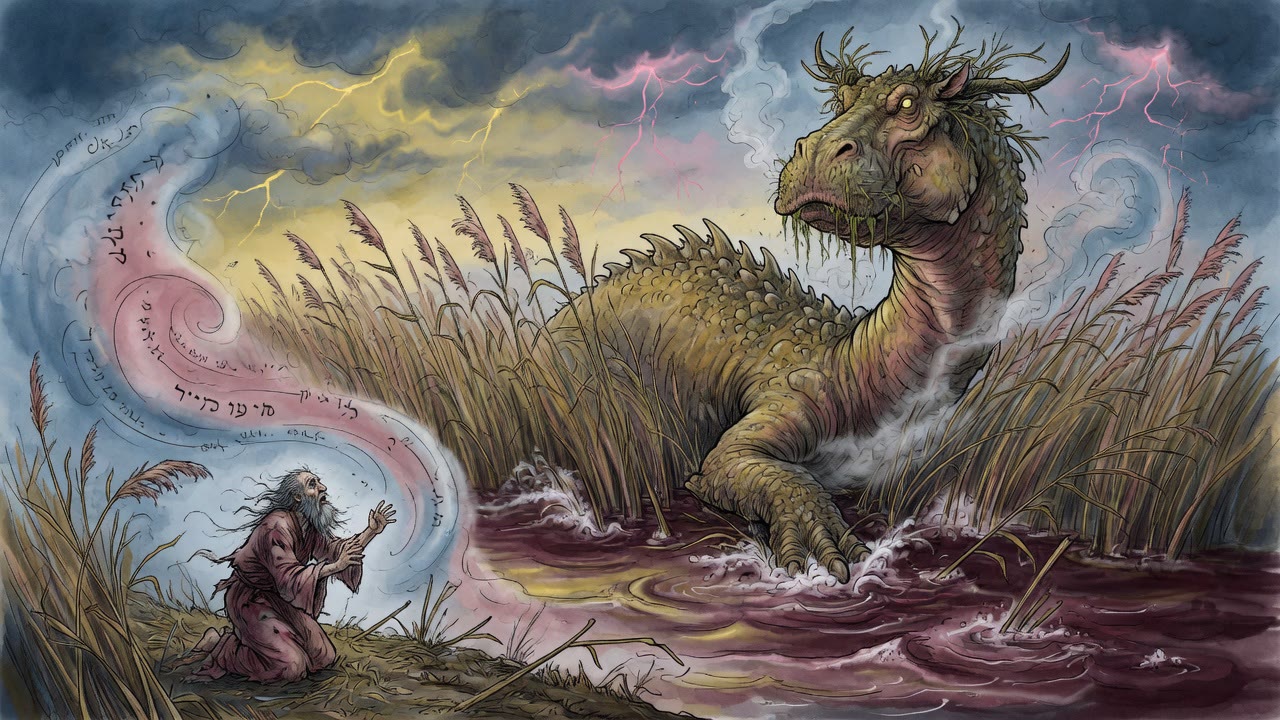
He understood that he had been a fool, and he wanted to make it good, so he set about a sacrifice. There was a difficulty. Somewhere in that year of feeding animals in the dark he had missed the lion, and the lion, hungry, struck him hard enough with its paw to leave him lame for the rest of his life. A man carrying a defect in his body, a mum (מום), cannot serve at an altar. The one act of atonement Noah could think of was the one act he was no longer permitted to perform.
His son Shem did it for him. The altar went up on the ground where Adam had offered, and Cain and Abel after him, and where the Temple in Jerusalem would stand much later. An ox, a sheep, a goat, turtle doves and pigeons, all of them from the kinds that had come aboard seven pairs at a time, which Noah had taken from the beginning to mean they were meant for burning. He stood there lame and watched his son do it.
The Bow and the Vineyard
God took the offering and did not withdraw the world. The bow went into the cloud as the sign of the oath Noah had extracted at the door, and it stopped appearing altogether in generations righteous enough not to need the reminder. Meat was permitted for the first time since Adam, with the blood held back. Seven laws came down binding on everyone alive, and the one pressed hardest was the one about blood, since whoever sheds a man's blood has his own blood shed, and if the courts fail the accounting happens anyway, and even an animal that kills a man answers for it.
Then Noah planted. He watched the vines and guarded the fruit, gathered the grapes in the seventh month and made the wine, and then he sealed it in a vessel and left it there until the first day of the first month of the fifth year. He killed a kid first and put some of its blood on the flesh that lay on the altar, and the fat went into the fire, and an ox and a ram and seven yearling sheep went up behind it. That offering was to make atonement for himself and his sons. Four years he waited on a jar of wine, for a man who had said nothing at all when saying something would have cost him a conversation.
Abraham Counted From Eight
Generations later God told Abraham what was about to happen to Sodom, and Abraham did not build anything. He started bargaining where he stood. Fifty righteous in the city, and would God sweep the place away with them inside it (Genesis 18:23-24). God said He would spare it for fifty. Then forty-five. Then thirty, ten in each of the three larger cities, with the two smaller ones pardoned on their account. Then twenty. Then ten.
At ten he stopped, and he could have said exactly why. There had once been eight righteous people in a doomed world, Noah and his wife and their three sons and their sons' wives, and eight had not saved that generation. Abraham was not going to ask for a number heaven had already refused, so he set his floor at ten and hoped Lot's household would come to that many. It did not, and the cities burned.
Even so, he had gone six rounds over five cities on behalf of people who had done nothing for him and lived nowhere near him. The man who saved the animals had not managed one.
← All myths