The Spies Who Made Their Pact Before They Left the Camp
God approved every name Moses wrote. Two men came back under a grape cluster hung from a pole. Ten mouths had already called the land a grave.
Table of Contents
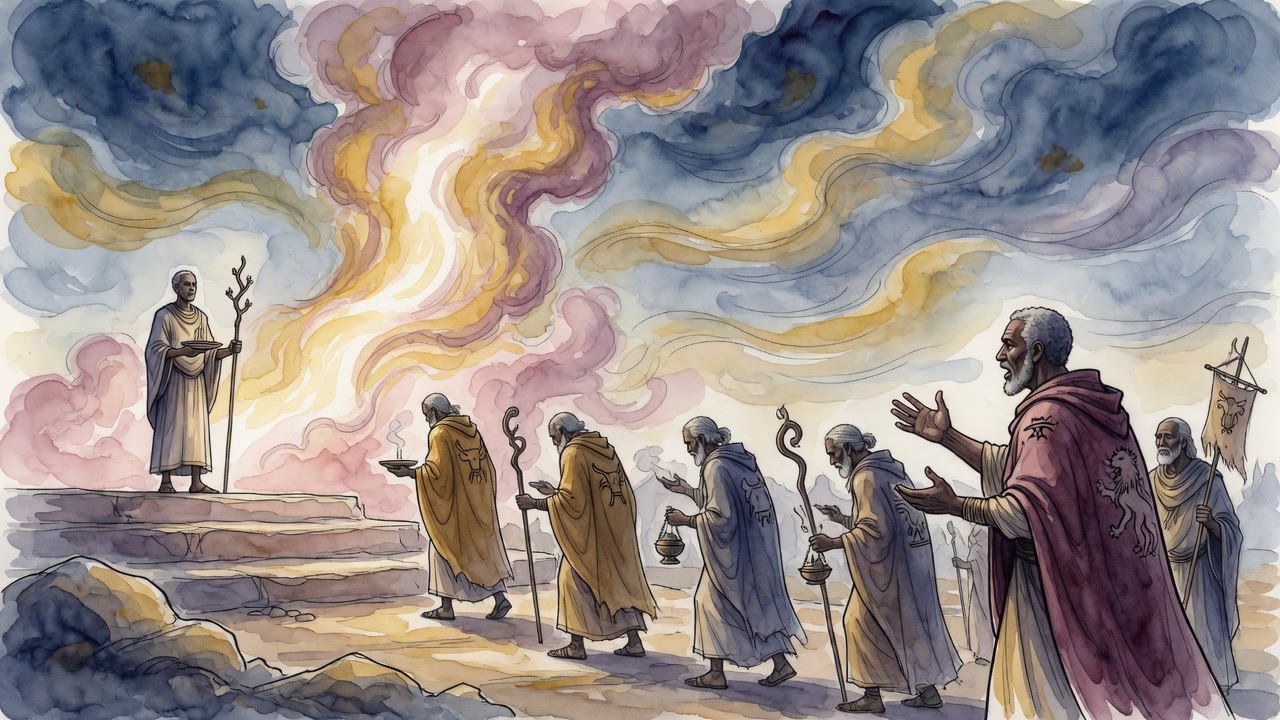
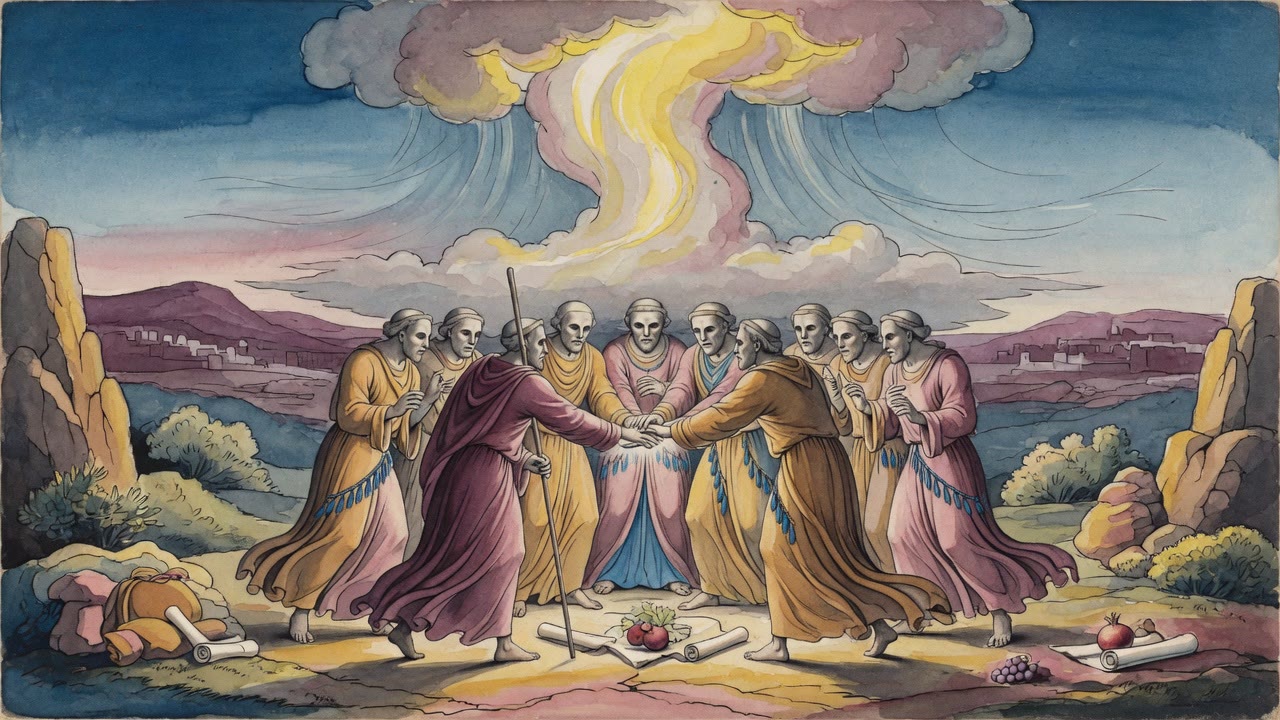
The lamp in the south tent had burned down to a thumb of wick. Ten men sat on the mats. Joshua was not there. Caleb was not there. Each of them had a new title as of that morning: scout, sent by Moses, approved by God.
 Click for full size
They put their hands together anyway.
"If the people enter the land, we lose the staff," one of them said. "In the wilderness a prince is a prince. Over there the fields will be cut into lots. New men will sit at new gates. We will be guests in our own tribes."
Nobody argued. The report was already written. The land would be too strong. The cities too high. The people like grasshoppers. They would say it after they had walked the roads, so the camp would believe they had seen it with honest eyes.
Ten Hands Before the Border
Moses had not picked at random. One distinguished man from each tribe, Levi left out. Pious men. Capable men. God had assented to every name. Moses slept for an hour, like a man who has done the job right.
He did not know about the tent.
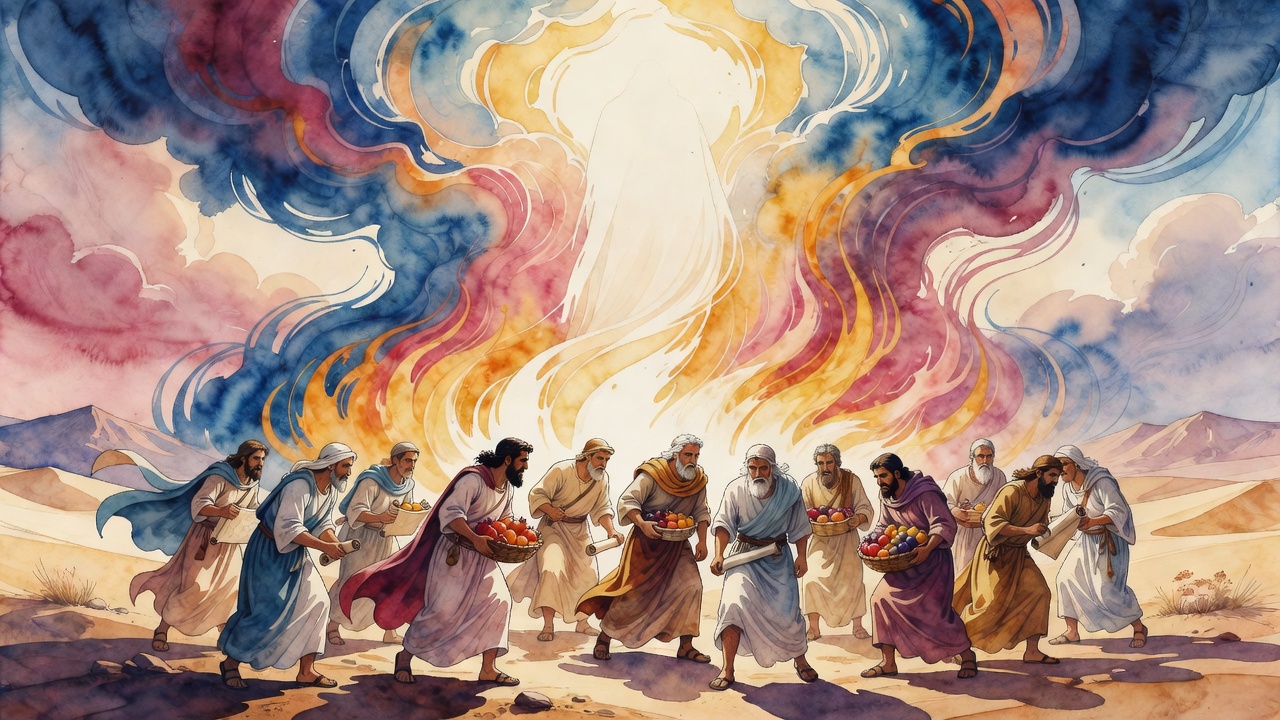
In the morning the twelve left the camp. Forty days they had. They walked north into a country that smelled of harvest. At the brook of Eshcol they cut a cluster of grapes so heavy two men had to sling it on a pole between them. They passed Hebron, where the sons of Anak walked, and the ground seemed to tilt under those feet. None of that was invented. The ten had simply decided, before the first grape, what the grapes would mean.
Princes Who Feared a Settled Land
In the wilderness their work was large and simple. They organized the march. They sat disputes. They stood before Moses as the face of a whole tribe. The staff in a man's hand was the tribe's spine.
Canaan would not keep that shape. Land would be portioned. Towns would grow their own elders. A prince of the desert might become a man with a field and a neighbor who did not owe him a hearing. Ten of them looked at that future and chose dust they already knew how to rule.
Joshua walked the same ridges. Caleb tasted the same fruit. They did not join the oath. They had not come to keep a staff. They had come to see whether God still meant the promise He had sworn to the fathers.
The Same Cities, Two Mouths
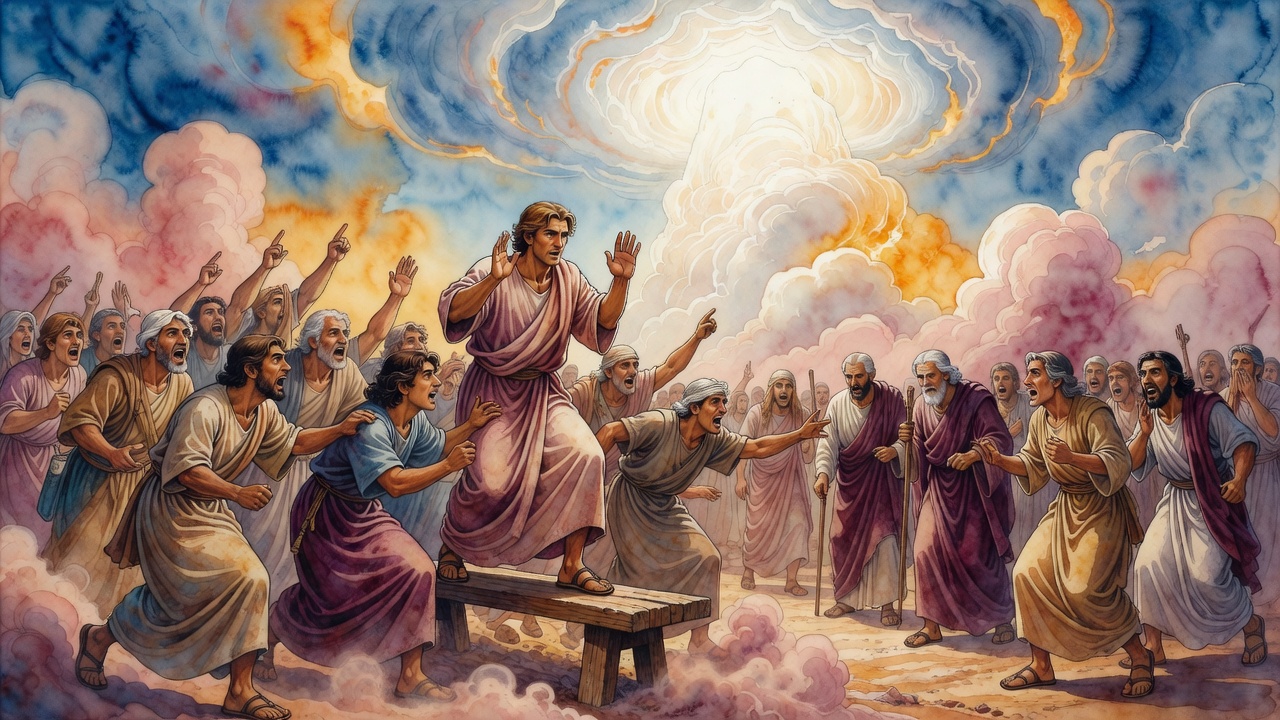
They returned on the fortieth day with the cluster on the pole and figs and pomegranates, and the whole camp came out to stare. The ten spoke first, because ten mouths fill a space faster than two.
"We came to the land," they said. "It flows with milk and honey. This is its fruit. But the people who dwell there are fierce. The cities are fortified and very great. We saw the sons of Anak. We were in our own eyes as grasshoppers, and so we were in theirs" (Numbers 13:27-33).
Caleb stilled the people before Moses. "Let us go up at once and take possession, for we are well able" (Numbers 13:30). Joshua stood with him. Same walls. Same giants. A different sentence.
The ten had not lied about the height of the walls. They had lied about the meaning, and they had agreed to that lie before they crossed the border.
That night the camp wept. The weeping was louder than the grapes.
Aaron Wore the Names on His Heart
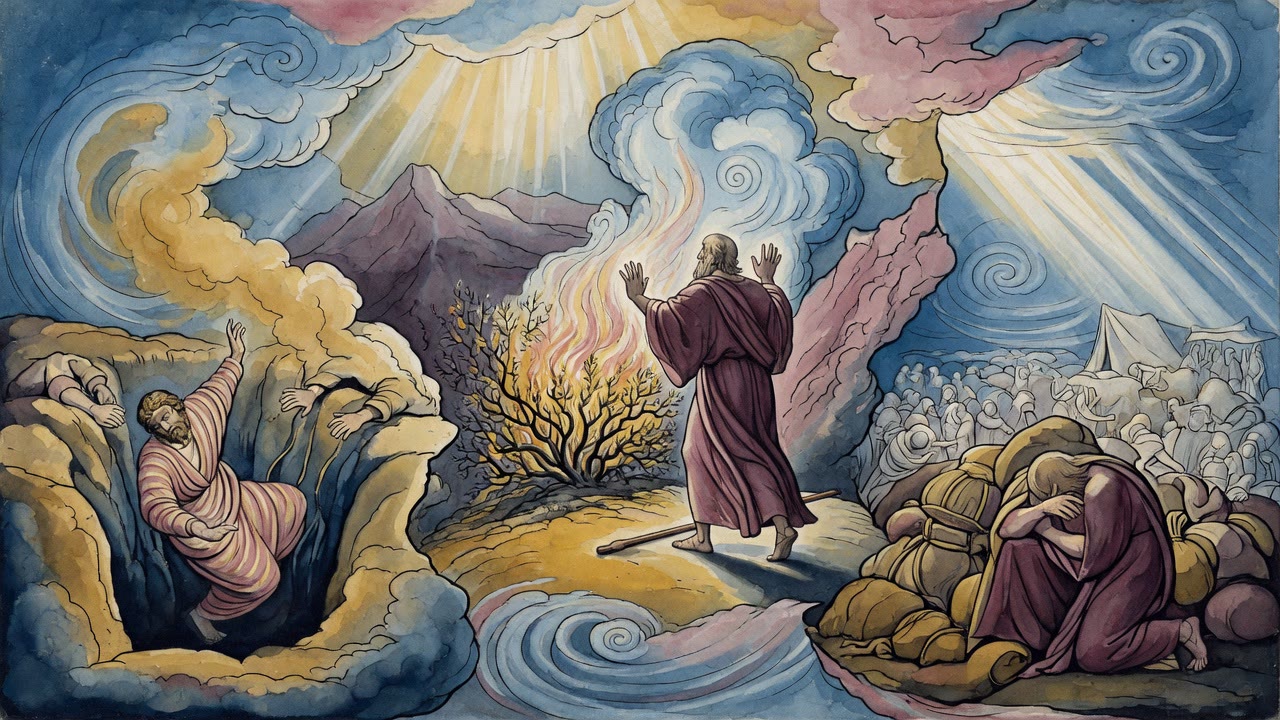
Moses fell on his face. While the noise went on, an older day came back to him. God had told him to appoint a High Priest. "From which tribe?" Moses had asked. "From Levi." Moses had been glad. His own tribe, beloved.
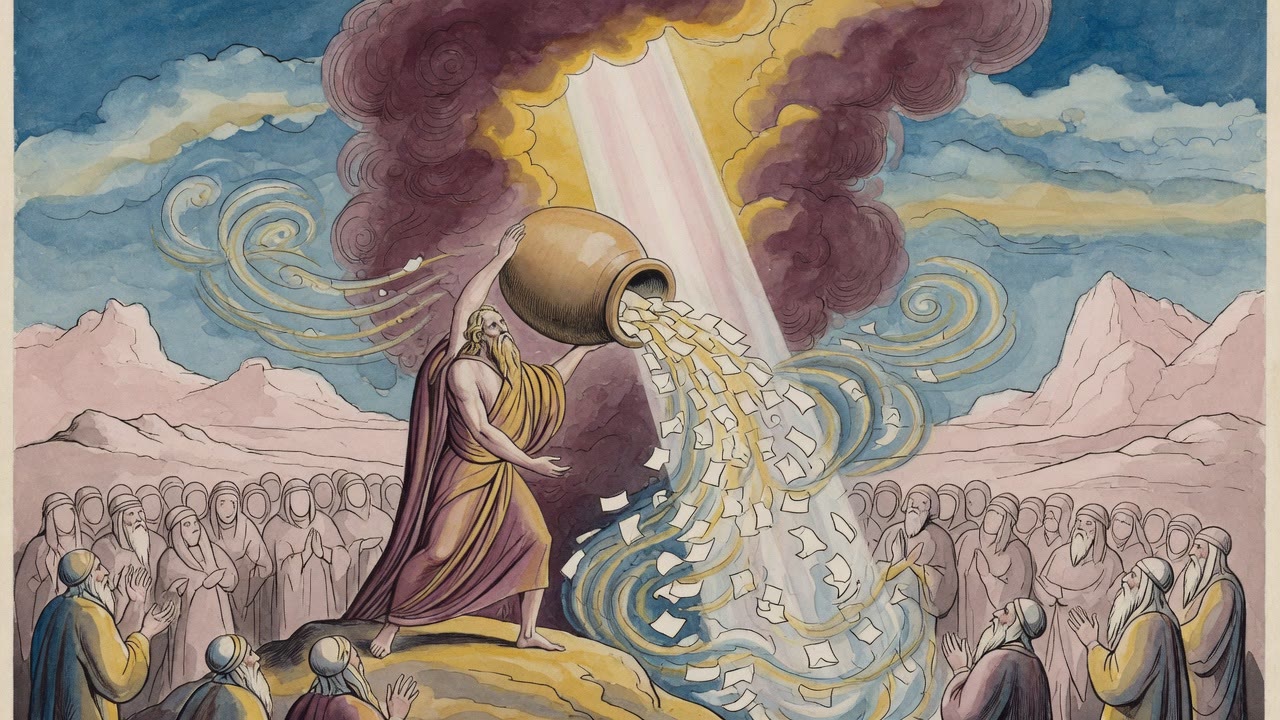
"By your life," God had said, "it is not your tribe. It is your brother." Bring Aaron near (Exodus 28:1). Anoint him with the oil (Exodus 29:7). Then the harder line: Aaron's service is not service unless the names of the tribes sit on his heart. "The names of the tribes are dearer to me than the anointing oil with which priests and kings are anointed."
Moses had learned it then. God does not keep a man in office for the tribe's pride. God keeps a man who will carry other people's names against his chest.
These twelve had been approved the way oil is poured. Ten of them would not carry the names. They carried their own staffs, and they were ready to spend a generation in sand to keep them.
The Graves They Chose
The decree came down. Forty years. The men who had wept would die in the wilderness. The children they said would be plunder would enter. Joshua and Caleb would live to walk the land they had praised.
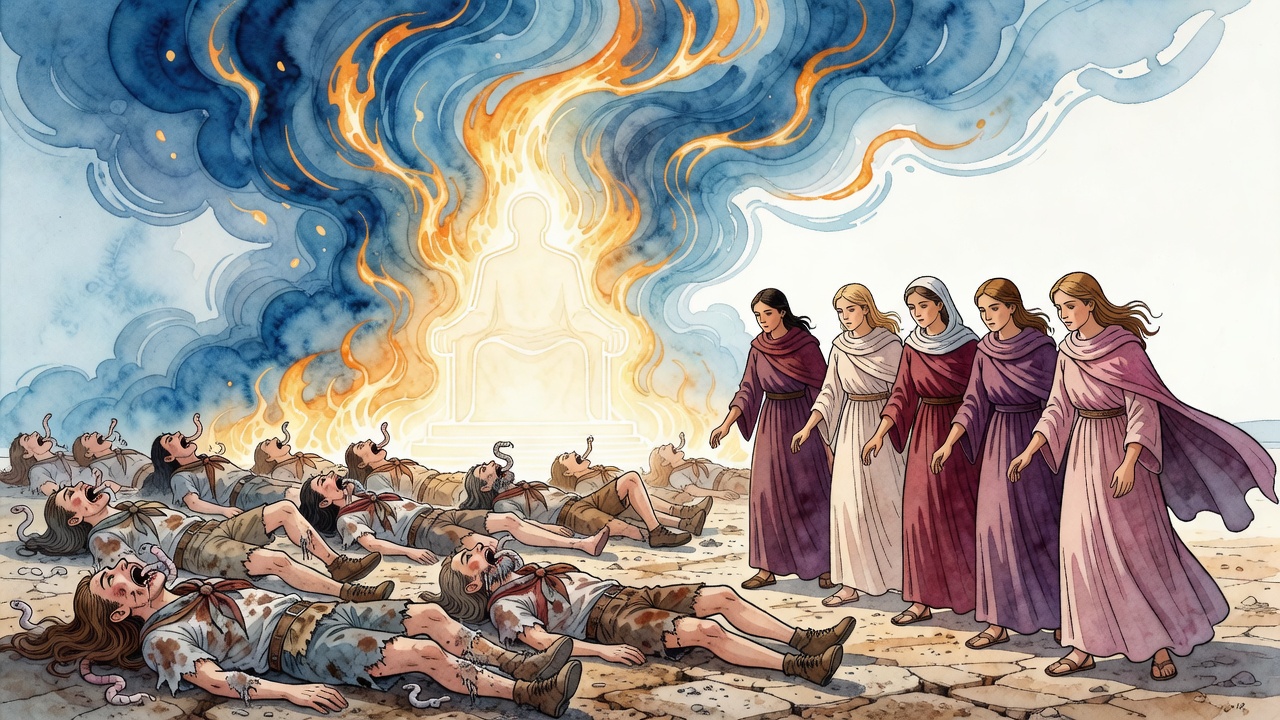
The ten did not last the forty. The plague found them first. The staffs they had tried to save were buried with them in unmarked ground, far from any portion, far from any gate they had feared to lose.
Moses still had to lead a people who had believed the ten. He still had Aaron at his side, names on the breastplate, oil on the head. One man wore Israel. Ten men had worn themselves.
The cluster of grapes dried in someone's tent and was thrown out. The pole was used for something else. The report, once spoken, could not be taken back. A nation learned to wander because ten princes chose their positions over their people, and loved their places more than the road God had opened.
← All myths