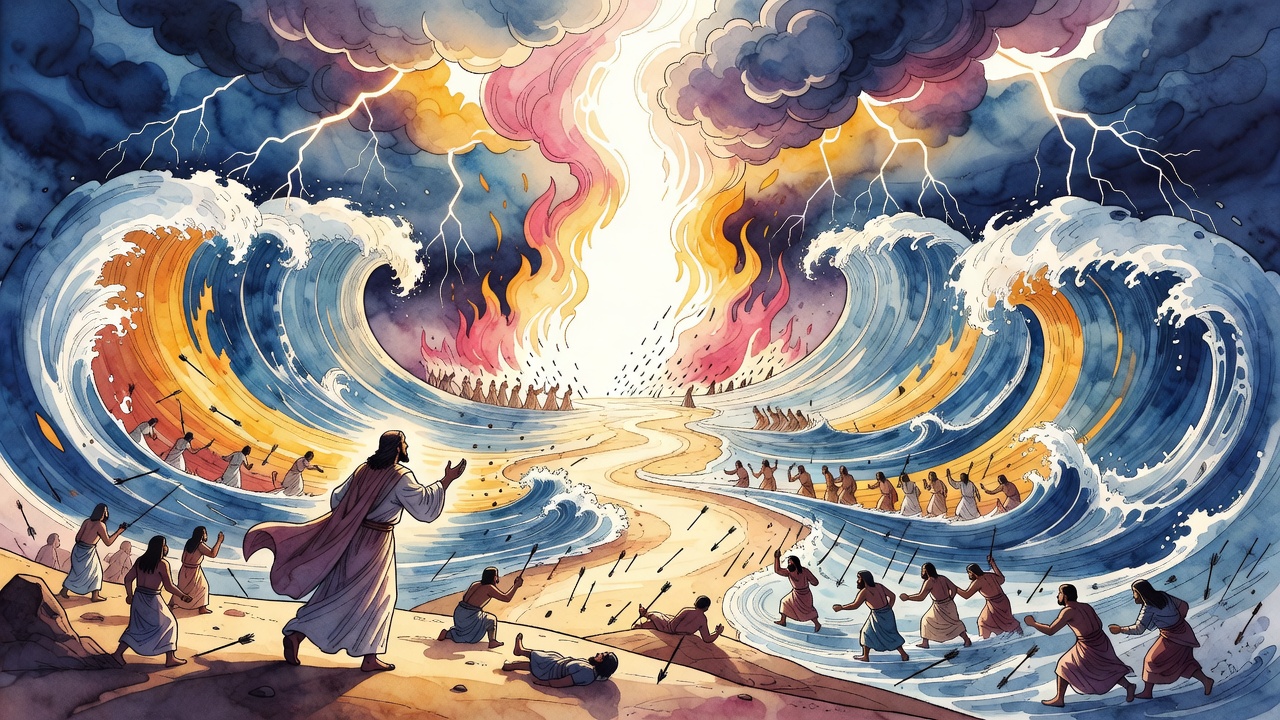
Moses Had to Drag Israel Away From the Red Sea
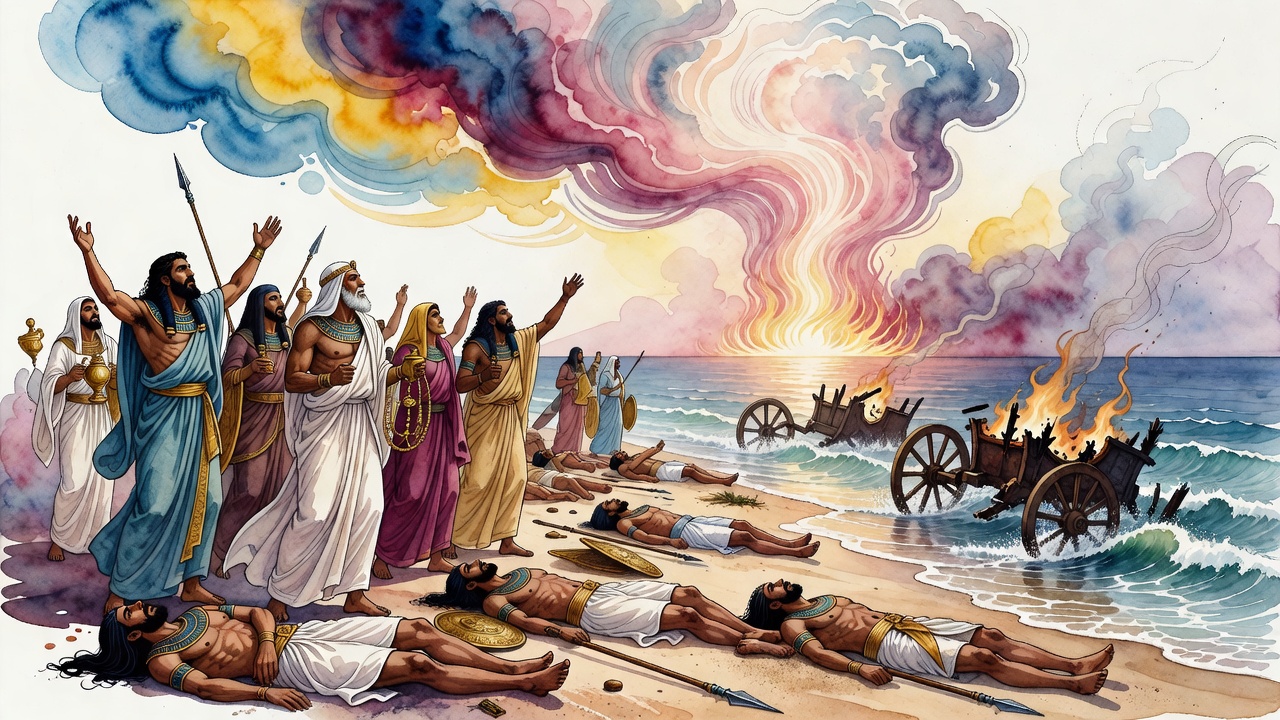
The drowned officers still wore Pharaoh's gold. Israel waded into the surf for it. Moses told them to form up and march. Nobody moved.
Table of Contents
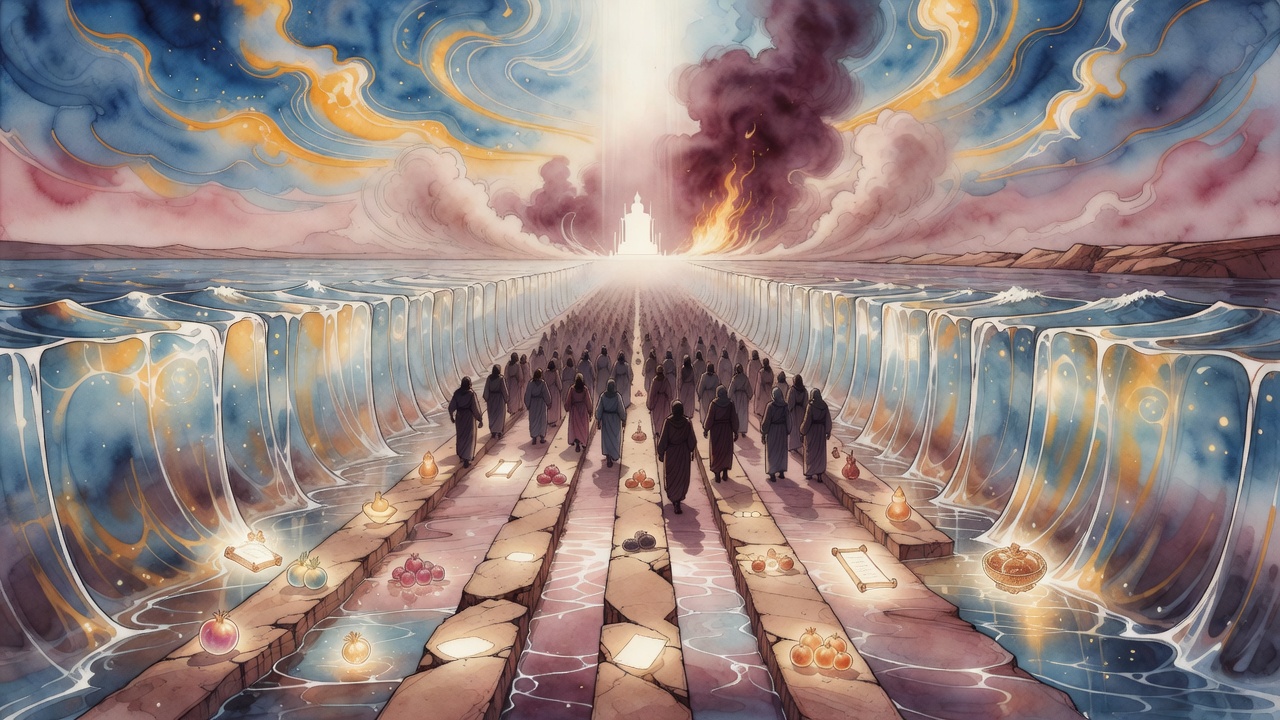
The sea gave back the bodies, and the bodies were wearing gold.
 Click for full size
All that morning the water pushed Pharaoh's drowned army onto the sand below the camp. Officers in gilded harness. Charioteers with rings still on their fingers. Pharaoh had marched with the treasury of Egypt in his baggage train, the way kings did, so that if a campaign turned badly he could hire fresh mercenaries before nightfall. The campaign had turned badly. The treasury was in the surf.
Gold Came In With the Bodies
Israel waded in and took it. They had walked out of Egypt with whatever their neighbors handed them at the door, and that had been a great deal. This was more. A man who had laid brick for thirty years without wages stood knee deep in warm water unbuckling a dead officer's collar, and counted it as back pay, and he had earned it twice over.
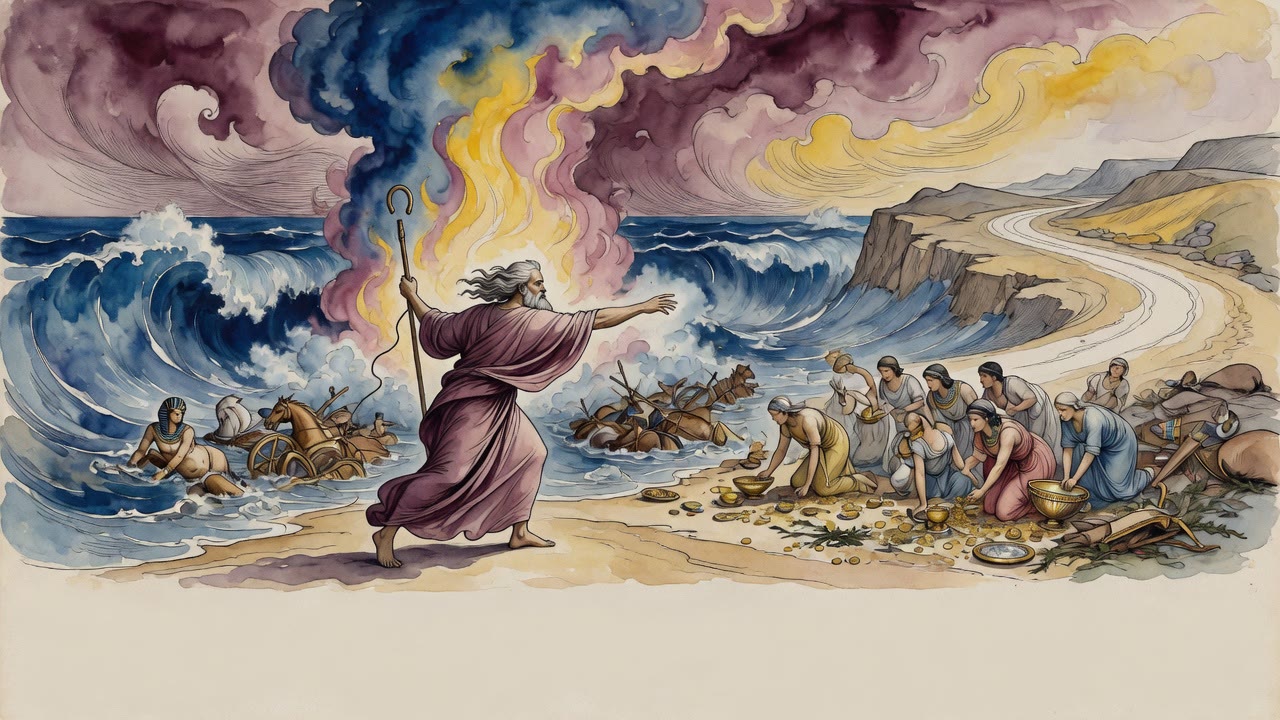
Pearls came in on the next wave. Jewels. Coin. A woman lifted a collar off a throat she did not know and felt the weight of it in both hands. Children ran the tideline with their fists full. Every wave put something else on the sand worth bending down for. The Song at the Sea was still in their mouths, and already their backs were bent over the dead.
Moses Walked the Shore
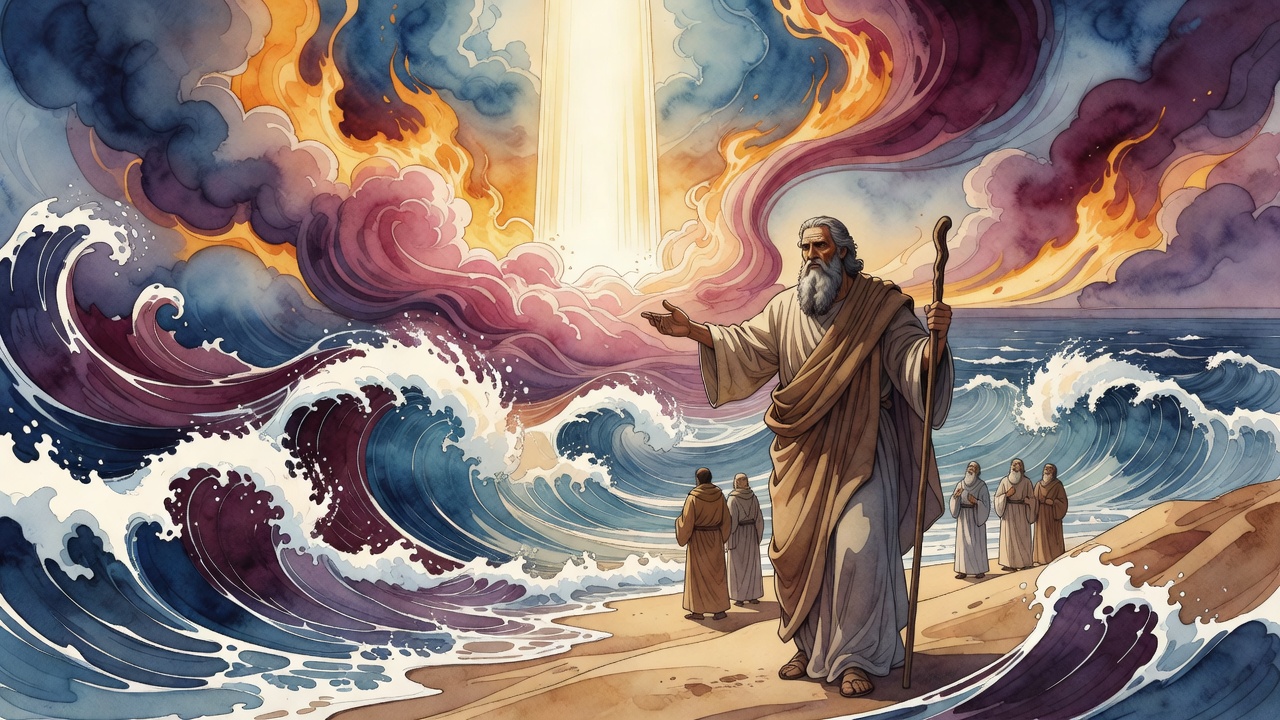
Moses went up and down the beach telling them to form up and march. Nobody formed up.
"Do you really believe," he said, "that the sea is going to go on handing you pearls?"
They had nothing to say to that, because the answer was already in their hands, and the water kept bringing in more. He took a man by the sleeve and pulled him two steps up the sand. The man shook him off and went back into the water. Moses walked the next household and the next. The cloud over the camp did not lift. No voice came from it. The beach stayed a beach of gold, and the people stayed in it.
They Counted the Dead
Then the mood on the beach changed, and it changed because of the faces.
The dead were not strangers. These were the men who had stood over the brick pits with sticks, the drivers who counted the day's tally and took skin off anyone who came up short. A woman rolled a body over with her foot and knew him. Word went along the shore. Look how many. Look how many of them are lying here.
Someone did the arithmetic out loud. If this many were dead on one beach, there was nobody left alive in Egypt. Egypt was standing open. Egypt had houses and grain and a river.
The next sentence came easily. Let us set a head over us and go back. After it a third one, quieter and more practical. Let us make something to walk in front of us on the road. They did not only say it. They stiffened their necks and refused to listen, and the wonders of the night before went out of their heads as though the water had never stood up on either side of them.
An Idol Had Crossed With Them
Something had come through the water with them.
It went into the corridor between the two standing walls, in among the carts and the bundles and the dough that never had time to rise, and it came out on the far side in Israelite hands. Nobody mentioned it while the singing was going on. It stood in the camp through the whole Song at the Sea, and it was still standing there while the beach filled with gold.
That was the camp Moses was trying to move. Not a tired people. A people settling in beside a drowned empire with a foreign god in the baggage, and every hour they stayed, the pull backward got stronger. The idol had already crossed. The gold was finishing the argument. If they stayed long enough, the road would point west again.
He Dragged Them Off the Sand
Every other march in the wilderness ran the same way. The cloud lifted and Israel walked. The cloud settled and Israel pitched. Nobody argued with a cloud. Nothing lifted that morning.
Moses put his own hands on them. He took a household by the arms and pulled them up off the sand, away from a dead man's rings, away from the water, away from the thing they had carried through it. A child dropped a handful of coin and cried. Moses did not stop for the coin. He moved the next household, and the next, until the beach began to empty because a man was emptying it.
They went. He said get up and march, and they got up and marched, and not one of them asked what a people eats in a country with no grain and no well. Generations later Jeremiah would remember it as the love of Israel's bridal days, a nation following a man into land that nothing grows in (Jeremiah 2:2).
What they walked into was Shur. Hundreds of miles of it. Lizards, scorpions, and snakes carrying a venom that does not need a bite to work: let one of them glide across the shadow of a bird in flight and the bird comes apart in the air and falls in pieces. That was the road. That was what the cloud had been pointing at the whole time they stood counting rings on dead men.
They went in with their arms full of a drowned army's gold. Behind them the Red Sea kept turning the last of the bodies over, and nobody looked back at it.
← All myths