Jethro Spoke Up for the Hebrews and Was Thrown Out of Egypt
Three men advised Pharaoh about the Hebrews. One was thrown out for defending them, one said nothing useful, and one of them thought of the river.
Table of Contents
 Click for full size
Three Men at Pharaoh's Table
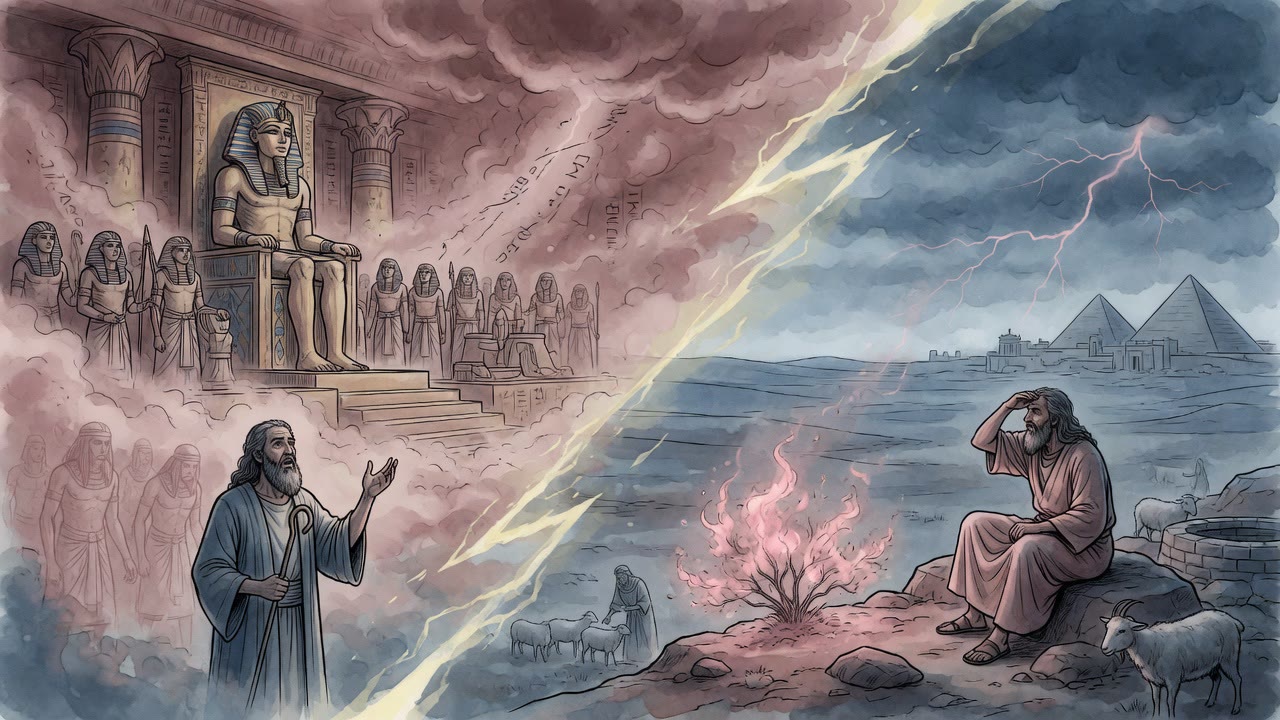
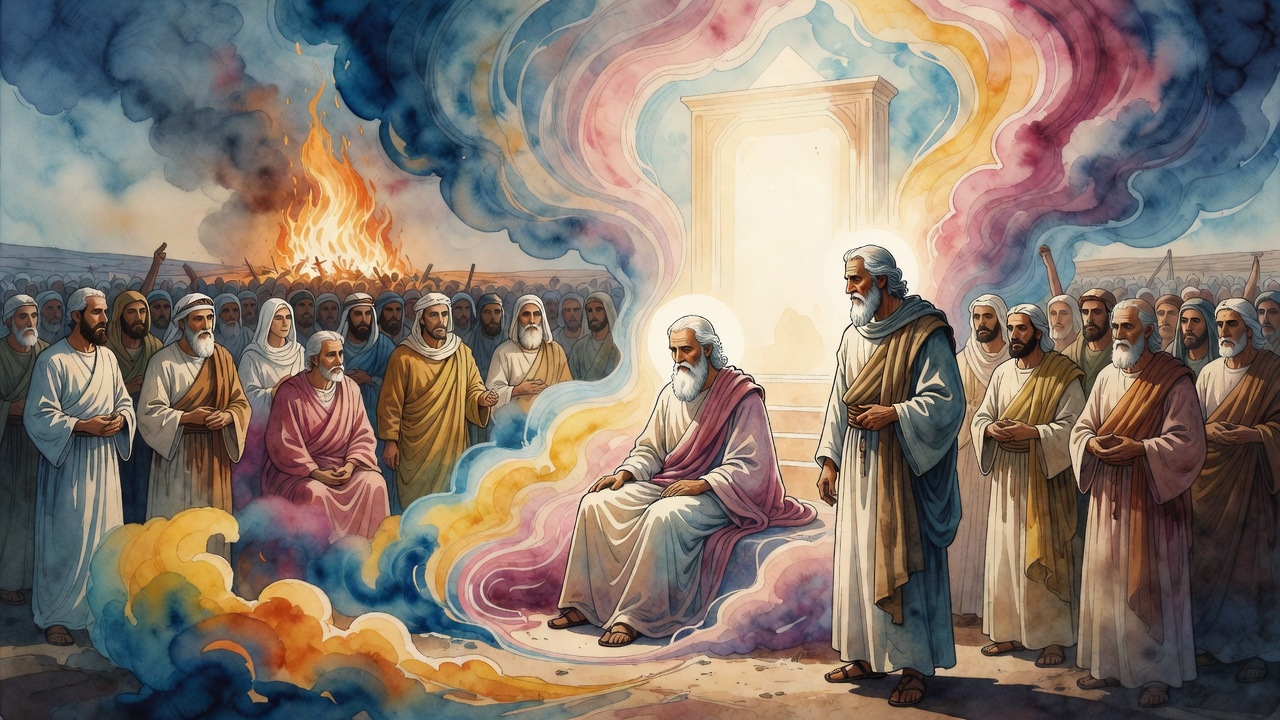
Jethro spoke first and it cost him everything he had.
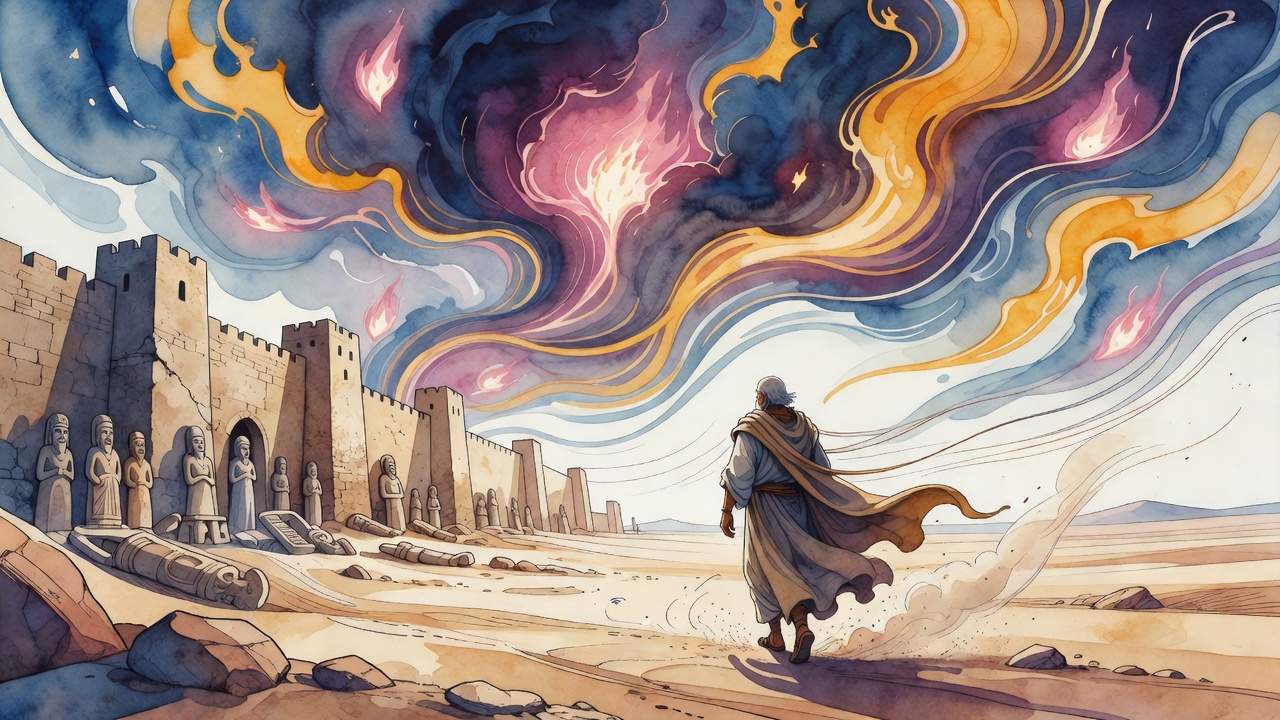
He told Pharaoh the truth about the Hebrews, and Pharaoh went white with rage, and Jethro was put out of the palace in disgrace. Not exiled with an escort. Dismissed, in front of the others, and left to find his own road. He went east into Midian.
Pharaoh turned to the second man. "What do you say, Job? What is your advice about the Hebrews?"
Job looked at the floor. "All the inhabitants of the land are in your power. Let the king do what seems good in his eyes."
Then Balaam spoke, and Balaam had actually thought about it.
"From everything the king may devise against the Hebrews, they will be delivered," he said. Fire would not do it, because their God had taken Abraham out of the furnace the Chaldeans threw him into. The sword would not do it, because Isaac had already been under the knife and had come away from it. Grinding labor would not do it either, because Jacob spent twenty years on the worst work Laban could find him and came out of it rich.
Then he handed Pharaoh the one thing left.
"Let the king order every male child born to Israel from this day to be thrown into the water. By that you can wipe out their name. Neither they nor any of their fathers was ever tried in that way."
The Priest With Seven Daughters
Jethro made a life in Midian. He became a priest there. He had daughters, and they took the flock to water, and one afternoon a shepherd fight at the well ended with a stranger driving the other men off and filling the troughs himself.
The stranger was a fugitive out of Pharaoh's own house. Jethro gave him Zipporah, and two boys were born, and the years went by quietly in a country where nothing much happened.
The Man Who Jumped Into the Scalding Bath
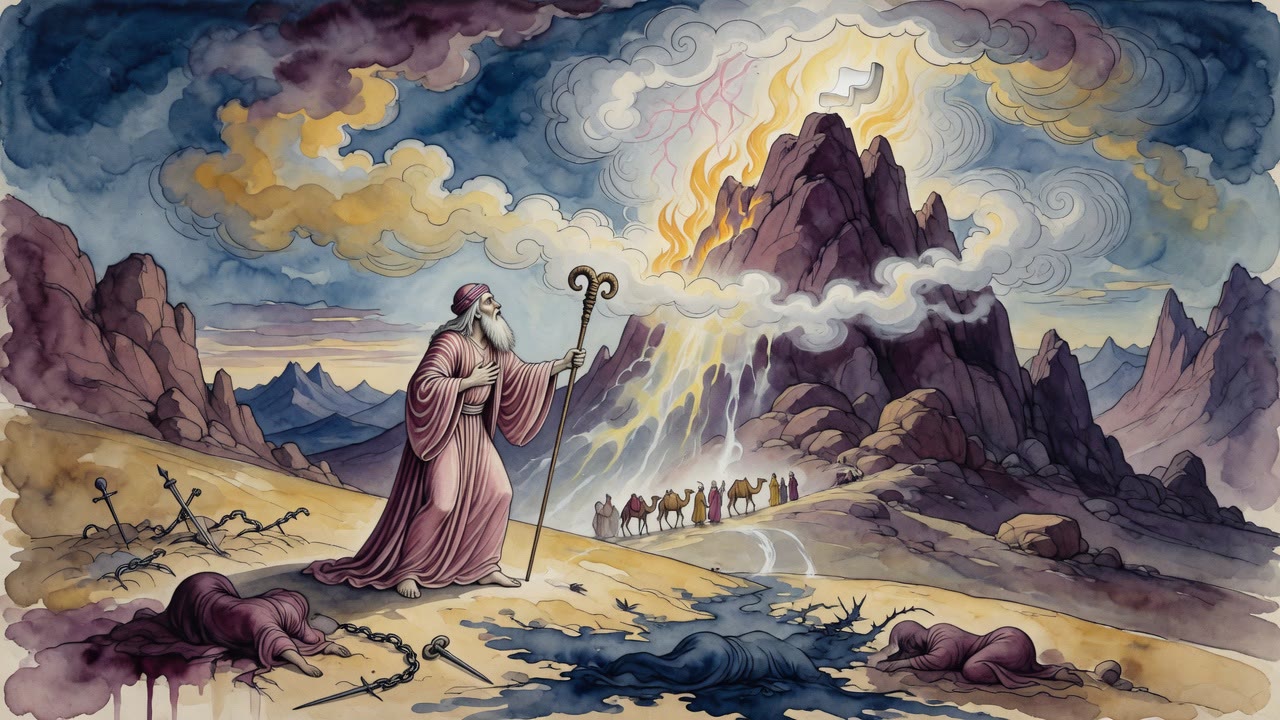
Then Egypt broke open, and the sea stood up in two walls and came down on an army.
Every nation between the Nile and the Jordan heard about it and none of them would go near Israel. That fear was worth more than an army. It sat around the camp like a wall nobody had to build.
Amalek walked into it anyway.
He gathered his forces and attacked, and he was badly beaten, and it did not matter. He was the fool who leaps into a tub of scalding water. He came out burned to the skin. He also left the water cool enough for the next man to climb in without flinching, and every nation watching learned in one afternoon that Israel could be approached after all.
God did not consider the beating sufficient. He swore by His throne and by His right hand that Amalek would never be forgotten, that the punishment would run through this world and into the days of the Messiah, and that the wiping out would be finished in the world to come. Until the seed of Amalek is gone, the face of God stays covered.
Jethro Crossed the Desert
The report that reached Amalek reached Midian too.
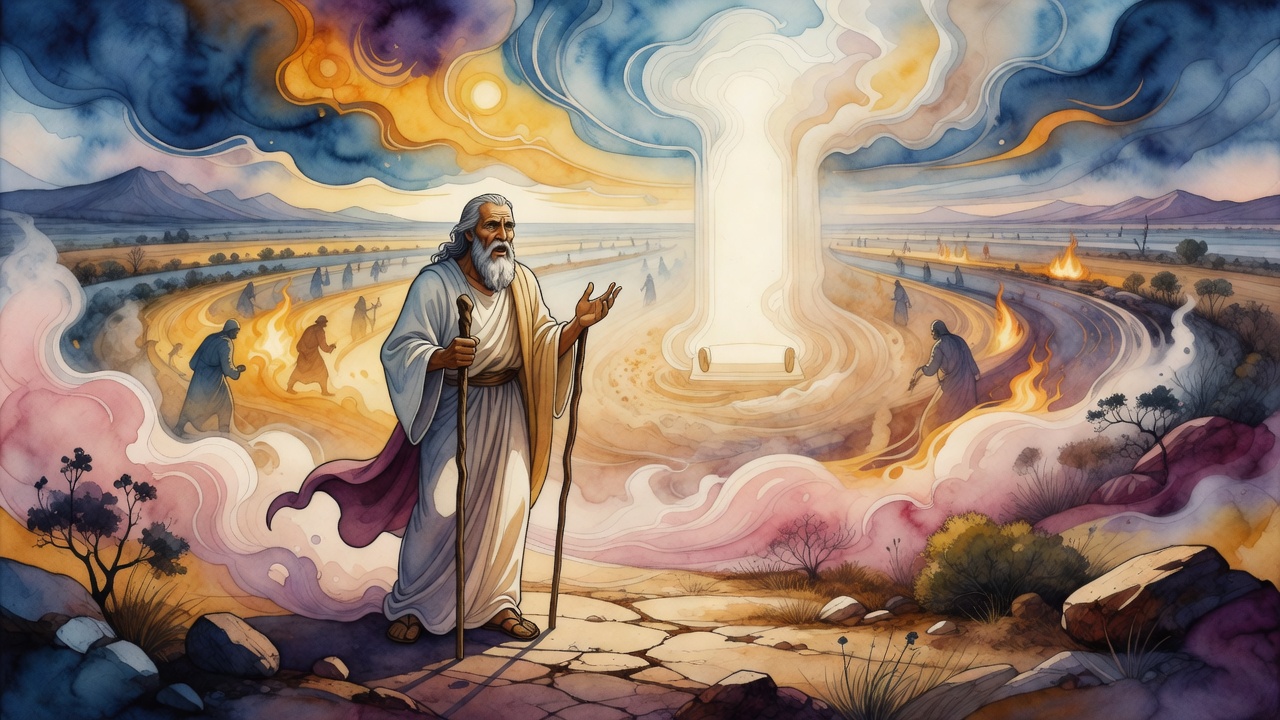
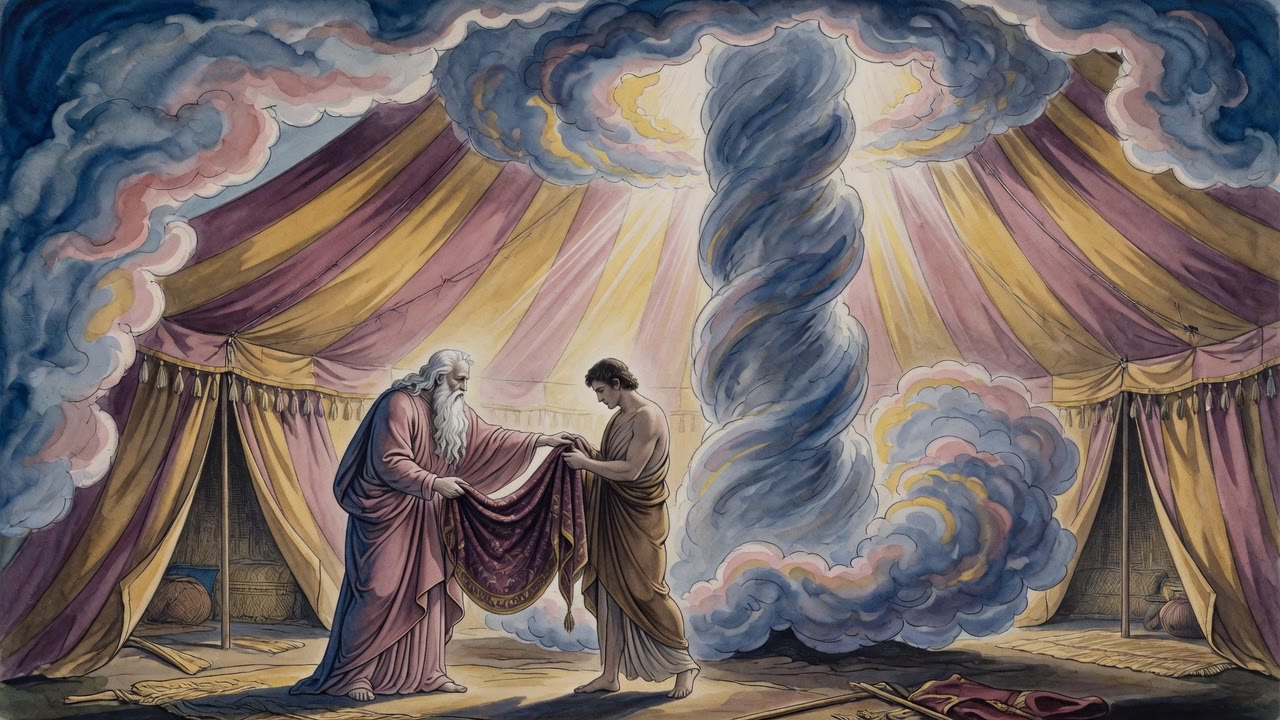
Jethro heard what had been done to Pharaoh and to Egypt, and he did not gather forces. He collected Zipporah, who had been sent back to her father, and her two sons, and he walked them across open country to a camp at the foot of a mountain, and he said out loud in front of everybody that he now knew the Lord was greater than all the gods.
The man who had lost a seat at the table of Egypt for defending these people came and stood among them at the foot of the mountain, on the far side of everything Pharaoh had tried.
What He Saw in the Court
The next morning he watched his son-in-law work, and he was appalled.
Moses sat alone from dawn until dark. The mixed multitude came first, arguing that they were owed the same share of the Egyptian spoil as everyone else. Behind them came a nation that would spend seventy silver pieces in court costs to win one silver piece off a neighbor, and would stretch a case out as long as it could be stretched. A man who could feel the ruling turning against him would stand up and ask for an adjournment and swear he had witnesses and proofs to bring next time.
They did not even like him for it. If Moses went out early they said, look at the son of Amram, up at dawn to get the biggest grains of manna. If he went out late they said, look at the son of Amram, walking through the crowd to collect his honors. If he took a path around the edge of the camp they said, look at the son of Amram, making it impossible for us to do the simple thing and honor a sage.
Jethro thought the whole method was absurd. He did not say so. He softened it on the way out of his mouth, and what Moses heard was, "The thing that you are doing is not good."
Then he laid out the replacement. Moses would stay the vessel of the revelations of God. He would put them in front of the people and teach them how to pray, how to sit with the sick, how to bury their dead, how to be a friend, how to do justice, and when not to insist on strict justice. The trials themselves would go to chosen men, and Jethro listed the qualities they had to have, seven of them, ending with a good name.
Moses took the counsel immediately, because he had been carrying it alone long enough to know exactly what it was costing him.
"If I did this, you were not content. If I did that, you were not content. I can no longer bear you alone."
And then, in the same breath, with the court still full of people who had spent the day insulting him, he blessed them. The Lord your God has multiplied you, and today you are as the stars of heaven for multitude. May the Lord God of your fathers make you a thousand times as many as you are.
← All myths