Moses Asked God to Kill Him Rather Than Carry Israel Alone
When Israel wept for meat in the wilderness, Moses did not pray for quail. He asked God to end his life. Sifrei Devarim examined the prayer word by word.
Table of Contents
 Click for full size
The Sound Across the Camp
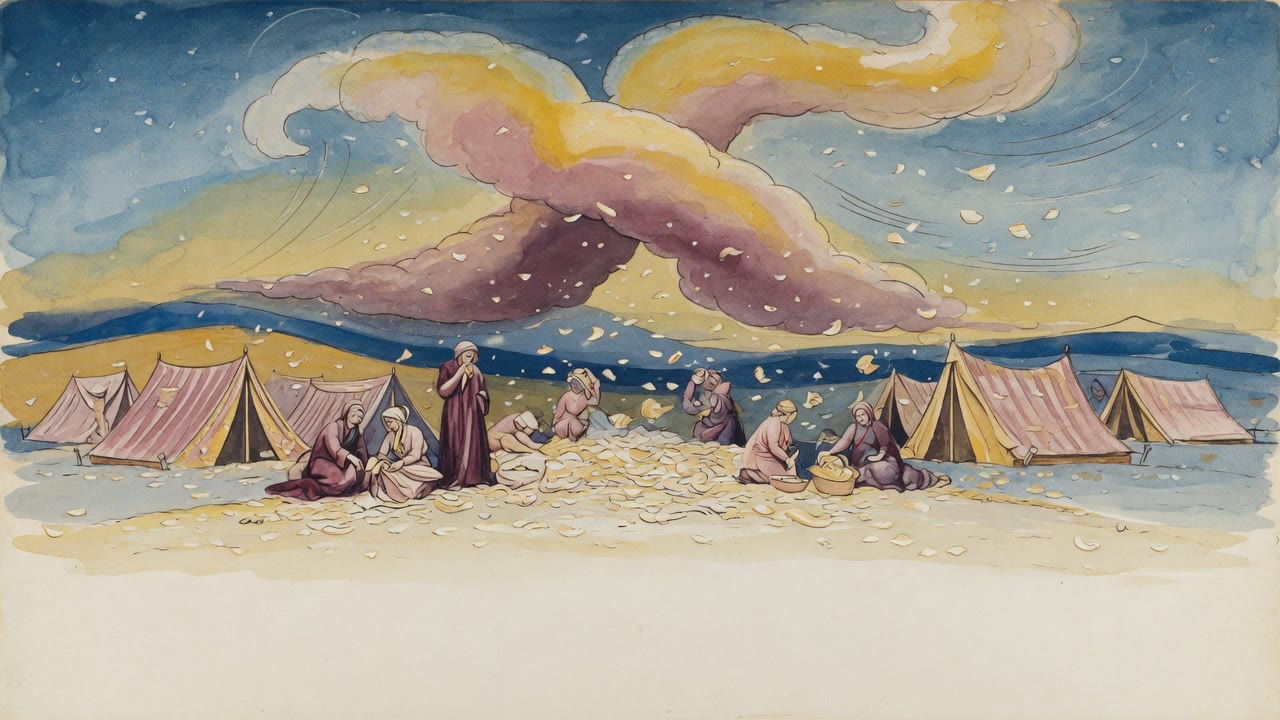
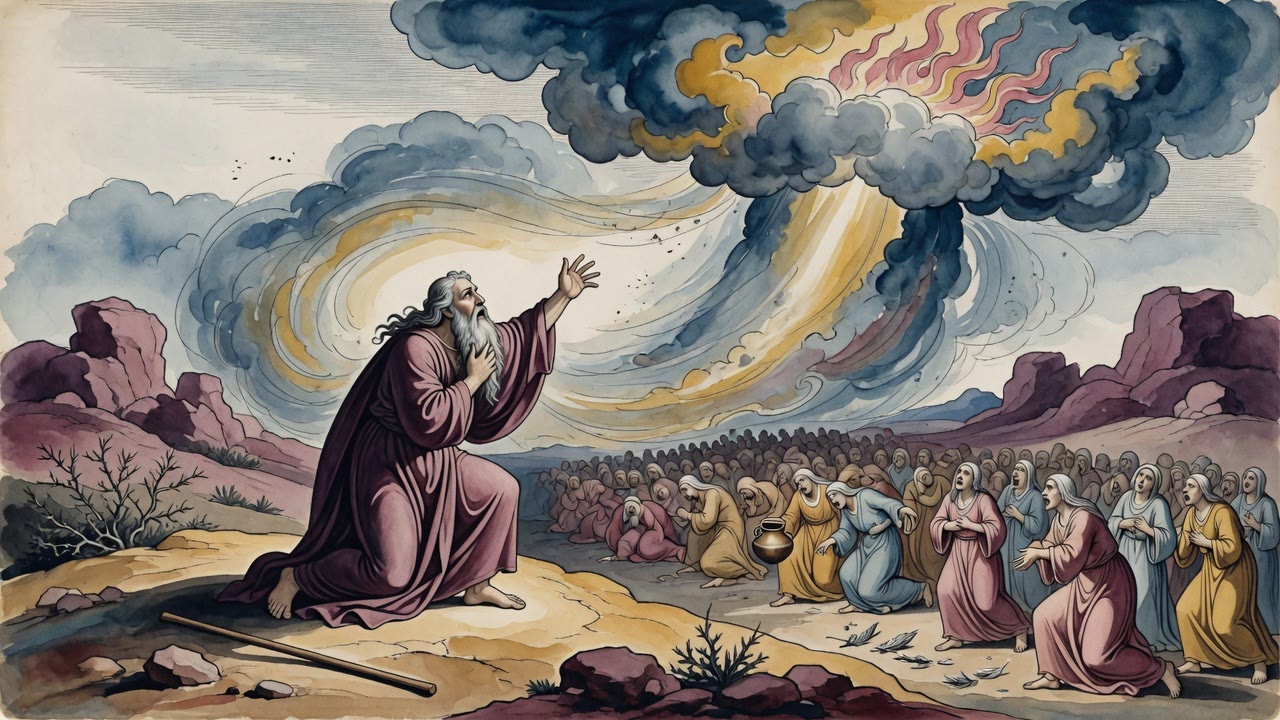
Israel was crying again. They had manna, the miraculous bread that tasted like whatever the eater most desired, fresh each morning, requiring no labor beyond gathering. But they wanted meat. They remembered the fish and melons of Egypt, and they remembered them the way people remember misery when it is over: selectively, warmly, as if the condition of being fed under Pharaoh had been a kind of abundance. They wept at the doors of their tents, loudly enough that Moses could hear it rippling across the entire camp. The weeping of families, all of them at once, rose into the desert air.
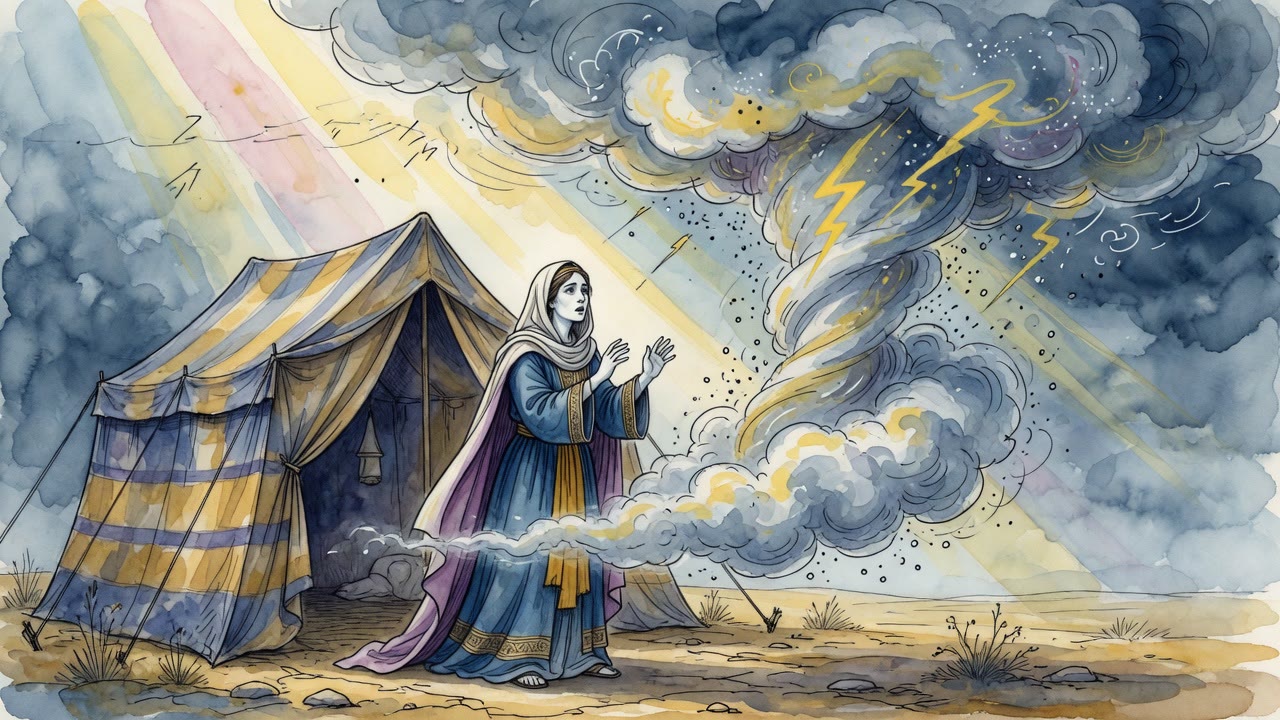
Moses heard it and fell apart.
The Prayer That Asked for Death
What Moses said to God at that moment is one of the most unguarded speeches in the entire Torah. He asked God directly: why have you dealt badly with your servant? Why have I not found favor in your eyes, that you placed the burden of this entire people on me? Did I conceive this people? Did I give birth to them, that you tell me to carry them in my arms the way a nurse carries a nursing infant, all the way to the land you promised their ancestors?
Then, without pause: I cannot carry this entire people alone. It is too heavy for me. If this is how you intend to treat me, please kill me right now. Do me this favor. Let me not see my misfortune.
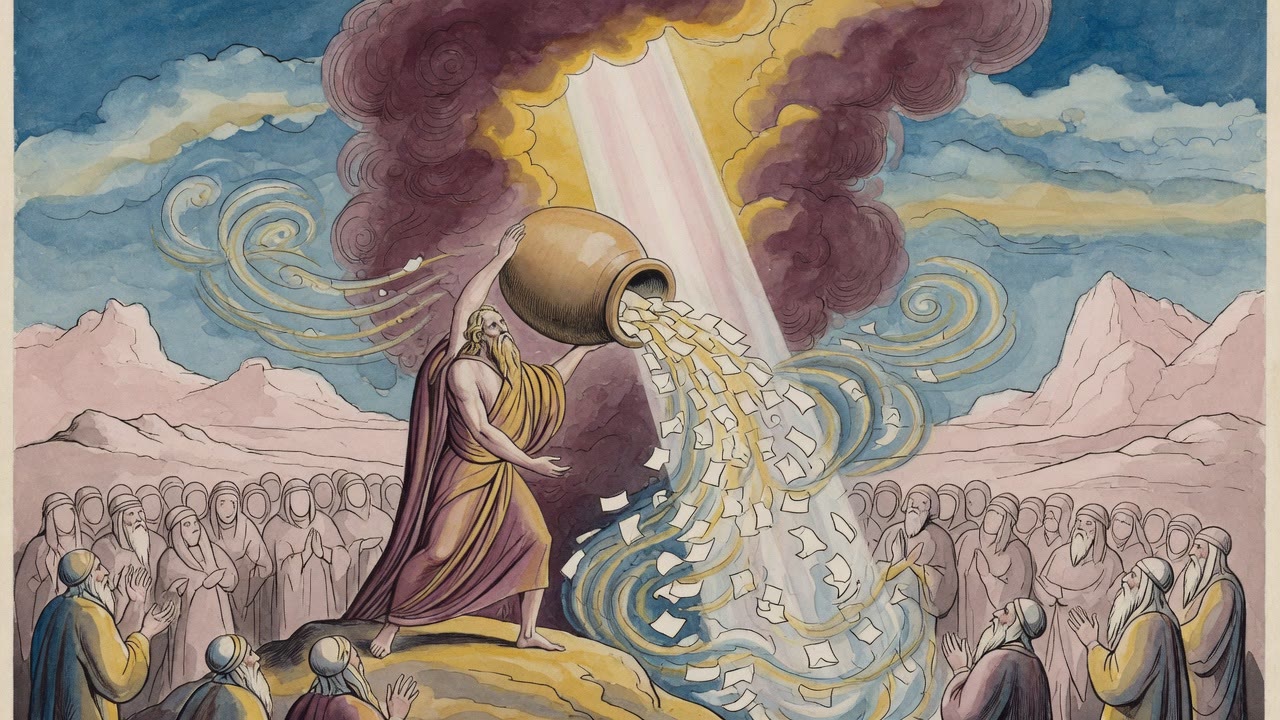
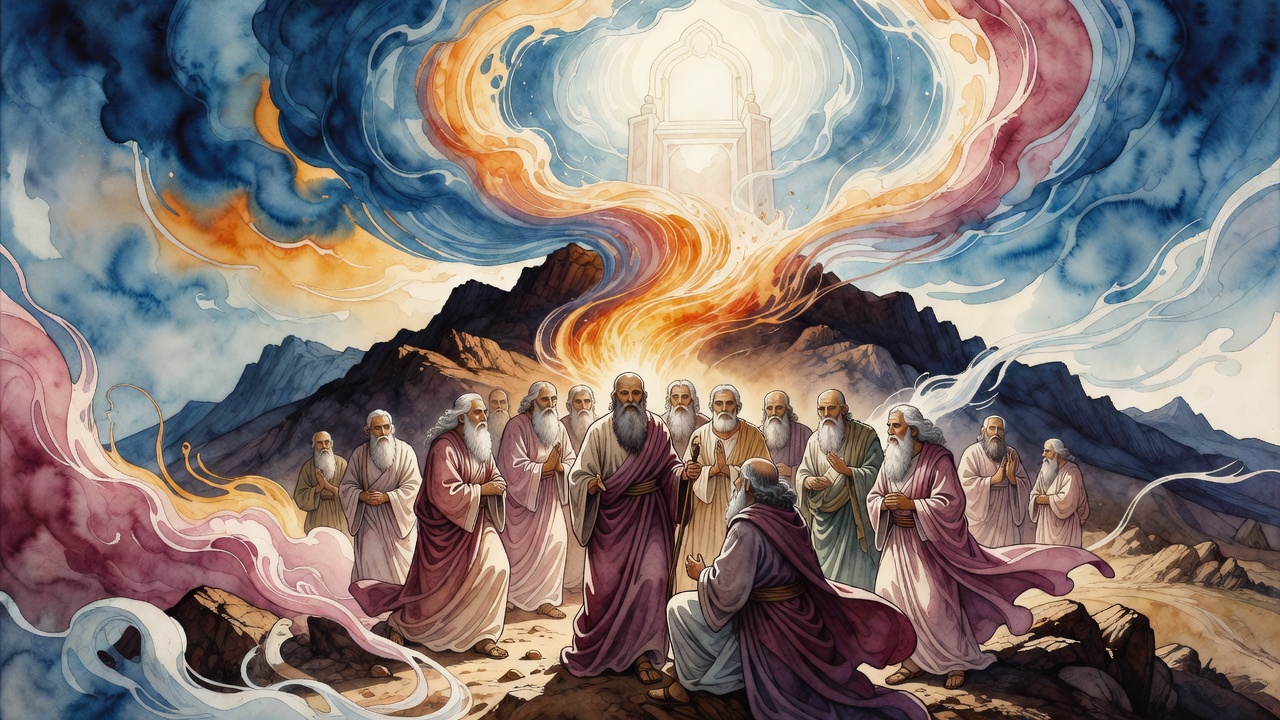
Sifrei Devarim parsed the prayer phrase by phrase. Moses was not having a moment of weakness that would pass. He was stating a structural truth about the distribution of prophetic labor. Seventy elders would subsequently receive a portion of Moses's spirit, not because Moses had failed but because the weight was real. One man bearing the spiritual burden of a nation of former slaves in the wilderness was not a design that could hold indefinitely.
What God Would Provide and What the Dispute Was About
God promised meat. Moses expressed doubt, not about God's power but about the mechanism. Will it be enough? Will it be found for them? Will all the fish of the sea be gathered for them? Rabbi Akiva read these questions as God's direct assertions: yes, I will provide, I will show my power. A second voice in Sifrei Devarim read them differently. The questions Moses was asking were not about logistics. They were about whether the people's complaint had any connection to genuine need. They had manna. They were not starving. The weeping at the tent doors was not hunger. It was the indulgence of people who had forgotten what real hunger felt like and were using remembered longing as a weapon against Moses.
Manna That Came From Abraham's Arm
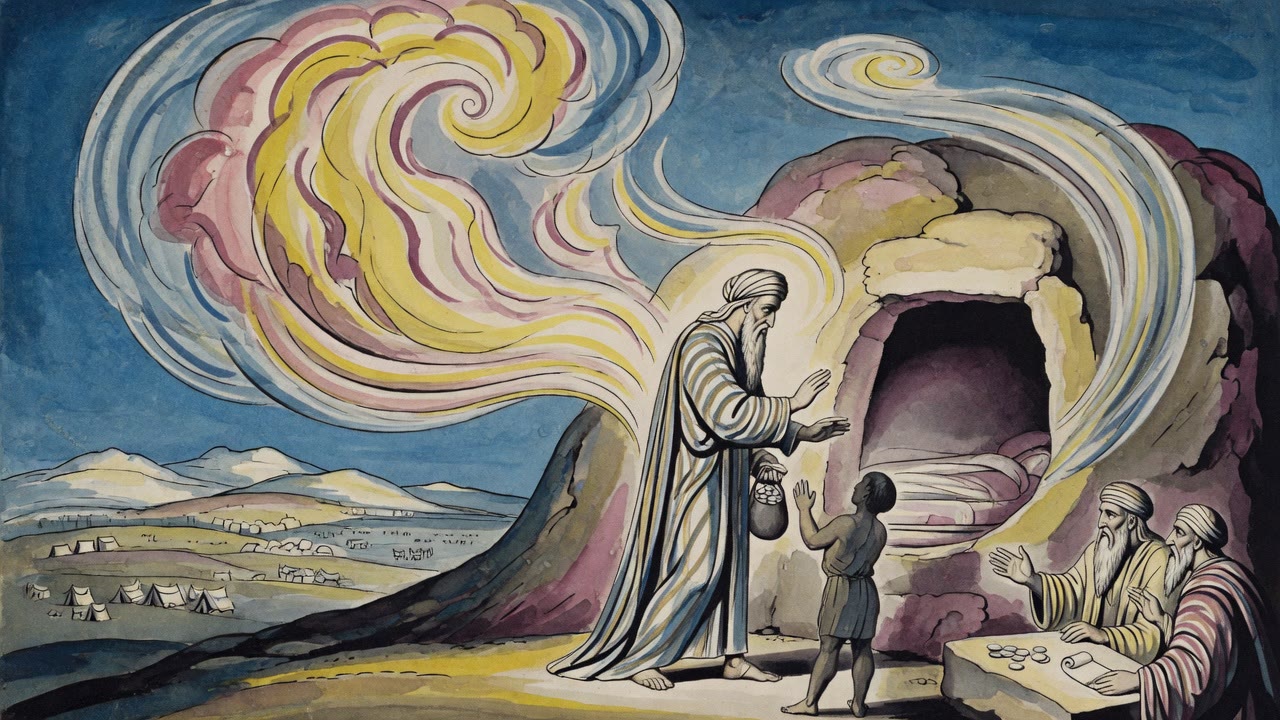
Legends of the Jews preserves a tradition about where the manna came from. When God called to Abraham at the Akeidah and Abraham answered hineni, here I am, the absolute readiness of that moment was not lost. God promised Abraham's descendants that it would be remembered. The manna falling each morning in the wilderness was the downstream consequence of a man lifting his arm to bind his son and saying here I am. The daily bread of a nation was the echo of one ancestor's readiness to give up everything.
The tradition does not soften the irony. Israel was weeping for meat while receiving daily bread that arrived because of the most terrible act of faith in their lineage. They were complaining about manna while the manna's existence was a sign that God had heard Abraham's voice forty generations back. Moses knew this history. He had argued Israel back from the golden calf by citing Abraham, Isaac, and Jacob. Now, listening to the weeping across the camp, he asked God to kill him.
The Limit of What a Prophet Could Carry
The tradition does not resolve Moses's prayer by explaining that he was wrong to feel it. God answered by appointing seventy elders and distributing the spirit that had rested on Moses alone. The distribution was not a demotion. It was an acknowledgment that Moses had accurately described his own condition. The weight was too much for one person. The prayer that asked for death produced a structural change in how prophetic leadership worked in Israel.
Moses stayed alive. He stayed prophesying. He went on to receive the quail, to watch the people eat until it was coming out of their noses, to address Israel on the plains of Moab forty years later. But the prayer remains in the record unretracted. Moses asked God to kill him in the wilderness, and the tradition preserved every word of it.
← All myths