Moses Struck the Rock in Fury Before the King's Troops
God told him to speak to the stone. The staff came down twice anyway. Water ran over his feet while the camp still watched his face.
Table of Contents
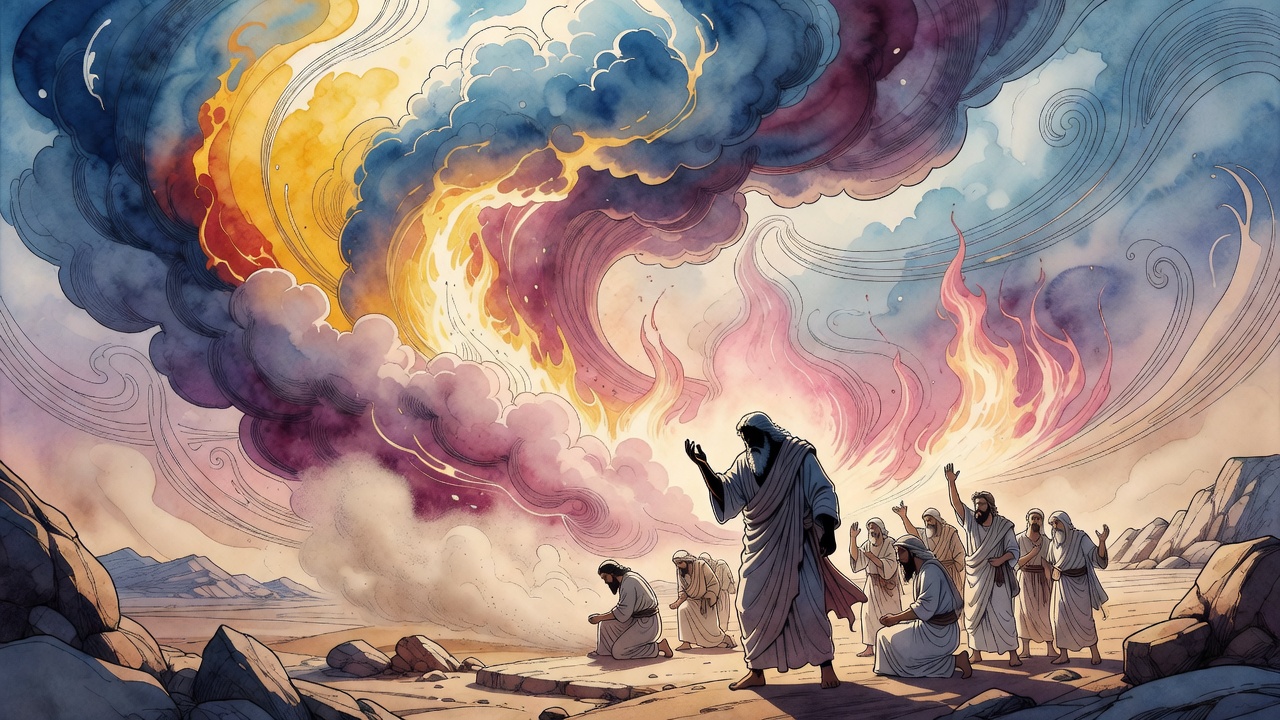
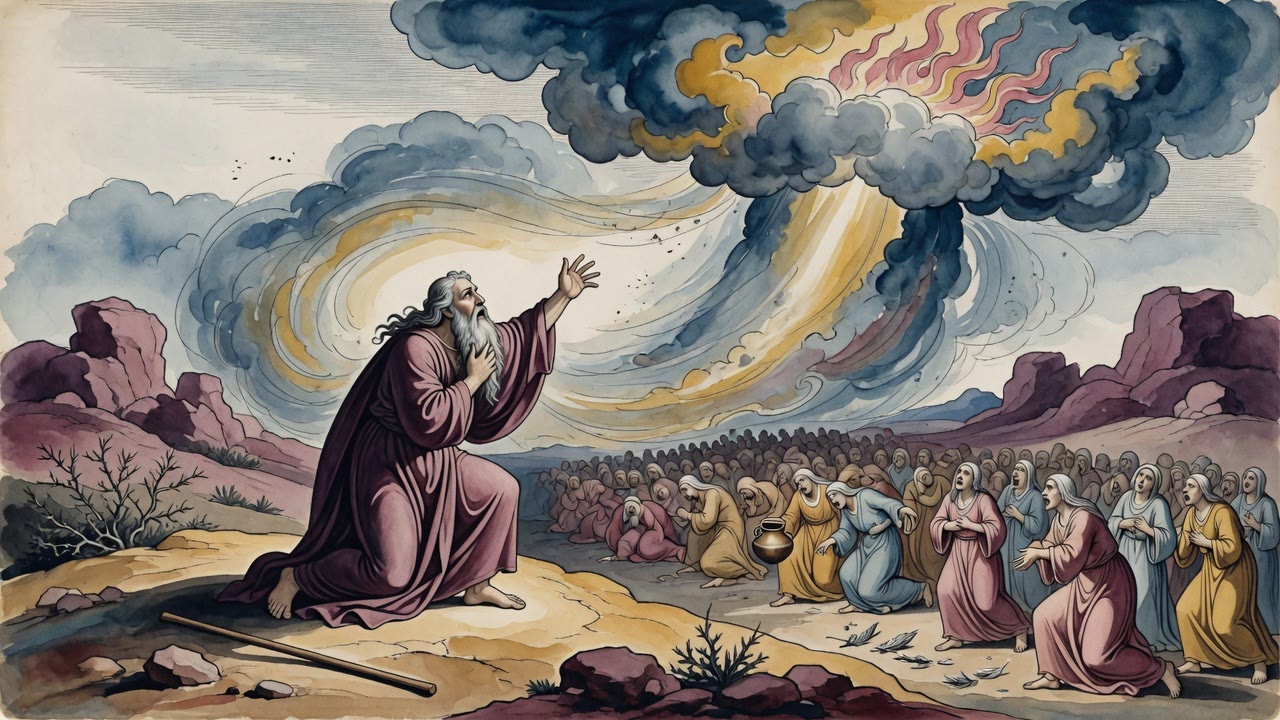
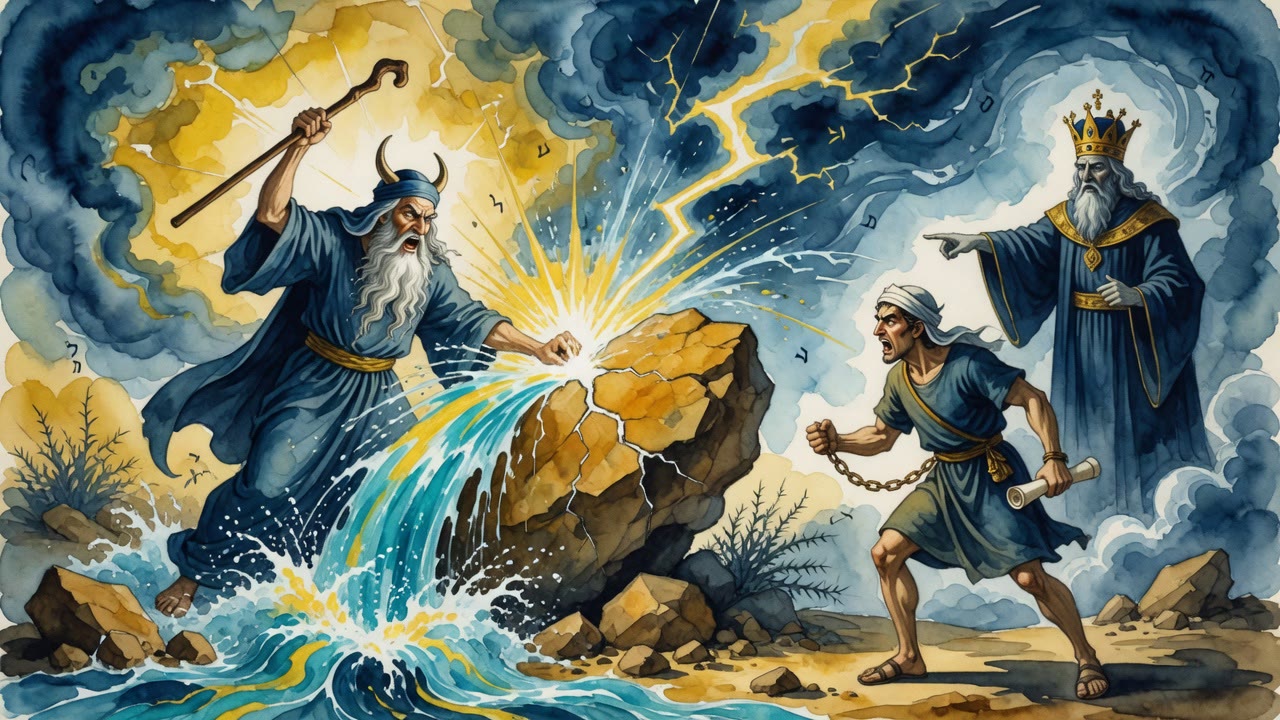
Moses raised the staff and brought it down on the rock a second time. Dust jumped. A crack opened. Water shoved out in a thick sheet and ran over his sandals, over the stone, toward the mouths that had been shouting at him since morning.
 Click for full size
The camp drank. Children shoved in with skins. The miracle worked. The face he had worn while he struck did not come off with the thirst.
Forty Years Had Worn the Patience Thin
He had stood at a rock before. In the first years after the Sea, at Horeb, God had told him to strike, and to take elders so they would see the water was not from a hidden well. The people thought that staff could only ruin. It had brought the plagues and the Sea. God wanted them to watch it do good. Moses let them pick the stone. He touched it with the sapphire rod. Water came. The place took two names, Massah and Meribah, because Israel tested God there and asked whether He was Lord over them or not (Exodus 17:7).
That striking had been ordered. This one was not.
Forty years on, at Meribah again, the well they had lived by had failed them in their minds. Most of the mouths in front of him had been born in sand. They put their hands on their hips and asked whether he had brought them out to die of thirst (Numbers 20:4). He looked at them. The long habit of prayer ran out of his hands and left the staff there instead.
Speak, Do Not Strike
God had said to speak to the rock. Speak, as if a stone could be addressed and would answer. The staff in Moses's hand was not ordinary wood. Rabbi Yossi ben Zimra heard the verse "strike into the rock" and said the rod was sapphire, hard enough to go through stone as if the stone were not there. At Horeb that hardness had been a tool. Here it became the easier blow. The lighter act was speech. After all the signs done with that same rod in Egypt, speaking should have been easy. Moses did not speak. He struck, twice, and the water came anyway.
God did not withhold the drink to make a point. The people swallowed. Moses stood in the runoff and understood that a working miracle was not the same as an approved method. "Therefore you shall not bring this congregation into the land" (Numbers 20:12). He did not leave that place until the sentence had closed on him.
The King and His Friend before the Troops
Heaven had swallowed harsher words from him before. When the people wept for meat, Moses had asked whether flocks and cattle must be slain for them, whether all the fish of the sea would be enough (Numbers 11:22). That was a lack of faith too, and larger, and no death sentence followed it.
A king had a close friend. In private the friend used harsh words, even arrogant ones. The king let it pass. Later the friend used the same mouth in front of the legions. The king decreed death. "The first one was between Me and you," God said to Moses. "Now, in the presence of the multitudes, it is not possible." The camp had watched a servant of the King strike when he had been told to speak. They would carry that face as if it were the King's own fury.
Aaron stood beside him in the same failure. The public act bound them both. Anger in front of the host could not be walked back in a tent at night.
Write Why I Am Flogged
Moses asked for the charge to be written plain. He did not want the generations to file him with the wilderness that had angered God. He pictured two women flogged in the same court. One had committed a sexual crime. One had eaten unripe fruit of the Sabbatical year. The second begged them to hang the fruit on her so the street would not say she was the first. "Let it be written in my regard for what I was punished." So the verse says, "Because you did not have faith," a label on the wound, not a silence that would let rumor do worse work.
Water still ran. The staff still shone like cut stone in his hand. He would die on this side of the river because the King would not let a furious face stand in for His own in front of the troops. The people filled their jars and did not see the door that had just shut on their prophet.
← All myths