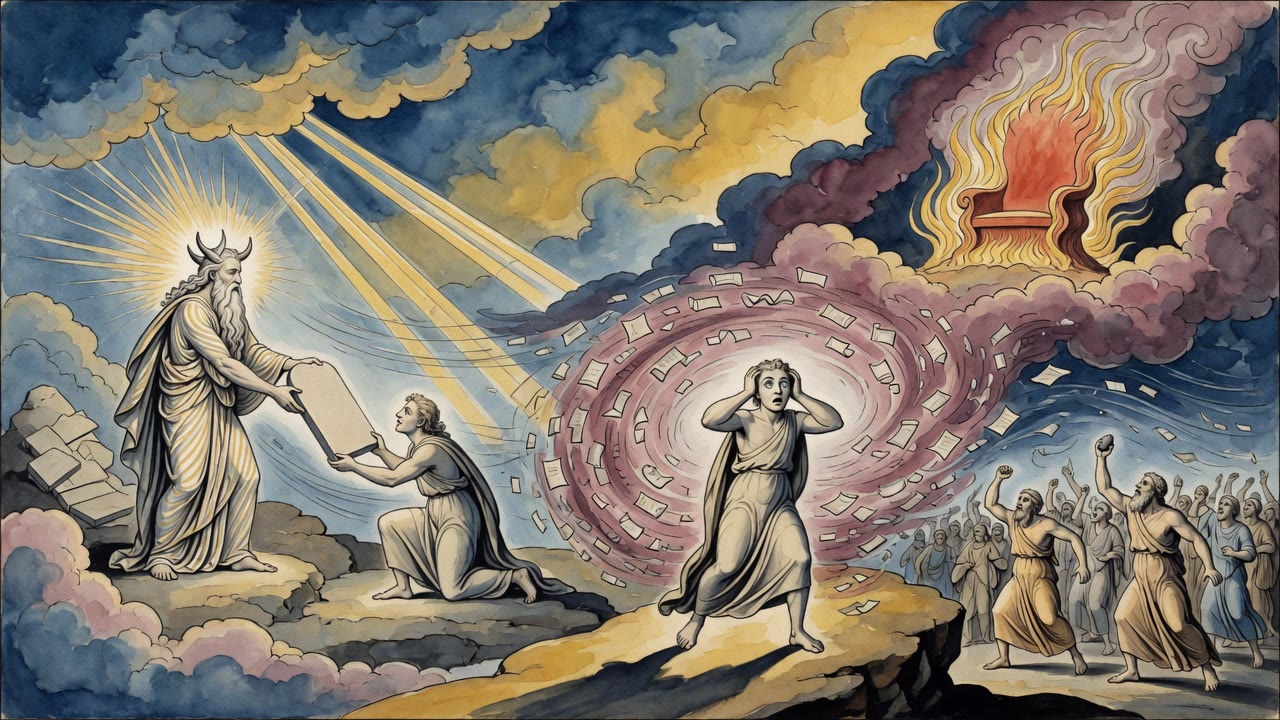
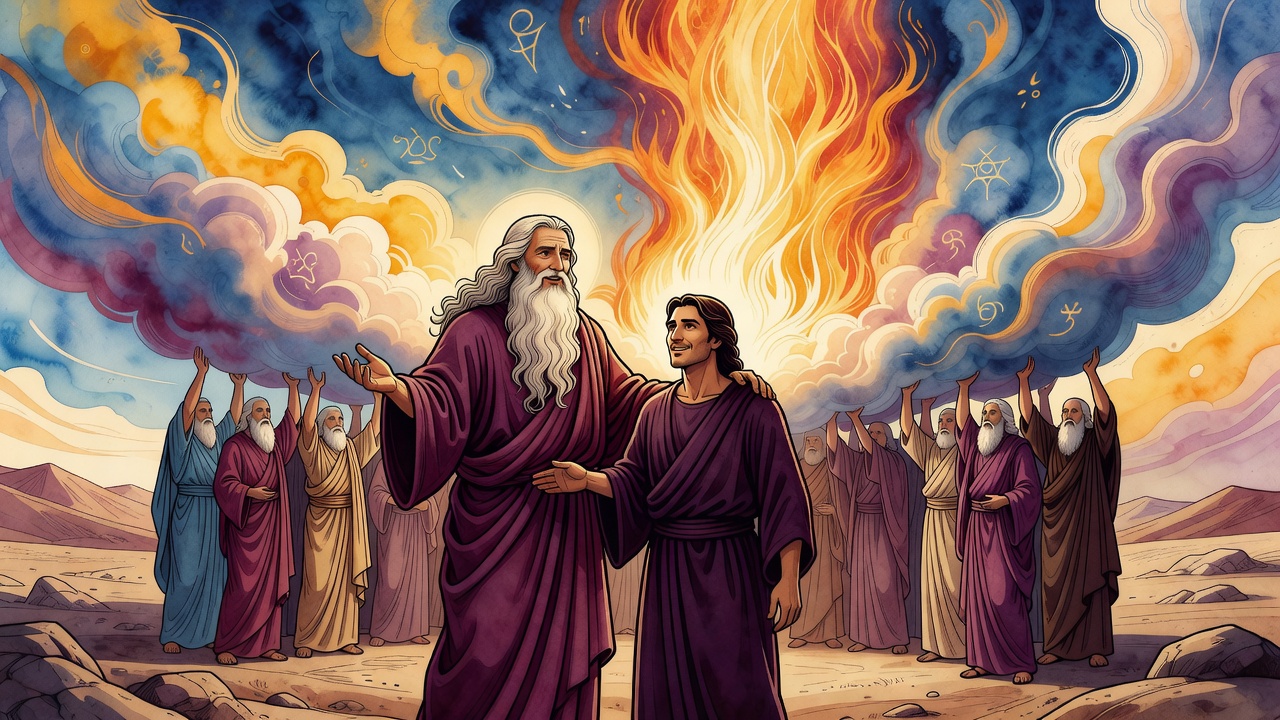
Moses Handed the Mantle to Joshua Inside the Tent
The cloud stopped at the tent door and would not come in. Moses said to Joshua the same words God had just spoken, then left him holding them.
Table of Contents
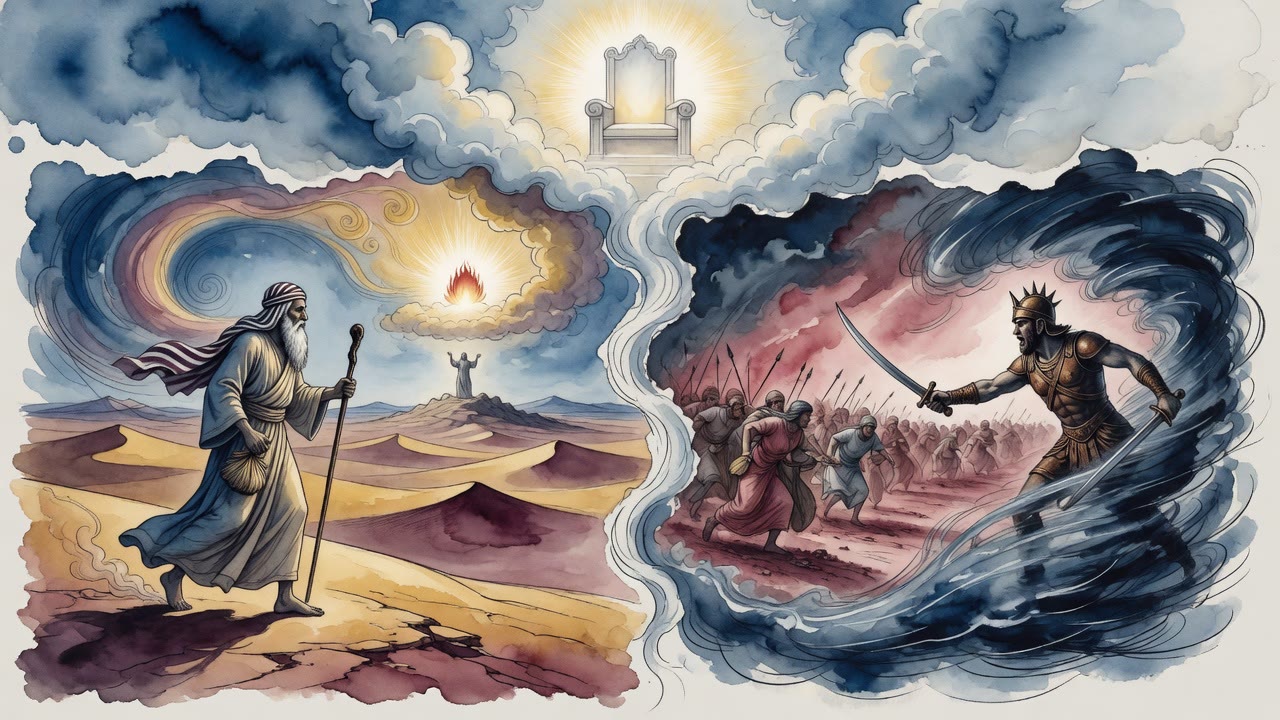 Click for full size
Take Joshua Into the Tent
Moses' days were ending. God did not send him up the mountain yet. He sent him for a younger man.
"Take Joshua the son of Nun, your servant, and place him in the Tabernacle. I will command him."
Joshua had been with Moses since he was young. He had fought Amalek while Moses held his arms up on the hill. He had gone up Sinai as far as the lower reaches and waited while Moses walked farther into the cloud. He had guarded the Tent of Meeting when Moses went out, staying inside after the Presence departed, as if the empty place itself were worth watching. Warrior. Son of valor. Minister to Moses in prophecy. None of it was inherited. All of it was earned in the specific work of standing near a man who spoke with God face to face and not being burned out of his own name.
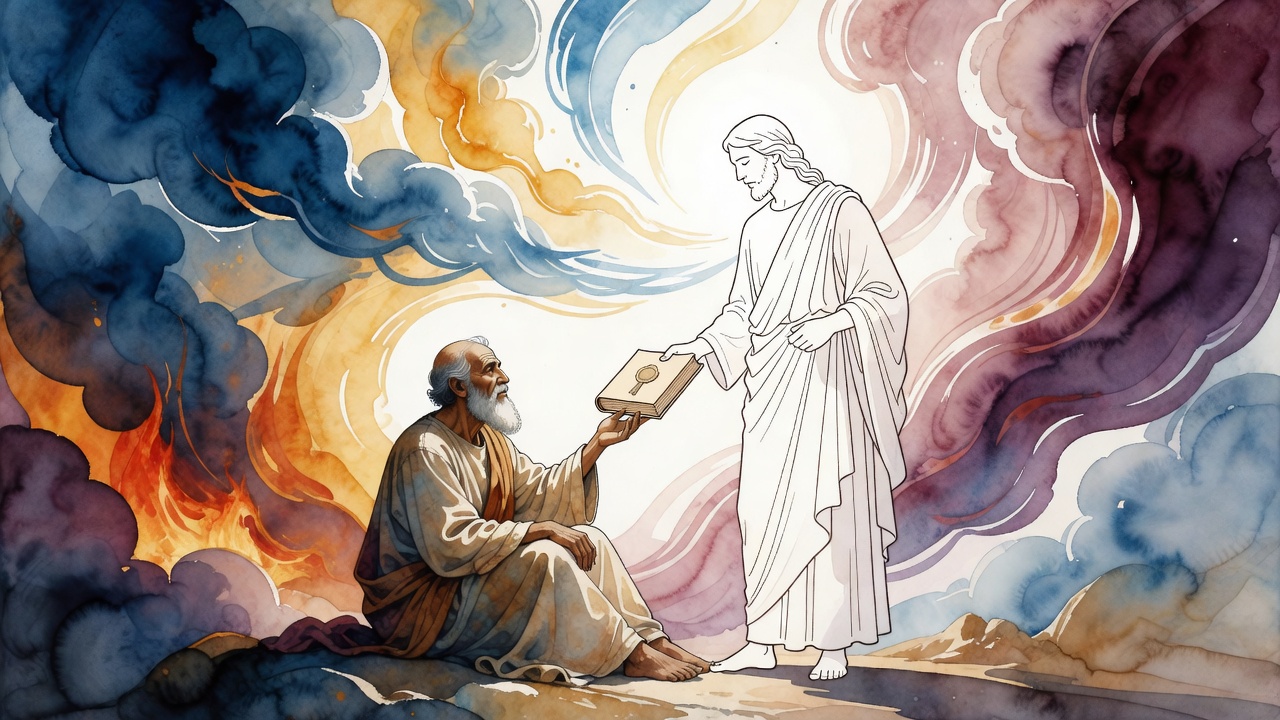
Moses did as he was told. He brought Joshua in. Inside the Tent he handed Joshua the work as if it were a mantle he could no longer wear. There was no cloth. There were words, and a younger pair of shoulders.
The Cloud Stood at the Door
The Lord appeared in the Tabernacle. The pillar of cloud came and stood at the entrance of the Tent. Not inside. At the door.
All through the wilderness that pillar had moved to show the people where to go and stopped to show them where to stay. Now it stopped on the threshold, between what was ending and what had to begin, and it watched the transfer happen from the one place that belonged to neither man alone.
God spoke to Joshua there. "Be strong and courageous. You will bring the children of Israel to the land I swore to give them. I will be with you."
The words landed on a servant who had spent years inside other people's commands. Now the command had his name on it. The cloud did not come in to make it easier. It stayed at the door and let him hear.
Moses Said the Charge Again
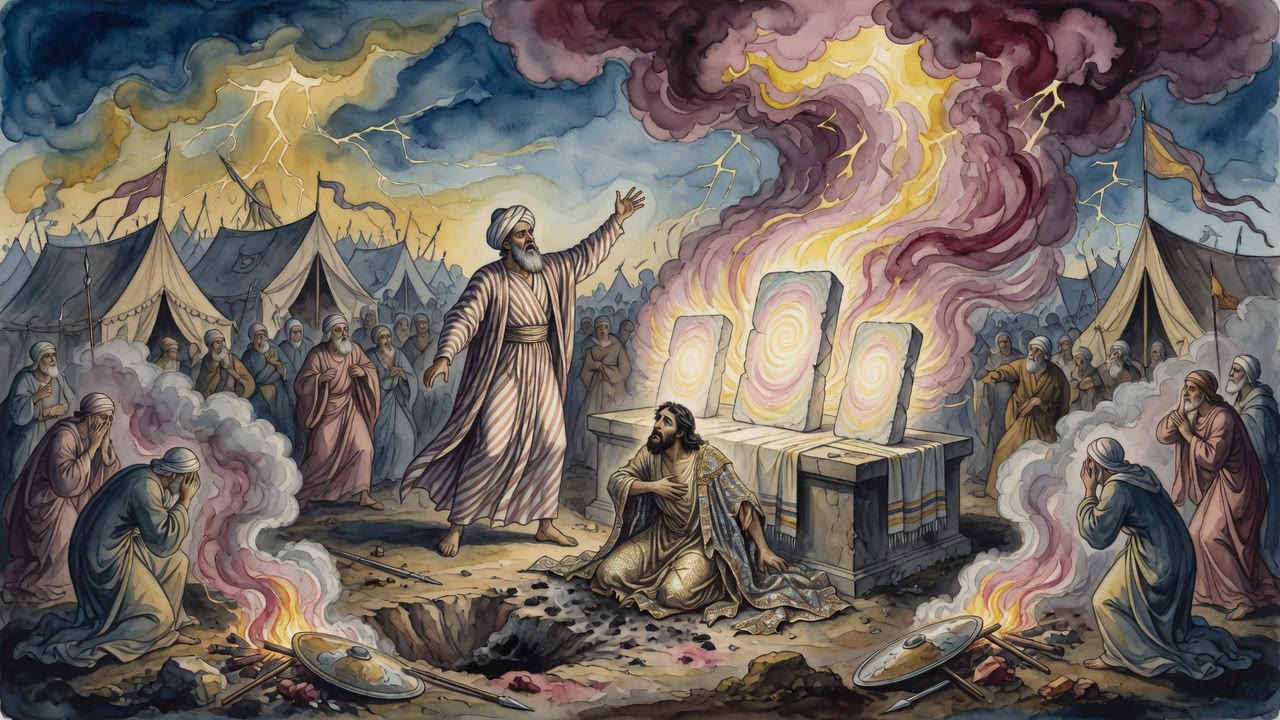
Then Moses turned to Joshua and said the same words. Be strong. Be courageous. The Lord will not leave you or forsake you. Do not be afraid. Do not be disheartened. You will make the children of Israel inherit the land, and the Lord will be with you.
He had never done this for anyone else. He was not handing over signs that bent rivers, or a history of plagues, or the particular courage of a man who had argued with God and lived. He was handing over the one thing that had kept him moving through forty years of impossible days: the knowledge that the One who sent him would not abandon the task halfway.
He said it in the same words in which he had just heard it. The doubling was the gift. Joshua would not have to guess whether the charge had cooled in a human mouth. He had heard it from God. He heard it again from Moses. The pillar stood at the door and did not move.
Moses called all Israel and told them what they had seen in the wilderness. Observe the words of this law. Walk in the way. Do not turn right or left. He taught them statutes and judgments to do in the land. Then the Lord said, "Go up to Mount Abarim and die there, and be gathered to your people as Aaron your brother was gathered."
Joshua Rose After the Thirty Days
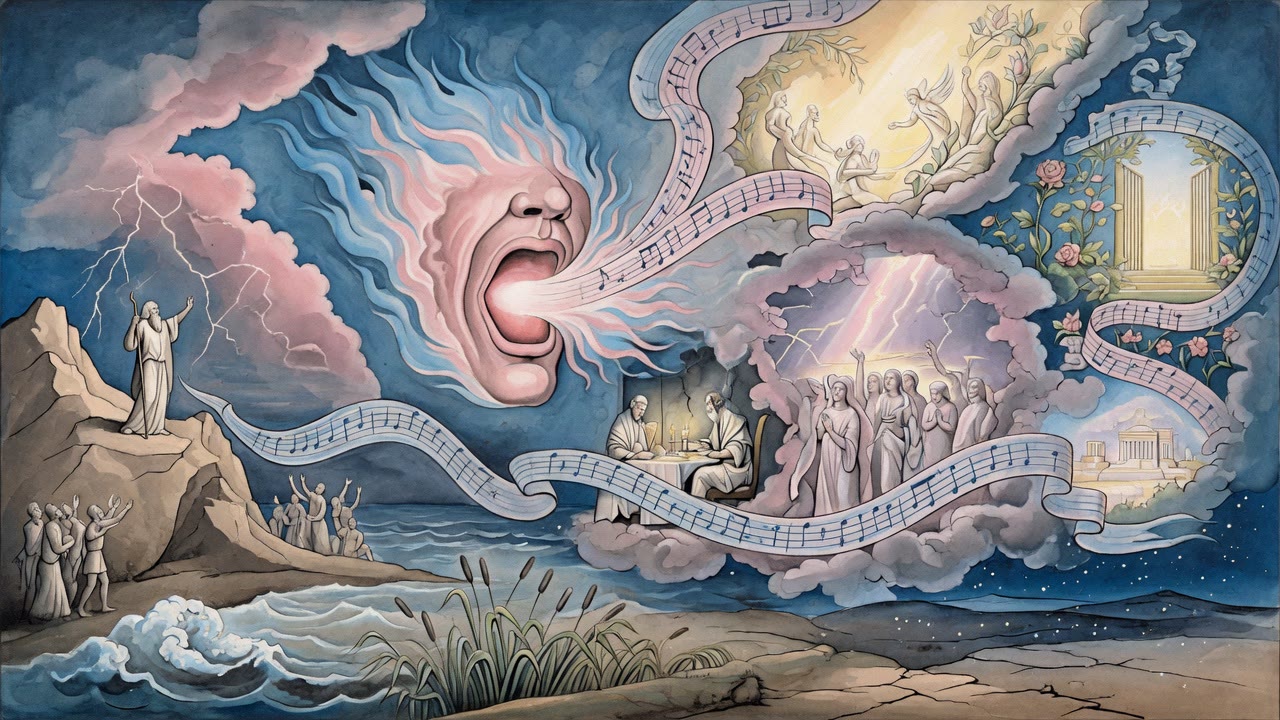
Moses went up as he was commanded. He died in the land of Moab by the order of the Lord, in the fortieth year from the going out of Egypt. Israel wept in the plains of Moab for thirty days. When the days of weeping were done, the Lord spoke to Joshua.
"Rise up. Pass the Jordan to the land I have given to the children of Israel. You shall make them inherit it. Every place the sole of your foot treads shall belong to you. No man shall stand up against you all the days of your life. As I was with Moses, so I will be with you. Only be strong. Keep the law Moses commanded you. Do not turn from it, right or left."
Joshua commanded the officers. Pass through the camp. Tell the people to prepare food. In three days you will cross. The officers did it. He sent two men to spy out Jericho. They came back after seven days and said the whole land was delivered, and the people in it were melted with fear.
The Manna Stopped in Gilgal
Joshua rose in the morning with all Israel. They left Shittim. They passed the Jordan. He was eighty-two years old when he put his foot on the far bank. The people came up from the river on the tenth day of the first month and camped in Gilgal, at the eastern corner of Jericho.
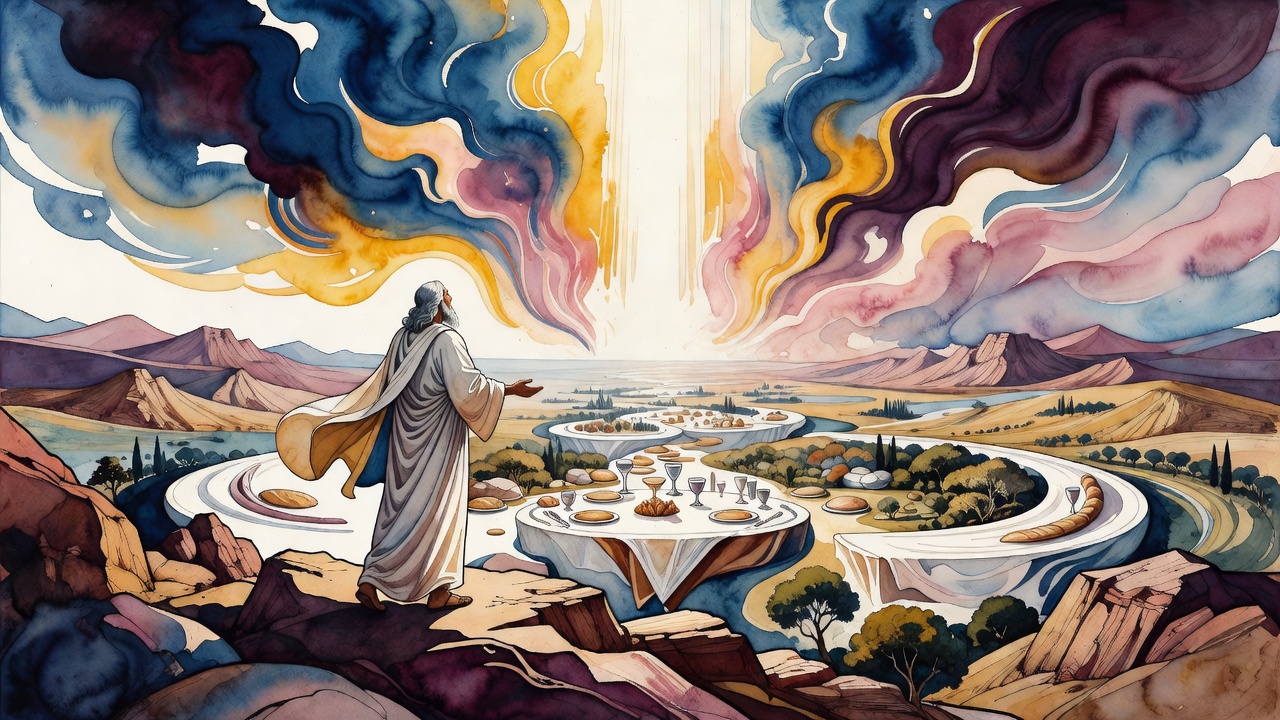
They kept the Passover there on the fourteenth day, as it is written in the law of Moses. On the morrow of that Passover the manna ceased. There was no more of it. They ate the produce of Canaan instead.
The bread of the wilderness had lasted as long as Moses' life and a little beyond. Then it stopped. Joshua, the warrior who had waited on Sinai and watched an empty Tent, stood in a land that would feed them by harvest, not by morning dew, and the pillar that had stood at the tent door was no longer the thing that told them where to camp.
Jericho shut itself. No one came out. No one went in. The Lord told Joshua to rise again. The city was already in his hand if he would walk around it. The servant who had been placed in the Tabernacle now had to take a walled town without the man who had split the sea.
← All myths