The Spies Told Joshua He Had No Children and No Right to Speak
Ten men came back from the land certain it would kill them. When Joshua stood up to answer them, they shouted that a childless man had nothing to lose.
Table of Contents
 Click for full size
The Name Moses Changed at the Door
Moses picked twelve men, one from each tribe, and he already knew what most of them were going to do with the assignment.
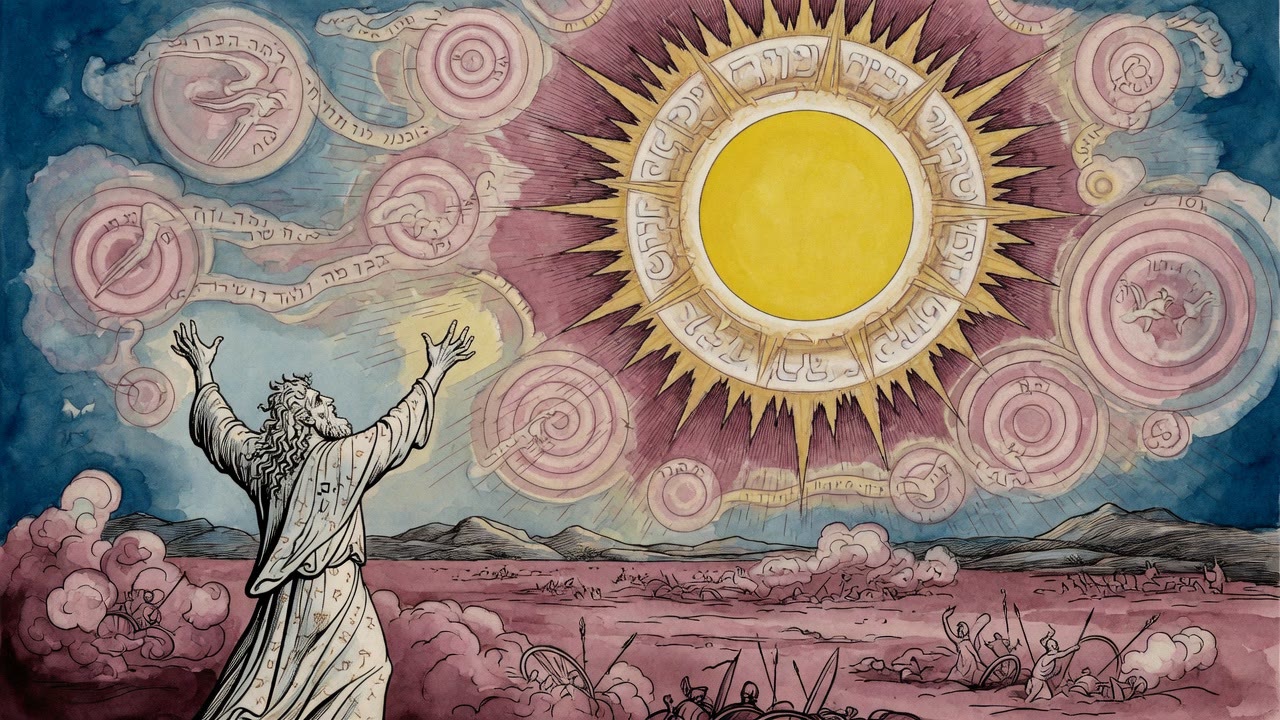
He could not stop them. He could do one thing. He took the man from Ephraim, whose name was Hoshea son of Nun, and put a letter of God's own name into it in front of everybody. Joshua. It was not a promotion. It was a prayer said out loud, that God would stand by him so that he would not follow the counsel of the spies.
Judah sent Caleb son of Jephunneh, who carried the name he deserved, because he said what he felt in his heart and turned away from the advice of the rest of them. Hoshea had been well named too. He was full of understanding, and he was not caught like a fish.
Then the twelve walked north into the land for forty days.
What the Ten Brought Back
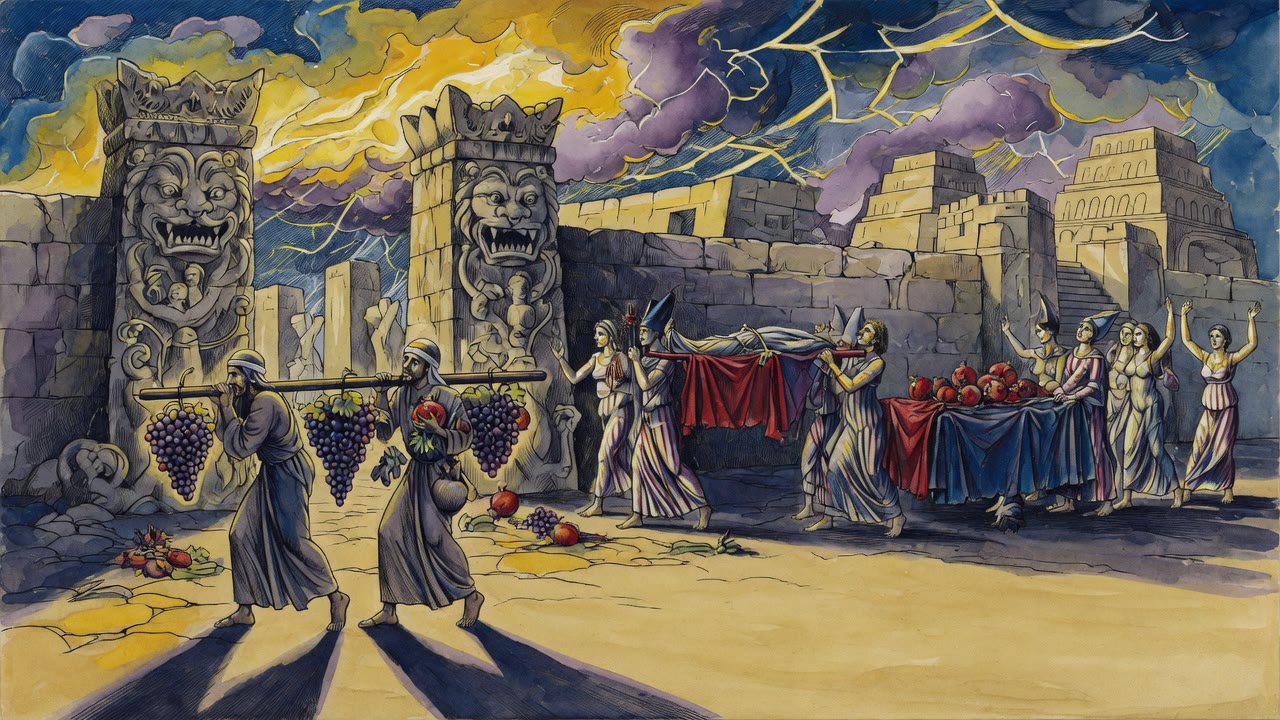
They came back carrying fruit so heavy it took poles and two men's shoulders to move, and they set it down in front of the whole camp, and then they talked.
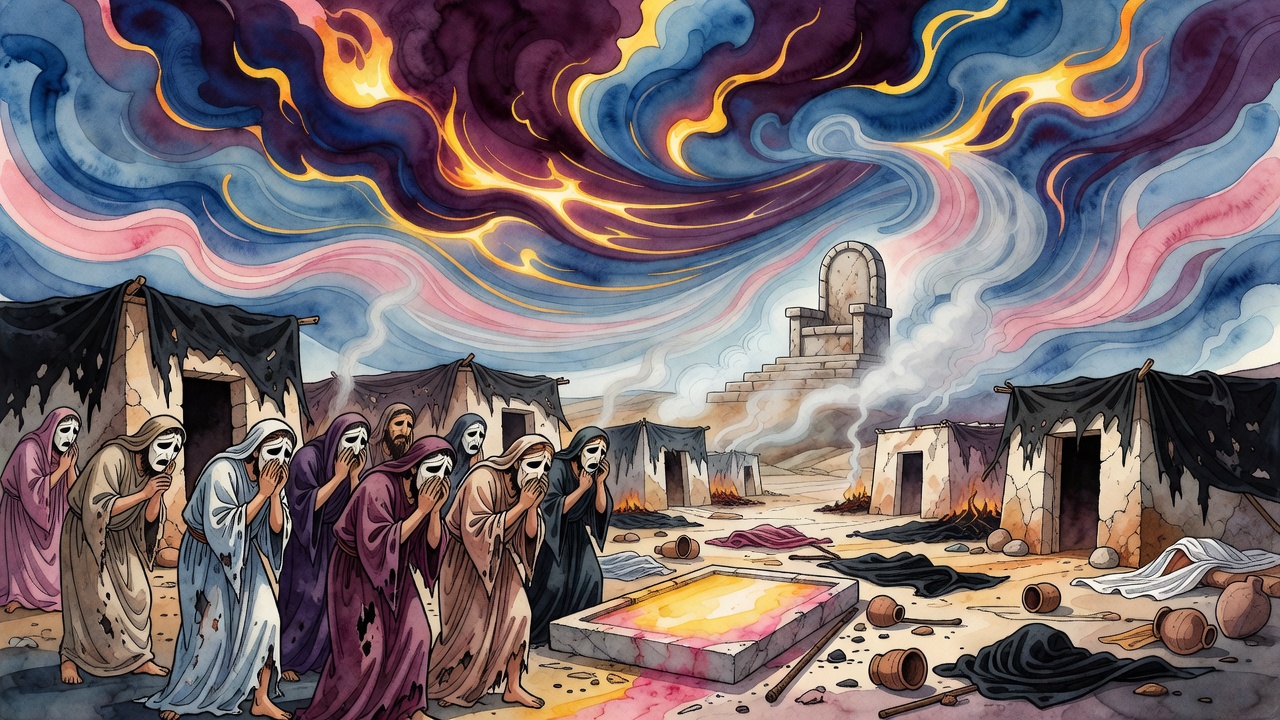
Cities walled up to the sky. Men so big that the scouts had felt like insects looking up at them. A land that eats the people living in it. Ten men said it, one after another, and by the time they finished the camp was weeping out loud, and it wept all night.
By What Right Do You Speak
As soon as the report was over, Joshua got to his feet to contradict it.
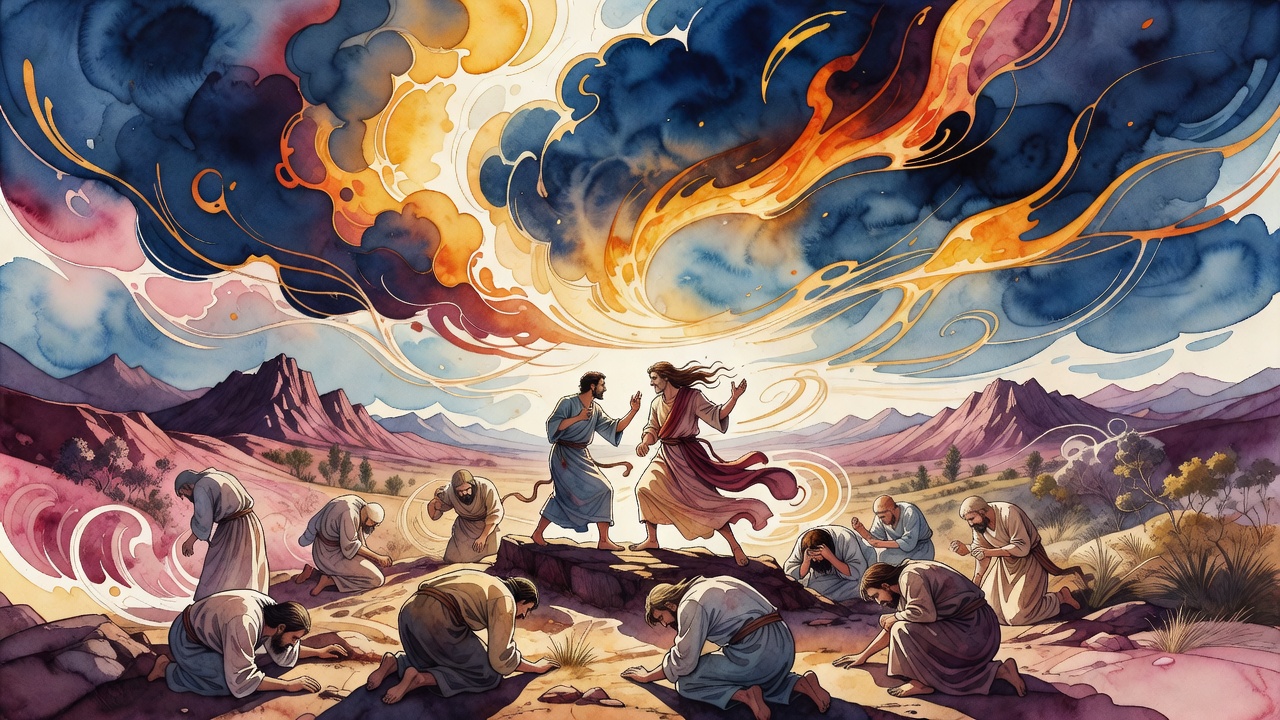
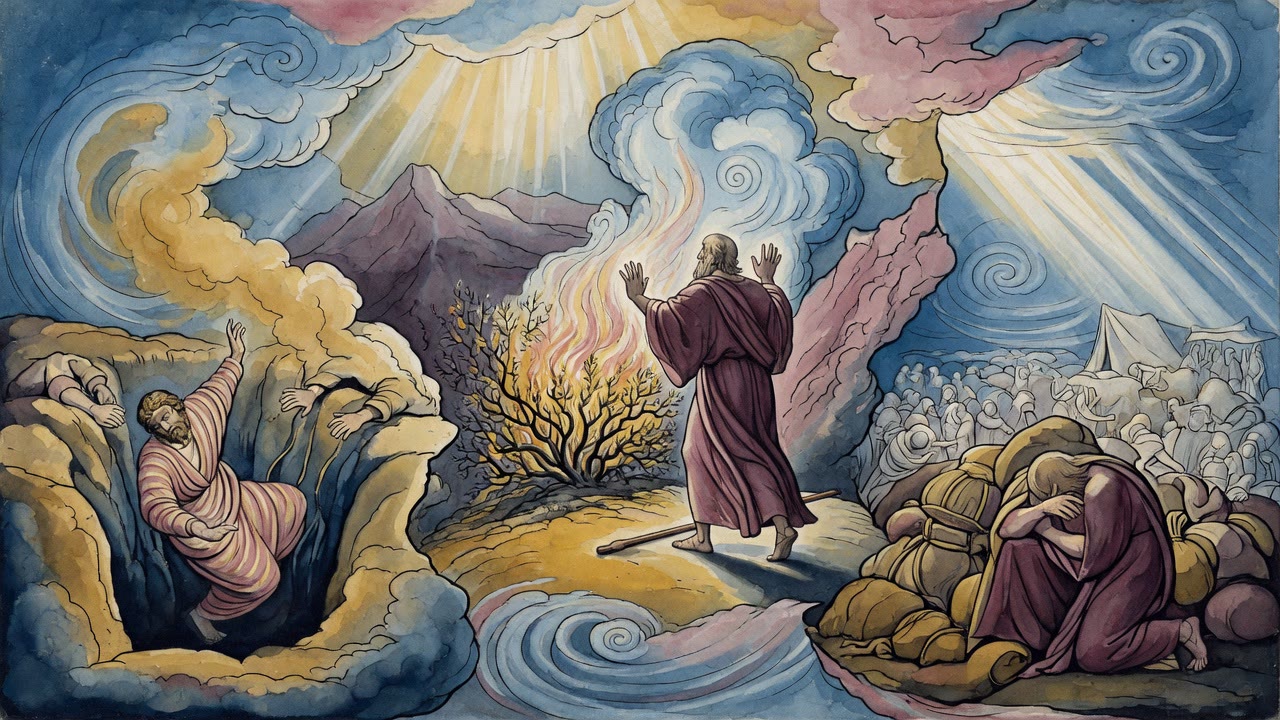
They did not let him open his mouth. "By what right do you presume to speak, you fool?" they shouted. "You have no sons. You have no daughters. What do you care if we all die trying to take that land? We have wives. We have children to think about."
It was the one thing in his life he had no answer for. They knew it, and they had aimed at it. Joshua sat down. He did not want to sit down. He sat down.
Caleb stood a few feet away and watched the whole thing and kept quiet. He was working out how a man might get a hearing in that camp without being shouted flat the way Joshua had just been shouted flat.
The Funerals
The ten died first, of plague, in front of everyone.
Then the sentence came down on everybody who had listened to them. Forty years in the wilderness, a year for every day the scouts had spent walking the country, and not one man of that generation would put a foot across the Jordan. The wives they had invoked buried them. The children they had invoked grew up burying them.
Joshua walked those forty years behind Moses. He had no sons to bury. He was still standing when the last of the men who had counted their children against him went into the ground.
The Ox and the Wild Ox
At the end Moses blessed the tribes one by one, and when he reached Joseph he said something strange about Joseph's line. His firstborn bull has majesty, and his horns are the horns of a re'em.
Everyone in that camp knew both animals. An ox has enormous strength and horns nobody would cross a field to look at. A re'em, the wild ox, carries all its beauty in its horns and cannot pull what an ox pulls. Joshua came out of Ephraim, which is Joseph's line, and Moses put both animals into one sentence over him. The strength of the ox. The horns of the re'em. With them he will gore the nations, to the ends of the earth.
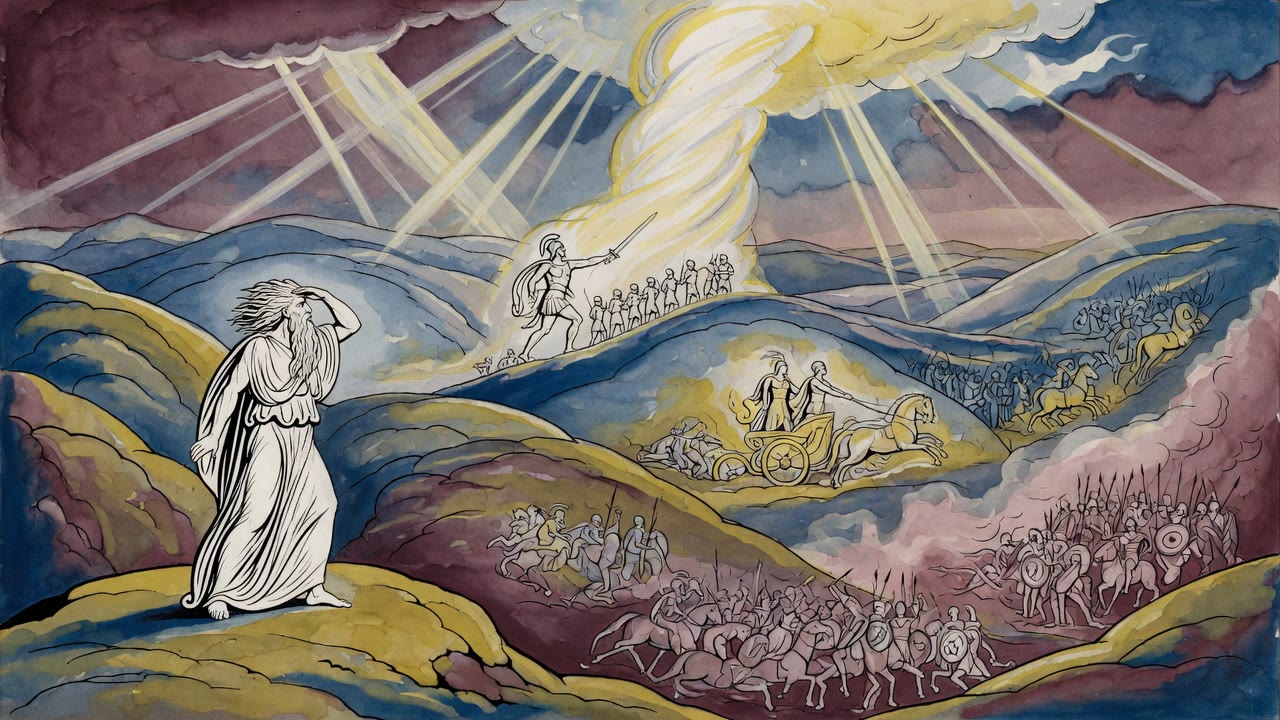
He crossed the river not long after. Thirty-one kings came down in front of him. In that age a ruler who had not taken a house and a holding somewhere in that small country would say of his entire reign that he had done nothing at all, and Joshua took the whole of it and cut it into portions with a measuring line and a lot.
He divided it among tribes crowded with sons and daughters. The man who had been told he had neither wrote down who got what.
← All myths