How Moses Chose Seventy Elders Without Anyone to Blame
Moses had seventy-two worthy candidates and only seventy spots. He designed a lottery that left no human hand to resent and no accusation to sustain.
Table of Contents
 Click for full size
The Problem With Too Many Worthy Men
Moses needed seventy elders. He had seventy-two candidates, six from each tribe, all of them worthy, all of them legitimate, all of them expecting to be chosen. Two would have to be turned away.
In a different kind of community, this would be an administrative problem. In the wilderness camp, it was a political crisis waiting to happen. These were not anonymous applicants in a large city. These were men whose families traveled beside each other, whose children grew up knowing each other's children, whose standing in their tribe depended in part on how they were regarded by Moses. A man passed over for the council of elders, in this particular community, would carry that slight for the rest of his life. And if he believed the selection had been anything less than completely fair, the resentment would pass to his sons.
Moses could not choose twenty of seventy-two by preference and expect the two he left behind to accept it quietly. He needed a mechanism that removed his judgment from the final step.
The Slips and the Vessel
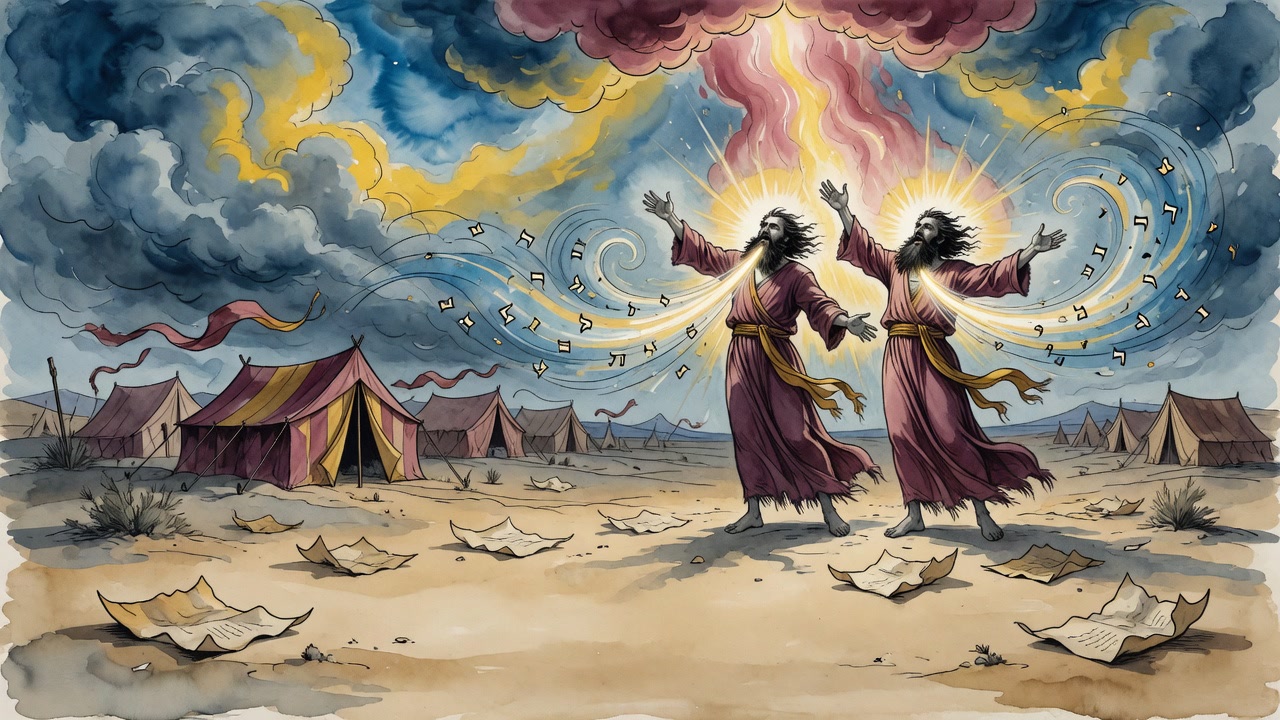
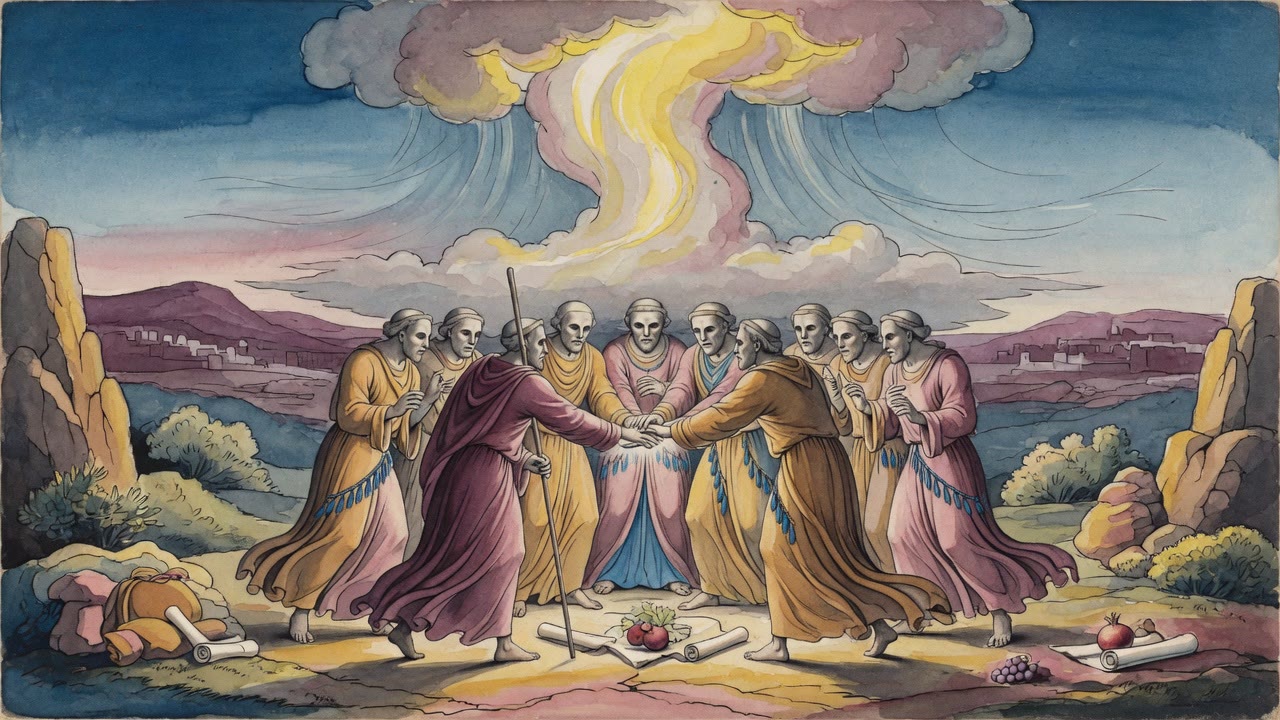
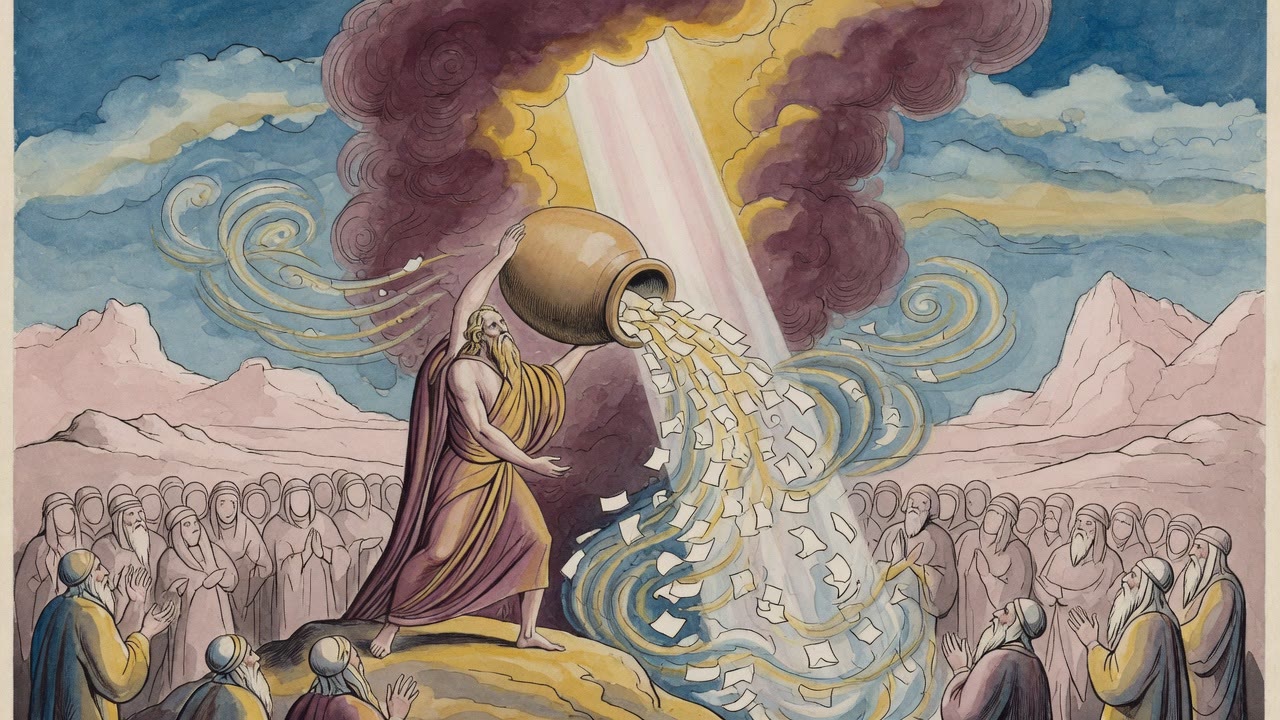
He wrote each name on a slip of parchment. Seventy slips said elder. Two slips were blank. All seventy-two went into a vessel, mixed together, indistinguishable from the outside. Each man drew one slip in turn.
When the two who drew blanks opened their hands, they understood immediately what had happened. God had not chosen them this time. Not Moses. Not tribal politics. Not favoritism toward this family or that lineage. The lottery had spoken, and the lottery was God's instrument. There was no human finger to point at. There was no argument about qualifications that could be sustained, because qualifications had not been the determining factor at the last moment. The vessel had been.
The Names That Came Out
The tradition preserved the full list of the seventy who were chosen, one from each corner of the encampment, each name a thread connecting the council to the full geography of the nation. From Reuben: Hanoch and Carmi. From Judah: Bezalel and Nahshon. From Zebulun: a man named Nimshi, and another whose descendants would one day change everything in Israel's history, a man the text called simply Elijah.
From the house of Joseph: Jair and Adoniram. From Dan: a man named Daniel. These names moved forward through time, threading through genealogies that Israel would one day know by heart. The council chosen in the wilderness turned out to have produced, through the ordinary movement of family lines, people who would matter centuries later in stories no one had yet lived. The lottery had chosen, and what the lottery chose had consequences that ran far past the desert.
Moses's Reassurance to the Two Left Behind
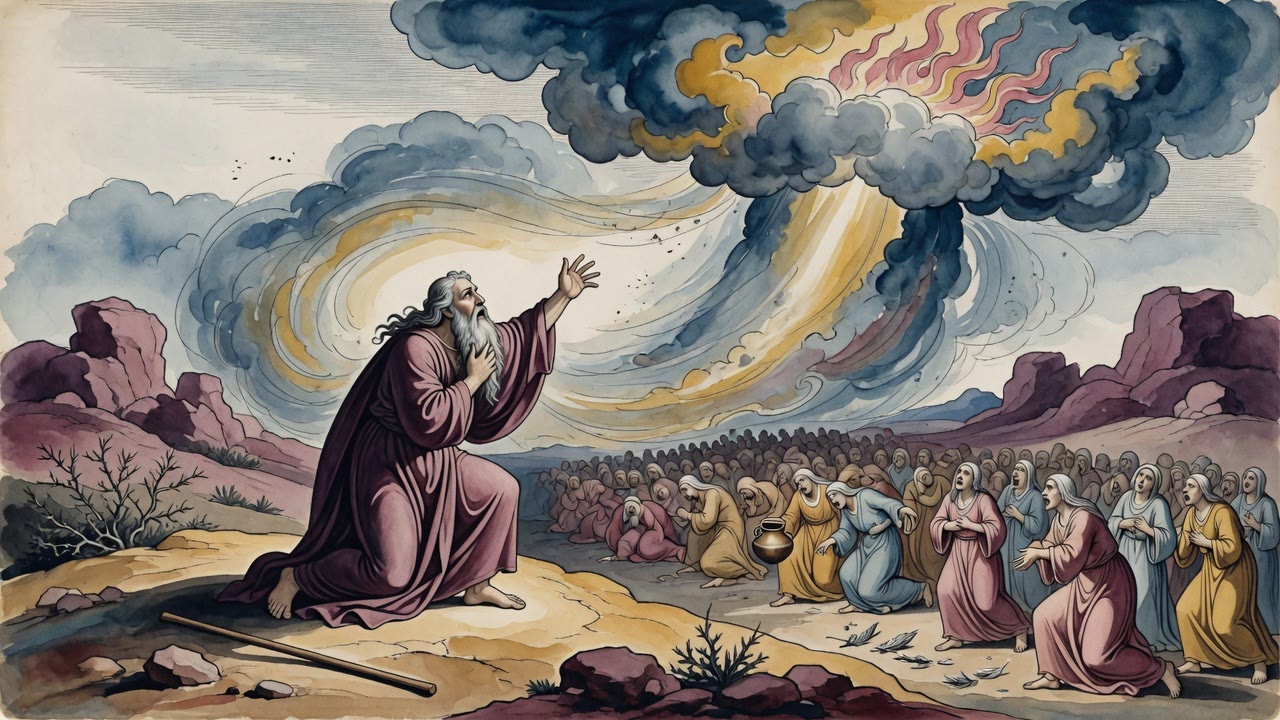
Moses did not dismiss the two men who drew blank slips. He spoke to them. If you had been worthy to be appointed, he told them, the slip with elder written on it would have entered your hand. But this was not your time. The divine economy was not closing against them permanently. It was directing them differently at this moment, for reasons that were not visible from inside the camp.
The reassurance was genuine and also limited. It could not remove the sting entirely. But it placed the outcome outside the range of accusations that could be leveled against Moses or against the other men who had drawn the elder slips. The community had been protected from the grievance that would have grown if Moses had simply pointed and chosen.
← All myths