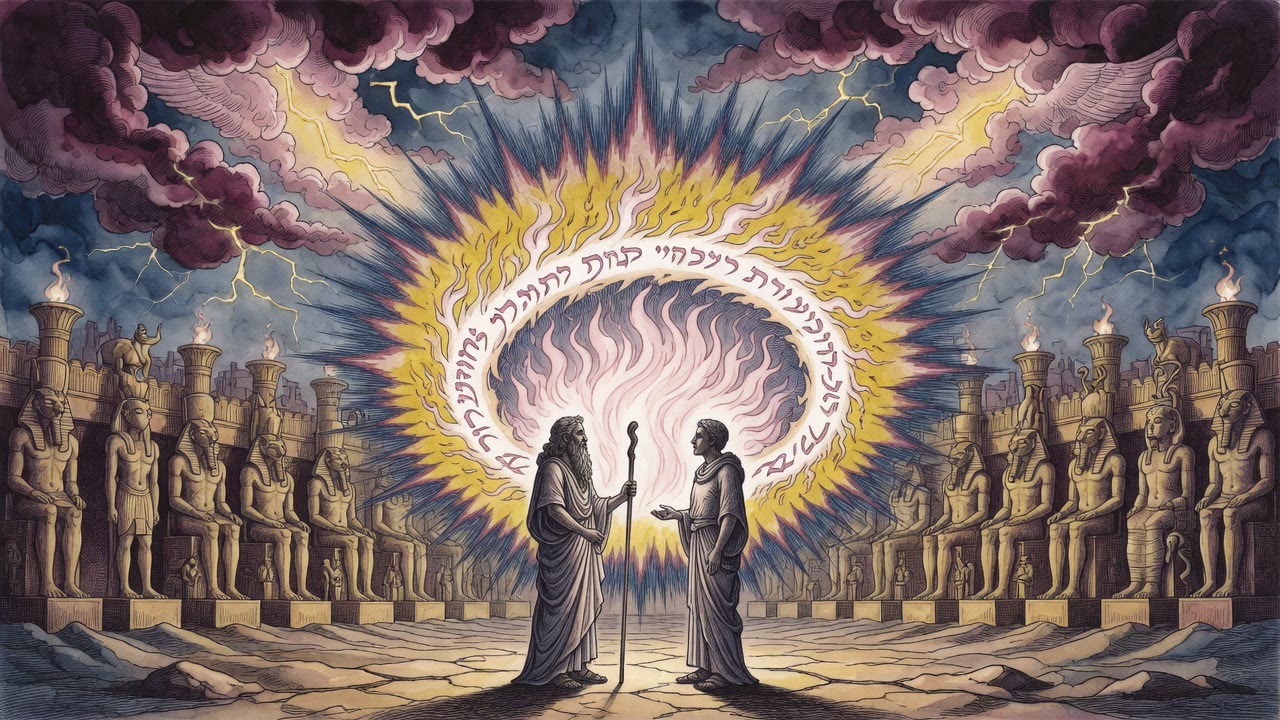
Moses Called Israel Faithless at the Burning Bush
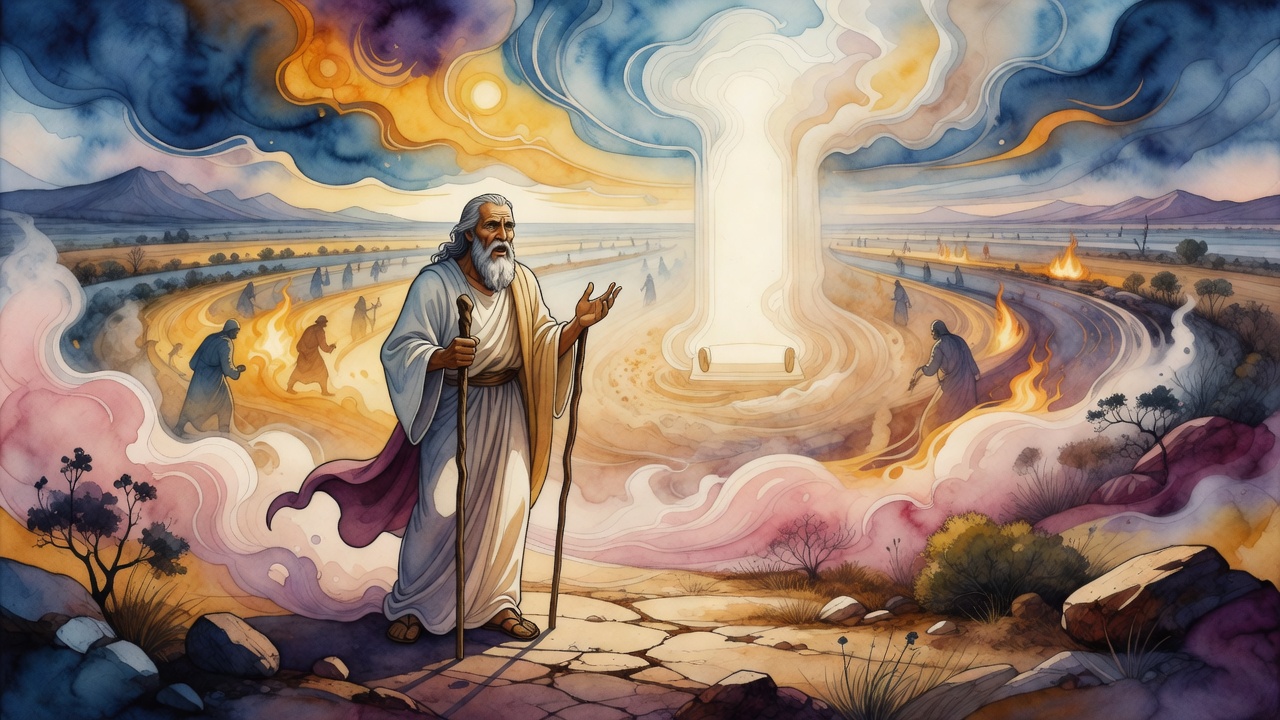
God had already told him the elders would listen. Moses said they would not. The staff hit the sand and became a serpent, and he ran from it.
Table of Contents
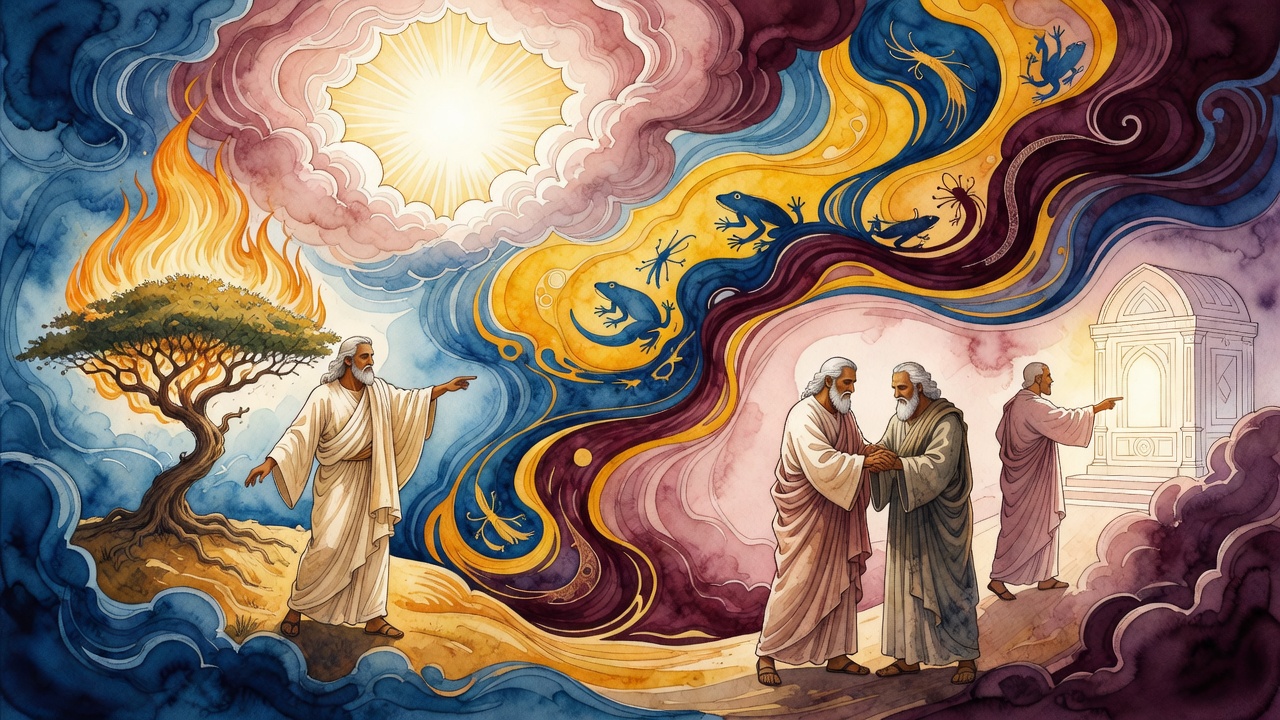 Click for full size
The Staff Became a Serpent
God had already told Moses that the elders would listen. He had said it clearly. Go, and the elders of Israel will hear you (Exodus 3:18). Then Moses said it again anyway. "They will not believe me. They will not hear my voice. They will say the Lord did not appear to you" (Exodus 4:1).
He was contradicting a direct assurance. To call Israel faithless was a specific accusation, and it was not accurate. Their lineage ran through Abraham, who had believed God without evidence when God said leave your land and go (Genesis 15:6). Their own mouths would soon prove the charge false. "The people believed" (Exodus 4:31).
God answered the slander with a question. "What is that in your hand?"
"A staff," Moses said.
"Cast it on the ground."
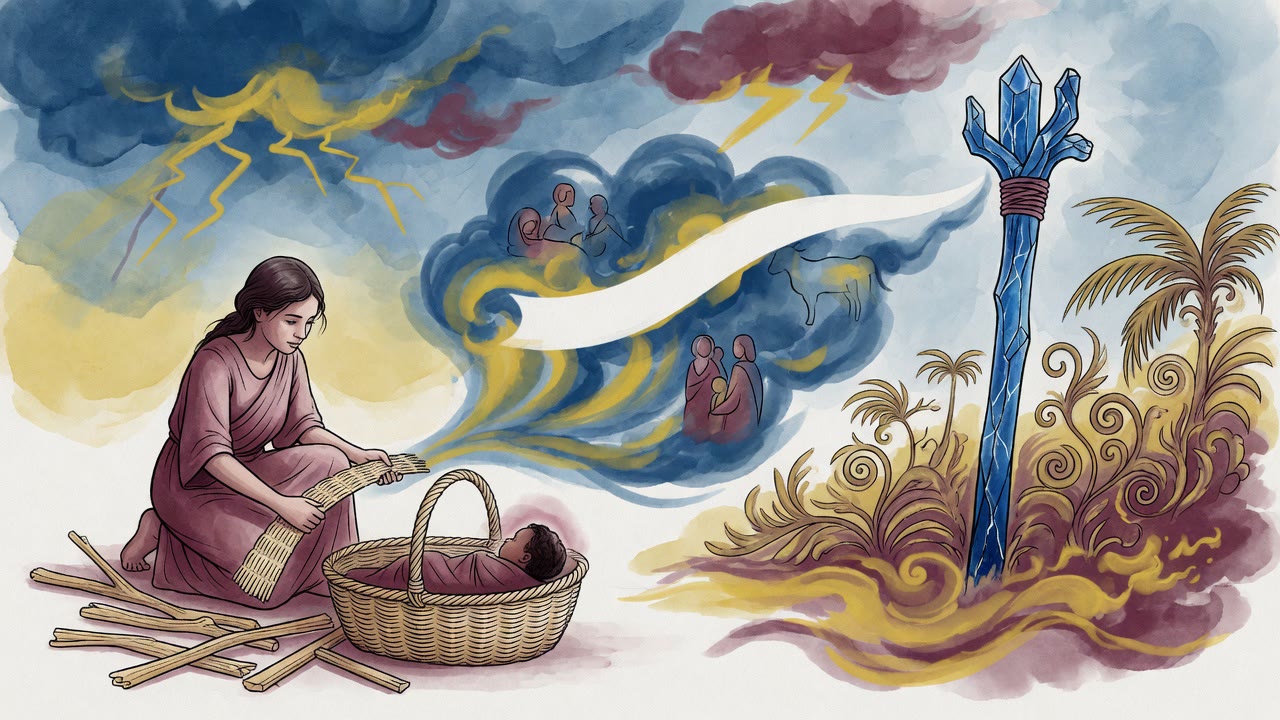
He threw it. The wood hit the sand and became a serpent, and Moses fled from it. The creature whose mouth had slandered the Creator in Eden now lay in the path of the man who had just slandered God's children. God called him back. "Put forth your hand and take it by the tail" (Exodus 4:4).
Moses reached down. He closed his hand around the tail. The wood was hard and dry again in his grip. Pharaoh would bite like that serpent, and then, like the stick, he would be nothing in the hand that held him.
A Hand White as Snow
"Give me a wonder," Moses had asked. God gave him another. "Put now your hand into your bosom" (Exodus 4:6). Moses slid his hand inside his robe and drew it out leprous, white as snow. The one who suspects the innocent is struck in his body. He had spoken evil speech against a people who were believers, children of believers, and the punishment sat on his own skin.
He put the hand back. When he drew it out a second time, the flesh had returned. Mercy arrived faster than the blow. The unclean thing was also a sign against Egypt, which had made Israel unclean, and a promise that Israel would come clean again. Two signs, then. One for Moses's mouth. One for Pharaoh's bite. Both of them had to be taken in the hand before they would turn back into tools.
Moses still did not want to go. "Send, please, by the hand of whom You will send" (Exodus 4:13). The bush had already spoken. The serpent had already been seized. The mission still sat in his throat like a stone.
Moses Asked Jethro for Leave
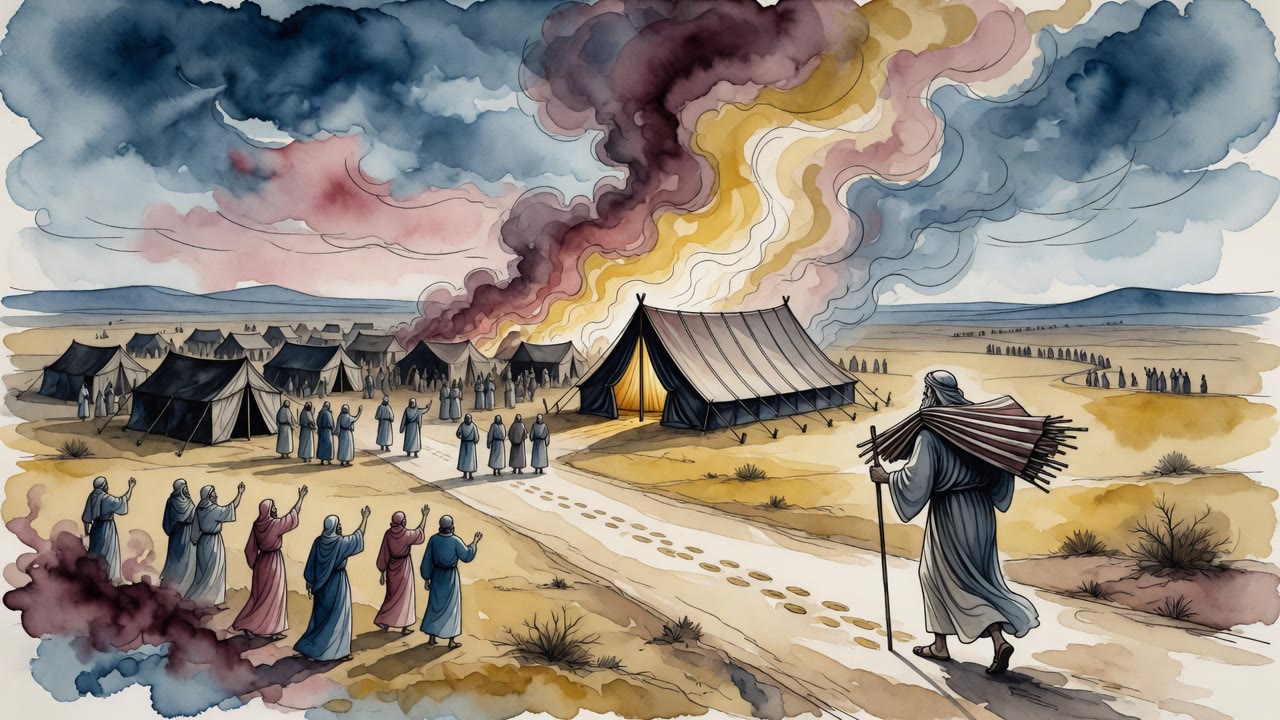
Before he walked toward Egypt he walked the other way. He went back to Jethro, his father-in-law, and asked permission to leave. He had lived in Midian for forty years. He had eaten at Jethro's table. He had married Jethro's daughter. He had a claim on him that a burning bush did not cancel.
Even now, with the staff in his hand and the plagues ahead, he stood in another man's tent and asked to go. Jethro sent him with a blessing. Moses walked toward Egypt carrying two things: the staff God had given him and the leave a father-in-law had granted. Both of them mattered. The man who would stand before Pharaoh still knew how to knock on a door he did not own.
He went against his will. He went anyway. The verse says only that Moses went and returned to Jethro. The going was the mission. The returning was the courtesy the mission did not erase.
Dawn Against One Heart
In Egypt, Pharaoh learned to avoid the river. Moses had been catching him there at first light, so the king stopped going out to the water. He stayed inside his house and let the morning happen without him.
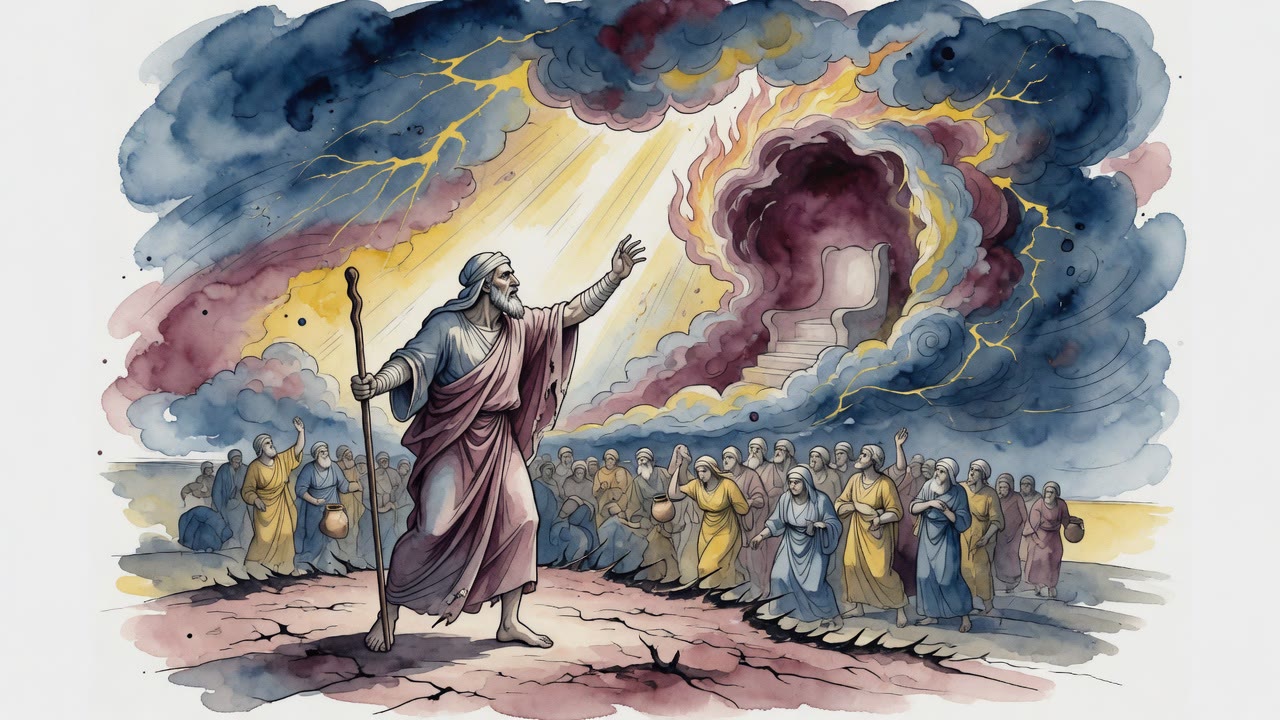
God sent Moses earlier still. Rise before dawn. Stand at the door. Catch him before he leaves. "For this time I will send all My plagues against your heart" (Exodus 9:14). Not against Egypt as a map. Against the place in one man where the choice was being made and made again.
Moses stood in the dark outside that house. The Nile was not the target anymore. The frogs, the blood, the darkness, each blow would land on a claim Pharaoh had made about his own dominion, but the aim was narrower than a kingdom. A heart that has made itself hard enough will not open even under ten catastrophes. God still had Moses get up early, so that the warning would arrive before the blow, and Pharaoh would have a chance he would not take.
The door stayed shut a long time. Then it opened, and Moses spoke into a face that had already decided not to hear him.
Bezalel Knew the House
After the wilderness, after the calf, after the covenant had been rebuilt, God named a craftsman. "See, I have called by name Bezalel, son of Uri, son of Hur, of the tribe of Judah" (Exodus 31:2). Moses came down from forty days on the mountain with his face still lit and began to relay the order. First the ark. Then the furnishings. Then the structure to house them.
Bezalel corrected him. "You build the house first," he said, "and then you fill it. You do not make the furniture before you have a room to put it in."
Moses stopped. He had just come from God. His skin still held the light. He stood in front of a young man who had not been on the mountain and heard the same instructions interpreted in the right order. "You must have been in God's shadow," Moses said. "You must have been standing beside us without our seeing you."
Moses took the correction. The man who had fled a serpent in the sand, who had asked a Midianite priest for leave, who had waited at a king's door before dawn, now stood still while a craftsman rearranged the work. Confronting Pharaoh had not finished him. After the plagues and the mountain, a Judahite craftsman still had to set the house in order. Moses closed his fingers around Bezalel's words the way he had once closed them around a tail. The wood stayed wood. The house would go up in the right order, because the staff had already shaped a hand that could hold a surprise without fleeing.
← All myths