The Sapphire Staff and the Baby in the Basket
A mother chooses wicker over wood for her son's basket. A staff cut from sapphire waits in a garden. A calf law turns out to be about a people.
Table of Contents
 Click for full size
Why Wicker and Not Wood
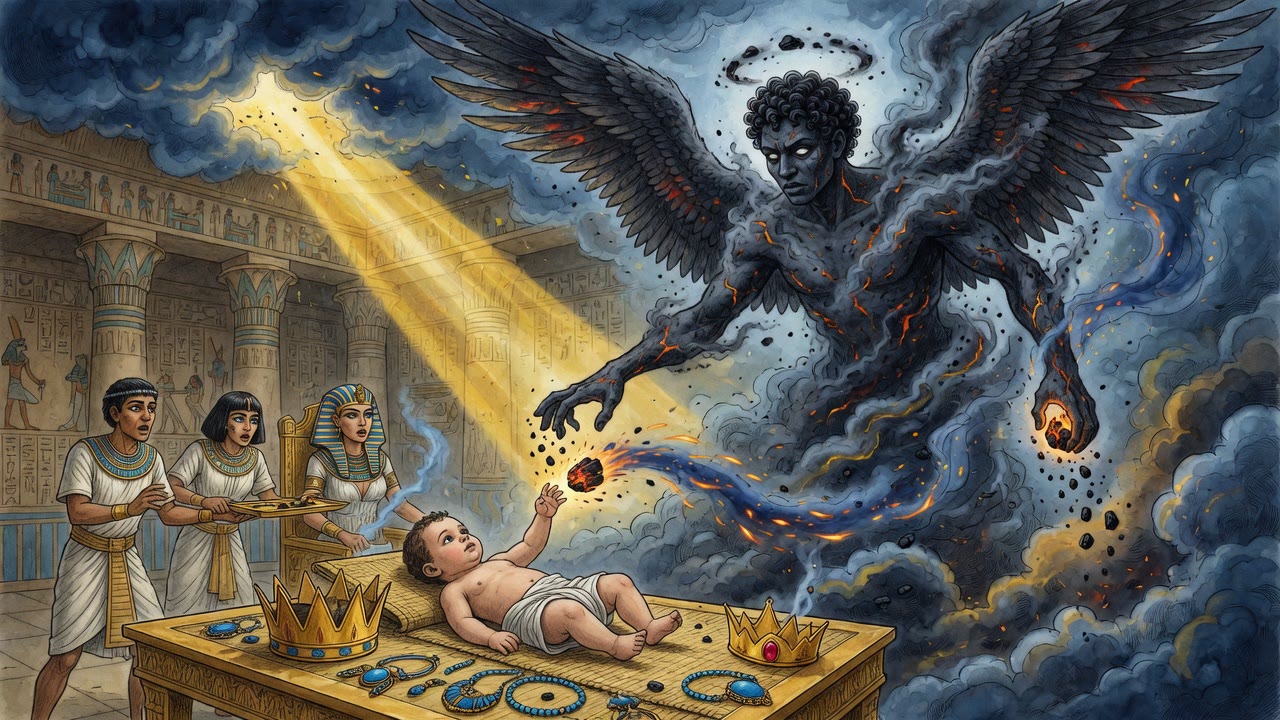
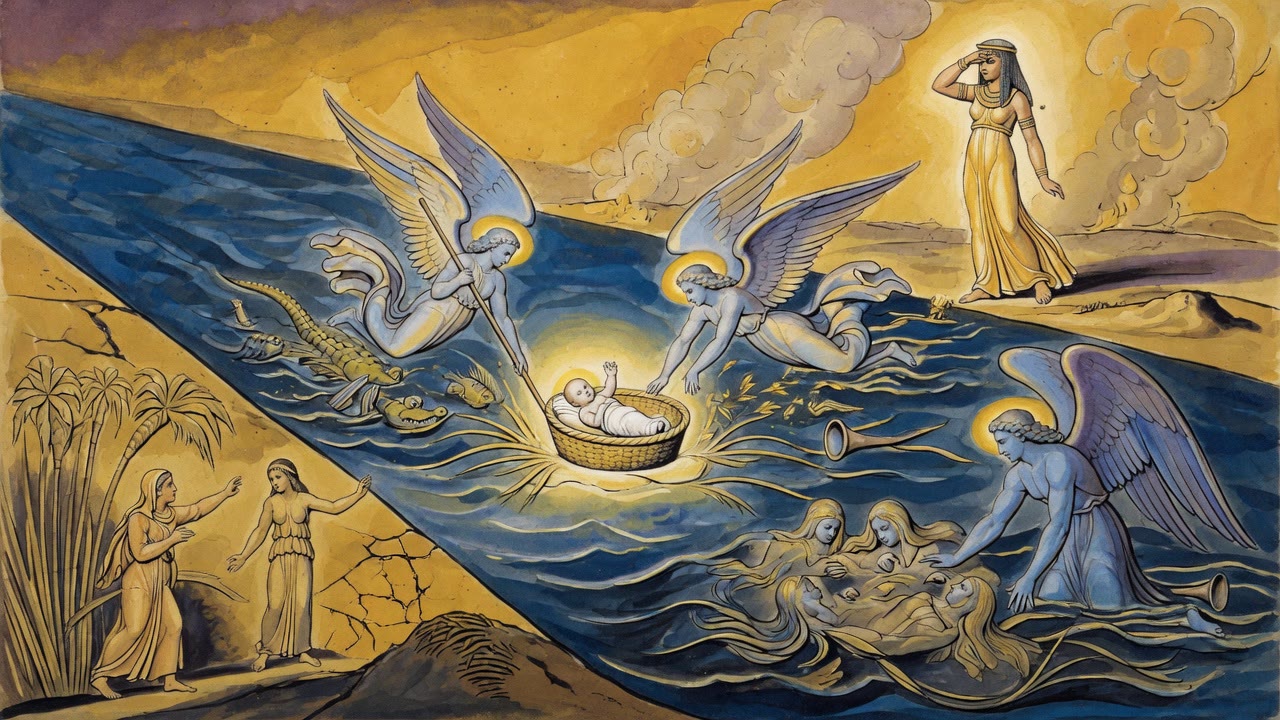
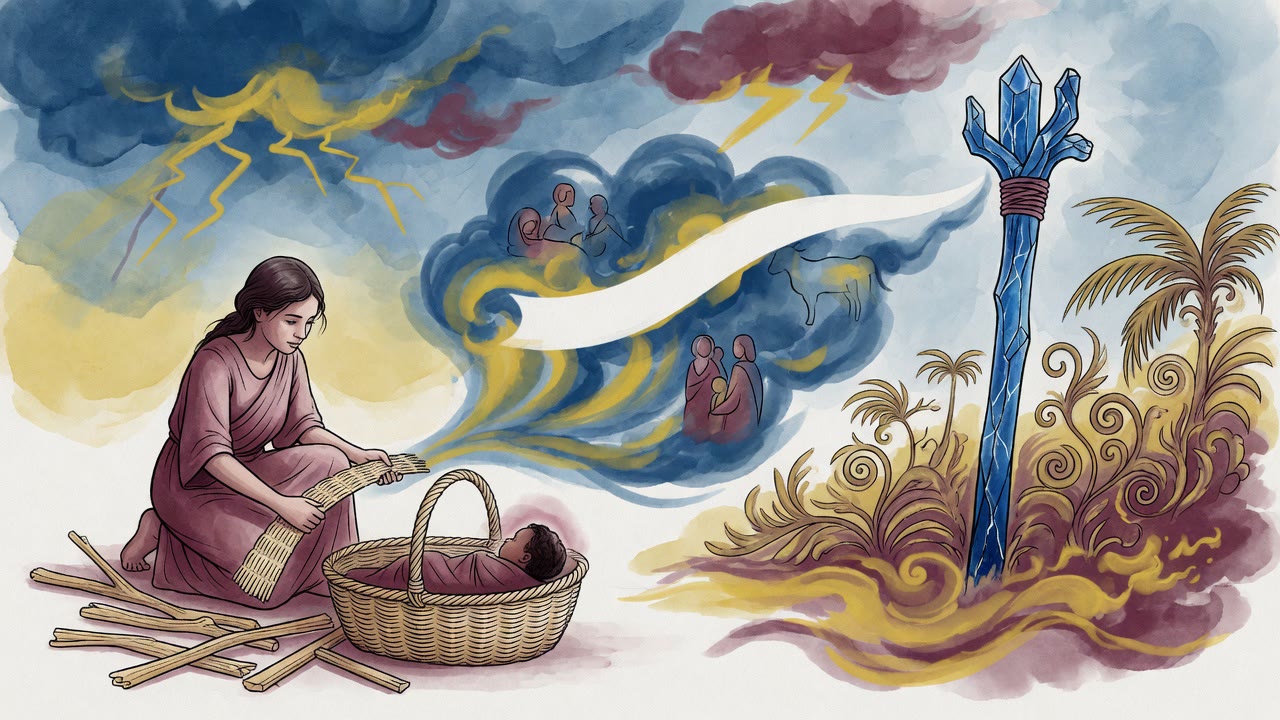
Yocheved built the basket herself. The Torah is specific: wicker, coated in clay on the outside and pitch inside, the whole thing light enough to float and tight enough to keep water out. She placed her infant son inside it and set it among the reeds at the edge of the Nile, where Pharaoh's daughter bathed, where there was some chance of a royal hand reaching in.
The rabbis stopped at the word wicker and would not move on. Why wicker? Why not cedar, which is strong and fragrant? Why not oak, which repels rot? The answer Rabbi Elazar gave was about theft. Righteous people, he said, treat their own property with more care than their own bodies. They will not reach a hand toward what does not belong to them. So Yocheved built the basket from what she owned. If she had used stolen wood, the box itself would have been a lie around the child inside, and a child who would one day stand at Sinai and receive the law against stealing could not be carried to his destiny in stolen planks.
Rabbi Shmuel bar Nachman read the same material choice as engineering wisdom. Wicker bends without breaking. It absorbs the soft knock of current against a reed bed and the harder knock of a drifting branch without cracking. The basket needed to survive its first hour, which was enough.
The Staff in Jethro's Garden
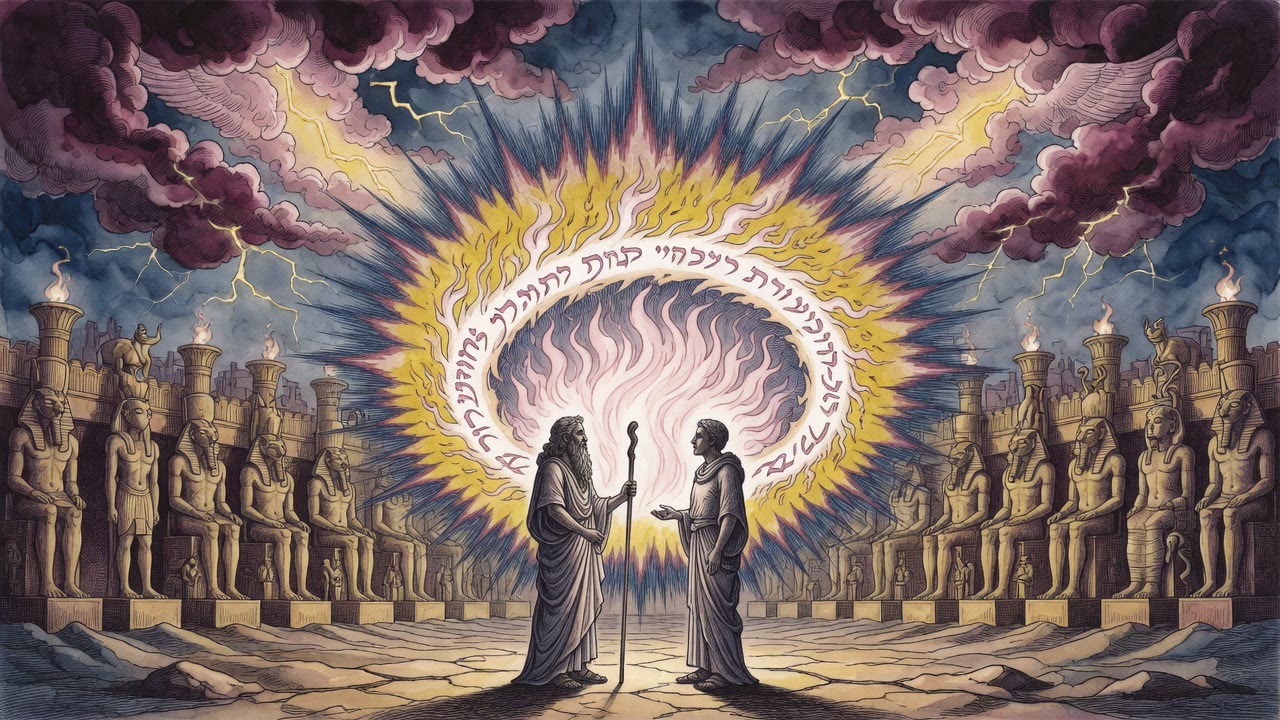
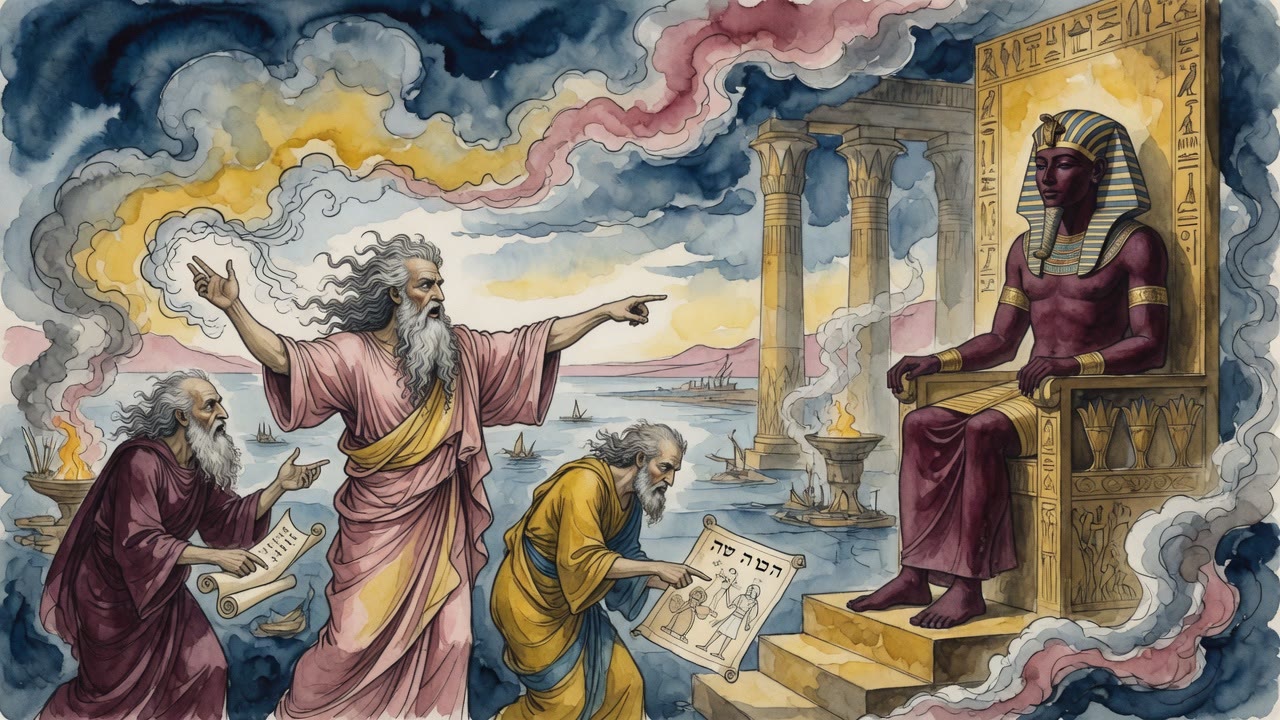
Somewhere in the household of Jethro, the Midianite priest, a staff stood planted in the ground, and ordinary men could not pull it up. The tradition said it was cut from sapphire, or from a vein of rock so dense it shone blue in certain light. The letters of God's name were carved into it. The ten plagues were written on it in the letters of their first sounds before any of them had happened.
Every young man who came to court Jethro's daughters tried the staff. The condition, in one version of the story, was that whoever could lift it and carry it would earn a daughter. Most men could not move it. Moses walked up and pulled it out of the ground with one hand. The tradition does not explain why he could do what others couldn't. It only notes that the staff was already his before he knew he needed it, already inscribed with the plagues he would call down before he had met the God who would send them.
The Calf That Was Seven Days Old
The third image in this cluster is quieter and stranger. Leviticus 22:27 says a newborn calf, lamb, or goat must stay with its mother for seven days before it can be brought as an offering. The animals have to wait. The law seems agricultural, a protection for the young and for the mother who just bore them.
The rabbis asked what this law had to do with the rest of Exodus, with staffs and baskets and plagues. Their answer was about readiness. A calf separated from its mother before it has been held and known and nursed is not yet itself. It has not become what it is. The seven days are not waiting days. They are becoming days.
Then the rabbis extended the image to Israel in Egypt. The people who stood at the edge of the sea had been slaves for four hundred years. They had built Pharaoh's cities and watched their sons drown in his river. The seven days of the calf law were the answer to a question the tradition kept asking: why didn't God simply pull Israel out of Egypt the moment the oppression started? Because the nation that left was not the nation that went in. The people had to become themselves first. The leaving was not a rescue. It was a birth.
Three Images, One Argument
Wicker instead of wood. A sapphire staff waiting in foreign soil for the right hand. A calf that must stay with its mother before it belongs to anything else. The rabbis who assembled these readings were not doing archaeology. They were doing something stranger: building a portrait of a universe that prepares its own instruments before they know they are being prepared. The basket was honest before Moses was born. The staff was engraved before the plagues were set loose. The people had to be held for four hundred years before they could be offered.
← All myths