Egypt Dreamed and Could Not Answer Until Hebrews Came
Pharaoh woke from dreams his court could not hold. Joseph named what the night meant. Generations later Moses stood at the sea and the answer came again.
Table of Contents
 Click for full size
The King Who Knew His Interpreters Were Wrong
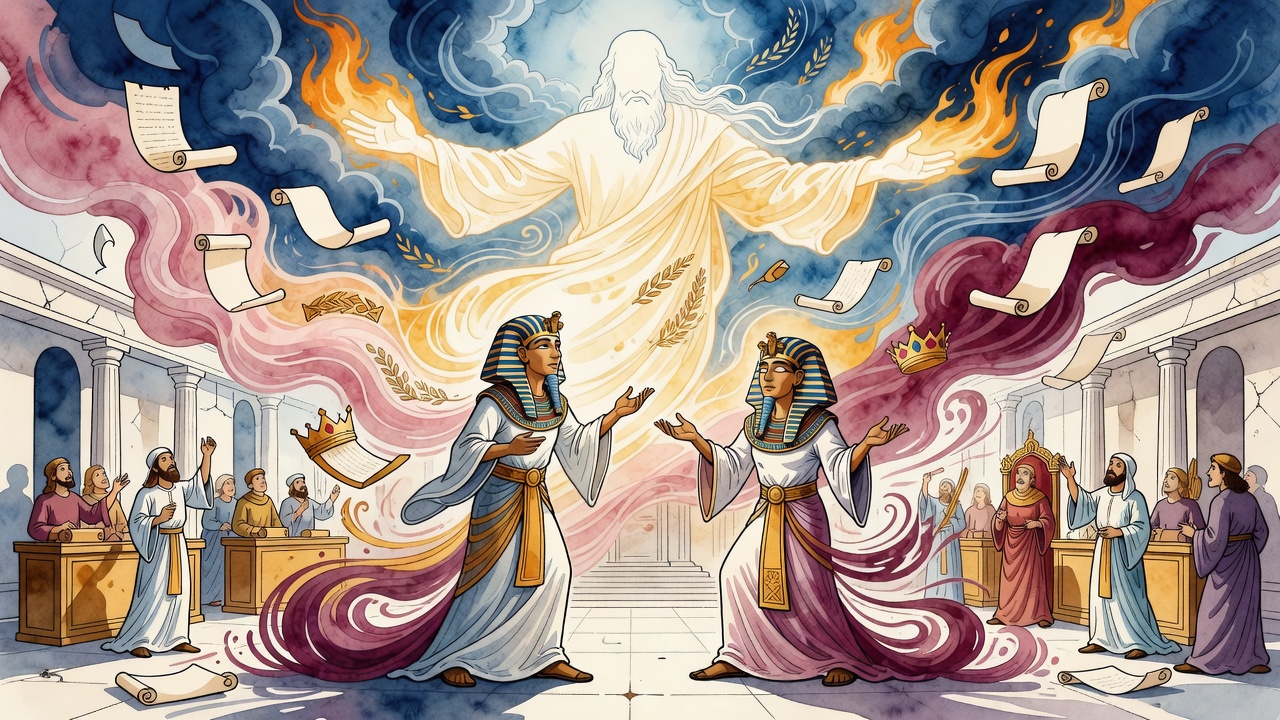
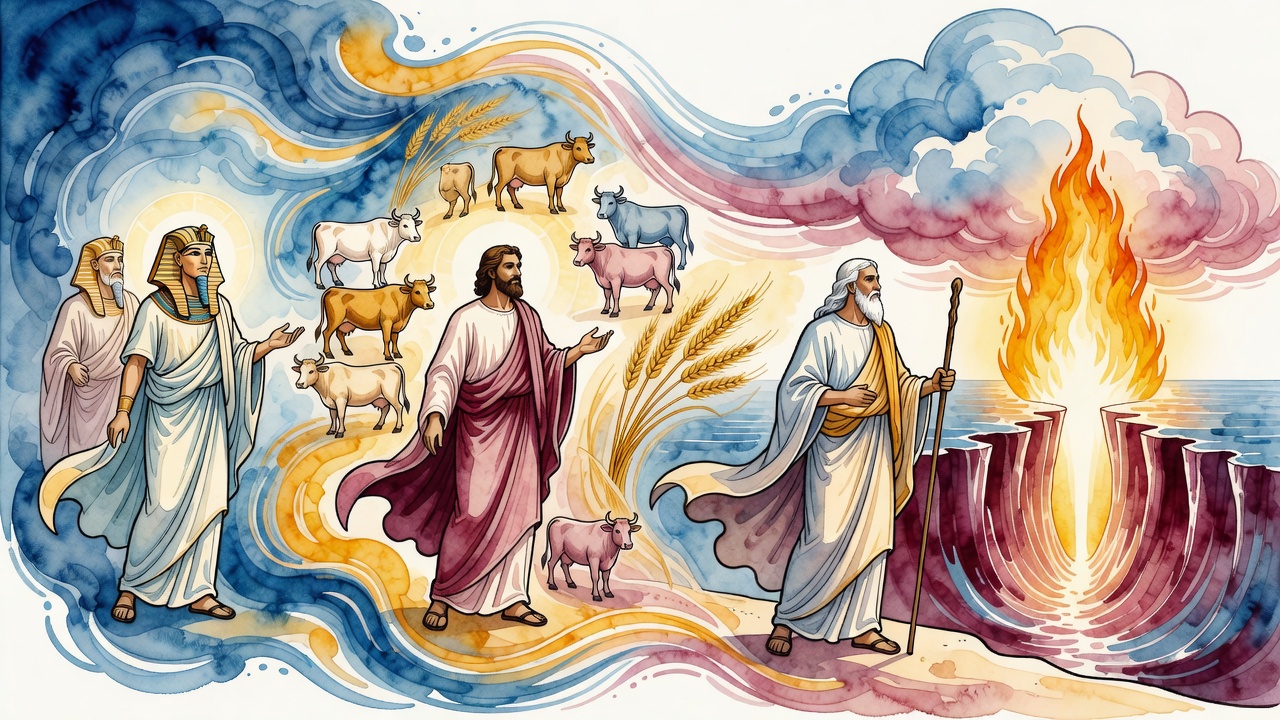
Pharaoh wakes from the dream of seven fat cows and seven starving cows, seven full ears and seven withered ears. His wise men are called. They speak. They give interpretations that reach for policy, for dynasty, for palace politics. Each answer arrives and Pharaoh knows it is wrong before the speaker has finished. The ruler of Egypt has power over everything in his kingdom except this: the meaning of the night.
In the Legends of the Jews, Ginzberg's synthesis of rabbinic lore, that moment is understood precisely. Pharaoh knows the correct interpretation exists. He knows he does not have it. His court is useless to him for the one thing that matters this morning. The king who has never been told no is now surrounded by yes-men who are also liars, and the dream sits in his chest like a foreign object, true and untranslatable.
Egypt Could Command Bodies but Not Dreams
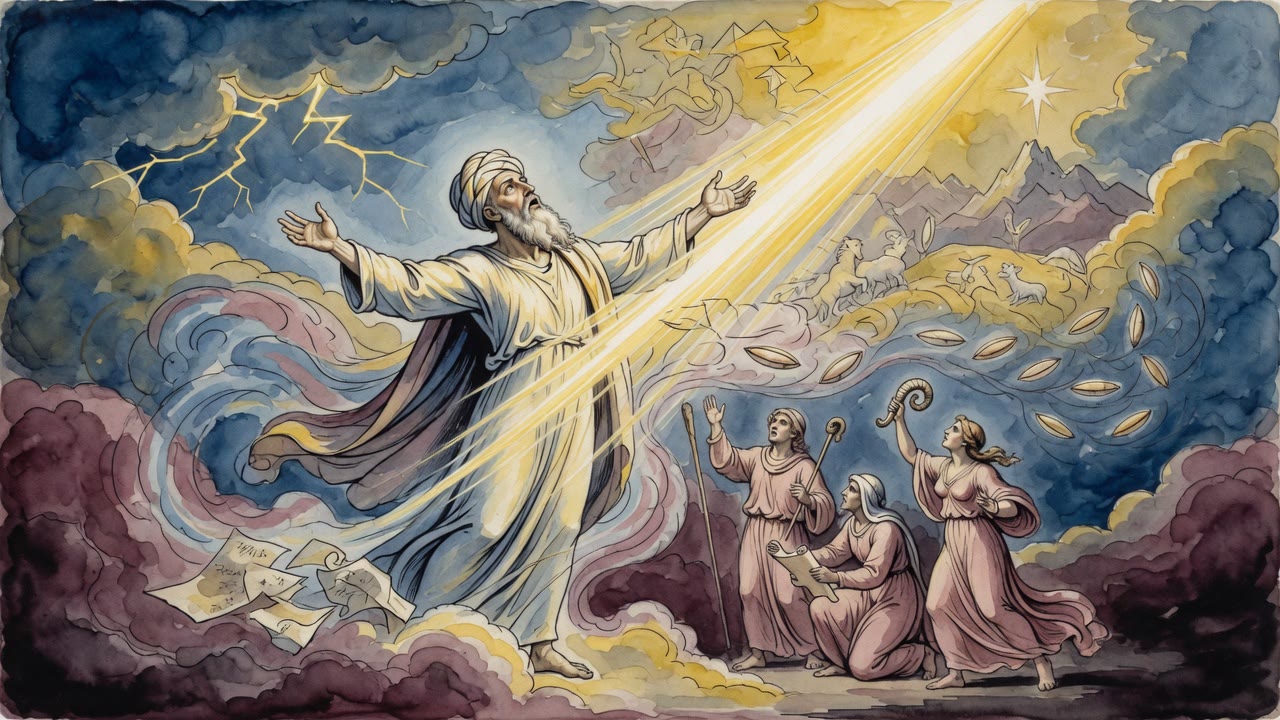
Ginzberg gives the dream its full imagery: the lean cows are grotesque, monstrous in their gauntness, and when they swallow the fat cows no trace of the fat cows remains. Egypt can command armies, granaries, and the bodies of its slaves. It cannot command what enters the palace through the night. The dream has come from a source that does not recognize Pharaoh's authority, and the whole infrastructure of Egyptian power has no tool for this problem.
This is one of the sharper reversals in the Joseph story. Egypt owns the prison where the Hebrew dreamer has been sitting for two years. Joseph owns the language Egypt needs. The empire can bury a man in a cell. It cannot manufacture the truth it requires when heaven sends one dream too many.
The Butler Remembered and Joseph Was Summoned
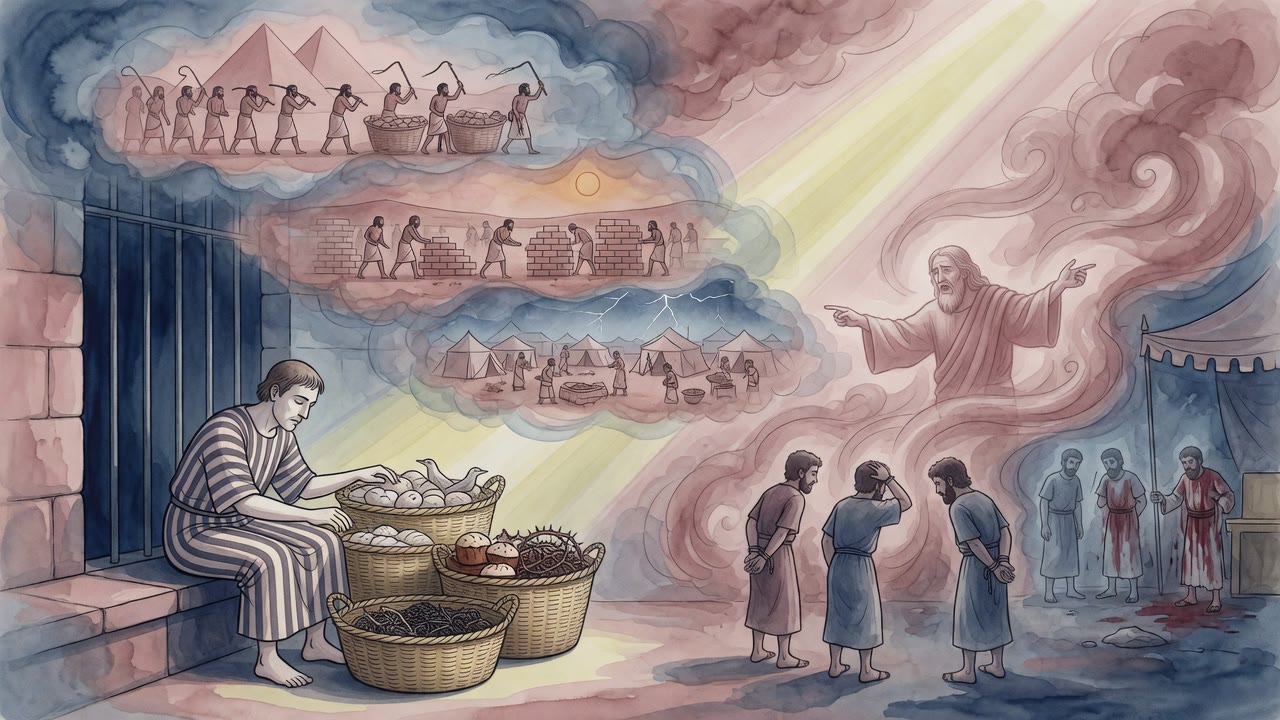
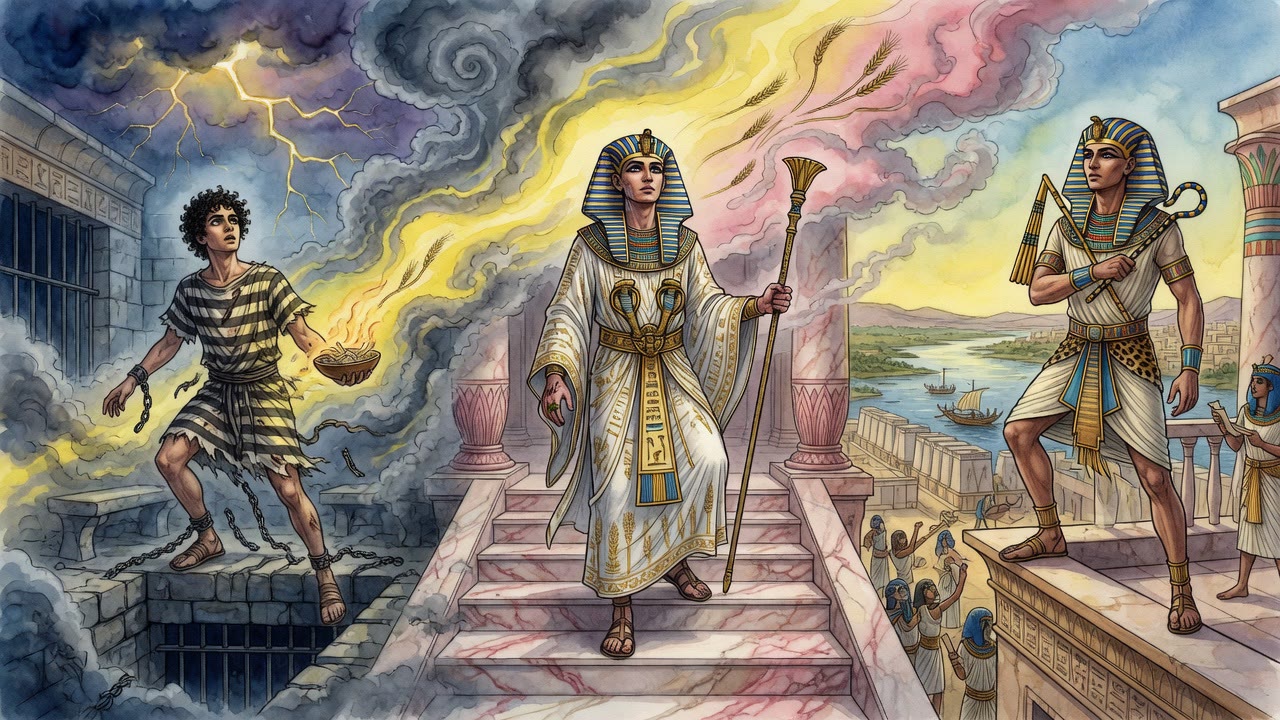
The chief butler had been in the prison with Joseph. Joseph had interpreted his dream correctly: the butler would be restored to his position in three days. Three days later, he was. He had promised to remember Joseph to Pharaoh. He forgot. For two years he forgot. Then Pharaoh's dreams gave him a reason to remember, and he remembered not out of loyalty but out of a calculation that a man who had correctly read his dream might correctly read the king's. Joseph was brought out of the pit, shaved, clothed, and stood before Pharaoh.
Joseph's vision of Egypt was different from Pharaoh's. Where Pharaoh saw catastrophe without meaning, Joseph saw seven years of abundance followed by seven years of famine, a natural cycle that required a human response of storage and distribution. The dream was not a punishment. It was information. Joseph gave Pharaoh what the court could not: not only the interpretation but the policy that followed from it.
A New Pharaoh Who Dreamed of Israel's End
Generations later, a Pharaoh arose who did not know Joseph. He had his own dream: of a scale, and all of Egypt on one side, and one Hebrew lamb on the other, and the Hebrew lamb outweighing Egypt. The advisers told him the lamb represented a Hebrew boy not yet born who would someday destroy Egypt. Pharaoh ordered every Hebrew male child thrown into the Nile. He acted on a dream he did not understand, against a child who had not yet been born, to prevent a future he could not see clearly. Moses was born anyway.
At the Sea, the Dream Was Answered
When Israel stood at the sea with Egypt behind them and water in front, Moses raised his staff. The sea split. Israel walked through on dry ground. The Egyptian army followed and the water returned. Ginzberg's account names the precise terror of that moment: Israel trapped between two annihilations, the army and the sea, with no path visible until there was one. The dream that had sent Egypt's armies after Hebrew male children had produced the man now standing on the bank holding a staff. What Pharaoh had tried to drown in the Nile stood at the shore and divided the water.
← All myths