Joseph Went From Prison to Viceroy in One Afternoon
All Egypt was down at the river for the flood festival. Zuleika stayed home, perfumed the hall, and sat in the doorway Joseph had to walk through.
Table of Contents
 Click for full size
The Banquet Where the Women Cut Their Hands
Zuleika got sick from wanting him. She stopped eating, and the flesh went off her, and the women of Egypt came to the house to sit with her and could not work out what was wrong.
"You lack nothing," they said. "Your husband is a prince and the king thinks well of him. What is there that your heart could possibly want?"
"Today," she said, "you will find out where this came from."
She told the servants to cook for all of them and she spread a banquet in her own house. She had oranges brought out, and small knives laid beside every plate for peeling them. Then she sent for Joseph and told him to put on the good clothes and come wait on her guests.
He came in with a dish in his hands. Not one woman in that room could look away from him. They went on working the knives through the fruit with their eyes fixed on the Hebrew steward, and they cut their own hands open, and the oranges in their fingers went red, and they kept cutting. Blood on the fruit, blood on the good linen, and none of them noticed a thing until he had walked back out.
Zuleika let them sit with their hands bleeding. She had made her point without saying it.
The Empty House on the Feast Day
She could not get him by asking and she could not get him by weeping, so she waited for the day the whole city would be somewhere else.
When the Nile came over its banks, everyone went down to the water. Princes and laborers, men and women, music the length of the road. Zuleika said she was ill and stayed behind.
Then she got up out of the sickbed and went to the hall of state and dressed like a queen. Onyx stones set in silver and gold on her head. Every preparation a woman used, worked into her face and her skin. She burned cassia and frankincense until the hall held the smell of it, and spread myrrh and aloes through the rest of the house. Then she sat down in the vestibule, in the doorway Joseph had to walk through to get to his work, and waited for him with the whole of Egypt three miles away at the river.
He came out of that house without his coat and went to prison for it.
Seventeen to Thirty
He was seventeen when his brothers put him in the pit and sold him to a caravan. He was thirty when he stood in front of the king.
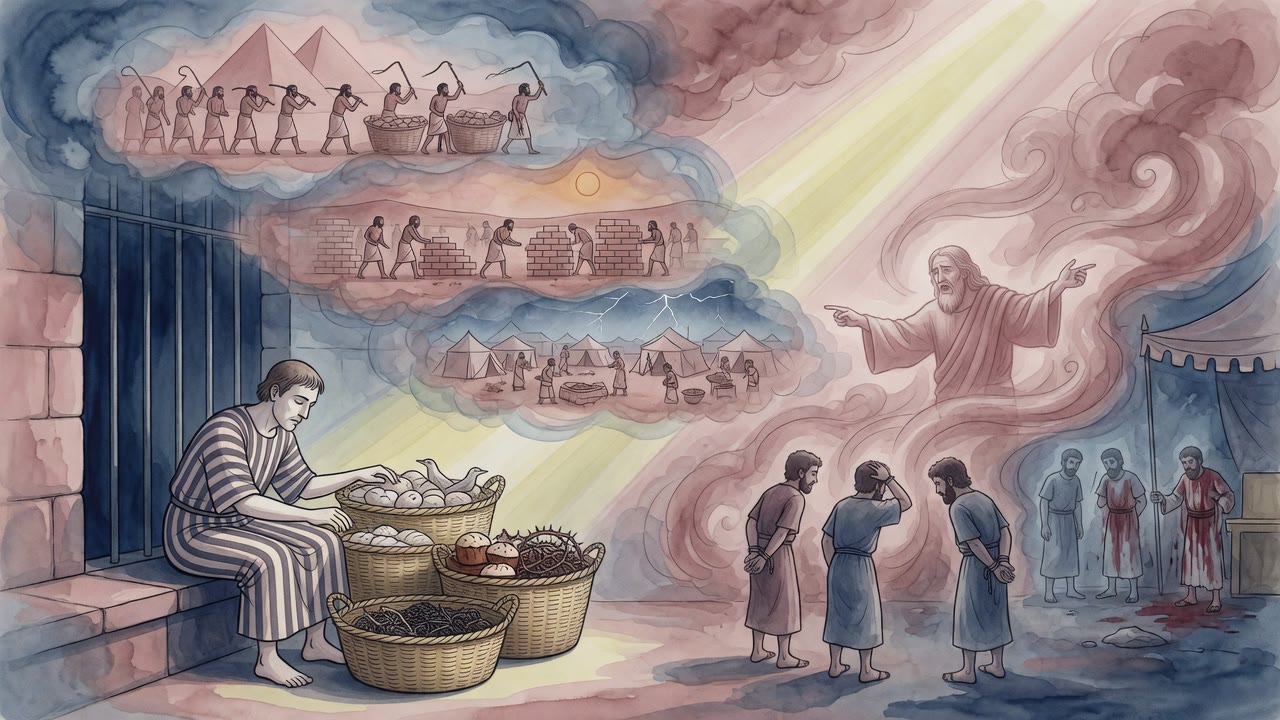
Between those two numbers there is a cell, and a steward who forgot him for two more years after he had asked to be remembered, and a great many mornings that started and ended in the same room.
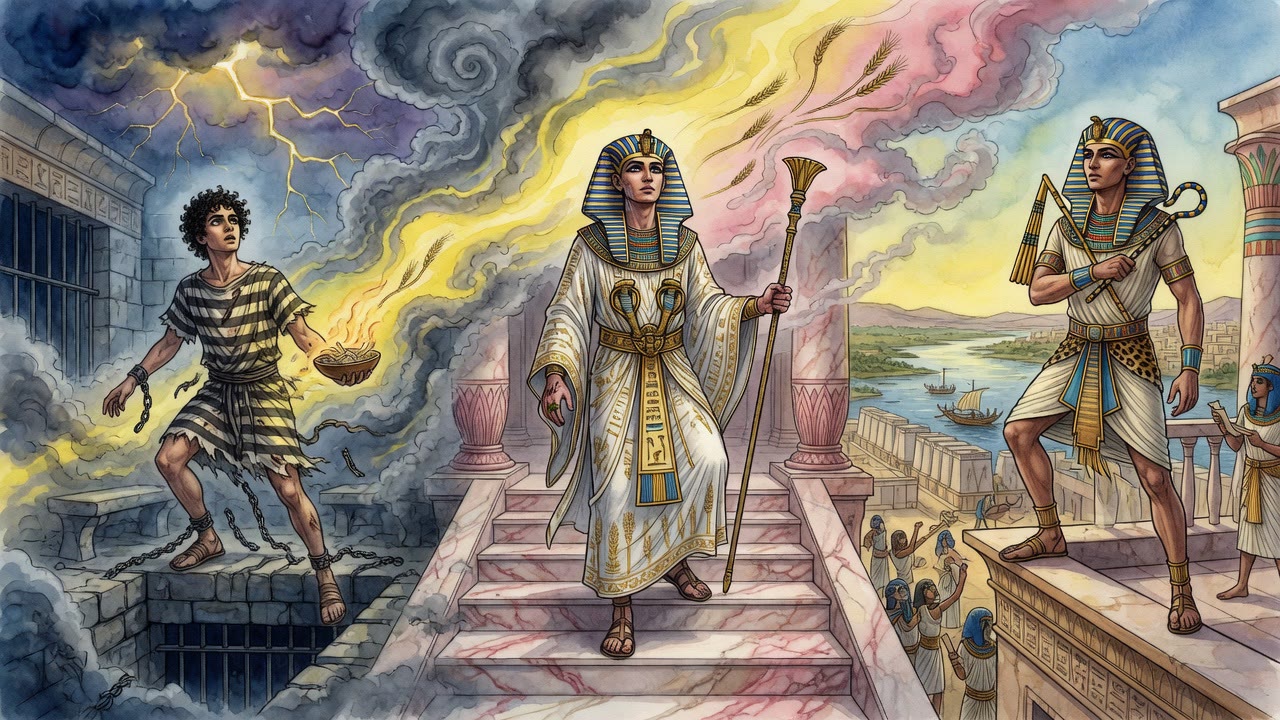
Then one morning the door opened out of order. They took him and shaved him, face and head, and put clean clothes on him and walked him up through the courts, and he had no time at all to prepare for what was on the other side.
The Third Step
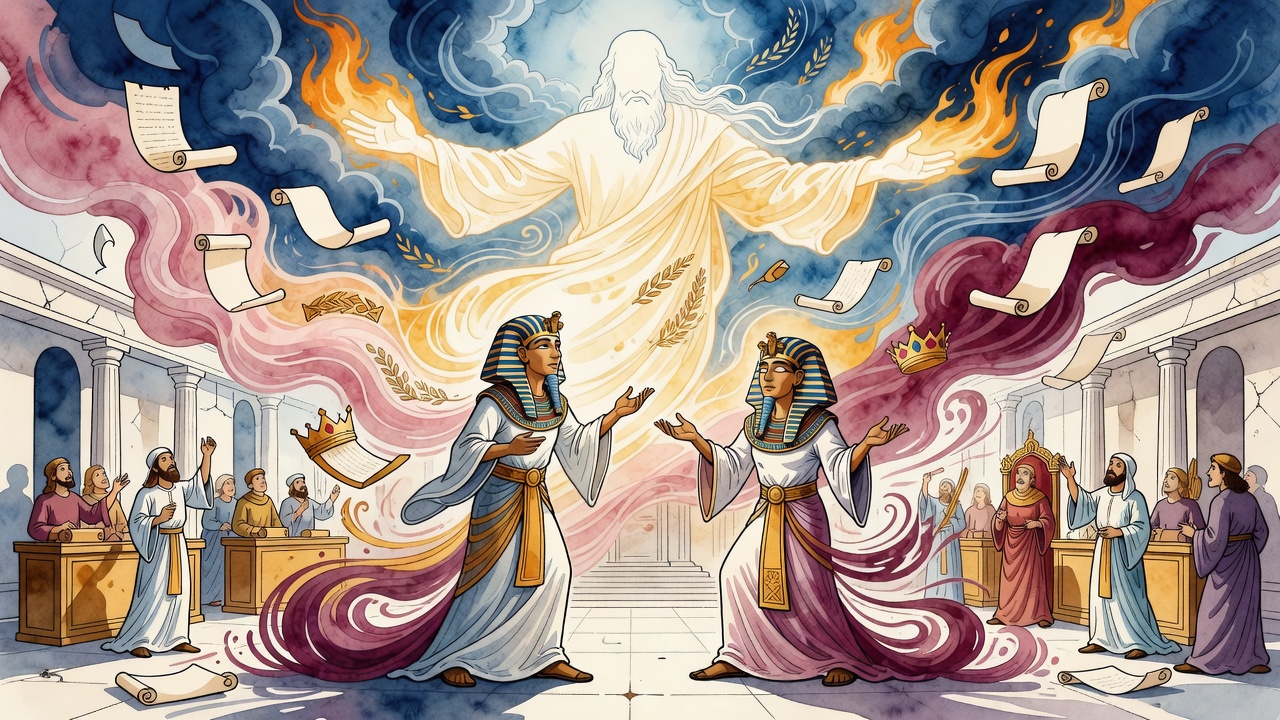
Pharaoh sat on the fourth step from the top. Joseph came in and went down on the ground, and then rose and climbed to the third step, and stopped there, which was as far up as a man in his position was allowed to stand.
The king did not open with threats. He opened by admitting he was stuck.
"My servant testifies about you that you are the best and most discerning man I could consult. Do for me what you did for him. Tell me what the visions of my dreams mean." Then he said the part that mattered. "Suppress nothing out of fear. Do not flatter me with lying words, or with words that please me. Tell me the truth, though it be sad and alarming."
Joseph did not take the compliment. It is not in me, he said. God will answer what Pharaoh needs answered.
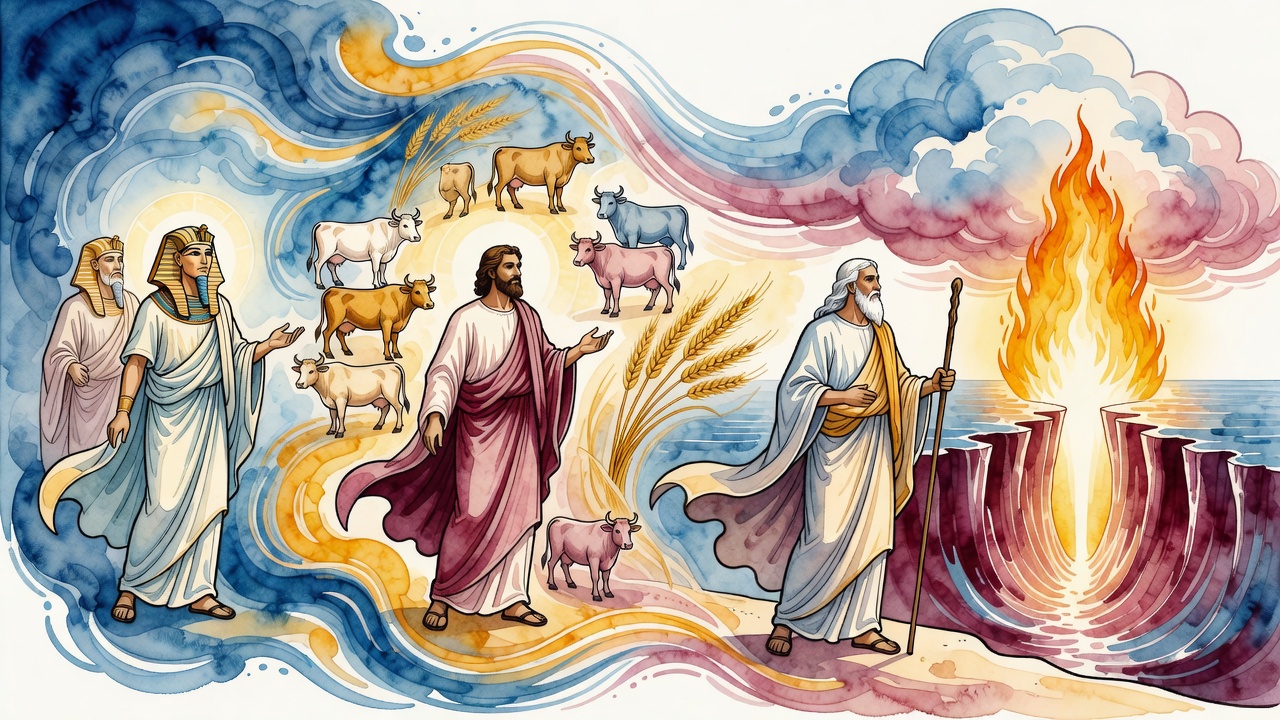
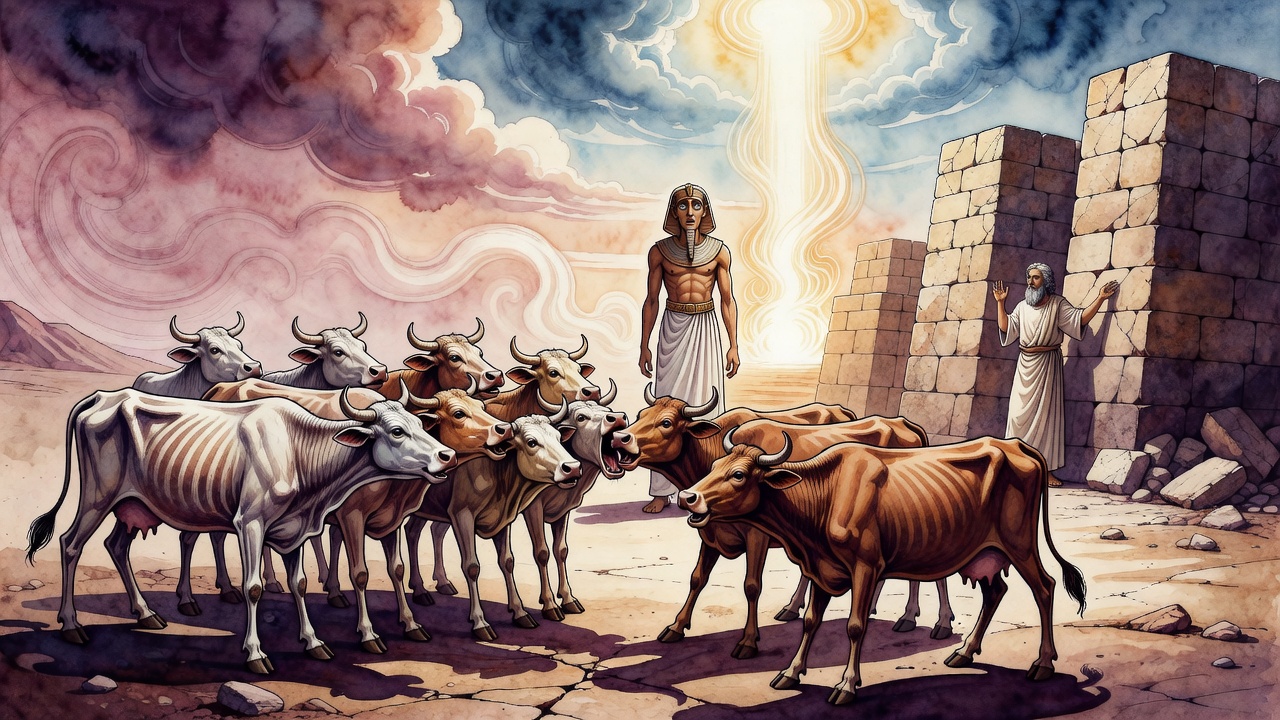
Then he laid it out. Seven fat cows and seven full ears are seven years of more grain than Egypt can eat. Seven gaunt cows and seven ears blasted by the east wind are seven years of famine that will swallow the seven good ones so completely that nobody will remember the plenty. Find a man with sense and put him over the land now, while the good years are still coming, and take a fifth of everything and store it.
Pharaoh looked around at his officials and asked whether they could find anyone else with the spirit of God in him like this one. Nobody said anything. So he pulled the signet ring off his own finger and put it on Joseph's hand.
By evening the man who had woken up in a cell was riding through the streets in the second chariot of the kingdom with heralds running in front of it shouting Abrech, bow the knee, and the crowds going down on their faces in the dust as he passed. New name, Zaphenath-paneah. New wife, Asenath, daughter of the priest of On. The prison clothes were somewhere behind him in a heap.
Four Thousand Six Hundred Men
The famine had not started yet, and in that first year the new viceroy did something nobody had asked of a grain administrator.
The people of Tarshish had come down into Ishmaelite territory, and the Ishmaelites, who were not many in those days, were being pushed off their own ground. They sent to the king of Egypt for help. Joseph raised an army of four thousand six hundred men and armed every one of them with a shield, a spear, a buckler, a helmet, and a sling, took the king's officers and a levy of Egyptians with him, and marched to the land of Havilah.
The Ishmaelites joined him there. Together they broke Tarshish in the field and drove the survivors out to their kinsmen in Javan, and settled the Ishmaelites back on the land that had been taken from them.
Then Joseph brought the army home to Egypt, and he had not lost a man.
← All myths